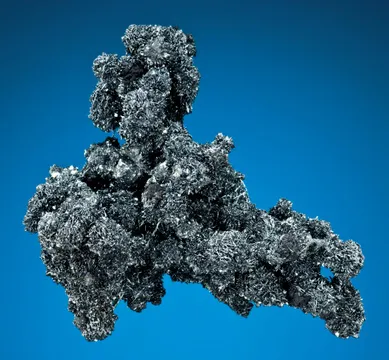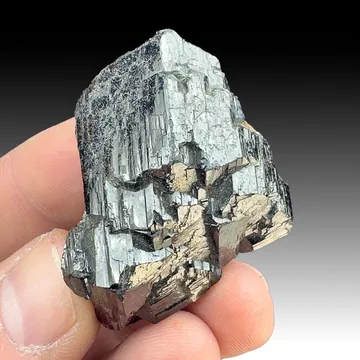
Viloco Mine, Bolivia — premier cassiterite locality famed for sharp, twinned crystals with notable translucency; top specimens rival gem-quality rough.
Key facts
Viloco is one of the essential names in Bolivian cassiterite, a mine whose specimens bridge ore geology, gemology, and the old cabinet tradition of the Andean tin belt. The locality, also widely encountered under the interchangeable name Araca, lies in Loayza Province of La Paz Department, in the high eastern Cordillera near the Quimsa Cruz–Tres Cruces granitic complex. Its collector fame rests on peribatholithic tin veins: narrow but locally vuggy hydrothermal fissures in and around Oligocene granite and older metasedimentary rocks, zoned outward from tungsten-arsenic-bismuth-copper assemblages near the intrusive center into cassiterite-rich veins and, farther out, zinc-rich sulfide mineralization.
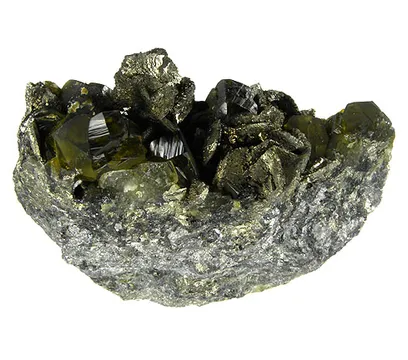
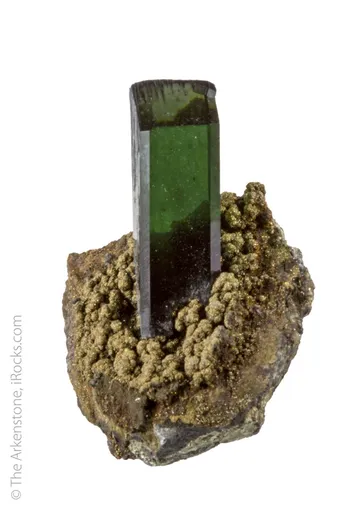
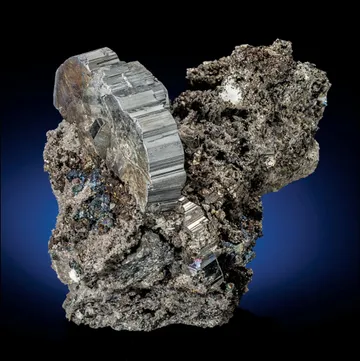
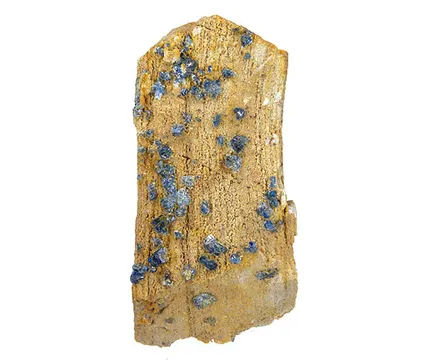
The best Viloco pieces are instantly recognizable: brown to black cassiterite in sharp, brilliant, commonly twinned crystals, with enough internal translucency that the edges flash golden brown under a strong light. Ordinary Bolivian tin ore is dark and massive; fine Viloco cassiterite is architectural. The crystals may sit as tight, sparkling druses, as stout prismatic individuals, or as cyclic twins perched with quartz and tan siderite. A small percentage is pale and transparent enough to have been separated as facetable rough, giving Viloco a rare dual status among collectors and gemologists: a world-class specimen locality and a source of cut cassiterite.
Regional View
Country View
The geologic story explains the look of the specimens. Viloco’s veins are not broad, open cavern systems; they are steep, structurally controlled hydrothermal fissures, commonly only millimeters to decimeters wide, in which comb-textured quartz, cassiterite, chlorite, siderite, tourmaline, arsenopyrite, löllingite, ferberite and later sulfides record pulses of tin-bearing fluid. Where those fissures opened just enough, the cassiterite grew free-faced rather than massive. That is why the finest specimens are compact but intensely crystallized, with crystals crowded across the surface instead of isolated in large pockets.

Photo: Wikimedia Commons
Search for specimens: View all specimens from Viloco Mine, Bolivia
Viloco Mine is best understood as part of the Viloco–Rosario de Araca district of the Bolivian tin belt, about 80 km southeast of La Paz in the Cordillera Oriental. The mine is catalogued as Viloco Mine or Araca Mine, and serious labels may legitimately use either name; San Antonio appears as a closely associated sublocality within the same mining field. The mine is recorded near 16°52'26" S, 67°29'52" W, at high Andean elevation in a historically difficult transport setting.
The deposit is a granite-related hydrothermal Sn-W-Mo-As vein system developed around the Quimsa Cruz or Tres Cruces batholith. Published work describes the vein field as hosted chiefly by metamorphosed black shales of the Amutara Formation, with veins also cutting porphyritic granite dikes and granitic rocks. Earlier studies also describe Viloco ore veins in Silurian quartzite and sandstone as well as granodiorite of the Tres Cruces batholith. The batholith and the tin mineralization are Late Oligocene to early Miocene in age: zircon dates from the Viloco part of the batholith cluster near 26 Ma, while cassiterite from Viloco has yielded a U-Pb age of about 24.4 Ma. For collectors, the important point is that the mineralization is magmatic-hydrothermal and structurally focused, not a secondary placer occurrence.
The veins are typically steep to nearly vertical and commonly trend roughly northeast, with many described between about N40°E and N60°E. They occur in sets, spaced only a few meters apart in places, and may continue for hundreds of meters along strike and down dip, although individual widths range from mere millimeters to about 50 cm. The best collector cavities formed where these veins opened and then sealed in repeated stages, producing drusy linings, comb textures, and locally cockade textures in brecciated material. Crystal sizes in the mineralized veins commonly fall between 1 mm and 5 cm, a range that matches the familiar miniature-to-small-cabinet scale of most Viloco specimens.
The district shows a clear metal zoning around the granite. Close to the intrusive rocks, quartz veins are richer in W-As-Bi-Cu minerals, especially ferberite, arsenopyrite and bismuth species. Tin becomes dominant at intermediate distances from the contact, with cassiterite the key ore mineral and, in places such as the Veta Principal, essentially the principal ore phase. Farther from the intrusive source, zinc and lead become more important, with dark iron-rich sphalerite and stannite marking the more distal polymetallic expression. The mineral sequence begins with tourmaline, quartz, Sn-rich rutile, monazite, zircon, Fe-rich chlorite and cassiterite, together with löllingite and ferberite. Later sulfidation overprinted portions of that assemblage, replacing löllingite with arsenopyrite and adding sphalerite, chalcopyrite, stannite, native bismuth, bismuthinite and other minor phases.
A variant assemblage has been documented east of Viloco town in mines hosted by granite. There, tabular hematite formed early and was partly replaced by cassiterite, scheelite, löllingite and pyrite; magnetite and siderite followed, with hematite locally pseudomorphed by magnetite as mushketovite. A later sulfide-rich stage added abundant pyrrhotite, stannite, chalcopyrite, iron-rich sphalerite and native bismuth. That mineralogical complexity is a reminder that “Viloco cassiterite” is not one uniform product but the collector-grade expression of a larger zoned ore system.
Mining history at Viloco is tied to the larger rise of Bolivian tin. The district was worked before the great twentieth-century tin consolidation, but its modern history is associated with the Empresa Minera de Araca and then the Patiño orbit. By the 1920s, Araca or Viloco was already a significant tin operation, and historical economic accounts place Araca among the profitable export producers of the tin-baron era. The mine later passed through the 1952 nationalization into the COMIBOL system, as did many major Bolivian tin mines. After the great restructuring of state mining in the 1980s, Viloco continued under changing arrangements, with cooperative work becoming central. COMIBOL records from 2022 document a mining-adaptation contract with Cooperativa Minera “Viloco” R.L., whose representative cited 250 cooperative members at the signing.
Specimen production appears to have been intermittent rather than the result of a single famous pocket. The pieces prized by collectors generally came from cassiterite-rich vein material, especially drusy fissure fillings where crystals were exposed cleanly on quartz, siderite or chloritic matrix. San Antonio material is especially prominent in specimen records, commonly with cassiterite on quartz and arsenopyrite. The most interesting gem-and-specimen episode came when miners were instructed under a German foreign-aid project to separate the finest transparent and specimen-grade cassiterite instead of sending it all to the mill. That decision helped preserve material that would otherwise have been crushed as tin ore, including the rare pale honey-brown rough later cut as Viloco cassiterite gems.
Access today should be approached as active-mine access, not as a casual collecting locality. Viloco has been described as still active, and modern operations are associated with cooperative and COMIBOL-linked mining rights. Old dumps and mine workings in Bolivian tin districts can be physically hazardous, legally controlled, and environmentally sensitive. Collector specimens seen on the market are overwhelmingly acquired through miners, Bolivian dealers, older collections, and international specimen dealers rather than through recreational field collecting.
Viloco cassiterite is the classic: SnO2 in sharp, lustrous brown to black crystals, commonly twinned and locally cyclic, with individual crystals ranging from millimeters to several centimeters; exceptional cabinet specimens show tightly packed druses or stout prismatic crystals with smoky-brown translucency, and old descriptions record beautiful large prismatic crystals from the mine. The finest pieces come from open portions of the cassiterite-rich veins, especially vein fillings with quartz, tan siderite, chlorite, tourmaline, arsenopyrite, löllingite and locally ferberite, rather than from massive ore. Good examples are judged by brilliance, sharp terminations, visible twin form, undamaged display faces, and the golden-brown transparency seen on crystal edges or backlit crystals; ordinary Viloco pieces may still be rich in cassiterite but are duller, more contacted, more massive, or visually crowded without the mirror-like luster that made the locality famous.
Quartz at Viloco is important less as a stand-alone species than as the architectural host that makes the best cassiterite specimens displayable. It occurs as vein quartz, comb-textured drusy quartz, clear to smoky or white crystals, and coarse quartz intimately associated with early cassiterite in the tin-rich stage of mineralization. In collector pieces, quartz provides contrast: bright black-brown cassiterite set on white crystalline quartz, transparent quartz points rising through cassiterite druses, or quartz intergrown with siderite rosettes and arsenopyrite. The best quartz-bearing specimens from Viloco are those in which quartz supports rather than overwhelms the cassiterite, with clean crystal surfaces, open spacing, and enough color contrast to separate the dark tin oxide from the matrix; quartz-only specimens are far less characteristic of the locality unless they preserve clear evidence of the tin-vein assemblage.
Siderite from Viloco is a subordinate but visually useful carbonate, typically appearing as tan to brown rhombohedral aggregates, curved rosettes, or drusy coatings with cassiterite and quartz. It is part of the hydrothermal vein assemblage and is especially noted in specimens where black-brown cassiterite crystals sit with gemmy quartz and tan siderite “rosettes,” giving the pieces a warmer, more varied palette than cassiterite-on-quartz alone. In the broader Viloco system, siderite also belongs to the carbonate-rich overprint documented in some granite-hosted veins, where it occurs with magnetite and replaces earlier iron oxides. Collectors should value siderite here when it is sharp, well placed, and aesthetically contrasting; mediocre siderite-rich pieces can look muddy or obscure the cassiterite, while the better ones frame the dark crystals and help prove a full Viloco vein assemblage.
Beyond these three display species, Viloco is a notably rich Sn-W-As-Bi-Cu-Zn vein locality. Documented minerals include arsenopyrite, löllingite, ferberite, scheelite, molybdenite, ferrimolybdite, bismuthinite, native bismuth, chalcopyrite, pyrite, pyrrhotite, sphalerite, stannite, galena, acanthite, marcasite, jamesonite, hematite, magnetite, goethite, chamosite, kaolinite, muscovite or sericite, tourmaline, apatite, monazite-group minerals, zircon, rutile, ankerite, halite and native tin. “Silesite” is historically tied to Viloco through Pauly’s 1926 description as a tin silicate-like material, but it is not treated as a modern approved collector species; later references have regarded such material as a fine mixture rather than a valid mineral species. For the advanced collector, the rarities that matter most are not showy cabinet pieces but paragenetic clues: early Sn-rich rutile and monazite in the tin stage, indium-bearing stannite in distal sulfide assemblages, and the unusual presence of native tin recorded from the locality.
Viloco is a locality where name discipline matters. Labels may read Viloco, Araca, Mina Araca, Viloco Mine, San Antonio Mine, or San Antonio, Viloco Mine; these names can be legitimate, but they are not interchangeable with every Bolivian cassiterite locality. Bolivia has many tin mines, and cassiterite from Huanuni, Llallagua, Chorolque, Poopó, Colquechaca, Caracoles, Avicaya and other districts can superficially resemble Viloco material. A credible Viloco specimen should show the right style: highly lustrous brown to black cassiterite, commonly twinned, often with quartz and/or siderite, and typically with strong translucency on edges when backlit. Large, dull, massive black cassiterite without that luster is harder to place with confidence unless provenance is strong.
The most common condition issues are edge bruising, contacted crystals, small nicks on terminations, and damage hidden by the high luster of the cassiterite. On dark Viloco crystals, a chipped edge may show as a lighter brown or gray patch; on gemmy crystals, the same chip may be easy to miss until the piece is tilted under a point light. Dense druses often have naturally contacted areas where crystals grew against vein walls or neighboring crystals, so a specimen should be judged by the integrity of its main display face rather than by the presence of every contact. Quartz points can be cleaved or bruised, siderite can be scuffed, and sulfides such as pyrrhotite or marcasite-bearing matrix should be inspected for instability.
Documented treatment problems are not a major theme for Viloco cassiterite specimens. The greater risks are over-cleaning, recemented matrix, and locality upgrading. Cassiterite itself is hard, dense and chemically robust, but associated sulfides and carbonates are not equally forgiving. Avoid aggressive acids on mixed pieces: siderite and carbonate matrix can be etched, and sulfide-bearing material can be destabilized. Ultrasonic cleaning is also unwise for many Viloco specimens because crystals may be attached along narrow vein contacts or perched on brittle quartz-siderite matrix.
Gem cassiterite from Viloco deserves separate caution. The material has very high refractive indices, high dispersion, high specific gravity and high birefringence, and near-colorless to pale brown stones have been noted as a possible confusion with synthetic moissanite in jewelry testing contexts. Viloco cassiterite is also electrically conductive enough to complicate some tester readings. For faceted stones, inclusions and proper gemological examination are more reliable than simple thermal or electronic testers. Viloco cassiterite is reported as inert to ultraviolet radiation; fluorescence should not be expected as a diagnostic feature for either specimens or cut stones.
Market availability is steady but selective. Small and mid-level specimens appear regularly through Bolivian and international channels, and modern online listings still show miniatures and small cabinet pieces. Fine old specimens with gemmy, transparent brown crystals, clean cyclic twins, or large sharp crystals are much scarcer and command a premium. The most desirable pieces combine the old Viloco look—mirror-bright cassiterite with brown translucency—with a complete display face and meaningful associations such as quartz, siderite or arsenopyrite. A specimen with strong provenance to an older collection, especially one acquired before the current online market, is especially worth preserving with its labels.
Viloco’s most collector-relevant story is also one of the simplest: for generations, beautiful cassiterite was tin ore first and a mineral specimen only by accident. In a narrow-vein mine, a sparkling pocket could disappear into the production stream if no one at the face had reason to save it. That changed when miners were taught, as part of a German foreign-aid effort, to set aside the best transparent and specimen-grade cassiterite instead of processing it all as ore. The result was not merely a few cabinet specimens spared from the crusher. By 2001, gemologist Jaroslav Hyrsl reported seeing hundreds of carats of faceted Viloco cassiterite in Bolivia, mostly light yellowish brown stones, with some bicolored brown and yellowish brown gems. For a tin oxide better known as dark ore, that is an extraordinary afterlife: crystals from a Bolivian mine face, saved from the mill, cut locally, and sent into the gem trade as one of the few meaningful sources of faceted cassiterite in the world.
The older mining story is harder and longer. Oral and documentary accounts from Loayza describe Viloco as one of the tin centers shaped by the Patiño period. Workers came heavily from Aymara communities and haciendas of the La Paz altiplano and nearby Loayza communities; the ore moved by animal transport before reaching the railway system, with accounts describing mineral carried on llama backs to Eucaliptus in Oruro and then onward by rail toward the Pacific. By the 1940s, local rural labor still formed a large part of the mining population. After the 1952 National Revolution, Viloco entered the nationalized COMIBOL world, and the mine camp became part of the vast social and economic system built around Bolivian tin.
A more unexpected Viloco footnote belongs to Bolivian cultural history. Film director Antonio Eguino was born in 1938 at the Viloco mine camp, where his father worked for Patiño Mines after working at Catavi. His early childhood links Viloco not only to tin and labor but to a later generation of Bolivian cinema; accounts of his life place the young Eguino among the mountain world of Viloco and the Tres Cruces cordillera before his family moved to La Paz.
Viloco also sits in the shadow of a national tragedy. On 26 September 1969, a Lloyd Aéreo Boliviano Douglas DC-6 flying from Santa Cruz de la Sierra to La Paz crashed in the Viloco area. Among the 72 people on board were members of The Strongest football club, and the disaster is remembered in Bolivia as the Tragedia de Viloco. It is not a mineral story, but it is inseparable from the place name for Bolivians: the same rugged, cloud-swept mountain country that made the mining district remote and difficult became the landscape of one of the country’s most mourned aviation accidents.