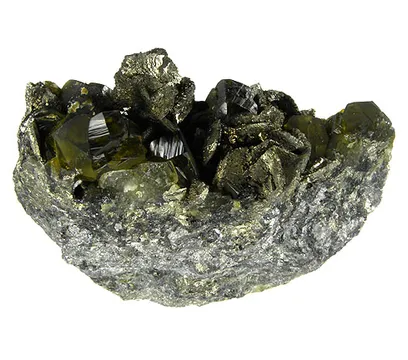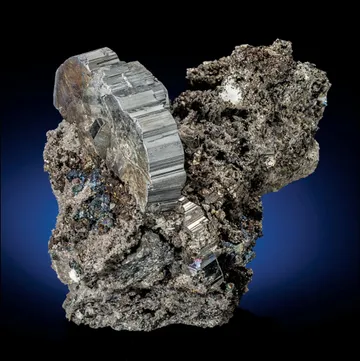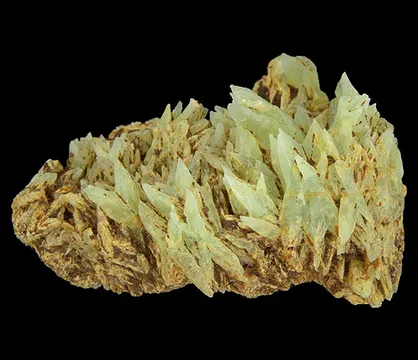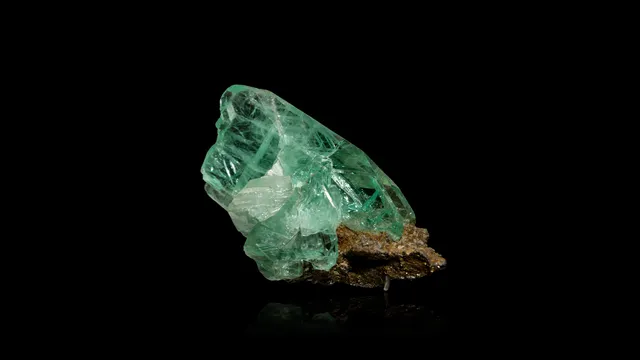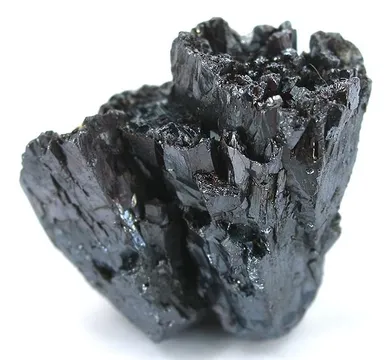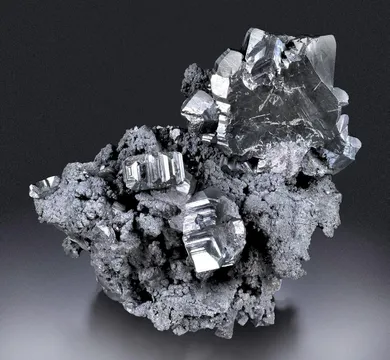
Machacamarca subdistrict, Bolivia - a historic locality for augelite-bearing sulfosalts and phosphates, famous for bournonite cogwheels and augelite on quartz.
Key facts
Machacamarca sits in the high, dry country northeast of Potosí, in the Colavi–Machacamarca mining district of Bolivia’s Eastern Cordillera. To collectors, the name means more than one mine: it is a labeling tradition, a specimen-producing district, and a cluster of old silver-tin workings whose pockets have yielded some of the most memorable Bolivian sulfosalt and phosphate specimens of the modern market. The old Machacamarca mine itself is historically important as the first locality to put recognizable augelite crystals into world collections, while the neighboring Víboras workings have given the district its great metallic showpieces: steel-gray bournonite “cogwheels,” platy twins, and sharp tabular groups on pyrite, quartz, siderite, and sphalerite.
Geologically, the district belongs to Bolivia’s polymetallic tin belt. The mineralized ground is built around Paleozoic marine clastic rocks overlain by Cretaceous continental sandstones and red beds, cut and disturbed by Miocene dacitic intrusions and hydrothermal breccias. In the nearby Silver Sand area, the same regional system is expressed as structurally controlled silver mineralization in brittle La Puerta sandstone, dacitic porphyry, breccia zones, and older manto-style tin-base-metal replacement along favorable horizons. Machacamarca’s classic specimen assemblage reflects that heritage: bournonite, freibergite/tetrahedrite-group minerals, jamesonite, sphalerite, pyrite, quartz, siderite, baryte, cassiterite, and a remarkable phosphate suite including augelite, lazulite, scorzalite, vivianite, ludlamite, and related secondary species recorded from the wider district.
The best specimens from the subdistrict have a distinctly Bolivian look: bright metallic crystals with hard, chiseled faces against granular pyrite or white quartz; colorless to creamy augelite crystals set like glassy tablets on matrix; dark reddish-black sphalerite with pyrite and sulfosalts; and, in the broader Colavi–Machacamarca district, inky-blue scorzalite crystals sprinkled across pale altered matrix. Fine Machacamarca pieces are not merely “Bolivian ore”; they are recognizable cabinet minerals, with the drama of a rugged high-Andean mining camp compressed into sharp, small-scale crystal architecture.
Regional View
Country View
A useful collector’s caution is that “Machacamarca” on a label can mean several different things. It may mean the Machacamarca Mine proper, the Machacamarca subdistrict, or the larger Colavi–Machacamarca mining district. That distinction matters especially for bournonite and scorzalite: many fine bournonites historically called “Machacamarca” are from Víboras, while the well-known blue scorzalite specimens came from Estaño Orcko in the broader district rather than from the Machacamarca Mine itself. The safest modern label preserves the exact mine when known, followed by the district and Potosí Department.
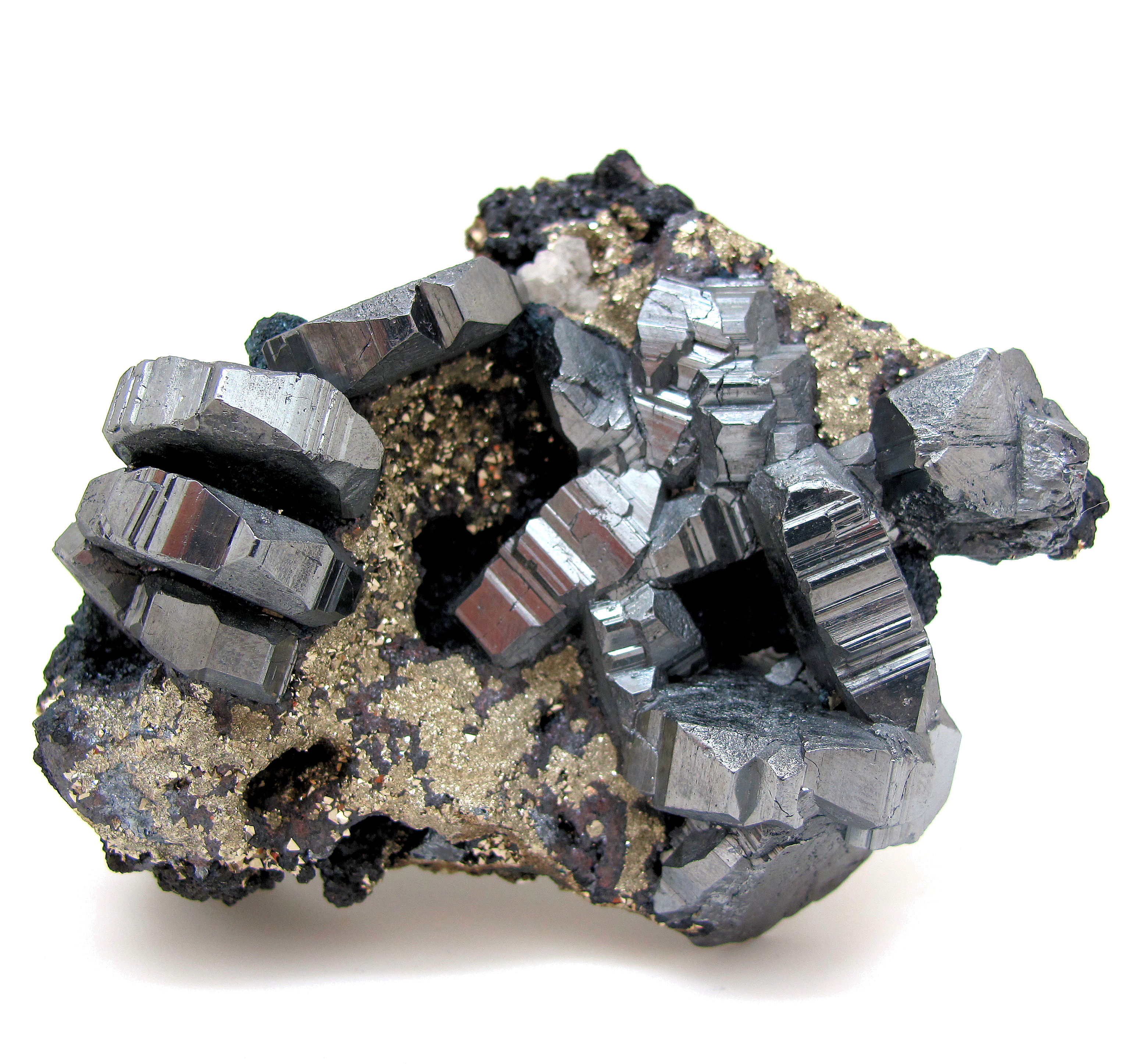
Photo: Wikimedia Commons

Photo: Wikimedia Commons

Photo: Wikimedia Commons
Search for specimens: View all specimens from Machacamarca subdistrict, Bolivia
Machacamarca is in Tacobamba Municipality, Cornelio Saavedra Province, Potosí Department, Bolivia, northeast of Potosí city and south of the village-and-mine cluster around Colavi. The old Machacamarca Mine is recorded near 19°22'18" S, 65°31'28" W, and the surrounding subdistrict is treated in mineralogical references as part of the wider Colavi–Machacamarca mining district. The country is high, cold, and semi-arid, with sparse vegetation, deeply cut drainages, and old workings distributed through rugged sandstone and shale terrain.
The district is a mixed silver-tin-base-metal system within the Bolivian tin belt. Modern technical work in the adjacent Silver Sand property describes a stratigraphic package of intensely folded and faulted Ordovician to Silurian marine clastic rocks unconformably overlain by weakly deformed Lower Cretaceous continental sandstone, siltstone, and mudstone. The Cretaceous sequence includes the lower La Puerta Formation, dominated by brittle sandstone, and the overlying Tarapaya Formation, made up largely of red siltstone and mudstone with minor sandstone. Miocene porphyritic dacite intrusions, including dikes, stocks, and laccolithic bodies, cut the sedimentary sequence; hydrothermal and phreatic breccias are also mapped in the district.
The ore systems are structurally controlled. Silver mineralization occupies faults, fractures, fissures, crackle breccias, sheeted veinlets, stockworks, and open-space fillings in the La Puerta sandstone and dacitic intrusive rocks. In the better-developed sandstone-hosted silver zones, silver-bearing sulfosalts and sulfides fill openings and fracture networks, while oxidation produces limonite, goethite, jarosite, and related staining. Tin-base-metal mineralization is also recorded as manto-style replacement, particularly where reactive calcareous horizons occur near the base of the Tarapaya Formation; cassiterite there is accompanied by pyrite, ankerite, siderite, and baryte. In collector terms, this means the district is not a single-pocket locality but a broad structural-mineralogical system with several mines and generations of mineralization.
The historically important mines and sections tied to the Machacamarca subdistrict include the Machacamarca Mine, Víboras Mine, Angustias veins, Ñañitay Mine, Providencia Mine, Sección Estañífera, and Esperanza mine. The Machacamarca Mine is recorded for silver and tin, and for a specimen suite including augelite, bournonite, sphalerite, pyrite, quartz, siderite, baryte, jamesonite, freibergite/tetrahedrite-group minerals, diaphorite, zinkenite, chlorargyrite, valentinite, vivianite, and secondary lead-antimony minerals. Víboras is especially important for bournonite, with associated pyrite, quartz, sphalerite, siderite, bornite, freibergite-group material, augelite, baryte, arsenopyrite, and tetrahedrite-group minerals appearing in specimen data. Angustias is recorded for acanthite, andorite, bournonite, chalcopyrite, freibergite-group minerals, jamesonite, pyrite, quartz, sphalerite, and zinkenite. Providencia and Sección Estañífera are better known from the literature as tin-bearing baryte-quartz-pyrite-siderite-cassiterite occurrences.
Mining is old. The subdistrict is described as a group of silver and tin mines worked from Spanish colonial times into the modern period. Nearby Silver Sand records point to silver mining from the early to mid-1500s in narrow high-grade veins, with the old Machacamarca silver mine worked through colonial and republican periods until declining silver prices around 1890 shifted local attention toward tin. Tin exploitation in the adjacent Colavi and Canutillos areas continued through the Tin Baron period and up to the 1985 tin price collapse. Modern exploration and development in the area are associated with New Pacific Metals’ Silver Sand project, held through Minera Alcira S.A. and related concessions; the project has brought systematic mapping, sampling, drilling, and resource work back into the old mining landscape, though that work is commercial exploration rather than specimen collecting.
For collectors, the key specimen episodes are more recent than the mines. Machacamarca and Víboras produced important bournonite specimens in the 1990s, 2000s, and later pockets, with documented discoveries around 2000–2012 and additional pockets reported in 2019 and 2020. A “great find” in 2009 supplied sharp metallic bournonite crystals, and a September 2012 Víboras pocket produced handsome matrix pieces with sharp, lustrous gunmetal crystals, including specimens with individual crystals around 29 mm. The famous bournonites range from cogwheel twins to elongated triangular twins and flat untwinned plates. The rarer phosphate finds—especially augelite at Machacamarca and scorzalite at Estaño Orcko in the broader district—are equally important but generally far smaller in crystal size, rewarding magnification, careful lighting, and accurate labels.
Access today should be assumed to be restricted. These are not public collecting sites; they are old and active mining/exploration areas with underground workings, dumps, private or state-controlled mineral rights, and local cooperative activity. Any field visit requires permission from landholders and mineral-right holders, and abandoned adits, stopes, oxidized dumps, and high-altitude weather make casual collecting inappropriate.
Scorzalite sold under the Machacamarca or Colavi–Machacamarca district name is best known from the Estaño Orcko find in the broader district, where collectors first encountered it as blue “lazulite” before analysis showed it to be the iron-dominant lazulite analogue, scorzalite. The specimens are typically pale tan to buff matrix pieces carrying scattered sharp, vitreous, deep inky-blue monoclinic crystals, usually in the 2–5 mm range, with occasional richer plates in miniature to small-cabinet sizes; quartz is the common association noted on dealer and photo records. Good pieces are judged less by overall specimen size than by the number, isolation, luster, and saturated blue color of the tiny crystals—especially crystals that stand proud of the matrix and survive without bruising—because ordinary examples can look like little more than dark-blue flecks in altered rock unless viewed under strong light and magnification.
Sphalerite from the Machacamarca subdistrict is a supporting but very characteristic species, occurring as dark reddish-black to black, semi-lustrous modified dodecahedral or complex crystals with pyrite, quartz, bournonite, freibergite-group minerals, chalcopyrite, jamesonite, and locally augelite. At the Machacamarca Mine, small but attractive association specimens combine reddish-black sphalerite groups only a few millimeters across with colorless gemmy augelite, quartz, and pyrite; at Víboras and related district workings, sphalerite can form sculptural dark matrix for bright cogwheel bournonite or occur with freibergite crystals and pyrite. The most desirable pieces are not large “zinc ore” specimens but balanced associations: sharp, identifiable sphalerite with metallic contrast, clean exposure, and locality-specific partners such as augelite, bournonite, or freibergite, while less interesting pieces are opaque dark aggregates lacking definition or context.
Beyond scorzalite and sphalerite, Machacamarca’s signature minerals are bournonite and augelite. Bournonite from Machacamarca and especially Víboras is world-class for the species, forming lustrous steel-gray cogwheel twins, tabular crystals, elongated triangular twins, and rarer untwinned plates on pyrite, quartz, siderite, and sphalerite; crystals to several centimeters are documented, and individual bournonite crystals to at least 7.2 cm have been reported from the district. Augelite gives the old Machacamarca Mine a special place in mineralogical history because it was the first locality known for well-crystallized augelite; specimens show colorless to creamy, glassy crystals on quartz, pyrite, baryte, limonite-rich matrix, and, rarely, sphalerite. The subdistrict also records acanthite, andorite, arsenopyrite inclusions in augelite, baryte, bindheimite, chalcanthite, chlorargyrite, chalcopyrite, diaphorite, freibergite/tetrahedrite-group minerals, jamesonite, lazulite, malachite reported with uncertainty, oxyplumboroméite, plumbogummite, pyromorphite, quartz, siderite, valentinite, vivianite, zinkenite, and historical “stylotypite,” now regarded with caution because Bolivian material appears to represent Ag-Fe-rich tetrahedrite pseudomorphs after bournonite rather than a reliably distinct species occurrence.
The first rule with Machacamarca specimens is to read the label critically. “Machacamarca” may mean the old Machacamarca Mine, the Machacamarca subdistrict, or the larger Colavi–Machacamarca district. Fine bournonite specimens labeled simply Machacamarca, particularly those mined in the 1990s and 2000s, are often from Víboras rather than the Machacamarca Mine proper. Scorzalite attributed broadly to Machacamarca is usually district material from Estaño Orcko, not from the Machacamarca Mine. The most desirable labels preserve the exact mine—Víboras, Machacamarca Mine, Ñañitay, Angustias, Estaño Orcko, Tomokoni, Canutillos, or Colavi—rather than collapsing everything into one famous locality name.
There are also documented mislabeling problems. Recent Bolivian magnetite specimens marketed as coming from this district have been called wrongly labeled in locality databases; the true source is identified as the San Calixto prospect on Cerro Huanaquino, roughly north of Potosí city. The Esperanza mine name has also appeared erroneously on some labels for amethyst and calcite crystals from Bombori village; Esperanza is a small silver mine and is not the source of those amethyst-calcite specimens. These mistakes matter because “Machacamarca” carries real specimen value, and a vague or incorrect label can turn a good mineral into a problem piece for a serious cabinet.
Condition issues are typical of brittle metallic vein material. Bournonite commonly shows contact points, chipped edges, bruised cogwheel rims, iron staining, or areas where crystals detached from tight vugs; evaluate the front and the sides, because many otherwise dramatic specimens are contacted on the back. Pyrite-rich matrix can shed small grains, and old oxidized material may carry limonite or sulfate crusts. Sphalerite is generally stable but easily loses its visual appeal when faces are abraded or coated. Augelite and scorzalite reward magnification, but the best crystals are small and exposed; even minor rubbing can reduce a specimen from excellent to merely representative.
Avoid over-cleaning. The district’s aesthetics often depend on natural contrast—gunmetal bournonite on pyrite, dark sphalerite against clear augelite, blue scorzalite on pale matrix, or silver-gray sulfosalts against rusty sandstone. Acids and aggressive mechanical cleaning can remove useful oxidation context, undercut fragile matrix, dull pyrite, or loosen small phosphate crystals. Hydrated and soluble secondary species such as chalcanthite, vivianite, and related alteration minerals should be kept dry, cool, and out of prolonged direct sunlight; vivianite in particular is light-sensitive and can darken over time.
Market availability is uneven. Bournonite from Machacamarca/Víboras appears periodically because several pockets reached the market over the last few decades, but truly sharp, aesthetic, damage-free matrix specimens with isolated cogwheels are scarce and increasingly competitive. Augelite from the Machacamarca Mine is much less common and best appreciated as a classic phosphate occurrence rather than as a large-display species. Scorzalite from Estaño Orcko was a limited find, and fine crystallized examples are now mostly recycled from older collections. Sphalerite associations remain obtainable but the best locality-specific combinations—sphalerite with augelite, bournonite on sphalerite, or sphalerite with freibergite—are much harder than ordinary dark sphalerite.
The most enduring Machacamarca story begins not with bournonite but with a quiet phosphate that many collectors would walk past if it lacked a label. In the late nineteenth century, augelite was still a mineral of almost ghostly rarity: known from Sweden and Bolivia, and easily confused with baryte. L. J. Spencer, working at the British Museum, wrote in 1898 that augelite had only recently been established as a definite species and that its known occurrences were few. Machacamarca’s importance is that it supplied the first well-formed crystals—small, pale, glassy tablets and prisms in old Bolivian ore—giving mineralogists something better than massive or poor material to describe and compare. For today’s collector, an old Machacamarca augelite is not just a rare aluminum phosphate; it is a specimen from the locality that made augelite visually collectible.
The bournonite chapter is louder, heavier, and more modern. In the 2000s and early 2010s, Machacamarca and Víboras specimens began appearing with a quality that startled sulfosalt collectors: sharp, steel-gray crystals with the stepped “cogwheel” habit, some on sparkling pyrite, others perched on quartz or siderite. A district note in a 2024 mineral-club newsletter describes the variety of forms—ordinary cogwheels, elongated triangular twins, and flat untwinned floaters—and records individual crystals to at least 7.2 cm. The same account mentions a doorstop-sized Machacamarca specimen weighing 9 kg, a museum-grade mass carrying perfect crystals. That is an extraordinary scale for a species many collectors usually encounter as small, edge-worn metallic blades.
Several named find periods have become part of the market memory. A 2009 Machacamarca find supplied sharp tabular metallic crystals on siderite and pyrite; dealer descriptions from the time connected some pieces to the excitement around a Mineralogical Record cover specimen. A September 2012 Víboras pocket produced lustrous gunmetal bournonite groups, including a photographed 95 x 74 x 46 mm specimen weighing 335 g, with about a dozen well-defined crystals, the widest 29 mm across. Later pockets in 2019 and 2020 kept the locality alive, but not predictably so. Machacamarca is one of those Andean districts where a pocket can suddenly put world-class material into circulation and then go quiet for years.
The scorzalite story is a classic tale of a rare mineral hiding behind a more familiar name. When the Estaño Orcko blue phosphate specimens first emerged, they were reportedly thought to be lazulite, a reasonable field call: the crystals were dark blue, small, and perched on pale matrix. Analysis by Brian Kosnar showed that the material was actually scorzalite, the iron-rich analogue. The revelation mattered because crystallized scorzalite is far rarer than lazulite in the specimen market. The find produced matrix pieces with tiny but sharp inky-blue crystals, usually only a few millimeters across; under magnification the best examples have a saturated color and glassy luster that explain why dealers quickly described them as among the best scorzalites to reach collectors in years.
The broader Colavi–Machacamarca district also supplied one of Bolivia’s memorable vivianite episodes. In June 2003, a trio of miner brothers from Colavi were hiking near the Tomokoni claim when they noticed a blue streak in red sandstone. Within hours, they had opened fractures and cavities containing green vivianite crystals; within days, local Bolivian mineral dealers were buying the production. Tomokoni is not the Machacamarca Mine, and careful labels should keep it separate, but the story belongs to the same high district of old silver and tin workings where phosphate pockets could still surprise miners centuries after the first colonial silver extraction.