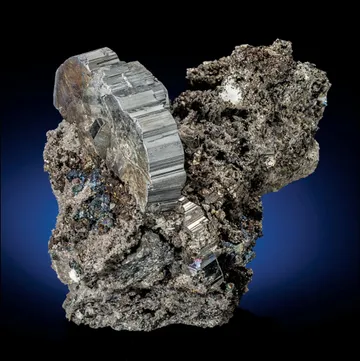
Siete Suyos mine, Bolivia - historic tin-belt locality known for gemmy greenish-brown siderite on pyrite and rich polymetallic textures prized by collectors.
Key facts
Siete Suyos is one of those Bolivian localities whose best specimens arrived quietly and then refused to behave like ordinary mine byproducts. Geologically it belongs to the Ánimas–Chocaya–Siete Suyos, or Gran Chocaya, polymetallic vein district of southern Potosí: a Miocene volcanic-dome-hosted tin–base-metal–silver system in the Bolivian tin belt, worked in steep NE–SW veins cutting both volcanic rocks and older metamorphosed sedimentary basement. In the ore microscope it is a classic Bolivian-type assemblage of cassiterite, pyrite, sphalerite, stannite-group minerals, galena, silver–lead–tin sulfosalts, quartz and siderite; in the specimen cabinet it is known above all for a small, memorable production of gemmy greenish-brown siderite perched on metallic pyrite, commonly accompanied by tiny gray stannite.
The locality matters because it sits at the intersection of several collector worlds. To the Bolivian-specialist it is part of the historic Chocaya–Ánimas camp, a district already recognized by Ahlfeld and Schneider-Scherbina as the southernmost large Bolivian tin deposit. To the ore-mineral collector it is a richly zoned indium-bearing polymetallic system, with modern work documenting stannite, sphalerite and late sulfosalt textures vein by vein. To the aesthetic collector it is a surprisingly refined siderite locality: the best pieces show sharp, translucent to gemmy, olive- to greenish-brown rhombs or compressed rhombohedral/hexagonal-looking crystals on lustrous pyrite, with stannite as the rare-species accent rather than the visual centerpiece.
Regional View
Country View
The name is complicated in the way many old Bolivian camps are complicated. Siete Suyos, Ánimas, Oploca and Chocaya are not isolated mineralogical islands; they worked parts of the same vein system, and in some cases the same named veins cross administrative mine boundaries. That is why older labels, dealer descriptions and even some scientific usages may blur Siete Suyos into “Ánimas,” “Chocaya,” “Oploca,” or the broader “Chocaya–Ánimas” district. For specimen purposes, the sharpest Siete Suyos identity belongs to the limited siderite–pyrite–stannite find that entered the market around 2009–2010 and was later celebrated in the collector literature.

Photo: Rob Lavinsky, iRocks.com / Wikimedia Commons
Search for specimens: View all specimens from Siete Suyos mine, Bolivia
Siete Suyos is in the Chocaya–Ánimas mining district, Atocha Municipality, Sud Chichas Province, Potosí Department, Bolivia. The mine is part of the larger Ánimas–Chocaya–Siete Suyos vein field, which extends for more than 5 km from Siete Suyos in the northeast toward Chocaya in the southwest. The system is hosted by a Miocene volcanic dome complex and underlying Ordovician metamorphosed sedimentary rocks; the veins are generally subvertical, NE–SW striking, and filled by banded to massive hydrothermal ore. Reported K-Ar ages in the district include about 13.8 Ma for biotite from unaltered volcanic rocks and about 12.5 Ma for sericitized rock, placing the hydrothermal system firmly in the Miocene history of the Bolivian tin belt.
The principal Siete Suyos veins recorded in the modern indium study are Esperanza, San Patricio, Salvadora, Arturo, Diez, Nueva, Colorada and Inca 1–7. The mine was worked from level 0 at about 4202 m above sea level down to level 28 at about 3564 m. Colorada and the Inca veins continue into the neighboring Ánimas mine, which is one reason that specimen labels and locality attributions must be handled carefully. In the Siete Suyos part of the system, Sugaki and co-workers described tin-rich veins such as Colorada, Inca and Nueva as largely composed of cassiterite and pyrite, while Esperanza, Salvadora, Arturo and Diez were described as veins dominated by pyrite, sphalerite, stannite and galena, with lesser cassiterite.
The district shows the kind of metal zoning that makes Bolivian polymetallic deposits so rewarding to study but treacherous to simplify. The tin-rich core is centered on the Siete Suyos side, especially the Colorada, Inca and Nueva veins and their continuation into Ánimas. Around that is a more zinc–silver-rich intermediate zone centered near Ánimas, and farther outward a Chocaya-centered zone richer in silver, zinc and lead. On the specimen scale, the same evolution is reflected in a three-stage paragenesis: an early low-sulfidation cassiterite–pyrrhotite–arsenopyrite–iron-rich sphalerite stage; a second pyrite–marcasite–sphalerite–stannite stage that carries much of the indium; and a late galena plus Ag-Pb-Sn sulfosalt stage.
Historically, the district was discovered around 1800, and its large-scale development is bound up with two great names in Bolivian mining: Avelino Aramayo and Simón I. Patiño. Ánimas was exploited by the Aramayo Mines Company from 1870, while Chocaya, or Chocaya La Vieja, was worked by the Minera y Agrícola Oploca Company from 1884; that company became part of the Patiño group in 1926. In the older economic literature, the Oploca–Siete Suyos mine is singled out for having worked what was described as the richest tin vein in Bolivia, with nearly 6 percent tin. Tin was the main commodity of the district until the 1950s, after which lead and silver became more important products.
Nationalization in 1952 brought the mines into COMIBOL, and Siete Suyos later formed part of the Empresa Minera Quechisla complex of southern Potosí. The old productive geography included mines and plants spread through Ánimas, Chocaya, Siete Suyos, Tatasi, San Vicente, Chorolque, Santa Ana and Telamayu. In 1985, after Decreto Supremo 21060 and the collapse of much state mining employment, Siete Suyos was among the camps deeply affected by “relocalización.” Local accounts describe nearly all salaried workers being dismissed or relocated, machinery being moved, and the educational, commercial, recreational and residential infrastructure of the camp being largely abandoned. Cooperative mining followed: local sources record the founding of Cooperativa Minera Siete Suyos on 10 October 1987 and its later consolidation in 1995 as Cooperativa Minera 8 de Abril Choroma Siete Suyos Ltda. More recent official consultation records list Cooperativa Minera Siete Suyos Ltda. for the Santa Ana Siete Suyos area, with zinc, lead and silver as the resources to be exploited.
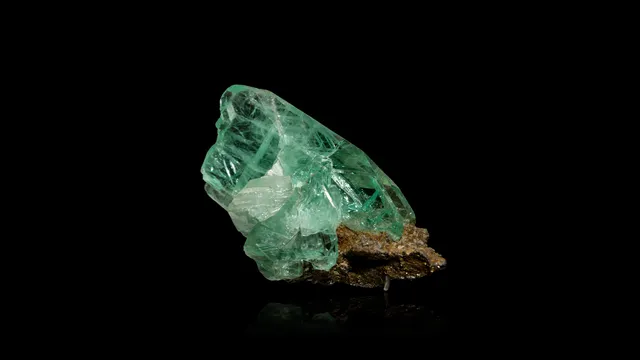
For collectors, the important modern find was a limited run of siderite–pyrite–stannite specimens that appeared on the market in the late 2000s. Dealer and Wikimedia descriptions consistently describe the pieces as directly obtained from the miner who collected them, an important detail because the locality sits in a shared vein system where mine-name ambiguity is otherwise common. The specimens range mostly from miniature to small-cabinet size, with recorded pieces around 2.9 x 2.6 x 1.7 cm, 4–6 cm class miniatures, and small cabinets up to about 9.3 x 5.6 x 3.6 cm. The visual formula is distinctive: sharp gemmy greenish-brown siderite crystals, generally up to about 0.7–1.2 cm and in one described crystal group up to 2.7 cm across, set on lustrous pyrite that commonly represents pseudomorphs after earlier siderite; minor gray stannite appears as the locality-signature accessory.
Collecting access today should not be treated as casual dump collecting. This is an active or intermittently active Bolivian mining area with cooperative operators, mine workings, old infrastructure, high-altitude terrain and real safety and permission issues. Good specimens have come through miners and the specimen trade, not through open public collecting comparable to a recreational locality. Serious buyers should prioritize pieces with old dealer labels, miner-obtained provenance, analytical confirmation where stannite is emphasized, and locality wording that makes clear whether the specimen is being sold as Siete Suyos proper or as the broader Chocaya–Ánimas district.
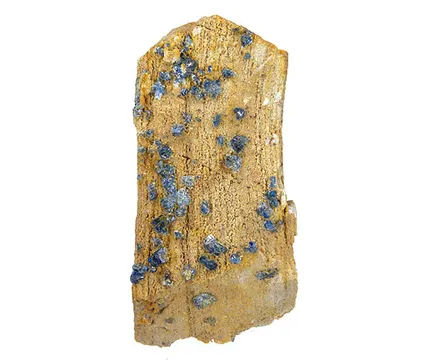
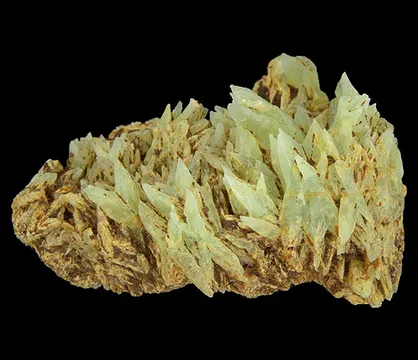
Siete Suyos siderite is the locality’s aesthetic calling card: sharp, translucent to gemmy, greenish-brown rhombic to compressed rhombohedral crystals, usually in the millimeter to roughly 1 cm range, perched on lustrous pyrite and sprinkled with tiny gray stannite. Published and dealer-described specimens from the limited find include crystals up to about 0.7, 0.8, 1.0 and 1.2 cm, with one small-cabinet specimen described as having a siderite crystal group 2.7 cm across. The best pieces are not simply “siderite from Bolivia”; they combine clean crystal definition, glassy to pearly luster, fresh greenish-brown color, open display on metallic pyrite, and the rare stannite association. Ordinary examples are darker, more crowded, or less sharply crystallized, while top pieces show the pleasing contrast of gemmy carbonate on brassy pseudomorphic pyrite, sometimes with a second generation of siderite inside hollow pyrite shells.
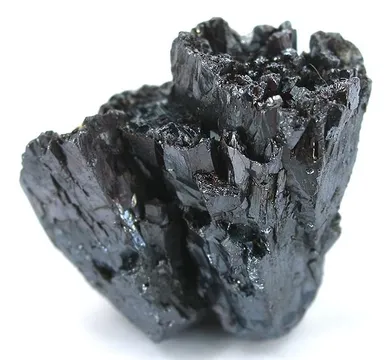
Pyrite at Siete Suyos is both an ore mineral and the architectural base of the collectible specimens. In the ore studies it commonly appears as anhedral, corroded grains with secondary porosity, pseudo-hexagonal outlines, and replacements or infillings by quartz, sphalerite, stannite-group minerals and sulfosalts; in the Arturo vein, pseudo-hexagonal pyrite forms are specifically noted, and in the Diez vein pyrite with arsenopyrite gives way inward to massive sphalerite with stannite-lined porosity. On hand specimens, the most desirable pyrite is lustrous and metallic, forming flattened pseudomorphs after compressed siderite rhombohedra, which gives the pieces their unusual sculptural look. The finest pyrite-bearing examples are those where the pyrite is bright, structurally interesting, and clearly supports later gemmy siderite rather than merely forming a dull sulfide matrix.
Siete Suyos stannite is usually a collector’s bonus mineral rather than the large display species: gray to dark metallic crystals or aggregates, commonly minor on siderite–pyrite specimens, but mineralogically central to the deposit. Sugaki and Kitakaze documented stannite-kesterite system minerals from Siete Suyos as granular crystals and massive or irregular aggregates in sulfide veins, closely associated with pyrite, sphalerite, arsenopyrite, chalcopyrite, cassiterite and quartz; in quartz-pyrite veins at Avicaya and Siete Suyos, stannite appears as patch-like massive aggregates of granular crystals about 0.05–1.0 mm. Later indium work on the Arturo, Chorro and Diez veins shows stannite replacing or filling porosity in sphalerite, cassiterite and pyrite-rich assemblages, with stage-2 stannite reaching high indium contents. Good Siete Suyos stannite specimens are therefore judged less by large crystal size than by verified identity, clean association with siderite and pyrite, and a matrix that tells the tin-polymetallic story of the mine.
Beyond the three display-associated species, Siete Suyos has a substantial ore-mineral list for a relatively small collector locality: arsenopyrite, boulangerite, bournonite, cassiterite, chalcopyrite, diaphorite, fizélyite, franckeite, freibergite-subgroup minerals, galena, hocartite, jamesonite, miargyrite, native silver, owyheeite, pyrargyrite, quartz, ramdohrite, sphalerite, teallite and tetrahedrite-subgroup minerals are all documented. Hocartite is especially noteworthy from the Salvadora vein, where Sugaki and Kitakaze published EPMA data and X-ray powder data for Siete Suyos material, describing granular hocartite in narrow franckeite-rich sulfosalt bands or veinlets at the central portion of pyritic sulfide veins. At the broader Ánimas–Chocaya level, type-locality interest rises sharply with species such as oscarkempffite and clino-oscarkempffite from the Colorada vein at Ánimas, but those should not be casually transferred to Siete Suyos labels unless a specimen is explicitly documented from the relevant mine and level.
The principal authenticity issue for Siete Suyos is locality precision, not artificial enhancement. No widely cited treatment or fake-siderite problem is associated with the locality, but mislabelling is built into the mining geography: Siete Suyos, Ánimas, Oploca and Chocaya share a vein system, and specimens have circulated under all of those names as well as the broader Chocaya–Ánimas designation. A specimen labelled simply “Chocaya” or “Ánimas” should not be upgraded to Siete Suyos because it resembles the famous material; conversely, authentic Siete Suyos pieces may be defensibly labelled with district context if the historical tag is broader. The strongest provenance is miner-obtained material from the known limited siderite–pyrite–stannite find, old labels from recognized dealers, or specimens matching the documented morphology with a consistent ownership trail.
Condition matters. Siderite has perfect rhombohedral cleavage and is softer than quartz, so bruised edges, cleaved crystal tips and scuffed luster are common enough to deserve inspection under good light. The pyrite base can be sharp-edged and metallic but may also be hollow where it pseudomorphed earlier siderite; avoid unnecessary pressure when mounting or trimming. Stannite is commonly present as small gray crystals or micro-aggregates, and visual identification alone is not ideal when value is tied to the species. Analytical confirmation is a plus, especially on pieces marketed as stannite-rich or as rare-sulfide specimens rather than primarily as siderite.
The best Siete Suyos pieces remain scarce. The known collector-quality production was repeatedly described as limited, and the locality never became a broad, continuous source of cabinet siderite. Most available specimens are miniatures and small cabinets with siderite crystals under about 1 cm, though a few larger groups exist. Expect a premium for sharp, gemmy, greenish-brown siderite standing proud on bright pyrite, especially where the pyrite shows clear pseudomorphic form and the stannite is visible. For market comparison, do not price them as generic Bolivian siderite; the locality’s value lies in the combination of rarity, aesthetics, and a distinctive siderite–pyrite–stannite association.
The specimen story begins with a collector’s kind of surprise: a mine famous in the economic and political geography of southern Potosí, yet nearly absent from the mineral-show memory of most collectors, suddenly yielding small elegant pieces that looked nothing like routine sulfide ore. Early descriptions of the find emphasize that the specimens were obtained directly from the miner who collected them. That mattered, because Siete Suyos sits in a web of old mine names where “Ánimas,” “Chocaya,” “Oploca,” and “Siete Suyos” can all feel uncomfortably close on a label. One described 5.8 x 4.4 x 3.6 cm specimen carried the essential visual drama: lustrous pyrite, possibly a pseudomorph after siderite, carrying sharp gemmy greenish-brown siderite, with the largest siderite group measuring 2.7 cm across. Other specimens were smaller but crisp—2.9 x 2.6 x 1.7 cm, 4.1 x 3.5 x 3.2 cm, 5.2 x 2.7 x 1.3 cm—and each repeated the same quiet miracle of gemmy carbonate on metallic sulfide.
Collectors often talk about Siete Suyos as if the mine were a locality puzzle, but for the people who lived there it was a complete world. A 2017 Bolivian remembrance describes the camp in the COMIBOL years as a far southern place of dirt streets, cold that could “freeze the soul,” and rivers of copajira—the acid mine drainage so familiar in Andean mining country. The school, Daniel Campos N° 4, stood among hundreds of modest workers’ houses. The sports fields were the social media of the town before phones; the little plaza El Castillo was where young people talked, flirted, argued politics, and tried not to be overheard by Father José, the parish priest. Then came 17 July 1980. After the coup d’état, green-beret soldiers entered the camp with machine guns. The former union offices became the military command post, and the night sounds of the camp changed: the same account remembers the dog Nerón, owned by doña Serafina, howling when it heard cries of torture from the building.
The labor history runs deeper. On 25 August 1940, a strike broke out at Siete Suyos after the arrest of a leader, and official narratives accused the miners of depredation and sabotage. In the early 1940s, the Oploca administration moved against the Sindicato Obrero de Siete Suyos, removing 12 principal workers labelled agitators and demanding guarantees of good behavior from 18 others. The camp was not an isolated grievance; it was part of the rising political force of the Bolivian mining proletariat, the same world that would produce the Pulacayo Thesis and, after 1952, nationalization.
One of the most charged episodes came in late 1946. The Compañía Agrícola y Minera Oploca de Bolivia, Chilean-capitalized and tied to Simón I. Patiño’s interests, became a test case for the new militant language coming out of Pulacayo. On 7 November, a commission from the miners’ congress arrived at Siete Suyos. Assemblies filled with confidence. On 10 November, Mario Torres Calleja of the FSTMB spoke in the theater of the Santa Ana mill and declared that the Pulacayo congress had approved “sentenciar el fin de la rosca”—to sentence the ruling mining clique to its end. Another speaker from Telamayu warned that they were “en pie de una guerra civil.” The Siete Suyos union disarmed the camp police, and an “Ejército Proletario” was formed under Abelardo Melgar Rivera. By early December, the company announced its intention to close the mine from 4 February 1947, turning an orebody into a national confrontation over ownership, labor, and power.
The 1985 collapse of state mining wrote a different sort of story. In Siete Suyos, accounts of relocalización describe a nearly emptied productive camp: only two watchmen left to care for machinery and infrastructure, equipment moved away, and the school, commerce, sports facilities, recreation spaces and executive housing abandoned. Out of that abandonment came cooperative mining. Local histories describe miners from Tasna, Chorolque, Cotani, 8 de Abril, Choroma and Siete Suyos trying to take possession of the workings in 1990; the first attempt ran into opposition from regular Ánimas workers, who came down with their children at the front, preventing violence. After further dealings with COMIBOL, the cooperative occupation went ahead, and workers first attacked the old waste before entering the mine itself. It is a fittingly Bolivian ending: after barons, nationalization, unions, dictatorship and collapse, the mountain was not abandoned by geology or by people.