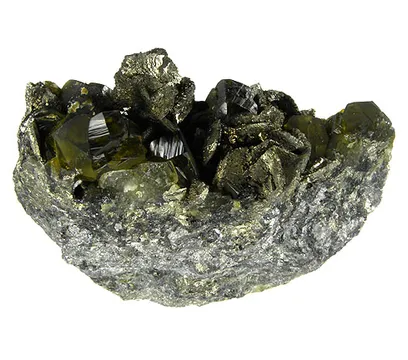
Machacamarca mining district, Bolivia - premier source of bournonite, with steel-gray cogwheels on quartz and pyrite, prized for locality and rarity.
Key facts
Machacamarca is one of the few Bolivian localities whose name means two rather different things to collectors. To the mining geologist, it is part of the Colavi–Machacamarca silver-tin district northeast of Potosí, a brittle sandstone and intrusive-hosted hydrothermal system in the southern part of Bolivia’s polymetallic tin belt. To the mineral collector, it is the modern source of some of the most dramatic bournonite ever recovered: steel-gray to silver-black cogwheels, blocky tabular crystals, and rarer arrowhead-like twins, commonly perched on quartz, pyrite, siderite, sphalerite, or tetrahedrite-group minerals. The best pieces have the unmistakable Bolivian look: heavy metallic crystals with sharp ribbing and crisp edges, glittering against drusy quartz or octahedral pyrite, often with a slightly architectural, almost engineered balance.
Regional View
Country View
The district is historically tangled because “Machacamarca” has been used on specimen labels for the district, the Machacamarca Mine proper, and nearby producing mines and sections such as Víboras. That ambiguity is not a trivial label problem: many of the famous late-20th- and early-21st-century bournonites sold simply as Machacamarca are now understood to be from the Víboras Mine or Víboras vein/section rather than the old Machacamarca Mine proper. For collectors, the safest and most honest label is often “Machacamarca mining district” unless the mine of origin is supported by a contemporary dealer, collector, or miner record.
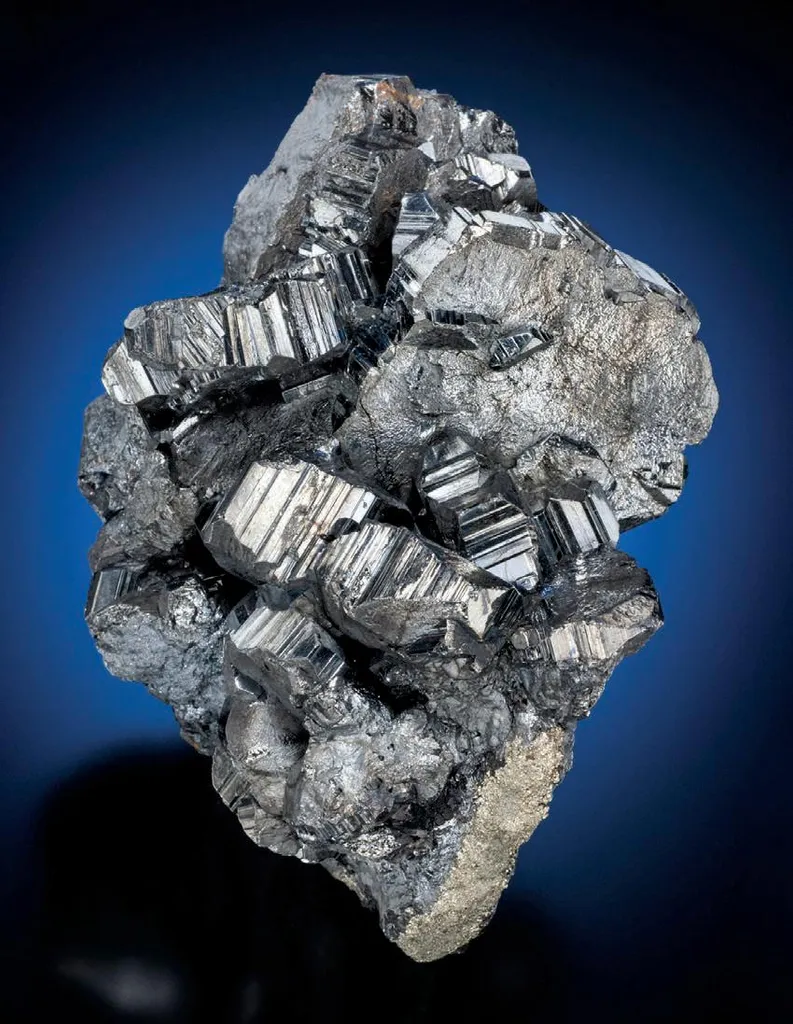
Photo: EarthWonders
Machacamarca’s scientific interest predates the 2000s bournonite rush by more than a century. British Museum material examined in the 1890s showed small augelite crystals with bournonite, octahedral pyrite, quartz, zinkenite, tetrahedrite, argentiferous galena, chalcopyrite, sphalerite, and alteration products. Later locality lists and modern collecting have expanded the district into a compact but exceptionally varied suite of Ag-Pb-Cu-Sb-Sn-Bi-Zn sulfides, sulfosalts, phosphates, and oxidation minerals. The district also includes the Colavi Mine, taken as the type locality of bismite, Bi2O3, giving this collector’s locality a foot in both showpiece mineralogy and formal species history.
Search for specimens: View all specimens from Machacamarca mining district, Bolivia
Machacamarca lies in Potosí Department, in the Tacobamba–Colavi area northeast of the city of Potosí and not far, in regional terms, from Cerro Rico. The broader district is often called the Colavi mining district or Colavi–Machacamarca district. Modern exploration literature for the adjacent Silver Sand area places it in the Eastern Cordillera at about 4,050–4,070 m elevation, within the southern section of Bolivia’s polymetallic tin belt. Access to the modern Silver Sand property is described from Potosí by a combination of paved highway and all-season gravel mining road, a useful reminder that these are high, cold, semi-arid Andean mining lands rather than casual collecting ground.
The geology that matters for collectors is a combination of brittle sedimentary host rocks and hydrothermal fracture systems. Modern Silver Sand descriptions record Cretaceous sedimentary units, especially the La Puerta Formation sandstones overlain by Tarapaya siltstones and mudstones, resting unconformably on strongly folded Paleozoic marine sedimentary rocks. Numerous small Miocene subvolcanic dacitic porphyry intrusions cut both the Cretaceous and Paleozoic sequences. Silver mineralization is hosted in faults, fractures, fissures, crackle breccias, sheeted veins, stockworks, and veinlets, with open spaces filled by silver-bearing sulfosalts and sulfides. That brittle sandstone setting is important because it helps explain why so many good specimens are crystals in cavities or open fractures rather than massive ore.
Four mineralization styles are recognized in the modern Silver Sand project area: sandstone-hosted silver mineralization, dacitic porphyry-hosted silver mineralization, hydrothermal breccia-hosted silver mineralization, and manto-type tin and base-metal mineralization. The first three are interpreted as epithermal products of late Cenozoic deformation in the Eastern Cordillera, comparable in broad style to Bolivian polymetallic vein systems. The manto tin-base-metal style is described as a metasomatic replacement system associated with an earlier mesothermal environment. Older geological summaries of the Colavi–Machacamarca district also emphasize Silurian and Devonian formations, intrusive relations, structure, and tin, silver, and tungsten mineralization, showing that the district has long been viewed as more than a single silver occurrence.
Mining history in the area is deep. Modern company reports describe Silver Sand as among Bolivia’s earliest mineral discoveries, with silver worked by Spanish colonial miners from the early 16th century through the 19th century. The historic Machacamarca silver mine was worked until the silver price decline around 1890; afterward, activity in the adjacent Colavi and Canutillos mines shifted toward tin, especially during Bolivia’s Tin Baron era and up to the collapse of tin prices in 1985. Historical records for production are poor, but the landscape of small workings, dumps, abandoned miners’ villages, and artisanal underground openings makes clear that the district was repeatedly prospected and mined over centuries.
For collectors, production is associated not only with the old Machacamarca Mine but with nearby sublocalities including Víboras, Infiernillos, Angustias, Ñañitay, Colavi, Estaño Orcko, and later exploration areas such as Silver Sand and Jisas. The best bournonite specimens appear to have come largely from the Machacamarca and Víboras mines, with some material reported from Infiernillos and other nearby workings. The “Machacamarca” label on a fine cogwheel should therefore be read as a district label unless documentation narrows it further.
Specimen production surged in the early 2000s, when the famous “Bournonite Boom” brought out high-quality tabular and cogwheel crystals. Important finds are recorded from 2001, 2003, 2008, 2009, 2012, and later pockets in 2019 and 2020. The 2001 material includes lustrous tabular crystals on quartz and pyrite matrix; the 2008 material includes a celebrated group of rare tapered arrowhead-like crystals; and later finds continued to supply large, well-formed crystals, sometimes with second-generation bournonite coatings or unidentified gray metallic sulfide/sulfosalt coatings.
Collecting access today should be treated as closed unless arranged through the legal mine or surface-rights holders. This is an active and historically mined district, not a public collecting site. Modern mineral tenure in Bolivia is administered through state authorities and mining contracts, and parts of the nearby district are controlled or explored under corporate or state-linked agreements. Most collector specimens reach the market through miners, Bolivian mineral dealers, and international dealers; field collecting without permission is unsafe, legally risky, and inappropriate.
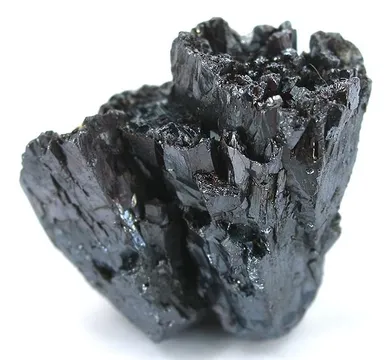
Bournonite is the signature mineral of Machacamarca, and the district’s best examples are among the great modern representatives of PbCuSbS3: metallic silvery gray to steel-black crystals in cogwheel twins, thick square-tabular forms, platy clusters, elongated triangular twins, rarer flat floaters, and very uncommon tapered “arrowhead” forms. Documented individual crystals reach at least several centimeters; published and dealer records mention cogwheels to about 5–6 cm, individual crystals to at least 7.2 cm, and exceptional large crystals reported up to around 10 cm. The finest pieces are not merely large; they are sharp, lustrous, undamaged, and three-dimensional, ideally positioned on sparkling quartz, bright octahedral pyrite, siderite, sphalerite, or tetrahedrite-group minerals. Ordinary Machacamarca bournonite tends to be dull, iron-stained, contacted, or visually crowded; the best pieces show crisp ribbing, clean metallic luster, balanced matrix, and a believable district label that acknowledges the common Víboras/Machacamarca ambiguity.
Pyrite at Machacamarca is usually a supporting but highly important aesthetic mineral, most familiar as bright octahedra and small metallic crystals sprinkled through quartzose matrix beneath bournonite. Classic British Museum descriptions noted symmetrically developed octahedra, commonly bright, though some crystals carry a thin dull black coating; at least one larger crystal was described as an icositetrahedron with small octahedral faces. On modern collector pieces pyrite provides the glittering granular-to-octahedral base that sets off the darker, ribbed bournonite, and it is one reason the best cabinet specimens photograph so well. Standalone pyrite is much less characteristic of the district than pyrite-associated bournonite, so pyrite pieces with sharp octahedra, clean quartz, and undamaged bournonite associations are far more desirable than massive or sulfide-coated matrix fragments.
Other documented Machacamarca district minerals include acanthite, andorite, arsenopyrite, augelite, baryte, bindheimite, bismite, bismuthinite, boulangerite, cassiterite, chalcanthite, chlorargyrite, cosalite, diaphorite, freibergite-group minerals, hocartite, jamesonite, lazulite, ludlamite, marcasite, metatorbernite, metavivianite, miargyrite, native bismuth, native silver, oxyplumboroméite, phosphophyllite, plagionite, plumbogummite, pyrargyrite, pyromorphite, pyrrhotite, quartz, scorzalite, semseyite, siderite, sphalerite, stannite, staročeskéite, tetrahedrite-(Fe), valentinite, vivianite, wulfenite, wurtzite, and zinkenite. Bismite from the Colavi Mine is the district’s principal type-locality connection. “Stylotypite” from Machacamarca is an important cautionary name: material so labeled is now treated as questionable or discredited, commonly interpreted as Ag-Fe-rich tetrahedrite-group material or tetrahedrite pseudomorphs after bournonite rather than a secure standalone species.
Machacamarca bournonite should be bought with the label in mind. “Machacamarca Mine,” “Machacamarca district,” “Víboras Mine,” “Víboras vein,” and “near Colavi” have all circulated on labels, sometimes for the same style of material. Because many specimens historically labeled Machacamarca proper are now believed to be from Víboras, a conservative district-level label is preferable unless there is firm provenance. This is not a locality where a vague old label automatically means fraud; it often reflects the way Bolivian miners, exporters, and dealers used the district name.
The main authenticity concern is misidentification rather than sophisticated faking. Bournonite can be confused on casual inspection with tetrahedrite-group minerals, freibergite, other dark sulfosalts, and the old “stylotypite” label. True bournonite should show the appropriate tabular or cogwheel morphology, metallic gray color, high density, and characteristic striated faces; important pieces should be analyzed or at least supported by expert provenance when the habit is unusual. Specimens sold as “stylotypite after bournonite” or “tetrahedrite after bournonite” require especially careful language, because the historical species name is problematic and the actual material may be tetrahedrite-group replacement preserving bournonite form.
Condition is critical. Bournonite is relatively soft and brittle, and the ribbed tabular edges chip easily. Edge nicks, bruised corners, contacted backs, broken wheels, and black or brown alteration coatings are common. Some Machacamarca crystals are naturally dull or iron-stained; others are partly coated by later sulfide or sulfosalt growth. A coating is not automatically damage—it may define a particular pocket—but it should be described accurately and should not be mistaken for pristine luster. Pyrite and sulfide-rich matrix can shed grains or stain packing material; specimens should be handled over a padded surface and kept dry.
The district is not known as a fluorescence locality for the bournonite-pyrite suite. More delicate phosphate material such as vivianite or metavivianite should be protected from strong light, heat, and dry display conditions; vivianite in particular can darken as Fe2+ oxidizes. Any specimens containing metatorbernite should be treated with normal radioactive-mineral precautions: minimize handling, avoid dust, wash hands after contact, and store away from prolonged close personal exposure.
Market availability fluctuates. Small to medium bournonite specimens from Machacamarca appear regularly enough that the locality is accessible to determined collectors, but fine pieces are genuinely scarce. The premium is paid for sharp, lustrous, damage-free crystals over about 2–3 cm, especially on quartz and pyrite or in well-balanced cabinet arrangements. Large cabinet pieces, historic early-2000s specimens, cover-quality examples, and unusual morphologies such as the 2008 arrowhead habit command a much stronger collector response than ordinary dull cogwheels or contacted clusters.
The first great modern Machacamarca story is the one collectors still call the “Bournonite Boom.” Around 2001, miners opened the kind of pocket every sulfosalt collector dreams about: lustrous tabular bournonite crystals sitting on bright quartz and pyrite, with metallic octahedra glittering around the darker striated plates. One documented small-cabinet specimen from that early production measures 9.3 x 6.0 x 5.4 cm, with a 2.7 cm bournonite crystal placed like a crown on a quartz-pyrite matrix. That find changed the way collectors looked at Bolivia for bournonite. Before then, the great names were the old European localities and a handful of scattered modern occurrences; afterward, Machacamarca became a locality that could stand in the same conversation.
The boom did not produce only one habit. Dealers and collectors who handled the material describe a surprisingly broad run: classic cogwheels, thick square-tabular crystals, platy clusters, elongated triangular twins, and isolated floaters. Some were disappointingly dull or iron stained, but the good ones had mirror-bright ribs and heavy, silvery faces. One 2003 specimen was singled out because its 2.8 x 2.5 cm tabular crystal was not just large but lustrous and sharply formed on microcrystalline gray quartz. In a locality that produced hundreds of merely adequate pieces, luster became the dividing line between a representative specimen and a serious one.
By 2008, Machacamarca had produced something stranger. A small pocket yielded about a dozen specimens with tapered, arrowhead-like bournonite crystals—an odd morphology not typical for the district and unusual for the species as a whole. Only three of the twelve were regarded as really good. The best thumbnail-sized piece from that pocket passed through Brian Kosnar, then to Mike Bergmann, then into the collection of Alex, and was later described as the little sister to the more famous Machacamarca bournonite that appeared on the cover of The Mineralogical Record. What makes that story memorable is the combination of tiny numbers and high consequence: a dozen pieces, three top examples, one morphology not seen again in the same way.
The May–June 2009 cover of The Mineralogical Record fixed Machacamarca in the visual memory of collectors. The cover specimen was a bournonite crystal cluster about 3 cm across from the Machacamarca mine, Víboras vein, near Colavi, Potosí Department. It had been a Rob Lavinsky specimen, ex Kosnar collection, and its publication gave the district a kind of formal recognition that dealer excitement alone could not supply. After that, “Machacamarca bournonite” was no longer simply a good Bolivian occurrence; it was a benchmark locality.
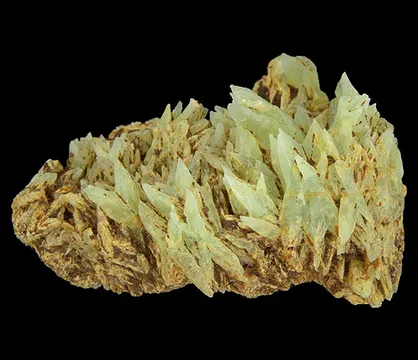
There are quieter, older stories embedded in the literature as well. In the 1890s, G. T. Prior and L. J. Spencer examined augelite from Machacamarca in the British Museum collection. The augelite was easy to miss: small colorless-to-white crystals, many only 3–4 mm and the largest only about 6.5 mm, found in cavities in bournonite or lining crevices in quartzose matrix with pyrite. They noted that nearly all of the British Museum’s bournonite specimens from the locality showed augelite. They also found zinkenite needles on bournonite and sometimes enclosed in augelite, but they could not confirm the rarer guejarite that had been reported by another author. Their closing observation feels very modern: Machacamarca minerals had few references, and part of the locality’s story was simply that interesting minerals had been overlooked.
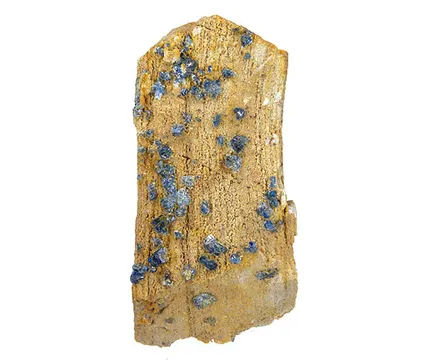
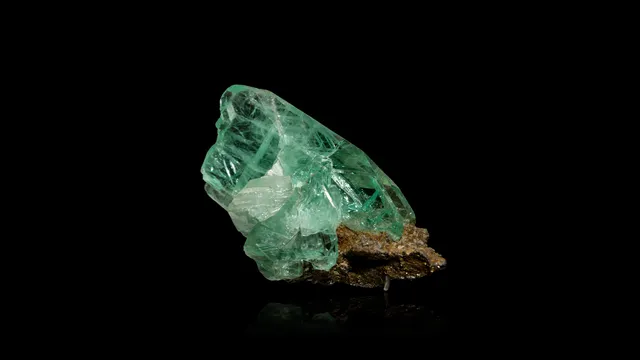
The district also produced a vivid phosphate episode away from the classic bournonite pockets. In June 2003, three brothers from Colavi were hiking near the Tomokoni claim when they noticed a blue streak in red sandstone. Within hours they had opened fractures and cavities containing green vivianite specimens; within days, Bolivian dealers were buying the material. The image is unforgettable: high Andean red sandstone, a blue-green signal in the rock, and a pocket that moved from hillside discovery to the mineral trade almost immediately.