Valenciana Mine, Mexico — famed epithermal silver locality, with lavender amethyst over calcite and valencianite adularia; historic Veta Madre mine, collectibl…
Key facts
Valenciana is one of the great silver names of the Americas and, for collectors, one of those localities where history and crystallography are inseparable. The mine lies on the Veta Madre system at Guanajuato, a long-lived epithermal silver-gold vein and breccia structure cutting the rugged volcanic and older basement rocks north of the city. Ore deposition here belongs to the Oligocene hydrothermal event that made Guanajuato famous: quartz-adularia veins, breccias, stockworks, open-space fillings, and repeated crack-seal episodes in which silver minerals, gold, quartz, calcite, and feldspar were laid down through a structurally restless vein system.
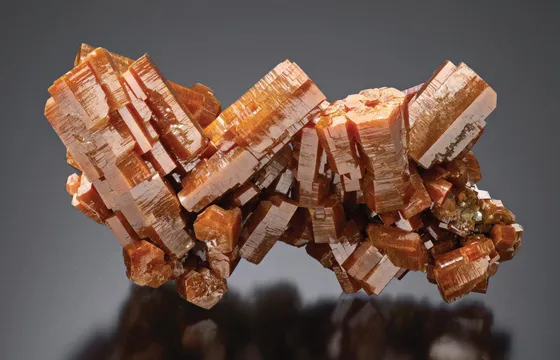
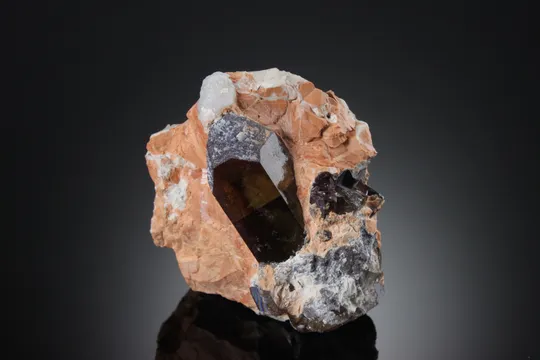
The great collector appeal of Valenciana is not simply that it was rich, but that its specimens have a distinct look. Fine pieces often show pale to medium lavender amethyst as sparkling drusy plates, pearly white to cream calcite perched above it, and the mine’s signature adularia variety, valencianite, as lustrous, bladed to rhomb-like white feldspar. Older pieces can be more austere and more mineralogical: yellow milarite crystals on valencianite, quartz-adularia combinations, and dark silver-sulfide assemblages containing pyrargyrite, acanthite, polybasite, sphalerite, and calcite. At their best, Valenciana specimens are not massive “show” amethyst in the Veracruz or Guerrero sense; they are refined epithermal vein specimens with a recognizably Guanajuato balance of lavender quartz, white gangue, and old-mine pedigree.
Regional View
Country View
Historically, Valenciana was the supreme mine of the Veta Madre. The silver occurrence was known in the colonial period, but its legendary bonanza came in the later eighteenth century under Antonio Obregón y Alcocer, later Count of Valenciana. In the peak years around 1771, immense masses of silver sulfides, ruby silver, and native silver made the mine one of the most productive silver operations on Earth. That history matters to collectors because old labels from Valenciana are plausible and desirable; specimens from nineteenth- and early twentieth-century collections are encountered, but they should be read carefully because “Guanajuato” was often used broadly for adjacent Veta Madre mines.

Photo: Wikimedia Commons

Photo: Wikimedia Commons
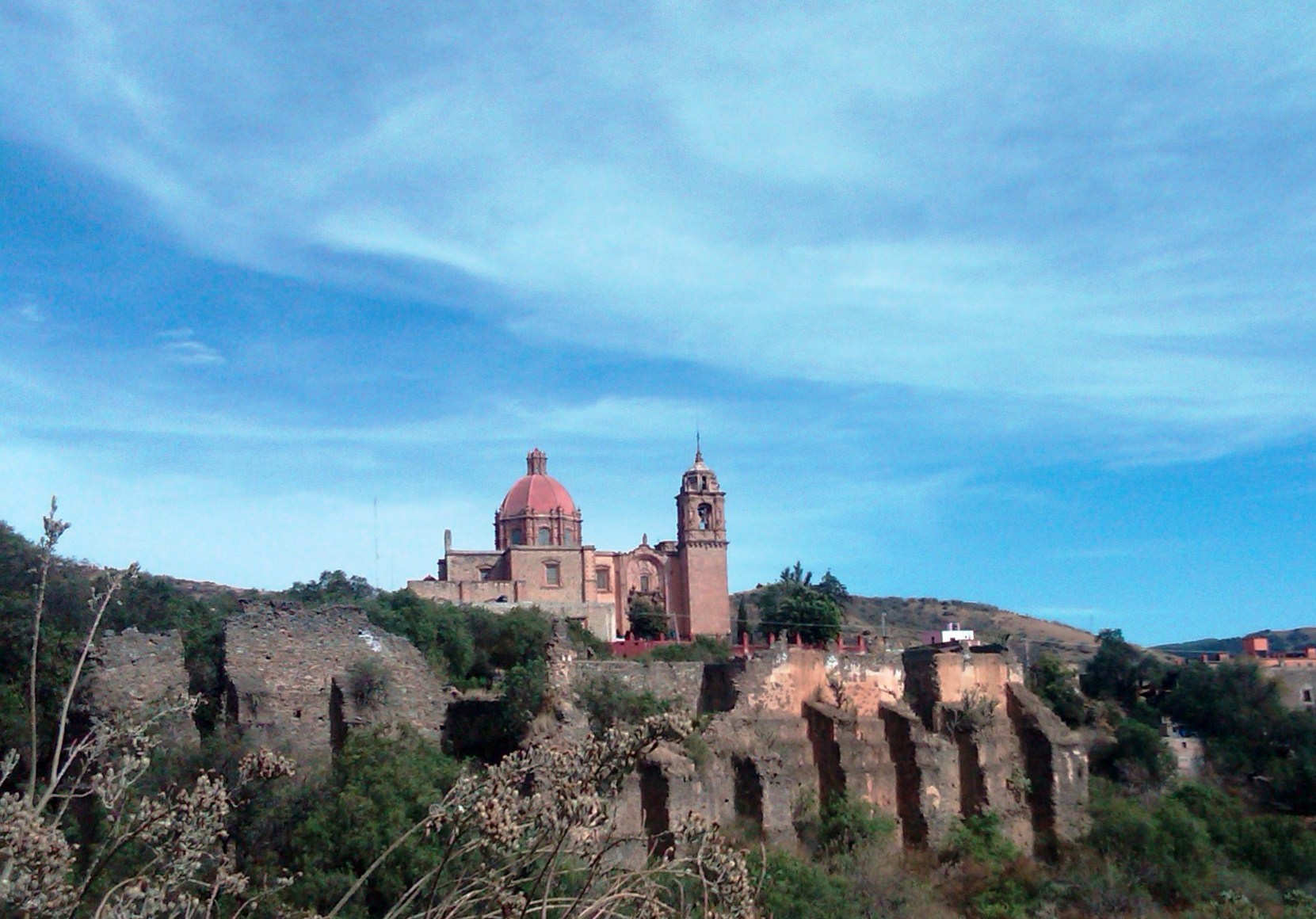
Photo: Wikimedia Commons
Search for specimens: View all specimens from Valenciana Mine, Mexico
Valenciana is part of the Guanajuato Mining District in central Mexico, on the Veta Madre, the “mother vein” that gave the district its extraordinary silver output. The modern Valenciana Mines Complex is an underground silver-gold operation made up of formerly independent but now interconnected historic mines, including Valenciana, Cata, Rayas, Los Pozos, Promontorio, Guanajuatito, and Santa Margarita. The old Valenciana mine itself is just north of Guanajuato city, in the high country of the Sierra de Guanajuato, at a locality long recorded by collectors as Mina la Valenciana.
Geologically the deposit belongs to the Guanajuato epithermal system. Mineralization occurs in quartz-adularia vein and breccia bodies, open-space fillings, fault-fracture zones, stockworks, and locally porous wall rock. The Veta Madre is closely associated with a northwest-trending fault system and a diorite dyke; in the Valenciana area, parallel mineralized structures occur at the contact between the Esperanza Formation and the dyke, and also within the Esperanza Formation. The broader district includes older marine sedimentary and volcanic basement rocks, Eocene to Oligocene volcanic and volcaniclastic units, and later felsic to intermediate volcanic rocks related to the same tectonomagmatic environment that drove hydrothermal circulation.
The ore minerals are those of a precious-metal epithermal vein system rather than a base-metal skarn or replacement deposit. Silver and gold are the chief commodities. Silver occurs in acanthite or argentite, native silver, polybasite, pyrargyrite, proustite, stephanite, naumannite, aguilarite, and related sulfosalts and selenides; gold occurs as native gold and electrum. Pyrite is common as an accessory sulfide, with sphalerite, galena, chalcopyrite, marcasite, and other sulfides present in lesser amounts. The gangue suite that collectors see most often is quartz, amethyst, calcite, dolomite, siderite, rhodochrosite, fluorite, adularia-valencianite, laumontite, stilbite-subgroup zeolites, hydroxyapophyllite-(K), and rare milarite.
The paragenesis is important for understanding the specimens. Published technical work on the Guanajuato operation divides the mineralizing event into three broad stages: an early quartz-adularia stage with trace silver and gold; a second stage that includes an early silver-rich adularia phase and a later calcite-quartz, lower-silver variant; and a late, precious-metal-poor stage with calcite, dolomite, and fluorite. This sequence explains why fine display specimens from Valenciana often show attractive gangue minerals rather than ore, while older ore specimens may be dark, heavy, and dominated by silver sulfides and sulfosalts.
Mining history at Valenciana stretches from colonial prospecting to modern resource work. Guanajuato silver mineralization was discovered by Spanish colonists in the La Luz area in 1548, and an outcrop of the Veta Madre was found at what became the Rayas claim in 1550. The Valenciana occurrence was among the silver discoveries that followed, but the mine reached its fame in the second half of the eighteenth century, when Antonio Obregón y Alcocer financed exploration and development. Around 1771, rich silver-sulfide ore containing ruby silver and native silver was found, and the mine was estimated to be producing as much as one-third of the world’s silver. Shafts developed rapidly: the Santo Cristo de Burgos shaft was sunk to about 150 m, and the San Antonio shaft on the Valenciana vein reached about 227 m by 1775.
Production was interrupted by Mexico’s War of Independence. Later accounts record the destruction of mining installations and a long halt before British capital reopened Valenciana in 1868, with production continuing into the 1870s. By the early twentieth century, the Veta Madre workings at Valenciana had been driven deep on the incline, and the mine was celebrated as the district’s greatest silver producer. The twentieth century brought American investment, cyanide reprocessing of dumps and tailings, revolutionary disruption, labor conflict, and, eventually, cooperative operation by the Sociedad Cooperativa Minera Metalúrgica Santa Fe de Guanajuato. In the modern era the Guanajuato operation was developed by Great Panther, placed on care and maintenance in 2021, and acquired by Guanajuato Silver in 2022 through its Mexican subsidiary Minera Mexicana el Rosario. Underground mining at the Valenciana Mines Complex continues in selected areas, with material transported for processing at the nearby El Cubo mill.
For collectors, present-day access should be treated as industrial and controlled rather than as an open collecting locality. The Valenciana area is historic and partly touristic, but specimen recovery from active or inactive underground workings requires permission from the operator and attention to mine-safety rules. Most collector specimens reach the market through miners, old collections, dealers, and recycled historic material rather than through casual field collecting. Pieces labeled simply “Guanajuato” or “Veta Madre” may be from neighboring mines, so provenance matters: labels naming Valenciana, old collection histories, and mineral associations such as valencianite with milarite carry particular weight.
Notable specimen finds include old-time milarite on valencianite, lavender amethyst with white calcite, pseudomorph combinations in which calcite replaced pyrite cubes, and dark silver-ore specimens containing pyrargyrite and acanthite. The milarite-valencianite pieces are among the most distinctive: small yellow milarite crystals sitting on white adularia plates, often with quartz. Amethyst-calcite specimens appear as drusy lavender quartz plates with pearly dogtooth to scalenohedral calcite, usually cabinet to small-cabinet in scale. Old pyrargyrite specimens are rarer and more mineralogically serious, especially where crystal form is preserved beneath or beside acanthite replacement.
Valenciana amethyst is a Veta Madre epithermal gangue mineral, not a geode-style mass occurrence, and its best pieces are usually plates or cavities of small, lustrous lavender to grape-violet quartz crystals with white calcite, valencianite, dolomite, or minor pyrite. Documented specimens range from miniature druses to cabinet plates around 7 to 15 cm, with the most attractive examples showing an even lavender suffusion, sparkling terminations, and contrasting pearly white calcite rather than dull, bruised, or iron-stained quartz. The finest collector pieces are prized for balance: clean amethyst coverage, lively luster, and well-positioned calcite crystals that sit above the quartz without overwhelming it.
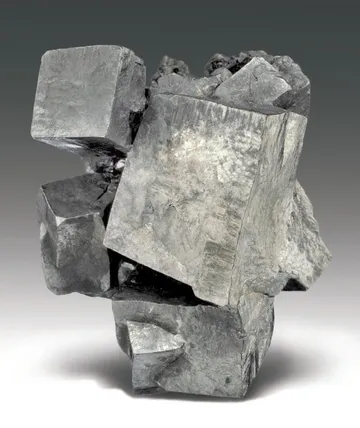
Calcite from Valenciana is most familiar as white to cream dogtooth or scalenohedral crystals on lavender amethyst, but it also occurs as later gangue with quartz, dolomite, fluorite, and the adularia variety valencianite. Collector-grade examples include pearly white dogtooth crystals to about 27 mm on pastel-purple amethyst plates, as well as unusual pseudomorph specimens in which calcite replaced pyrite cubes on valencianite-quartz matrix. The best calcites here are bright, sharply terminated, and aesthetically elevated above the quartz; ordinary pieces tend to be chalky, cleaved, or merely massive vein calcite without the lavender-white contrast that makes the locality recognizable.
Quartz is the fundamental gangue mineral of the Valenciana vein system and appears as clear, milky, chalcedonic, and amethystine material in drusy crusts, open-space fillings, casts, and vein breccias. Specimen quartz from this mine is most desirable when it forms glassy points over valencianite or when the color shifts into even lavender amethyst with contrasting calcite; some pieces show quartz casts after earlier calcite rhombs or chalcedony filling hollow spaces. Fine Valenciana quartz is judged less by size than by texture and association: crisp terminations, clean luster, visible epithermal growth surfaces, and association with calcite or valencianite are far more important than bulk.
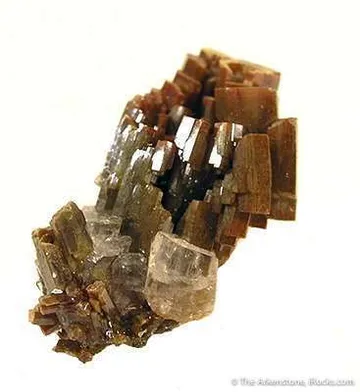
Valenciana milarite is one of the mine’s most specialized collector minerals: small pastel-yellow to yellow-green beryllium-silicate crystals perched on off-white valencianite, commonly with quartz and locally calcite or albite. Documented old-time examples show milarite crystals to about 8 mm on plates roughly small-cabinet in size, and many carry strong old-collection appeal, including ex-Harvard, George Elling, and other classic pedigrees. The best pieces have isolated, sharp, visibly hexagonal milarite crystals placed on a clean feldspar matrix; lesser examples require magnification to see scattered grains or have milarite lost in the pale adularia background.
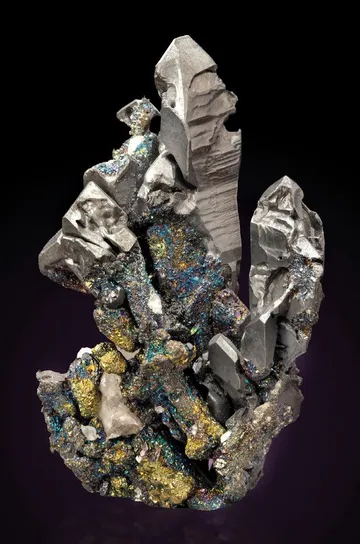
Pyrargyrite is the classic “ruby silver” of Valenciana’s ore history, associated with the silver-rich portions of the Veta Madre assemblage and recorded with acanthite, polybasite, sphalerite, calcite, and other silver sulfides and sulfosalts. Collector specimens are far scarcer than the amethyst-calcite material; one documented example shows massive black acanthite replacing a group of more than ten former pyrargyrite crystals up to 2.2 cm tall, with cavernous terminations, micro calcite, red-brown sphalerite, and late black polybasite. The best Valenciana pyrargyrites are those that retain recognizable crystal morphology, deep red internal color where fresh or backlit, and an old, specific mine provenance; massive dark ore without visible ruby-silver form is much less desirable.
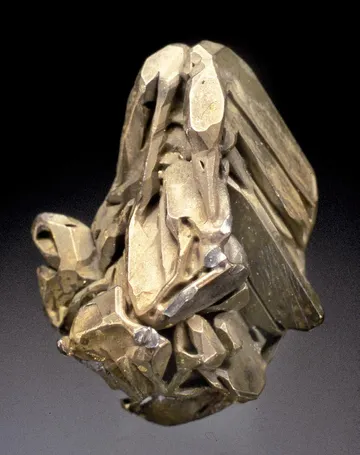
The orthoclase-group mineral that made Valenciana famous among mineralogists is valencianite, a historical variety of adularia named for this mine and studied from La Valenciana material. It forms distinctive white, cream, or locally translucent rhomb-like adularia crystals and bladed intergrowths, commonly as a feldspar crust beneath or beside quartz, amethyst, calcite, and milarite. Good valencianite specimens show crisp, lustrous feldspar forms rather than dull white crusts, and the most desirable pieces either display broad sculptural plates of the feldspar or carry additional rare species—especially yellow milarite—on the valencianite matrix.
Other documented Valenciana minerals include acanthite, aguilarite, naumannite, native silver, native gold and electrum, polybasite, proustite, stephanite, selenopolybasite, sphalerite, galena, chalcopyrite, cubanite, pyrite, marcasite, fluorite, dolomite, siderite, rhodochrosite, goethite, albite, laumontite, stilbite-subgroup zeolites, hydroxyapophyllite-(K), fluorstrophite, and chalcedony. Valencianite deserves special emphasis: it is not an IMA-valid mineral species, but it is a historically important adularia variety originally described from Valenciana material and has been modernly studied for its chemistry, structure, and Ar-Ar age. The mine’s silver selenides and sulfosalts are also important because they tie collector specimens directly to the same high-grade ore assemblage that built Valenciana’s historical fame.
Valenciana specimens should be bought with an eye for locality precision. “Guanajuato” is a district name as much as a city name, and similar amethyst-calcite, quartz-adularia, and silver-ore specimens can come from neighboring Veta Madre mines such as Rayas, Cata, Sirena, San Vicente, or other Guanajuato workings. For ordinary amethyst-calcite specimens this may not change the visual appeal dramatically, but for milarite on valencianite, pyrargyrite, and old silver-ore pieces, a specific Valenciana label is a significant part of the specimen’s scientific and market value.
The most common modern mislabeling issue is not a famous Valenciana fake tradition, but locality drift and commercial simplification. Some dealer labels use “Guanajuato” broadly; others may attach “Valenciana” to any lavender quartz-calcite specimen from the district. Conversely, old labels may say only “Valenciana” when they mean the mine, the settlement, or the mining area. Better specimens should be accompanied by old collection labels, MinID records, dealer archives, or a chain of provenance that makes the mine assignment plausible.
Condition varies strongly by species. Amethyst druses are prone to bruised terminations and rubbed high points, especially on broad plates. Calcite cleaves easily and commonly shows missing dogtooth tips, broken scalenohedra, or acid-softened surfaces. Valencianite plates are more durable than calcite but can have broken feldspar blades along exposed edges. Milarite crystals are small, isolated, and easily lost; inspect them under magnification for chips, glue, or detached-looking crystals. Pyrargyrite and proustite are light-sensitive silver sulfosalts, and any fresh red color should be protected from prolonged strong light; acanthite replacement and surface tarnish are part of many old ore specimens, but abrasion on crystal faces lowers value.
Fluorescence is not the main collecting reason for Valenciana material, though individual calcites or associated minerals may show a response. Handle specimens primarily as historic epithermal vein pieces: keep calcite away from acids, keep silver sulfosalts out of bright display lighting, and avoid ultrasonic cleaning on mixed amethyst-calcite-valencianite specimens because small calcite and milarite crystals can detach.
Market availability is uneven. Amethyst with calcite from Guanajuato appears periodically and can be affordable in miniature to small-cabinet sizes, though truly fine, undamaged, well-balanced Valenciana examples are much scarcer. Milarite on valencianite is a classic but uncommon specialty piece; specimens tend to circulate from old collections and are priced for rarity and pedigree as much as size. Pyrargyrite from Valenciana is rarer still in crystallized form, and old silver-ore pieces with recognizable ruby-silver morphology deserve careful preservation. Broad, aesthetic valencianite plates are collectible in their own right and are especially desirable when they carry a historical label or associated milarite.
In the eighteenth century, Valenciana changed from a known silver occurrence into a mine of almost mythic scale. Antonio Obregón y Alcocer financed the venture during the 1760s, and the bonanza that followed transformed him into the Count of Valenciana. The decisive moment came around 1771, when the workings encountered immense masses of silver sulfides mixed with ruby silver and native silver. That was not merely a rich pocket in the ordinary sense; contemporary and later mining accounts credited Valenciana with as much as one-third of the world’s silver production at its peak. The mine was developed with urgency: the Santo Cristo de Burgos shaft reached roughly 150 m, and by 1775 the San Antonio shaft had been sunk to about 227 m on the vein.
Alexander von Humboldt visited Guanajuato on 8 August 1803, when Valenciana was still the celebrated mine of New Spain. He treated it not as a curiosity but as a world-scale industrial phenomenon, comparing its output with the great mines of Peru and Potosí and noting the extraordinary wealth it had generated. Later writers retold the image of Guanajuato’s mines as an underground world: workings descending in every direction, hundreds of meters below the surface, with the Veta Madre functioning as the mineral artery of the city.
The War of Independence shattered that world. Production ceased during the conflict, and mining installations were destroyed. One account records revolutionaries burning the headworks of the newly built Valenciana shaft in 1821. The workforce itself was drawn into the struggle: many Valenciana miners joined the movement around the capture of the Alhóndiga de Granaditas, and the Valencia regiment formed under Colonel Casimiro Chovell and mine engineer Ramón Fabié. The mine that had helped finance imperial Spain became entangled in the violence that ended Spanish rule in Mexico.
The nineteenth-century revival was difficult. British capital reopened Valenciana in 1868, but the logistics were punishing: heavy machinery had to be hauled inland from the coast by mule because rail facilities were lacking. Even so, old mining summaries credited Valenciana as the greatest silver producer on the Veta Madre, with workings driven down to about 2,400 ft on the incline and production valued in the hundreds of millions of dollars. By 1906, writers looking back over Guanajuato’s mining record still treated Valenciana as the standard by which the district’s richness was measured.
A quieter but very collector-relevant story belongs to valencianite. The white feldspar plates from Valenciana were long distinctive enough to earn their own historical varietal name. Modern mineralogical work has returned to those specimens with contemporary analytical tools, treating them not as a romantic old label but as a mineralogical problem: What exactly is this adularia-like feldspar, and why did it stand out from ordinary orthoclase? The answer so far preserves the old collector’s name as a variety rather than a valid species, but it has given the mine a second kind of fame—one tied to crystal structure and geochronology as much as to silver.