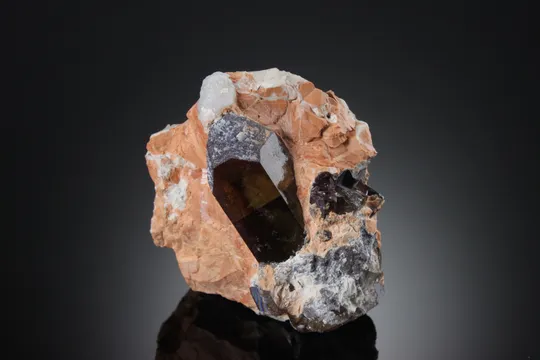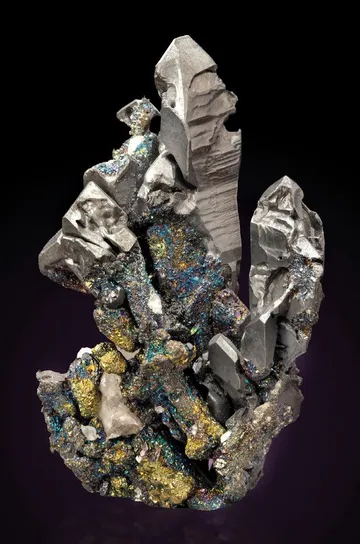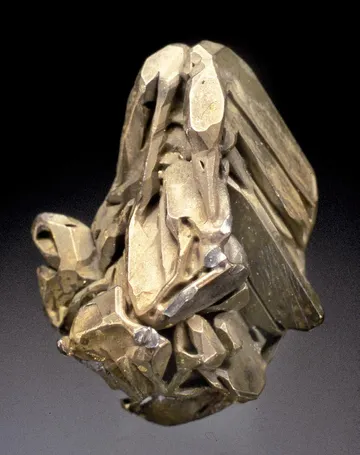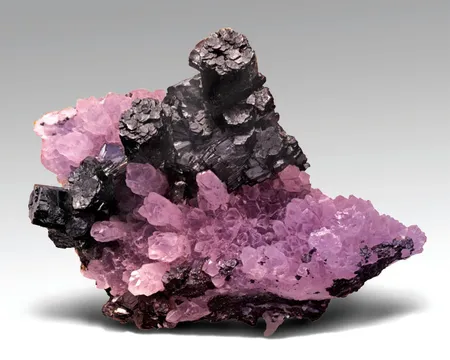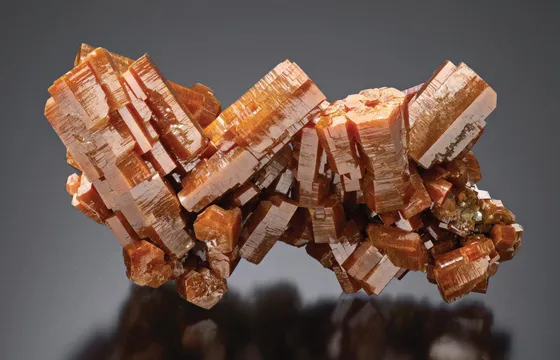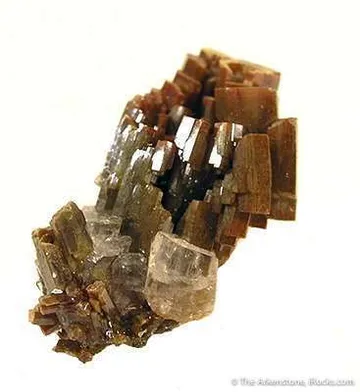
Rayas, Mexico — Guanajuato silver locality famed for acanthite and other silver sulfides on pale gangue, with mining lore and strong collector appeal.
Key facts
Rayas is one of the indispensable Mexican silver localities: the San Juan de Rayas Mine, on the central Veta Madre of Guanajuato, gave its name to one of the historic mining neighborhoods of the city and to one of the classic specimen labels in the silver-sulfide world. For collectors, “Rayas” means more than a place name. It means old Mexican acanthite—often still called “argentite” on antique labels—showing sharp cubic or pseudo-cubic forms, hoppered faces, skeletal growth, hooked branches, and lustrous steel-gray to black metallic surfaces, commonly perched on white calcite or quartz. The mine’s mineralization belongs to the great Guanajuato epithermal Ag-Au system, where the Veta Madre and its associated structures produced silver sulfides and sulfosalts with quartz, calcite, pyrite, chalcopyrite, sphalerite, galena, and locally gold-rich material.
Historically, Rayas belongs to the beginning of Guanajuato’s ascent as a mining city. The Rayas-Mellado area was opened in the mid-16th century, and later accounts connect the working of Rayas with the discovery and development of the Veta Madre. By the 18th and 19th centuries the mine was celebrated for the scale of its workings, the depth of its shaft, and the fortunes attached to the Sardaneta family, the Marquises of San Juan de Rayas. In modern collector language, however, its reputation rests especially on the silver species: acanthite, stephanite, polybasite, pyrargyrite, pearceite, naumannite, and the germanium-bearing rarity argyrodite.
Regional View
Country View
The best Rayas specimens have the unmistakable drama of dark silver minerals on pale gangue. Fine acanthites may be single blocky crystals, small forests of stacked cubes, or replacements after earlier silver sulfosalts, and the better pieces show clean form rather than the soft, lumpy masses common in ore. Stephanite from Rayas is scarcer and more subtle: black to metallic-gray crystals, sometimes tabular or complexly intergrown, valued when individual faces remain sharp and lustrous.

Photo: Wikimedia Commons

Search for specimens: View all specimens from Rayas, Mexico
Rayas is the San Juan de Rayas Mine, also recorded as the Rayas or Reyes Mine, in Guanajuato, Guanajuato Municipality, Guanajuato, Mexico. It lies on the central part of the Veta Madre system, the famous northwest-southeast silver-bearing structure that made Guanajuato one of the great mining districts of the Spanish colonial world and later of independent Mexico. Modern geological literature treats the district as an epithermal Ag-Au-Cu-Pb-Zn vein system; the Veta Madre itself is generally described as intermediate-sulfidation, while other district systems include lower-sulfidation veins.
The ore is not simply “silver in quartz.” The classic Guanajuato assemblage is a multi-stage hydrothermal system. Studies of the Veta Madre describe an early Cu-Pb-Zn sulfide stage, followed by Ag-Au mineralization with white quartz, then Ag-Au mineralization with transparent quartz and calcite, and finally a late calcite stage. In practical specimen terms, that sequence helps explain why silver sulfides and sulfosalts occur in and on quartz-calcite gangue, why pyrite and chalcopyrite are common companions, and why some vuggy pieces show younger metallic crystals grown on earlier quartz surfaces.
The district gangue is commonly brecciated and silicified, with volcanic and sedimentary rock fragments cemented by calcite and quartz. USGS work on Guanajuato ores emphasized argentite/acanthite and native gold-silver as principal ore minerals, with polybasite, pyrargyrite, and argyrodite as minor but important silver minerals. That description fits Rayas well: collectors encounter Rayas most often through its acanthite and sulfosalts, not through large showy quartz, even though quartz and calcite are essential to the specimen matrix.
Rayas also has a distinctive deeper-ore history. In the early 1970s, after many thought the district was largely exhausted, renewed geological work and mining discoveries revived Guanajuato. At Rayas, the “Clavo de Rayas” was recognized as a deep ore body notable not only for silver and gold but also for unusually significant chalcopyrite and copper values. Contemporary recollections describe a copper-rich silver body that forced geologists to think about whether mining had reached the deeper, hotter threshold of the system beneath the classic epithermal levels.
Mining at Rayas began in the colonial period and continued through many ownership and operating phases. The Rayas and Mellado workings were historically close enough to form a linked mining community, and the wealthy Rayas owners left their mark on Guanajuato’s churches and civic architecture. In the 20th century the district passed through foreign-company, cooperative, and modern corporate phases. The Sociedad Cooperativa Minero Metalúrgica Santa Fe de Guanajuato stabilized operations after the late 1930s and became central to the district’s mid-20th-century history. In the 21st century, Rayas has been treated as part of the broader Valenciana Mines Complex, an interconnected underground silver-gold operation in which old mines such as Rayas, Cata, Valenciana, Los Pozos, Promontorio, Santa Margarita, and Guanajuatito are discussed as a complex rather than isolated colonial workings.
For collectors, access must be understood in modern terms: Rayas is not a casual collecting dump locality. It is an historic mine area within the urban and heritage landscape of Guanajuato, and parts of the broader complex have been active or operationally controlled. Underground access is a mine-safety and property matter, not a recreational collecting opportunity. Specimens on the market are overwhelmingly old collection pieces, production-era recoveries, dealer-traded miniatures and thumbnails, or pieces recovered when mining intersected vugs and sulfide-rich seams. The best provenance carries old labels, level information, or recognized collection history, because “Guanajuato” labels are easily broadened or misassigned among Rayas, Cata, Valenciana, La Sirena, and La Luz mines.
Documented specimen finds include acanthite from several styles of crystallization: sharp cubic crystals, pseudo-cubic acanthite after high-temperature argentite, platy replacements after polybasite, pseudomorphs after pyrargyrite, and arborescent or skeletal clusters. Dealer and museum records also document fine stephanite from Rayas, including small thumbnails and larger tabular crystals, and rare argyrodite associated with stephanite from level 470. These occurrences are important because they tie specimen mineralogy to actual mine levels and ore shoots rather than to a generic district label.
Rayas acanthite is the mine’s signature collector mineral, typically steel-gray to black with metallic luster and occurring as sharp cubes or pseudo-cubes after argentite, hoppered crystals, stacked thumbnail clusters, skeletal or hooked growths, and pseudomorphs after earlier silver sulfosalts such as polybasite and pyrargyrite. Documented pieces range from sub-centimeter crystals on calcite or chalcopyrite veinlets to miniature-class specimens with crystals around 1–2 cm, and older literature and specimen records make Rayas one of the classic Mexican sources for large, well-formed silver sulfide crystals. The common associations are calcite, quartz, polybasite, chalcopyrite, pyrite, pyrargyrite, and locally dolomite or cerussite; the best specimens are not merely rich ore but sharply crystallized, lustrous, three-dimensional groups with pale gangue contrast and minimal bruising on the cube edges or skeletal projections.
Stephanite from Rayas is much scarcer than the locality’s acanthite, polybasite, and pyrargyrite, and good pieces are prized for sharp metallic-gray to black crystals rather than sheer size. Verified specimen records describe intergrown splendent thumbnails from El Clavo, crystals to about 0.5 cm on small 2 cm specimens, and exceptional museum-quality material with thick gray tabular crystals reaching several centimeters; the rarest context is stephanite accompanied by microscopic gray argyrodite from level 470. Fine Rayas stephanite should show clean crystal form—tabular, complex, cogwheel-like, or modified prismatic faces—strong metallic luster, and a secure mine provenance, because ordinary black sulfosalt ore from Guanajuato can be visually ambiguous without analysis or trusted collection history.
Other minerals documented from Rayas include argyrodite, naumannite, pearceite, polybasite, pyrargyrite, native gold, chalcopyrite, pyrite, quartz including amethyst, calcite, ankerite, dolomite, azurite, malachite, and members of the tetrahedrite and stilbite subgroups. Argyrodite is the standout rarity: specimen records describe it as a gray mat of microscopic crystals recovered with stephanite on level 470, an association that gives Rayas importance beyond attractive acanthite thumbnails. Rayas itself is not the recognized type locality for aguilarite—the type locality is the San Carlos Mine in the La Luz area of Guanajuato—but Rayas belongs to the same broader district in which the acanthite-aguilarite-naumannite selenium-sulfur series has been studied in detail.
The most common labeling issue is the old “argentite” name. On antique labels, Rayas acanthite is often called argentite because many crystals preserve cubic or pseudo-cubic forms. Mineralogically, collectors should treat room-temperature cubic “argentite” specimens as acanthite paramorphs or pseudomorphs after argentite unless there is a very specific reason to say otherwise. A precise label such as “acanthite after argentite” or “pseudo-cubic acanthite” is preferable to an unqualified argentite label.
The second authenticity concern is mine-level and mine-name drift within Guanajuato. A specimen labeled only “Guanajuato” may be from Rayas, Cata, Valenciana, La Sirena, La Luz, or another district mine. Rayas attribution is strongest when supported by an old label, a dealer record, a known collection, or a distinctive published specimen. Acanthite after polybasite and acanthite after pyrargyrite can also be confused with primary platy acanthite or with dark silver sulfosalts; where the pseudomorph is the selling point, the label should say what the replacement is and what the presumed original species was.
Condition matters greatly. Acanthite is soft, sectile to easily bruised, and unforgiving on sharp crystal edges; the same is true of stephanite, which is brittle and can chip along exposed corners. Rayas specimens with aerial skeletal growths, hooked branches, and platy pseudomorphs should be handled over a tray and kept out of tight cotton or foam that can snag projections. Avoid aggressive cleaning. Calcite matrix may react with acids, sulfides may dull if rubbed, and old patinas are part of the appeal of classic silver specimens.
Fluorescence is not a major buying point for the Rayas silver minerals themselves. Calcite from Guanajuato specimens may fluoresce in some cases, but acanthite and stephanite are valued for metallic luster, crystal form, contrast, and provenance. Store specimens dry and stable; sulfide tarnish, dust, and repeated handling can reduce visual quality.
Market availability is episodic. Small Rayas acanthites appear regularly enough that a patient collector can find thumbnails and miniatures, but sharp, lustrous, undamaged crystals with old labels are increasingly competitive. Stephanite is distinctly rarer and should be evaluated conservatively, with close attention to whether the specimen has been analytically confirmed or carries a reliable chain of custody. Rayas argyrodite is a specialist rarity and should not be accepted from appearance alone.
In November 1971, Rayas still held one of its great secrets. The cooperative was stable but short of equipment and safety resources, and the routine underground inspection was being made by Alejandro García, captain of the mine, and Estanislao Zárate Lujano, superintendent of mines. They were descending from level 220 to the 275 south level through the old San Cayetano stope, tired enough to sit down at the entrance of an abandoned heading about 20 or 25 meters long. By Zárate’s own telling, they were smoking Raleigh cigarettes when a pale mark caught his eye on the hanging wall, halfway along the drift—a whitish stain standing out from the grime that coated the old workings.
With the weak light of a carbide lamp and the steel pick he always carried, Zárate chipped away the soot-black coating and uncovered a band of white quartz. It was only a small veinlet, but black points in the quartz suggested silver sulfide. He ordered a sample. On Monday morning, around 9 o’clock, he was in the mechanical shop of Evaristo Cortés when the Rayas mine telephoned: Alejandro García asked whether he had seen the assay slips. The sample had run 225 grams of silver per tonne. That was encouraging, not spectacular, but enough to wash and examine the hanging wall properly.
On Tuesday they returned. The cleaned quartz did carry silver sulfides, and chalcopyrite as well. Zárate had air and water lines installed and ordered two or three rows of drill holes to “comb” the hanging wall. The first three or four rounds returned only 200 to 230 grams of silver per tonne. Then, on the fifth, the quartz opened and “filled” with silver and chalcopyrite. Grades rose to more than half a kilogram of silver per tonne. Eight months later the developed ore shoot was estimated at 700,000 tonnes, with average grades of 525 grams of silver per tonne, 5.7 grams of gold per tonne, and 2.1% copper. In some zones the silver concentration reached 8 kilograms per tonne or more. For more than a year, about 30 tonnes per month of export ore were bagged and shipped directly to the Peñoles smelter in Torreón, Coahuila.
What made the find geologically provocative was the copper. Rayas had always belonged to the great epithermal story of Guanajuato, but this ore shoot carried enough chalcopyrite—2.1% copper on average—to raise the question of whether the workings had reached a deeper, hotter threshold of the system. The “last clavo” of Rayas was mined slowly for about twenty years and was remembered as the discovery that gave the Guanajuato cooperative its most prosperous era.
More than a century earlier, Gabriel Ferry’s 1856 account fixed Rayas in another kind of memory: the drama of the descent. He described the great shaft as 34 feet in diameter and nearly 1,200 feet deep, with three principal galleries stacked one above another. The machinery was the malacate: horses galloping around a drum, raising ore and water in sacks of aloe fiber and oxhide. From the surface, Ferry found little to prepare him for the scale below—wooden sheds, tile roofs, administrative buildings, and a few whitewashed houses. Underground, the mine became a labyrinth of terraces, turns, wet walls, and lights moving in the darkness.
In the mine chapel, Ferry saw a low altar with candles burning before a saint and an old miner kneeling in prayer. Beyond it, the workings became hotter and more oppressive. In one labor, he found men waist-deep in water, striking the rock with barretas, while others carried sacks of ore away through vapor and candle smoke. Near the great shaft he watched a peon perform a terrifying job: as a water-filled oxhide bag rose on the malacate cable, the man had to use a rope to deaden its swing so it would not be cut open on the rock. Every quarter hour, all day, a false step could have sent him into the black shaft.
Then Ferry himself had to ascend by the tiro. He was given wool clothing against the spray, a leather baton to fend himself from the walls, and a plaited aloe-fiber strap to fasten him to the cable. Suspended over the shaft, he asked whether accidents happened. The answer was not comforting: an Englishman, badly tied to the rope, had fallen almost from the top to the bottom so silently that the guide did not notice until he reached daylight. The normal ascent took twelve minutes, but Ferry’s was slowed to half an hour so he could “observe the wonders of the mine.” The result is one of the most vivid 19th-century descriptions of any Mexican silver mine, and it is Rayas—not Valenciana, not Cata—that supplies the stage.
Wilson, I. F., Milton, C., and Houston, J. R. (1975). A Mineralogical Study of the Guanajuato, Mexico, Silver Ores. U.S. Geological Survey Open-File Report 75-70, 157 pp. A foundational ore-mineralogy report for the Guanajuato silver-gold ores, including Rayas and Cata material. https://pubs.usgs.gov/publication/ofr7570
Vassallo, L. F. (1988). “Características de la composición mineralógica de las menas de la Veta Madre de Guanajuato.” Revista Mexicana de Ciencias Geológicas, 7(2), 232–243. Important for the Veta Madre mineralization stages and the acanthite-aguilarite-naumannite selenium-sulfur relationship. https://rmcg.geociencias.unam.mx/index.php/rmcg/article/view/1280
Petruk, W., and Owens, D. (1974). “Some mineralogical characteristics of the silver deposits in the Guanajuato Mining District, Mexico.” Economic Geology, 69, 1078–1085. Frequently cited in later Guanajuato studies for ore textures and mineralogical character of the district. https://www.scielo.org.mx/pdf/bsgm/v67n2/v67n2a16.pdf
Mango, H., Arehart, G., Oreskes, N., and Zantop, H. (1991). “A fluid inclusion and isotope study of the Rayas Ag-Au-Cu-Pb-Zn mine, Guanajuato, Mexico.” Economic Geology, 86, 1554–1561. A locality-specific study of Rayas ore fluids and isotopic evidence. https://www.scielo.org.mx/pdf/bsgm/v67n2/v67n2a16.pdf
Mango, H., Arehart, G., Oreskes, N., and Zantop, H. (2014). “Origin of epithermal Ag-Au-Cu-Pb-Zn mineralization in Guanajuato, Mexico.” Mineralium Deposita, 49, 119–143. A modern synthesis of the district’s epithermal mineralization. https://hero.epa.gov/reference/7283991/
Orozco-Villaseñor, F. J. (2010). “Mineralogy and genesis of the Rayas ore shoot, and its geological relation with other ore bodies, Veta Madre, Guanajuato, Mexico.” In P. Birkle and I. S. Torres-Alvarado, eds., Water-Rock Interaction: Proceedings of the 13th International Conference on Water-Rock Interaction, Taylor & Francis Group, pp. 219–222. A focused paper on the Rayas ore shoot and its relation to the Veta Madre. https://www.researchgate.net/publication/289654209_Mineralogy_and_genesis_of_the_Rayas_ore_shoot_and_its_geological_relation_with_other_ore_bodies_Veta_Madre_Guanajuato_Mexico
Mindat.org locality record: “San Juan de Rayas Mine (Rayas Mine; Reyes Mine), Guanajuato, Guanajuato Municipality, Guanajuato, Mexico.” Useful for the verified species list, photo records, and references tied to acanthite, stephanite, argyrodite, and other Rayas minerals. https://www.mindat.org/loc-2324.html
Mineralogical Record general index entries for Rayas/Reyes acanthite. The index records appearances of Rayas acanthite as coating polybasite crystals, pseudomorphs after pyrargyrite, and thumbnail clusters of brilliant cubes. https://mineralogicalrecord.com/wp-content/uploads/2020/10/pdfs/MR10_General_A-B_small.pdf
“GUANAJUATO MINA DE RAYAS” — Travel Report. A short Spanish-language video visit to the Rayas mine area in Guanajuato. https://www.youtube.com/watch?v=Z6PjPyg5jb0
“GTO MINA DE RAYAS” — Travel Report. A brief companion video showing the historic Rayas site from a visitor perspective. https://www.youtube.com/watch?v=Gq5zwkCKscI
“Mina de Rayas: Orgullo histórico de Guanajuato capital” — TV Guanajuato. A local media article summarizing Rayas as one of Guanajuato’s oldest and most emblematic mines. https://tvguanajuato.com/guanajuato-capital/mina-de-rayas-orgullo-historico-de-guanajuato-capital/
Mindat: San Juan de Rayas Mine — The central locality page for species, photos, alternate names, and mineral references.
Mindat: Acanthite from San Juan de Rayas Mine — Focused acanthite occurrence page with associations and photo-derived mineral context.
Mindat: Stephanite from Guanajuato Municipality — Useful for comparing Rayas stephanite with other Guanajuato stephanite localities.
Wikimedia Commons: Acanthite-140348.jpg — Freely licensed photograph of a large, lustrous Rayas acanthite crystal.
Wikimedia Commons: Mina de rayas.jpg — Freely licensed photograph of the historic Mina de Rayas site.
USGS Open-File Report 75-70 — Classic mineralogical study of Guanajuato silver-gold ores.
Revista Mexicana de Ciencias Geológicas: Veta Madre mineralogy — Article on Veta Madre ore-mineral stages and silver-selenium mineral chemistry.
Revista Geomimet: “Cómo descubrimos el último clavo de la Mina de Rayas en Guanajuato” — First-person account of the 1971 discovery of the late Rayas ore shoot.
Wikisource: “The Miners of Rayas” — 1856 narrative source rich in period descriptions of Rayas miners and Guanajuato mining culture.
Wikisource: “Description of, and descent into, a Silver Mine” — Vivid 19th-century description of descending and ascending the Rayas mine.
INAH: Historic center of Guanajuato and adjacent mines — Heritage context for the Rayas and Valenciana mines within Guanajuato’s mining landscape.
Guanajuato Silver: Valenciana Mines Complex — Current corporate overview of the broader mine complex that includes historic workings in the Valenciana-Rayas-Cata area.