A collector's guide to San Juan de Rayas Mine, Mexico: its geology, mining history and notable minerals, illustrated with the 66 specimens documented from this locality on EarthWonders.
Key facts
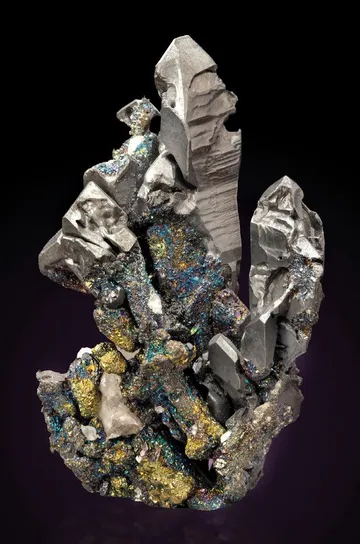
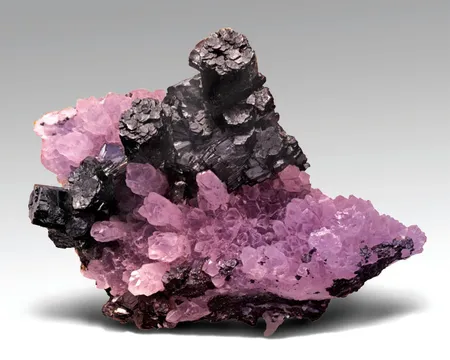
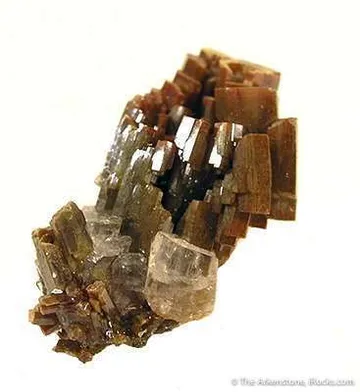
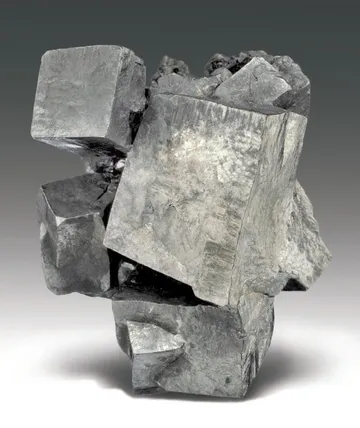
San Juan de Rayas is one of the essential names in Mexican silver mineral collecting: an old, deep, historically resonant mine on Guanajuato’s Veta Madre, the great northwest-trending silver-gold vein system that made the city one of the world’s legendary mining camps. Collectors know Rayas less for colorful oxidized ore than for sculptural black and steel-gray silver minerals—especially acanthite, polybasite, pyrargyrite, and stephanite—often sitting on quartz, calcite, or dark silver-rich matrix and sometimes dusted with bright chalcopyrite or pyrite. The best specimens have the unmistakable Guanajuato look: metallic, compact, three-dimensional, and architectural, with acanthite cubes and skeletal forms rising like miniature towers over bladed polybasite or replacing ruby-silver crystals while retaining their earlier outlines.
Regional View
Country View
The mine’s importance is not merely mineralogical. Rayas is bound into the civic history of Guanajuato itself: it is traditionally credited as one of the earliest exploited mines of the district, discovered in 1550 by Juan de Rayas, and its profits helped create the powerful Sardaneta y Legaspi family, later ennobled as the Marquises of San Juan de Rayas. Today, the mine stands inside a living mining landscape—part industrial ruin, part active silver district, part UNESCO-recognized historic cityscape—where mine shafts, reduction works, churches, tunnels, and steep streets all testify to four and a half centuries of ore extraction.

Photo: Wikimedia Commons
This is a locality where specimen quality depends on form as much as richness. A massive-looking dark sulfide lump may be historically interesting ore; a great collector piece shows deliberate structure—isolated cubes, hoppered faces, arborescent acanthite stacks, pseudohexagonal polybasite plates, or short prismatic pyrargyrite with ruby-red internal fire at the edges. Good Rayas specimens often reward side lighting and a loupe: under normal cabinet light they may appear uniformly black, but careful illumination reveals red flashes in pyrargyrite, satiny gray replacement acanthite, tiny golden chalcopyrite, or minute late acanthite overgrowths on earlier silver sulfosalts.

Photo: Wikimedia Commons
Search for specimens: View all specimens from San Juan de Rayas Mine, Mexico
San Juan de Rayas lies in the Guanajuato mining district, Guanajuato Municipality, central Mexico, within the belt of steep hills north and northeast of the historic city. The mine is on the Veta Madre system, the dominant mineralized structure of the district. Modern technical descriptions place the district’s mineralization in a low-sulfidation epithermal silver-gold setting: quartz-adularia vein and breccia bodies, fault controlled, with silver and gold accompanied by silver sulfides, silver sulfosalts, native silver or electrum locally, and accessory pyrite, galena, sphalerite, and chalcopyrite. At San Juan de Rayas, the collector expression of that system is the black-silver suite—Ag2S and silver-antimony-copper sulfosalts—rather than the showier amethyst-calcite style that appears at some other Guanajuato mines.
The structural setting is fundamental. The Veta Madre is a long northwest-trending normal-fault vein system dipping generally southwest; in the Valenciana Mines Complex it is associated with a quartz-adularia vein/breccia system, diorite dikes, the Esperanza Formation in the footwall, and Guanajuato Formation conglomerates in the hanging wall in places. Modern mine descriptions treat Rayas as one of the mineralized areas along this continuous trend, with Cata, Los Pozos, Valenciana, Guanajuatito, Santa Margarita, and Promontorio forming adjoining or historically separate working sectors. The richest mineralization in the broader complex is commonly tied to structural bends, splays, contacts, and repeated brecciation—features that explain why old mines like Rayas could be both deep and highly localized in ore distribution.
The mine was traditionally discovered in 1550 by the muleteer Juan de Rayas and became one of the first major working points of the Guanajuato district. Later accounts describe the Rayas shaft as among the deepest of its time; official and heritage sources give figures around 400 to 420 meters, while a Mexican geological inventory lists the Tiro General de Rayas as about 11 meters in diameter and 415 meters deep. That same inventory places the mine 1.4 kilometers north-northeast of Guanajuato city, gives the mineralized structure a N45W strike and 45-degree southwest dip, and records historical operation on the -345, -365, and -465 levels when the mine was under the Sociedad Cooperativa Minero-Metalúrgica Santa Fe de Guanajuato.
The older production history is long and uneven. Small-scale working began in the 16th century, productivity increased in the early 18th century with the use of explosives for tunneling, and the district reached astonishing colonial importance before being disrupted by the War of Independence. Mining ceased in 1816 in the district and production facilities were destroyed during the conflict; British and later American capital returned in the 19th and early 20th centuries, old dumps and tailings were reworked after cyanidation became available, and in 1939 the district mines were turned over to the Sociedad Cooperativa Minera Metalúrgica Santa Fe de Guanajuato. Great Panther later acquired the Guanajuato Mine Complex from the Cooperative in 2005, and Guanajuato Silver acquired Great Panther’s Mexican mining assets in 2022. Current corporate descriptions group Rayas within the Valenciana Mines Complex, operated by Minera Mexicana Rosario, a wholly owned subsidiary of Guanajuato Silver.
For collectors, the most useful geological clue is that specimens came from narrow silver-rich vein and breccia zones, not from broad open cavities like those at classic fluorite or zeolite localities. The USGS 1950 specimen list for Guanajuato silver ores records Rayas material from the 220, 230, 255, 260, and 275 levels and from named veins or workings including Santa Margarita, San Martin, San Cipriano or Cuatro y medio, and Santa Cecilia. Those ore samples were described as gold-silver ore with vuggy quartz, dark sulfide streaks rich in silver, prominent sulfide patches and bands, chalcopyrite and other sulfides, and in one case crystals of argentite. That is exactly the environment implied by the better cabinet specimens: dense silver sulfides and sulfosalts with enough open space to develop lustrous crystal faces, but still very much ore-zone material.
Collecting access today should be treated as closed unless arranged through lawful mine, museum, or local heritage channels. Rayas is part of a historic mining and urban landscape, but it is also associated with private or corporate mineral rights, deep workings, fenced shafts, unstable old structures, and modern underground mining infrastructure in the broader complex. Visitors can see the historic mine area and panoramic viewpoints around the Rayas neighborhood; specimen collecting underground or on mine property is not a casual tourist activity. Most legitimate specimens now reach collectors through old collections, dealer inventories, miner-saved pieces from earlier production, or dispersed lots labeled Rayas, Guanajuato.
Acanthite is the signature collector mineral of San Juan de Rayas, occurring as lustrous black to steel-gray cubic, pseudocubic, skeletal, hoppered, hooked, arborescent, and replacement forms on quartz, calcite, pyrite- or chalcopyrite-dusted matrix, polybasite, and pyrargyrite. Fine miniatures show individual cubic crystals around 1 to 2 cm, while the most desirable pieces are three-dimensional groups rather than flat ore fragments: branching “melted” stacks, sharp cubes with deep hopper faces, acanthite perched on bladed polybasite, and acanthite pseudomorphs after pyrargyrite or polybasite that preserve prismatic or pseudohexagonal outlines. Ordinary pieces are simply rich black silver sulfide; good Rayas acanthite has luster, relief, undamaged projecting crystals, convincing old provenance, and enough contrast from white calcite, quartz, or golden micro-chalcopyrite to display the dark crystals clearly.
Pyrargyrite from San Juan de Rayas is the locality’s classic “ruby silver,” normally appearing black to metallic gray in room light but showing deep red translucency, red flashes, or wine-red edges under strong illumination. Specimens are typically thumbnails to miniatures, with short prismatic crystals, parallel-growth clusters, twinned-looking groups, and compact crystalline masses; associations include polybasite, acanthite, chalcopyrite, quartz, and pyrite. The best examples here are not necessarily the largest but the cleanest: complete clusters with sharp terminations, minimal bruising on the soft sulfosalt, and visible ruby color at edges or thin points. Some Rayas material now sold as acanthite after pyrargyrite preserves the old pyrargyrite crystal habit but is coated or replaced by later acanthite, so careful inspection of luster, color, and crystal form is part of evaluating any piece.
Polybasite is one of the defining Rayas silver sulfosalts, documented as black pseudohexagonal plates reaching exceptional size for the species, with Mindat recording crystals to 6 cm and descriptions of fine large crystals with chalcopyrite. Collector specimens commonly show bladed or plate-like polybasite in clustered, pseudohexagonal forms, sometimes on quartz or silver-rich matrix and often with later acanthite overgrowths or golden chalcopyrite microcrystals. The finest pieces are those in which the polybasite habit remains legible: sharp independent plates, open spacing, bright metallic luster, and contrasting late minerals rather than a dull massive aggregate. Because acanthite commonly coats or replaces polybasite at Rayas, a first-rate specimen may be a combination or pseudomorph, but the preserved polybasite geometry is what gives it its locality character.
Chalcopyrite at San Juan de Rayas is a supporting but important collector mineral, best known as bright yellow to golden microcrystals associated with excellent polybasite and acanthite rather than as large standalone crystals. Documented habits include twinned and modified pseudotetrahedral crystals to about 5 mm, and on display specimens it may appear as a sparkling golden dusting or druse over black silver minerals, giving the classic gray-and-gold contrast seen on some Rayas combinations. Fine chalcopyrite pieces from this mine are therefore judged by association, freshness, and aesthetics: sharp golden crystals on well-formed polybasite or acanthite, not massive brassy sulfide. The name also appears in descriptions of some pseudomorph-style specimens where chalcopyrite partially follows earlier polybasite outlines, so careful labeling should distinguish true chalcopyrite crystals from coatings on silver sulfosalts.
Other documented minerals from San Juan de Rayas include ankerite, azurite, calcite, dolomite, malachite, native gold, naumannite, pearceite, quartz including amethyst, stephanite, stilbite-subgroup material, and tetrahedrite-subgroup minerals. The rarest collector note is argyrodite, Ag8GeS6, recorded from a few specimens with stephanite recovered from the 470 level as microscopic gray crystals; stephanite itself is documented as lustrous black wedge-shaped crystals to about 0.5 cm, also from the 470 level in association with argyrodite. San Juan de Rayas is not the principal type locality name attached to the famous Guanajuato selenium minerals—aguilarite, guanajuatite, and paraguanajuatite belong to the wider Guanajuato district—but Rayas is part of that same unusually silver-rich, selenium-bearing metallogenic province, and its naumannite and argyrodite records make it important to systematic collectors beyond the better-known acanthite-polybasite suite.
The main authenticity issue with San Juan de Rayas specimens is not a known industry of manufactured fakes; it is labeling precision. Old Guanajuato specimens may be labeled “Rayas,” “Reyes,” “Guanajuato,” or simply “Mexico,” and specimens from Cata, Valenciana, La Sirena, San Carlos, and other nearby mines can look deceptively similar. For serious collectors, an old label with a specific mine name is valuable, but the specimen’s style should still make sense: Rayas acanthite and polybasite commonly show dark metallic silver sulfides and sulfosalts on quartz, calcite, or sulfide-rich matrix, while some other Guanajuato mines are better known for different habits or associations.
A second labeling issue is the old use of “argentite.” At room temperature the silver sulfide specimens in collections are properly acanthite or acanthite pseudomorphs after argentite; “argentite” is the high-temperature Ag2S polymorph and survives in older labels largely as historical terminology. Do not strip that information away—an old “argentite, Rayas Mine” label is part of a specimen’s history—but catalog the mineral as acanthite unless analytical or historical context demands a pseudomorph note.
Condition matters greatly. Acanthite and pyrargyrite are soft, heavy, and easily bruised; sharp cube corners, prismatic terminations, and projecting branches are the first areas to suffer. Pyrargyrite is especially sensitive to rough handling and strong prolonged light, and the red translucency that makes it desirable is often visible only on thin edges or small crystals. Polybasite plates can be chipped, bent-looking, or partly coated by later minerals; this may be natural, but damage is common on exposed plate edges. Chalcopyrite accents can tarnish or appear dull if handled, and old specimens may have dust lodged in vugs and between fine acanthite crystals.
Fluorescence is not normally a buying point for the main Rayas silver suite. Calcite associated with Guanajuato silver minerals may fluoresce in some specimens from the district, but acanthite, polybasite, pyrargyrite, stephanite, chalcopyrite, and argyrodite should be expected to be non-fluorescent. Store good pieces dry, avoid repeated handling with bare fingers, and keep ruby-silver specimens out of strong direct sunlight. For display, oblique LED lighting often brings out form and red internal reflections better than diffuse overhead light.
Market availability is moderate but uneven. Small acanthite specimens from Rayas appear regularly enough that the locality is obtainable, yet truly fine examples—sharp, lustrous, damage-free, sculptural, and well provenanced—are much scarcer. Polybasite-rich combinations and acanthite after polybasite or pyrargyrite are considerably more sought after, especially when the earlier crystal form is obvious. Pyrargyrite from Rayas remains a classic Mexican ruby-silver occurrence and is much less common than acanthite in ordinary dealer stock. Argyrodite and stephanite-bearing material from the 470 level should be treated as systematic rarities and, where possible, verified analytically.
The founding story of Rayas has the compressed power of a mining legend: in 1550, Juan de Rayas, described in modern heritage accounts as a muleteer, found silver mineralization where the Rayas claim would later stand. From that beginning grew one of the old working centers of Guanajuato, a mining city whose alleys, churches, tunnels, reduction haciendas, and steep neighborhoods still follow the logic of ore. In collector terms it is easy to see only the thumbnail acanthites; in the field, Rayas belongs to a much larger scene of shafts and terraces cut into the hills above the city.
A 1906 account of Guanajuato’s mines preserves one of the best Rayas stories, centered on the Sardaneta y Legaspi family. The elder owner of Rayas, dying before he could realize a major development plan, is said to have charged his son to continue the work and to have prophesied that he would “discover even greater riches and honors.” The younger Legaspi pushed southeast despite advice from all directions—some urging him onward, others telling him to stop—and eventually struck a second bonanza at the San Miguel shaft. The riches returned to the family, and so did the promised honors: the Spanish Crown made the owner Marquis de Rayas. At the mine, the story was embodied not in a specimen but in architecture, a grand building with flying buttresses and a sculptured portal surmounted by the Archangel Michael, patron of that part of the mine.
The scale of the old workings is part of the Rayas aura. Heritage sources describe Rayas as the deepest mine of its region, with a shaft around 400 to 420 meters; the Mexican geological inventory gives the Tiro General de Rayas an 11-meter section and 415 meters of depth. That is not an abstract number when one stands above Guanajuato’s ravines. The city drops away in a jumble of colored walls and stone streets, and the mine openings occupy the high ground—reminders that for centuries the economic heart of the city was not the plaza below but the dark, descending geometry of the Veta Madre.
The specimen history has its own quieter drama. In 1950, USGS geologist Ivan F. Wilson collected ore specimens from the Sociedad Cooperativa Minero Metalúrgica Santa Fe de Guanajuato, recording Rayas samples from named veins and levels: San Martin below the 275 level, San Cipriano or Cuatro y medio about five meters below the 275 level, Santa Cecilia on the 220 level, the footwall portion of the Veta Madre on the 230 level, and other workings around the 255 and 260 levels. His descriptions are wonderfully practical: “dark streaks high in silver,” “vuggy quartz with good sulfide crystals,” “patches of chalcopyrite and other sulfides,” and “crystals of argentite.” Those field notes are the geological counterpart to what collectors hold in hand today—the little black crystals in a perky box are descendants of dark silver-rich streaks followed through a deep colonial mine.
San Juan de Rayas Mine locality page, Mindat — Core locality record for the mine, including alternate names, mineral list, specimen photographs, and key references such as Panczner and Mineralogical Record citations.
Acanthite from San Juan de Rayas Mine, Mindat occurrence record — Species-specific occurrence page documenting acanthite at Rayas, with associated minerals and a large photo record.
D. W. Whitebread, “A mineralogical study of the Guanajuato, Mexico, silver ores,” U.S. Geological Survey Open-File Report 75-70, 1975 — Important mineralogical study of Guanajuato silver-gold ores; records the district’s ore suite and Rayas ore samples collected by Ivan F. Wilson in 1950.
Christopher W. Livingstone, Michael B. Dufresne, Fallon T. Clarke, and James L. Pearson, “Technical Report on the Valenciana Mines Complex, Guanajuato, Mexico,” effective December 31, 2023; dated March 7, 2024 — Current technical report covering the Valenciana Mines Complex, including Rayas in the broader Veta Madre mine system, with geology, mineralization, history, and production context.
Servicio Geológico Mexicano, “Inventario Físico de los Recursos Minerales del Municipio Guanajuato, Gto.” — Spanish-language official geological inventory with a concise Rayas entry giving location, structure orientation, shaft dimensions, depth, levels, and historical operating data.
R. J. A. Randall, E. Saldaña, and K. F. Clark, “Exploration in a volcano-plutonic center at Guanajuato, Mexico,” Economic Geology, 89, 1722–1751, 1994 — Major district-scale geological paper frequently cited in later technical reports for the Guanajuato epithermal system.
D. Moncada, S. Mutchler, A. Nieto, T. J. Reynolds, J. D. Rimstidt, and R. J. Bodnar, “Mineral textures and fluid inclusion petrography of the epithermal Ag–Au deposits at Guanajuato, Mexico: Application to exploration,” Journal of Geochemical Exploration, 114, 20–35, 2012 — Modern fluid-inclusion and textural study using material from accessible underground workings including Rayas, valuable for understanding boiling and epithermal ore deposition along the Veta Madre.
“Category: San Juan de Rayas Mine,” Wikimedia Commons — Useful visual archive of Rayas mineral and locality photographs, including acanthite, polybasite, pyrargyrite, and mine-site images.
“Guanajuato’s Silver Mining History [Mine Tours and Mexico’s Independence]” — Spanish and Go — Travel-history video covering Guanajuato’s mining landscape, including Mina de Rayas, Bocamina San Ramón, Bocamina San Cayetano, La Valenciana, and the link between mining and the independence story.
“CCDN6251 PYRARGYRITE, San Juan de Rayas Mine, Mexico” — Crystal Classics — Dealer specimen video focused on a pyrargyrite from San Juan de Rayas, useful for seeing how the dark metallic crystals respond to lighting.
“Mina de Rayas: Orgullo histórico de Guanajuato capital” — TV Guanajuato — Spanish-language media piece emphasizing the mine’s historical importance, early exploitation, and surviving industrial landscape.
San Juan de Rayas Mine, Mindat — Best single locality database entry for mineral list, alternate names, and specimen photographs.
Wikimedia Commons: San Juan de Rayas Mine — Open image collection of Rayas specimens and mine-site photographs.
USGS Open-File Report 75-70: A mineralogical study of the Guanajuato, Mexico, silver ores — Classic technical source for the silver-ore mineralogy of Guanajuato and Rayas-level ore records.
Guanajuato Silver: Valenciana Mines Complex — Current corporate overview of the operating mine complex that includes the Rayas sector within the Veta Madre system.
NI 43-101 Technical Report on the Valenciana Mines Complex, Guanajuato, Mexico — Detailed modern geology, history, mining, exploration, and production report for the broader complex.
Servicio Geológico Mexicano municipal mineral inventory for Guanajuato — Official Spanish-language reference with Rayas shaft dimensions, structural orientation, and mine-status details.
INAH: Historic City of Guanajuato and Adjacent Mines — Heritage context for Rayas within the UNESCO-recognized mining city.
Guanajuato.mx: Exploring the Mines of Guanajuato — Visitor-oriented historical overview of Guanajuato mines including Rayas.
Wikimedia Commons file: Acanthite-Polybasite-247917.jpg — Licensed photograph of a classic Rayas acanthite-polybasite specimen.
Wikimedia Commons file: Pyrargyrite-142380.jpg — Licensed photograph of Rayas pyrargyrite, useful for understanding the locality’s ruby-silver habit.