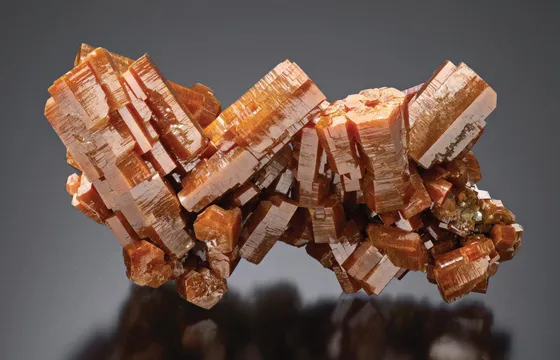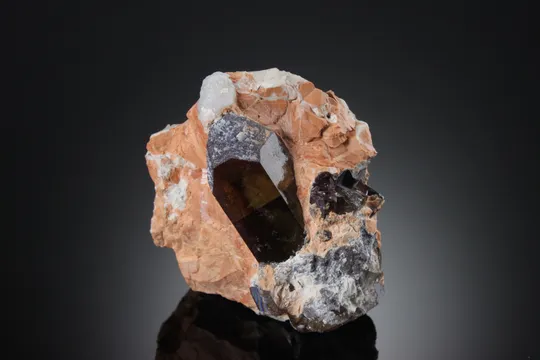
La Sirena Mine, Mexico, Guanajuato locality famed for distorted acanthite crystals, aguilarite, amethyst crusts, and pyrite in quartz–calcite.
Key facts
La Sirena is one of the small but specimen-rich names on the great Guanajuato Veta Madre, the epithermal silver-gold vein system that made Guanajuato one of the classic silver districts of the world. The mine sits in the Guanajuato municipality, close to the city itself, and belongs mineralogically to the same family of deposits as Rayas, Valenciana, Cata, Peregrina, and the other famous workings strung along the Mother Lode. For collectors, La Sirena is not important because of a long species list; it is important because a short list produced memorable specimens: distorted, skeletal, “tortured” acanthite crystals; rare crystallized aguilarite; lilac to purple amethyst crusts with snowy calcite; and bright pyrite druses that make the calcite and quartz combinations sparkle.
Regional View
Country View
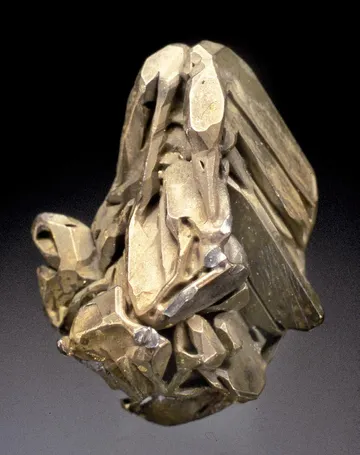
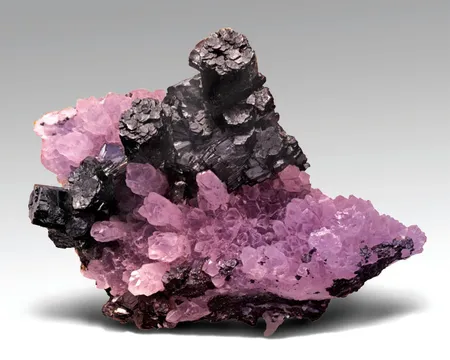
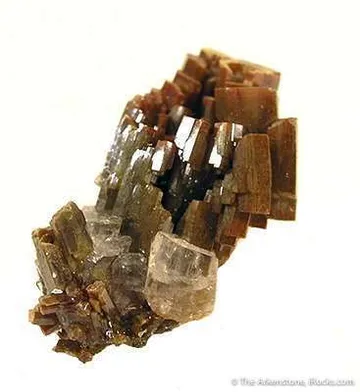
The best La Sirena specimens have a very recognizable Guanajuato look: metallic silver minerals in dark, lustrous, irregular crystals, or pale gangue plates covered by amethystine quartz and sharp white calcite. Acanthite pieces from the 590 level are especially prized when the forms are neither shapeless masses nor ordinary black crusts, but three-dimensional, branching clusters of pseudo-cubic to elongated crystals with hopper faces and open, sculptural profiles. The quartz-calcite-pyrite pieces are more decorative than rare, yet good examples have superb cabinet appeal: lavender quartz druse, isolated white calcite crystals, and tiny pyrite cubes glittering across the surface.

Photo: Wikimedia Commons

Photo: Wikimedia Commons
La Sirena is a vein deposit on the Veta Madre system at Guanajuato, an epithermal precious-metal structure hosted here principally by rhyolite, with associated conglomerate and strong silicification. The mine lies about 2.1 km S 74° E of Guanajuato city in a straight line, near the Peñolera area reached from the city’s Panorámica road. The official Mexican inventory record places it at about 2,090 m elevation and describes the mining work as a tabular vein occurrence within the 25 km surface trace of the Veta Madre.
Structurally, La Sirena is part of a northwest-trending, southwest-dipping fault-vein system. The broader Veta Madre is a major normal-fault-controlled epithermal vein system, and studies of the Guanajuato district describe the central Veta Madre as the dominant, historically most productive vein system of the camp. La Sirena’s mineralization is described in the Mexican inventory as disseminated and irregularly banded silver sulfides, silver sulfoantimonides, and native silver. That description matches what collectors see in specimens: acanthite and other silver minerals are not simply sprinkled through massive quartz, but appear as pocket crystals and late-stage metallic growths associated with quartz, calcite, pyrite, and other silver-bearing species.
The district-wide ore assemblage is typical of intermediate- to low-sulfidation epithermal silver-gold systems: silver sulfides and sulfosalts, base-metal sulfides, quartz, calcite, adularia, and locally selenium-bearing silver minerals. At La Sirena specifically, the verified mineral list is compact: acanthite, aguilarite, baryte, calcite, marcasite, polybasite, pyrargyrite, pyrite, quartz, and amethyst. The mine’s collector fame rests on two suites. The first is the metallic suite, especially acanthite from the 590 level and rare aguilarite. The second is the gangue suite, especially amethyst and calcite, commonly with pyrite.
Historically, La Sirena was one of the recognized silver occurrences opened after the early development of the Veta Madre. In the late nineteenth and early twentieth centuries it became important in a very different way: as part of the modern revival of Guanajuato mining after long reliance on patio amalgamation. The Guanajuato Consolidated Mining and Milling Company, incorporated in West Virginia in 1898, took over and worked the Sirena, Cardonas, Barragana, and Constantina silver-gold mines on the Veta Madre. Early twentieth-century accounts describe the company’s Sirena operation with modern milling, cyanide, power, tramway, and compressor installations, and the Sirena mine was repeatedly noted in discussions of cyanidation of silver ores.
The mine has not been a public collecting locality in the modern recreational sense. The Mexican inventory record from 2003 listed Sirena as legally current, on private land, with Compañía Minera Las Torres as concessionaire, and described the mine as inactive at that time while still having a beneficiation plant. For collectors, this means La Sirena specimens should be treated as old underground-production material, dealer-held material, or collection-circulated pieces rather than as something a visitor should expect to collect casually. The mine is in a historic urban mining district with private property, old workings, and concession rights; access requires permission from the relevant land and mineral-rights holders.
The documented specimen-producing levels are especially important for labeling. Acanthite from the 590 level is repeatedly cited in dealer and collection records, and calcite from the 670 level is also recorded. The best-known acanthite pieces are small miniatures rather than large cabinet pieces, but they can be visually powerful because the crystals are aerial and complex. Quartz, calcite, amethyst, and pyrite pieces occur as small-cabinet to cabinet plates, with some documented examples around 7 to 11 cm and at least one large quartz-after-calcite plate photographed at 28 cm across.
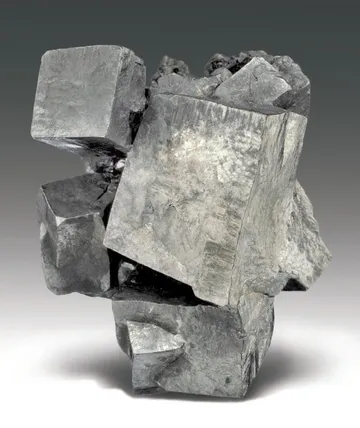
La Sirena acanthite is the signature mineral of the mine and is best known from the 590 level, where it forms black to battleship-gray metallic crystals in distorted pseudo-cubic, skeletal, hopper, branching, and elongated habits; the “cubes” are often monoclinic acanthite after high-temperature argentite forms, stretched along body-diagonal directions and sometimes overgrown by later acanthite. Documented specimens include thumbnail to miniature clusters, a 4 x 2.2 x 1.5 cm competition-quality arborescent miniature, and a 3 x 2.6 x 2.5 cm major cube perched on smaller cubes; other pieces show crude acanthite partly coated by microcrystalline chalcopyrite with tiny calcite rhombs. The best La Sirena acanthites are three-dimensional and lustrous, with sharp crystal edges, hopper recesses, and recognizable stacked architecture; ordinary pieces are flatter, more massive, or dulled by coatings and handling.
Calcite from La Sirena is a major aesthetic partner rather than merely gangue, occurring as white to colorless scalenohedra, small rhombohedra, granular “puffball” aggregates, and isolated crystals on amethyst, quartz, pyrite, and silver minerals. Recorded pieces include 9 x 6 x 3.5 cm groups of white scalenohedral crystals, small-cabinet plates of calcite on pyrite with crystals reported to 4 cm, and 670-level specimens in which colorless to milky calcite sits against a drusy pyrite backdrop. Good La Sirena calcite specimens are judged by contrast and placement: a clean white scalenohedron on lavender quartz or glittering pyrite is far more desirable than a crowded broken crust, and edge damage is common where plates were trimmed from vugs.
Quartz at La Sirena is the principal gangue and specimen matrix of the mine, occurring as colorless to pale amethystine druse, larger terminated points coated by microcrystalline quartz, and quartz-after-calcite forms on broad plates. It hosts pyrite, calcite, acanthite, and aguilarite, and it is most collectible when it preserves the open vug texture of the epithermal vein rather than appearing as massive vein quartz. The strongest quartz specimens from La Sirena are not simply “quartz from Mexico”; they are association pieces—sparkling quartz plates with calcite scalenohedra and pyrite, amethystine shards with a centered calcite crystal, or large quartz-after-calcite plates with sparse pyrite—that show the sequential growth history of the vein pocket.
La Sirena amethyst is typically a lavender to purple quartz druse, often in short, glassy crystals with subtle phantoms and commonly decorated by white calcite. Unlike the long, slender Veracruz-style crystals many collectors know from Mexico, La Sirena amethyst is a Guanajuato vein product: crusts and plates from silver workings, with purple color strongest in zones or cores and with calcite scattered as snowy balls, scalenohedra, or small rhombs. Documented specimens include a 3.9 x 3.3 x 2.2 cm Consie Prince collection cluster of glassy lavender crystals with subtle phantoms and an 11.4 x 8.3 x 4.8 cm amethyst-calcite plate; the best pieces have even coverage, attractive purple saturation, fresh luster, and undamaged calcite accents rather than dull, bruised druse.
Pyrite from La Sirena is most often seen as bright microcrystalline to small cubic druse on quartz and calcite plates, where it gives the specimens their glittering surface and sharp contrast. It occurs with calcite, quartz, amethyst, chalcopyrite, and locally acanthite; one documented dealer specimen described a pale amethystine shard with a centered “pineapple” calcite and a heavy sprinkling of pyrite and chalcopyrite, while other specimens show translucent calcite against a fine pyrite druse with a slightly iridescent blue cast. Top La Sirena pyrite pieces are association specimens with fresh, bright, evenly distributed pyrite and undamaged calcite or quartz; pyrite alone from the mine is generally less important than pyrite used as a sparkling stage for calcite, amethyst, or silver minerals.
Other minerals verified from La Sirena include aguilarite, baryte, marcasite, polybasite, and pyrargyrite. Aguilarite is the standout rarity: although the type locality for aguilarite is the San Carlos Mine in the Guanajuato district rather than La Sirena, La Sirena produced some of the finest collector specimens of the species, including crystals and groups reported to about 15 mm, hoppered or chevron-like dark gray crystals, and aguilarite with calcite or quartz. Polybasite and pyrargyrite place La Sirena squarely within the classic Guanajuato silver-sulfosalt suite, while baryte and marcasite round out the shorter documented list.
The first authenticity issue with La Sirena is not fakery so much as labeling. Guanajuato has many old mines on closely related vein systems, and visually similar acanthite, silver sulfosalt, quartz, calcite, amethyst, and pyrite specimens can come from Rayas, San Juan de Rayas, Valenciana, Cata, Peregrina, San Carlos, La Luz, and broader “Guanajuato” labels. A piece labeled only “Guanajuato” should not be upgraded to La Sirena without an old label, dealer record, collection provenance, or distinctive level information. “590 Level, La Sirena Mine” is meaningful provenance for acanthite and aguilarite; “670 Level” appears on calcite material. Conversely, “La Sirena” should not be confused with other mines of the same name in Mexico, including the unrelated La Sirena near Zimapán, Hidalgo, which is a different deposit with a different mineralogical literature.
Acanthite is soft and easily bruised. The lustrous high points on La Sirena crystals can show rubs, cleaved tips, and contact marks, especially on the protruding hopper edges of the better skeletal pieces. Because acanthite is a silver sulfide, it should be handled minimally, kept dry, and displayed away from sulfurous storage materials. Old specimens are often mounted on acrylic bases; that is not a problem if disclosed, but collectors should check that glue does not obscure damage or a broken contact.
Calcite and quartz-amethyst combinations from La Sirena commonly have edge damage from extraction and trimming. Small white calcite balls and scalenohedra detach easily, and their absence can leave pale scars on purple quartz druse. Calcite may fluoresce in some Guanajuato specimens, but fluorescence should be treated as a bonus rather than a primary buying criterion unless the specimen is specifically sold with a documented UV response. Avoid aggressive cleaning: acids will attack calcite, while mechanical cleaning can dull pyrite, break micro-calcite, and expose bruising on quartz.
Aguilarite from La Sirena deserves special caution. It is rare, visually similar to acanthite or mixed silver sulfosalts, and may need analysis or a reliable provenance chain. Good aguilarite specimens are expensive for their size because a 1 to 2 cm group can be highly significant. The best pieces show recognizable hoppered, skeletal, or pseudo-dodecahedral metallic crystals rather than nondescript black blebs. Some Guanajuato aguilarites are coated by chalcopyrite; uncoated examples with associated calcite are especially desirable.
Market availability is uneven. Decorative calcite-quartz-pyrite and amethyst-calcite plates appear periodically from old stocks and collection dispersals, often as small-cabinet pieces. Fine 590-level acanthite and aguilarite are much less common and should be treated as classic old Mexican silver specimens rather than routine contemporary production. Aesthetics, exact mine-level provenance, sharpness, luster, and old labels drive value.
In the early twentieth century, La Sirena was part of Guanajuato’s technological turning point. For centuries, the district had leaned on patio amalgamation, with ore crushed, mixed, spread, and worked in open patios while mercury did the metallurgical work. Around 1898, the Guanajuato Consolidated Mining and Milling Company entered the district and took up the old Sirena property. Contemporary mining writers described a camp that had been languishing, with old mines slow to unwater and reopen, and then singled out Sirena as the first of the company’s mines to be put back into good working order.
The mine became a test case for cyanidation of silver ores. Experiments at Sirena around 1900 were cited later as evidence that cyanide could leach the chloride and sulfide compounds in which silver commonly occurred. A 1902 Engineering and Mining Journal account described W. Leonard Holmes, a cyanide expert, spending roughly four months experimenting at the Guanajuato Consolidated mill. The reported target was ambitious for the day: a 128-ton-per-day plant, with crushing, concentration, and cyanidation costs claimed at about seven Mexican dollars per ton. The article’s page carried a period photograph captioned “Miners in La Sirena Mine, Mexico,” placing the human labor of the mine beside the new metallurgy that was supposed to transform it.
The specimen world has its own sharper story. A famous La Sirena aguilarite in the mim Museum, formerly in the F. John Barlow collection, is a tiny but dramatic object: a 3 x 2 x 3 cm, 8-gram “L”-shaped aggregate of sparkly gray metallic crystals, with doubly terminated white calcite scalenohedra to 5 mm perched on it. Its description notes that, unlike many Guanajuato aguilarites, it is not coated by chalcopyrite. Then comes the human sting: the miner who collected it was fired for “high-grading” two weeks after he removed it. In one small thumbnail specimen, the collector sees both the rarity of crystallized aguilarite and the old tension between ore, specimens, wages, and ownership underground.