






USA localities - vast collecting diversity, from Franklin–Sterling Hill and Bisbee to Elmwood and Keweenaw, with iconic specimens and varied ore deposits.
Key facts
The United States is not a single collecting district so much as a continent-scale cabinet: cratonic iron ranges, rift copper, Appalachian and Rocky Mountain ore belts, Basin-and-Range epithermal systems, Mississippi Valley–type zinc districts, granitic pegmatite provinces, alkaline complexes, evaporite basins, desert oxidation zones, and young volcanic gem occurrences all fall within one national locality record. For collectors, that breadth matters because the country has produced specimens that define entire species in the marketplace: scarlet rhodochrosite from the Sweet Home mine in Colorado, deep blue azurite and velvet malachite from Bisbee, glowing willemite-calcite-franklinite ore from Franklin–Sterling Hill, red-orange wulfenite from the Red Cloud mine, gem benitoite and black neptunite from San Benito County, native copper and silver from Michigan’s Keweenaw, and the amber calcite–purple fluorite–sphalerite combinations of Elmwood, Tennessee.
The geological setting is correspondingly immense. The Lake Superior region preserves Mesoproterozoic rift volcanics and conglomerates that carried native copper on a scale unmatched elsewhere. The Appalachians and Adirondacks expose ancient metamorphic terranes, zinc and talc districts, garnet deposits, and marble-hosted rarities. The midcontinent holds carbonate-platform ore systems such as the Central Tennessee zinc district and the Upper Mississippi Valley lead-zinc-fluorite districts. The Cordillera—California through Arizona, Nevada, Utah, Colorado, Montana, Idaho, and Alaska—adds porphyry copper systems, precious-metal veins, skarns, pegmatites, volcanic-hosted uranium and beryllium occurrences, and some of the finest oxidized copper and lead mineral assemblages ever mined.
Historically, the United States is central to specimen mineralogy not just for abundance, but for documentation. Localities such as Franklin and Sterling Hill became laboratories for complex ore mineralogy; the California benitoite occurrence gave science a new blue gem mineral; Bisbee and Red Cloud became benchmarks for copper and lead secondary minerals; and the Sweet Home mine showed that a modern specimen-mining operation, worked deliberately for intact pockets rather than ore tonnage, could produce museum icons. At their best, American specimens are immediately recognizable: Keweenaw copper in branching metallic sheets, Elmwood calcite as warm honey scalenohedra rising from black sphalerite, Bisbee azurite as electric-blue blades and rosettes, and Franklin ore under shortwave ultraviolet as a theatrical red-and-green blaze.
Regional View
Country View
Because “USA” is a country-level locality, precision matters. A fine label should not stop at “USA” unless the specimen is genuinely of unknown sublocality; serious American specimens are normally bought and sold by mine, district, county, and state. The difference between “Arizona wulfenite” and “Red Cloud mine, Silver District, La Paz County, Arizona” is not cosmetic—it changes appearance, rarity, desirability, and confidence.

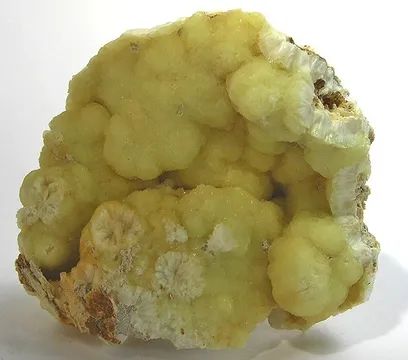
Photo: Wikimedia Commons

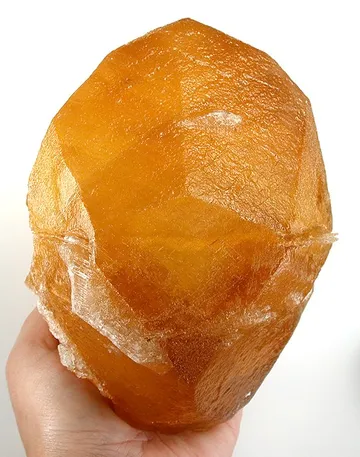
Photo: Wikimedia Commons

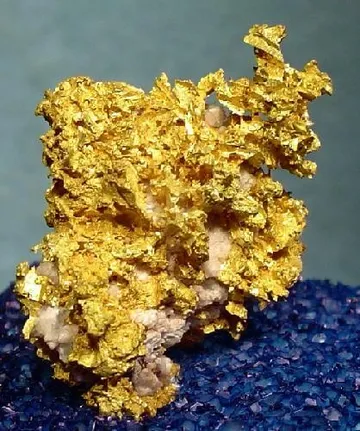
Photo: Wikimedia Commons

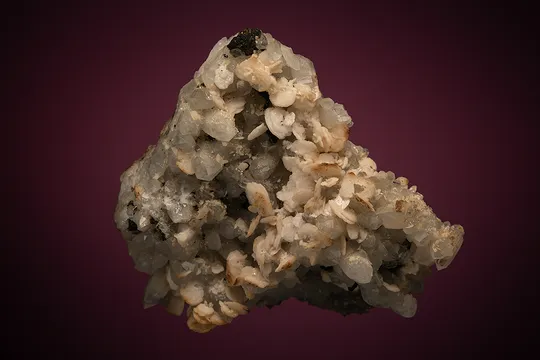
Photo: Wikimedia Commons
Search for specimens: View all specimens from USA
At country scale, the United States includes nearly every major specimen-forming environment. The oldest collecting stories come from native copper in the Lake Superior district, where copper occurs in basaltic lava flows, amygdules, fissure veins, and conglomeratic beds of the Midcontinent Rift. These deposits produced crystallized copper, copper sheets, copper in calcite, native silver, and the distinctive copper-silver intergrowths collectors call “halfbreeds.” The district’s industrial period began in the nineteenth century and made Michigan’s Copper Country one of the first great American mining regions; today its dump material, museums, and historic sites remain fundamental to American mineral collecting, though access is a patchwork of public, museum, private, and protected ground.
The eastern United States contributes some of the country’s most scientifically important mineral assemblages. The Franklin and Sterling Hill zinc deposits of Sussex County, New Jersey, are marble-hosted zinc-manganese-iron ore bodies famous for franklinite, willemite, zincite, hardystonite, esperite, clinohedrite, margarosanite, and an exceptional suite of fluorescent minerals. Franklin’s main mine closed in 1957 and Sterling Hill in 1986, but the collecting culture survived through museums, clubs, show circuits, old collections, the Buckwheat Dump at Franklin, and the Sterling Hill Mining Museum. For many collectors, Franklin–Sterling Hill is the American locality where science, mining, fluorescence, and field collecting most visibly meet.
In the midcontinent, carbonate-hosted lead-zinc-fluorite systems supply a different aesthetic. The Elmwood mine near Carthage, Tennessee, belongs to the Central Tennessee zinc district and is best known for sphalerite, fluorite, calcite, baryte, dolomite, galena, and marcasite in open cavities and breccia-related mineralization. Elmwood specimens are rarely subtle: black to reddish-brown sphalerite forms lustrous foundations; purple, lavender, yellow, or color-zoned fluorite cubes nestle among them; and large amber to honey calcite crystals rise above the matrix. Good Elmwood pieces are among the most displayable American cabinet specimens, and old-stock material continues to circulate actively.
The western United States is dominated by magmatism, faulting, oxidation, and repeated mineralizing events. Arizona alone would justify a major national guide: Bisbee in Cochise County produced superb azurite, malachite, cuprite, chrysocolla, smithsonite, cerussite, wulfenite, and countless rare copper minerals from oxidized replacement ores and limestone-hosted cavities; the Red Cloud mine in La Paz County produced the standard of red wulfenite in lustrous tabular crystals; and the state’s porphyry copper and skarn districts supplied generations of copper, molybdenum, lead, zinc, silver, and gold specimens. Bisbee’s Copper Queen and related mines were worked for nearly a century, and the town’s mining identity remains inseparable from Phelps Dodge, underground copper mining, the Queen Mine Tour, and the Bisbee Mining & Historical Museum.
Colorado’s mineral reputation rests on precious-metal veins, pegmatites, high mountain districts, and one especially beloved carbonate: rhodochrosite. The Sweet Home mine near Alma began as a silver mine, but its modern fame came from specimen mining in the 1990s and early 2000s, when miners working under Sweet Home Rhodo, Inc. and Collector’s Edge recovered cherry-red rhodochrosite crystals on quartz, tetrahedrite, fluorite, and sulfide-rich matrix. The best pieces are not merely red; they have a saturated internal glow, sharp rhombohedral form, and a sculptural relationship to matrix that makes them instantly identifiable. Colorado also supplies amazonite and smoky quartz from the Pikes Peak batholith, creedite and fluorite from the San Juan region, gold from Cripple Creek and the Colorado Quartz mine across the state line in California’s Mother Lode context, and countless locality-specific classics.
California’s collector importance lies in both pegmatites and rare minerals. The Pala and Mesa Grande districts of San Diego County produced pink and multicolored tourmaline, kunzite, morganite, lepidolite, quartz, and associated rare-element pegmatite minerals from zoned granitic pegmatites. The Benitoite Gem Mine in San Benito County is one of the most distinctive gem-mineral occurrences in the world: blue benitoite crystals with black neptunite, brown to orange joaquinite-(Ce), white natrolite, and blueschist or serpentinite matrix. Benitoite was identified as a new mineral in the early twentieth century and later became California’s official state gemstone. Even small, sharp benitoite crystals remain intensely sought after because the appearance, chemistry, and locality are so closely linked.
Utah adds the topaz-rhyolite and volcanic beryllium story. Red beryl occurs in the Thomas Range and Wah Wah Mountains, with the Ruby Violet mine in the Wah Wahs historically recognized as the commercial source of gem-quality red beryl. These crystals are typically small, intensely raspberry to red, and rooted in cavities and fractures in rhyolite rather than in the granitic pegmatite environment collectors associate with emerald, aquamarine, or morganite. Utah topaz, bixbyite, pseudobrookite, hematite, and associated volcanic-cavity minerals complete one of America’s most unusual high-silica volcanic specimen suites.
Some American localities are famous because collectors can still participate directly. Herkimer County and neighboring Mohawk Valley sites in New York produce doubly terminated quartz crystals from cavities in dolostone; several fee-dig operations allow visitors to collect their own “Herkimer diamonds.” Arkansas’ Crater of Diamonds State Park occupies an eroded diamond-bearing volcanic pipe and remains celebrated because visitors may search a plowed field and keep what they find. These localities are not just specimen sources; they shape how new collectors enter the hobby.
Collecting access in the United States must be treated with care. Many historic mines are private property, patented claims, active industrial sites, reclaimed ground, Superfund or hazardous areas, or within parks and protected lands where collecting is restricted or prohibited. Bureau of Land Management and Forest Service lands can be open to casual collecting in some places, but rules vary by land status, claim status, commodity, amount collected, tools used, and state or local regulations. The safest approach is to treat every locality as closed until permission, claim status, safety conditions, and applicable rules have been confirmed.
The USA mineral assemblage is too large to reduce to a simple species list, but several suites define the country for collectors.
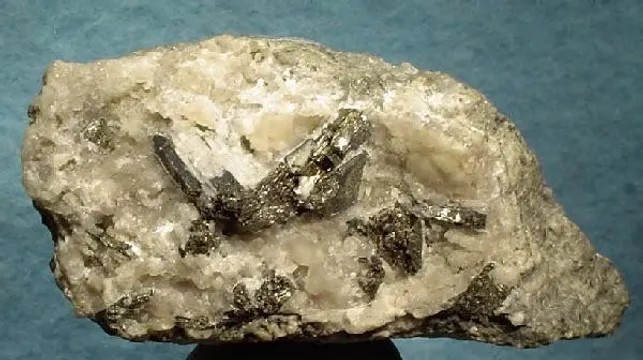
Franklin–Sterling Hill is the nation’s great complex zinc-manganese locality. Its classic ore association is franklinite, willemite, zincite, calcite, and associated manganese silicates and zinc silicates in metamorphosed carbonate rocks. Under shortwave ultraviolet light, the standard Franklin look is red-fluorescent calcite with green-fluorescent willemite and black franklinite, but the district’s mineralogy extends far beyond showy fluorescent ore. Hardystonite, esperite, clinohedrite, margarosanite, bustamite, rhodonite, and numerous arsenates, phosphates, silicates, and rare zinc-manganese species make the district one of the most species-rich mineral areas in the world. For collectors, locality attribution between Franklin mine, Sterling Hill, Buckwheat Dump, Parker shaft, Mill Site material, and other sublocalities can be important.
Bisbee’s signature minerals are azurite and malachite. The best azurite occurs as lustrous blades, rosettes, spherical aggregates, and deep blue crystal groups, often with malachite, cuprite, calcite, or limonite-stained matrix. Malachite appears as velvety botryoids, silky linings, replacements, and pseudomorphs after azurite. Bisbee also produced fine cuprite, especially chalcotrichite, as well as native copper, chrysocolla, smithsonite, cerussite, wulfenite, spangolite, brochantite, connellite, and many rarer copper minerals. The district’s best specimens are products of rich oxidized cavities rather than ordinary massive ore, and that is why true Bisbee pieces have such a distinctive cavern-formed elegance.
Red Cloud wulfenite is one of the cleanest American mineral icons. Wulfenite, PbMoO4, from this mine is prized for saturated orange-red to red color, glassy luster, transparency, and square to rectangular tabular crystals. The best crystals stand upright on dark, iron-stained matrix or grow in vuggy quartz-limonite gangue. Associated minerals include vanadinite, mimetite, cerussite, lead oxides and carbonates, fluorite, quartz, and manganese oxides, but it is the red wulfenite tablets that made the mine legendary.
Sweet Home rhodochrosite, MnCO3, defines modern American specimen mining. The classic association is rhodochrosite with quartz, fluorite, tetrahedrite, pyrite, sphalerite, and other sulfides. The great pieces are sharp rhombohedra in cherry to raspberry red, often partly gemmy, perched on white quartz or dark sulfide matrix. Unlike many rhodochrosite localities that produce massive, banded, or pale crystals, Sweet Home is coveted for transparent to translucent crystals with vivid color and dramatic pocket aesthetics.
Elmwood is best known for calcite, fluorite, sphalerite, and baryte. Calcite occurs in multiple generations, including large scalenohedral and twinned amber crystals. Fluorite ranges from classic purple cubes to pale, zoned, or partially dissolved forms; sphalerite is typically dark but can show red internal fire on thin edges; baryte commonly forms white, rounded or mound-like aggregates. A strong Elmwood specimen often depends on balance: fluorite color, sphalerite luster, calcite placement, baryte contrast, and undamaged terminations.
The California State Gem Mine assemblage is among the most distinctive in world mineralogy. Benitoite, BaTiSi3O9, occurs as blue triangular to pseudohexagonal crystals, commonly on or in white natrolite with black neptunite and brownish joaquinite-(Ce). The color contrast—blue, black, white, and tan-orange—makes even small specimens visually memorable. Benitoite’s type-locality significance and California state-gem status add weight, but collectors prize the specimens primarily because the best crystals are bright, gemmy, sharply formed, and unlike anything else.
Red beryl from Utah is notable not for abundance, but for geological oddity and rarity. It is beryl colored red by manganese, occurring in volcanic rhyolite cavities and fractures, especially in the Wah Wah Mountains and Thomas Range. Most crystals are small; fine gemmy crystals from the Wah Wah Mountains are genuinely scarce. Specimen-quality red beryl in matrix, even with tiny crystals, carries substantial collector interest when the locality is credible.
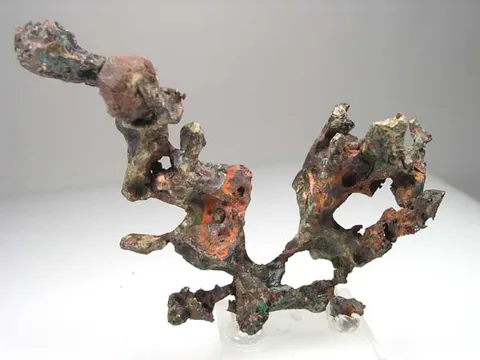
Keweenaw native copper and silver occupy a category of their own. Crystallized copper can form wires, sheets, spinel-law twins, arborescent growths, and sculptural masses. Copper in calcite, copper with native silver, datolite nodules, pumpellyite, prehnite, quartz, epidote, and zeolites round out the district’s specimen identity. The metal itself may be bright, brown, black, or naturally patinated green; serious collectors pay close attention to whether a piece has been naturally weathered, acid-cleaned, lacquered, trimmed, or artificially brightened.
Other American classics include Herkimer-style quartz from New York, turquoise from Nevada, Arizona, New Mexico, and Colorado, tourmaline from Maine and southern California, gold from California and Colorado, smoky quartz and amazonite from Colorado’s Pikes Peak region, topaz and bixbyite from Utah, fluorite from Illinois and Kentucky, barite from Missouri and South Dakota, garnet from New York, aquamarine from Colorado and New England pegmatites, and diamonds from Arkansas.
The first authenticity issue with any USA specimen is locality precision. Because the national label covers thousands of mines and districts, “USA” alone is usually inadequate for advanced collecting. For common species—quartz, calcite, fluorite, pyrite, copper, garnet, baryte, and malachite—an American country label may be little more than a starting point. A reliable specimen should ideally carry mine, district, county, state, collector or dealer history, and any old labels or collection numbers.
Franklin–Sterling Hill material is commonly traded, but misidentification is frequent because many visually similar white, gray, tan, and brown minerals fluoresce differently under shortwave, midwave, and longwave ultraviolet. A daylight lump of ore can contain calcite, willemite, franklinite, hardystonite, clinohedrite, esperite, margarosanite, tephroite, bustamite, or simply altered carbonate and silicate mixtures. Serious fluorescent-mineral collectors should record wavelength response, phosphorescence, associations, and sublocality. Shortwave UV lamps require eye and skin protection; never stare into the lamp or use it casually around children, pets, or bystanders.
Herkimer diamond quartz brings a different problem: the name is widely misused. Doubly terminated quartz from outside the Herkimer-Mohawk Valley region may be attractive, but it should not be sold as a Herkimer diamond without the proper New York locality. Large clusters deserve special scrutiny because repairs and reconstructions are well known in the trade; some repaired groups are legitimate collector pieces when disclosed, but undisclosed glue at contact points is a value issue. A longwave UV flashlight, magnification, and careful inspection around matrix contacts can be useful.
Keweenaw copper often has been cleaned. Acid-brightened, lacquered, or artificially polished copper can still be collectible, but it should be priced and described accordingly. Natural patina, crisp crystallization, matrix association, and clear mine attribution increase desirability. Be wary of generic “Michigan copper” if the form looks cast, machined, tumbled, or chemically stripped to an unnatural uniform pink shine.
Red beryl is a high-risk purchase without provenance or laboratory support. Natural Utah red beryl is rare, commonly small, and highly valued when gemmy; hydrothermal synthetic red beryl has been documented, and red stones or crystals from implausible localities should be approached skeptically. For faceted red beryl, a recognized gemological report is prudent. For matrix specimens, locality, matrix style, crystal habit, and ownership history are important.
Benitoite is also locality-sensitive. Genuine benitoite from San Benito County typically appears with natrolite, neptunite, joaquinite-(Ce), glaucophane/crossite-bearing blueschist or serpentinite-associated matrix, though loose crystals and etched stones occur. Damage is common: crystals can be abraded, partly embedded, cleaved, or acid-cleaned from natrolite. Strong blue color, sharp triangular form, associated neptunite, and reliable labels command premiums.
Sweet Home rhodochrosite is abundant enough in the market to be familiar but scarce enough in top quality to remain expensive. Edge bruising, rehealed cleaves, repairs, and reattachment to matrix should be examined carefully. Because many famous Sweet Home pieces came from reconstructed pockets or were repaired professionally after extraction, condition disclosure is essential rather than automatically disqualifying. The finest specimens combine saturated color, transparency, sharpness, matrix balance, and clean provenance.
Elmwood specimens are often heavy, fragile, and deceptively vulnerable. Calcite points chip easily; fluorite corners may be naturally modified or damaged; baryte aggregates shed; and sphalerite can be cleaved or bruised along reflective faces. The best Elmwood material is no longer a casual byproduct flowing freely into the market, so old-stock pieces with good labels are increasingly appreciated.
For radioactive minerals—uranium minerals from Colorado Plateau districts, New Mexico localities, Utah, Wyoming, and elsewhere—collectors should use appropriate storage, labeling, ventilation, and handling practices. Many American uranium specimens are legal to own in small collector quantities, but they should not be kept loose in living spaces, handled by children, cut or ground, or shipped without attention to regulations.
The American mineral story begins long before specimen cabinets. On the Keweenaw Peninsula of Michigan, native copper was mined and worked by Indigenous peoples thousands of years before the nineteenth-century industrial boom. Later, as the United States expanded westward, the Keweenaw became one of the country’s earliest mineral rushes. Before California gold transformed the national imagination, Michigan copper had already drawn prospectors, investors, miners, and engineers into the forests and basalt ridges of Lake Superior. The material they sought did not need smelting from sulfide ore; it occurred as copper itself—metal in the rock—sometimes in masses large enough to require heroic extraction.
At Franklin and Sterling Hill, the great drama is color hidden inside apparently ordinary rock. In daylight, a classic ore specimen may look like black franklinite scattered through pale calcite and grayish willemite. Under shortwave ultraviolet, it becomes one of the most famous sights in mineral collecting: calcite glows red, willemite green, and rarer species may answer in blue, orange, yellow, violet, or afterglow. The district trained generations of collectors to carry ultraviolet lamps, to learn wavelengths, and to understand that the finest specimen might look unimpressive until the lights went out.
Bisbee’s collecting romance comes from cavernous oxide ore. Miners chasing copper opened pockets lined with azurite, malachite, calcite, cuprite, and other secondary minerals, sometimes in forms that looked more like grotto decoration than ore. The town itself became the “Queen of the Copper Camps,” and its mines yielded billions of pounds of copper along with silver, gold, lead, zinc, and manganese. Yet collectors remember not tonnage, but the rescued treasures: blue azurite rosettes, green malachite replacements, glassy cuprite, and specimens with the unmistakable reddish-brown limestone-and-limonite character of the Warren District.
The Red Cloud mine earned one of the great phrases in American collecting. For years an old mine building served as a desert landmark, and directions to the locality reportedly included looking for the shack marked “WULFENITE IS LOVE.” The phrase is funny because it is also exact. Red Cloud wulfenite has the emotional force of a species ideal: red-orange, lustrous, transparent, sharp, and improbable against the dry Arizona landscape. A good Red Cloud specimen looks as if a square chip of stained glass grew upright from iron-rich rubble.
At the Sweet Home mine, modern specimen mining became theater. In 1991, Bryan and Kathryn Lees and their associates entered the mine not simply to extract ore, but to recover rhodochrosite pockets intact. The project required the patience of mining, the eye of a collector, and the nerve to spend real money chasing pockets that might or might not exist. In 1992 the mine yielded the Alma King, a deep cherry-red rhodochrosite crystal of museum importance. Other named specimens followed, and the reconstructed Crystal Wall—built from actual pocket plates—gave the public a sense of what miners were seeing underground when the rock opened and red crystals flashed back in their lights.
At Arkansas’ Crater of Diamonds, the story is wonderfully democratic. John Huddleston found the first diamonds there in 1906 on what was then private land; later the site became a state park where visitors search an open plowed field and keep what they find. The locality has produced the Uncle Sam diamond, the largest diamond found in the United States, along with thousands of visitor finds. Unlike most famous mineral localities, where the best pieces disappeared into collections long ago, Crater of Diamonds keeps alive the improbable possibility that a first-time visitor might bend down and pick up a genuine American diamond.


,_neptunite,_natrolite.jpg)