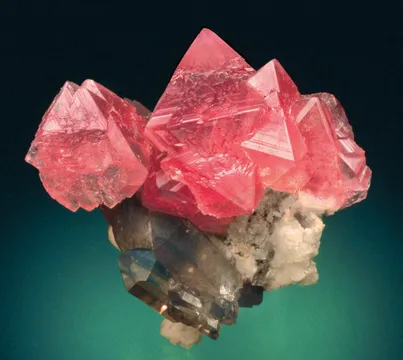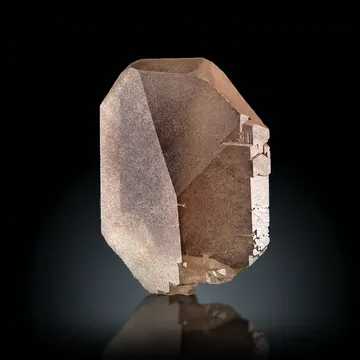
A collector's guide to Trimouns Talc Mine, France: its geology, mining history and notable minerals, illustrated with the 59 specimens documented from this locality on EarthWonders.
Key facts
Trimouns is one of those rare localities where an industrial giant and a collector classic are the same place. High above Luzenac in Ariège, on the eastern flank of the Saint-Barthélémy massif in the French Pyrenees, the quarry exposes a great talc-chlorite body formed by metasomatic alteration along a major structural contact between crystalline basement rocks and carbonate-rich cover rocks. To the talc industry it is the celebrated “white gold” of Luzenac; to mineral collectors it is a world-class source of rare-earth-element minerals from dolomite-lined cavities.
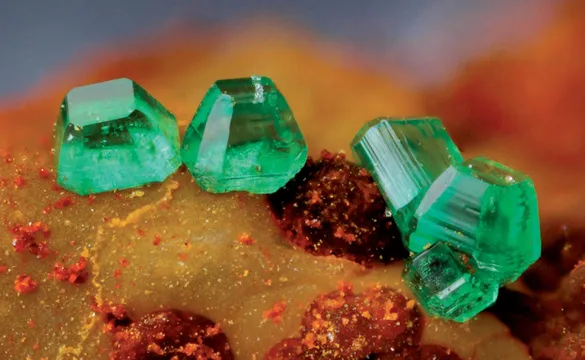
The collecting importance of Trimouns rests on its dolomitic levels. In the walls and blocks of the quarry, small geodes in dolomite produced an unusually rich suite of REE-bearing minerals: allanite-(Ce), dissakisite-(Ce), bastnäsite-(Ce), parisite-(Ce), synchysite-(Ce), monazite-(Ce), xenotime-(Y), hingganite-(Y), iimoriite-(Y), aeschynite-(Y), trimounsite-(Y), and gatelite-(Ce), among others. Many are micromount minerals, but Trimouns is not merely a locality for analytical specks. Good specimens can show sharp crystals set dramatically on white to translucent dolomite, with the best allanite-dissakisite crystals reaching eye-visible miniature quality and some REE species forming bright, gemmy, sharply bounded individuals.
The classic Trimouns aesthetic is unmistakable: snowy dolomite rhombs and pearly talc provide the stage; dark brown, honey-brown, orange, yellow, or colorless rare-earth crystals supply the focus. Fine specimens often look deceptively delicate, with a single prismatic crystal protected in a pocket, or a spray of small blades and tablets scattered across dolomite. The quarry also produced attractive talc and carbonate specimens in their own right, including crystalline talc plates and pale dolomite groups that show why this industrial talc body became a mineralogical reference locality.
Regional View
Country View
The mine is also historically important. Organized exploitation began in the nineteenth century, was transformed by the arrival of rail transport and the construction of the Luzenac processing system, and became the basis for a major French industrial-minerals enterprise. The Société Anonyme des Talcs de Luzenac was founded in 1905; the Luzenac operations later passed through Rio Tinto Minerals and were acquired by Imerys in 2011. Today the quarry remains active, and that continuing industrial life is part of the locality’s collector story: many of the best specimen-producing zones were exposed only because of large-scale talc extraction, and once a dolomitic pocket zone was mined through, it was gone.

Search for specimens: View all specimens from Trimouns Talc Mine, France
Trimouns is an open-pit talc-chlorite quarry situated roughly 6 km northeast of Luzenac, at about 1,700 m elevation, in the Saint-Barthélémy or Tabe massif of Ariège. The deposit has been traced for about 5 km along a north-northeast trend, although the principal industrial workings occupy a more limited part of that structure. It lies on a major east-dipping thrust or shear contact: to the west, the footwall is made up of crystalline rocks of the Saint-Barthélémy massif, including migmatites, gneisses, and mica schists; above and to the east are epimetamorphic graphite-bearing chloritic rocks with dolomite lenses, sericite schists, Silurian black schists, and overlying Devonian limestones.
The ore is a metasomatic talc-chlorite body rather than a simple sedimentary talc layer. Dolomitic rocks, mica schists, schists, aplites, and pegmatitic material were altered by magnesium-rich hydrothermal fluids along the structural zone. Talc-rich ore dominates toward the hanging-wall side, while chlorite-rich ore becomes more important toward the footwall. In the quarry, the main mineralized layer is commonly described as 25 to 75 m thick, dipping eastward more steeply in the southern part than in the north. Talc-rich facies may contain roughly 80–97% talc, while chloritic facies may contain approximately 70–90% chlorite with subordinate talc. This is why mining has always required selective extraction: the quarry is not simply white talc everywhere, but a complex interleaving of talc, chlorite, dolomite, schistose material, and altered pegmatitic bodies.
For collectors, the crucial environment is not the soft talc ore itself but the dolomite horizons near the talc-chlorite contact. Centimeter-scale cavities in these dolomitic levels hosted late-stage rare-earth mineralization. The pockets are typically lined with dolomite and may carry talc, calcite, quartz, pyrite, pyrrhotite, clinochlore, and a suite of REE minerals. The literature ties these REE species to fluids active during talcification and chloritization, with rare earths probably mobilized from earlier allanite-bearing material and redeposited in the dolomite geodes. Geochronological work on xenotime and monazite from the deposit has placed the hydrothermal activity in the Cretaceous, around 112–97 Ma, giving Trimouns a much younger ore-forming history than its Variscan basement might at first suggest.
The industrial story began modestly. Talc was gathered and taken down from the mountain by people or donkeys, then ground in flour mills at Luzenac before being sold to druggists and apothecaries in Toulouse. A geological reference to the talc appeared in 1841, and Jacques Durand acquired mining rights in the 1840s. The business struggled until the late nineteenth century, when Julien Dumas acquired the Durand succession and brought in Georges Goubeau to manage the operation. Production rose rapidly: hundreds of tonnes in the late 1880s became many thousands of tonnes by 1900, and by 1905 the Société Anonyme des Talcs de Luzenac had been created.
Mechanization changed the scale. A cableway was experimented with in the late nineteenth century and opened in 1894, allowing ore to descend from the high quarry to the Luzenac plant. Steam and then electric shovels appeared in the early twentieth century, Raymond mills were installed in the 1920s, and later decades brought dumpers, hydraulic shovels, optical sorting, micronization, and tightly controlled product streams for industrial use. The modern system crushes ore near the quarry and sends it by a 5 km cableway to the processing plant in Luzenac; historic descriptions note 120 buckets of 1.4 t capacity and a transport rate of about 180 t per hour. Because the quarry sits around 1,700–1,800 m elevation, winter weather has always shaped operations, and stockpiles are required so the plant can continue working outside the main extraction season.
Current collecting access is not comparable to a small abandoned mine or club quarry. Trimouns is an active industrial site under Imerys Talc Luzenac France, and official public access is through guided Talcaneô visits by coach, with reservation requirements, closed shoes, weather limitations, and strict safety controls. Serious collectors should assume that casual collecting is not permitted. Specimens on the market come from past collecting, from material saved during operations, from old French collections, and from dealer dispersals; precise pocket provenance is usually rare, but labels that mention the dolomite contact zones, REE pockets, or old Trimouns finds are worth preserving.
Notable finds were especially important from the dolomite geodes exposed during quarrying in the late twentieth century and early twenty-first century. These cavities yielded the classic Trimouns REE assemblage: dark allanite-rich zones in lighter dissakisite crystals, orange to yellow bastnäsite and hydroxylbastnäsite, parisite-synchysite crystals, tiny but sharp trimounsite-(Y), and a range of analytical rarities. Most collector specimens are small, often micromounts or thumbnails, yet the finest pieces have enough scale and contrast to stand comfortably in a cabinet of European classics.
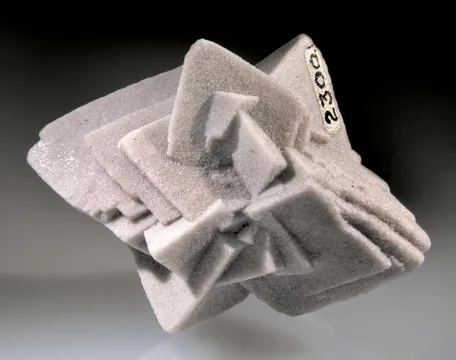
Dolomite is the key matrix and pocket mineral at Trimouns, and the best pieces are much more than “host rock.” It occurs as white, colorless, pale grey, or faintly honey-tinted rhombohedral crystals lining cavities in the dolomitic levels adjacent to the talc-chlorite ore, often forming the sparkling bed on which allanite-(Ce), dissakisite-(Ce), bastnäsite-(Ce), calcite, talc, parisite-synchysite, and other REE minerals are displayed. Good Trimouns dolomite specimens show crisp, lustrous, well-separated rhombs or stacked rhombohedral growths with open spaces that frame the rarer species; ordinary examples are massive, sugary, or too bruised from quarry handling. Attractive hand specimens around miniature to small-cabinet size are known, including dolomite with talc plates and dolomite-pocket specimens carrying prismatic allanite-dissakisite crystals.
Allanite-(Ce) from Trimouns is famous because it is intimately tied to dissakisite-(Ce), and many prismatic crystals are chemically zoned between the two; the darker, iron-richer zones are typically allanite-rich, while paler transparent to honey-brown portions tend toward dissakisite. Classic specimens occur in dolomite vugs as slender rods, prisms, or longitudinally striated tablets, commonly only a few millimeters to about 1–1.5 cm, though exceptional crystals several centimeters long are documented. The best collector pieces show an isolated, complete, lustrous, sharp prismatic crystal standing on clean white dolomite or calcite-dolomite matrix, ideally protected by a natural cavity and showing visible color zoning; lesser pieces are broken, embedded, analytically uncertain, or present only as tiny dark streaks in dolomite.
Bastnäsite-(Ce) at Trimouns occurs in the same dolomite-geode environment as the allanite-dissakisite suite, most often as small hexagonal tablets, platy blades, or flattened crystals in pale yellow, honey-yellow, orange, or brownish tones. Early French notes described translucent yellowish-white tabular hexagonal crystals only a few millimeters across, but later collecting established that Trimouns can produce eye-visible bastnäsite, including sharp crystals around the centimeter range and occasional larger individuals on dolomite. Fine pieces are valued for textbook hexagonal form, transparency to translucency, warm color, and contrast against white dolomite, especially when associated with allanite-dissakisite or hydroxylbastnäsite; unattractive examples are usually just scattered microcrystals, confused carbonate-group intergrowths, or incomplete plates without visual separation from the matrix.
Calcite is a subordinate but important carbonate at Trimouns, occurring with dolomite in cavities and as part of the gangue assemblage of the talc-chlorite deposit. Collector specimens show colorless to white, translucent calcite crystals perched on dolomite, commonly as sharp rhombohedral or modified scalenohedral forms of millimeter to centimeter scale; one photographed Trimouns example shows a clear calcite crystal about 1.5 cm on dolomite. The best calcite pieces are those where the calcite adds architecture to the dolomite matrix or frames rarer REE minerals such as allanite-(Ce); ordinary calcite from the quarry is too small, cloudy, or visually indistinct from the associated dolomite unless the crystal form is especially clean.
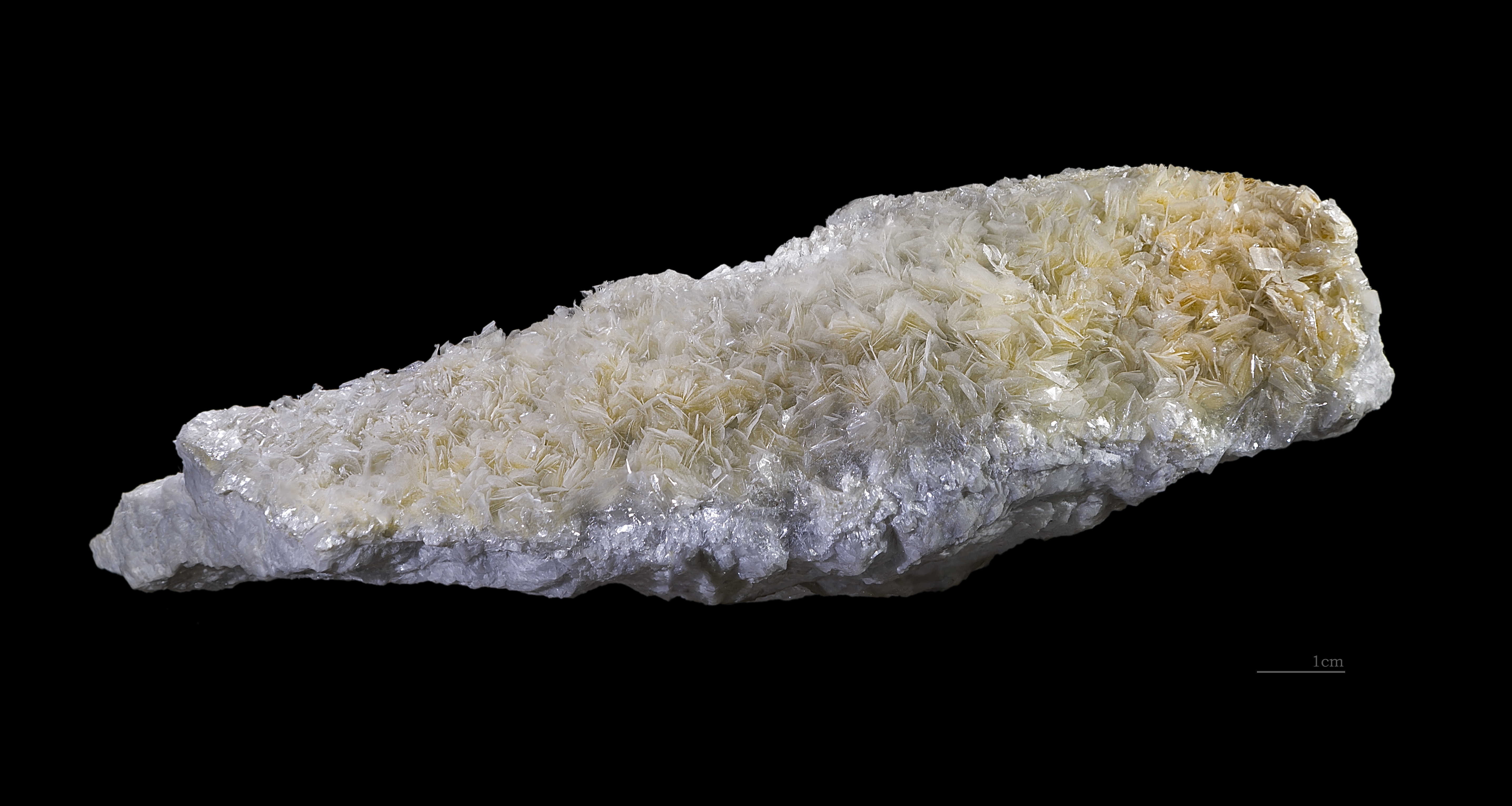
Talc is the industrial mineral that made Trimouns famous, but crystallized talc specimens from the quarry are scarcer and more delicate than the scale of mining might suggest. It occurs as pale greenish, white, silvery, or pearly lamellar aggregates, soft plates, and fine foliated crystal layers, sometimes lining dolomite cavities with REE minerals and occasionally forming transparent, plastic-film-like plates to around the centimeter scale. Good Trimouns talc specimens preserve bright, undamaged, discrete platy crystals or satiny sprays on dolomite, preferably with a clear relationship to the dolomite pockets; common quarry talc, by contrast, is massive, friable, smeary, or too industrial in appearance to make a satisfying mineral specimen.
Trimouns is especially prized for its rare-earth minerals and type-locality species. Trimounsite-(Y), Y2Ti2SiO9, was first described from the locality as pale brown prismatic crystals in dolomite-lined microcavities, with adamantine luster, striated faces, and crystals reported up to about 5 mm; the name commemorates Trimouns itself, an Occitan name commonly interpreted as “three peaks.” Gatelite-(Ce) was also described from Trimouns, occurring as colorless, transparent, striated crystals from dolomitic levels, intergrown at microscopic scale with törnebohmite-(Ce). Other important documented species include dissakisite-(Ce), often forming pale to brown prismatic crystals with allanite-rich zones; parisite-(Ce) and synchysite-(Ce), which can occur together and may require analysis; hingganite-(Y), iimoriite-(Y), aeschynite-(Y), monazite-(Ce), xenotime-(Y), clinochlore including golden-brown ripidolite, pyrite, pyrrhotite, quartz, rutile, cassiterite, and a long tail of micromount rarities that make Trimouns one of Europe’s great REE specimen localities.
Trimouns specimens require a collector’s eye and, for many species, a laboratory-minded caution. The most common authenticity issue is not outright fakery but misidentification. Allanite-(Ce) and dissakisite-(Ce) are chemically close epidote-supergroup minerals, and Trimouns crystals may be zoned at the scale of a single crystal: dark zones can be allanite-rich, while lighter zones may be dissakisite-rich. A label reading simply “allanite” or “dissakisite” should be treated as a working identification unless it is supported by analysis or by a reliable published/dealer provenance. The same warning applies to parisite-(Ce) and synchysite-(Ce), and to bastnäsite-group species where morphology alone is not always enough.
Condition is a major value factor. The talc and carbonate matrices are relatively soft and vulnerable to rubbing, edge bruising, and powdering; dolomite rhombs chip easily; and many of the REE crystals are slender or perched in exposed cavities. Look carefully for repaired prismatic crystals, broken terminations, contact scars from pocket walls, and compressed talc layers. On high-end allanite-dissakisite pieces, a complete termination and unbroken attachment to matrix matter more than mere size. A slightly smaller but pristine crystal on clean dolomite is usually preferable to a longer, broken, or analytically ambiguous crystal.
Trimouns talc specimens should be handled sparingly. Talc is extremely soft, and even casual rubbing can dull a pearly surface or smear loose powder across adjacent crystals. Avoid ultrasonic cleaning; use only the gentlest air bulb or soft artist’s brush when absolutely necessary. Carbonate matrices should not be acid-cleaned: calcite and dolomite are integral to the specimen, and acid can ruin both the display matrix and the contextual evidence that makes a Trimouns REE specimen meaningful.
Fluorescence is not the principal appeal of most Trimouns collector pieces, but trimounsite-(Y) has been reported with bright blue cathodoluminescence, and some REE-bearing species may respond subtly under specialized excitation. Radioactivity is generally not the selling point either, but collectors should remember that some REE minerals may contain minor thorium or uranium substitutions; sensible storage and handling practices for REE-rich micromounts are appropriate, especially for concentrated lots.
Market availability is uneven. Dolomite, talc, and small allanite-dissakisite specimens appear periodically, but sharp, aesthetic matrix pieces are not common. Bastnäsite-(Ce) and parisite-synchysite pieces are scarcer still, and type-locality trimounsite-(Y) or gatelite-(Ce) is largely a micromount and specialist market. Specimens with old French labels, analytical notes, or provenance to known Trimouns collectors deserve premium attention. Because the locality is an active quarry with restricted access, and because many productive dolomite zones have already been mined through, high-quality older material should be regarded as finite rather than continuously replenished.
Before Trimouns became an industrial landmark, talc moved down the mountain at human and animal speed. Villagers collected the soft white stone as a secondary activity, carried it down from the heights on the backs of people or donkeys, and ground it in flour mills at Luzenac. From there it went to Toulouse, sold to druggists and apothecaries. It is a striking origin story for a deposit that would later supply a significant share of the world talc market: a mountain mineral gathered by hand, processed in repurposed grain mills, and traded as a useful powder long before the quarry was a terraced white amphitheater in the Pyrenees.
The first great business transformation belongs to the late nineteenth century. Jacques Durand, a painter-gilder from Toulouse, acquired talc rights and land in the 1840s, but the enterprise faltered and liquidation came in 1888. Julien Dumas then took over the succession and hired Georges Goubeau, an engineer, to manage the operation. The numbers changed quickly. Production rose from about 800 tonnes in 1888 to 13,000 tonnes in 1900, then to 20,000 tonnes in 1905, with 340 workers. That same year the Société Anonyme des Talcs de Luzenac was founded, giving the mountain deposit the corporate form that would carry it into the twentieth century.
The cableway is one of the great physical details of Trimouns. Tried as early as 1889 and opened in 1894, it solved the most obvious problem of a quarry perched high above its plant: how to move heavy, soft rock from the mountain to the valley without turning every tonne into a road-haulage ordeal. Later descriptions of the system give it a memorable mechanical rhythm: a 5 km line, 120 buckets, each with a capacity of about 1.4 tonnes, half descending and half returning, transporting around 180 tonnes per hour. Because the descending loaded buckets help power the system, the cableway has been described as producing part of the electricity needed by the operation. For a collector standing in Luzenac and looking uphill, that cableway is a reminder that every pocket specimen from Trimouns came out of a working industrial landscape, not a quiet alpine fissure.
Mechanization arrived in stages, and the names of the machines became part of the folklore. In 1920 Paul Fédou installed a steam shovel on rails, remembered as “La fumeuse,” then followed it with electric shovels imported from the United States. The quarry’s output climbed from 29,000 tonnes in 1919 to 80,000 tonnes in 1929. Later, dumpers and hydraulic shovels took over the heavy work; yet for a long time talc extraction itself remained highly selective and partly manual because different grades had to be kept separate. That selectivity matters to collectors: the same attention to subtle color, texture, and facies changes that served the talc plant also helped reveal the dolomite pockets that mineralogists prize.
A more recent human story is that of Mohamed Abouti, a seasonal talc sorter who retired after 42 years at Trimouns. In the contemporary quarry, large machinery moves through a white, almost lunar landscape, but the sorting tradition still depends on trained eyes and hands. A 2023 account of Abouti’s retirement framed him as part of a long community of Ariège, Portuguese, and Moroccan workers tied to the Luzenac talc industry. For collectors, stories like his put people back into a locality often discussed only in terms of rare-earth formulas and type minerals. The specimens reached cabinets because generations of quarry workers, sorters, mechanics, geologists, and seasonal crews learned to read the mountain.
The mineralogical story has its own cast. Pierre Gatel, an amateur mineralogist, is repeatedly associated with the study and recognition of the Trimouns rare-earth suite, and gatelite-(Ce) was later named in his honor. The type material for gatelite-(Ce) was deposited in the Muséum national d’Histoire naturelle in Paris, while trimounsite-(Y) type material is housed at the Royal Institute of Natural Sciences of Belgium in Brussels. Those museum placements are a quiet but important endpoint of the Trimouns story: crystals that began in small dolomite cavities inside an industrial talc quarry became reference material for mineral species recognized by the international mineralogical community.
Moine, B., Gavoille, B. & Thiébaut, J. (1982). “Géochimie des transformations métasomatiques à l'origine du gisement de talc et chlorite de Trimouns (Luzenac, Ariège, France). I. — Mobilité des éléments et zonalités.” Bulletin de Minéralogie 105, 62–75. A foundational open-access paper on the metasomatic zoning and geochemistry of the talc-chlorite deposit.
“Minéralogie de la France (4).” Bulletin de la Société française de Minéralogie et de Cristallographie 97, 521–524, 1974. Includes early formal notes on allanite and bastnäsite from Trimouns, with crystal habits, sizes, and microprobe observations.
Fortuné, J.-P., Gavoille, B. & Thiébaut, J., with Moreau, P. and Procureur, G. (1980). Le gisement de talc de Trimouns près Luzenac (Ariège). 26th International Geological Congress, Gisements Français, Fascicule E10, BRGM, 43 pp. The classic BRGM field-trip monograph on the Trimouns deposit.
Moine, B., Fortuné, J.-P., Moreau, P. & Viguier, F. (1989). “Comparative mineralogy, geochemistry, and conditions of formation of two metasomatic talc and chlorite deposits: Trimouns, Pyrénées, France, and Rabenwald, Eastern Alps, Austria.” Economic Geology 84, 1398–1416. A comparative ore-genesis paper placing Trimouns in a broader metasomatic talc-chlorite context.
Piret, P., Deliens, M. & Pinet, M. (1990). “La trimounsite-(Y), un nouveau silicotitanate de terres rares de Trimouns, Ariège, France: (TR)2Ti2SiO9.” European Journal of Mineralogy 2, 725–729. The type description of trimounsite-(Y), one of the locality’s signature type minerals.
Handbook of Mineralogy: Trimounsite-(Y). Concise reference summary for trimounsite-(Y), including occurrence, associations, name origin, and type material.
Kolitsch, U. (2001). “The crystal structure of trimounsite-(Y), (Y,REE)2Ti2SiO9: an unusual TiO6-based titanate chain.” European Journal of Mineralogy 13, 761–768. The detailed crystal-structure study of trimounsite-(Y).
Gatel, P., Parodi, G.-C., de Parseval, P., Fontan, F. & Marty, F. (2002). “Les minéraux de terres rares à Trimouns.” Le Règne Minéral, Hors-Série VIII, 29–63. Part of the major French special issue devoted to rare-earth minerals from Trimouns.
Gatel, P. & Marty, F. (2002). “Autres espèces de Trimouns.” Le Règne Minéral, Hors-Série VIII, 64–76. Companion article covering additional non-REE and associated species from the locality.
Bonazzi, P., Bindi, L. & Parodi, G. C. (2003). “Gatelite-(Ce), a new REE-bearing mineral from Trimouns, French Pyrenees: Crystal structure and polysomatic relationships with epidote and törnebohmite-(Ce).” American Mineralogist 88, 223–228. The type description of gatelite-(Ce), a Trimouns type-locality mineral named for Pierre Gatel.
Marty, F. (2004). “The Trimouns quarry, Luzenac, Ariège, France.” The Mineralogical Record 35(3), 225–247, 274. The principal English-language collector-locality article on Trimouns, with emphasis on rare-earth minerals and specimen occurrence.
Martin, F., Micoud, P., Delmotte, L., Marichal, C., Le Dred, R., de Parseval, P., Mari, A., Fortuné, J.-P., Salvi, S., Béziat, D., Grauby, O. & Ferret, J. (1999). “The structural formula of talc from the Trimouns deposit, Pyrénées, France.” The Canadian Mineralogist 37, 997–1006. A focused mineralogical study of Trimouns talc itself.
Schärer, U., de Parseval, P., Polvé, M. & de Saint Blanquat, M. (1999). “Formation of the Trimouns talc-chlorite deposit (Pyrénées) from persistent hydrothermal activity between 112 and 97 Ma.” Terra Nova 11, 30–37. The key geochronological paper for the Cretaceous hydrothermal age of the deposit.
Hoshino, M., Kimata, M., Nishida, N. & Shimizu, M. (2008). “Crystal chemical significance of chemical zoning in dissakisite-(Ce).” Physics and Chemistry of Minerals 35, 59–70. Important for understanding the allanite-(Ce)–dissakisite-(Ce) zoning problem in Trimouns specimens.
Hoshino, M., Kimata, M., Nishida, N. & Shimizu, M. (2010). “Dissakisite-(Ce) chemical composition: some implications for its origins.” Physics and Chemistry of Minerals 37, 255–263. Further work on dissakisite-(Ce) chemistry and genesis, relevant to Trimouns material.
“Minerals with a Type Locality in France,” SFMC / Mineralogical Society publication. Includes a detailed section on trimounsite-(Y), its type locality, description, associations, and references.
“Le talc à ciel ouvert” — TF1 Info A 2026 French television segment showing the active Trimouns quarry, machinery, terraced white landscape, and cableway context.
“Ariège : la carrière de talc de Trimouns, une géante de la production mondiale” — La Dépêche A news video and article on modern production, the quarry setting, and Imerys operations.
“Mohamed Abouti, une vie comme trieur de talc à la carrière de Trimouns à Luzenac” — La Dépêche A human-interest video focused on a longtime seasonal talc sorter retiring after 42 years at Trimouns.
“Talc de Luzenac” — Fondation Groupe Dépêche, Métiers d’Occitanie Short media profile of the Trimouns-Luzenac talc operation and associated industrial careers.
“The World’s Largest Talc Quarry (Trimouns Quarry in Luzenac, France)” — Mining #Shorts A brief overview video aimed at a general mining audience.
Mindat: Trimouns Talc Mine, Luzenac, Foix, Ariège, Occitanie, France The main online locality database entry, especially useful for the long mineral list, references, photos, and occurrence notes.
Talcaneô official visitor page Current public-visit information for the quarry and Luzenac talc museum space, including access rules and seasonal schedules.
Géorisques: Imerys Talc Luzenac France, Trimouns quarry Official French regulatory page confirming the active industrial status of the quarry and inspection records.
Wikimedia Commons: Trimouns Talc Mine category Open-image repository with quarry views and mineral specimen photographs from Trimouns.
Geological Society of France PDF: “Le gisement de talc de Luzenac : un géant de taille mondiale” Accessible overview of the deposit’s history, geology, mining methods, processing, and bibliography.
Persée: Moine, Gavoille & Thiébaut 1982 on metasomatic transformations at Trimouns Open-access scan and text of a key geological paper on the talc-chlorite deposit.
Persée: “Minéralogie de la France (4)” Useful historical source for early reported allanite and bastnäsite from the Trimouns talc quarry.
American Mineralogist: Gatelite-(Ce), a new REE-bearing mineral from Trimouns Full PDF of the gatelite-(Ce) type-mineral description.
Handbook of Mineralogy: Trimounsite-(Y) Concise mineralogical reference for Trimouns’ namesake type-locality species.
SFMC: Minerals with a Type Locality in France Broader French type-locality reference including a dedicated Trimounsite-(Y) section.
ResearchGate abstract: Marty 2004, “The Trimouns quarry, Luzenac, Ariège, France” Abstract and bibliographic page for the major Mineralogical Record collector article.
Fabre Minerals: Dissakisite-(Ce)/Allanite-(Ce) with Dolomite from Trimouns Dealer specimen note illustrating the common allanite-dissakisite zoning issue on Trimouns material.
Volker Heck: minerals of Luzenac / Trimouns Collector-oriented photo and locality page with notes on talc, dolomite cavities, and REE minerals.