Talèfre Glacier, France — Alpine locality yielding smoky quartz, gwindel quartz, and pink fluorite; famed for historic specimens and striking setting.
Key facts
Talèfre Glacier is one of the classic high-Alpine crystal grounds of the Mont Blanc massif: not a mine in the usual sense, but a glacier basin and ring of granite walls where collectors have long worked the open fissures, “fours,” and freshly exposed moraine for smoky quartz, gwindel quartz, and the coveted pink to red fluorite of Chamonix. The setting is as important as the specimens. Talèfre lies in the upper Chamonix side of the massif, under and between names that carry real mineralogical weight—Les Courtes, Les Droites, Aiguille Verte, Aiguille de Talèfre, Aiguille du Moine, Aiguille de Pierre Joseph, and the Jardin de Talèfre. The host is the Mont Blanc granite, traditionally called protogine, cut by Alpine extensional fissures that opened during uplift and deformation and were later lined by quartz, feldspar, chlorite, carbonates, titanium minerals, and fluorite-bearing late-stage solutions.
The best specimens have the unmistakable look of serious Alpine material: smoky quartz crystals with glassy faces, saw-tooth gwindel crests, faden-like or twisted internal architecture, and the warm brown to near-black colour produced in the radioactive granitic environment; pale rose to raspberry-pink fluorite octahedra perched on smoky quartz or adularia; and occasional combinations with hematite, calcite, siderite, titanite, anatase, brookite, chlorite, albite, and muscovite. Talèfre’s importance is historical as well as aesthetic. Alpine writers from the nineteenth century onward treated the basin as crystal country, and Alfred Lacroix’s mineralogical work used material from the Talèfre area in discussions of Mont Blanc quartz and titanite habits. Modern collectors still regard Talèfre gwindels and smoky quartz–fluorite associations as among the most characteristic French Alpine specimens.
Regional View
Country View
Talèfre specimens are best understood as products of a moving high-mountain landscape. Glacial retreat has changed access, exposed new granite surfaces, destabilized old ones, and periodically revealed fissures that earlier collectors could not reach. That has kept the locality alive, but it also means that many pieces enter collections under broad names—“Talèfre,” “Bassin de Talèfre,” “Col de Talèfre,” “Les Courtes,” or simply “Chamonix”—rather than as pocket-specific finds. For collectors, the finest labels preserve not only the glacier basin but also the wall, col, or cleft association when known.

Photo: Wikimedia Commons
Search for specimens: View all specimens from Talèfre Glacier, France
Talèfre Glacier is a glacier locality rather than an underground mine. The “deposit” is the network of Alpine fissures in the Mont Blanc granite and adjacent crystalline rocks exposed around the basin and its enclosing peaks. These fissures formed during Alpine deformation and uplift, then acted as cavities through which hot aqueous fluids circulated. In the Mont Blanc massif the typical cleft sequence begins with quartz-dominated growth, commonly accompanied or followed by albite and adularia, then chlorite and later carbonates, fluorite, muscovite, siderite, and zeolitic or low-temperature overgrowths. At Talèfre, the collector’s ore body is therefore not a vein mined for metal but a system of discontinuous crystal pockets—some in place on steep granite walls, others broken open and transported by frost, rockfall, and glacier movement.
The mineralization is classic Chamonix Alpine-cleft mineralization. Quartz is dominant and ranges from colourless rock crystal to smoky quartz and morion; gwindel habit is especially important in the Talèfre and Col de Talèfre material. Fluorite occurs mostly as octahedra, from pale pink to stronger rose-red, and is most desirable when it sits on smoky quartz or adularia rather than as isolated damaged crystals. Mindat records the Talèfre Glacier mineral list with albite, anatase, brookite, calcite, chlorite-group minerals, epidote, fluorite, galena, hematite, K-feldspar including adularia, molybdenite, muscovite, pyrite, quartz including gwindel and smoky quartz, rutile including sagenite, siderite, and titanite. The Aiguille de Talèfre and Aiguille de Pierre Joseph sublocalities are especially relevant for quartz, gwindel quartz, adularia, siderite, and titanite.
There is no ordinary mining history at Talèfre: no shaft, concession, dressing floor, operator, or production record for ore. The history is the history of Chamonix cristalliers. The valley’s crystal collecting tradition predates modern alpinism and became one of the roots of the guide culture of Chamonix. Talèfre was already cited in older mineralogical and mountaineering literature as productive crystal ground, and Lacroix included the glacier basin among the notable Mont Blanc localities for quartz and titanite. In the twentieth century, especially from the 1950s and 1960s onward, high-level Alpine collecting was revived by guides, climbers, and specialists who could reach steep sectors opened by summer melt. The modern “production period” is therefore intermittent and seasonal: short late-summer windows, occasional rich pockets, long gaps, and finds dictated by snow cover, permafrost conditions, and the technical courage of the collectors.
Collecting today is regulated and physically serious. On the Chamonix side of the Mont Blanc massif, crystal collecting is subject to municipal declaration and a code of honour; traditional hand collection is treated differently from extraction using explosives, mechanical means, vehicles, or helicopter transport. The rules emphasize preservation of the classified Mont Blanc site, respect for land ownership, and the obligation to present scientifically or patrimonially significant finds to the local authorities or museum structures. Even for properly declared collectors, Talèfre is not casual rockhounding. Access involves glacier travel, ladders or steep approaches, unstable moraines, rockfall, crevasses, rapid weather changes, and in many cases technical climbing. Most collectors should treat Talèfre specimens as acquired material, not as a field-trip objective.
Notable finds from the Talèfre basin include smoky gwindels from the Col de Talèfre area, smoky quartz groups with small pink fluorite octahedra, darker smoky quartz and morion from high walls around Aiguille Verte and Les Courtes, quartz with hematite dusting or lamellar hematite, and quartz with siderite, calcite, adularia, and chlorite. A documented 2017 discovery in the Talèfre Basin produced gwindel quartz with hematite roses, including a 7.3 cm specimen in which the gwindel stood perpendicular to the floor of the piece and the hematite dusted the crest and base while leaving the front “window” clear. Dealer records also show Talèfre smoky quartz specimens around 6 cm and large dark smoky floaters up to roughly 18 x 12 x 11 cm, including pieces described with healed undersides and brown siderite. These market records are useful because they show what the locality actually yields: cabinet-worthy but often hard-won Alpine crystals, with condition and exact association driving value far more than size alone.
Smoky quartz is the signature mineral of Talèfre Glacier, especially in the form of brown to very dark smoky crystals and the celebrated “quartz courbe” or gwindel habit associated with the Col de Talèfre and the basin walls. Good Talèfre smoky quartz is not simply dark quartz: it has high transparency through cognac to clove-brown colour, crisp Alpine lustre, striated prism faces, and either elegant single-crystal architecture or the curved, saw-tooth crest of a true gwindel. EarthWonders and dealer records show representative pieces from about 5–7 cm through larger cabinet specimens, with exceptional Chamonix gwindels commanding much higher prices when they are complete, strongly twisted, well coloured, and unrepaired. Associations include small quartz crystals, adularia, fluorite, hematite, chlorite, albite, and siderite; ordinary pieces tend to be abraded, frosted, broken out of a cleft without clean terminations, or too opaque to show the inner Alpine glassiness that makes the best Talèfre material so compelling.
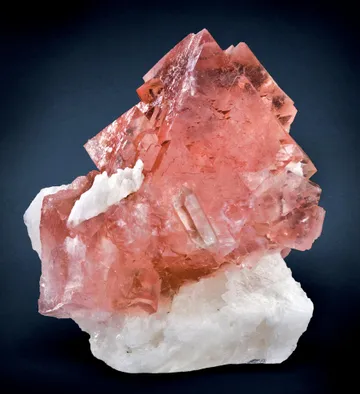
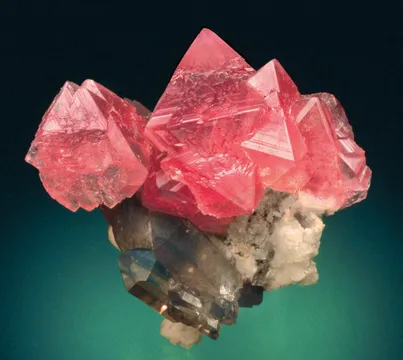
Talèfre fluorite belongs to the famous Mont Blanc pink-fluorite tradition: mostly octahedral crystals, commonly small, ranging from very pale rose and nearly colourless to richer pink and raspberry tones, with the most desirable examples sitting naturally on smoky quartz, quartz, or adularia. Mindat photo associations for Talèfre fluorite emphasize quartz, smoky quartz, K-feldspar/adularia, calcite, and hematite, which matches the collector market: the memorable specimens are not loose octahedra but Alpine compositions where pink fluorite punctuates smoky quartz like drops of colour on brown glass. Local dealers have described Talèfre pieces with small octahedral pink fluorite on smoky quartz and noted pitted quartz surfaces where former fluorite crystals have dissolved away, a typical and locality-relevant texture. Fine Talèfre fluorite is much rarer than Talèfre quartz, and the best pieces are judged by saturated colour, transparency, sharp undamaged octahedra, stable matrix, and believable Chamonix provenance.
Quartz from Talèfre Glacier covers more than the smoky variety: the basin yields clear to lightly smoky Alpine quartz groups, gwindels, double-terminated crystals, smaller druses, and quartz carrying later minerals such as chlorite, siderite, titanite, albite, calcite, and fluorite. In the Mont Blanc clefts, quartz commonly forms the architectural framework on which the later mineral story is written, so collectors should look closely at growth interruptions, healed bases, re-entrant faces, faden-like features, chlorite ghosts, and the way associated species occupy protected pockets or crests. A strong Talèfre quartz specimen has sharp, lustrous terminations and enough clarity to show internal zoning or smoky veils; a strong gwindel has coherent twist rather than just bent or damaged growth. The most ordinary examples are loose moraine points with abrasion from ice and rockfall, while the best preserve the fresh, glassy pocket surface of a crystal removed directly from a cleft.
Other documented Talèfre minerals give the locality much of its depth. Adularia is a classic cleft companion, occurring as white to pale feldspar crystals on or with quartz. Titanite has historical significance because Lacroix discussed Mont Blanc titanite forms from the Talèfre area, including old “pictite” habits, and recent work on Al-rich titanites from Mont Blanc fissures continues to treat the Talèfre and Argentière basins as important reference ground. Anatase and brookite are recorded from Talèfre and are the sort of small titanium-oxide species that reward careful loupe work rather than casual display viewing. Hematite may appear as dusting or lamellar crystals with quartz and fluorite; siderite and calcite occur as late carbonate associates; chlorite inclusions and coatings are common Alpine signatures; and molybdenite, galena, pyrite, muscovite, epidote, albite, and rutile/sagenite round out the known suite. Talèfre is not chiefly a formal type-locality story; it is a reference locality for Mont Blanc cleft habits, particularly smoky gwindel quartz, quartz–fluorite associations, and historically important titanite forms.
The main authenticity issue with Talèfre specimens is not treatment but attribution. Chamonix material moves through the market under overlapping labels—Talèfre Glacier, Bassin de Talèfre, Col de Talèfre, Les Courtes, Aiguille Verte, Aiguille de Talèfre, Mont Blanc, and sometimes just “French Alps.” Older Alpine labels can also be confused with Swiss localities because smoky gwindel quartz is famous on both sides of the Alps. A Talèfre attribution is strongest when supported by an old Chamonix label, cristallier provenance, a dealer history, or a recorded sublocality. Broad “Mont Blanc” labels should not be upgraded to Talèfre without evidence.
Condition is critical. Alpine quartz often breaks naturally during pocket opening, frost shattering, rockfall, or glacial transport, and later cleaning can expose or enlarge bruises on edges and terminations. Gwindels deserve especially close inspection: the serrated crest, side terminations, and basal contact are common sites of chips, trimming, repairs, and restoration. Large Chamonix gwindels can be spectacular, but the market accepts repairs only when they are clearly disclosed; undisclosed restoration is a serious value problem. With fluorite, look for edge bruising on the octahedra, missing points, cleaved backs, and loss of colour from poor display history. Pink Alpine fluorite can be visually delicate, and strongly lit display should be conservative.
Pitted quartz surfaces can be natural and even diagnostic where former fluorite has dissolved, but they can also make a specimen look worn if the piece lacks composition or colour. Hematite dusting may be attractive when it accentuates a crest or base, but dull iron staining can reduce transparency. Calcite and siderite associates should be treated gently; aggressive acid cleaning can change the character of an Alpine specimen by stripping late-stage minerals or leaving a quartz-only piece that has lost its paragenetic context.
Fluorescence is not the reason to buy Talèfre fluorite. These specimens are collected for daylight colour, form, locality, and association; any ultraviolet response is secondary. The stronger collector considerations are rarity and availability. Smoky quartz and quartz are seen regularly enough that a patient buyer can be selective, but fine Talèfre gwindels, undamaged smoky quartz floaters, and quartz with intact pink fluorite octahedra are scarce. Compared with Swiss Alpine smoky quartz, Talèfre material is less abundant on the international market and is valued heavily for French Mont Blanc provenance. Compared with Argentière or Les Droites fluorite, Talèfre fluorite is usually encountered in smaller numbers, and the best matrix pieces are difficult to replace.
The modern Talèfre story is inseparable from the Chamonix cristalliers who cross glacier and granite in the short melt season. In one account, Christophe Péray—one of the best-known crystal hunters of the valley—and the Spanish-born Chamonix guide Simón Elías worked in the great granite basins of Argentière and Talèfre during the August window, when snow pulls back from the high clefts. Their objective was not a roadside cavity but a succession of steep pockets in the walls around Les Courtes and Aiguille Verte. Péray warned the visiting writer that the approach itself would be a commitment: five hours to the hut, six more to a bivouac, and heavy packs before the real work began.
The first productive pocket in that narrative yielded about forty pieces. The crystals were sorted on the ledge, the keepers wrapped in an old copy of Libération, the rejects dropped at their feet. The best specimen from that day—a smoky quartz and pink calcite combination—was later good enough to make the cover of Le Règne Minéral. That single detail captures the Talèfre world perfectly: not volume production, not neat benches and ore carts, but a handful of crystals hauled out of a high cleft by climbers who know that one aesthetic combination can justify days of exposure.
The next day shifted directly into Talèfre terrain. Péray was injured with back pain and returned to Vallorcine; Elías continued toward another cavity high on the south face of Aiguille Verte, above the Talèfre Glacier. They left before six in the morning, moved unroped over a western section of the glacier, cached crampons, and climbed toward the south buttress of the Grande Rocheuse. To their left was the Whymper couloir, once the celebrated 1865 route of Edward Whymper on the first ascent of the Aiguille Verte, but now in summer a rockfall funnel. Elías chose the spur because it would shield them from stones falling “very often” in the couloir.
When asked how many cavities were on the route, Elías answered with a collector’s mental map: one up on the snow, one on the summit where he had found morion quartz and red fluorite, and the red-fluorite pocket toward which they were moving. Six hours out from the refuge, at about 4,000 m, they reached a snow-covered balcony near the summit ridge. Elías built a diagonal rappel, descended into space, and then entered a sunless gully; two more rappels followed. The pocket itself was halfway up the cliff, only about 20 cm wide, a horizontal fissure with grey, black, and silvered crystal points projecting several centimetres from its roof. Below them, snow-covered boulders dropped roughly 500 m to the glacier. They worked hanging in harnesses, not standing in a comfortable pocket chamber.
For ninety minutes Elías collected while suspended. He kept only the better pieces. The find included smoky quartz covered with red fluorite, but the largest pieces were fractured, and the total value of the day’s recoveries was estimated at about 2,000 euros—good, but not the miracle implied by the setting. The return was as physical as the approach: thirteen hours outside, more than 1,200 m of ascent, and about a third of that on technical ground. The next day, under the Talèfre ladders, the writer slipped in a scree slope, tore his trousers, badly bruised his leg, and felt intense pain in his right arm. Elías improvised a sling from a down jacket and produced his “potion magique,” isotonic tablets to strengthen meltwater for the way out.
A more modest but equally revealing field note comes from a 2011 Talèfre trip by four amateur collectors who made an annual late-August ritual of prospecting the glacier. They had three days of fine weather; while Lyon sweltered at 37°C, they were happy to put on fleece in the evening. The year was a “good vintage,” though without a first-rank pocket. The important detail was the retreating ice: zones of Talèfre where the ice had become thin had disappeared entirely, exposing broad granite areas they hoped to be the first to inspect. That hope is the heartbeat of Talèfre collecting—melt reveals rock, rock may reveal a fissure, and a fissure may reveal a pocket that no one has seen.
The same account also shows why Talèfre rewards restraint. During the trip, an enormous block suddenly tipped loose and began its descent with a deafening crash. Friends 100 m below had to stop searching for the flash of smoky quartz on blue ice and read the block’s possible trajectory instead. That is the other side of the locality’s romance. Every specimen from Talèfre carries a little of that landscape with it: thawed granite, retreating ice, a narrow season, and the hard judgement of when to continue and when to leave the mountain alone.