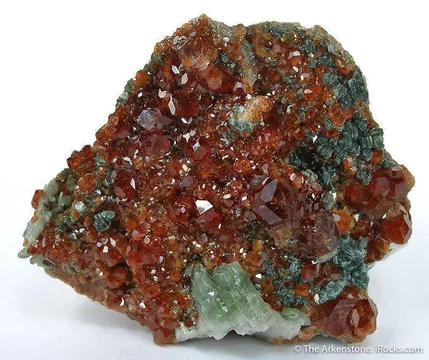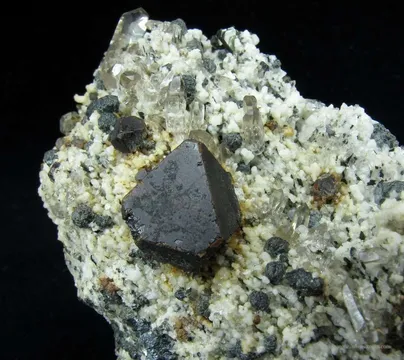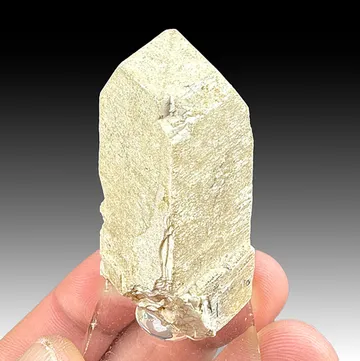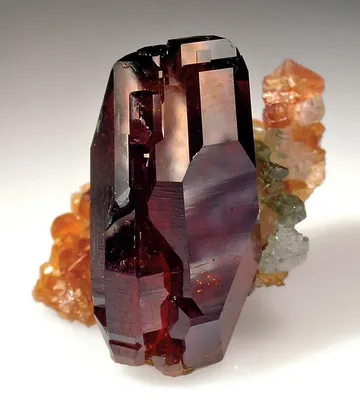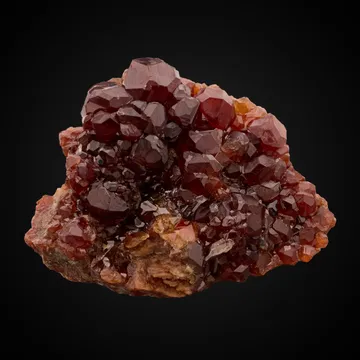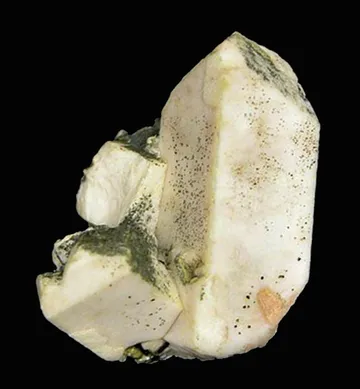
Traversella Mine, Italy — Alpine skarn locality famed for large carbonates, amethystine quartz, iron oxides, sulfides, and scheelite; a prized Piedmont collect…
Key facts
Traversella is one of the great Alpine skarn localities: an old iron mine in Val Chiusella, north of Torino, where a small Oligocene quartz-diorite to monzodiorite intrusion met carbonate-bearing rocks of the Sesia-Lanzo Zone and built a remarkably varied contact-metasomatic mineral system. To mining engineers it was a magnetite deposit, with later economic attention to pyrite, chalcopyrite, scheelite, and minor uranium minerals. To collectors it is something richer: a classic Piedmontese source of large carbonates, lustrous iron oxides and sulfides, amethystine quartz, and sharp bipyramidal scheelite, all carrying the visual language of skarn—black magnetite, green silicates, white to honey carbonates, brassy pyrite, and orange-yellow scheelite in talc, chlorite, or calcite.
The best Traversella specimens have an old-European poise. Dolomite may appear as pearly rhombohedra or saddle-shaped aggregates, sometimes of remarkable size, against sulfides, quartz, hematite, or magnetite. Quartz ranges from clear druses to prase and the famous deep-purple amethyst of the 1959 find. Scheelite, the species for which many collectors first learn the locality, is typically pseudo-octahedral: yellowish to orange-yellow, dense, adamantine to vitreous, and best when isolated crisply on contrasting talc, chlorite, calcite, or skarn matrix. Traversella also matters historically: the mine is tied to centuries of iron extraction, early mineralogical literature, the development of mineral-dressing technology, and the type-locality status of ferro-ferri-hornblende.
Regional View
Country View
Traversella specimens reward close reading of matrix. A black metallic octahedron may be magnetite rather than galena; green masses may be diopside, amphibole, chlorite, or talcose retrograde skarn; carbonate pockets can carry dolomite, calcite, siderite, or the old “mesitine” material now treated as ferroan magnesite. The locality’s finest pieces are not merely single crystals, but small records of a changing system: prograde skarn, magnetite bodies, retrograde hydration, sulfide pulses, and late open-space crystallization.
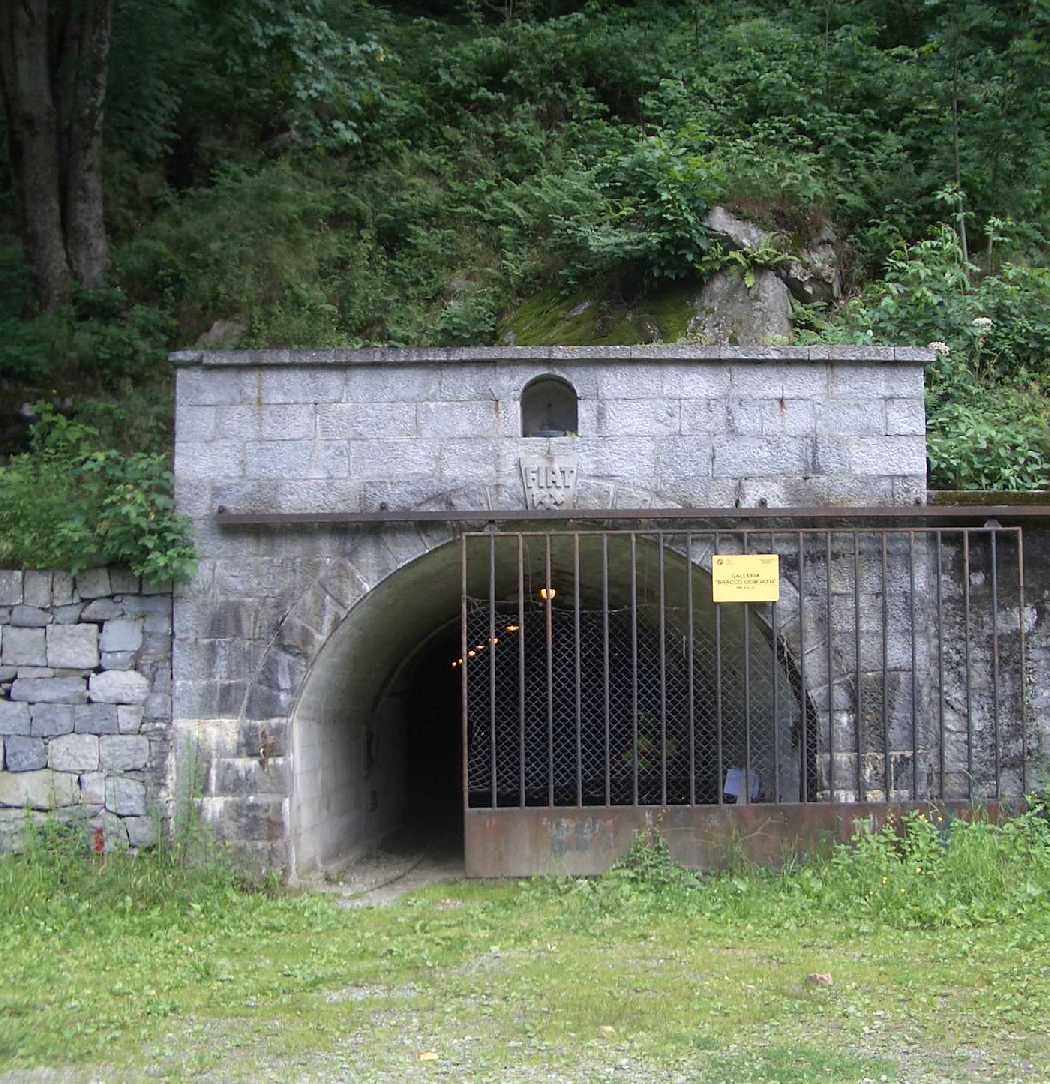
Photo: Wikimedia Commons
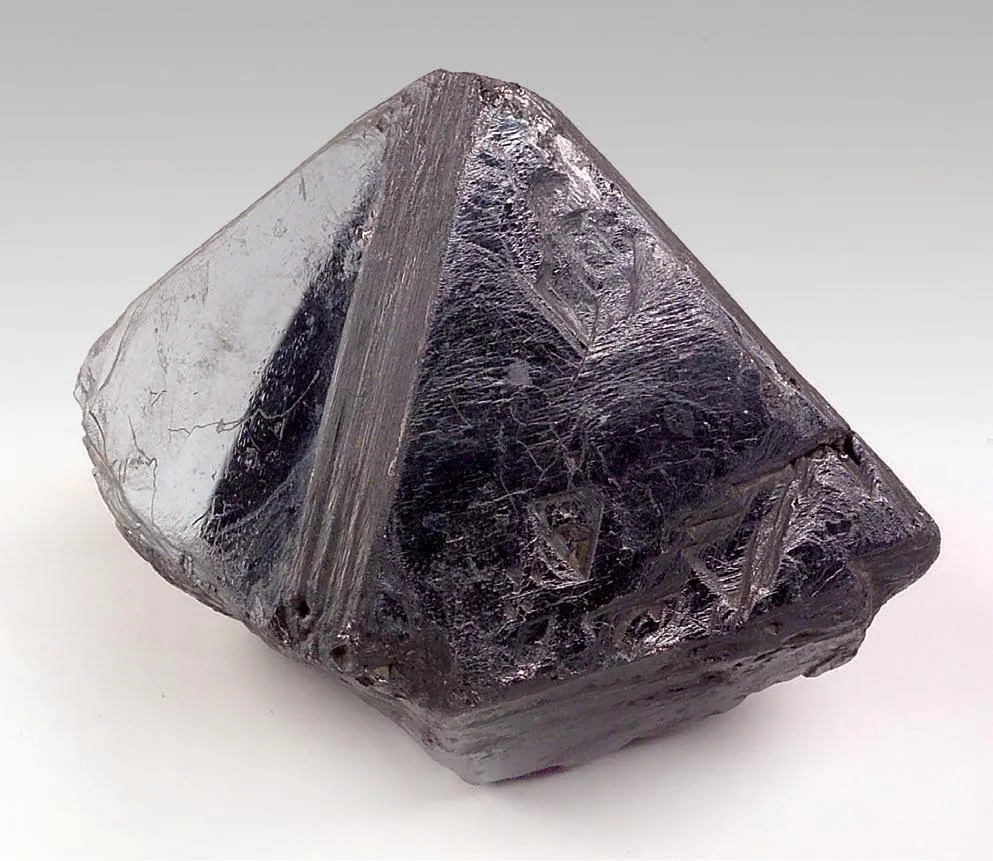
Photo: EarthWonders
Search for specimens: View all specimens from Traversella Mine, Italy
Traversella Mine lies near the village of Traversella in Val Chiusella, in the Canavese district of Piedmont. The deposit is a skarn-type mineralization developed around the Traversella pluton, a small Periadriatic intrusive body of quartz-diorite to monzodiorite composition emplaced at about 30 million years. The pluton intruded metamorphic rocks of the Sesia-Lanzo Zone—mainly micaschist and gneiss, with important dolomitic marble layers. Where magmatic heat and fluids reacted with these carbonate rocks, the system produced prograde skarns dominated by diopside, garnet, forsterite, and magnetite, followed by retrograde assemblages rich in amphibole, talc, chlorite, carbonates, scheelite, and sulfides.
The principal ore was magnetite, occurring in bodies broadly aligned north-south and roughly parallel to the intrusive contact. Along the Anglosarda tunnel, the relationship between pluton, marble, hornfels, prograde skarn, retrograde skarn, and magnetite ore is especially clear. The magnetite bodies are commonly developed near the outer limit of prograde skarn, between the skarn and hornfelsed country rocks. Later fluids cut and replaced these assemblages, introducing talc, tremolite-actinolite amphiboles, chlorite, carbonates, scheelite, pyrite, pyrrhotite, chalcopyrite, arsenopyrite, and, in more specialized pockets or veinlets, rarities such as cobaltite, bismuthinite, native gold, and uranium minerals.
The mine’s collecting reputation rests on that late and retrograde history. The ore bodies provided the industrial mass, but cavities, fractures, breccias, and carbonate-rich veins provided the crystal specimens. Open spaces at the upper levels yielded many of the classic cabinet pieces: dolomite, calcite, quartz, siderite, pyrite, galena, magnetite, hematite, and scheelite in combinations that show the transition from iron skarn to hydrothermal pocket. The upper levels are especially important for old scheelite crystals; large euhedral examples preserved in museums and private collections came from levels now inaccessible because of collapses and filling. The celebrated amethyst find of 1959 came from a large cavity opened during work in the 3rd Massa Ferriere, level 826, and produced exceptional crystals, including specimens over 30 cm.
Mining probably began very early, with traditional accounts and local evidence pointing toward Roman-age activity, but the clear documentary record begins in the late Middle Ages. A 1487 document from the Savoy administration refers to iron-ore possession by the inhabitants of Brosso and Traversella, while later sixteenth-century records describe extraction already established beyond living memory. For much of its early life, the mine was not a single rationalized industrial operation but a scatter of small concessions and family workings. Work concentrated where ore was visible and, for local people, often fitted around the agricultural calendar.
The eighteenth and nineteenth centuries were Traversella’s great mining age. The discovery attributed to Bernardo Mutta in 1716 at Pian del Gallo helped transform the site into the economic center of the valley. From 1723, the Savoy state taxed production by weight, creating unusually detailed production records. In 1745, recorded production was about 100,000 rubbi, roughly 920 metric tons of ore. By 1750 it had risen to about 190,000 rubbi, and in 1794 to about 700,000 rubbi. In 1829, production approached one million rubbi. For the 1723–1884 period, the total production of iron ore has been estimated at about 342,000 metric tons, corresponding to roughly 114,000 metric tons of iron if a one-third yield is assumed.
Industrial operators changed with time. At the beginning of the twentieth century the mine passed to the Società Anonima delle Miniere di Traversella, and in 1914 the property was acquired by FIAT interests. During the Fascist autarky period, activity resumed with renewed intensity, and in 1938 a cableway was built to move ore quickly to the railway station at Montalto Dora. Work was suspended during the Second World War. Postwar attempts to revive production were defeated by ore quality, extraction costs, and competition from foreign iron deposits. The mine was officially closed in 1971.
Today Traversella is not a free-collecting locality. Underground access is controlled and tied to museum and guided-tour activity, and mineral collecting in the mine is prohibited. The Museo della Miniera di Traversella, housed in the former crushing silo of the mining complex, presents the mineral collection, mining tools, ore-processing route, and access to part of the underground workings. As of the 2026 season, the museum announced public opening from May 1 through September 27 on Saturdays and Sundays from 14:00 to 18:00, with group access available by reservation. For collectors, the practical point is simple: legitimate Traversella specimens on the market should be old finds, museum deaccessions where documented, long-held private material, or specimens recovered under authorized scientific or museum-supervised activity—not casual recent field-collected pieces from inside the mine.
Dolomite is one of the signature collector minerals of Traversella and occurs chiefly at the contact between carbonate rocks and metalliferous masses, in geodes with quartz, calcite or other carbonates, magnetite, hematite, sphalerite, pyrite, marcasite, galena, chlorite, and scheelite. The classic crystals are rhombohedral, either sharply edged and pearly or curved into saddle-shaped aggregates; colors range from white and faint yellow to colorless, brown, and pink, with iron-bearing material commonly showing darker brown alteration. Historical accounts and museum specimens show that crystals over 20 cm were recovered while the mine was active, but most available pieces are smaller, and quality is judged less by sheer size than by freshness of luster, clean separation from matrix, attractive association with sulfides or iron oxides, and freedom from bruising along the rhombohedral edges.
Quartz at Traversella is common both as a rock constituent and as pocket crystals produced during late hydrothermal circulation; it appears as small colorless to white pointed prisms lining cavities, clear druses on carbonates and sulfides, green prase associated with skarn silicates, and the famous amethyst from the 1959 cavity in the 3rd Massa Ferriere at level 826. Ordinary Traversella quartz crystals are often modest, commonly under 5–6 cm and only rarely over 10 cm, but the amethyst discovery produced exceptional deep-purple crystals exceeding 30 cm and remains one of the most remarkable Italian quartz finds. Fine pieces are those in which the quartz is not merely a covering druse but part of a balanced association—on dolomite, siderite, calcite, galena, pyrite, or hematite—or, in the case of amethyst, has strong color, intact termination, and credible provenance to the 1959 find.
Scheelite is Traversella’s emblematic tungsten mineral and occurs with variable abundance through the mine levels, but the classic collector crystals came especially from high levels that are now inaccessible. The typical Traversella habit is a sharp pseudo-octahedral tetragonal bipyramid, usually yellowish to orange-yellow, translucent to transparent, and adamantine to vitreous; large crystals can exceed 10 cm, while smaller examples occur in spathic calcite with magnetite, chlorite, pyrrhotite, and chalcopyrite, and larger examples may be embedded in talc, chlorite, or calcite. Early crystallographic work distinguished material from chloritic, talcose, and serpentinitic layers from crystals found in alternations of dolomite and magnetite, and the best display specimens are those where the scheelite is isolated, lustrous, undamaged on the sharp bipyramidal edges, and set against a contrasting pale or green matrix rather than hidden in massive skarn.
Beyond these headline species, Traversella has produced an unusually deep mineral list for such a compact district. Magnetite is the dominant ore mineral and occurs rarely as world-class dodecahedral or octahedral crystals, including historic crystals over 12 cm in museum collections. Calcite is abundant in geodes and can form transparent scalenohedra, prisms, rhombohedra, and elegant twins. Pyrite is common and famous for morphological variety, with large striated cubes, pyritohedra, and iron-cross twins; galena occurs in massive form and, more rarely, in well-formed cubic to octahedral crystals in carbonate cavities. Hematite appears as tabular crystals and iron roses on quartz and dolomite. Traversella is also the type locality of ferro-ferri-hornblende, formally approved from material historically labeled “speziaite,” and it is the historic source of “mesitine,” described by Breithaupt in 1828 and now treated as ferroan magnesite rather than a valid species. Notable rarities and specialized assemblages include cobaltite, bismuthinite, native gold, erythrite, silver, tochilinite, uraninite, wulfenite, stolzite, anglesite, cerussite, diopside “traversellite,” fassaite-like augite, clinochlore, epidote, and andradite.
Traversella is a classic old-label locality, and the main authenticity problem is not sophisticated treatment but locality precision. Older labels may read simply “Traversella,” “Ivrea,” “Piedmont,” “Canavese,” or even group Traversella with nearby Brosso material. That is understandable historically, but it matters: Traversella Mine, the Traversella commune, Brosso, the Vico and Bracco quarries, and other Val Chiusella occurrences are not interchangeable. For high-value scheelite, dolomite, magnetite, or amethyst, insist on the most specific provenance available, especially when a specimen is claimed to be from the 1959 amethyst cavity, an upper-level scheelite find, or a historic museum collection.
Scheelite should be checked physically and optically. The expected habit is tetragonal bipyramidal, commonly pseudo-octahedral, with high density and strong luster; short-wave UV fluorescence can support the identification, but it does not substitute for morphology, density, and provenance. Orange-yellow Traversella scheelite embedded in talc, chlorite, or calcite is plausible, as are smaller crystals in calcite with magnetite and sulfides. Overly perfect loose crystals, vague “Italy” labels, or specimens with no matrix and no history deserve caution unless they can be tied to an old collection or a trustworthy dealer.
Dolomite, calcite, and siderite from Traversella are vulnerable to the usual carbonate problems: bruised rhombohedral edges, cleavage nicks, acid cleaning damage, and iron-oxide staining or alteration that may be natural but can also obscure repairs. Traversella dolomite is often best appreciated under low-angle light, where pearly luster, curved faces, and contact marks become obvious. Pyrite and marcasite-bearing specimens should be kept dry and stable; Traversella pyrite is not especially notorious for decay, but mixed sulfide specimens from old mines always deserve conservative storage.
Specimens containing fibrous amphibole, chrysotile, talcose material, or dusty skarn should be handled sensibly: do not saw, grind, brush aggressively, or blow dust from matrix. Uraninite from Traversella is rare but documented; any specimen containing suspected uranium minerals should be stored and labeled responsibly, kept away from prolonged handling, and not displayed in enclosed living spaces without basic radiation awareness. Many Traversella pieces are dense for their size because of magnetite, galena, scheelite, or sulfides, so mount and ship them with more support than their dimensions alone suggest.
Availability is uneven. Small dolomite, quartz, calcite, pyrite, and mixed skarn specimens appear periodically, while fine scheelite, large magnetite crystals, 1959 amethyst, well-crystallized galena, and documented old museum-grade combinations are scarce. The mine’s modern access restrictions mean the market is driven mostly by old collections, Italian collector networks, and occasional documented specimens from institutional or long-private holdings.
The oldest Traversella story begins in the half-light between documentary history and archaeological hint. Near the village, in a small iron exploration tunnel—a “croso”—coins of Roman age were found, and local tradition links the valley’s iron to very early exploitation. Whether one leans on Roman memory or late-medieval paperwork, the point is the same: the mountain was known as a source of metal long before it was known as a source of cabinet specimens.
The first firm documentary scene is dated 1487, when a Savoy claim recognized that the inhabitants of Brosso and Traversella were to remain in “free and pacific possession of iron ore.” That phrase has the ring of law, but behind it was an intensely physical landscape: scattered diggings, family concessions, seasonal work, and ore followed wherever it showed itself. A 1570 lawsuit looked backward and declared that iron ore had been extracted in the Traversella area for “10, 20, 30, 40, 50, 60 and more years,” so long that living memory could not contradict it. The mountain had already become a workplace inherited rather than discovered.
Before rational mine planning, the slope was described almost as an anthill. Property limits on the surface were uncertain, and underground headings were driven without a coherent plan. Tunnels crossed; when two miners met underground, they might have to reverse their digging direction. One working could be driven beneath another. Water was discharged from one gallery into another. Collapses were frequent. It was a mineral district before it was an engineered mine, and that unruly early geometry is still part of the locality’s character.
The eighteenth-century turning point is attached to a name: Bernardo Mutta. In 1716, he is credited with discovering the main ore vein at Pian del Gallo. After that, Traversella moved from a local seasonal resource toward the economic engine of a valley. By 1723 the Savoy administration was taxing production by weight. The old unit was the rubbo, about 9.2 kg, and the fiscal details are wonderfully concrete: in 1753 the tax was about five denari per rubbo, later reduced to two; a kilogram of bread might cost around sixty denari. By 1840 the tax stood at 0.1 lira per rubbo. The records created by that taxation are why we can still recite production numbers today.
Those numbers are large enough to change one’s sense of the place. Recorded production in 1745 was about 100,000 rubbi, roughly 920 metric tons of ore. In 1750 it was 190,000 rubbi. In 1794 it reached 700,000 rubbi. In 1829 it approached one million rubbi. Between 1723 and 1884, estimated production was about 342,000 metric tons of ore. Calculated at roughly one-third iron yield, the metal produced would be about fourteen times the iron used in the Eiffel Tower. Traversella was not a picturesque hole in the Alps; it was an industrial force.
It also produced one of the great nineteenth-century stories of mineral dressing. In 1854, Quintino Sella, working on behalf of Count Riccardi di Netro, designed a rotating magnetic separator for Traversella material. The device used a cylinder with 48 fixed magnets to draw magnetic minerals from crushed and screened feed. In 1855 Sella obtained a fifteen-year Privilege—the ancestor of a patent—for electromagnetic dressing of copper ores containing magnetite. FIAT would install magnetic separators at Traversella almost a century later, but Sella’s machine already pointed toward the modern language of ore processing.
A second technological episode followed after the mine passed to the Società Anonima delle Miniere di Traversella around 1900. Tests of the Elmore process explored the separation of sulfides using their affinity for dense combustible oils. The experiment was not fully satisfactory, but it revealed a key principle: oil-wetted sulfides in a slurry could be carried upward by foam. That process was patented as froth flotation. In 1904, under poor company finances, the patent was sold for £225 to Minerals Separation Ltd., which developed it internationally. Traversella’s ore problems helped push into existence one of the most important mineral-processing methods in the world.
Collectors have their own Traversella legend, and it is purple. Amethyst had already been recorded from the mine by Pelloux in 1908, but the great discovery came in 1959, when a large cavity was opened during excavation in the 3rd Massa Ferriere at level 826. One crystal now associated with the Natural History Museum of Milan stands about 30 cm tall and has been described among the three or four best crystals from that find. The discovery remained unique in Italy for its combination of size and deep color. It is the kind of pocket that changes a locality’s reputation permanently: an iron mine suddenly becomes an amethyst locality of international note.
Another story begins with a mislaid name. In 1914 Luigi Colomba described “speziaite,” naming it for Giorgio Spezia, the University of Torino mineralogist who in 1905 had developed a method for hydrothermal synthesis of quartz. The material was dark green to blackish amphibole from Traversella. Decades later, a specimen collected in the 1960s by Leandro De Magistris, later held by Renato and Adriana Pagano, allowed modern crystal-chemical work to resolve the identity. In 2016, the mineral was formally described as ferro-ferri-hornblende, with Traversella as the type locality; the old “speziaite” specimen in Torino was checked and became part of the modern story as cotype material. A name that had drifted outside formal approval became, through modern amphibole nomenclature, one of Traversella’s most precise scientific credentials.
The mine today has turned from extraction to memory. The museum occupies the old crushing silo, where ore once moved through hoppers and crushers rather than display cases. One guided account describes the material arriving at an 800-tonne hopper at the top of the silo, then passing through crushers, a conveyor, a 300-tonne hopper, and mills that reduced the mixed ore and rock to a fine “flour.” In that same building, visitors now see the minerals as specimens rather than feedstock: dolomite, calcite, quartz, magnetite, scheelite, amethyst, silver, and the tools that made the valley’s former life possible.