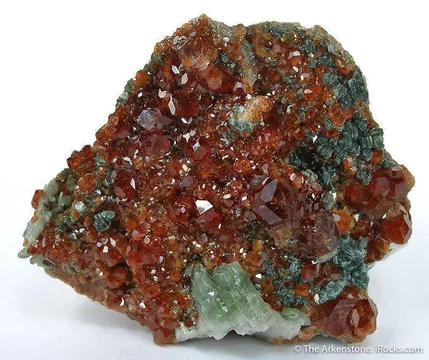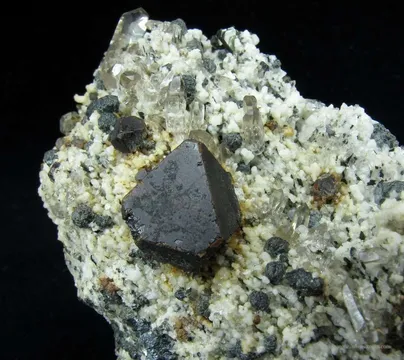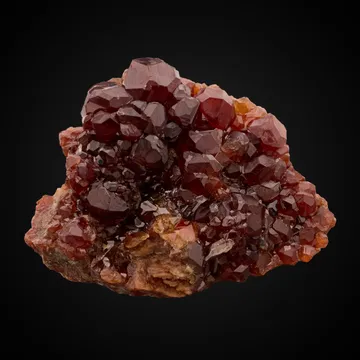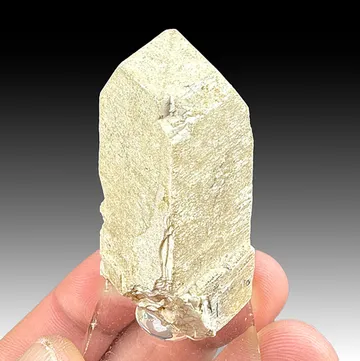
Baveno, Italy — renowned feldspar locality on Lago Maggiore; pink orthoclase from miarolitic cavities with smoky quartz and rare Be/Sc minerals, prized for twi…
Key facts
Baveno is one of the great old names in feldspar collecting: a lakeside town on Lago Maggiore whose pink granite quarries supplied building stone to palaces, churches, monuments, and city streets, while their crystal-lined cavities supplied mineralogy with a classic feldspar habit, a vocabulary word, and a remarkable suite of beryllium-, scandium-, niobium-, yttrium-, fluorine-, and rare-earth-bearing minerals. The collecting locality is not a metallic ore deposit in the usual sense. It is a quarry district in the Permian Mottarone-Baveno granitic pluton, part of the “Graniti dei Laghi” of the western Southern Alps, where a pale pink, K-feldspar-rich granite carries miarolitic pegmatitic cavities and late-stage mineralization.
The specimens that made Baveno famous are architectonic rather than gaudy: cream, white, or soft pink orthoclase crystals, often sharp enough to read the twin law at arm’s length, associated with smoky quartz, albite, fluorite, zinnwaldite mica, stilbite, and rarer beryllium and scandium species. The best feldspar pieces have a porcelain to slightly silky luster, clean re-entrant angles, well-proportioned twins, and enough matrix to tell the story of a cavity rather than a loose crystal picked out of a quarry spoil pile. Baveno also belongs in every serious locality conversation because it is tied to the Baveno twin of feldspar and because its tiny miaroles have yielded a cluster of type-locality species, including bavenite, bazzite, cascandite, jervisite, and scandiobabingtonite.
Regional View
Country View
The mineral locality should be pictured as a chain of granite workings and associated sublocalities around Baveno, Feriolo, Oltrefiume, and Monte Camoscio, rather than as a single pocket. Names encountered on labels include Seula, formerly tied to the Montecatini quarry; Scala dei Ratti or Ratti quarry; Cirla or Monte Camoscio quarry; Locatelli; and older or neighboring quarry names recorded in the literature. The industrial quarrying exposed the miarolitic cavities; the mineralogical importance came from collectors, quarrymen, and museum mineralogists recognizing that the smallest pockets in a commercial stone operation could contain species that would matter far beyond Lake Maggiore.

Photo: Wikimedia Commons

Photo: Wikimedia Commons
Search for specimens: View all specimens from Baveno, Italy
Baveno’s mineral specimens come from miarolitic cavities and pegmatitic segregations in the Baveno pink granite, a Lower Permian granite body in the Mottarone-Baveno pluton of the Lake District of Verbano-Cusio-Ossola, Piedmont. Regional studies place the Graniti dei Laghi in the South Alpine basement south of the Insubric line, with the batholithic system made of several plutons including Mottarone-Baveno and Montorfano. The Baveno pluton is notable for a pink miarolitic facies, historically quarried as “Rosa Baveno,” in which late magmatic fluids concentrated fluorine, beryllium, scandium, yttrium, rare earths, niobium, tin, and other incompatible elements into cavities and small pegmatitic zones.
The quarrymen were not following ore shoots, but commercial stone. The extractive bodies are benches and faces of pink granite, together with feldspar-rich material and quarry waste that have been used as secondary raw material. Mineral collectors are interested in the same rock for a different reason: the miaroles. These are small to sometimes decimeter-scale cavities formed during late-stage crystallization as volatile-rich residual melt and fluid separated from the granite. Their walls commonly show feldspar, quartz, albite, mica, fluorite, zeolites, and late alteration products; the smallest vugs and crusts may carry the rare phases that made Baveno famous.
The main historical mineral localities are distributed around Monte Camoscio and the Baveno-Feriolo-Oltrefiume quarry belt. Seula is the most important name for many type-locality records, especially bavenite, bazzite, and scandiobabingtonite. Scala dei Ratti at Feriolo is important for rare-earth and accessory minerals and appears in modern mineralogical work. Cirla or Monte Camoscio quarry is a familiar label for classic feldspar specimens. Locatelli is associated in the literature with bavenite and other rare miarolitic species. Older specimens may bear “Baveno, Novara,” because Verbano-Cusio-Ossola Province was created later; that old provincial designation is historically normal and should not by itself be treated as a locality error.
Quarrying for Baveno pink granite was established long before the modern collector market. Local tradition connects its discovery with the Borromeo family in the early sixteenth century, and documented architectural use begins in the Milan area with major religious and public buildings. In the nineteenth century the industry expanded dramatically, especially under Nicola Della Casa, whose firm began quarrying in Baveno in 1874 and helped industrialize and internationalize the trade. The Cirla company became another major name in the twentieth century, connected with column work and export markets. Today the district is still an active industrial stone and feldspar locality, with Seula and Scala dei Ratti recurring in modern accounts of quarrying and mineral recovery.
For collectors, that active status is crucial. These are not casual free-collecting sites. The quarries involve heavy machinery, high faces, blasting or cutting operations, unstable waste, and private or concessionary rights. Any visit requires explicit permission from the operator or landholder and current local safety compliance. Old dumps and rehabilitated areas may look tempting, but the modern quarry landscape is managed industrial ground, not an open public collecting park. Specimens on the market therefore range from nineteenth- and early twentieth-century classics to later finds recovered with quarry cooperation or by experienced local collectors.
The important finds are overwhelmingly pocket finds. Some cavities produced showy feldspar-quartz-fluorite-zinnwaldite associations; others yielded only microscopic treasures. Baveno’s scientific reputation rests on that scale contrast: a quarry face made for blocks and slabs, but with tiny cavities that contain submillimeter to millimeter bazzite, cascandite, jervisite, scandiobabingtonite, bavenite, xenotime-(Y), thortveitite, gadolinite-group minerals, and other highly specialized species. A particularly well-documented modern example is the Seula material that allowed complete study of jervisite using exceptional crystals found in 2017, a reminder that even a locality known for centuries can still produce scientifically useful material when the right pocket is noticed and preserved.
Orthoclase is the face of Baveno collecting: white, cream, pale salmon, or pink K-feldspar from miarolitic cavities in the pink granite, typically blocky to prismatic and commonly twinned according to the Baveno law, with crystals ranging from small cabinet-size individuals of a few centimeters to matrix groups in which the largest feldspar crystals may reach roughly 3–4 cm on ordinary market examples and larger on exceptional older pieces. The classic associations are smoky quartz, albite, fluorite, zinnwaldite mica, stilbite, and other late-stage cavity minerals; “snowy” white orthoclase with smoky quartz and pale blue albite is especially evocative of the Seula and Monte Camoscio quarry environment. Good Baveno orthoclase is judged less by color intensity than by geometry: sharp twin junctions, undamaged terminations, clean contrast against smoky quartz or albite, and a natural matrix setting that preserves the miarolitic architecture.
Beyond orthoclase, Baveno is unusually rich in minerals that matter more under a microscope than in a display case. Bavenite, Ca4Be2Al2Si9O26(OH)2, takes its name from the locality and occurs as white to pale fibrous, radial, or crusty material in miarolitic cavities, commonly tied to beryllium-bearing assemblages. Bazzite, Be3Sc2(Si6O18), is the blue scandium analogue in the beryl group and is prized at Baveno as tiny pale blue hexagonal crystals, commonly on albite and orthoclase. Cascandite, CaScSi3O8(OH), and jervisite, NaScSi2O6, are scandium silicates first described from Baveno-region material; jervisite is especially a micromount mineral, occurring as light green to nearly colorless minute crystals and fibrous or radial aggregates. Scandiobabingtonite, Ca2(Fe2+,Mn)ScSi5O14(OH), was described from a Baveno pegmatitic cavity as submillimeter colorless to pale gray-green tabular crystals and rims on babingtonite. The rare-mineral list also includes xenotime-(Y), thortveitite, gadolinite-group minerals, hingganite-group minerals, zircon, titanite, fluorite, smoky quartz, albite, zeolites, and mica-group minerals, making Baveno a locality where thumbnail feldspar specimens and analytical micromounts belong to the same story.
For orthoclase and associated cabinet specimens, the common condition problems are chipped feldspar edges, bruised terminations, cleaved corners, broken smoky quartz tips, and pocket clay or iron staining lodged along twin seams. Baveno feldspar often has a soft, old-European look; do not expect the glassy brilliance of alpine quartz or the saturated color of amazonite-bearing NYF pegmatites. A fine piece may be modest in color but excellent in form.
Mislabelling is more important than fakery. “Baveno twin” is a crystallographic term and does not mean the specimen came from Baveno. Feldspars from many localities can be Baveno-twinned, so a label reading only “Baveno twin orthoclase” should not be upgraded to “Baveno, Italy” without provenance. Conversely, old labels that say Baveno, Novara, or Lago Maggiore can be legitimate historical labels for material now catalogued under Verbano-Cusio-Ossola Province, Piedmont. Be cautious with vague labels such as “Baveno quarry” when the specimen is a rarity; for scientific micromounts, sublocality names such as Seula, Scala dei Ratti, Cirla, Locatelli, or Giacomini matter.
The rare species require analytical humility. Bavenite, bertrandite, pale zeolites, fine feldspar overgrowths, and white fibrous or radiating alteration products can look deceptively alike in tiny cavities. Bazzite is usually small and blue, but blue color alone is not proof; pale beryl, coatings, and lighting can mislead. Cascandite and jervisite are generally microminerals and should be considered suspect without strong provenance or analytical confirmation. Scandiobabingtonite, aluminocerite-(CeCa), calcioancylite-(Nd), thortveitite, xenotime-(Y), and related rare-earth or scandium phases are specialist material; purchase them from dealers or collections that preserve analytical history.
Cleaning should be conservative. Orthoclase and albite tolerate gentle mechanical cleaning and water better than delicate zeolite-rich or clay-coated micromounts, but acids can damage associated carbonates, fluorite surfaces, zeolites, and rare alteration minerals, while aggressive ultrasonic cleaning may open cleavage cracks or detach tiny crystals. Some Baveno specimens include uraninite, thorite, or other radioactive accessory minerals as microscopic components; these are rarely a handling concern on ordinary feldspar pieces, but labelled radioactive micromounts should be stored and handled with the usual sensible precautions: avoid dust, keep them boxed, and do not grind or trim without proper controls.
Market availability is uneven. Orthoclase, orthoclase with smoky quartz, and feldspar-albite-fluorite matrix pieces appear with some regularity, though truly sharp, undamaged, aesthetically balanced examples from old collections are much scarcer than the locality name might suggest. Bavenite is available mainly as small or micromount material. Bazzite from Baveno is desirable and usually small; rich, well-crystallized blue examples command attention. Cascandite, jervisite, scandiobabingtonite, thortveitite, and the rare-earth species are analytical micromount territory and should be valued as scientific specimens, not display minerals.
The Baveno story begins with stone before it becomes mineralogy. The quarries lie along the old route between Baveno and Feriolo, below the slopes of Monte Camoscio, in a landscape where the same pink granite appears as mountain, quarry face, lakeside paving, church column, villa portal, and collector specimen. Local accounts preserve the tradition that St Charles Borromeo “discovered” the stone in the early sixteenth century, but the stronger historical thread is the Borromeo family’s role in spreading its use through Milanese architecture. By the early eighteenth century, Baveno crystals were already being sent to France for examination by crystallographers, moving quietly from quarry curiosity into the developing language of mineral science.
In the eighteenth century, Father Ermenegildo Pini, the Barnabite priest and mineralogist from Milan, collected Baveno specimens that later entered the Museo Civico di Storia Naturale di Milano. Those old specimens matter because Baveno is a locality where the museum label is almost part of the specimen: the history of Italian mineralogy, the Borromeo collections, private nineteenth-century collectors, and the Milan museum all intersect in the same granite cavities. A modest white feldspar or fibrous bavenite from Baveno may have the plain appearance of a quarry mineral, but the locality belongs to the period when crystallography was becoming a disciplined science.
The industrial age made Baveno louder. The old quarry methods used wooden wedges, soaked so that they swelled and split slabs from natural fractures; later came metal pins, dynamite, derricks, lizzatura sledging routes, carts, boats, and eventually mechanical cutting. Nicola Della Casa’s firm began quarrying in Baveno in 1874, and by 1879 had achieved the status of an award-winning company allowed to use the royal coat of arms. Della Casa’s celebrated distinction was not simply that he sold stone, but that he helped mechanize and market it, earning recognition as the first in Italy to apply mechanization to granite quarrying. From the mineral collector’s viewpoint, every technological change mattered because every new face, blast, bench, and block could break into a fresh miarole.
The Cirla company carried the granite across an even larger stage. In the 1880s it was using mechanical lathes for columns, and its work is linked with the colonnades of St Paul Outside the Walls in Rome, the Christopher Columbus monument in New York, and later export projects reaching Central and South America and the Far East. That international architectural career is part of why Baveno specimens feel different from isolated pegmatite pieces: the same rock that yielded a 2 mm bazzite crystal also travelled as polished stone into monumental architecture.
Ettore Artini gives Baveno its most memorable mineralogical chapter. As curator of the Milan museum from 1893, he studied and described new species from the granite quarries, including bavenite in 1901 and bazzite in 1915. The bazzite story is particularly vivid because the mineral was not a showy hand specimen discovery but a rare phase recognized from a single geode’s fragments. Artini described the little blue crystals as “fascetti prismatici” of a “bellissimo colore azzurro chiaro” — small prismatic bundles of beautiful light-blue color — a phrase that still captures why Baveno bazzite fascinates collectors despite its size.
Modern Baveno still has the power to surprise, but now the excitement often happens at the scale of hundreds of microns. In August 2017, a field excursion to the Seula quarry produced a specimen carrying divergent groups of exceptionally well-crystallized jervisite prisms perched on quartz and albite. The individual crystals were only up to about 250 microns long, yet they were good enough to permit detailed optical, chemical, Raman, morphological, and single-crystal X-ray work. That is Baveno in miniature: a quarry district worked for building stone, a cavity almost too small to notice, and a mineralogical result that refines the description of a scandium pyroxene.