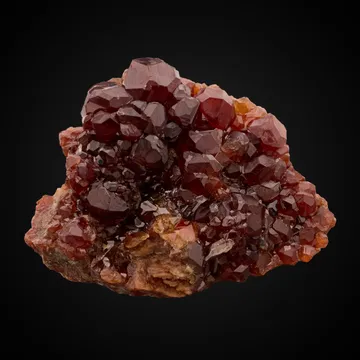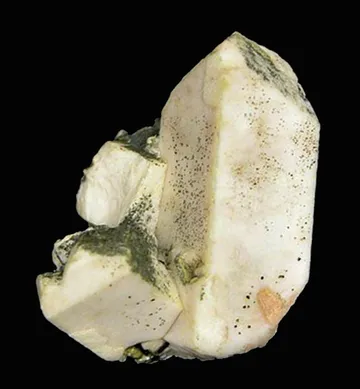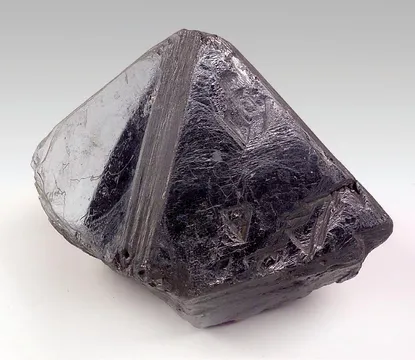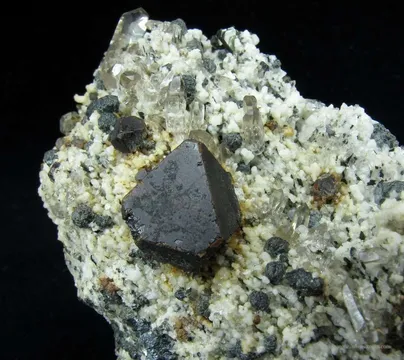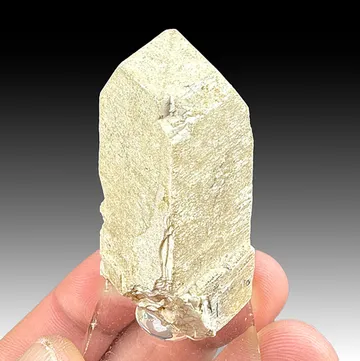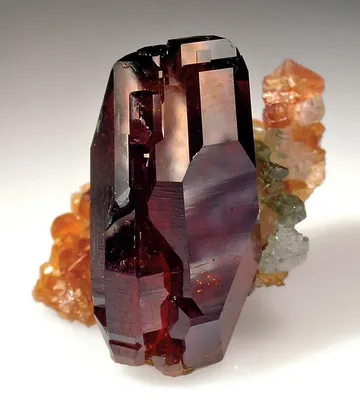
Ala Valley, Italy—an Alpine locality famed for rodingite pockets yielding garnet-diopside-clinochlore, with striking colors and cabinet-quality specimens.
Key facts
Ala Valley — Val d’Ala to Italian collectors — is one of the great Alpine rodingite localities: a narrow valley in the Lanzo Valleys of Piedmont where serpentinite-hosted calcium-silicate lenses and dikes produced the classic Italian association of hessonite grossular, diopside, clinochlore, vesuvianite, epidote, and andradite. For specimen collectors its importance rests on three things at once: it is an old and deeply studied locality, it is tied to the type-locality history of diopside, and it produced cabinet-worthy garnet-diopside-clinochlore specimens whose color contrast is immediately recognizable across a room.
The valley lies in the Western Alps between the Gran Paradiso region to the north and the Dora-Maira domain to the south. Its best specimens come not from ordinary skarn but from rodingites: Ca-rich, Si-poor rocks formed by metasomatic reaction between serpentinites and mafic rocks, then overprinted during the Alpine metamorphic history of the Piemonte metaophiolite zone. The resulting mineral pockets and fracture fillings are small, irregular, and locally very rich. Fine specimens show transparent to translucent orange, reddish orange, cherry-brown, or hyacinth-brown grossular crystals, commonly with pale green diopside prisms and leafy to rosette-like green clinochlore on pale rodingite matrix. The best pieces are not large in the modern “showy cabinet” sense; their appeal is precision, luster, color, and a very Alpine balance of several crisp minerals on one hand-sized stone.
Regional View
Country View
Historically, Ala Valley specimens entered European collections under several names and sublocalities: Pian della Mussa, Mussa Alp, Testa Ciarva, Roch Neir, Borne del Brous, Curbassera, Monte or Rocca Tovo, Fontana del Preive, and others. Older labels may simply read “Ala, Piedmont” or “Val d’Ala,” which is understandable for nineteenth- and early twentieth-century material but frustrating for the modern locality specialist. The classic topotype diopside story centers on Testa Ciarva and Roch Neir near Pian della Mussa, where Bonvoisin’s “alalite” and “mussite” were later recognized by Haüy as varieties of one species: diopside.

Photo: Rob Lavinsky / iRocks.com via Wikimedia Commons
Ala Valley’s fame is not merely aesthetic. The locality has supported more than two centuries of mineralogical work, from Bonvoisin and Haüy through Repossi, Grill, Dal Piaz, Maletto, Piccoli, and modern analytical studies of garnet and vesuvianite. The finest specimens therefore occupy an unusually satisfying place in a collection: they are beautiful, historically resonant, chemically instructive, and geographically specific to a famous Alpine valley whose collecting history is now largely historical rather than active.
Search for specimens: View all specimens from Ala Valley, Italy
Ala Valley is the central of the Lanzo Valleys in Piedmont and extends from Ceres through Ala di Stura to Balme and the high glacial basin of Pian della Mussa. Administratively, the classic mineral localities fall within the Metropolitan City of Turin, chiefly in the municipalities of Balme, Ala di Stura, and Ceres. Geologically, most of the valley belongs to the Piemonte zone of calcschists with metaophiolites; rocks of the Sesia-Lanzo zone occur in the lower valley and on Uja di Ciamarella, while Gran Paradiso gneisses appear in the upper Vasoera area.
The collector minerals are hosted primarily by rodingite bodies enclosed in serpentinite. These rodingites represent altered mafic rocks — originally gabbroic or basaltic bodies — transformed by Ca-rich metasomatic fluids during serpentinization and later Alpine metamorphism. Modern studies describe Val d’Ala metaophiolites as having experienced ocean-floor alteration followed by high-pressure Alpine subduction and greenschist-facies exhumation overprinting. In practical collecting terms, that complicated history produced boudinaged lenses, layers, and fracture systems in which grossular, andradite, diopside, epidote, clinochlore, vesuvianite, titanite, magnetite, rutile, calcite, and related species developed in highly variable local pockets.
The productive specimen bodies are not “ore bodies” in the sense of a single mineable lode. They are small to meter-scale rodingite lenses, veins, and fractures, scattered along the valley and exposed in serpentinite cliffs, loose blocks, and old workings. Testa Ciarva and Roch Neir near Pian della Mussa are the most famous sources for fine grossular and for the historical diopside material. Research on the garnet-bearing rodingites notes rodingite layers up to about 2 m thick in serpentinite cliffs at these localities. Monte Tovo produced garnets with more rounded or globular forms in mineralized veins. Curbassera yielded grossular concentrations in brown rodingite lenses and in debris blocks related to an old landslide. Borne del Brous is especially important in the vesuvianite literature and also appears on good hessonite-associated specimens.
Mining history in Ala Valley is best understood as a mixture of small-scale extraction, scientific collecting, and specimen quarrying rather than as a single industrial mineral district. The valley has recorded exploitable commodities including asbestos, iron pyrite, and talc, with named localities such as the Bracchiello quarry for amphibole asbestos and magnetite, Monte di Voragno-Bellacosta for talc, and several smaller occurrences for pyrite and sulfides. The specimen-producing rodingites, however, were sought principally for mineral cabinets, scientific study, and gem material. By the early nineteenth century they were already known to European mineralogists; by the time of Repossi’s 1919 monograph and later twentieth-century regional works, the best localities had become classic stops in the literature of Piedmontese mineralogy.
Testa Ciarva has a special status. It is both one of the key diopside type-locality sites and one of the best-known sources for hessonite, diopside, clinochlore, and vesuvianite combinations. Recent vesuvianite research describes Testa Ciarva as the most exploited deposit in the valley for vesuvianite quality and quantity and notes that mineral sampling there is now totally forbidden because of past intense collecting. Collectors should treat all field access in Ala Valley as legally and physically sensitive: Piedmont regulates mineral collecting, requires compliance with regional rules, and recognizes property, protected-area, quarry, concession, and safety restrictions. Some old collecting sites are steep Alpine exposures or unstable artificial cavities rather than casual rockhounding spots.
The finest historical pockets produced euhedral hessonite crystals to about 2 cm, usually smaller, lining fractures and cavities in pale rodingite. Some specimens show garnet crystals combining trapezohedral and dodecahedral forms; others show complex faces, striations, zoned color, or deformation. Diopside may occur as pale green, grayish green, whitish, fibrous, fasciculated, or more distinctly prismatic crystals; “mussite” was the old name for the fibrous to fasciculated material. Vesuvianite occurs as green, olive-green, brownish, reddish-brown, columnar, tabular, twinned, and sometimes gemmy crystals, especially noted at Testa Ciarva, Borne del Brous, Mont Fort, Fontana del Preive, Pian Ciamarella, Uja di Mondovè, Vallonetto di Mondrone, and Monterosso d’Ala.
Grossular from Ala Valley is best known as hessonite: lustrous, transparent to translucent orange-brown, reddish orange, dark red, hyacinth, and cherry-brown crystals in rodingite fractures and pockets, especially from Testa Ciarva, Roch Neir, Curbassera, and related Pian della Mussa localities. Published analytical work records grossular crystals generally to about 2 cm, with studied reddish garnets ranging from about 1 to 3 cm and smaller clear yellow crystals to a few millimeters; collector specimens typically display smaller repeated crystals rather than a single large isolated gem. The most attractive pieces combine sharp trapezohedral, dodecahedral, or mixed-form garnets with pale green diopside and green clinochlore, sometimes with vesuvianite, epidote, calcite, titanite, magnetite, or rutile. What separates a first-rate Ala Valley grossular from an ordinary one is not merely size but depth and liveliness of color, undamaged lustrous faces, transparency, recognizable crystal form, and a matrix that lets the garnet’s orange-red color stand cleanly against green diopside or clinochlore.
Ala Valley diopside is historically central to the species: material from Roch Neir and Testa Ciarva near Pian della Mussa is tied to Bonvoisin’s “mussite” and “alalite,” later united by Haüy as diopside. In specimens it appears as pale green to grayish green, whitish, translucent, lustrous prismatic crystals, as slender elongated crystals, and as fibrous or fasciculated aggregates, commonly grown with hessonite grossular, clinochlore, vesuvianite, epidote, calcite, and magnetite in rodingite. Commercial and museum pieces show everything from delicate green sprays accenting garnet crusts to individual diopside crystals several centimeters long on matrix; the best examples have bright green color, crisp terminations, and contrast with orange hessonite rather than forming dull granular patches. Because diopside is the locality’s type-mineral story, an old-label specimen from Testa Ciarva or Roch Neir with well-formed crystals is significantly more desirable than an attractive but unspecific “Val d’Ala” piece.
The garnets of Ala Valley are Ca-rich rodingite garnets, dominated by grossular-andradite compositions rather than the almandine-pyrope style familiar from many schists. Modern work documents near-end-member grossular, near-end-member andradite, and grandite solid solutions, with orange-red hessonite from Testa Ciarva and Roch Neir forming the collector classic and light yellow topazolite-variety andradite from Roch Neir representing one of the valley’s more specialized garnet interests. Andradite also occurs in dark melanite and rare demantoid varieties, though these are generally much less available as showy specimens than hessonite. Good Ala Valley “garnet” specimens should be judged with the rodingite context in mind: sharp Ca-garnet crystals in clean association with diopside, clinochlore, vesuvianite, epidote, magnetite, or titanite are more locality-characteristic than isolated loose crystals without matrix or sublocality.
Other documented minerals from Ala Valley include vesuvianite, epidote, clinochlore, magnetite, titanite, rutile, calcite, prehnite, actinolite, albite, apatite, quartz, ilmenite, malachite, azurite, bornite, chalcocite, perovskite, and a range of additional Alpine and ore-related species from valley sublocalities. Vesuvianite deserves special attention: Val d’Ala material has been studied as gem-quality vesuvianite, with Testa Ciarva and Borne del Brous among the important localities, and crystals may show green to dark olive-green, reddish-brown, chocolate, tabular, columnar, twinned, or polychrome habits. For type-locality collecting, diopside is the essential Ala Valley species; for rarity within the garnet suite, topazolite, melanite, and demantoid varieties of andradite are the names to watch, always with caution about analytical confirmation and exact sublocality.
The principal authenticity issue with Ala Valley specimens is locality precision. Old labels reading “Ala,” “Val d’Ala,” “Pian della Mussa,” or “Mussa Alp” may be legitimate, but they often conceal the sublocality that modern collectors most want: Testa Ciarva, Roch Neir, Borne del Brous, Curbassera, Monte Tovo, Fontana del Preive, or another named occurrence. Conversely, some labels over-specify. Becchi delle Curbassere has sometimes been repeated incorrectly as a diopside type locality; the careful modern reading places the diopside type-locality sites at Roch Neir and Testa Ciarva near Pian della Mussa. A topotype diopside label should therefore be examined with particular care.
No widely documented treatment practice is associated with Ala Valley hessonite, diopside, or vesuvianite specimens. The market risk is mislabelling, confusion with other Alpine hessonite localities, and “improved” locality names rather than heating, dyeing, or routine laboratory enhancement. Hessonite with diopside and clinochlore from Bellecombe, Val di Susa, Val di Viù, Passo del Faiallo, Val Malenco, Jeffrey mine in Quebec, and other localities can be visually similar at a glance, so matrix style, associations, old labels, collection provenance, and sublocality are important. Ala Valley pieces with old European labels, published provenance, or named sublocality are worth a premium.
Condition is crucial. The garnets are commonly small and perched; bruised high points, chipped trapezohedral faces, contacted edges, and damaged terminations are frequent. Clinochlore can be scaly and fragile, diopside may cleave or snap, and vesuvianite can show internal fractures or inclusions. Modern gemological work on Ala Valley garnets notes fractures, inclusions of clinochlore and diopside, calcite veinlets, and microcracking in cut stones; these features are part of the material’s natural history but can reduce transparency and specimen value. The same study found the analyzed faceted garnets inert to both longwave and shortwave ultraviolet light, so strong fluorescence should not be expected as a routine identifying feature.
Because the host geology includes serpentinite and recorded asbestos occurrences in the broader valley, old matrix specimens and field material should be handled sensibly: avoid sawing, grinding, or air-blasting dusty serpentinite or fibrous material, and store fragile pieces in closed boxes where loose fibers or crumbs will not be disturbed. For display, keep specimens out of vibration-prone cases; the fine garnet-diopside-clinochlore combinations are often more delicate than their compact look suggests.
Market availability is steady but not abundant. Small hessonite-on-matrix specimens appear periodically, while fine older pieces with bright orange-red crystals, green diopside or clinochlore contrast, and Testa Ciarva or Roch Neir provenance are much harder to replace. Diopside-dominant topotype specimens are scarcer than hessonite-dominant garnet pieces. Vesuvianite from the valley is sought by both mineral and gem collectors, especially when sublocality is secure. Since important collecting areas such as Testa Ciarva are restricted or forbidden for sampling, the best specimens on the market are usually older collection material rather than new production.
The most famous Ala Valley story begins with names that did not survive. In the Napoleonic period, Costanzo Benedetto Bonvicino, who published in French as Bonvoisin, described several supposedly new lithological substances from the Lanzo valleys. From Roch Neir came a pale, fibrous to fasciculated mineral he called “mussite”; from Testa Ciarva came transparent colorless to greenish prismatic crystals he called “alalite.” The names were wonderfully local — one from Mussa, the other from Ala — but mineralogy had other plans. In 1806 René-Just Haüy recognized that the two were varieties of the same species and established the name diopside. The obsolete variety names still matter because they tie specific crystal styles to specific places: mussite to Roch Neir, alalite to Testa Ciarva, and both to the birth story of diopside.
There is also a domestic, almost intimate side to the garnets. The orange-brown hessonites of the valley were not only scientific specimens; they were cut and worn locally. Modern researchers note that they were used in traditional costumes of the valley and as engagement tokens. That detail gives Ala Valley hessonite a cultural identity uncommon among Alpine rodingite minerals: these little orange-red crystals were at once cabinet specimens, gem rough, and social objects, bright enough to carry meaning in village dress and courtship.
Testa Ciarva’s history reads like the arc of many great European localities in miniature. The same rocky massif that produced diopside topotype material, fine hessonite, and gem-quality vesuvianite became so heavily worked by generations of collectors that recent literature describes the area as totally forbidden for mineral sampling. The irony is sharp: the place became famous because collectors and mineralogists recognized its value, and that very fame helped close the door on new collecting. For modern buyers, a Testa Ciarva label is therefore not casual decoration. It marks material from a locality whose best days are historical, whose classic pockets are exhausted or protected, and whose specimens now move mainly through old collections.
A smaller but memorable place-name story survives at Fontana del Preive. The locality is in the lower Rio Chianale valley near a spring, now dry, named for a nearby man-shaped rock known locally as the “Preive” — the Priest. It is one of those Alpine names that fixes a geological occurrence to a human landmark: a dry source, a rock with a figure-like profile, and a mineralized rodingite exposure remembered by collectors because vesuvianite, clinochlore, and diopside occur there.