A collector's guide to Piedmont, Italy: its geology, mining history and notable minerals, illustrated with the 84 specimens documented from this locality on EarthWonders.
Key facts
Piedmont is not a single mine locality in the ordinary sense; for collectors it is a province-scale Alpine mineral field, where several quite different geological engines have produced specimens that are now part of the vocabulary of classic European collecting. In the Lanzo Valleys, especially Val d’Ala above Pian della Mussa, rodingite bodies enclosed in serpentinite gave the world the historical “alalite” diopside, with honey to cinnamon grossular-hessonite, pale green diopside, clinochlore, vesuvianite, and epidote in compact but wonderfully colored associations. In the Ossola district, the Monte Cervandone–Alpe Devero area is a high-alpine fissure and pegmatite-related rarity factory, prized less for cabinet drama than for exquisitely crystallized arsenites, arsenates, phosphates, and REE species. At Baveno, miarolitic cavities in the pink granite quarries produced feldspar, quartz, fluorite, beryl, and a remarkable suite of Be- and Sc-bearing rarities. At Traversella, a historic Fe-Cu-W skarn deposit adds a mining chapter: magnetite, pyrite, chalcopyrite, scheelite, garnet, epidote, pyroxene, and chlorite in a contact-metasomatic system long worked for ore as well as specimens.
The finest Piedmont specimens have a recognizable Alpine look: sharp crystals on pale, hard matrix, often in color contrasts that read immediately across a case. A good Val d’Ala piece may be no larger than a hand specimen yet flash with wine-orange garnet, mint to leek-green diopside, and dark green clinochlore. A Cervandone cafarsite may be a thumbnail or small miniature, but if the octahedra are sharp, brown, isolated, and well exposed on quartz or gneissic matrix, it carries far more locality significance than its size suggests. Piedmont’s best material rewards the collector who values species history, crystallographic sharpness, and the exact locality name on an old label.
Regional View
Country View

Photo: Rob Lavinsky, iRocks.com / Wikimedia Commons

Photo:

Search for specimens: View all specimens from Piedmont, Italy
The collector’s Piedmont is best read as a group of classic Alpine sublocalities rather than as one deposit. The common thread is the Western Alps: ophiolitic rocks, serpentinites, high-pressure Alpine metamorphic units, granitic intrusions, pegmatites, and contact-metasomatic ore systems packed into a relatively small region. Three settings dominate the mineral-specimen story: rodingites in serpentinite, Alpine fissure and pegmatite systems, and skarn-type ore deposits.
Val d’Ala, in the Lanzo Valleys near Balme and Pian della Mussa, is the historical heart of the rodingite assemblage. Rodingites are calcium-rich metasomatic rocks formed where mafic rocks such as basalt or gabbro interacted with fluids related to serpentinization. In the field, they appear as lenses, dikes, and layers enclosed by serpentinite, cut by mineralized veins and fractures. These veins are the source of the classic combinations: grossular and andradite-rich garnet, hessonite, diopside, clinochlore, vesuvianite, epidote, and related Ca-silicates. The famous localities around Roch Neir and Testa Ciarva at Pian della Mussa are especially important because the Ala Valley material is bound to the early history of diopside; the light-green variety name “alalite” preserves that connection.
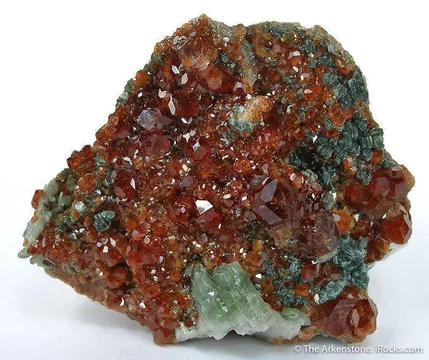
The best Val d’Ala specimens tend to be small cabinet pieces, miniatures, and thumbnails rather than large plates. Their appeal lies in contrast and crispness: cinnamon to red-brown grossular crystals on pale rodingite, pale green diopside prisms protruding from garnet-rich crusts, dark green clinochlore rosettes or lamellae defining the matrix, and brownish to greenish vesuvianite in transparent to translucent crystals. Many pieces from older collections were trimmed from tough, massive rodingite; damage on high points is common, but well-centered combinations with intact diopside terminations and lustrous garnets remain strongly collectible.
Monte Cervandone and the Devero Alp in the Ossola district form a very different collecting chapter. Here the collector is dealing with high-alpine terrain, gneiss, pegmatitic dikes, quartz veins, and open Alpine-type fissures that concentrated arsenic, beryllium, niobium, rare earths, phosphorus, titanium, and tungsten into a famous suite of microscopic to thumbnail rarities. Cafarsite is the best-known collector species from the Italian side, but it belongs to a broader Cervandone mineralogical system that includes asbecasite, gasparite-(Ce), cervandonite-(Ce), fetiasite, paraniite-(Y), chernovite-(Y), synchysite-(Ce), xenotime-(Y), monazite-(Ce), and later-recognized natural organic minerals such as deveroite-(Ce) and marchettiite. For serious systematic collectors, a small, verified Cervandone specimen with sharp crystals and a reliable old label can be more desirable than a showier but common Alpine quartz.
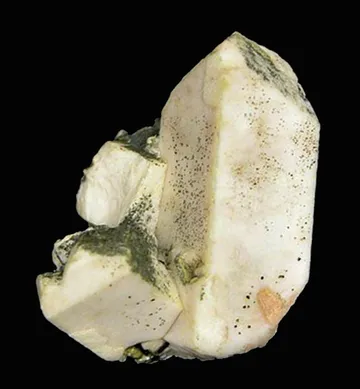
The Baveno granite quarries on Lake Maggiore add the miarolitic-granite side of Piedmont. The pink granite around Monte Camoscio, Oltrefiume, and Feriolo contains cavities and pegmatitic facies that yielded orthoclase, quartz, albite, fluorite, beryl, muscovite, zeolites, and a remarkable list of rare Be- and Sc-bearing minerals. Bavenite and bazzite are the best-known names to collectors, but the locality is also important for scandium mineralogy, including scandiobabingtonite and other rare species documented from small cavities. Baveno specimens are commonly encountered as old European collection pieces: white to pink feldspar, smoky or clear quartz, small fluorite, and accessory rarities that require magnification and good labeling.
The Val Vigezzo emerald-bearing pegmatites at Alpe Rosso above Orcesco and near Pizzo Marcio provide Piedmont’s unusual beryl story. These are albitized pegmatites cutting serpentinite and related rocks, where chromium-bearing beryl occurs along exocontacts in green to grey micaceous zones rich in phlogopite, talc, and tremolite. The best emerald specimens are green, hexagonal, and unmistakably beryl in habit, but their average color and transparency are modest by gem-market standards. As specimen minerals, they are desirable because they are Alpine emeralds from a rare Italian setting and because the same pegmatitic field yielded type-locality or historically important rare minerals such as vigezzite and roggianite.
Traversella, in Valchiusella north of Turin, is Piedmont’s classic mine locality. The deposit is a polymetallic Fe-Cu-W skarn developed in the contact aureole of the Traversella granodioritic to dioritic intrusive body against metamorphic rocks of the Sesia-Lanzo unit, including mica schist, gneiss, and carbonate lenses. Magnetite was the principal ore for centuries; pyrite and chalcopyrite became increasingly important in the twentieth century for sulfuric-acid production, and scheelite supplied tungsten interest. The skarn assemblage also accounts for the locality’s specimen appeal: garnets, epidote, pyroxenes, chlorites, quartz, carbonates, sulfides, and scheelite from a mine that was simultaneously industrial, historical, and mineralogical.
Mining and collecting access in Piedmont varies sharply by sublocality. Traversella is preserved as an organized mining museum and geopark setting, with exhibits, outside educational routes, and controlled gallery visits rather than ordinary collecting access. Balangero, the former chrysotile asbestos mine north of Turin, is a remediated and restricted site of mineralogical importance because of balangeroite and chrysotile, but it is not a modern collecting locality. Baveno quarry collecting depends on quarry status, permission, safety restrictions, and local rules. The high-alpine localities of Val d’Ala, Val Vigezzo, and Devero require respect for protected areas, land ownership, seasonal hazards, and Italian collecting regulations. For most collectors outside Italy, the practical source of Piedmont specimens is old European material, dealer stock, or well-documented pieces from historical collections.
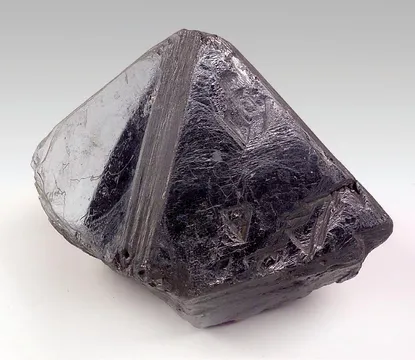
Piedmont cafarsite is the signature rarity of the Monte Cervandone–Devero Alp area, where it occurs in Alpine fissure and pegmatite-related assemblages as dark brown to nearly black isometric crystals, commonly octahedral or modified octahedral, on quartz, gneissic matrix, or associated rare-mineral crusts. The crystals are usually only a few millimeters, with better specimens showing isolated, sharp individuals around 5–10 mm and exceptional historical examples reaching larger thumbnail scale. Associations may include quartz, agardite, asbecasite, gasparite-(Ce), chernovite-(Y), synchysite-(Ce), monazite-(Ce), xenotime-(Y), hematite, magnetite, anatase, rutile, and other Cervandone rarities. A good Piedmont cafarsite is not judged by size alone: the crystal faces must be bright enough to read, the octahedral form should be complete, and the matrix should place the species in the Cervandone paragenesis rather than presenting a loose brown grain that needs a microscope and a story.
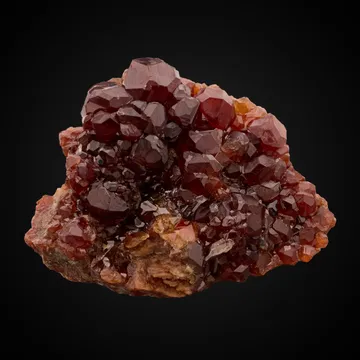
Grossular from Piedmont is best known from the Val d’Ala rodingites, especially the Pian della Mussa–Testa Ciarva–Roch Neir area, where calcium-rich metasomatic veins produced lustrous garnets in orange, cinnamon, reddish brown, honey-brown, and darker grandite tones. Crystals are typically dodecahedral, trapezohedral, or mixed-form, from submillimeter sparkling druses to crystals approaching a centimeter on better specimens, commonly set with pale green diopside, dark green clinochlore, vesuvianite, epidote, and pale rodingite matrix. The finest specimens show glassy, transparent to translucent garnets with rich color and enough spacing that individual forms are readable; ordinary pieces are more massive garnet-rich rock, attractive in color but lacking sharp, isolated crystals or strong contrast with the associated diopside and chlorite.
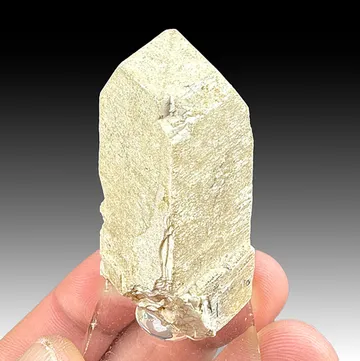
Diopside is one of Piedmont’s historically defining minerals, with Val d’Ala material giving rise to the old variety name “alalite” and forming classic pale to medium green prisms in rodingite veins near Pian della Mussa, Testa Ciarva, and Roch Neir. Crystals are commonly slender, glassy, and translucent, generally from a few millimeters to a few centimeters, with the most desirable pieces showing undamaged terminations rising above orange-brown grossular-hessonite and green clinochlore rather than being buried in garnet-rich crust. Piedmont diopside also occurs in other regional skarn and metasomatic settings such as Traversella and Val d’Ossola, but the most collectible look remains the Val d’Ala combination: mint to leek-green pyroxene needles or prisms, cinnamon garnet, and dark chloritic matrix in a tight Alpine composition.
Piedmont epidote appears in several contexts, notably in Val d’Ala rodingites and Traversella skarn assemblages, where it belongs to the same calcium-silicate world as garnet, diopside, vesuvianite, chlorite, quartz, calcite, and sulfides. In Val d’Ala it may occur as green to pistachio-green prismatic crystals or granular to bladed aggregates in rodingitic veins; at Traversella it is part of the skarn and contact-metasomatic silicate assemblage accompanying magnetite, pyrite, chalcopyrite, garnet, pyroxene, chlorite, carbonates, and scheelite. Good Piedmont epidote specimens are those in which the crystals stand out cleanly from rodingite or skarn matrix and show lustrous faces; ordinary material is often dark, compact, intergrown, or visually subordinate to the more colorful garnet-diopside association.
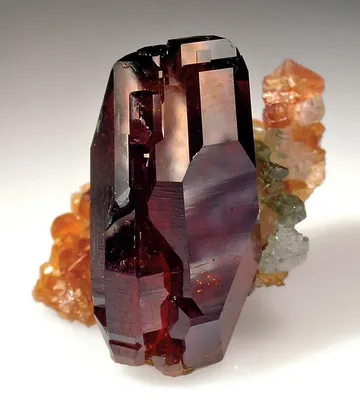
“Garnet” on Piedmont labels usually means the Val d’Ala rodingite garnets in the grossular-andradite field, with hessonite-variety grossular providing the classic cinnamon to orange-brown collector pieces and darker grandite to andraditic compositions adding chemical complexity. The crystals grew in multiple vein generations, from fine-grained massive garnet-rich rodingite to coarser vein crystals associated with diopside, clinochlore, vesuvianite, epidote, and local titanite or apatite. Sizes vary from sparkling druses of tiny crystals to individual garnets near centimeter scale, and the best specimens combine bright luster, saturated color, and a clean field of crystals on pale or greenish matrix. Pieces simply labeled “Piedmont garnet” should be localized whenever possible, because Val d’Ala, Val di Susa, Viù Valley, Traversella, and neighboring Aosta Valley material can be superficially similar in color and association.
Clinochlore is the dark green structural and visual foil in many Val d’Ala rodingite specimens, forming platy, lamellar, pseudohexagonal, or rosette-like crystals between cinnamon grossular-hessonite and pale green diopside. Individual crystals are usually small, commonly millimetric, but their value on a specimen is disproportionate: sharp clinochlore provides the green ground that makes the orange garnets and pale diopside read so strongly. It also belongs to the late and evolving vein history of rodingites, where chlorite generations cut or accompany garnet- and diopside-bearing assemblages. The best clinochlore-bearing pieces are not necessarily clinochlore specimens in isolation; they are balanced combinations where the chlorite is crystalline, not just a dull massive coating, and where it frames intact garnet and diopside crystals without overwhelming them.
Piedmont beryl has two principal collector personalities: blue to pale beryl and alteration-related Be minerals in the Baveno granite-pegmatite environment, and green chromium-bearing beryl from the Val Vigezzo emerald pegmatites at Alpe Rosso and Pizzo Marcio. At Baveno, beryl occurs in pegmatitic facies and miarolitic cavities with orthoclase, quartz, albite, fluorite, mica, zeolites, bavenite, bazzite, and other rare species; crystals may be small and accessory, valued heavily when tied to a historic quarry label. In Val Vigezzo, beryl crystals commonly show a green Cr-rich rim and a whitish milky core, with partial replacement by bavenite, bertrandite, bityite, or related Be silicates. Good Piedmont beryl specimens must have locality precision: “Baveno” implies a granite-cavity context, while “Val Vigezzo” or “Pizzo Marcio” implies the much scarcer emerald-bearing albitized pegmatite story.
Vesuvianite from Piedmont is most admired from Val d’Ala, where rodingite bodies up to roughly meter scale host mineralized veins and fractures containing vesuvianite with grossular, diopside, epidote, clinochlore, and other Ca-silicates. The crystals are typically brown, greenish brown, yellowish green, or pinkish to brownish in gemmy portions, and some Val d’Ala material has been studied specifically for gem potential. In specimens, vesuvianite may appear as prismatic crystals, coarse vein material, or lustrous translucent patches that can be difficult for a casual eye to separate from garnet without testing and context. The most desirable examples show distinct crystal form, transparency, and association with Val d’Ala’s hessonite-diopside-clinochlore suite; lesser pieces are massive or visually confused with garnet-rich rodingite.
Piedmont emerald is a Val Vigezzo specialty rather than a commercial gem source, occurring in albitized pegmatites at Alpe Rosso above Orcesco and near Pizzo Marcio, where pegmatitic bodies cut serpentinite and reacted with Cr-bearing wall rocks. The crystals are green, hexagonal beryl, commonly small, included, and only locally transparent enough for tiny cut stones or cabochons; a documented Val Vigezzo specimen with a clean 5–10 mm crystal on matrix is already significant. Associations and alteration products include albite, phlogopite, talc, tremolite, tourmaline, bavenite, bertrandite, bityite, and rare Nb-Ta-Ti oxides such as vigezzite or related species in the broader pegmatite system. Good pieces are valued for proof of identity, visible hexagonal habit, and precise Pizzo Marcio or Alpe Rosso provenance, not for Colombian-style color or clarity.
Hessonite is the collector’s name most often attached to Val d’Ala grossular, where orange, cinnamon, honey-brown, cherry-brown, and reddish crystals cover rodingite matrix with pale green diopside and dark green clinochlore. Crystals are generally small but highly lustrous, often subcentimeter, and the classic specimens are combination pieces rather than single crystals: garnet-rich crusts, sprays of diopside, and chlorite plates together produce the famous Piedmont color harmony. Historically, these orange-brown garnets had local gem use and ornamental significance in the valley, but for mineral collectors the premium is on sharpness, transparency, saturated color, and undamaged high points. Ordinary hessonite pieces from Piedmont are abundant enough in older stock; top examples with clean association, old labels, and lively crystal faces are distinctly scarcer.
Other documented Piedmont minerals include several species of international systematic importance. Baveno is the type locality or name locality for bavenite and bazzite and is a major locality for scandium-bearing species such as scandiobabingtonite, cascandite, and jervisite. Monte Cervandone and the Devero area are central to the history of asbecasite, gasparite-(Ce), cervandonite-(Ce), fetiasite, paraniite-(Y), deveroite-(Ce), marchettiite, and allied REE arsenate, arsenite, phosphate, and oxalate minerals. The Val Vigezzo pegmatites are tied to roggianite and vigezzite, while Traversella contributes a classic skarn suite of magnetite, pyrite, chalcopyrite, scheelite, quartz, calcite, dolomite, garnet, epidote, pyroxenes, chlorites, and accessory ore minerals. Piedmont is also historically tied to piemontite by name and to Balangero by balangeroite, a fibrous silicate from the former chrysotile asbestos mine.
The first authenticity issue with Piedmont is not treatment; it is provenance. Val d’Ala hessonite-grossular, Bellecombe material from neighboring Aosta Valley, Val di Susa garnets, Viù Valley pieces, and other Alpine rodingite specimens can be similar enough that unlabeled or poorly labeled material is often reduced in value to “Italian rodingite garnet.” Serious buyers should favor specimens with old labels, precise sublocalities such as Testa Ciarva, Roch Neir, Pian della Mussa, Alpe Rosso, Pizzo Marcio, Monte Cervandone, Baveno, or Traversella, and associations that make geological sense.
For cafarsite and the Cervandone rarities, analytical confidence matters. Dark brown octahedra from Cervandone can be convincing, but small rare arsenates and arsenites are not field-identification minerals for most collectors. A premium cafarsite should have sharp isometric crystals, a credible Cervandone or Devero label, and preferably a trail through a knowledgeable dealer or collection. Matrix relationships and associations are useful, but for high-value systematic purchases, previous analysis, museum-quality provenance, or a reputable source is worth paying for.
Val d’Ala garnet-diopside pieces commonly show bruising because the crystals are exposed on hard matrix and older specimens were often extracted and trimmed from tough rodingite. Check the highest garnet faces for edge chipping, the tips of diopside prisms for breaks, and clinochlore plates for crushing. A bright miniature with a few discreet contacts may still be excellent; a dull garnet crust with many broken crystal tops should be priced as common locality material.
Emerald from Val Vigezzo should not be evaluated like commercial gem emerald. The crystals are generally small, pale to medium green, included, and often partly milky or altered. Be cautious of overly vivid, transparent “Piedmont emerald” offered without matrix or locality documentation. Genuine collector-grade pieces are interesting because they are Italian Alpine emerald in an albitized pegmatite context, not because they compete with major gem sources.
Baveno specimens have a different risk profile: old labels are valuable, but rare species in Baveno cavities may be microscopic or visually unimpressive. Orthoclase, quartz, albite, and fluorite combinations are readily collectible, but bavenite, bazzite, scandiobabingtonite, and related rarities should be treated as systematic specimens requiring magnification and, when value warrants it, analytical support. Small rare species glued onto an attractive feldspar-quartz matrix are not typical of honest Baveno cavity pieces; natural placement in the cavity assemblage matters.
Handling also deserves attention. Balangero material, chrysotile-bearing specimens, and fibrous serpentinite-associated pieces should be kept sealed and handled with minimal disturbance. Do not saw, brush, blow, or aggressively clean suspected asbestos-bearing material. Traversella sulfide specimens may contain pyrite, pyrrhotite, chalcopyrite, arsenopyrite, or other sulfides and should be stored dry and watched for oxidation. Scheelite-bearing material from Traversella may fluoresce under shortwave ultraviolet light, which can help locate small grains, but fluorescence alone is not a locality proof.
On the market, Piedmont is available but uneven. Val d’Ala hessonite-diopside-clinochlore combinations appear regularly in European stock and at shows, from inexpensive thumbnails to fine old miniatures. Cafarsite and Cervandone rarities are much scarcer, especially as aesthetic specimens rather than micromounts or tiny reference pieces. Baveno feldspar-quartz-fluorite specimens are obtainable, but verified Baveno rarities remain specialized. Traversella material is commonest as historical mine specimens, sulfides, magnetite, scheelite, and skarn minerals; pieces with strong aesthetics and early labels are less common than the mine’s fame might suggest.
In Val d’Ala, the mineral story is unusually intimate: the orange-brown garnets were not merely named and measured in scientific papers, but used locally as gemstones. Hessonites from the rodingites were worn in traditional costumes of the valley and even carried the social meaning of an engagement sign. That detail explains why Val d’Ala garnet is more than a dealer shorthand. The locality sits at a meeting point of field mineralogy, Alpine petrology, and local culture, where a crystal small enough to cut and set could move from a fissure in serpentinite to a family ceremony.
Traversella tells a more industrial story. The ore crossed from the mine workings to the processing buildings by an inclined bridge and was fed into the crushing silo, beginning in an 800-tonne hopper. Crushers reduced the rock, conveyor belts moved it onward, and a second 300-tonne hopper fed ball mills that ground the material into a mixed mineral “flour.” Magnetite was then separated magnetically, using equipment based on the oscillating electromagnet principle associated with Quintino Sella. The remaining heavy fraction passed over vibrating wooden boards where dense minerals such as scheelite could be recovered, and lighter sulfides such as pyrite and chalcopyrite were concentrated by flotation.
Baveno’s story begins earlier, in the age when crystallography itself was taking shape. At the beginning of the 1700s, the Borromeo family sent crystals from the Baveno granite quarries to France for examination by early crystallographers. Later, Ermenegildo Pini collected Baveno material that entered the Milan museum collections, and Ettore Artini, curator of the Milan Museum from 1893, became central to the recognition of Baveno rarities. The quarrymen were extracting pink granite, but the cavities in that granite quietly produced a second industry of knowledge: bavenite in 1901, bazzite in 1915, and later scandium species that made Baveno one of the world’s unusually concentrated scandium-mineral localities.
At Balangero, the mineralogical significance is shadowed by industrial hazard. The former chrysotile asbestos mine north of Turin became one of Western Europe’s largest asbestos operations before closing in 1990. Its mineralogical legacy includes balangeroite, first recognized from the mine and once confused with fibrous serpentine-type material. For collectors, the site is a reminder that locality fame is not always picturesque: some classic minerals come from places where access, conservation, and health concerns properly override field collecting.