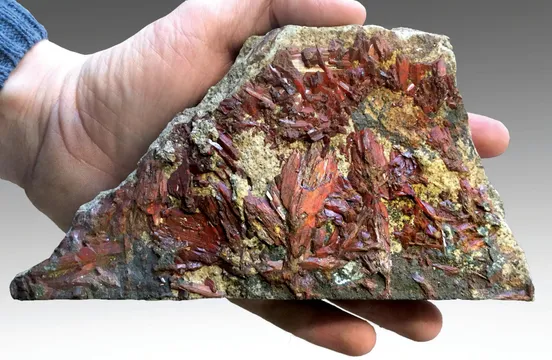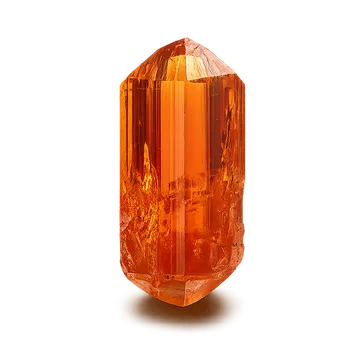
ロシア・ムルジンカ鉱山産のトパーズ - 薄青色から無色まで、ペグマタイト中に鋭い直交晶系の結晶、自然色・古い産地・ウラル山脈の魅力で珍重。
Key facts
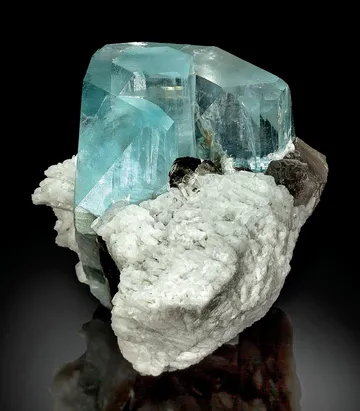
ムルジンカ鉱山産トパーズは、古典的なロシアのペグマタイト伝統に属します。淡青色から無色の結晶が、鮮明でガラス光沢を放ち、しばしば長石、アルビト、または煙水晶とともに展示され、すぐれた宝石原石として扱われることは少なく、 loose gem rough として扱われることはほとんどありません。最良の標本には19世紀の気品が不可欠に感じられ、冷たい透明感を放つトップザが、淡い長石や暗い煙水晶の上に浮かぶように現れ、色は抑えられ、直交晶系のシャープさを備え、現代の青色トップザ処理が宝石市場を席巻する以前から、ウラル山脈を古典的な産地として確立させた理由を示しています。
「ムルジンカ鉱山」は、歴史を持つコレクター向けラベルでもあります。古いラベルには Murzinka、Mursinsk、Murzinsk、または Murzinska などと読まれることがあり、歴史的に broad Murzinka 名義の多くの標本は、おそらくアルファバシュカ(Alabashka)ペグマタイト帯、特に有名な Mokrusha 掘削区域および隣接するトパーズ含有脈から来たと考えられます。コレクターにとって、その曖昧さは locality の特徴の一部です。Murzinka という名は、現代の単一の鉱山ではなく、中部ウラルのネイバ川周辺のより広い宝石産地を意味することが多いのです。
地質的には、材料は古典的な花崗岩-ペグマタイトのトップザです。ムルジンカ–アデイ花崗岩関連ペグマタイト系は、ウラル宝石ベルトの一部で、後期の揮発性豊富な流体がフッ素、ベリリウム、リチウム、ホウ素、希少金属をペグマタイトの pockets に濃縮させました。これらのポケットには、トップザは石英、煙水晶、アルビト、微斜長石、白雲母、スコロール、ベリル、リチウム粘土石とともに成長しました。コレクターの魅力は、単にトップザが青いというだけでなく、結晶が自然で古く、しばしばファセット宝石材料として単独で取り扱われるのではなく、ペグマタイト美学に組み込まれている点にあります。
最も優れたムルジンカのトップザ標本は、自然な色、透明度、終端部の品質、基質のバランスによって判断されます。淡く氷のように青い untreated の色は、 locality にとっては、強い「ロンドン・ブルー」の宝石色よりも説得力があります。真剣なコレクターはまた、古い産地履歴を評価します。なぜなら、最良の歴史的標本は何世代もかけてロシア、欧州、米国のコレクションに分散され、現在は sporadically(散発的に)しか再登場しないからです。
Search for specimens: View all topaz specimens from Murzinka Mine, Russia
Murzinka Mine is recorded in the Prigorodny District of Sverdlovsk Oblast, Russia, in the Middle Urals. Mindat gives the locality coordinates near 57°43′01″N, 61°00′55″E and records the historical names Mursinsk, Murzinsk, and Murzinska. The locality is best understood as a historic granite-pegmatite district label, with many topaz specimens attributed broadly to Murzinka but mineralogically tied to the Alabashka pegmatite field and its sublocalities.
The Alabashka pegmatite field lies within the Murzinka granite and is documented as a 19 km2 pegmatite field with gem pegmatites mined since 1722. The famous Mokrusha Mine, one of the central names for Murzinka blue topaz, is a complex granitic pegmatite in the Alabashka field and is specifically noted for natural blue topaz crystals. These pegmatites belong to the late-stage rare-metal and gemstone mineralization associated with the Murzinka–Adui granite massif, where greisenization and pegmatite formation followed the final stages of Permian granite-related activity in the Urals.
Mining history spans several overlapping periods. The broader Murzinka gem district entered Russian mineral history in the 17th century, with early colored-stone discoveries along the Neiva region. The Alabashka pegmatites are recorded as mined from 1722 onward, while several accounts associate the most famous blue topaz discoveries at Mokrusha with the later 19th century. By the late 1800s, Murzinka and Alabashka topazes had already entered major collections; one of the celebrated surviving specimens in the Australian Museum is described as having been produced from the Russian locality in the late 1880s.
Collectors should treat access as restricted unless specific permission is obtained. These are old mine and pegmatite workings, not a simple public fee-dig locality. Some modern regional tourism and amateur collecting activity occurs around the Murzinka gemstone belt and old dumps, but serious collecting requires attention to land status, mining rights, safety, and local regulations. The most important specimen-quality topazes circulating today are old collection pieces rather than products of steady modern mine output.## ムルジンカ鉱山(ロシア)産トパーズの特徴
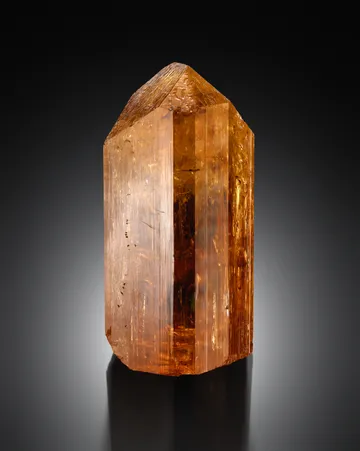
ムルジンカ産トパーズは、青みがかった淡い blue、氷のような青、無色、そして淡いシャンパン色から黄色がかった色調が最も評価されています。青色は一般に繊細で自然な外観で、処理された商業用ブルートパーズに見られる飽和した エレクトリックカラーとは異なります。いくつかのロシアの説明では、特定の石にやや緑がかった、または黄色がかった色調が見られる一方で、他の石はほとんど水晶のように透明です。
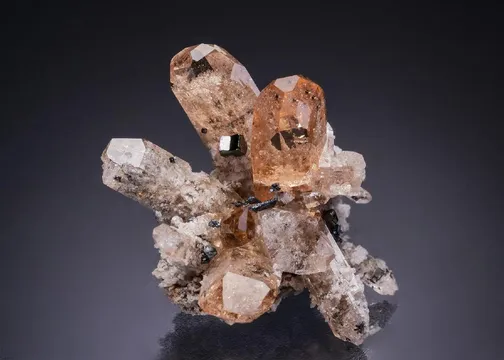
結晶は通常、プリズマ状で直角晶系を持ち、ガラス質の面と明るく幾何学的に複雑な終端を備えています。多くは下部を長石や石英に結合しているため、両端がはっきりとしたダブル terminated の標本は珍しいです。歴史的な記述は、ムルジンカ産物を Ilmeny トパーズと区別する点として、結晶学的なアウトラインがより単純で、形態が少なく、いくつかの結晶に溶解痕があることを挙げています。市場では、最も recognizable なムルジンカ産のピースは、鋭い単結晶または小さなグループがマイクロクリン、アルビト、クレーヴァランド石、または煙石英の上に載っているものです。
基質は locality のアイデンティティの主要な部分です。古典的な組み合わせは、煙石英とアルビトまたは長石の組み合わせのトパーズです。特に、正長石(オルトクラス)やマイクロクリンの上にトパーズがあり、少量の煙石英のアクセントがあるものは高く評価されます。 Mindat のムルジンカ Mine 地区のトパーズの写真データには、関連鉱物として繰り返し石英、煙石英、アルビト、クレーヴァランド石、マイクロクリン、モスカビ石、ショーロル、ベリル、レピドライトが記録されています。広いアラバシュカ–モクルーシャ系では、ビーロル類(アクアマリン、ヘリドールなど)やフェナキサイト、スペサルタイン、コーディエライト、リチウム雲母、希少種が含まれる鉱物組成へと拡張します。
現代のディーラーレコードで見られる最も収集価値の高い標本の多くは、サムネイル〜ミニチュアサイズに該当し、良品市場用の結晶は2–5 cm程度が典型的です。より大きな歴史的な基質標本ははるかに希少です。オーストラリア博物館の有名なアラバシュカ-ムルジンカ標本(全体で7.5 × 7 × 4.2 cm)は、この locality からのトップクオリティの“トパーズ-煙石英-アルビト”の組み合わせがいかに特異であるかを示しています。
品質は、次の狭い要因のセットに依存します:自然な淡い青色、透明度の高さ、未損傷の終端、最小限の基底解裂ダメージ、そして説得力のある古いペグマタイト基質。結晶の終端が完璧でも、基部が割れているトパーズは、基質に付着して成長した場合は locality では普通です。終端がきれいに折れている、プリズムのエッジが打撲されている、または結晶が再び付着している場合は、価値が著しく低下します。最良のピースは、宝石品質のトパーズ結晶、干渉のない付着、対照的な基質、そして信じられる古い産地情報を組み合わせています。## Collector Notes
The main authenticity issue with Murzinka topaz is locality precision. “Murzinka Mine” on an old label may not mean the exact Mindat locality now called Murzinka Mine. It may refer broadly to the Murzinka district, the Alabashka pegmatite field, Mokrusha, or another nearby historical working. This does not automatically make an old label wrong; it reflects how Russian gemstone localities were marketed and cataloged in earlier collecting eras. For a high-value specimen, old labels, collection history, and comparison with known Alabashka-Mokrusha habits matter.
Treatment concerns are different for specimens than for cut gems. Natural pale blue Murzinka topaz exists, but modern commercial blue topaz is very commonly produced by irradiation followed by heat treatment. A matrix specimen from Murzinka with a saturated Swiss-blue or London-blue color should be viewed skeptically unless its color and provenance are well documented. Natural Murzinka blues are generally delicate, icy, and transparent rather than neon or inky.
No famous, locality-specific fake scandal defines Murzinka topaz in the way that some other classic localities have known episodes of widespread fabrication. The practical risks are more ordinary: mislocalized old material, enhanced color in loose stones, repaired crystals, composite matrix assemblies, and damage hidden at the attachment point. Because topaz has perfect basal cleavage, old specimens often show basal contact damage, cleaved areas at the base, or small edge nicks along bright terminations. These are common condition issues, but they should be disclosed clearly.
Fine Murzinka topaz is not abundant on the current market. Dealer records show occasional thumbnails and miniatures, often sold, while top-tier old matrix pieces are genuinely scarce. Prices vary widely with size, color, condition, and provenance: modest damaged singles may be accessible, but clean natural blue crystals on attractive matrix with an old collection history can command strong four-figure prices and sometimes much more. The strongest collector demand is for pieces that look unmistakably old, natural, and Russian—pale blue topaz, smoky quartz contrast, feldspar matrix, and no distracting repairs.## Stories & Field Notes
ムルジンカの物語は、多くの名石物語と同様に始まる。 deliberate topaz hunt ではなく、別のものを探していた人のもとからだ。1667年、鉱山鉱業者のディミトリ・アレクセーエヴィチ・ツマシェフは、国家工場のための雲母を探してムルジンカのオストログに到達した。ネイヴァ川沿いで探していた雲母は見つからなかったが、集落周辺の最初の浅い採掘から驚くべき宝が得られた——ロシア語で「色の見えない清浄さ」を持つ石として記された大きな黄玉だった。1668年1月までに、ツマシェフはさまざまな色の石と鉱石の標本を半パド(半ポンド)分ほどシベリアのプリカーズクへ運んだ。その瞬間から、ムルジンカ地域は森林の frontier から宝石の国へと移り変わった。
この地区の名声は黄玉だけに由来するものではなかった。ムルジンカはエメラルド、アメジスト、煙水晶、赤色トルマリン、ベリル、他のウラル宝石ベルトの石と結びつけられる名となった。デミドフ家—プロコフィーとニキータ・アキンフィエヴィチ—はこの地域の石の初期の買い手・推進者の中におり、石の彫刻作業を組織し、ウラルの宝石をロシアの顧客だけでなく海外にも販売した。地元の記憶の中で、ムルジンカは単なる鉱山ではなく、石の文化だった。探鉱者、カッター、コレクター、村の美術館が皆同じ長い物語に属していた。
最も注目すべき現存するムルジンカ黄玉の一つは、現在オーストラリア植物学館のアルバート・チャップマン・コレクションに所蔵されている。その美術館はこれを「鉱物界のレンブラント」と呼ぶ。 smoky quartzと albite 上に薄い青透明の黄玉結晶、サイズは7.5 x 7 x 4.2 cm、産地はアラバシュカ、ムルジンカ。収集の歴史を通じた経路は、標本そのものとほぼ同じくらい見事だ。元々はロシアの美術館にあり、次にJ. ピアポント・モーガンの第二宝石コレクションへ移り、1901年にニューヨークのアメリカ自然史博物館へ寄贈された。66年間展示された後、ピーター・バンクロフトが学芸員に手をつけて1967年に放出を説得した。それからデービッド・ウィルバーへ、次にエド・スウォボダへと渡り、動向を注意深く追っていたアルバート・チャップマンが1984年3月にスウォボダから最終的に取得した。
後の章には、古いウラルの石の男イワン・イワノヴィッチ・ズヴェレフの名が結びつく。1958年、ズヴェレフの尽力により、地元の学校に恒久的な宝石展示が開かれ、ムルジンカの採掘から長年にわたって集められた鉱物が展示された。最高の黄玉標本がすでに遠い博物館や私的コレクションに散逸していたこの地方にとって、地元の展示は重要だった。村の風景の中に石の物語を anchor していたのだ。## 鉱物学的記録と出版物
V. I. Popova, V. A. Popov, and A. A. Kanonerov, Murzinka: Alabashka Pegmatite Field, Mineralogical Almanac, Vol. 5, 2002 — アラバシュカ・ペグマタイト field の必須ローカリティ・モノグラフ。歴史、地質、地図、脈情報、鉱物リスト、標本写真を収録。
Peter Lyckberg, review of Murzinka: Alabashka Pegmatite Field, Gems & Gemology, Fall 2002 — コレクター志向のレビュー。アラバシュカ-ムルジンカ標本がロシアのペグマタイト地質学の中心となる理由を強調。
Mindat: Murzinka Mine, Prigorodny District, Sverdlovsk Oblast, Russia — ムルジンカ鉱山のローカリティ記録。座標、歴史的名称、鉱物リスト、参考文献を含む。
Mindat: Topaz from Murzinka Mine — ムルジンカ鉱山産黒雲母の標本に関する種別ローカリティ記録。関連鉱物と写真統計を含む。
Mindat: Alabashka pegmatite field, Yuzhakovo, Sverdlovsk Oblast, Russia — 19平方キロメートルの野田ペグマタイト場の地域記録。1722年以来の採掘と鉱物連関を記録。
Mindat: Mokrusha Mine, Alabashka pegmatite field — 複雑な花崗岩性ペグマタイトのサブローカリティ記録。天然の青色トパーズで有名。
Australian Museum: Topaz, Alabaschka Murzinka, Albert Chapman Collection D.50715 — アラバシュカ-ムルジンカの最も優れたトパゾ石標本の博物館記録。モーガン–AMNH–バンクロフト–チャップマンの出所を含む。
V. N. Puchkov, “General features relating to the occurrence of mineral deposits in the Urals: What, where, when and why,” Ore Geology Reviews 85, 2017, 4–29 — ムルジンカ–アドゥイ花崗岩質 massif と珍元素ペグマタイト(トパーズ、ベリル、アレクサンドライトを含む)の地域地質背景。
E. V. Sokol, Y. V. Seryotkin, and T. A. Bul’bak, “Na-Li-Be-rich cordierite from the Murzinka pegmatite field, Middle Urals, Russia,” European Journal of Mineralogy 22, 2010, 565–575 — ムルジンカペグマタイト場における異常な化学組成を文献化した技術的研究。
I. V. Pekov et al., “Londonite from the Urals, and new aspects of the crystal chemistry of the rhodozite-londonite series,” The Canadian Mineralogist 48, 2010, 241–253 — Mokrushaペグマタイトからのロンドナイトを記録し、同じペグマタイト系のレア元素の複雑性を強調。## さらなる読み物と外部リンク
EarthWonders標本の例: ムルジンカ鉱山産のブルートパーズ — 公開された来歴と販売情報を伴う、小型の歴史的ブルートパーズの市場記録。
Crystal Classics: Orthoclase上のトパーズ, ムルジンカ鉱山 — 古典的な淡青色のトパーズ-長石スタイルと高品質標本の現代価格設定を示す販売業者記録。
Crystal Classics: スモーキー石英を伴うトパーズ, ムルジンカ鉱山 — トパーズとスモーキー石英の有用な標本説明およびマトリクス品の状態問題の説明。
Minfind: ムルジンカ鉱山産トパーズ — 現地の良質な宝石トパーズ結晶の希少性を指摘する archived 販売業者リスト。
Dave Bunk Minerals: トパーズ、ムルジンカ浴域 — 伝統的なムルジンカ材料の自然な青色と結晶形の特徴を強調する販売済標本記録。
World of Stones: ムルジンカ鉱床群 — モクロシァについての歴史的ノートとトパーズの色、広範なムルジンカ宝石地区のロシア語解説。
Между строк: Dmitry Tumashevとムルジンカ宝石の偶然の発見 — 17世紀の発見と後のムルジンカ宝石文化に関するロシア語の地域史記事。
Jewellery Business: 「青く感じる?青いトパーズガイド」 — 色の主張を評価するための自然色対照放射処理トパーズの背景情報。