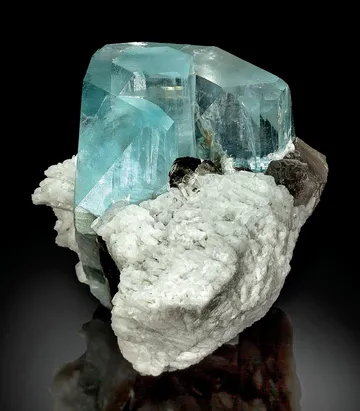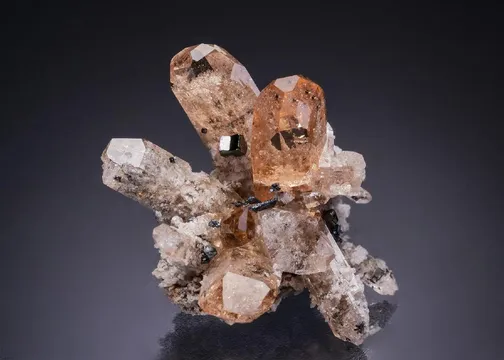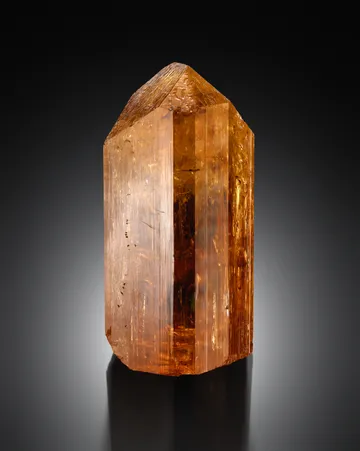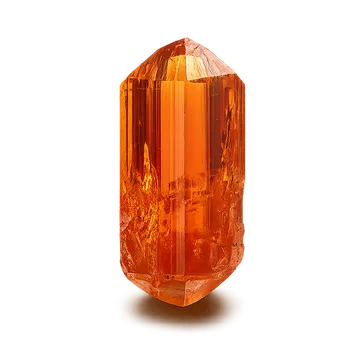
Topaz from Murzinka Mine, Russia - pale blue to colorless, sharp orthorhombic crystals in pegmatite; prized for natural color, old provenance, and Urals charm.
Key facts
Topaz from Murzinka Mine belongs to the old Russian pegmatite tradition: pale blue to colorless crystals, sharply glassy, often displayed on feldspar, albite, or smoky quartz rather than as loose gem rough. The best pieces have an unmistakably 19th-century elegance—cool, transparent topaz rising from pale feldspar or dark smoky quartz, with the restrained color and crisp orthorhombic geometry that made the Urals a classic source long before modern blue topaz treatment flooded the gem market.
“Murzinka Mine” is also a collector label with history attached. Old labels may read Murzinka, Mursinsk, Murzinsk, or Murzinska, and many specimens historically sold under the broad Murzinka name likely came from the Alabashka pegmatite field, especially the famous Mokrusha workings and neighboring topaz-bearing veins. For collectors, that ambiguity is part of the locality’s character: the name Murzinka often means the wider gem district around the Neiva River in the Middle Urals, rather than a single modern operating mine.
Geologically, the material is classic granite-pegmatite topaz. The Murzinka–Adui granite-related pegmatite system is part of the Ural gemstone belt, where late, volatile-rich fluids concentrated fluorine, beryllium, lithium, boron, and rare metals into pegmatite pockets. In those pockets, topaz grew with quartz, smoky quartz, albite, microcline, muscovite, schorl, beryl, and lithium micas. The collector appeal is not merely that the topaz is blue; it is that the crystals are natural, old, and typically integrated into a pegmatite aesthetic rather than isolated as faceted-gem material.
The finest Murzinka topaz specimens are judged by natural color, transparency, termination quality, and matrix balance. A pale, icy, untreated blue is far more convincing for the locality than an intense “London blue” gem color. Serious collectors also prize old provenance, because the best historic pieces were dispersed through Russian, European, and American collections generations ago and now reappear only sporadically.
Search for specimens: View all topaz specimens from Murzinka Mine, Russia
Murzinka Mine is recorded in the Prigorodny District of Sverdlovsk Oblast, Russia, in the Middle Urals. Mindat gives the locality coordinates near 57°43′01″N, 61°00′55″E and records the historical names Mursinsk, Murzinsk, and Murzinska. The locality is best understood as a historic granite-pegmatite district label, with many topaz specimens attributed broadly to Murzinka but mineralogically tied to the Alabashka pegmatite field and its sublocalities.
The Alabashka pegmatite field lies within the Murzinka granite and is documented as a 19 km2 pegmatite field with gem pegmatites mined since 1722. The famous Mokrusha Mine, one of the central names for Murzinka blue topaz, is a complex granitic pegmatite in the Alabashka field and is specifically noted for natural blue topaz crystals. These pegmatites belong to the late-stage rare-metal and gemstone mineralization associated with the Murzinka–Adui granite massif, where greisenization and pegmatite formation followed the final stages of Permian granite-related activity in the Urals.
Mining history spans several overlapping periods. The broader Murzinka gem district entered Russian mineral history in the 17th century, with early colored-stone discoveries along the Neiva region. The Alabashka pegmatites are recorded as mined from 1722 onward, while several accounts associate the most famous blue topaz discoveries at Mokrusha with the later 19th century. By the late 1800s, Murzinka and Alabashka topazes had already entered major collections; one of the celebrated surviving specimens in the Australian Museum is described as having been produced from the Russian locality in the late 1880s.
Collectors should treat access as restricted unless specific permission is obtained. These are old mine and pegmatite workings, not a simple public fee-dig locality. Some modern regional tourism and amateur collecting activity occurs around the Murzinka gemstone belt and old dumps, but serious collecting requires attention to land status, mining rights, safety, and local regulations. The most important specimen-quality topazes circulating today are old collection pieces rather than products of steady modern mine output.
Murzinka topaz is most admired in pale blue, icy blue, colorless, and faintly champagne to yellowish tones. The blue is generally delicate and natural-looking, not the saturated electric color associated with treated commercial blue topaz. Some Russian descriptions note slightly greenish or yellowish cast in certain stones, while others are essentially water-clear.
The crystals are typically prismatic and orthorhombic, with glassy faces and bright, geometrically complex terminations. Many attach by the lower end to feldspar or quartz, so fine double-terminated examples are unusual. Historic descriptions distinguish Murzinka material from Ilmeny topaz by its simpler crystallographic outlines, fewer forms, and the presence of dissolution features in some crystals. On the market, the most recognizable Murzinka pieces are sharp single crystals or small groups perched on microcline, albite, cleavelandite, or smoky quartz.
Matrix is a major part of the locality’s identity. The classic association is topaz with smoky quartz and albite or feldspar; topaz on orthoclase or microcline with small smoky quartz accents is especially desirable. Mindat photo data for topaz from the Murzinka Mine locality repeatedly records quartz, smoky quartz, albite, cleavelandite, microcline, muscovite, schorl, beryl, and lepidolite as associated minerals. In the broader Alabashka–Mokrusha system, the mineral suite expands to include beryl varieties such as aquamarine and heliodor, phenakite, spessartine, cordierite, lithium micas, and rare species.
Most collectible examples seen in modern dealer records fall in thumbnail to miniature sizes, with crystals around 2–5 cm being typical for fine market pieces. Larger historic matrix specimens are far rarer. The Australian Museum’s famous Alabashka-Murzinka specimen, 7.5 x 7 x 4.2 cm overall, shows how exceptional a balanced topaz-on-smoky-quartz-and-albite piece can be from this locality.
Quality depends on a narrow set of factors: natural pale blue color, high transparency, unbruised terminations, minimal basal-cleavage damage, and convincing old pegmatite matrix. A topaz crystal with a perfect termination but a cleaved base is normal for the locality if it grew attached to matrix; a cleanly broken termination, bruised prism edges, or reattached crystal sharply reduces value. The finest pieces combine a gemmy topaz crystal, undisturbed attachment, contrasting matrix, and believable old provenance.
The main authenticity issue with Murzinka topaz is locality precision. “Murzinka Mine” on an old label may not mean the exact Mindat locality now called Murzinka Mine. It may refer broadly to the Murzinka district, the Alabashka pegmatite field, Mokrusha, or another nearby historical working. This does not automatically make an old label wrong; it reflects how Russian gemstone localities were marketed and cataloged in earlier collecting eras. For a high-value specimen, old labels, collection history, and comparison with known Alabashka-Mokrusha habits matter.
Treatment concerns are different for specimens than for cut gems. Natural pale blue Murzinka topaz exists, but modern commercial blue topaz is very commonly produced by irradiation followed by heat treatment. A matrix specimen from Murzinka with a saturated Swiss-blue or London-blue color should be viewed skeptically unless its color and provenance are well documented. Natural Murzinka blues are generally delicate, icy, and transparent rather than neon or inky.
No famous, locality-specific fake scandal defines Murzinka topaz in the way that some other classic localities have known episodes of widespread fabrication. The practical risks are more ordinary: mislocalized old material, enhanced color in loose stones, repaired crystals, composite matrix assemblies, and damage hidden at the attachment point. Because topaz has perfect basal cleavage, old specimens often show basal contact damage, cleaved areas at the base, or small edge nicks along bright terminations. These are common condition issues, but they should be disclosed clearly.
Fine Murzinka topaz is not abundant on the current market. Dealer records show occasional thumbnails and miniatures, often sold, while top-tier old matrix pieces are genuinely scarce. Prices vary widely with size, color, condition, and provenance: modest damaged singles may be accessible, but clean natural blue crystals on attractive matrix with an old collection history can command strong four-figure prices and sometimes much more. The strongest collector demand is for pieces that look unmistakably old, natural, and Russian—pale blue topaz, smoky quartz contrast, feldspar matrix, and no distracting repairs.
The Murzinka story begins like many of the great gemstone stories: not with a deliberate topaz hunt, but with someone looking for something else. In 1667, the ore prospector Dmitry Aleksandrovich Tumashev reached the Murzinka ostrog while searching for mica for state factories. He did not find the mica he wanted along the Neiva, but the first shallow diggings around the settlement produced a more surprising prize—large topazes described in Russian as stones of “unseen purity of color.” By January 1668, Tumashev had carried half a pud of assorted colored stones and ore samples to the Siberian Prikaz. From that moment, the Murzinka area moved from forested frontier to gemstone country.
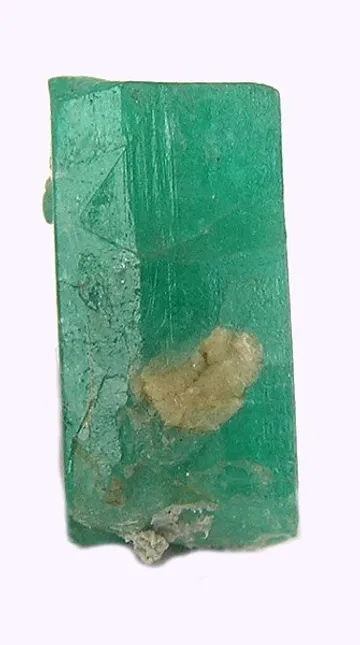
The district’s fame did not come only from topaz. Murzinka became a name attached to emerald, amethyst, smoky quartz, red tourmaline, beryl, and other stones of the Ural gemstone belt. The Demidovs—Prokofy and Nikita Akinfievich—were among the early buyers and promoters of the region’s stones, organizing stone-cutting work and selling Ural gems not only to Russian patrons but also abroad. In local memory, Murzinka was not simply a mine; it was a stone culture, where prospectors, cutters, collectors, and village museums all belonged to the same long story.
One of the most remarkable surviving Murzinka topazes is now in the Australian Museum’s Albert Chapman Collection. The museum calls it a “Rembrandt of the mineral world”: pale blue transparent topaz crystals on smoky quartz and albite, 7.5 x 7 x 4.2 cm, from Alabaschka, Murzinka. Its route through collecting history is almost as impressive as the specimen itself. It was originally in a Russian museum, then passed into J. Pierpont Morgan’s second gem collection and was donated to the American Museum of Natural History in New York in 1901. It remained on display there for 66 years before Peter Bancroft persuaded a curator to release it in 1967. From there it passed to David Wilbur, then to Ed Swoboda. Albert Chapman, who had followed its movements closely, finally acquired it from Swoboda in March 1984.
A later chapter belongs to Ivan Ivanovich Zverev, the old Ural stone man whose name is tied to the preservation of Murzinka’s memory. In 1958, through Zverev’s efforts, a permanent gemstone exhibition opened in the local school, showing minerals collected from the Murzinka workings over many years. For a locality whose best topaz specimens had already scattered into distant museums and private collections, that local exhibition mattered: it kept the story anchored in the village landscape that produced the stones.