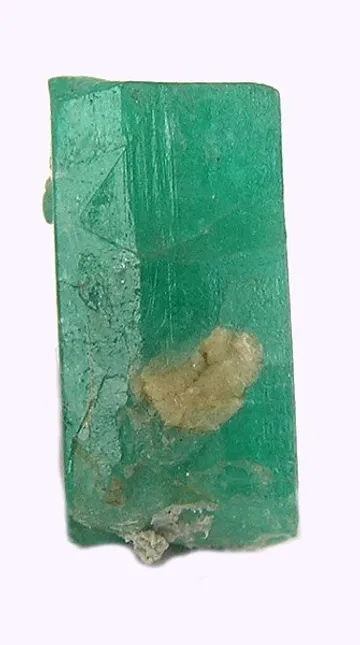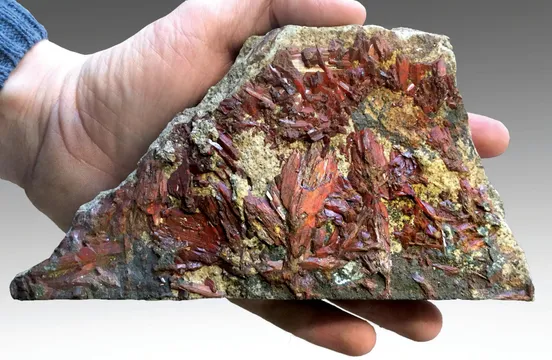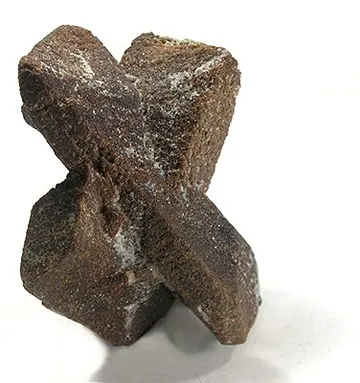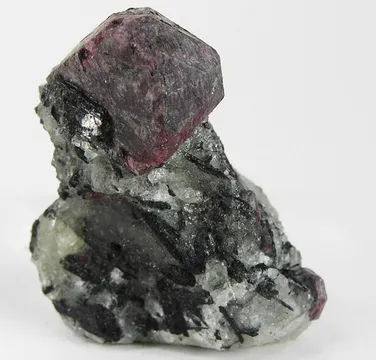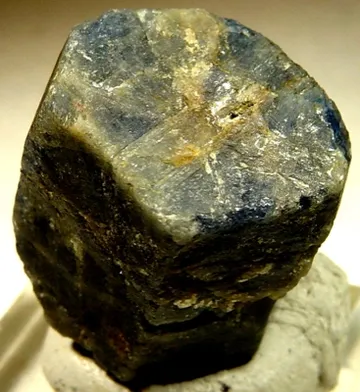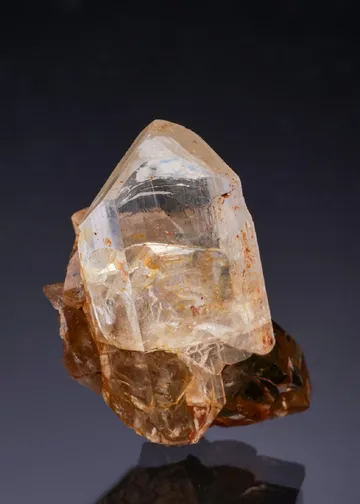
Murzinka Mine, Russia — historic pegmatite locality famed for pale blue topaz, aquamarine beryl, smoky quartz, and cleavelandite; highly prized by collectors.
Key facts
Murzinka is one of the great old names of pegmatite mineralogy: a locality label that collectors associate above all with natural blue topaz, yellow and blue beryl, smoky quartz, cleavelandite-albite “roses,” microcline, muscovite, lepidolite, and rare Be-Li-B-Cs minerals from the Middle Urals. In strict modern locality work, “Murzinka Mine” is a historic collector and trade name that can cover specimens from the broader Murzinka–Alabashka area rather than a single sharply bounded shaft. That ambiguity is not a defect so much as part of the locality’s history: for more than a century, the finest pieces moved through Russian, European, and American collections under old labels reading Murzinka, Mursinsk, Murzinsk, Murzinska, Alabaschka, or related spellings.
Geologically, the classic material comes from chambered granitic pegmatites of the Murzinka–Adui gem belt on the eastern side of the Middle Urals. These are miarolitic pegmatites—veins and lenses in which late volatile-rich residual fluids left open cavities, locally called zanoryshi, where crystals could grow freely rather than being locked in massive quartz and feldspar. The collector look is immediately recognizable: pale water-blue to colorless topaz, commonly sharp and transparent, rising from white albite or cleavelandite and smoky quartz; hexagonal beryl prisms in pale blue aquamarine, yellow heliodor, or greenish-yellow beryl; and dark smoky quartz or morion set against feldspar and mica.
Regional View
Country View
The finest Murzinka specimens have a delicacy very different from the later Brazilian and Pakistani pegmatite classics. The topaz is rarely theatrical electric blue; it is usually an old-collection, natural, watery blue or limpid colorless crystal, often with a broad wedge-like orthorhombic termination and glassy luster. Matrix examples are especially prized because many historic crystals were removed as gem rough, while intact combinations with albite, smoky quartz, microcline, and mica preserve the actual cavity architecture of the Urals pegmatites.

Photo: Wikimedia Commons

Photo: Wikimedia Commons

Photo: Wikimedia Commons
Search for specimens: View all specimens from Murzinka Mine, Russia
Murzinka lies in Sverdlovsk Oblast in the Middle Urals, in the historic gem country north of Yekaterinburg and southeast of Nizhny Tagil. In collector usage the name commonly refers not just to the village area but to the northern part of the Murzinka–Adui gem belt, including the Alabashka, Murzinka, and Yuzhakovo pegmatite fields and nearby vein fields. This is why old labels can be both famous and imprecise: a crystal labeled simply “Murzinka” may have come from a named mine such as Mokrusha, Kazennitsa, Staraya Mylnitsa, Tiazhelovesnitsa, Zolotukha, Chernukha, or another nearby working.
The essential deposit type is chambered granitic pegmatite. The pegmatites are related to the Murzinka–Adui granite-gneiss massifs and are emplaced mainly in metamorphic rocks along their western margins, with some bodies cutting granitic rocks. The productive gem veins are famous for cavities in which feldspar, albite, quartz, muscovite, lepidolite, topaz, beryl, tourmaline, and rarer beryllium minerals crystallized from volatile-rich residual fluids. The geological signature is a classic late pegmatite association enriched in fluorine, boron, beryllium, lithium, cesium, and related rare elements.
The best-known source of the iconic topaz-bearing material is the Mokrusha mine area in the Alabashka pegmatite field. Mokrusha is described as a system of large, gently dipping, sheet-like pegmatite bodies connected by steeper bodies. The workings exposed a vertical mineralogical sequence that is very useful to collectors: an upper body with lepidolite-topaz mineralization in cavities, a middle body characterized by albite-beryl mineralization, and a lower body with albite and morion. This internal zoning explains why one Murzinka specimen may be a pale blue topaz on cleavelandite, another a yellow beryl in albite, and another a nearly black smoky quartz association.
The history is long and colorful. The Murzinka gem district is tied to the earliest Russian discoveries of colored stones in the Urals, traditionally associated with the Tumashev brothers in the seventeenth century. The blue topaz fame of the Alabashka–Mokrusha area belongs especially to the nineteenth and early twentieth centuries, when local miners—gorshchiki—worked swampy, forested ground in shafts and pits, often most effectively in winter when the wet ground froze. Mokrusha became one of the central objects of this work; early accounts place its discovery in 1875, though N. I. Koksharov had already pointed to the area by 1854.
The most successful pre-revolutionary topaz years at Mokrusha were in the 1880s and around 1890, with the miner A. Ovchinnikov named in historical accounts. In 1904, Mokrusha produced not only topaz but many large crystals of smoky quartz. In the 1910–1911 season, S. Kh. Yuzhakov opened a major pocket that yielded feldspar crystals up to 75 cm and a very large topaz crystal later described by A. E. Fersman. Soviet exploration and extraction brought another important phase: the Murzinka party of the Pyshma expedition evaluated Mokrusha in 1964–1968, later followed by work by PO Uralkvartssamotsvety and the Neiva geological prospecting party in the 1970s and 1980s.
The 1964–1968 work at Mokrusha reportedly opened 56 nests or pockets and recovered 61 kg of topaz, 31.2 kg of tourmaline, 0.38 kg of beryl, and 200 kg of morion. Later exploration in 1979–1981 evaluated the Alabashka vein field for faceting topaz and beryl, ornamental graphic pegmatite, and collector material. In 1982–1986, exploration-mining work on the Mogol area, including the Mokrusha and Golodnaya veins, produced notable specimens. One 1985 stage in quarry 1 of the Mokrusha vein reportedly opened 200 pockets and cavities; 76 large samples contained more than 5 kg of facetable topaz, about 1 kg of beryl, and 2,870 drusy specimens.
The celebrated “Pobeda” druse from that period captures the best Murzinka aesthetic in museum scale: a 43 kg composition with two large blue topaz crystals of about 20 cm, twenty-five smaller topaz crystals from 1 to 6 cm, and cleavelandite roses. It was transferred to Gokhran of Russia and is associated with the Samotsvety museum collection in Moscow. Other named topaz crystals recorded from the Neiva party work include “Ural,” “Tumashev,” and “Murzinsky,” weighing 8.4 kg, 11 kg, and 13.8 kg respectively.
Collecting today is fundamentally different from the historic mining period. The famous productive pockets are long worked, and serious excavation at old pits, shafts, and dumps requires local knowledge, permission, and caution. Some old dumps and tour routes in the Murzinka area are still visited by mineral enthusiasts, and small quartz, feldspar, mica, beryl, topaz, tourmaline, and corundum-group material may be encountered in the broader district. For specimen collectors, however, the best Murzinka pieces on the market are usually old material—museum deaccession fragments, nineteenth- and twentieth-century collection pieces, or specimens with inherited Russian or European labels.
Topaz is the mineral that made Murzinka a world locality: transparent crystals from nearly colorless through watery blue to stronger sky-blue, typically simple, sharp orthorhombic prisms rather than the more complex and often doubly terminated Ilmen-type crystals. Many Murzinka topaz crystals grew attached at the lower end to cavity walls, albite, cleavelandite, smoky quartz, microcline, muscovite, or lepidolite, and the best pieces show natural pale blue color, clean glassy transparency, an undamaged termination, and—most desirable of all—an intact matrix association rather than a loose gem crystal. Historic Mokrusha pockets produced everything from small jewel-like crystals to museum-scale material, including giant named crystals and the 43 kg “Pobeda” druse with large blue topaz and cleavelandite roses; ordinary pieces are fractured, included, waterworn-looking, heavily cleaved, or locality-vague, while fine Murzinka topaz has the unmistakable quiet brilliance of an old Ural pegmatite pocket.
Beryl from Murzinka is a pegmatite-cavity mineral of the middle albite-beryl zones and related veins, occurring as hexagonal prisms in green, yellow, pale blue, and near-colorless tones, with aquamarine and heliodor being the collector varieties most often singled out. The district is historically known for large and gemmy crystals: nineteenth-century accounts record a precious beryl 25 cm long from Starceva Yama near Murzinka, and broader Murzinka-area literature notes multicolored gem beryls reaching roughly the high-tens-of-centimeters scale. Fine specimens retain bright prism faces, a complete or partially complete pinacoidal termination, and a natural matrix of albite, smoky quartz, microcline, or mica; lesser examples are opaque industrial beryl, broken prism sections, or loose crystals without the old locality context that gives Murzinka beryl much of its appeal.
Quartz is the structural and visual backbone of Murzinka specimens, lining pegmatite cavities as rock crystal, smoky quartz, morion, and locally amethyst or sceptre forms, and providing the contrast that makes pale blue topaz and aquamarine stand out. In the Mokrusha system, smoky quartz and morion are especially important: historical accounts record abundant large smoky quartz crystals in 1904, and Soviet work recovered hundreds of kilograms of morion from evaluated pockets and nests. The finest quartz specimens from Murzinka are not merely dark crystals but complete, lustrous cavity pieces with feldspar, albite, topaz, beryl, or mica associations; ordinary examples are single smoky fragments, cleaved bases, or undocumented dark quartz that lacks a clear pegmatite-pocket assemblage.
Aquamarine from Murzinka is the blue beryl expression of the same volatile-rich pegmatite system that produced the topaz: typically pale to medium blue hexagonal prisms, sometimes transparent and gemmy, associated with smoky quartz, albite, microcline, and mica. Good pieces are far rarer on matrix than loose crystals, and the most desirable examples show a visibly blue, transparent prism seated in or crossing smoky quartz or albite, preserving the cavity relationship rather than presenting only a detached gem rod. Damage, repair, and restoration are not unusual on old aquamarine specimens because the crystals are brittle, elongated, and often recovered from clay-filled pockets or old collections; a fine Murzinka aquamarine is judged as much by provenance, composition, and survival on matrix as by color alone.
Heliodor is one of Murzinka’s signature beryl varieties, occurring as yellow to golden-yellow hexagonal crystals, sometimes with a greenish cast, in the albite-rich pegmatite pockets of the Alabashka–Mokrusha system and related Murzinka-labeled material. The finest heliodor crystals combine transparency, saturated natural yellow color, sharp prism geometry, and an old Ural look, especially when attached to cleavelandite, microcline, or smoky quartz rather than reduced to a loose repaired fragment. Collectors should distinguish attractive pale yellow beryl from truly fine heliodor: strong luster, clean interior, complete termination, and secure old provenance separate important Murzinka specimens from ordinary yellow beryl sections.
Smoky quartz, including very dark morion, is one of the most characteristic Murzinka pocket minerals, lining cavities and forming the dark architectural mass on which topaz, beryl, albite, feldspar, and mica can appear. In the Mokrusha zoning, the lower body is described as albite-morion dominant, while upper and middle pockets may carry smoky quartz with topaz or beryl; this explains the range from standalone smoky quartz specimens to high-value combination pieces. Good Murzinka smoky quartz shows natural smoky to almost black color, bright faces, complete terminations, and a convincing association with feldspar or gem minerals; ordinary pieces are abundant broken morion fragments or dark quartz with weak locality support.
Albite is indispensable to Murzinka collecting because it is the pale, bladed to platy cleavelandite substrate on which many of the best topaz and beryl crystals grew. Russian and international accounts repeatedly note the distinctive “comb” albite or cleavelandite roses of the Mursinka–Adui belt, and the famous “Pobeda” druse is remembered not only for its blue topaz but for the cleavelandite rosettes that framed them. By itself, Murzinka albite is generally of specialist interest, but as matrix it is crucial: crisp white blades, rosettes, or combs carrying topaz, heliodor, aquamarine, smoky quartz, or microcline elevate a specimen far beyond a loose crystal of the same species.
Other minerals documented from the Murzinka-labeled locality and its closely associated Alabashka–Mokrusha system include microcline, muscovite, lepidolite, elbaite including siberite and rubellite-style tourmaline, schorl, phenakite, herderite, clinobehoite, cordierite, spessartine, fluorapatite, euclase, hambergite, milarite, zinnwaldite-group mica, masutomilite, siderophyllite, fluor-Na-microlite, and londonite. The rare-mineral interest is not incidental: Mokrusha is one of the classic Ural localities where the common gem assemblage grades into a Be-Li-B-Cs pegmatite chemistry, with londonite occurring as tiny colorless transparent crystals on microcline in a museum specimen from the Il’ya Kryzhanovsky collection, acquired in 1912. Clinobehoite, Be(OH)2, was described from pegmatites of the Murzinka region as colorless to white lamellar crystals in spherulitic aggregates, and remains one of the locality’s more specialized beryllium-mineral connections.
The central authenticity issue for Murzinka is locality precision. “Murzinka Mine” on an old label may not mean a single modern mine coordinate; it may indicate the Murzinka district, the Alabashka pegmatite field, Mokrusha, Kazennitsa, Sarapulka-area workings, or another nearby gem pegmatite. Serious collectors should preserve every label and never “improve” an old broad label into a precise sublocality unless the chain of evidence actually supports it. A vague nineteenth-century “Mursinsk” label can be more honest and more valuable than a modern over-specific attribution.
The second issue is treatment and color expectation. Modern commercial topaz is often irradiated and heated to produce strong blue colors, but classic Murzinka topaz is admired for natural pale blue, watery blue, colorless, or slightly tinted tones. A small loose “Murzinka” topaz of intense London-blue color should be treated with skepticism unless there is exceptional provenance and gemological confirmation. Conversely, do not dismiss a pale crystal because it is not vivid; the best old Ural topaz is often subtle.
Condition matters severely. Topaz has perfect basal cleavage, and many crystals show cleaved bases, bruised terminations, or internal fractures from pocket recovery and later handling. Beryl crystals from the locality may be repaired or restored, especially long aquamarine crystals on smoky quartz; repairs are not automatically disqualifying on important old specimens, but they must be disclosed and priced accordingly. Smoky quartz and morion commonly have contacted backs or broken bases, while cleavelandite matrix can be crumbly, bladey, and difficult to clean without loss.
Matrix is a major value driver. A clean loose Murzinka topaz or heliodor can be desirable, but a sharp topaz on cleavelandite and smoky quartz, or aquamarine on smoky quartz with an old label, is in a much higher collecting tier. Pieces with Russian museum, Kochubei, Kryzhanovsky, J. P. Morgan, Bancroft, Chapman, or other documented old-collection connections can carry historical value beyond mineral aesthetics.
Market availability is limited and episodic. Small loose crystals and old thumbnails appear occasionally; convincing matrix pieces are much scarcer; major natural-blue topaz combinations, heliodor on matrix, and aquamarine-smoky quartz specimens are rare enough that provenance, restoration history, and locality wording should be examined before purchase. The best Murzinka specimens are not simply Russian examples of common species—they are pieces of the early history of pegmatite collecting.
Fersman’s Murzinka is not an abstract locality; it is a damp forest world of shafts, winter labor, and local miners who believed they could read a pegmatite by its smallest signs. He recorded the voice of the old gorshchik Sergey Yuzhakov, sitting in a cramped hut in the village of Yuzhakovo, insisting that “Everything is in Murzinka, and if something is not, it means they have not dug deep enough yet.” The line has survived because it is exactly how great pegmatite districts feel to collectors: every exhausted pit still seems to promise one last clay-filled pocket, one last blue crystal under the roots and swamp water.
At Mokrusha, Fersman described a low, wet, forested place where shafts were scattered over roughly a hectare. Some had collapsed; others were covered with boards and worked only in the frozen season. The one orderly opening belonged to S. Yuzhakov, an open working about 10 meters deep, with a small hut for bad weather and a primitive hand pump to keep water down. There, in folded and decomposed gneissic rock, pale pegmatite veins branched, split, and swelled into more massive bodies—the places a skilled miner hoped would open into a zanorysh.
The most vivid scene is the opening of a fresh pocket. It was filled with brown-red wet clay, and Yuzhakov did not attack it like ore. He worked slowly with a pick and wooden sticks, then sorted the clay with his fingers. First came small, nearly black smoky quartz crystals and feldspar twins. Then came the charged pause that every pocket miner knows: everyone staring at the careful hands, waiting to see whether the cavity held only quartz and feldspar or the gem mineral they had chased through the vein. Yuzhakov felt larger smoky quartz on the wall and another mineral he could not yet identify by touch—beryl or topaz. After washing the pocket and using two nearby dynamite shots to clear the rock, the cavity yielded a wine-yellow beryl and drusy pieces of smoky quartz with green mica and feldspar.
Mokrusha also produced its legends in numbers. During the 1910–1911 season, S. Kh. Yuzhakov opened a large pocket from which feldspar crystals up to 75 cm long were recovered, along with a huge topaz crystal described by Fersman. Decades later, Soviet work at Mokrusha transformed local lore into measured production: 56 pockets in one 1960s campaign; 61 kg of topaz, 31.2 kg of tourmaline, 0.38 kg of beryl, and 200 kg of morion; then, in 1985, 200 pockets and cavities in quarry 1 of the Mokrusha vein. The numbers are dry, but the image is not: cavity after cavity opening in white albite, dark quartz, clay, mica, and feldspar, with occasional flashes of blue topaz or yellow beryl.
One of the greatest single specimen stories belongs to the Australian Museum’s Murzinka topaz, a 7.5 x 7 x 4.2 cm specimen of pale blue transparent topaz on smoky quartz and albite from Alabaschka, Murzinka. The museum calls it a “Rembrandt of the mineral world.” Its path reads like a mineral-collecting genealogy: first in a Russian museum, then acquired by J. Pierpont Morgan for his second gem collection, donated to the American Museum of Natural History in New York in 1901, displayed there for 66 years, released in 1967 after Peter Bancroft persuaded a curator to part with it, then sold through David Wilbur and Ed Swoboda before Albert Chapman finally bought it from Swoboda in March 1984. Few Murzinka specimens better show how a pocket crystal from the Ural forest could become an object of international collecting history.