Tincroft Mine, UK — historic Cornish locality producing brown siderite on quartz with chalcopyrite and hematite, co-type locality for pharmacosiderite, prized…
Key facts
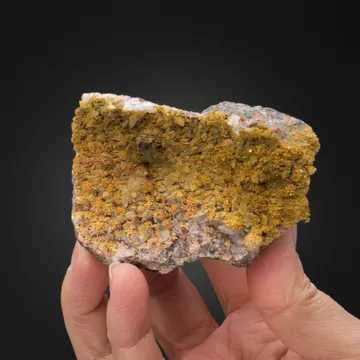
Tincroft Mine belongs to the hard, complex centre of Cornish mining: the Camborne–Redruth–St Day district around Pool and Carn Brea, where granite-related tin and copper lodes cut both the Carnmenellis granite and its hornfelsed “killas” envelope. For collectors it is not simply another Cornish tin-copper mine, but a classic old-label locality whose best-known cabinet pieces are warm brown siderite on white to iron-stained quartz, often enlivened by chalcopyrite, specular hematite, fluorite, or the occasional reminder of the mine’s arsenic-rich chemistry. It is also mineralogically historic as a co-type locality for pharmacosiderite, the hydrated potassium ferric arsenate whose name preserves both arsenic “poison” and iron in Greek roots.
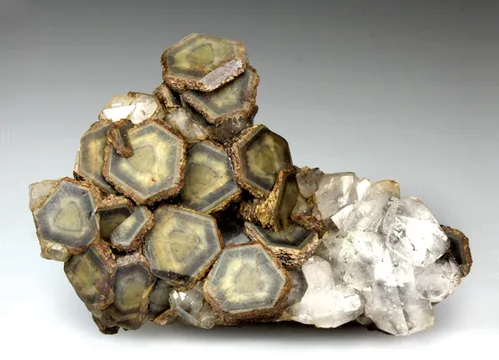
The mine’s specimen personality is unusually coherent. Good Tincroft pieces tend to be compact, old-time matrix specimens rather than modern show-stoppers: pale to deep brown lenticular siderite crystals, milky or apricot hematitic quartz, bright brassy chalcopyrite, black specularite, and an undertone of chlorite, cassiterite, arsenopyrite, and oxidized copper minerals. The finest siderites have crisp, lustrous, flattened rhombohedral forms with real relief on the matrix; the finest chalcopyrites show sharp brassy crystals or the Cornish “blistered copper” style of botryoidal chalcopyrite. Even when modest in size, a well-preserved Tincroft specimen has the authority of a locality that worked through the classic age of Cornish mineral collecting and appears repeatedly in nineteenth- and twentieth-century mineral literature and dealer catalogues.
Regional View
Country View
The surface remains are now much reduced, but the surviving man-engine house at South Tincroft gives the locality a physical presence rare among built-over Cornish mines. It stood for a practical purpose that collectors can still read in the specimens: deepening copper workings, changing ore zones, and the relentless move from copper to tin as the lodes passed downward through the granite-killas contact system.

Photo: Rod Allday / Wikimedia Commons
Search for specimens: View all specimens from Tincroft Mine, UK
Tincroft Mine was situated at Pool, near Carn Brea, between Camborne and Redruth, in the most intensively mined part of west Cornwall. The deposit is part of the Cornubian granite-related hydrothermal lode province: fissure veins carrying copper and tin ores, with associated arsenic, iron, tungsten, uranium, phosphate-arsenate, carbonate, oxide, and silicate minerals. The important geological control is the relationship between the ENE–WSW lodes, the Carnmenellis granite, and the overlying or adjacent Upper Devonian metasediments known locally as killas. In the Tincroft–Carn Brea area, ore was worked through the transition from killas into granite, a setting that explains the mine’s mixed copper-tin identity and its specimen assemblage of quartz, chlorite, siderite, chalcopyrite, hematite, cassiterite, arsenopyrite, fluorite, and secondary arsenates.
The chief ore structure in the district was the Tincroft North Lode, closely tied historically and geologically to the adjacent Carn Brea, Cook’s Kitchen, New Cook’s Kitchen, East Pool, and South Crofty workings. Geological descriptions of the North Tincroft Lode show a shallow, north-dipping structure, passing through adit levels and steepening at depth before crossing the granite-killas contact. In the shallower studied workings, the lode fill is a dense chlorite-dominated assemblage with chalcopyrite and arsenopyrite, minor fluorite and quartz, cassiterite, and numerous small vugs. Those vugs are not the source of the large display siderites familiar to collectors, but they are important because they show the microscopic richness of the lode system: anatase, monazite, cassiterite, chalcocite, chalcopyrite, bornite, cuprite, ilmenite, goethite, langite, brochantite, marcasite, arsenopyrite, pyrrhotite, sphalerite, and colourless apatite have all been reported from this lode context.
The mine’s history is long and layered. The ground was known under older names including Penhallick Vean and Tyn Croft in the 1680s, and serious renewed working began in the late eighteenth century. By 1793 the mine had reached about 50 fathoms and was equipped with a 45-inch pumping engine, a necessity in a mine constantly troubled by water. Tincroft produced copper first; it closed in 1826 after copper-price weakness and the sale of machinery, then reopened in 1833 and regained profitability in the 1840s. By the 1860s the story had changed: underground connections and boundary disputes with Cook’s Kitchen show how crowded and contested the district had become, while the mine itself increasingly turned toward tin. Tincroft is commonly described as changing from copper to tin production in 1865, and by 1872 it sold 829 tons of tin for £74,206 while copper sales had dwindled to £473.
The later corporate history is inseparable from its neighbours. Cook’s Kitchen was merged with Tincroft in 1895 after pumping and water-level concerns became acute. In 1896 Tincroft and Carn Brea amalgamated as Carn Brea and Tincroft United. Sources differ in how they mark the end: old Tincroft is often said to have ceased in 1913, while the South Tincroft/Carn Brea-Tincroft complex continued in some form until underground work ended in 1921, with a brief 1926 reworking of burrow material through the stamps engine. That ambiguity matters for collectors because old labels may read Tincroft Mine, South Tincroft, Carn Brea and Tincroft, Carn Brea, Illogan, Pool, or Redruth, and all can refer to overlapping historical ground rather than to sharply separated modern collecting sites.
Production figures given for the combined Carn Brea and Tincroft mines are very large by Cornish standards: about 460,000 tons of copper ore and 53,000 tons of tin are cited for their lifetime output. The mine also had a striking industrial plant. Recorded shafts include Barncoose Engine, Martin’s East, Old Sump, Highburrow West and East, North Tincroft, Willoughby’s, Downright, Harvey’s Engine, Tyrie’s, Old Tincroft, South, Miner’s, Davey’s, Fanny, Man Engine, Sincock, Polkinghorne, Teague’s Engine, Barker’s, and Sykes. Recorded lodes include Tincroft or Old Tincroft, Barncoose, Highburrow, Martin’s, Dunkin’s, Chapple’s, Teague’s, South, Pryce’s, South Branch, Grout’s, East Pool, Stainsbury’s, and Druid’s. Such a list is not decorative: it explains why Tincroft labels can be difficult, and why mineral associations vary from quartz-siderite display pieces to chlorite-cassiterite-sulphide ore and oxidized copper-arsenate material.
Collecting at the locality today should be approached as historical study rather than field collecting. Much of the site has been built over, and the surviving South Tincroft structures lie on the Mineral Tramways trail with public access to the heritage landscape, not to mineralized underground workings. The consolidated man-engine house and compressor-house remains are important industrial archaeology; they are not open invitations to disturb masonry, enter old workings, or dig on private or protected ground. Specimens on the market are overwhelmingly old stock, ex-collection material, or pieces dispersed through dealers and museum holdings.
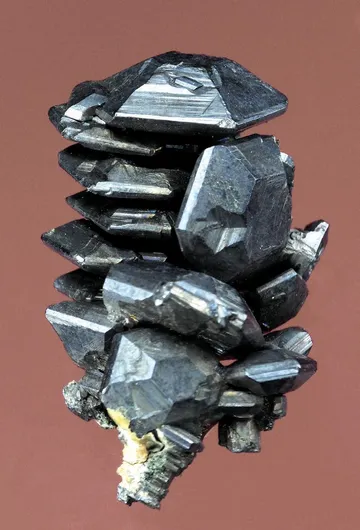
The notable specimen finds that built Tincroft’s reputation were the quartz-siderite-chalcopyrite pieces from the old mine, together with copper and arsenate minerals recorded in classic literature. Dealer descriptions and museum photographs repeatedly show small cabinet to cabinet-size specimens: brown lenticular siderite on milky quartz, siderite with chalcopyrite and quartz, quartz carrying black specularite, and occasional pieces with fluorite or apatite. Richard Barstow’s 1970s lists record Tincroft chalcopyrite as sharp brassy lenticular crystals to 1 cm on quartzose veinstuff with small light-brown lenticular siderite, and Tincroft chalcocite as dark grey platy or elongated crystals on cellular quartz-chlorite veinstuff. These old catalogue entries are valuable because they preserve a collector’s-eye view of material that is now scattered through private collections.
Siderite is the signature collector mineral from Tincroft: typically tan, grey-brown, yellowish brown, golden brown, or deep brown, occurring as flattened lenticular to rhombohedral crystals on quartz, sometimes with chalcopyrite, hematite or specularite, fluorite, and minor cassiterite-bearing veinstuff. Documented specimens range from thumbnails and miniatures to cabinet pieces around 9 to 12.5 cm across; individual siderite crystals are usually only a few millimetres, though choice pieces show sharp crystals around 7 to 8 mm and rich drusy coverage. The best examples have clean contrast against white or iron-stained quartz, bright lustre, crisp crystal outlines rather than muddy carbonate crusts, and an old Cornish pedigree; ordinary pieces are more massive, oxidized, or visually flat, with siderite lost against ferruginous quartz.
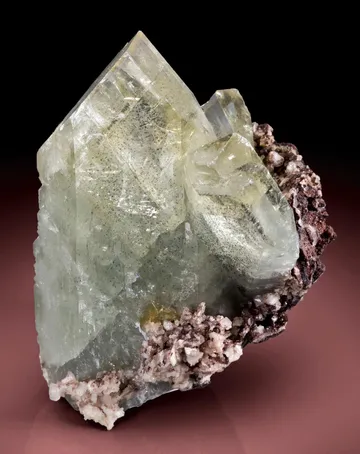
Quartz at Tincroft is both the principal display matrix and a real part of the lode paragenesis. On collector specimens it appears as milky to white, grey, iron-stained apricot, locally amethystine, and sometimes terminated crystals about 1 cm tall, serving as the stage for siderite, chalcopyrite, specular hematite, and fluorite; in studied North Tincroft Lode material it also occurs as anhedral grains, small vug fillings, and late space-filling material intergrown with chlorite and fluorite. Good Tincroft quartz specimens are not judged as quartz classics in isolation, but by how well the quartz frames the associated minerals: bright white crystals under brown siderite, hematite-stained crystals giving warm colour contrast, or quartzose veinstuff carrying sharp brassy chalcopyrite and light-brown siderite.
Chalcopyrite from Tincroft has two collector faces: the lode-mineral face, where it is part of a chlorite-arsenopyrite-cassiterite-sulphide assemblage, and the display-specimen face, where bright brassy crystals sit on quartz with siderite. Analytical work on North Tincroft material found chalcopyrite as small anhedral masses intergrown with sphalerite and arsenopyrite, locally rimmed or cracked by bornite, while old collector specimens include sharp brassy lenticular crystals to about 1 cm scattered over quartzose veinstuff with abundant small light-brown siderite. The most desirable examples preserve fresh golden lustre, distinct crystal form, and balanced association with quartz and siderite; darker, massive chalcopyrite or indistinct sulphide-rich ore is historically interesting but less competitive as a display specimen unless it represents the “blistered copper” variety or has strong old-label provenance.
Other documented Tincroft minerals broaden the locality well beyond siderite and quartz. The mine is a co-type locality for pharmacosiderite, KFe3+4(AsO4)3(OH)4·6-7H2O, a secondary arsenate of oxidized arsenic-bearing sulphide deposits. The recorded suite also includes arsenopyrite, bornite, cassiterite, chalcocite, Cornwallite, cuprite including tile ore, fluorapatite including carbonate-rich fluorapatite, fluorite, goethite, hematite including specularite, kaolinite, malachite, marcasite including lonchidite, native copper, olivenite including leucochalcite, pyrite, scorodite, tennantite-subgroup minerals, tenorite, torbernite, tourmaline, uraninite as pitchblende, and wolframite-group minerals. Among these, chalcocite, blistered chalcopyrite, torbernite, hematite/specularite, cassiterite, and the arsenate species are the ones most likely to interest advanced Cornish collectors when supported by a reliable old label.
Tincroft specimens deserve careful label reading. The most common authenticity issue is not outright fakery but locality drift: Tincroft, South Tincroft, Carn Brea, Carn Brea and Tincroft United, Cook’s Kitchen, New Cook’s Kitchen, South Crofty, Illogan, Pool, Camborne, and Redruth can appear on labels for geologically connected or historically amalgamated ground. A specimen labelled only “Carn Brea” or “Redruth” should not be upgraded to Tincroft without corroborating labels, catalogue history, or a distinctive association matching known Tincroft material. Conversely, old labels may use older administrative geography rather than modern Mindat-style locality hierarchy.
Documented fakes specific to Tincroft are not a prominent issue in the collector literature, but overconfident identifications are. Brown carbonate on quartz from Cornwall is not automatically Tincroft siderite, and botryoidal or iridescent chalcopyrite should not be called “blistered copper” from Tincroft unless the provenance supports it. Modern acid-cleaned iridescent chalcopyrite from other countries is common in the trade; it should not be confused with old Cornish blistered chalcopyrite or bornite-associated copper sulphide specimens. For high-value pieces, old dealer labels, collection labels, and comparison with known Tincroft associations are worth more than a tidy modern label.
Condition is central. Siderite has perfect rhombohedral cleavage and chips easily along edges; the flattened Tincroft crystals are small enough that damage can be subtle until viewed under magnification. Quartz matrices commonly show old iron staining, bruised terminations, and minor saw or trim marks. Chalcopyrite and bornite can tarnish naturally; fresh brassy lustre is desirable, but a completely unnaturally bright surface on an old Cornish sulphide should be treated with caution. Specimens with secondary copper sulphates or arsenates should be kept dry and stable, as some efflorescent minerals can change in fluctuating humidity.
Fluorescence is not a major reason to seek Tincroft specimens. The handling concerns are more practical: arsenopyrite, pharmacosiderite, scorodite, olivenite, and other arsenic-bearing species are part of the documented assemblage, and torbernite, uraninite, and pitchblende are also recorded. Do not abrade, lick, soak, or acid-clean such pieces casually; wash hands after handling friable ore or oxidized material; store radioactive uranium-bearing specimens in a sensible, labelled, ventilated manner away from living areas if they are more than trace examples.
Market availability is limited but not vanishing. Siderite on quartz is the most frequently encountered Tincroft specimen type, usually as old collection material. Chalcopyrite with quartz and siderite is scarcer and more desirable when crystals are sharp rather than massive. Good labelled pharmacosiderite from the co-type locality is rare, and many collectors will accept more famous Cornish arsenate localities for display while reserving Tincroft as a locality slot. Cabinet-quality siderite-quartz pieces with strong aesthetics, no repairs, and nineteenth- or early twentieth-century provenance should be considered classic Cornish material.
In the late eighteenth century, Tincroft was already behaving like the kind of mine that could enrich and punish its owners in the same decade. A new lease in 1783 did not immediately transform the ground, but by 1793 the mine was 50 fathoms deep and running a 45-inch pumping engine. Four years later, in 1797, it was making profits of £21,000, a remarkable sum for the period. Then came the complications that so often shadow Cornish success: an expiring lease, a lawsuit over a Boulton & Watt patent, tired machinery, and rich ground that began to fail. By 1806 the older parts were abandoned and work concentrated on Martin’s and Chapple’s lodes while heavy rain beat the worn pumps and pushed the mine back toward water.
The mine’s dependence on its neighbours could be brutally literal. In 1819, the beam on the pumping engine at Wheal Fanny broke. Tincroft was close enough and hydraulically connected enough that water rose in its own workings until the neighbouring problem was fixed. That episode anticipates the mine’s later nineteenth-century strategy: Tincroft’s survival was tied not only to ore prices and its own lodes, but to the pumping decisions of Cook’s Kitchen, Wheal Agar, East Pool, South Crofty, and the other mines around Pool and Carn Brea.
The most revealing dispute came in 1862, when Tincroft was connected underground with Cook’s Kitchen. An agreement allowed Tincroft miners to drive the 180- and 200-fathom levels, but the connection exposed an awkward fact: Cook’s Kitchen miners had already been working Tincroft ground on other levels. The compensation was £1,800. For a mineral collector holding a hand-sized quartz-siderite-chalcopyrite specimen, that figure is a reminder that these labels came from a crowded subterranean geography of legal boundaries, lode continuations, and workings that did not always respect the neat lines on a sett map.
Tincroft also sits in the story of mechanized mining. In 1868, F. B. Doering rock drills were tried underground. They saved time and money, yet were not retained at that moment; other drills came later. The surface plant kept evolving as the mine pursued deeper and harder-won ore: a man engine and whim in 1863, a Blake rockbreaker in 1873, a stamps engine and pumping installation at North Tincroft in 1874, a second-hand Harvey’s 70-inch pumping engine on Old Sump in 1890, and a compressor house in 1891. The surviving man-engine house is therefore not a romantic ruin standing apart from specimen history; it is a remnant of the machinery that made the deeper tin era possible.
The numbers from the 1870s show how deceptive production could be. In 1872 Tincroft sold 829 tons of tin for £74,206 while copper sales had fallen to only £473. On paper, that sounds like triumph: copper had faded, tin had taken over, and the mine had adapted. Yet by 1877 the mine owed £15,593, while tin prices were falling again and ground falls and stoppages reduced output. Tincroft paid off the debt in 1881 and carried on, but the story is a useful corrective to the easy collector’s phrase “rich old mine.” Rich ore did not guarantee easy profit.
The final decades read like a map of mutual dependence. Tin prices collapsed again in 1893, but Tincroft continued and began contributing to the pumping charges of neighbours such as Wheal Agar and East Pool, because if they stopped pumping the water levels at Tincroft and South Crofty would be threatened. In August 1895 Cook’s Kitchen merged with Tincroft because closure and stopped pumping would have endangered the district. In 1896 Carn Brea and Tincroft amalgamated, and by 1921 underground work was over. In 1926 the stamps engine briefly treated burrow material before being scrapped: a small, practical epilogue to a mine whose best specimens had already entered the old Cornish collecting stream.