Taxco de Alarcón, Mexico: a classic silver district famed for rhodochrosite on quartz, ilvaite, pyrargyrite, and well-labeled, striking ore specimens.
Key facts
Taxco de Alarcón is one of Mexico’s classic silver districts: a steep, white-walled colonial city built over an older mining camp, underlain by a polymetallic Ag-Zn-Pb system whose specimens bridge ore geology, Spanish American mining history, and the cabinet aesthetics of Mexican classics. For mineral collectors, “Taxco” is not a single shaft so much as a compact district of veins, stockworks, replacement mantos, and related workings—Guerrero, Los Remedios, El Solar, San Antonio, Babilonia, Guadalupe, Golondrina, Pedregal, Hueyapa and others—developed in carbonate and metamorphic rocks on the northern flank of the Sierra Madre del Sur metallogenic province.
The best Taxco specimens have the look of an active silver district rather than a display quarry: bright sulfides and sulfosalts sitting in open-space quartz, calcite, fluorite, barite, or manganese-carbonate gangue. The locality is especially admired for rhodochrosite on quartz and ilvaite, pyrargyrite on quartz, fluorite with quartz and calcite, skeletal galena with sphalerite and fluorite, and sprays or druses of calcite and quartz carrying pyrite. Fine examples tend to be old, precisely labeled to Los Remedios, Guerrero I, El Solar, or La Azul, and visually complex—pink manganese carbonates, black ilvaite or sphalerite, brass pyrite, metallic galena, and glassy quartz in the same hand-sized miniature or cabinet piece.
Regional View
Country View
Geologically, Taxco belongs to a Late Eocene to early Oligocene episode of hydrothermal mineralization associated with the waning subduction-related magmatism of the northern Sierra Madre del Sur. The principal silver-base-metal mineralization is described as intermediate-sulfidation epithermal, expressed as veins and stockworks, with important carbonate-replacement mantos and skarn-related assemblages where mineralizing fluids met favorable limestone horizons. This is why Taxco specimens so often show “ore” and “gangue” in intimate association: argentiferous galena, sphalerite, pyrargyrite and related sulfosalts are not incidental guests, but part of the same hydrothermal architecture that produced quartz, calcite, fluorite, barite, rhodochrosite, and ilvaite.

Photo: Wikimedia Commons
Taxco’s collecting appeal is sharpened by scarcity. It was a working ore district first, a specimen source second, and many pieces reached the market through old mine lots, miners, dealers, and estate collections rather than through systematic specimen mining. Large matrix pieces with crystallized pyrargyrite, good rhodochrosite, or undamaged mixed sulfide-gangue associations are far less common than the district’s historical fame might suggest.
Search for specimens: View all specimens from Taxco de Alarcón, Mexico
The Taxco mining district lies in northern Guerrero, in and around the municipality of Taxco de Alarcón. The district is centered on polymetallic Ag-Zn-Pb-Cu mineralization and includes classic intermediate-sulfidation epithermal veins and stockworks, plus replacement mantos developed in carbonate strata. In modern geological summaries, the Taxco deposits are tied to the Late Eocene magmatic-hydrothermal event of the Sierra Madre del Sur: radiometric dating of the Calavera dike group, which predates mineralization, gives ages around 35 Ma, constraining the epithermal ore event to younger than that and plausibly near 33 Ma.
The district’s host-rock framework is important to specimen style. Carbonate units such as the Morelos Formation provided chemically reactive beds for replacement bodies and manto mineralization, while structural preparation—faults, fractures, vein fissures, and contacts—provided the pathways for hydrothermal fluids. Lead-zinc mineralization is reported as stronger in the fissure veins than in the replacement bodies, and the ore assemblage includes argentiferous galena, sphalerite, chalcopyrite, pyrargyrite, proustite, polybasite, argentite or acanthite, and freibergite-group minerals. The gangue suite is unusually broad and attractive: quartz, calcite, barite, fluorite, rhodochrosite, pyrite, pyrrhotite, marcasite, stibnite, jamesonite, hematite, tremolite, epidote, and ilvaite are all documented from the district or its mines.
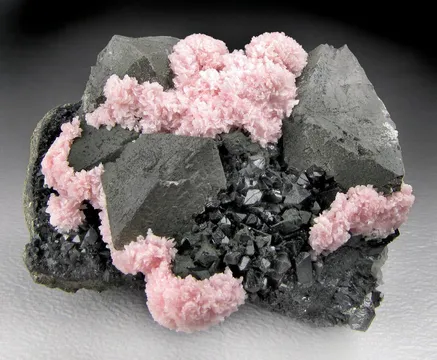
Los Remedios is the specimen locality collectors encounter most often on fine labels. It is especially associated with rhodochrosite, quartz, ilvaite, barite, fluorite, calcite, sphalerite, galena, pyrite, pyrargyrite, arsenopyrite, kutnohorite, and native silver. Many of the better rhodochrosite pieces are old, often attributed to around 1988–1990 in dealer records, and show pink rhodochrosite as lenticular or rhombohedral crystals on quartz, sometimes with ilvaite, sphalerite, chalcopyrite, fluorite, calcite, or tetrahedrite-family minerals. Level-specific labels such as “Level 5” appear on older rhodochrosite-ilvaite and rhodochrosite-after-calcite material, and Levels 5 and 6 are also noted in the collector literature for ilvaite.
The Guerrero I mine and its El Solar shaft are another key collector reference point. Guerrero I is documented for calcite, quartz, galena, sphalerite, pyrite, fluorite, hematite, stibnite, freibergite-subgroup minerals and other sulfides and sulfosalts. El Solar labels appear on both ore and specimen material, including pyrargyrite with tetrahedrite and rhodochrosite pseudomorphs after calcite with quartz. The name can also appear in connection with the processing side of the modern mining operation, so careful collectors distinguish shaft, mine, plant, and broad district labels rather than treating every “El Solar” tag as a pocket description.
La Azul, near Acamixtla within the Taxco district, is the important fluorite occurrence. It has been discussed in the literature both in relation to epithermal models and to Mississippi Valley-type interpretations, with later geochronological arguments favoring a close relationship between La Azul fluorite and the broader Taxco epithermal event. Collector pieces are not common, but the locality matters because fluorite is part of Taxco’s district-scale hydrothermal signature, not merely an accessory species.
Mining at Taxco predates Spanish colonial development, and documentary histories describe Indigenous exploitation before the 16th-century colonial mining boom. Spanish mining expanded in the 1500s, and Taxco became one of the emblematic silver centers of New Spain. By the 18th century, the fortune of José de la Borda helped reshape the city’s architectural identity, including the celebrated church of Santa Prisca, built from the wealth of the surrounding mines. In the 20th century, selective flotation changed the district’s waste and production pattern; the first such plant is reported by 1920 under American Smelting and Refining Company influence, and later operations were associated with Industrial Minera México and Grupo México.
The modern Taxco unit was described as a three-mine operation producing zinc, lead, silver and byproduct metals from underground workings and a flotation plant. Its large-scale activity stopped amid the labor conflict that began on July 30, 2007, and Grupo México’s subsidiary announced closure on the grounds of depleted reserves and labor problems. For collectors, this matters directly: fresh production of specimen material from the main mines has been limited or absent for many years, and most quality pieces on the market are older, recycled from collections, or from small lots with incomplete mine attribution.
Collecting access today should be considered highly restricted. The mines are not public collecting grounds; old workings, shafts, stopes, dumps, and tailings present obvious legal and safety hazards, and the district’s sulfide-rich waste has been the subject of environmental studies because of acid drainage and metal mobility. Serious collectors are best served by documented specimens with old labels, photographs, dealer provenance, museum records, or modern analytical confirmation where species identity is not visually secure.
Calcite from Taxco is less a standalone showpiece mineral than a crucial gangue and texture-maker in the district’s silver-base-metal assemblages: translucent white sprays on quartz and pyrite are known from Los Remedios, calcite on quartz is recorded from El Solar, and late-stage calcite may partly coat fluorite-quartz-siderite assemblages at Los Remedios; the most collectible pieces use calcite structurally—as scalenohedra or rhombs that set off pyrite, quartz, fluorite, or sulfides, or as the precursor form in rhodochrosite pseudomorphs after calcite—whereas ordinary pieces are massive vein carbonate without sharp crystals, contrast, or mine-specific provenance.
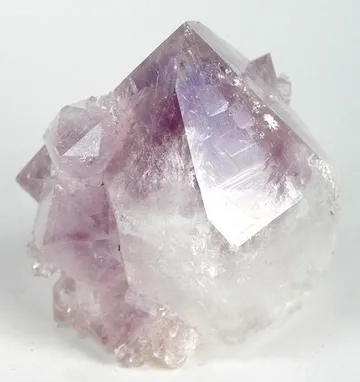
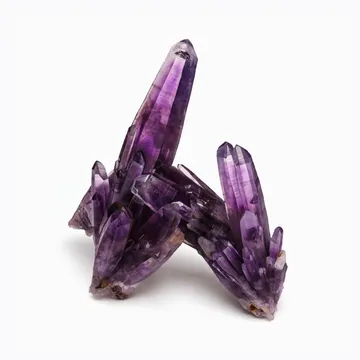
Quartz is the visual backbone of many Taxco specimens, forming milky to clear druses, small prismatic crystals, and locally amethystine clusters from Los Remedios; it provides the matrix for arborescent pyrargyrite, is intergrown with rhodochrosite and ilvaite in classic manganese-carbonate pieces, and appears as small lustrous crystals beneath fluorite and calcite, so the best Taxco quartz specimens are not judged merely by crystal size but by how cleanly the quartz stages and supports the associated ore minerals—ruby silver, pink rhodochrosite, skeletal galena, sphalerite, pyrite, fluorite, or barite.
Taxco rhodochrosite is a connoisseur’s Mexican classic, especially from Los Remedios and El Solar, where it occurs as pale to strong pink rhombohedral, lenticular, drusy, and pseudomorphic material associated with quartz, ilvaite, sphalerite, chalcopyrite, fluorite, calcite, and tetrahedrite-family minerals; older Los Remedios pieces include Level 5 rhodochrosite after calcite and rhodochrosite on black ilvaite, while finer 1990-era cabinet specimens show pink crystals included in or covering clear quartz, sometimes with a second generation preserving quartz forms, and good examples are separated from average ones by color saturation, undamaged crystal edges, black or glassy contrast, and specific mine or level attribution.
Sphalerite is one of the principal zinc ore minerals at Taxco and occurs with argentiferous galena, quartz, fluorite, pyrite, chalcopyrite, and pyrargyrite in the vein and replacement assemblages; as a collector mineral it is usually encountered as lustrous black to dark brown crystals or microcrystalline aggregates that add weight and contrast to mixed specimens rather than as isolated large crystals, with better pieces showing sharp sphalerite in balanced association—particularly with skeletal galena, quartz coatings, fluorite, or pink rhodochrosite—rather than dull massive ore.
Galena at Taxco is historically important because much of it is argentiferous and tied directly to the district’s silver production; collector pieces from Los Remedios and Guerrero I tend to show metallic gray cubes, cubo-octahedra, cleavages, or skeletal forms with quartz, pyrite, sphalerite, fluorite, calcite, or rhodochrosite, and the strongest specimens have bright faces, open-space crystal geometry, and visible association with the district gangue suite, while lesser pieces are simply massive lead ore without the sculptural skeletal development or contrasting matrix that gives Taxco galena its cabinet value.
Pyrargyrite is the Taxco species that most directly connects specimen collecting with silver-ore romance: fine pieces are rare and usually old, occurring as lustrous dark metallic to black-red crystals, crystal masses, or arborescent clusters on quartz, sometimes with pyrite, sphalerite, tetrahedrite, or miargyrite; large matrix examples are especially prized, including classic cabinet specimens with ruby-silver crystals perched on quartz, while thumbnail and miniature pieces are judged by sharpness, luster, red internal flashes under strong light, absence of bruising, and credible attribution to the Taxco mines rather than a vague Mexican silver label.
Pyrite is abundant in the Taxco system and is a major sulfide in both ore and tailings studies, but its collector role is usually architectural and aesthetic: brassy microcrystals, cubes, and sparkly coatings occur with quartz, calcite, barite, galena, sphalerite, and pyrargyrite, adding contrast to otherwise white or gray gangue; the best pieces use pyrite as a glittering accent around translucent calcite sprays, barite blades, skeletal galena, or ruby-silver crystals, while massive pyritic ore and oxidized dump material are far less desirable and may be unstable if stored damp.
Fluorite at Taxco is documented both from the silver-base-metal mines and from the La Azul fluorite deposit near Acamixtla, with reported colors including purple, brown, colorless, and yellow; Los Remedios specimens can show lustrous cubo-octahedral fluorite crystals to about 1.5 cm in cavities on quartz, with late calcite and siderite, while mixed pieces may carry galena, sphalerite, or calcite, and the best examples are those that prove Taxco’s fluorite in context—sharp crystals on quartz-rich ore matrix or old La Azul material—rather than loose or poorly attributed cubes.
Barite is a documented Taxco gangue mineral and collector species, especially at Los Remedios, Guerrero I, El Solar, Xochicalco, Gavilán, and Azul; specimens range from colorless to gray transparent or translucent tabular crystals and bladed aggregates, sometimes with pyrite, and older references note varied habits and associations, so worthwhile Taxco barite is clean, lustrous, and well isolated on matrix, ideally with pyrite or sulfide contrast and a mine-specific label, while massive baritic gangue without crystal definition is commoner and of little specimen importance.
Other documented minerals from Taxco de Alarcón and its district include native silver, chalcopyrite, arsenopyrite, pyrrhotite, marcasite, stibnite, jamesonite, boulangerite, freibergite-subgroup minerals, miargyrite, proustite, polybasite, argentite or acanthite, hematite, siderite, kutnohorite, ilvaite, epidote, tremolite, gypsum, and a notable mercury suite in the Huahuaxtla area, including cinnabar, metacinnabar, native mercury, calomel, terlinguaite, montroydite, eglestonite, mosesite, and related secondary species. For collectors, the rarities to watch are well-labeled ilvaite with rhodochrosite, Taxco pyrargyrite with convincing old provenance, kutnohorite from Los Remedios, mercury minerals from Huahuaxtla, and correctly identified silver sulfosalts rather than visually assumed “ruby silver.”
Taxco labels deserve careful reading. Older specimens may be labeled simply “Taxco,” “Tasco,” “Taxco, Guerrero,” or “Taxco district,” and many are legitimate, but such labels do not always identify a specific mine. This matters most for rhodochrosite, ilvaite, barite, fluorite, pyrargyrite, and galena, where Los Remedios, Guerrero I, El Solar, La Azul, or Huahuaxtla attribution can materially affect both scientific and market value. A specimen with a vague Taxco label is not automatically wrong, but a mine-specific old label, collection card, dealer record, or published photograph is worth a premium.
There is a documented fake problem involving “silver” crystals sold as Taxco, noted in the Mineralogical Record’s index to fakes, frauds, and synthetic minerals. Treat showy native-silver crystal groups with Taxco labels cautiously unless the provenance is excellent and the specimen’s morphology, matrix, oxidation, and label history make sense. Genuine native silver is documented from the district, but it is not the form in which most classic Taxco specimens are encountered; the famous silver-specimen appeal of the district is more often expressed through pyrargyrite and other silver sulfosalts, argentiferous galena, and historical ore associations.
Pyrargyrite and related silver sulfosalts require sensible display conditions. They should not be baked under hot case lights or left for years in direct sunlight; subdued lighting preserves luster and reduces unnecessary photochemical darkening. Handle them by the matrix, avoid repeated rubbing of crystal faces, and remember that the red “ruby silver” glow is best checked with a brief strong light, not prolonged exposure.
Taxco carbonates can be deceptively fragile. Rhodochrosite pseudomorphs after calcite, lenticular rhodochrosite crusts, and calcite sprays may have many small edges and terminations that are easily bruised. Quartz druses can hide contact points; ilvaite or sulfide matrix can be dense and unforgiving if a specimen is dropped. When buying, inspect high points of rhodochrosite, calcite scalenohedra, quartz tips, galena corners, and barite blade edges.
Pyrite-rich material should be kept dry and stable. Taxco tailings studies document abundant sulfides and secondary sulfates, so any specimen showing powdery sulfate blooms, a sulfurous smell, or crumbly oxidizing pyrite deserves isolation and monitoring. Cabinet-grade pyrite accents on quartz, calcite, barite, or sulfides are usually fine if kept in a low-humidity environment, but damp storage is unwise.
Mercury minerals from Huahuaxtla are a different collecting category from the main Ag-Zn-Pb cabinet pieces. Cinnabar and associated mercury halides or oxides can be scientifically interesting, but loose powder, friable crusts, and poorly sealed micro material should be handled with appropriate caution. Do not grind, trim, or ultrasonically clean mercury-bearing specimens, and keep them labeled and contained.
Market availability is uneven. Calcite, quartz, pyrite, and mixed sulfide pieces from Taxco appear regularly but are often modest. Good rhodochrosite from Los Remedios, especially with ilvaite or quartz, is much scarcer. Fine pyrargyrite on matrix is genuinely rare and brings strong interest when it has old provenance. Barite and fluorite are available sporadically, and mine-specific La Azul fluorite or well-crystallized Los Remedios fluorite is preferable to generic Taxco fluorite.
One of Taxco’s most remarkable modern mining stories did not come from a working stope, but from beneath a hotel. In February 2013, during remodeling at the Hotel Posada de la Misión, workers opened a void below the building and revealed what was first suspected to be a colonial working. Archaeological review changed the story: the extraction marks did not match colonial techniques, and the mine was interpreted as pre-Hispanic, associated with Chontal miners. Later accounts describe the mine as deliberately hidden at the time of the Spanish conquest. The place is now presented as the Mina Prehispánica de Taxco, but the restrictions around it are revealing: no excavation, no alteration, no removal of stone material, and no disturbance of basketry remains embedded in the rock. For a collector, it is a rare physical reminder that Taxco’s silver story did not begin with Spanish shafts or 20th-century flotation plants.
The 18th-century city above the veins carries another mining story in stone: José de la Borda’s Santa Prisca. Borda’s fortune came from the surrounding mines, especially the San Ignacio bonanza, and that wealth transformed the old Real de Minas into one of Mexico’s most beautiful mining towns. Santa Prisca was not just a church built in a mining town; it was a mineral monument, a baroque statement made possible by silver ore. The contrast is still striking: underground, galena, sphalerite, quartz, calcite, and silver sulfosalts; above ground, pink stone towers, carved façades, and the civic identity of a city that still calls itself a capital of silver.
A quieter collector story follows one of Taxco’s great pyrargyrites. The well-known cabinet specimen of arborescent pyrargyrite on quartz from the Dr. Miguel Romero collection measures 12 x 8.7 x 7 cm and was on loan exhibition to the University of Arizona Museum for more than a decade before being acquired in 2008. It later appeared in connection with the Mineralogical Record supplement on the Miguel Romero Collection of Mexican Minerals. The specimen explains Taxco’s reputation better than any ore-grade table: sharp black-red ruby-silver crystals rising from white quartz, large enough to command a case, yet rare precisely because Taxco was never a place where such matrix pyrargyrite was abundant.
The final modern chapter is less romantic but important for provenance. The Taxco unit stopped in the labor conflict that began on July 30, 2007, when Taxco, Cananea, and San Martín were all affected by strikes. Grupo México’s subsidiary subsequently described the Taxco closure as tied to depleted reserves and labor problems. For mineral collectors, that date is a market boundary. Specimens with credible pre-2007 labels, old dealer cards, or collection histories often have a different character from later recirculated material; they are the residue of a district whose best pockets entered cabinets through miners, local channels, and old Mexican collections before the main industrial operation fell silent.