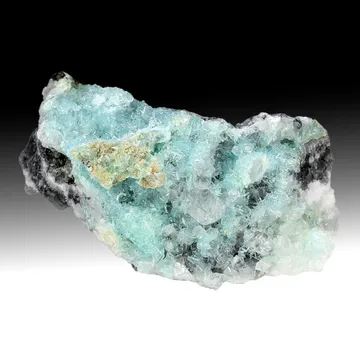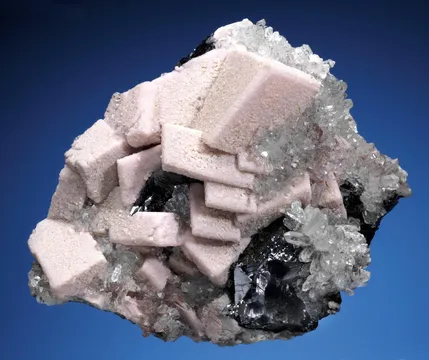
Remedios Mine, Mexico: Taxco locality famed for pink rhodochrosite on quartz, rare paragenesis with ilvaite and galena, and old-mine specimens for collectors.
Key facts
Remedios Mine—better known on older labels as Mina los Remedios or Los Remedios Mine—is one of the specimen-producing underground mines of the historic Taxco silver district in northern Guerrero. For collectors, its importance is not that it rivals the great Mexican rhodochrosite localities in abundance; it is important because it produced a distinctive, scarce, and very recognizable suite: pink rhodochrosite on quartz, rhodochrosite with black ilvaite, pale amethyst with rhodochrosite, skeletal galena with sphalerite and fluorite, and the hard, glassy quartz-barite-calcite assemblages typical of Taxco’s silver-lead-zinc system.
Geologically, Remedios belongs to the Taxco district’s polymetallic intermediate-sulfidation epithermal system, with fissure veins and related replacement bodies cutting and replacing Mesozoic sedimentary and metamorphic rocks near Tertiary volcanic and intrusive rocks. The ore suite is classic Taxco: argentiferous galena, sphalerite, pyrite, pyrargyrite and other sulfosalts, with quartz, calcite, fluorite, barite and carbonate gangue. What makes Remedios special in the cabinet, however, is the manganese-rich overprint that gave collectors its light to vivid pink rhodochrosite, often as lustrous small rhombohedra, botryoidal or nodular aggregates, or unusual rhodochrosite forms preserving earlier quartz or calcite morphology.
Regional View
Country View
The best Remedios specimens have a restrained but unmistakable look: sugary to glassy quartz, sometimes faintly amethystine, carrying tight pink rhodochrosite mounds or small rhombohedral crystals; black prismatic ilvaite rising through or beneath the carbonate; and, on some old ore specimens, skeletal metallic galena intergrown with dark sphalerite and small white quartz. These are not usually the blazing, gem-red rhodochrosites of Colorado or the large translucent rhombs of Peru. Remedios is a locality for connoisseurs who value paragenesis, old-mine association, and the quiet elegance of a pink manganese carbonate crystallizing in a silver-base-metal district.
Search for specimens: View all specimens from Remedios Mine, Mexico
Remedios Mine is in the Taxco de Alarcón municipality of Guerrero, close to the city of Taxco and the old mining settlements on the district’s western and northern flanks. Mindat places the mine at about 18°32′ N, 99°36′ W, roughly 2.4 km from Taxco de Alarcón and close to Minas Viejas, Joyas del Progreso, Cerro Gordo and Dolores. Older and Spanish-language labels usually read “Mina los Remedios, Taxco, Guerrero,” and good labels may also carry a mine level number, especially Level 5 for the familiar rhodochrosite-ilvaite material.
The broader Taxco district is one of Mexico’s classic silver districts. Mining in the region began before the colonial period and expanded dramatically after Spanish discovery in the early sixteenth century; modern twentieth-century operations began in 1918. In the modern mining-company literature, the Taxco complex includes several underground mines—San Antonio, Guerrero and Remedios—and a flotation plant producing lead and zinc concentrates with subordinate gold and silver. Southern Copper reports that the complex is located on the outskirts of Taxco, with access by highway from the Cuernavaca area.
The district is stratigraphically and structurally complex. The mineralized system is hosted in a Mesozoic package that includes Taxco Schist, Mexcala shale or shale-sandstone units, and Morelos Limestone, overlain or cut by younger volcanic and intrusive rocks including rhyolite and diabase dikes and sills. Regional studies classify the main Taxco ore deposits as polymetallic intermediate-sulfidation epithermal deposits, with veins and stockworks accompanied by replacement mantos of possible skarn affinity. The Calavera dike swarm, which predates mineralization, has yielded late Eocene ages around 35 Ma; the Taxco epithermal mineralization is constrained as younger than about 34.96 Ma and may have formed near 33 Ma, during the late Eocene to Oligocene metallogenic episode associated with Sierra Madre del Sur magmatism.
At the mine scale, published thesis work describes the Remedios shaft as collared in the Mexcala Formation at about 1,610 m elevation. That work names the Esperanza and San Pedro–San Pablo veins as major Remedios veins, with sampling focused on the Esperanza vein because access to San Pedro–San Pablo was limited. The Esperanza vein is described as having about 150 m of vertical extent, being accessible on Levels 1, 2 and 3, extending roughly 700 m along strike, and ranging from about 0.15 m to 2 m thick. It dips steeply north to northwest, is strongly sheared in places, and carries brecciated shale fragments where Taxco Schist and phyllite are overlain directly by Mexcala Formation. Company reports also name El Muerto and El Cristo among the Remedios veins, each reported at about 1 km long and averaging about 5 m in width.
The ore and gangue assemblage at Remedios is consistent with the district pattern but unusually interesting to specimen collectors. The Esperanza vein has been reported to contain pyrite, sphalerite, galena, chalcopyrite, marcasite, minor arsenopyrite, hematite and pyrargyrite, with quartz, calcite, siderite, dolomite, ankerite and fluorite as gangue minerals. The broader Remedios mineral list adds barite, ilvaite, kutnohorite, native silver and rhodochrosite. Sphalerite color is reported to vary from honey brown near surface to black at depth, and silver content is reported to decrease with depth; district-wide, replacement mantos tend to be richer in base metals, while veins commonly carry the more silver-rich ore.
Specimen production appears to have been tied largely to underground mining rather than organized collecting for the mineral market. Old dealer and collector records repeatedly place attractive rhodochrosite, quartz and ilvaite specimens on Level 5, with some quartz-barite material reported from Level 2 and quartz-calcite material from Level 3. The celebrated rhodochrosite-on-quartz pieces are generally old-stock specimens from the late twentieth century, with notable examples recorded from about the late 1980s to around 1990. Good specimens are scarce enough that experienced collectors and dealers have long treated Remedios rhodochrosite as a locality classic rather than a common Mexican stock item.
Current access should be regarded as closed industrial-mine access, not a field-collecting opportunity. Southern Copper has reported the Taxco mine on strike since July 2007, with operations expected to remain suspended until labor issues are resolved. As of the company’s 2026 quarterly reporting, the Taxco labor matter remained unresolved and the mine remained suspended. The specimens reaching today’s market are therefore overwhelmingly older production, collection dispersals, and dealer holdbacks rather than new collecting.
Remedios rhodochrosite is a scarcity-driven locality classic, most often seen as pale to strong pink small rhombohedral crystals, drusy coatings, nodular aggregates, and locally as pseudomorphic or epitactic growths associated with quartz, calcite and black ilvaite; documented old specimens include Level 5 material, a 12 cm specimen of nodular rhodochrosite on clear quartz collected in the 1980s, small rhombohedral aggregates included in clear quartz from about 1990, and light pink rhodochrosite preserving calcite-like forms. The finest examples here are not judged only by color but by architecture: pink carbonate cleanly perched on transparent or pale amethystine quartz, sharply contrasting against black ilvaite, or showing two generations of growth in which later rhodochrosite preserves missing quartz forms. Ordinary pieces tend to be chalkier, paler, more massive, or visually crowded by sulfides; the best Remedios pieces have luster, separation, readable crystallography, and a convincing old Taxco label.
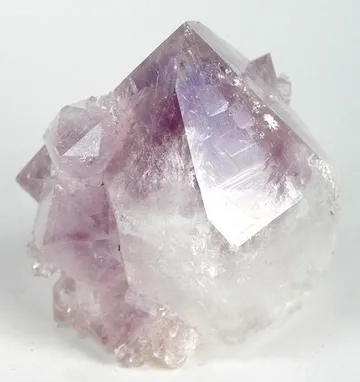
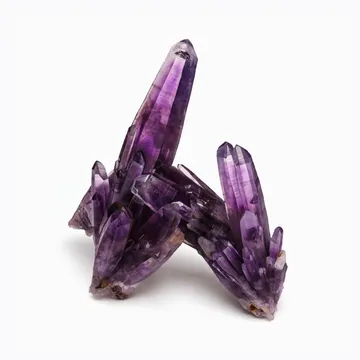
Quartz from Remedios is chiefly a matrix and association mineral, but it is central to the locality’s best cabinet specimens: clear to white crystals, short stubby terminated clusters, drusy plates, and pale amethystine crystals provide the stage for rhodochrosite, barite, calcite, fluorite, pyrite, galena and sphalerite. Documented pieces include Level 3 quartz with a white spray of sharp scalenohedral calcite, Level 2 quartz with barite crystals to about 1.5 cm, Level 5 quartz with minor pink rhodochrosite, and pale amethyst clusters partially coated by rhodochrosite. The most desirable quartz specimens from Remedios are those in which the quartz is clean and lustrous enough to frame the association rather than disappear into ore matrix—especially clear quartz carrying pink rhodochrosite, pale amethyst with rhodochrosite, or quartz that contrasts sharply with skeletal galena and dark sphalerite.
Other documented minerals from Remedios include arsenopyrite, barite, calcite, fluorite, galena, ilvaite, kutnohorite, native silver, pyrargyrite, pyrite and sphalerite. Ilvaite is one of the most collectible associated species: old references and dealer records describe black, lustrous, striated prismatic crystals from Level 5, and Moore’s compendium notes Taxco ilvaite to about 2.5 cm from Levels 5 and 6 of Los Remedios. Galena from the mine is notable as bright skeletal crystals with sphalerite, quartz and fluorite; some old specimens show twinned sphalerite intergrown with skeletal galena and fluorescent fluorite. Barite occurs in several habits, calcite can form acute scalenohedra, fluorite may be pale green to colorless and fluorescent, and kutnohorite is a manganese-carbonate companion worth checking analytically where pale pink carbonates lack convincing rhodochrosite habit.
Remedios specimens should be bought with careful attention to labeling. The most common locality confusion is not a sophisticated fake but an imprecise Mexican label: “Taxco,” “Los Remedios,” “Remedios Mine,” “Taxco district,” and occasionally “Guerrero Mine” can be conflated in old dealer stock. Because the Taxco complex includes multiple underground mines, the best labels name Los Remedios specifically and, ideally, record a level such as Level 5. Be especially cautious with attractive rhodochrosite-quartz pieces sold only as “Mexico” or “Taxco” without supporting history; Remedios rhodochrosite is scarce enough that a vague label materially weakens the specimen.
No widely documented, locality-specific fake industry is associated with Remedios rhodochrosite, but there are practical identification issues. Pale pink calcite, kutnohorite and rhodochrosite can resemble one another in drusy or botryoidal habit, and older labels may not reflect modern analytical caution. Rhodochrosite should show the expected carbonate behavior, but aggressive acid testing on a specimen is poor practice; use a hidden spot only if absolutely necessary, or rely on non-destructive observation and provenance. Pink carbonate coatings on black ilvaite or quartz are attractive, but color alone is not proof. Where a piece is unusually valuable, a Raman or XRD confirmation is appropriate.
Condition is a major value factor. The quartz can be chipped at exposed terminations, calcite associations bruise easily, barite edges may cleave or ding, and ilvaite crystals often show contact damage where plates were removed from tight underground pockets. Rhodochrosite coatings can be thin, so abrasion on high points is common; a slightly matte or worn pink surface is less desirable than crisp sparkling micro-rhombs or lustrous nodules. Skeletal galena-sphalerite specimens should be checked for edge contacts, loose matrix, and dull or altered sulfides.
Fluorite on Remedios combination pieces may fluoresce under both longwave and shortwave ultraviolet light, a useful supporting observation on some galena-sphalerite-quartz-fluorite specimens but not a locality guarantee. Keep sulfide-rich pieces dry and stable; pyrite- and marcasite-bearing material from many base-metal districts can deteriorate if stored in damp conditions, and Remedios tailings studies show active sulfate formation in weathered mine waste. For display, avoid high humidity, repeated handling, and acidic cleaning.
Market availability is limited but not impossible. Small to cabinet-sized Remedios rhodochrosite and quartz specimens appear periodically from old collections, especially material traceable to the 1980s and 1990s. The commonest collector-grade pieces are modest pink rhodochrosite coatings or mounds on quartz or ilvaite; the premium pieces are well-balanced cabinet specimens with clear quartz, strong pink color, visible rhodochrosite crystallization, and old documentation. Ilvaite plates from Level 5 are more obtainable than truly fine rhodochrosite, while galena-sphalerite-fluorite-quartz combinations are attractive old-mine curiosities that remain underappreciated compared with the rhodochrosite.