






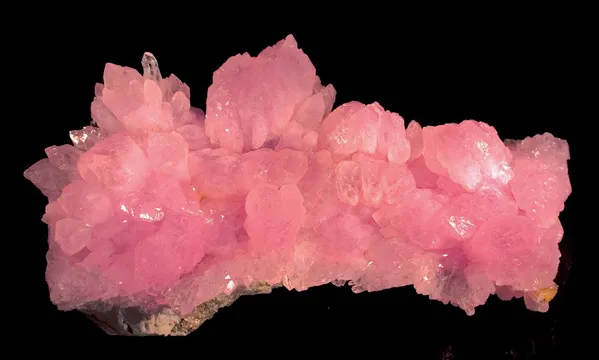
Taquaral, Brazil: famed for rose quartz with phosphates from Lavra da Ilha pegmatite; a type locality for zanazziite and whiteite, prized by collectors.
Key facts
Taquaral, in the Itinga municipality of northeastern Minas Gerais, is one of the classic collector names of the Araçuaí–Itinga pegmatite district, and its fame rests above all on an uncommon marriage: crystallized rose quartz with rare secondary phosphates. The name “Taquaral” on a specimen label may cover several nearby pegmatite localities, but the best-known source is the Ilha claim, or Lavra da Ilha, a granite pegmatite on a small island in the Jequitinhonha River north of the town. There, late-stage pink quartz grew as transparent to translucent crystals, crusts, parallel aggregates, crowns, and drusy groups on older quartz and feldspar, then acquired sprays and rosettes of brown eosphorite, olive-green zanazziite, wardite, whiteite, and related alteration minerals from phosphate-rich zones.
The setting is deeply Brazilian: a lithium–cesium–tantalum pegmatite province developed in and around quartz-mica schists of the Araçuaí orogen, long worked by garimpeiros for gems, feldspar, mica, beryl, tourmaline, lithium minerals, tantalum-niobium oxides, and the occasional miraculous pocket. Taquaral’s specimens are not usually about brute size. They are about contrast and paragenesis: pink quartz against brown phosphate blades, greenish beryllium-phosphate microcrystals on glassy quartz, colorless or smoky quartz cores wrapped by later pink growth, and the unmistakable old Brazilian pegmatite aesthetic of sharp little crystals that look delicate but carry a serious mineralogical pedigree.
Regional View
Country View
For mineralogists, the locality is more than a rose-quartz source. Lavra da Ilha is a type locality for zanazziite and for two whiteite species, and Taquaral-area material has figured in structural and spectroscopic work on the eosphorite–childrenite series. For collectors, the finest pieces have a look that is instantly recognizable: irregular but lustrous pink quartz crystals, commonly only millimetres to a couple of centimetres across, carrying doubly terminated brown phosphate crystals or small olive-green hemispherical sprays. Old labels may read Taquaral, Lavra da Ilha, Ilha claim, Lavra de Ilha, Laranjeira, Piauí Valley, or simply Itinga; sorting those names correctly is part of collecting this district well.

Photo: Géry Parent / Wikimedia Commons

Search for specimens: View all specimens from Taquaral, Brazil
Taquaral lies in the Itinga area of the Jequitinhonha Valley, within the Araçuaí Pegmatite District of the Eastern Brazilian Pegmatite Province. Regionally, these are rare-element granitic pegmatites related to the late to post-collisional granitic suites of the Araçuaí orogen, and many are lithium-rich LCT bodies. The Itinga field has long been important for spodumene, petalite, lepidolite, montebrasite, beryl, elbaite, cassiterite, columbite-tantalite, feldspar, mica, and phosphate suites. Taquaral is the collector end of that same geological story: small, evolved pegmatite bodies where late fluids opened cavities, altered primary phosphates, and left some of Brazil’s most distinctive rose-quartz specimens.
The classic specimen source is Ilha claim, Lavra da Ilha, a granite pegmatite located on an island in the Jequitinhonha River about 3 km north of Taquaral. Published descriptions record a zoned pegmatite, partly covered by alluvium, striking roughly N 40° E, subvertical, and perhaps 300 meters long, hosted by quartzose mica schist. The mine workings were an elongated open excavation reported at about 70 x 10 meters and more than 15 meters deep. A quartz core was flanked by feldspathic zones of medium grain size, with albitic replacement bodies and geode-rich pockets. Those albitized and pocketed zones are the collector setting for the best rose quartz and phosphate combinations.
The Ilha pegmatite was discovered in 1969 and became one of the great late-20th-century Brazilian rose-quartz localities. Its position in the river controlled the work. The island itself was described as about 500 meters long, and the excavation was repeatedly filled with sand by annual rises of the Jequitinhonha. Small production could be obtained only when water was low and the sand had been cleared, a rhythm that helped make the classic material episodic. Old-time specimens from the 1960s and 1970s remain especially desirable, both because of their aesthetics and because they document the phosphate paragenesis that later produced several formal mineral descriptions.
The mineralization at Lavra da Ilha is a late-stage pegmatite assemblage built around quartz, feldspar, albite, mica, lithium and beryllium minerals, tourmaline, tin and niobium-tantalum oxides, and a rich secondary phosphate suite derived largely from alteration of primary phosphates such as triphylite-group material. The rose quartz ranges from nearly purple-pink to pale pink-white and may be transparent, translucent, or opaque. Individual crystals were described from a few millimetres to about 2 cm, commonly with one or two complete terminations, and in some specimens they form crowns around larger quartz crystals up to decimetric size. Eosphorite is so common on good Lavra da Ilha rose quartz that its presence, especially with zanazziite, wardite, or apatite, is one of the strongest visual clues to origin.
Beyond Ilha, the Taquaral label may include Laranjeira and its Ademar pegmatite, the Piauí Valley localities such as Poço d’Antas, Ponte do Piauí, Arqueana, Cachoeira, Xuxa, Guimarãesite occurrence, and Maxixe claim, as well as Baixão and other nearby claims. The Maxixe claim is historically important for the 1917 discovery of deep blue Maxixe-type beryl whose color faded rapidly in light. Poço d’Antas is important to collectors for 2006 childrenite and childrenite–eosphorite series specimens, some with roscherite-group or atencioite-group associations. Laranjeira and Ademar are tied to crystallized rose quartz and rare rose quartz–elbaite combinations.
Collecting access today should be treated as closed unless arranged through legitimate local land and mineral-rights holders. Lavra da Ilha is an inactive claim on a river island with old flooded or sand-filled workings; the broader Itinga–Araçuaí region also contains active or permitted lithium projects and long-established private claims. Serious collectors should expect to acquire Taquaral specimens through old collections, Brazilian dealers, established international dealers, auctions, and show stock rather than through field collecting.
Quartz is the structural backbone of the Taquaral specimens: older white, clear, milky, and locally smoky quartz forms the cores, points, and matrix on which the later rose quartz and phosphate minerals developed, especially at Lavra da Ilha. The most interesting non-rose examples are not anonymous pegmatite quartz but pieces that preserve the growth sequence—smoky or colorless crystals partly overgrown by pink quartz, quartz cores ringed by crowns of smaller pink doubly terminated crystals, and plates where feldspar, albite, eosphorite, and mica give context. Good Taquaral quartz is judged by architecture and association rather than by isolated crystal size: sharp primary quartz with later pink growth, intact terminations, clean contrast with brown eosphorite or green zanazziite, and minimal bruising on the exposed tips will always outrank dull, massive, or contextless quartz.
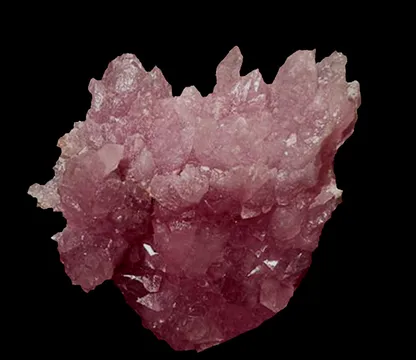
Taquaral rose quartz is important because it is crystallized, not merely massive lapidary rose quartz, and the Lavra da Ilha material is among the classic Brazilian examples. The crystals are usually small—commonly millimetric to roughly 2 cm—but they form lustrous crusts, parallel aggregates, crowns, radiating groups, and drusy carpets on quartz, feldspar, albite, or mica; color ranges from pale pink-white to saturated pink and, in some descriptions, nearly purple-pink. The finest specimens have transparent to translucent crystals with bright luster, recognizable terminations, and a three-dimensional growth habit, ideally sprinkled with doubly terminated brown eosphorite, olive-green zanazziite, wardite, or other phosphates. Ordinary pieces are paler, opaque, abraded, massive, or stripped of their accessory minerals; exceptional ones retain the natural phosphate “seasoning” that makes Taquaral so identifiable.
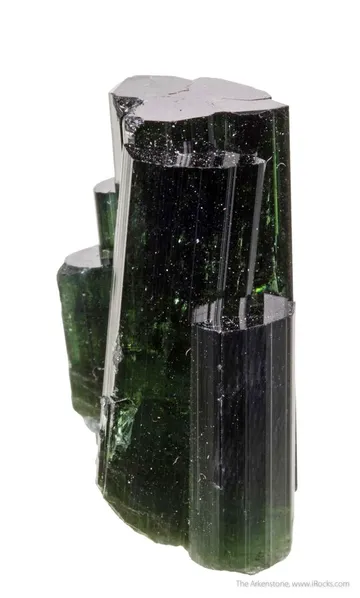
Elbaite from the Taquaral area belongs to the evolved LCT pegmatite suite and is best documented from Ilha, Laranjeira/Ademar, Arqueana, Ponte do Piauí, Maxixe, and other Piauí Valley occurrences, but collector-grade combinations with rose quartz are distinctly uncommon. The sought-after pieces show gemmy green to blue-green elbaite crystals, sometimes labelled verdelite or indicolite in older usage, on or with rose quartz and older quartz; a notable Laranjeira specimen has been described as a 5 cm clear deep green, slightly bluish elbaite crystal associated with a large quartz prism overgrown by transparent to translucent rose quartz. Good Taquaral elbaite is valued for transparency, undamaged terminations, saturated green color, and convincing matrix association; loose crystals or vague “Taquaral” pieces without sublocality and without the quartz context need more scrutiny.
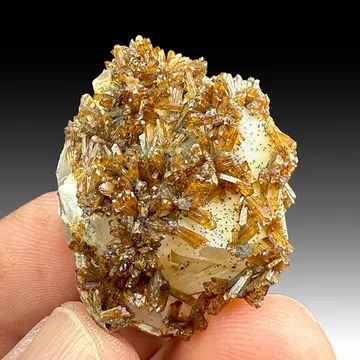
Eosphorite is the signature accessory mineral on classic Taquaral rose quartz, especially from Lavra da Ilha, where it occurs as slender prismatic, bladed, and commonly doubly terminated crystals in golden-brown, orange-brown, light brown, and sometimes violet-brown tones. Crystals on cabinet specimens are usually a few millimetres, but examples around 1 cm are well documented, and rosette or fan groups can give a small specimen surprising visual weight. It occurs on pink, clear, milky, or smoky quartz and with albite, feldspar, wardite, zanazziite, roscherite-group minerals, apatite, and related phosphates. Better pieces have sharp, lustrous, translucent crystals standing free on attractive pink quartz, not mashed into an iron-stained crust; the best show a balanced composition in which the brown phosphate enhances rather than obscures the rose quartz.
Childrenite from Taquaral is less abundant on the market than eosphorite and is most strongly associated with Ilha claim records and with the Poço d’Antas claim in the Piauí Valley, where a 2006 find produced unusually showy specimens for the species. Poço d’Antas pieces are described as bladed to sword-shaped, translucent brown to golden-brown crystals, commonly 1 to 1.5 cm and rarely a little larger, on quartz, fine-grained muscovite, feldspar, and roscherite-group material; some are prismatic and doubly terminated with well-defined faces, and some occur with yellow-green atencioite or roscherite-group growths. Top examples are richly crystallized, undamaged, lustrous, and correctly distinguished from eosphorite-series or possible ernstite-replacement material; ordinary examples are small, dull, oxidized, or analytically ambiguous.
Albite at Taquaral is mostly a matrix and pocket-zone mineral rather than the headline species, but it is essential to understanding the specimens. At Lavra da Ilha, albitic substitution bodies in the feldspathic zones are explicitly part of the geode-rich setting that produced the rose quartz and phosphate suite, and albite or cleavelandite is a common white contrasting substrate for quartz, eosphorite, zanazziite, wardite, muscovite, and other secondary phosphates. Collectible albite pieces from Taquaral are strongest when the albite forms clean white platy or crystalline matrix under pink quartz or phosphate crystals; by itself it is seldom the reason to buy the specimen, but a bright albite base can make small brown eosphorite or green beryllium-phosphates stand out beautifully.
Lepidolite is a lithium-mica component of the evolved Taquaral pegmatites and is recorded from Ilha, Laranjeira/Ademar, and several Piauí Valley claims, where it belongs with the broader lithium-bearing assemblage rather than with a single celebrated lepidolite pocket. In specimens it is typically a matrix or association mineral with quartz, feldspar, tourmaline, and phosphates; Piauí Valley material may be labelled simply as mica or probable lepidolite when associated with childrenite, ruifrancoite, or roscherite-group minerals. Good Taquaral lepidolite specimens are those in which the mica adds color, texture, and geological context to rose quartz, elbaite, or phosphate crystals; as a standalone species it is much less characteristic here than the rose quartz–eosphorite–zanazziite combinations.
Taquaral’s rarities are a major part of its authority. Lavra da Ilha is the type locality for zanazziite, a rare calcium-magnesium-beryllium phosphate that forms olive-green to yellowish or tan barrel-shaped pseudohexagonal crystals, divergent sprays, and spheroidal groups on quartz; it is also a type locality for whiteite-(CaFeMg) and whiteite-(MnFeMg), typically small tan tabular phosphate crystals. The same phosphate assemblage includes wardite, montgomeryite, collinsite, rockbridgeite, fluorapatite or apatite, vivianite, triphylite-related alteration products, pyrite, cassiterite, columbite-tantalite, beryl, muscovite, microcline, sphalerite, hyalite opal, iron and manganese oxides, and locally roscherite-group minerals. In the wider Taquaral–Piauí Valley district, guimarãesite was described from the Guimarãesite occurrence, and Ponte do Piauí is notable for advanced beryllophosphate species including wilancookite and moraesite-bearing associations.
The most important authenticity issue with Taquaral specimens is locality precision. “Taquaral” may be a correct broader label for material from Ilha, Laranjeira, Baixão, Poço d’Antas, Arqueana, Ponte do Piauí, Maxixe, or other nearby claims, but the market value and mineralogical meaning change substantially with the sublocality. Lavra da Ilha rose quartz with eosphorite and zanazziite is a classic, highly recognizable association; childrenite from Poço d’Antas is a different collecting story; elbaite from Laranjeira or Arqueana should not be casually folded into “Ilha” without evidence.
Old names are another trap. Zanazziite from Lavra da Ilha was historically called roscherite before the species was described in 1990, so older “roscherite on rose quartz” labels may deserve analytical reassessment. Conversely, not every greenish spheroidal or radial beryllium-phosphate growth from Taquaral is automatically zanazziite. Whiteite species, roscherite-group minerals, greifensteinite, ruifrancoite, and related phosphates can require analysis. “Amblygonite” labels from Ilha are also suspect: late-stage pocket material in the amblygonite–montebrasite series has been reported as nearly end-member montebrasite, while dealers have often continued to use amblygonite as a convenient commercial name.
A very Taquaral-specific condition issue is phosphate removal. Some rose-quartz specimens reportedly had eosphorite removed because local miners thought the brown crystals detracted from the pink quartz. To modern collectors, that often destroys the specimen’s best evidence of locality and paragenesis. Look for suspiciously scraped pink quartz surfaces, odd empty attachment sites, or polished-looking scars where brown eosphorite should have been. On the other hand, not every incomplete spot is human damage: these are pegmatite pocket specimens from a river-island working, and natural contacts, sand abrasion, edge wear, iron or manganese oxide coatings, and broken matrix backs are common.
Good Taquaral rose quartz is much rarer than casual “rose quartz” buyers realize. Massive pink quartz is abundant worldwide; sharp, lustrous, naturally crystallized rose quartz with late phosphate minerals is not. Small miniatures and thumbnails appear periodically, especially from old collections, but large, undamaged, well-composed pieces with strong pink color and intact eosphorite or zanazziite are scarce and increasingly competitive. Poço d’Antas childrenite from the 2006-style find is also not a routine item; good cabinet pieces with lustrous centimetric blades are far more unusual than their modest auction prices sometimes suggest.
Fluorescence is not the main attraction, though hyalite opal associated with some Lavra da Ilha material has been reported as fluorescent. Handling should be conservative. Rose quartz can have bruised edges and internal fractures, eosphorite and childrenite blades can snap, and crumbly albite or mica matrix can shed. Avoid aggressive acid cleaning: it can remove iron staining in ways that improve brightness but may damage delicate phosphates, alter the old surface character, or erase exactly the accessory minerals that make the specimen identifiable.
Lavra da Ilha was a mine whose geology had to negotiate with a river. The pegmatite sat on a narrow island in the Jequitinhonha, about 500 meters long, and the workings were not a tidy underground level but a long open cut in an island that flooded. Published descriptions place the excavation at roughly 70 x 10 meters and more than 15 meters deep. Each annual rise of the river could refill the pit with sand. When miners returned in low-water months, they first had to remove the river’s deposit before they could work the pegmatite again. That seasonal rhythm helps explain why fine Taquaral pieces feel episodic: the pockets were not simply “mined out” in a continuous campaign but recovered in bursts, whenever water, sand, labor, and luck aligned.
The discovery story also begins with a date collectors should remember: 1969. The Ilha pegmatite was recognized then, and its classic production belongs especially to the years that followed. In old collections, specimens from the 1960s and 1970s can show the full personality of the mine before the phosphate suite was widely understood. Some were kept as rose quartz, some as eosphorite on rose quartz, and some greenish phosphate growths travelled under the name roscherite before zanazziite was formally described. A specimen could sit for years wearing an obsolete label, then become type-locality material in hindsight.
One of the most painful little episodes in Taquaral collecting is the removal of eosphorite. Several old rose-quartz pieces reportedly had their brown phosphate crystals taken off because garimpeiros thought they spoiled the look of the pink quartz. To a lapidary eye, that might have seemed sensible: pink quartz was the saleable beauty, brown needles were clutter. To a mineral collector, it is the opposite. The brown blades prove the locality, complete the paragenesis, and make the specimen more sophisticated. The most desirable pieces today are often the survivors—rose quartz still wearing its eosphorite, zanazziite, wardite, or apatite exactly where the pocket put them.
Rich Kosnar’s name is woven into the American collecting history of the material. A 1974-mined zanazziite with eosphorite on rose quartz, later sold from the Richard A. Kosnar collection, illustrates how the phosphate story crossed from Brazilian pegmatite pockets into the international specimen market before every species name was settled. Kosnar was active in importing Brazilian gems and minerals, and later auction descriptions credit him as the first U.S. dealer to bring zanazziite to market. The irony is pleasing: specimens once handled as rare “roscherite” from Taquaral later became representatives of zanazziite, while Kosnar’s own surname would also become attached to kosnarite, another rare phosphate from Brazil.
The wider Taquaral district carries another gem-mining legend at Maxixe. In 1917, the Maxixe claim in the Piauí Valley yielded a deep blue aquamarine-like beryl whose color was spectacular but unstable. Exposure to light faded it toward whitish yellow. The color is now understood as a radiation-related color center, and the name “Maxixe” became part of gemological vocabulary. That story belongs to the same mineral province as the rose quartz and phosphate pockets: evolved pegmatites, lithium-rich fields, and discoveries whose beauty sometimes proved transient, fragile, or chemically more complex than first appearances suggested.
.jpg)
