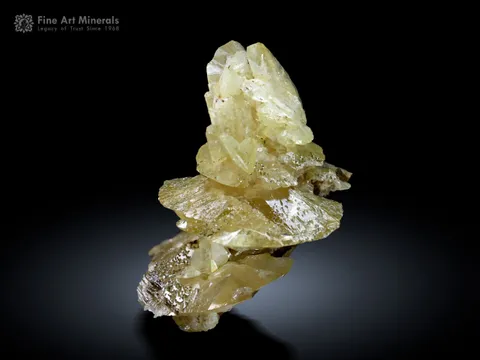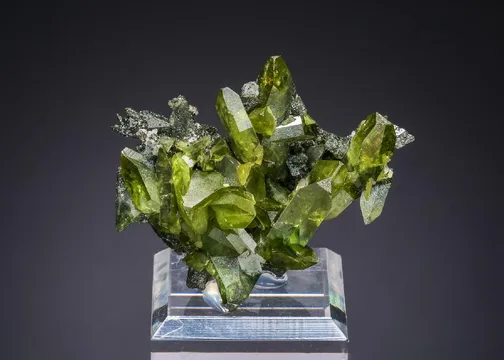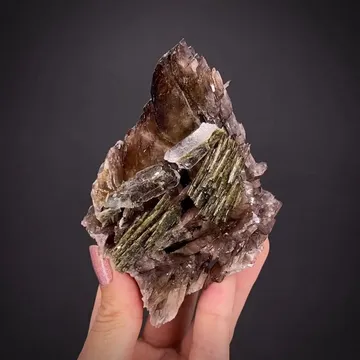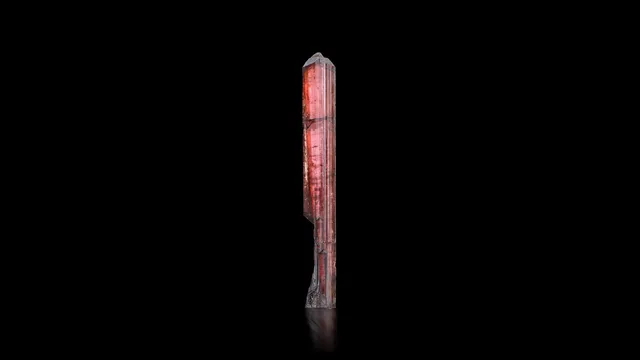
A collector's guide to Stak Nala, Pakistan: its geology, mining history and notable minerals, illustrated with the 396 specimens documented from this locality on EarthWonders.
Key facts
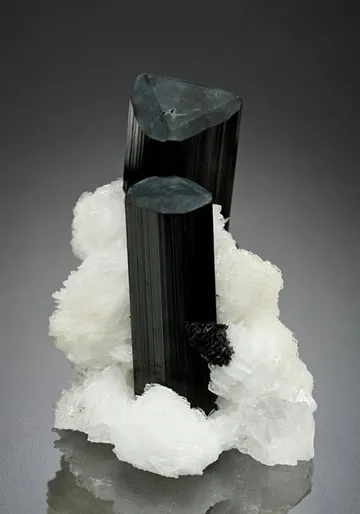
Stak Nala is the classic Pakistani tourmaline locality: a high Himalayan rare-element pegmatite occurrence in the Haramosh Mountains of Gilgit-Baltistan, long known in the trade under older labels such as “Skardu District,” “Northern Areas,” or simply “Stak Nala, Gilgit-Skardu Road.” For collectors, the name means slender to stout, sharply striated tourmaline prisms rising from snowy albite var. cleavelandite, commonly accompanied by quartz and, in better combinations, fluorite, topaz, apatite, lepidolite, hambergite, or rare oxide accessories. Its signature specimen style is instantly recognizable: dark green to black schorl-rich lower sections grading into green, blue, colorless, yellowish, or pink elbaite terminations, often with the tourmalines jacketed or feathered by white platy albite.
Geologically, Stak Nala is not a broad gem field in the casual sense but a specific suite of miarolitic granitic pegmatite sills emplaced in the northeastern part of the Nanga Parbat–Haramosh Massif. The productive pegmatites are thin, internally zoned, pocket-bearing bodies derived from volatile-rich Himalayan leucogranitic magmas. Their collector importance comes from an unusual combination of geological discipline and visual drama: symmetrical zoning in the pegmatite, early schorl-rich crystallization, late sodic alteration, and rupture of miarolitic cavities together produced the open-pocket environment in which colored elbaite, cleavelandite, quartz, fluorite, topaz, lepidolite, apatite, and rarities could grow as display-quality specimens.
Historically, Stak Nala became internationally significant in the 1980s, when systematic work by the Gemstone Corporation of Pakistan and associated ventures brought large numbers of bi- and tricolored tourmalines to market. Those finds helped establish Pakistan as a serious source of pegmatite specimens, not merely gem rough. Later finds, including small but attractive production in the 2000s and continuing sporadic circulation from old collections, have kept the locality visible, but the finest old matrix pieces retain a distinct prestige: crisp, colorful, unrepaired tourmalines naturally set in cleavelandite are far less common than loose or damaged prisms.
Regional View
Country View
The best Stak Nala specimens succeed by contrast. The eye first reads the nearly architectural white albite, then the dark vertical tourmaline prisms, then the small but crucial flashes of color at terminations and growth zones. Fine pieces may look modest in low light, but backlighting reveals their real quality: green “caps,” blue indicolite-toned ends, pink or colorless zones, and occasional yellowish bands within crystals that otherwise appear almost black. In top examples, the albite is not just matrix but part of the composition, wrapping the tourmalines in pearly blades without smothering the terminations.

Photo: Wikimedia Commons

Photo: Wikimedia Commons
Search for specimens: View all specimens from Stak Nala, Pakistan
The Stak Nala pegmatites lie on the west side of the Stak valley, roughly north of the Indus River and reached historically from the Gilgit-Skardu road by a rough route toward Toghla village, then by foot access to the pegmatite workings higher on the slope. Modern locality usage generally places the occurrence in the Haramosh Mountains, Roundu District, Gilgit-Baltistan. Older specimen labels may read Skardu District, Baltistan, Northern Areas, or simply “Skardu Road,” all of which can be legitimate historical label language if the specimen style and provenance are consistent.
The deposit is a miarolitic granitic pegmatite system, best understood as a rare-element, Li-B-F-rich pegmatite occurrence related to Himalayan leucogranitic magmatism in the Nanga Parbat–Haramosh Massif. The pegmatites form low-angle to flat-lying sills, commonly thin but exceptionally productive where pockets formed. The classic geological model divides the main bodies into a border zone, a coarser wall zone, and a central core zone. Early K-feldspar, oligoclase, quartz, and schorl dominate parts of the wall zones; later albitization and volatile escape produced fine platy albite var. cleavelandite, colored elbaite, quartz, and accessory minerals in pockets.
The most productive mineralization has been described from a relatively thin main sill, about a meter thick, with a thicker south pegmatite nearby producing less tourmaline. Mining accounts also name working areas or pegmatite bodies such as Kaska, Baho, and Zaloowa, with Kaska repeatedly cited as the chief tourmaline-producing mine near Toghla. The productive pockets were not random cavities in a barren pegmatite: they formed in structurally and chemically favorable zones where late magmatic fluids became trapped and where earlier crystallization of schorl had helped remove iron from the system, allowing pale, colored elbaite to develop in later stages.
The internal mineral sequence matters directly to collectors. Schorl-rich zones and veins belong to the earlier tourmaline history of the pegmatite, while the desirable multicolored elbaite terminations and cleavelandite jackets record later pocket-stage growth. This explains why many Stak Nala crystals have dark, nearly opaque bases with more translucent or transparent colored terminations. It also explains the common associations: tourmaline with cleavelandite, tourmaline with quartz, quartz impaled or crossed by tourmaline, and rarer combinations with fluorite, topaz, apatite, lepidolite, or hambergite.
Local villagers are credited with the first tourmaline discovery in the early 1980s. The Gemstone Corporation of Pakistan began organized work soon afterward, and by the mid- to late 1980s Stak Nala specimens had reached the international collector market in quantity. Mining records describe seasonal work constrained by snow and winter conditions, commonly from spring through early autumn. At Kaska, underground workings included multiple adits, with recovery using hand tools, pneumatic picks, chisels, crowbars, and blasting. Several accounts emphasize that this work produced both gem material and intact mineral specimens, though blasting inevitably damaged many crystals.
Production during the Gemstone Corporation period was substantial by pegmatite-specimen standards. Published mining summaries report roughly 150 kg of tourmaline and specimens per season from the Kaska mine and about 0.45 million carats of tourmaline from Stak Nala over eight working years from 1981-1982 through 1988-1989. One especially memorable recovery is attributed to Edward Link in 1988: 20 tricolored tourmaline crystals about 12 cm long and 2 cm wide. Those figures explain why loose Stak Nala tourmalines are not intrinsically rare, while also explaining why intact, aesthetic matrix pieces remain selectively scarce: the mine produced many crystals, but comparatively few survived extraction, transport, and decades of trading as undamaged display specimens.
Organized corporate mining reportedly ended around 1990, but Stak Nala did not disappear from the market. Local miners continued to work the area intermittently, and later parcels and pockets entered circulation. Dealer records document late-2005 and late-2007 tourmaline finds, and gemological reporting shows that fluorite rough was still being obtained in the 2010s. Today, collecting access should be treated as mining access, not recreational collecting. The workings are remote, mountainous, locally controlled, and potentially hazardous, with old adits, fractured rock, and the legacy of blasting. For most collectors, the practical route to Stak Nala material is through reputable dealers, auctions, older collections, Pakistani mineral suppliers, and well-documented specimen pedigrees.
Tourmaline is the mineral that made Stak Nala famous, and here the group is best appreciated as a continuous visual story from schorl-rich dark bases to elbaite-rich colored terminations. Crystals are typically prismatic, strongly striated, and commonly a few centimeters long, with published descriptions of elbaite generally in the 1 to 10 cm range and exceptional tricolored crystals around 12 cm known from mining accounts. The classic association is tourmaline in or on white cleavelandite, with quartz very common and fluorite, topaz, apatite, lepidolite, and hambergite much more selective. Ordinary pieces may be dark, broken, or only weakly zoned; good Stak Nala tourmalines show sharp luster, intact terminations, clean color zoning, and natural matrix attachment; exceptional pieces combine multiple upright crystals, green or blue caps, pink or colorless zones, and a balanced cleavelandite-quartz composition.
Elbaite from Stak Nala is the colored, lithium-rich tourmaline phase responsible for the locality’s collector identity: dark green bodies giving way to yellow-green, blue-green, indicolite-blue, colorless, and pink sections, sometimes within a single doubly terminated crystal. The finest elbaite specimens came from pocket zones in the main tourmaline-bearing pegmatites, where late Fe-poor fluids allowed colored elbaite to crystallize with cleavelandite and quartz. Crystals are usually slender to moderately stout prisms, commonly in the miniature to small-cabinet size range when on matrix, and the best pieces are judged by translucency, zoning sharpness, termination quality, and how much of the crystal is visible rather than buried in albite. Pink-capped and blue-capped examples are more coveted than routine dark-green crystals, while doubly terminated specimens on cleavelandite represent the classic Stak Nala ideal.
Albite at Stak Nala is both a major pegmatite feldspar and the principal display matrix for the tourmalines, occurring as white to pearly platy cleavelandite in the pocket stage and as more granular sodic plagioclase in the broader pegmatite zones. Collectors most often encounter albite as blades, sheaves, and rosette-like aggregates wrapped around tourmaline prisms, sometimes partly penetrating or jacketing the crystals. Its value here is aesthetic rather than rarity: ordinary albite is common and can be massive or chalky, but fine albite provides snowy contrast, pearly luster, open architecture, and secure natural attachment for tourmaline, quartz, fluorite, or hambergite. Stak Nala pieces are at their best when albite frames the tourmalines without hiding terminations or obscuring color zoning.
Cleavelandite is the collector’s name for the platy albite habit that gives Stak Nala specimens their white, bladed matrix and their unmistakable “Pakistani pegmatite” contrast. At Stak Nala it is a late-stage pocket mineral tied to albitization and volatile escape, commonly forming thin pearly blades that flare around elbaite-schorl prisms and quartz. Fine cleavelandite specimens from this locality are not judged as feldspar specimens alone but as compositions: blades should be lustrous, clean, three-dimensional, and sufficiently open to reveal the tourmaline. Dense opaque masses are common; elegant, translucent, well-arranged cleavelandite that wraps dark and colored tourmaline without breakage is much more desirable.
Quartz is one of the essential pocket minerals at Stak Nala, typically appearing as colorless to translucent crystals associated with tourmaline and cleavelandite. The best-known style includes double-terminated quartz crystals crossed, pierced, or flanked by tourmaline prisms, sometimes giving the specimen a “pincushion” character. Quartz is rarely the rare mineral on a Stak Nala piece, but it can make the specimen: a clear, sharp, damage-free quartz crystal provides geometry and transparency against the dark tourmaline and white albite. Ordinary quartz associations may be cloudy, etched, or interrupted by pocket-wall growth; better examples show glassy luster, doubly terminated form, and natural intergrowth with upright tourmaline.
Schorl from Stak Nala is not just “black tourmaline” but the dark structural foundation of the locality’s polychrome tourmaline specimens. It occurs as striated, prismatic black to very dark green sections in the wall zones and pocket-stage tourmalines, commonly grading into green, blue, colorless, or pink elbaite toward the terminations. Good schorl-rich pieces preserve this transition clearly and are especially attractive when the dark lower prism is jacketed by white cleavelandite and topped by a translucent colored cap. Ordinary schorl fragments from Stak Nala are plentiful enough; fine schorl-elbaite matrix pieces are distinguished by sharp vertical crystals, intact terminations, visible zoning, quartz or albite balance, and a clean separation from the many broken dark bases produced during mining.
Fluorite is a prized accessory at Stak Nala because it adds saturated green color to an assemblage otherwise dominated by dark tourmaline and white albite. It occurs in pocket associations with tourmaline, albite, quartz, and other late-stage minerals, commonly as green crystals or gem rough; gemological reporting describes bluish green fluorite from Stak Nala that can show weak yellowish-green response to long-wave UV and stronger greenish-yellow response to short-wave UV, with brief green phosphorescence after short-wave exposure. Specimen fluorites are often small, around the 1-2 cm range in ordinary examples, while larger sharp green octahedral or modified cubic crystals with tourmaline and albite are far more desirable. The best pieces combine a clean green fluorite crystal with undamaged tourmaline and bright cleavelandite rather than isolated fluorite rough.
Apatite from Stak Nala is a late pocket accessory, generally encountered as fluorapatite in violet, pink, or greenish tones associated with albite, schorl-elbaite tourmaline, quartz, and feldspar. It is not the main reason collectors pursue the locality, but a well-placed apatite crystal can lift a specimen from ordinary tourmaline-on-albite into a more complex pegmatite association. The crystals tend to be much scarcer on the market than tourmaline and cleavelandite, and most Stak Nala apatite pieces are small thumbnails to miniatures or secondary accents on larger matrices. Good examples show an identifiable, undamaged apatite crystal with pleasing color and a natural relationship to the classic tourmaline-cleavelandite assemblage.
Hambergite is a genuine Stak Nala rarity and one of the locality’s most interesting accessory species for advanced pegmatite collectors. Documented specimens include tabular to bladed, lustrous white or colorless crystals on cleavelandite, quartz, or tourmaline, with reported examples ranging from small millimeter-scale crystals to exceptional multi-centimeter blades; one public auction record describes a sharp pearly hambergite crystal about 4.2 cm on albite, while another notes a twinned 1.5 cm hambergite on a doubly terminated quartz with tourmaline. Because hambergite is not abundant here, the key criteria are crystal identity, sharpness, luster, lack of bruising, and convincing association with Stak Nala matrix minerals. Fine Stak Nala hambergite is far rarer than ordinary tourmaline from the locality and should carry stronger documentation.
Topaz is a late-stage pocket mineral at Stak Nala, recorded with colored tourmaline, cleavelandite, quartz, lepidolite, fluorite, and apatite in the core and pocket zones. As a specimen mineral from this locality it is much scarcer than tourmaline and usually appears as a small colorless to pale crystal rather than as the dominant display species. A notable collector-grade Stak Nala topaz association is topaz with schorl-elbaite tourmaline and albite, where the topaz may be a small but meaningful accessory; one auction description even recorded a small associated topaz showing yellow fluorescence under UV. Good Stak Nala topaz pieces are valued for sharpness, transparency, and undamaged placement on a classic tourmaline-cleavelandite matrix, not for large standalone topaz crystals.
Lepidolite at Stak Nala belongs to the lithium-rich late pegmatite assemblage and appears in pocket zones with elbaite, albite, quartz, topaz, fluorite, and rare oxide minerals. It is generally subordinate visually, occurring as mica aggregates or crystals that may be pale, lilac, pinkish, or colorless-looking depending on habit and lighting. The most scientifically important Stak Nala lepidolite connection is its role as the host surface for billwiseite, the locality’s type mineral, which was found scattered across a large lepidolite crystal. As a collector mineral, lepidolite is most desirable when it adds color and context to a tourmaline-cleavelandite specimen or when it is associated with rare minerals; ordinary mica masses without sharp associated species are much less compelling.
Feldspar at Stak Nala is fundamental to both the pegmatite geology and the specimen aesthetic. The pegmatites include K-feldspar, oligoclase, albite, microcline, and perthitic feldspar, with early feldspars forming part of the border, wall, and core architecture and later albite producing the cleavelandite blades that collectors prize. On specimen labels, “feldspar” may refer broadly to white albite/cleavelandite matrix or to blockier K-feldspar and microcline in the pegmatite. Good feldspar-associated pieces from Stak Nala are those in which the feldspar is clean, crystallized, and supportive of the tourmaline rather than massive or unattractive; blocky feldspar alone is secondary, but feldspar that preserves natural pocket relationships with tourmaline, quartz, fluorite, or hambergite is important.
Other documented minerals from Stak Nala include beryl including aquamarine and morganite, muscovite, microcline, almandine-spessartine garnet, cassiterite, columbite-(Mn), tantalite-(Mn), stibiotantalite, stibiocolumbite, bertrandite, hydroxylherderite, eosphorite, pollucite, monazite-group minerals, xenotime, zircon, ilmenite, magnetite, pyrite, lollingite, montmorillonite, aragonite, and opal-AN. The locality’s standout rarity is billwiseite, Sb5(Nb,Ta)3WO18, for which Stak Nala is the type locality; it was described from tiny pale yellow-green crystals on lepidolite and is a scientific mineral rather than a normal cabinet-specimen species. Stibiotantalite is another notable rare accessory, recorded as a yellow mineral associated with tourmaline and albite in early 1990s reporting.
The primary collecting challenge with Stak Nala is not identifying the general style, which is often obvious, but separating fine, natural, intact examples from the mass of broken, repaired, over-labeled, or broadly attributed material. True Stak Nala tourmalines typically show a distinctive combination of dark schorl-rich bodies, green or colored elbaite zones, white cleavelandite, quartz, and a compact pegmatite-matrix aesthetic. Loose crystals without matrix can still be genuine, but they are easier to misattribute to other Pakistani or Afghan pegmatites and should be bought on color zoning, morphology, provenance, and seller reliability rather than locality claim alone.
Repairs are common enough that they should be expected and checked for, especially on large matrix specimens with exposed upright crystals. Stak Nala tourmalines are hard but brittle, and the terminations, junctions with albite, and points where prisms emerge from matrix are vulnerable. Use long-wave and short-wave UV inspection, magnification, and strong side lighting to look for glue lines, filled cracks, reattached terminations, and constructed matrix. A disclosed old repair does not necessarily disqualify a specimen, but an undisclosed repair to a main crystal or termination materially changes value.
Condition standards should be strict. The best Stak Nala specimens have complete terminations, crisp prism edges, no obvious bruising on colored caps, and matrix that has not been aggressively trimmed through important crystals. Many otherwise attractive pieces show broken small tourmalines at the base, incomplete albite, or contacted quartz; such flaws are common and may be acceptable if the main crystal is strong. However, premium prices should be reserved for pieces that are naturally balanced, unrepaired or minimally repaired, and visibly three-dimensional all around.
Fluorite from Stak Nala deserves special handling because of its perfect cleavage and relative softness compared with tourmaline and quartz. Green fluorite associations should be protected from knocks and from prolonged strong light until stability is understood. Reported Stak Nala fluorite can show UV response and brief phosphorescence, but fluorescence should be treated as a supporting observation, not a locality proof. Topaz, if present, may also fluoresce in some cases, but small accessory crystals should be tested gently and never used as the sole basis for identification.
Market availability is uneven. Loose dark-green to black tourmalines and modest green-capped crystals appear regularly. Good miniatures and small cabinet specimens with cleavelandite are available but selective. Fine, older, unrepaired matrix pieces from the 1980s with multiple colored terminations, quartz, and strong provenance are scarce and increasingly collection-bound. Hambergite, fluorite-dominant pieces, topaz associations, apatite combinations, and rare-mineral specimens such as billwiseite-bearing material are specialized and should be documented carefully.
The Stak Nala story begins in a way that still feels intimate despite the locality’s international reputation: local villagers found tourmaline in the early 1980s, and only afterward did formal exploration arrive. The productive zone was not a vast open quarry but a high, difficult set of pegmatite bodies above the valley, reached from the Gilgit-Skardu road toward Toghla and then on foot up the slope. The most productive geology was almost improbably narrow. Geological accounts describe most tourmaline and associated mineral production as coming from a single sill about one meter thick, while a thicker pegmatite roughly 500 meters south produced much less. In collector terms, a major Pakistani classic was built from thin rock and fortunate pockets.
During the Gemstone Corporation of Pakistan period, Stak Nala became a seasonal mining camp governed by snow, altitude, and access. Work generally began in April and ended in September. At Kaska, underground mining advanced through multiple adits, and the equipment list reads like the real texture of hard-rock gem mining: hammers, pneumatic picks, dynamiting, crowbars, and chisels. The operation was technical enough to involve geologists, mining engineers, and supervisory staff, but the final recovery of fragile tourmaline crystals still depended on getting open-pocket minerals out of blasted pegmatite without destroying the prize.
One production figure gives a sense of scale: about 150 kg of tourmaline and specimens per season from the Kaska tourmaline mine. Another is even more striking: Gemstone Corporation data reported about 0.45 million carats of tourmaline from Stak Nala in eight working years, from 1981-1982 to 1988-1989. Against that background, the story of Edward Link’s 1988 recovery stands out as the kind of pocket detail collectors remember: 20 tricolored tourmaline crystals, each about 12 cm long and 2 cm wide. That is not the size of the average Stak Nala piece on the market; it is the scale of the find that made the locality’s reputation credible.
Later local accounts preserve a more rugged picture of the mountain after the company work. Kaska and Zoa Lungma are described as the two main mining areas, reached from Tookla village in about half an hour. A temporary zigzag road was reportedly built toward Kaska so equipment could be moved upward, with local people helping carry machinery and supplies. Tunnels were driven into the rock in different directions, said to extend 100 to 300 feet inward, with openings only 3 to 8 feet high and wide. After the organized work ended, the mountain was described as having been converted into “hundred of holes” with the look of a bee nest—a vivid image, and a sobering one for anyone who has handled a delicate tourmaline cluster without thinking about the landscape it came from.
The afterlife of the mine is equally important. When organized work ended, local miners continued intermittently, but with less equipment and less training. Some accounts describe reopened or unstable tunnels and fractured ground, while dealer and auction records show that material continued to emerge sporadically: late-2005 colorful tourmalines, late-2007 polychrome crystals, green fluorite parcels obtained in Skardu in 2013, and old collection pieces reappearing decades after their extraction. Stak Nala therefore has two markets running at once: the historical market of 1980s classics and the continuing trickle of later finds, recirculated specimens, and locally sourced material.
B. M. Laurs, J. H. Dilles, Y. Wairrach, A. B. Kausar and L. W. Snee, “Geological setting and petrogenesis of symmetrically zoned, miarolitic granitic pegmatites at Stak Nala, Nanga Parbat–Haramosh Massif, northern Pakistan,” Canadian Mineralogist, 36, 1-47, 1998. The essential geological paper for the locality, documenting the pegmatite zoning, host setting, tourmaline mineralization, albitization, and pocket-stage assemblage.
F. C. Hawthorne, M. A. Cooper, N. A. Ball, Y. A. Abdu, P. Černý, F. Cámara and B. M. Laurs, “Billwiseite, ideally Sb5(Nb,Ta)3WO18, a new oxide mineral species from the Stak Nala pegmatite, Nanga Parbat–Haramosh Massif, Pakistan: description and crystal structure,” Canadian Mineralogist, 50, 805-814, 2012. The formal type-mineral description of billwiseite from Stak Nala.
IMA-CNMNC Newsletter record for IMA 2010-053 Billwiseite. Records the approval of billwiseite and gives the Stak Nala type-locality coordinates.
J. C. Zwaan, “Green Fluorite from Stak Nala, Pakistan,” Journal of Gemmology, 34(3), 192-194, 2014. Gemological note on bluish green Stak Nala fluorite, including cutting parcels, refractive index, specific gravity, UV response, phosphorescence, inclusions, and spectroscopy.
Rupert Hochleitner and Stefan Weiß, “Stibiotantalit - ein Neufund von Stak-Nala in Pakistan,” Lapis, 16(3), 15, 1991. Short German report documenting stibiotantalite as a new find from Stak Nala.
Journal of Gemmology abstract note on Hochleitner and Weiß, 1991. English-language abstract noting yellow stibiotantalite from Stak Nala associated with tourmaline and albite.
Ali H. Kazmi and Michael O’Donoghue, Gemstones of Pakistan: Geology and Gemmology, Gemstone Corporation of Pakistan, 1990. Foundational book-length reference on Pakistan’s gemstone geology and trade context, including Stak Nala among the country’s pegmatite localities.
“Gemstone Sector Study: Baltistan Mining, Lapidary & Marketing.” Technical-sector study preserving useful locality details on Stak Nala access, elevation, pegmatite bodies, main and south mines, and the local mining setting.
DMB0762 TOURMALINE with ALBITE, Stak Nala, Pakistan — Crystal Classics. Short specimen video showing a Stak Nala tourmaline with albite.
ASG3408 Tourmaline with CLEAVELANDITE Stak Nala, Pakistan — Crystal Classics. Short specimen video focused on the classic tourmaline-cleavelandite association.
Mindat: Stak Nala, Haramosh Mountains, Roundu District, Gilgit-Baltistan, Pakistan — Core locality database page with coordinates, mineral list, references, and photograph links.
USGS Publications Warehouse: Laurs et al. 1998 Stak Nala pegmatite paper — Authoritative abstract and citation for the principal geological study.
RRUFF: Billwiseite type description PDF — Full paper describing Stak Nala’s type-locality mineral, billwiseite.
Journal of Gemmology, 34(3), 2014 — Includes the gemological note “Green Fluorite from Stak Nala, Pakistan.”
Gemstone Sector Study: Baltistan Mining, Lapidary & Marketing — Useful for access, mining, and regional gemstone-sector context.
Trango Tours: Mining in Stak Nala, Gilgit-Baltistan, Pakistan — Local narrative of mining at Kaska and Zoa Lungma, including tunnel dimensions and village context.
Pala International: Clanin in Pakistan — Field-oriented account with observations on Stak Nala ownership, reopened workings, and mining hazards.
Wikimedia Commons: Tourmaline, Albite var. Cleavelandite, Quartz from Stak Nala — Freely licensed image of the classic tri-colored tourmaline-cleavelandite-quartz style.
Wikimedia Commons: Schorl, Tourmaline var. Indicolite, Albite var. Cleavelandite and Quartz from Stak Nala — Freely licensed image showing the schorl-to-colored-tourmaline association with albite and quartz.
Wikimedia Commons: Tourmaline with Albite var. Cleavelandite from Stak Nala — Freely licensed image of a classic pink-and-green capped Stak Nala tourmaline on cleavelandite.