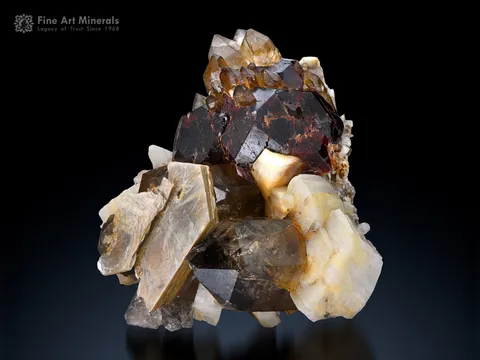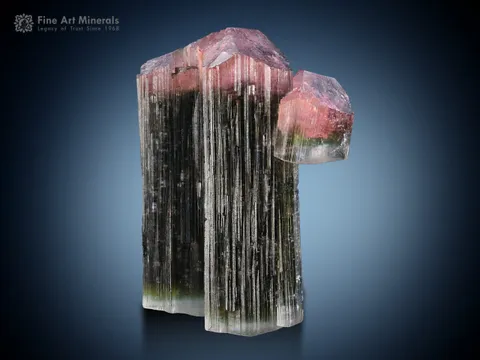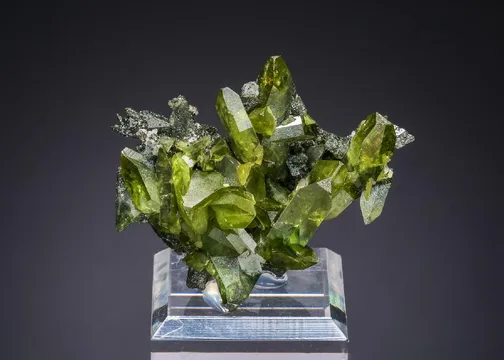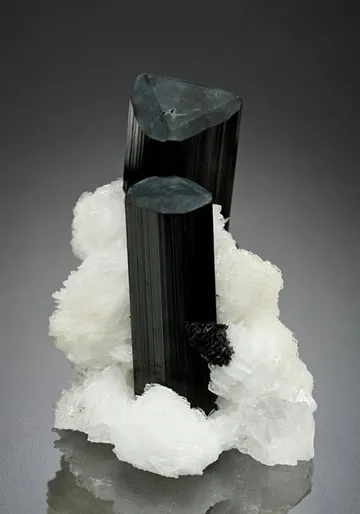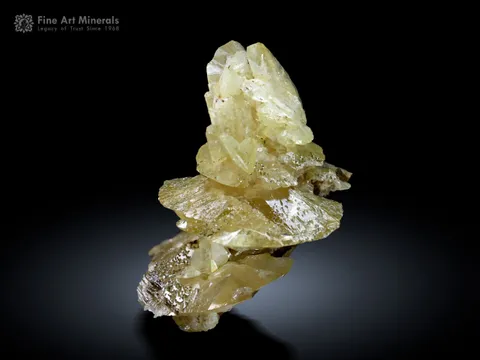
Roundu District, Pakistan — renowned miarolitic pegmatites yielding aquamarine, tourmaline, topaz, rare phosphates and elbaite; a premier collector locality.
Key facts
Roundu District sits astride one of the most collectible pegmatite belts in northern Pakistan: the Indus-side stretch of Gilgit-Baltistan between the Nanga Parbat–Haramosh massif and the approaches to Skardu. For specimen collectors, “Roundu” is not a single mine but a district-scale name that now gathers several older labels—Shengus or Shingus, Sabsar, Stak Nala, Astak Nala, Tormiq, Dambo Das, Bulachi and nearby small prospects—many of which were historically sold simply as “Skardu,” “Northern Areas,” or “Haramosh.” Its importance rests on miarolitic granitic pegmatites: pocket-bearing, feldspar-quartz-mica bodies capable of producing gem beryl, colored tourmaline, topaz, apatite, fluorite, spessartine, rare phosphates and complex Ta-Nb-Sb-W oxides.
The district’s two great specimen identities are distinct but complementary. Shengus is the aquamarine-and-rare-phosphate side of Roundu: pale to saturated blue beryl on albite, quartz, muscovite and schorl, plus the salmon, pink-red and orange-red väyrynenite that made the locality internationally important for rare-species collectors. Stak Nala is the tourmaline side: flat-lying pegmatite sills whose pockets yield dark schorl-rooted crystals grading into green, colorless, blue or pink elbaite, commonly set in white cleavelandite with quartz, K-feldspar and mica. The best Roundu specimens have the unmistakable look of high-Himalayan pegmatite crystallization: sharp prismatic aquamarine rising from white feldspar, black tourmaline spears cutting through milky to clear quartz, and tiny but electric rare phosphates with the color of salmon, rose or red-orange fire.
Regional View
Country View
Historically, the Roundu labels require careful reading. Roundu became a district-level administrative name only in 2019, carved from the old Skardu District, so older specimens and publications often place Shengus, Stak Nala and adjacent valleys under Skardu District, Baltistan, or the Northern Areas. Serious locality attribution therefore depends less on the modern district name than on the sublocality: Shengus for classic aquamarine and väyrynenite; Sabsar and nearby Khargulook for väyrynenite and aquamarine; Stak Nala for multicolored tourmaline; Astak Nala for tourmaline and topaz; Tormiq and Dambo Das for quartz, epidote and titanite-bearing material.

Photo: Wikimedia Commons

Photo: Wikimedia Commons
Search for specimens: View all specimens from Roundu District, Pakistan
Roundu’s collectible minerals come chiefly from gem-bearing granitic pegmatites in the Haramosh region of Gilgit-Baltistan. These are not stratiform ore deposits in the metallic-mining sense, but small to moderate pegmatite bodies—dikes, veins and sills—whose economic value lies in miarolitic cavities and coarse internal zones. The host rocks around Stak Nala belong to the Nanga Parbat–Haramosh massif, where orthogneiss and related high-grade rocks are cut by late, volatile-rich granitic pegmatites. At Stak Nala the pegmatites have been interpreted as products of Himalayan leucogranitic magma enriched in H2O, F, B and Li; as the bodies crystallized, fluids escaped into pockets, albitized earlier feldspar and built the cleavelandite-rich cavities that collectors recognize immediately.
The Stak Nala pegmatites are unusually well described compared with most Himalayan gem localities. They occur on the west side of the Stak valley, north of the Indus River, reached from the Gilgit–Skardu road toward Toghla village and then by footpath above the valley floor. The main tourmaline-bearing bodies are flat-lying to gently dipping sills, with symmetrical zoning from feldspar-quartz border and wall zones inward to coarser feldspar-quartz-tourmaline zones and pocketed cores. Most of the classic production came from a thin main sill roughly a meter thick; a thicker south pegmatite, separated by about half a kilometer, produced less material. In the main mine area, cavities tend to occur in the upper part of the core, and the pocket assemblage is dominated by albite, quartz, K-feldspar, tourmaline, muscovite or lepidolite, topaz and fluorite, with rare species in the most evolved pockets.
The tourmaline mineralization at Stak Nala is a paragenetic story visible in the specimens. Early iron-rich schorl formed in the border and wall zones, especially toward the hanging-wall side of the pegmatites. As crystallization progressed and the residual melt-fluid system became more sodic, lithium-rich and iron-poor, elbaite developed in pockets. That is why many Stak Nala tourmalines have dark black, brown or dark green lower sections and lighter terminations: green, colorless, pale blue, pink, or combinations of these. Platy albite, often described as cleavelandite, jackets the crystals or grows between them; quartz and feldspar give structural contrast; topaz, fluorite, fluorapatite and mica complete the best associations.
Shengus is the better-known Roundu name for aquamarine and väyrynenite. The village and its surrounding prospects lie along the Indus-side route between Gilgit and Skardu, historically a natural buying point for rough, crystals and matrix specimens. Published field accounts describe a mine camp near Shengus only about 50 metres above the Indus, with aquamarine-bearing pegmatites scattered in the surrounding slopes. The district study of Baltistan lists Shengus as the Roundu locality for aquamarine, Astak for tourmaline, Tormiq and Dambo Das for quartz and epidote, and Tormiq also for titanite; dealers at Shengus were recorded handling topaz, garnet, morganite, fluorite and apatite in addition to aquamarine.
Mining has been small-scale, seasonal and highly physical. The most productive work has followed exposed pegmatite veins and pocket zones by shallow pits, adits and hand-driven underground openings. In the Shengus area, workings were described as clusters of pits and adits on steep slopes on the far side of the Indus, reached in places by a wire-and-tray pulley crossing. The same report bluntly noted that some workers had fallen from steep hillsides into the river and nalas, and that mining there was being carried out at life risk. At Astak Nala, tourmaline-bearing pegmatites associated with feldspar were visited on dangerous slopes, with platforms built beneath some mine pits to reduce the hazard.
The modern collecting situation is therefore commercial rather than recreational. These are not fee-collecting sites in the North American sense; they are local miners’ workings, village-controlled prospects and dealer networks. Specimens normally leave the valleys through local buying points, Skardu, Gilgit, Peshawar’s Namak Mandi market, and international dealers. The safest and most ethical access for collectors is through documented specimens with precise sublocality labels, not unsupervised field collecting. Because older labels may say “Skardu,” “Haramosh,” “Northern Areas,” or simply “Pakistan,” a good Roundu label should preserve the sublocality when known: Shengus, Sabsar, Stak Nala, Astak Nala, Tormiq, Dambo Das, Bulachi or a named mine.
Notable finds include the early 1980s discovery of tourmaline at Stak Nala by local villagers, followed by exploration by the Gemstone Corporation of Pakistan. Stak Nala’s main mine and south mine established the locality’s reputation for bicolored and tricolored tourmaline in cleavelandite-quartz pockets. Shengus, meanwhile, became famous for gemmy aquamarine crystals, spessartine-on-albite combinations, and väyrynenite ranging from thumbnail loose crystals to highly important large, sharp, pink-red crystals from named Shengus-area workings such as Shai-cheesh. The rarest Shengus material is not abundant in the market; it tends to appear as small lots when individual pockets are opened, then vanish quickly into advanced collections.
Väyrynenite from Roundu is centered on the Shengus–Sabsar belt and is the district’s signature rare species: a manganese-beryllium phosphate, BeMn(PO4)(OH), occurring as salmon-pink, orange-pink, pink-red to red-orange prismatic or bladed crystals, commonly etched, striated and gemmy only in part. Most market pieces are loose thumbnails from less than 1 cm to nearly 3 cm, and matrix specimens are distinctly scarcer; documented Shengus matrix examples show sharp crystals to about 2.5 cm in semi-parallel groups, while the great museum-class Shai-cheesh crystals reach far beyond ordinary collector scale, including doubly terminated pink-red crystals over 10 cm. Associations recorded from Shengus include topaz, tourmaline including indicolite and schorl, eosphorite, cleavelandite, fluorapatite, muscovite, beryl, aquamarine and hydroxylherderite. The best Roundu väyrynenite has saturated salmon to red-orange color, glassy luster, a complete natural termination, enough translucency to glow with backlighting, and—rarest of all—natural matrix or a clear association; ordinary pieces are often small etched fragments or partly contacted pocket-wall crystals that read more like gem rough than display minerals.
Quartz in Roundu is usually appreciated as an essential architectural mineral in pegmatite combinations rather than as a stand-alone species: at Stak Nala it forms clear, colorless, milky or smoky crystals with tourmaline and cleavelandite, including double-terminated quartz carrying dark green to multicolored tourmaline, while at Shengus it appears with aquamarine, schorl, albite and muscovite. The finest pieces use quartz as a transparent stage—lustrous, euhedral, not merely massive—so that dark tourmaline spears or pale blue aquamarine prisms are visibly anchored in the pocket assemblage. Tormiq and Dambo Das are also recorded as Roundu sources for quartz, with epidote noted from the same areas, but the collector market most strongly recognizes Stak Nala quartz-tourmaline-albite pieces and Shengus aquamarine-quartz combinations. Good Roundu quartz is clean, glassy, well terminated and compositionally integrated with the associated pegmatite minerals; lesser pieces are cloudy matrix quartz or broken pocket fill with little crystal definition.
Aquamarine is the public face of Shengus: elongated, lustrous hexagonal beryl prisms in pale sea-blue to stronger ice-blue tones, commonly on albite with muscovite, quartz, schorl and spessartine, and more rarely with topaz, cassiterite, pollucite, lepidolite or väyrynenite in the broader pocket suite. Field accounts describe Shengus aquamarines as mainly elongated, brilliant and gemmy, though often pale, and collector examples range from thumbnails and miniatures to showy cabinet crystals of several centimetres; documented specimens include 5 cm transparent crystals in albite and quartz, 9 cm aquamarines from Sabsar, large cabinet Shengus crystals, and unusual groups with darker blue termination “caps.” Good Roundu aquamarine stands upright from crystallized albite or feldspar, has glassy prism faces, an undamaged basal termination, strong blue saturation for the locality and an association that does not obscure the beryl; ordinary pieces are pale, internally fractured, repaired at the base, or visually swallowed by massive matrix.
Tourmaline from Roundu is dominated by Stak Nala and Astak Nala, with Stak Nala supplying the classic collector look: striated prismatic crystals in which black, brown or dark green schorl-rich bases pass into green elbaite and, on the best pieces, colorless, pink or pale blue terminations. The Stak Nala crystals form in pegmatite pockets with platy albite, quartz, K-feldspar, muscovite, lepidolite, topaz, fluorite and fluorapatite; published descriptions note crystals up to about 10 cm, commonly more valued as specimens than cut gems because of cracks and inclusions. Astak Nala is also recorded as a Roundu tourmaline and topaz area, but most high-end “Roundu tourmaline” in the collector market is Stak Nala material. Good specimens show sharp terminations, visible color zoning, strong luster, attractive separation from white cleavelandite, and preferably quartz or feldspar that strengthens the composition; ordinary pieces are dark broken schorl sections, heavily contacted crystals, or repaired clusters where color zoning is weak.
Albite is the visual matrix mineral that makes many Roundu specimens work. At Stak Nala it is especially important as platy albite—cleavelandite—formed during late volatile escape and albitization, locally associated with F-rich muscovite and elbaite in miarolitic cavities; at Shengus it forms blocky to bladed white or silvery matrix for aquamarine, väyrynenite, schorl, spessartine and quartz. It commonly jackets tourmaline, wedges between quartz and beryl, or builds pearly white rosettes and blades that set off the blue of aquamarine and the green-black-pink zoning of elbaite. Fine Roundu albite specimens are rarely collected for albite alone; their value lies in crisp, bright, undamaged cleavelandite plates that frame the principal crystal without covering it. Poorer pieces have bruised, chalky, iron-stained or overly massive feldspar that hides the pocket relationships.
Beyond these five species, Roundu has a deep pegmatite roster. Shengus and nearby prospects are documented for topaz, schorl, elbaite, indicolite, fluorapatite, eosphorite, hydroxylherderite, muscovite, microcline, spessartine, morganite, goshenite, cassiterite, pollucite and microlite-group minerals. Stak Nala adds lepidolite, fluorite, topaz, hambergite and the rare type-locality oxide billwiseite, Sb5(Nb,Ta)3WO18, described from a miarolitic cavity in the Stak Nala pegmatite. Tormiq and Dambo Das broaden the district beyond gem beryl and tourmaline with quartz, epidote and titanite-bearing material. For the specialist, the real appeal of Roundu is that common pegmatite species and world-class rare-species chemistry occur in the same geographic corridor.
Roundu specimens demand careful locality discipline. Because many pieces entered the market before Roundu was created as a district in 2019, older labels may read “Skardu District,” “Northern Areas,” “Haramosh Mountains,” “Skardu Road,” or simply “Pakistan.” These are not automatically wrong, but they are incomplete by modern standards. A refined label should preserve the older wording and add the present interpretation only when justified, for example “Shengus, now Roundu District” or “Stak Nala, Haramosh Mountains, now Roundu District.” Be especially cautious of vague dealer phrases such as “Roundu mine,” since Roundu is a district and valley name rather than a single universally recognized mine.
Repairs are common enough to matter. Long aquamarine prisms on feldspar and albite are vulnerable at the base; Stak Nala tourmalines are commonly cracked internally and may be reattached where they emerged from cleavelandite; quartz-tourmaline combinations can hide contacts under albite coatings. None of this is inherently disqualifying in Pakistani pegmatite specimens, but it must be disclosed. Examine bases, terminations and the line where a principal crystal enters matrix. Color-matched epoxy on aquamarine terminations and tight base repairs have been documented in the trade, so use magnification and side lighting rather than relying on frontal display.
Väyrynenite presents a different problem: misidentification and over-optimistic labeling. Shengus väyrynenite is often small, etched, fractured, contacted or black-stained by manganese oxides, and loose crystals may resemble pieces of gem rough. A documented Mindat specimen from Shengus carried a label suggesting rutile association, but the photographer concluded the supposed rutile-like crystals were more likely dark brown väyrynenite and noted that rutile is not reported from Shengus. For expensive väyrynenite, ask for a precise sublocality, dimensions, previous collection history and, where value depends on species rather than aesthetics, analytical confirmation.
Treatment concerns are modest but real. Most collector specimens are sold as natural crystals, but gem rough and cut stones from Pakistan can be mixed with material from Afghanistan and, more recently, other sources. Faceted or cabochon väyrynenite should be treated as a gemological object: confirm species by Raman or equivalent testing, expect inclusions, and do not assume a Shengus origin unless it is documented. Reported Pakistani cat’s-eye väyrynenite was inert to both long- and short-wave UV; ordinary lack of fluorescence therefore should not be treated as suspicious. Aquamarine may be heated in the gem trade to improve blue color, but for matrix specimens the larger issues are repair, glue, oil or consolidant in fractures, and hidden contacts.
Condition standards differ by species. For aquamarine, termination damage and base repair strongly affect price because the crystals are visually simple and damage is easy to read. For Stak Nala tourmaline, internal cracks are common and acceptable if the crystal is complete, lustrous, well zoned and well placed. For albite and cleavelandite, edge bruising is expected on older pieces but severe crushing dulls the entire specimen. For väyrynenite, a complete natural termination and undamaged luster are major premiums because many crystals were etched, broken or extracted as fragments.
Market availability is uneven. Shengus aquamarine and Stak Nala tourmaline remain obtainable, but the best older pocket styles—especially dramatic quartz-tourmaline pieces from late 1980s-type finds and strong blue aquamarines on crystallized matrix—are much scarcer than generic Pakistani pegmatite specimens. Väyrynenite is genuinely rare: small loose crystals appear in pulses when parcels emerge, while matrix pieces and large sharp crystals are major collection objects. Roundu is therefore a locality where price is driven less by species name alone than by the exact combination of sublocality, crystal completeness, matrix aesthetics, and credible provenance.
The Roundu story is inseparable from the Indus. A Baltistan gemstone-sector field report described the Shengus workings not as romantic alpine collecting but as a vertical problem: clusters of pits and adits on steep hillsides across the river, the mines reached by a wire tray pulled by hand. The report’s caption is unforgettable—“What a bridge! Simply a wire with tray for crossing the River with manual pulley to reach the Gemstone mines”—and the companion image described the aquamarine mine as “a vertical hill with no platform.” The author added, without softening the words, that many had lost their lives and that some workers had fallen from the hills into the river and nalas. Every aquamarine crystal from those slopes should be seen against that physical reality: a blue prism bought and sold in a glass case, born from an exposed pegmatite seam above a dangerous crossing.
Stak Nala’s discovery reads like the beginning of a modern classic locality. Local villagers found tourmaline there in the early 1980s. The site lay 13 km north of the Indus River on the west side of the Stak valley, around 2,800 m elevation, reached first by rough road to Toghla and then on foot to pegmatites about 2 km north and 400 m above the valley floor. Exploration by the Gemstone Corporation of Pakistan soon recognized that the important mineralization was concentrated in two pegmatite bodies only about half a kilometer apart. The fame of the district came down to a much smaller geological fact: most production came from a single sill only about a meter thick. Out of that thin sheet came the black-to-green-to-pink and black-to-blue tourmalines that now define Stak Nala in collections around the world.
Giuseppe Agozzino’s recollection of Pakistan in the early 1980s gives the human scale of the first international fascination with the region. He began field research in the Karakorum Mountains in 1981 with help from Balti people and, from 1981 to 1984, completed more than twenty gem-mineral explorations focused on the Haramosh Mountains and the Shigar, Basha and Braldu valleys. In his telling, aquamarine was “the queen of Karakorum gemstones.” At the time the Gemstones Corporation of Pakistan began its work, he wrote, the known aquamarine sources were essentially the Dassu area, the Shengus area and Mount Haramosh. The Shengus camp was placed on the Gilgit–Skardu road beside the village, just 50 metres above the Indus, with aquamarine pegmatites scattered over the surrounding mountains. The crystals, he remembered, were elongated, brilliant and gemmy, though often pale.
That early exploration also explains why Roundu specimens have moved through so many hands and labels. Agozzino wrote of teaching people how to look for and mine gemstones, and of experience being passed from miners to dealers to scientific institutions. He also recognized what outsiders could not overcome: the Karakorum was so rich, and so difficult, that only local inhabitants could realistically mine many of the places. Some promising sites were at valley bottoms; others were far up toward glaciers or on inaccessible peaks. Roundu’s specimen record still reflects that geography. A dealer may know the valley; a miner may know the pocket; the old paper label may preserve only “Skardu Road.”
The modern rare-species chapter has its own drama in miniature. In June 2014, gem dealer Dudley Blauwet obtained a small parcel of väyrynenite during buying in Skardu, sourced from a miner active in the Sabsar and Khargulook areas about 10 km east of Shengus. Some pieces looked silky. Eleven pieces weighing 3.8 g went to a cutting factory, and when they returned in 2015 one silky piece had become a 0.62 ct cabochon showing a weak cat’s-eye. The stone measured only 4.53–4.60 x 3.55 mm, but for väyrynenite that was enough to be remarkable: transparent, slightly orangey pink, with distinct pleochroism and fine parallel tubes or needles contributing to the effect. Roundu’s greatest rarities are often like that—physically tiny, but mineralogically large.
Laurs, B. M., Dilles, J. H., Wairrach, Y., Kausar, A. B., and Snee, L. W. (1998), “Geological setting and petrogenesis of symmetrically zoned, miarolitic granitic pegmatites at Stak Nala, Nanga Parbat–Haramosh Massif, northern Pakistan,” The Canadian Mineralogist, 36, 1–47. The essential geological paper on Stak Nala pegmatite zoning, pocket formation, tourmaline chemistry and emplacement history.
Hawthorne, F. C., Cooper, M. A., Ball, N. A., Abdu, Y. A., Černý, P., Cámara, F., and Laurs, B. M. (2012), “Billwiseite, ideally Sb3+5(Nb,Ta)3WO18, a new oxide mineral species from the Stak Nala pegmatite, Nanga Parbat–Haramosh Massif, Pakistan: description and crystal structure,” The Canadian Mineralogist, 50, 805–814. Formal description of billwiseite from Stak Nala, establishing one of Roundu’s most important rare-species records.
Mindat: Billwiseite mineral page. Summarizes the type locality, type material, formula, physical properties, associations and Royal Ontario Museum catalogue information for billwiseite.
Moore, T. P. (2005), “What’s New in Minerals — Tucson Show 2005,” The Mineralogical Record, 36(3), 285–301. Cited by Mindat for väyrynenite from Shengus, marking the locality’s appearance in the modern rare-species literature.
Moore, T. P. (2025), “What’s New in the Mineral World Report #74,” The Mineralogical Record. Discusses a notable market lot of 33 thumbnail väyrynenite crystals and one matrix specimen from Shengus, with colors from salmon-orange to pink-red and red-orange.
Zwaan, J. C. (2016), “Cat’s-eye Väyrynenite from Pakistan,” The Journal of Gemmology, 35(4), 288–289. Describes the 0.62 ct chatoyant väyrynenite reportedly sourced from the Sabsar–Khargulook area east of Shengus.
Laurs, B. M., and Fritz, E. A. (2006), “Väyrynenite from Pakistan,” Gems & Gemology, 42(1), 75. GIA Gem News International note on gem-quality Pakistani väyrynenite, including properties useful for separating it from lookalike phosphate gem rough.
“Gemstone Sector Study: Baltistan Mining, Lapidary & Marketing”. Development-sector report with valuable field observations on Roundu localities, mining access, Shengus dealers, Astak Nala, and the practical hazards of Indus-side pegmatite mining.
Agozzino, G. (2020), “Memories of Pakistan,” Gems&Jewellery, Autumn 2020. First-person account of early 1980s gem exploration in the Karakorum, including Shengus, Haramosh and the rise of Pakistani aquamarine mining.
MIM Museum discussion thread: Shengus väyrynenite specimens. Documents major MIM Museum väyrynenite crystals from the Shai-cheesh mine at Shengus, including a 13.6 cm main crystal.
Mindat: Roundu District, Gilgit-Baltistan, Pakistan — Modern district-level locality page and mineral list, useful for reconciling older Skardu labels with current geography.
Mindat: Stak Nala, Haramosh Mountains, Roundu District — Core locality page for Stak Nala, with mineral list, references and gallery access.
Mindat: Aquamarine from Shengus — Occurrence page showing Shengus aquamarine and its documented associated minerals.
Mindat: Väyrynenite from Shengus — Occurrence page for the district’s signature rare phosphate.
Mindat: Tourmaline from Stak Nala — Useful association record for Stak Nala tourmaline with albite, quartz, muscovite, microcline, fluorite, topaz and lepidolite.
USGS Publications Warehouse: Stak Nala pegmatite paper — Abstract and bibliographic record for the definitive Canadian Mineralogist study.
RRUFF: Billwiseite description PDF — Full paper describing billwiseite from the Stak Nala pegmatite.
Gemstone Sector Study: Baltistan Mining, Lapidary & Marketing — Valuable field and market report for Roundu mining areas, access, hazards and commodity distribution.
Gem-A: “Memories of Pakistan” — First-person historical account of early Karakorum gem exploration and the Shengus aquamarine camp.
Wikimedia Commons: Aquamarine from Shengus — Licensed photograph of a Shengus aquamarine crystal from the Rob Lavinsky/iRocks archive.
Wikimedia Commons: Elbaite and quartz from Stak Nala — Licensed photograph of a classic Stak Nala tourmaline-quartz-albite association.