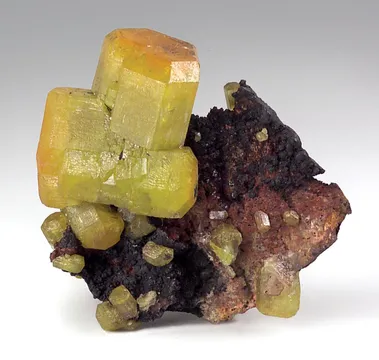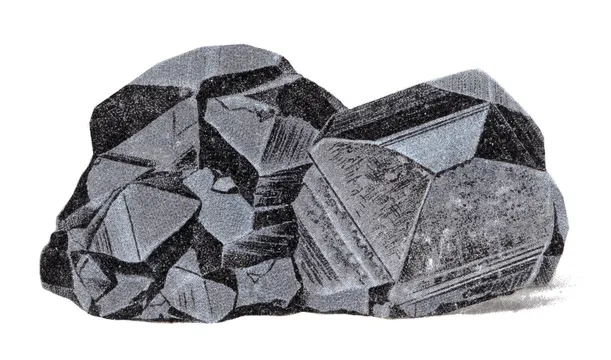
St Andreasberg Mining District, Germany - renowned for rare noble calcite and rich silver minerals; type-locality minerals include samsonite and harmotome.
Key facts
St Andreasberg is one of the great small places in mineral collecting: a compact Upper Harz silver district whose fame rests not on bulk tonnage but on the extraordinary mineralogical richness of narrow hydrothermal veins. In a district only a few kilometres across, steeply dipping calcite-dominant fissure veins cut Middle Devonian slates, marly shales, sandstones, pillow-spilitic rocks and hornfels in the contact realm of the Brocken pluton. The ore sequence is complex, with ordinary Pb-Zn-Cu sulphides overprinted and reopened by rich Ag-As-Sb-Ni-Co mineralization; that late “noble calcite” stage is the source of the specimens that made St Andreasberg a name collectors still speak with reverence.
The look of the classic pieces is unmistakable. The finest silver-mineral specimens are not showy in the modern, candy-colored sense; they are dense, dark, old-European miniatures and thumbnails in which red-black pyrargyrite, steel-gray stephanite, silvery dyscrasite and native silver sit with white calcite, gray mammillary native arsenic, löllingite, stibarsen, galena, quartz and zeolites. Then there is the softer side of the locality: pink apophyllite, harmotome, stilbite, analcime, and the celebrated St Andreasberg calcites in a remarkable range of forms. The district’s best specimens have a 19th-century museum character—heavy for their size, often matrix-rich, aesthetically restrained, and mineralogically intense.
Regional View
Country View
Mining began here in the early 16th century and continued, with long cycles of boom, exhaustion, technological renewal and decline, until the closure of the Samson Mine on 31 March 1910. The district yielded roughly 320 tonnes of silver over its mining life, but to collectors its greater yield was a suite of classic specimens and several type-locality minerals: arsenolite, breithauptite, harmotome and samsonite among the best known. Samsonite, discovered near the end of mining, is particularly emblematic—a rare Ag-Mn-Sb sulfosalt named for the Samson Mine itself.

Photo: Wikimedia Commons

Photo: Wikimedia Commons
Search for specimens: View all specimens from St Andreasberg Mining District, Germany
St Andreasberg lies in the western to middle Harz Mountains of Lower Saxony, now within the Braunlage municipal area. The silver district is structurally and mineralogically distinct within the broader Harz vein province. Rather than broad, simple lodes, St Andreasberg contains about twenty mostly narrow veins, commonly less than a metre thick, with different strike directions and steep northerly to northeasterly dips. The productive part of the system occupies a fault-bounded, horst-like wedge between the Neufanger and Edelleuter fault systems, with ore controlled by repeated fracturing, reopening and intersection of veins with cataclastic “Ruschel” zones.
The host rocks are Middle Devonian sedimentary and volcanic units—slates, marly shales, sandstones and spilitic rocks—metamorphosed or altered in places within the aureole of the Brocken granite. That host-rock contrast mattered underground. Changes from competent hornfels and calc-silicate rock into fractured shale or limestone influenced vein width, pocket formation, ore shoots and the behavior of water. The most collectible minerals came from vugs and reopened fissures where calcite, quartz and subordinate fluorite or barite were accompanied by late silver minerals and arsenides.
The mineralization is best understood as a multi-stage vein system. Early low-grade carbonate-oxide material was followed by a main Pb-Zn-Cu sulphide stage with galena, sphalerite, chalcopyrite and tetrahedrite-group minerals. A later reactivation introduced the signature St Andreasberg assemblage: native arsenic and native antimony, nickel-cobalt arsenides, dyscrasite, pyrargyrite, stephanite, polybasite, argentopyrite, proustite, pyrostilpnite and related silver minerals in calcite-rich openings. A final stage remobilized calcite and silver-bearing material into rich but irregular shoots. For collectors, the essential point is that many of the best specimens are products of repeated vein reopening rather than a single clean crystallization event.
The famous mines include Samson, Catharina Neufang, Gnade Gottes, Bergmannstrost, Abendröthe, Felicitas, Claus-Friedrich, Alter Theuerdank and St Andreaskreuz, with the Samson Mine by far the central name. The Beerberg mines formed the historically important “Auswendiger Zug,” while the mines beneath and near the town formed the “Inwendiger Zug.” Records and surviving workings show that the district was busy very early: rich ore was found around 1520, mining freedoms were granted in 1521 and repeated in 1527, and by 1537 the new mining town had grown dramatically, with more than a hundred mines active in the surrounding ground. In the 18th century a mineral depot at Clausthal helped channel Andreasberg specimens into European collections.
The Samson Mine was the great survivor. It became the principal hoisting shaft in the late mining period, ultimately reaching roughly 810 to 840 metres depth and 42 levels. It was long counted among the world’s deepest mines, and its preserved water-powered machinery is now as famous as its specimens: a 9-metre reversible waterwheel for hoisting and a 12-metre wheel associated with the 1837 man engine. The mine is preserved as a museum and World Heritage component, while nearby Roter Bär functions as an educational mine where visitors and geoscientists can examine parts of the old mining and geological setting. Collecting from underground workings is not a normal open-access activity; modern acquisition is overwhelmingly through old collections, museum deaccessions, historic dealer stock and specimens circulating with 19th- and 20th-century labels.
The best specimen finds were the pockets and ore shoots where late calcite openings intersected the silver-rich stages. Samson is especially important for pyrargyrite, dyscrasite, stephanite, native arsenic, pink apophyllite, harmotome and samsonite. Gnade Gottes produced notable silver-sulfosalt material, including associations of ankerite, pyrargyrite and stephanite. St Andreaskreuz and the Beerberg mines are important for apophyllite and broader district mineralogy. Alter Theuerdank is represented in documented material containing pyrargyrite with quartz and later supergene species. Because the last major mining ended in 1910, nearly every serious specimen from the district should be treated as an old-time piece unless supported by a well-documented later collecting context.
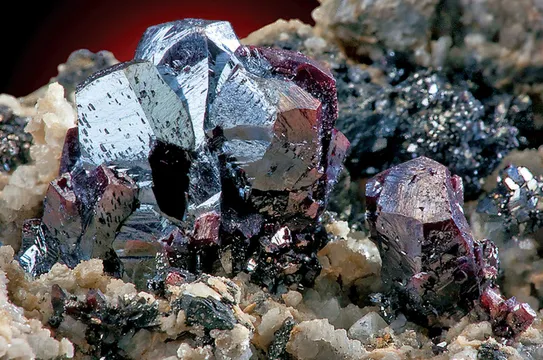
Pyrargyrite is the red-silver mineral by which St Andreasberg is most instantly recognized. The district produced dark cherry-red to nearly black submetallic crystals, commonly short prismatic to barrel-like, striated, grouped, or nestled into white calcite and quartz with native arsenic, löllingite, galena, native silver, stibarsen, dyscrasite and occasionally stephanite or miargyrite. Samson Mine specimens dominate the classic record, but pyrargyrite is documented from several nearby mines including Gnade Gottes, Catharina Neufang, Bergmannstrost, Felicitas and Alter Theuerdank. Typical crystals are only a few millimetres, and rich crusts on arsenic can be highly collectible, but the great pieces show sharp, isolated crystals around 1 to 2 cm, with exceptional examples reaching about 2.2 cm, preferably on contrasting calcite rather than embedded in massive ore. The deciding qualities are true red translucency on thin edges, intact terminations, recognizable crystal form, old labels, and associations that prove the specific Andreasberg paragenesis rather than a generic “ruby silver” look.
Dyscrasite from St Andreasberg is a connoisseur’s mineral: silvery-white to tarnished gray Ag-Sb alloy, often striated, distorted, twinned, nodular, arborescent or partly embedded in calcite and arsenic-rich matrix. Samson Mine specimens are the classic ones, commonly associated with native arsenic, löllingite, calcite, galena, pyrargyrite and other silver minerals; the mineral also appears in district records from mines such as Catharina Neufang, Claus-Friedrich and Gnade Gottes. Many pieces show only metallic patches or small crystals, while better specimens carry distinct striated crystals around 0.8 to 1.5 cm; larger apparent masses are often less aesthetic, partly enclosed, polished on one side, or valuable more as ore-mineral study pieces than display specimens. The best St Andreasberg dyscrasites balance mineralogical clarity and old-time character: visible silvery crystals, undisturbed arsenic or calcite matrix, and no confusion with native silver, allargentum or löllingite coatings.
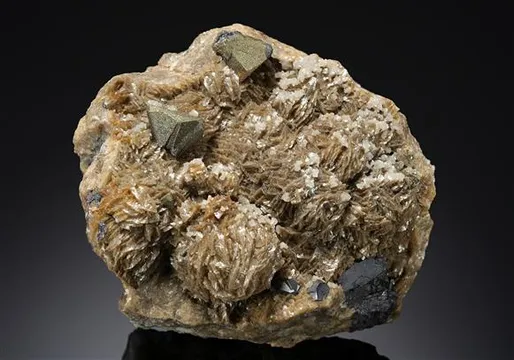
The apophyllite of St Andreasberg, now generally treated in modern nomenclature as fluorapophyllite-(K) where determined, is prized for a delicate pink color that sets it apart from the colorless zeolites of many European veins. Samson and St Andreaskreuz are the key names, with documented occurrences also tied to the Samsoner Hauptgang, Felicitaser Gang and Franz Auguster Gang. Crystals are typically small—often millimetric to about 1.2 cm on collectible miniatures—lustrous, translucent, pseudo-cubic to tabular or pyramidal, scattered on drusy calcite-rich matrix and sometimes accompanied by glittering safflorite or other arsenides in the vugs. Large Indian apophyllites overwhelm these in size, but not in historical stature: the best Andreasberg pieces are old 19th-century classics with distinct pink color, sharp bright faces, minimal cleaving and enough matrix to place them unmistakably within the silver-vein assemblage.
Stephanite is rarer as a good St Andreasberg display specimen than pyrargyrite and is most valued when the crystals are sharp enough to be read as crystals rather than black ore. It occurs as black to iron-gray metallic crystals and tabs, locally twinned or intergrown, with calcite, native arsenic, pyrargyrite, ankerite and other silver sulfosalts; Samson and Gnade Gottes are important named sources, and St Andreaskreuz is represented in collector material with calcite. Many specimens are tiny, with crystals only a few millimetres, but even 5 mm sharp twinned crystals on native arsenic and calcite are considered strong locality pieces, while well-formed thumbnails with lustrous bullet-like terminations are exceptional. Fine examples are separated from ordinary dark ore by crisp morphology, bright metallic luster, clean contrast against calcite, and a secure old locality label, since massive stephanite-rich fragments can be visually unrewarding and easy to confuse with other black silver sulphosalts.
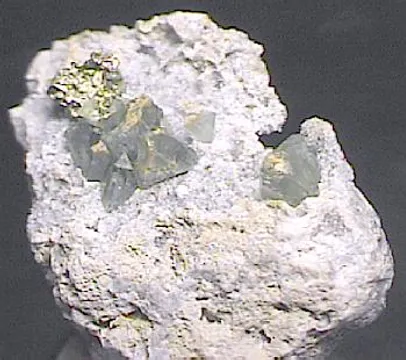
Fluorite is not the first mineral most collectors associate with St Andreasberg, but good examples are scarce, distinctive and strongly desired by locality specialists. It occurs as small cubes, cuboctahedral or octahedral crystals, generally pale green, blue-green, yellowish or colorless to translucent, usually as an accessory on calcite, quartz and galena-bearing matrix rather than as broad fluorite plates. Documented pieces include sharp blue-green octahedra around 1.3 cm perched on calcite, yellow fluorite cubes with fluorescent calcite, and apple-green fluorite accompanying slender white scalenohedral calcite; many are 19th-century or early old-collection specimens. The best pieces are not large by world fluorite standards, but they have locality importance: isolated, undamaged crystals with good color and crystal form, preferably on typical Andreasberg calcite, are far better than nondescript grains in carbonate.
Beyond these five, St Andreasberg is a type-locality and rarity district of unusual depth. Arsenolite, breithauptite, harmotome and samsonite are the classic type-locality names, while pyrostilpnite, argentopyrite, polybasite, miargyrite, proustite, native silver, native antimony, stibarsen, nickeline, rammelsbergite, safflorite, löllingite, skutterudite-group minerals, galena, sphalerite, chalcopyrite, quartz, calcite, stilbite, analcime and chlorargyrite all contribute to the locality’s collecting personality. Samsonite deserves special mention: discovered in 1908 on the Samson vein at depth and named for the mine, it is one of the great St Andreasberg micromount-to-thumbnail rarities, commonly appreciated as much for its locality identity as for its modest crystal size.
The main authenticity problem with St Andreasberg is not widespread artificial treatment; it is provenance. The mines closed in 1910, and a large proportion of attractive specimens now in circulation passed through old European collections with labels that may say only “Andreasberg,” “St. Andreasberg,” “Harz,” “Samson,” or an obsolete German mine name. A specimen with an exact mine, vein, level, old label, and plausible paragenesis is significantly more desirable than an anonymous “St Andreasberg” piece, even if the latter is attractive. Conversely, over-specific modern relabeling should be viewed cautiously unless backed by an older label, published specimen, museum record, or credible collection history.
Mislabelling among the metallic species is a real practical issue. Dyscrasite, native silver, allargentum, löllingite, stibarsen, arsenic and tarnished silver sulfosalts can be visually confusing, especially where they occur as tiny metallic crusts on gray arsenic or in calcite. Stephanite and pyrargyrite can also be misread when pyrargyrite is very dark and opaque. For expensive pieces, especially those sold as dyscrasite, samsonite, argentopyrite, pyrostilpnite or unusual arsenides, analytical confirmation or a strong published provenance is worthwhile.
Condition standards should be adjusted to old-European silver-vein material, but not abandoned. Pyrargyrite is soft and light-sensitive; sharp crystals can show edge wear, bruising, dulling or loss of red translucency after long display. Store good red silver minerals away from strong light and avoid repeated intense illumination. Stephanite is brittle and small crystals on calcite are easy to chip. Dyscrasite is sectile but specimens often suffer from tarnish, abrasion, or historic trimming. Apophyllite cleaves readily and many pink pieces have small cleaves or contacts; strong color, luster and intact corners matter. Calcite is soft and often broken on exposed terminations, though minor peripheral damage is normal on old St Andreasberg matrix specimens.
Handling precautions are sensible. Native arsenic, arsenolite, arsenides and antimony minerals occur in the district; avoid dust, do not trim or saw arsenic-rich material without proper controls, wash hands after handling, and keep friable arsenic-bearing specimens away from children and food areas. Some calcites show pink fluorescence and some fluorites show blue to purple fluorescence, but fluorescence should be treated as a bonus rather than a primary identifying feature.
Market availability is limited and episodic. Common calcite and modest old matrix pieces appear regularly, but fine pyrargyrite, sharp stephanite, attractive dyscrasite, pink apophyllite with color, harmotome with provenance, and any well-crystallized type-locality rarity are increasingly collection-to-collection specimens. The strongest St Andreasberg pieces tend to sell on a combination of aesthetics, old label, exact mine attribution, and species importance; a modest but documented Samson thumbnail can be more desirable than a larger, vague district specimen.
St Andreasberg began with a rush. Rich silver ore was found at the Beerberg around 1520, and the Hohnstein counts responded in 1521 with a Bergfreiheit, a mining freedom intended to draw skilled miners into what was still a thinly settled mountain place. The strategy worked. Within a few years the town had become a free mining community of houses, shafts, ore dressers, smelters, officials and fortune-seekers. By 1537, contemporary accounts record 116 mines in operation, and the new settlement already had civic officers at work. In a place where today the landscape can seem quiet and wooded, the early district was a scatter of shafts and water channels, hammering and hauling, with silver ore determining the pace of life.
The 18th century brought a second great pulse of production. The Rehberger Graben and Oderteich water system turned rainfall and mountain streams into industrial power, and in 1724 the district produced nearly 2,000 kg of silver while paying out about 30,000 taler in profit. Around that peak, about 480 miners and smelter workers and 200 Pochkinder—children employed in ore dressing—were part of the St Andreasberg mining economy. Those numbers give the old specimens their human scale: the pyrargyrite crystal in a cabinet today was once a small part of a hard-running mountain industry, washed, sorted and valued by hands that worked for ore, not for display.
On 12 December 1777, Johann Wolfgang von Goethe entered the Samson Mine during his first Harz journey. His diary note is short and unforgettable: “Entered Samson in the evening, came out by God’s grace.” The mine had already become more than a workplace; it was a descent into a celebrated underworld, a place where visitors could feel the depth, danger and mechanical ambition of Harz mining. Goethe’s reaction—uneasy, almost relieved—still rings true for anyone who has stood above an old shaft and imagined hundreds of metres of ladders, wet timber, dark levels and moving waterwheels below.
Technology changed the bodily experience of the mine. The Samson man engine installed in 1837 was built to spare miners the exhausting climb through deep workings, using a moving system of platforms driven originally by water power. Even today, the preserved machinery is central to the museum’s identity. The 9-metre reversible waterwheel, the 12-metre wheel and the man engine make visible what mineral specimens alone cannot: the engineering needed to reach the veins that produced them. In the 19th century, those mechanisms were not picturesque heritage objects; they were the difference between beginning a shift already exhausted and arriving underground with strength left for the face.
The end came with painful clarity. In 1889 mechanical drilling was introduced and raw ore production more than doubled, and in 1888 new rich ore shoots briefly raised hopes. But deeper mining, declining ore quality and falling silver prices could not be overcome. By 1905 the Samson produced only 364 kg of silver, and by 1909 only 90 kg. On 31 March 1910, the last 80 miners came out of Samson for the final time. Two years later the silver smelter was shut down as well. From then on, St Andreasberg’s mineral specimens were no longer a by-product of active silver mining; they became historical objects.
One of the district’s last mineralogical gifts arrived at the very edge of closure. In 1908, Berginspektor H. Werner found the mineral later named samsonite on the Samson vein about 550 metres below the surface. It is a small, dark, rare silver-manganese-antimony sulfosalt, not a mineral that announces itself across a room, yet it embodies the locality perfectly: chemically unusual, born in a complicated silver vein, found deep underground, and tied forever to the mine whose final years were already numbered.