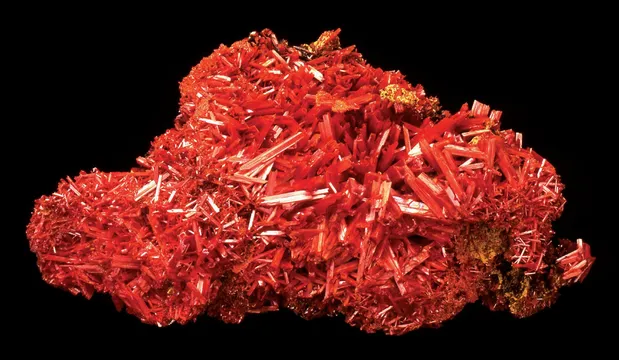
A collector's guide to South Australia, Australia: its geology, mining history and notable minerals, illustrated with the 164 specimens documented from this locality on EarthWonders.
Key facts
South Australia is best understood by collectors not as a single mine, but as a state-scale mineral province whose specimens come from several sharply different geological worlds. In the north and west, Cretaceous sedimentary rocks of the Great Artesian Basin and older Paleozoic sandstones around Mintabie produced the opal that made Coober Pedy, Andamooka, and Mintabie household names among gem collectors. In the Mount Lofty and Flinders Ranges, Proterozoic rocks of the Adelaide Fold Belt host the classic copper districts of Burra, Kapunda, Moonta, Wallaroo, Blinman, and Yudnamutana, where oxidation transformed copper sulfides into azurite, malachite, atacamite, chrysocolla, cuprite, and native copper. Around the Stuart Shelf and Spencer Gulf, sediment-hosted copper systems such as Mount Gunson added distinctive green atacamite and gypsum associations. The state also has serious micromount credentials: phosphate localities such as Reaphook Hill, Moculta, and Tom’s Quarry have yielded uncommon species and type minerals prized far beyond Australia.
For the cabinet collector, South Australia’s most recognizable look is contrast: milky to translucent opal with red, green, blue, and violet fire in pale claystone; botryoidal and pseudomorphic malachite with flashes of royal-blue azurite from Burra and the Flinders Ranges; orange to honey selenite sprays from salt-lake settings; and colorless, white, cream, or pale phosphate microcrystals from Reaphook Hill and the Barossa–Kapunda phosphate quarries. The best pieces are not merely “Australian” in a general sense; they are locality-specific. A Coober Pedy opalised shell, a Burra malachite-after-azurite plate, a Mount Gunson atacamite, or a Reaphook Hill scholzite cluster each tells a different geological story.
Regional View
Country View
South Australia’s opal fields owe their specimens to silica moving through weathered sedimentary rocks and settling in cracks, joints, bedding-related “levels,” and fossil cavities. Coober Pedy is especially noted for light opal and crystal opal, including opal replacing shells and rarer vertebrate remains in the Bulldog Shale. Andamooka is famous for crystal opal and for matrix opal, where precious opal occurs as innumerable tiny patches through porous host rock. Mintabie, unlike the other major South Australian opal fields, produced from Paleozoic rocks and became renowned for durable crystal and dark-base material.
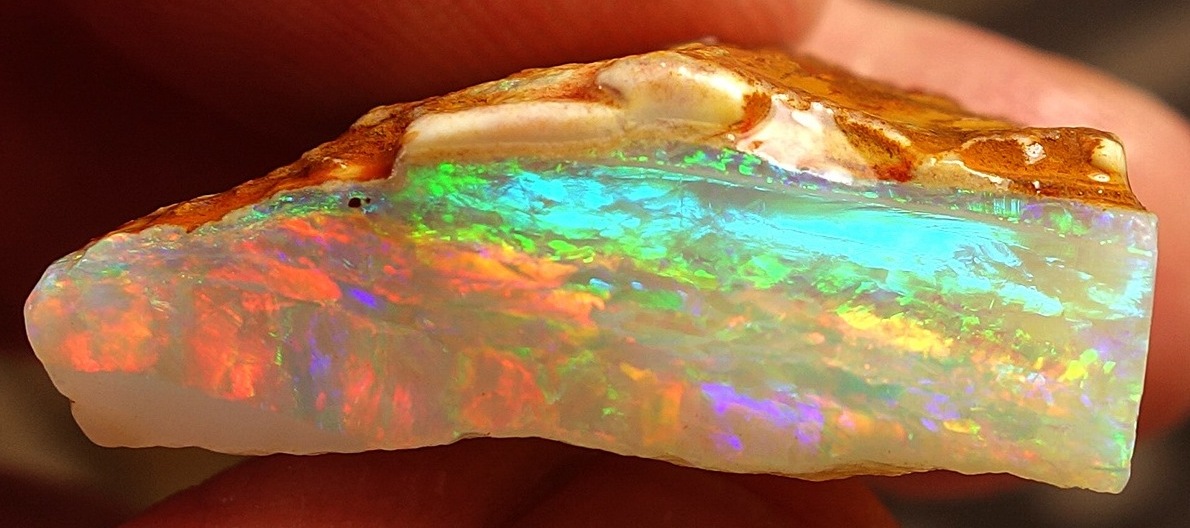
Photo:
The state’s copper specimens are just as historically important. Burra’s “Monster Mine” was one of the great 19th-century copper deposits, and its specimens still anchor Australian suites in museums and private collections. Fine Burra material may show silky or botryoidal malachite, malachite pseudomorphs after azurite, blue azurite rosettes and nodules, quartz coatings, calcite, chrysocolla, cuprite, and copper oxides. Sir Dominick in the Yudnamutana district and the Moonta–Wallaroo–Kadina mines add further copper-carbonate and copper-chloride character, while Mount Gunson is the collector’s reference point for many South Australian atacamites.

Photo: Wikimedia Commons
South Australia also rewards collectors who look beyond bright cabinet pieces. Lake and lagoon evaporites produce gypsum and selenite forms from clear blades to orange sprays; the Flinders Ranges barite deposits around Oraparinna and Dunbar have been commercially important; and Reaphook Hill is one of Australia’s great small phosphate localities, known for scholzite and for rarer species such as hillite and reaphookhillite.

Photo: Wikimedia Commons
Search for specimens: View all specimens from South Australia, Australia
The EarthWonders locality “South Australia, Australia” covers a state rather than one mine, so the deposit types are diverse. The most collector-visible are sedimentary precious opal fields, oxidised copper deposits, evaporitic gypsum lakes, hydrothermal and fracture-fill barite veins, and unusual secondary phosphate systems. Coober Pedy and Andamooka lie in the great opal belt associated with Cretaceous sedimentary rocks of inland Australia. At Coober Pedy, opal occurs mainly as seams, veins, and fossil replacements in weathered Bulldog Shale; productive zones are commonly tied to transitions between lighter weathered claystone and darker, denser mudstone. Andamooka’s field is shallower in places and famous for crystal, jelly, white, black, painted-lady, and matrix opal. Mintabie is geologically distinct because its opal occurs in older Paleozoic rocks, chiefly kaolinitic sandstone of the Mintabie beds rather than the more typical Cretaceous host.
The old copper mines belong mostly to the Adelaide Fold Belt and related Proterozoic successions. Burra is the key specimen locality. Its copper ore was worked from supergene zones rich in malachite and azurite, with deeper and associated mineralization including chalcocite, chalcopyrite, bornite, cuprite, native copper, chrysocolla, libethenite, pseudomalachite, quartz, carbonates, and iron oxides. The main historical lodes included mineralised zones controlled by brecciation, faulting, and carbonate host rocks, and the specimens for which Burra is famous came mainly from oxidised ground and later from material exposed or disturbed during renewed open-cut work. The Moonta–Wallaroo–Kadina field on the Yorke Peninsula was another major copper province, yielding atacamite, malachite, azurite, native copper, and associated sulfides. In the northern Flinders Ranges, Sir Dominick and other Yudnamutana district mines produced attractive azurite and malachite pseudomorphs.
Mount Gunson, near Pernatty Lagoon on the Stuart Shelf, is a different copper environment. Its mineralization is sediment-hosted and stratabound near the Marinoan disconformity at the base of the Whyalla Sandstone. The Mount Gunson district is particularly important to collectors because atacamite is not just an accessory name on a mineral list there; it is a prominent copper mineral in the oxidised ore, accompanied by malachite, azurite, chrysocolla, bornite, chalcocite, manganese oxides, gypsum, and in some specimen material white clay minerals such as dickite. Some of the best Mount Gunson collector pieces show bright green, platy to prismatic atacamite contrasting with pale matrix or gypsum.
South Australia’s gypsum and selenite localities are largely tied to arid-zone evaporite basins. Lake MacDonnell on the far west coast is a major gypsum deposit, with selenite and rock gypsum formed from gypsum-saturated brines. Other salt-lake and lagoon settings, including the Lake Torrens–Andamooka Ranges area, Lake Gilles, Pernatty Lagoon, and Blanchetown district occurrences, have produced selenite blades, sprays, twinned crystals, and sand-included forms. These specimens tend to be far more delicate than the copper or opal material; good pieces are undamaged, lustrous, translucent to transparent where appropriate, and clearly attributable to a known lake or lagoon locality.
Barite is most important in the Flinders and Mount Lofty Ranges, where many deposits are fracture-fill veins in Adelaidean sedimentary and metasedimentary rocks. The Oraparinna Diapir area, including Oraparinna and Dunbar, is the standout South Australian barite district, with steeply dipping veins commonly one to several metres wide. Most Oraparinna barite is industrial material, but collectors seek well-formed white, cream, or honey barite crystals and plates, especially those with calcite, quartz, goethite, or minor copper staining.
Gold occurs in both alluvial and reef settings. The Echunga field in the Adelaide Hills was South Australia’s most productive historical goldfield, with Chapmans Gully, Donkey Gully, Jupiter Creek, and related diggings worked from the 1850s onward. Barossa, Teetulpa, Waukaringa, Wadnaminga, Tarcoola, and Mongolata add further historical goldfields, while Olympic Dam, Prominent Hill, Carrapateena, Challenger, Kanmantoo, and other modern operations place the state’s gold story in a larger copper–uranium–iron oxide and orogenic framework. Specimen gold from South Australia is much less abundant on the collector market than opal or copper minerals, and good labelled alluvial nuggets or quartz-associated pieces are desirable when provenance is solid.
Collecting access varies widely and should never be assumed from an old label. Opal mining in South Australia is regulated through proclaimed precious stones fields and permits; active claims, dugouts, shafts, and machinery areas must be respected. Andamooka has visitor fossicking information and tailings areas, but the rules differ from working claims. The Department for Energy and Mining identifies Jupiter Creek near Echunga as a permitted fossicking area, while Chapel Hill is closed to public access for safety reasons. Many historic copper mines are heritage places, private land, active leases, pastoral leases, national parks, conservation reserves, or dangerous abandoned workings. Burra’s heritage precinct is for viewing history, not casual specimen extraction. Serious field collectors should secure permission from landholders and leaseholders, check current South Australian mining and fossicking rules, and avoid any open shaft, unstable mullock, or undermined ground.
South Australian opal is dominated in the collector trade by Coober Pedy, Andamooka, and Mintabie material, each with a different look: Coober Pedy commonly yields light, milky to translucent seam and crystal opal, including opalised shells and fossil cavities in Cretaceous Bulldog Shale; Andamooka is prized for crystal, jelly, white, black, painted-lady, and especially matrix opal in a porous brown host that is often treated to darken the body color; Mintabie is remembered for hard crystal and dark-base opal from Paleozoic kaolinitic sandstone. Good specimen-grade South Australian opal shows strong directional or broad play-of-colour, clean fire through appreciable thickness, and clear locality character; ordinary pieces may be thin potch-and-colour seams, low-brightness matrix, unstable or cracked fragments, or attractive lapidary rough without much specimen presence.
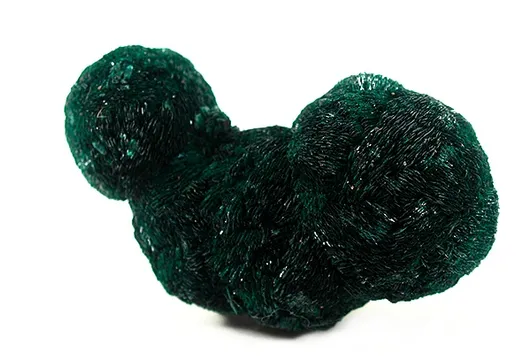
Malachite from South Australia is best represented by Burra Burra Mine material and by the broader Flinders and Mount Lofty copper districts, where oxidation of copper ores produced botryoidal crusts, silky fibrous coatings, spherical aggregates, banded masses, and sharp pseudomorphs after azurite. Burra specimens may carry malachite on dolomite, claystone, quartz, chrysocolla, calcite, azurite, cuprite, or manganese oxides, and the most desirable pieces retain crisp azurite forms while being fully or partly replaced by deep green malachite, sometimes with fresh blue azurite still present. Sir Dominick specimens from the Yudnamutana district are also respected for well-shaped malachite-after-azurite crystals. The premium is on form and contrast: lustrous botryoids, undamaged pseudocrystals, sharp sprays, and pieces with old labels far outrank massive green ore or crumbly gossan.
South Australian azurite is inseparable from the great oxidised copper deposits, especially Burra, where spherical aggregates, rosettes of lustrous platy crystals, nodules, tabular microcrystals, and azurite associated with malachite, chrysocolla, quartz, dolomite, calcite, and manganese oxides have long been known. Burra azurite nodules can show surfaces made of tiny bladed terminations, and some cavities carry brilliant tabular or acicular crystals; pseudomorph stories are part of the appeal, with azurite replaced by malachite, chrysocolla, or goethite and, more rarely, azurite reported after libethenite. Sir Dominick is another South Australian locality known for azurite and malachite pseudomorphs after azurite. Top pieces have saturated royal-blue colour, intact rosette or nodule form, aesthetic green malachite contrast, and provenance to a specific mine rather than only “South Australia.”
Gypsum in South Australia is most distinctive from evaporitic lake and lagoon environments such as Lake MacDonnell, Lake Gilles, Lake Torrens–Andamooka Ranges, Pernatty Lagoon, and Blanchetown-type deposits, where arid brines deposited selenite, rock gypsum, domal aggregates, blades, sprays, and sand-included forms. Lake MacDonnell is a major industrial gypsum locality, while collector specimens from the Andamooka Ranges–Lake Torrens area and Pernatty Lagoon may show honey-orange sprays, transparent blades, twinned crystals, or sculptural clusters. Good gypsum specimens from the state combine translucency, lustre, intact terminations, and a stable displayable arrangement; ordinary pieces are bruised, cleaved, dehydrated-looking, or so coated in mud and sand that the crystal form is lost.
Atacamite is one of South Australia’s signature copper minerals, with important specimen occurrences in the Moonta–Wallaroo–Kadina copper field and especially the Mount Gunson copper mines near Pernatty Lagoon. At Mount Gunson, atacamite is part of oxidised sediment-hosted copper mineralization in and around Whyalla Sandstone, with malachite, azurite, chrysocolla, bornite, chalcocite, manganese oxides, gypsum, and clay minerals as common contextual associates. Specimens may show deep emerald to grass-green platy, bladed, or prismatic crystals on pale matrix, sometimes with gypsum or malachite; the most desirable pieces are bright, visibly crystallised, and not merely green crusts. South Australian atacamite is also prone to confusion with malachite or other green copper minerals, so well-labelled old material or analytically confirmed pieces carry a premium.
Quartz is widespread across South Australia, but collector pieces are most meaningful when tied to specific settings: rock crystal from quarries and veins in the Mount Lofty Ranges, smoky quartz and citrine reported from the Echunga goldfield and Mount Jagged area, amethyst from Eyre Peninsula occurrences such as the Kimba district and copper-field localities such as Poona, drusy quartz casts and coatings associated with Burra copper minerals, and quartz veins linked to reef gold in the Adelaide Hills, Barossa, and Tarcoola districts. South Australian quartz rarely competes with the great global alpine or pegmatite localities, so quality depends on locality interest, sharp undamaged faces, attractive inclusions or associations, and historic context. Quartz that carries malachite, azurite, gold, calcite, or old South Australian mine labels is generally more desirable than isolated, water-worn, or unprovenanced pieces.
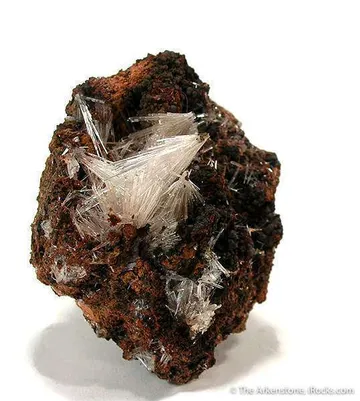
Scholzite from South Australia is above all a Reaphook Hill mineral, from a zinc- and phosphorus-rich deposit in diapiric breccias within late Proterozoic sedimentary rocks on Martins Well Station in the Flinders Ranges. The locality was worked in the 1970s primarily for specimen material, and its scholzite occurs with a remarkable secondary phosphate assemblage including parahopeite, tarbuttite, collinsite-like material, hillite, switzerite, chalcophanite, and reaphookhillite. Collector specimens tend to be small cabinet, thumbnail, or micromount pieces, with colorless to white crystals, sprays, crusts, or tabular aggregates on dark manganese oxide or gossanous matrix. The best examples are bright, clean, and visibly crystallised under magnification, with undamaged sprays and associated rare phosphates; massive white crusts without crystal definition are far less compelling.
South Australian barite is most strongly associated with the Flinders Ranges, especially the Oraparinna Diapir and nearby Dunbar deposits, where barite veins fill fractures in Adelaidean Wilpena Group sediments and related structures. Most production has been industrial, particularly oil-drilling grade barite, but collector material includes white to cream or pale honey barite crystals and cleavages, commonly with calcite, quartz, goethite, or minor copper minerals. The best South Australian barite specimens show clear crystal form, bright lustre, and provenance to Oraparinna, Dunbar, Moralana, Noarlunga, or another named deposit; ordinary material is heavy white vein barite with little form, useful as a locality representative but not a display specimen.
Selenite, the transparent to translucent crystalline variety of gypsum, is a familiar South Australian evaporite specimen from salt lakes, lagoons, and arid basin margins including the Andamooka Ranges–Lake Torrens area, Lake Gilles, Lake MacDonnell, and Pernatty Lagoon near Mount Gunson. Habits range from clear blades and twinned plates to orange sprays and sand-included clusters, with some Mount Gunson–Pernatty material showing green copper-mineral associations or inclusions. Fine pieces are judged by transparency, clean terminations, sculptural form, and freedom from bruising along cleavage faces. Because selenite is soft, cleaves readily, and can be dulled by abrasion or moisture, a pristine South Australian specimen with original locality information is much scarcer than the abundance of gypsum deposits might suggest.
Gold specimens from South Australia are historically important but comparatively uncommon in the mineral market, with the main collector context coming from Echunga, Jupiter Creek, Barossa, Teetulpa, Waukaringa, Tarcoola, Wadnaminga, Mongolata, and by-product gold from copper districts such as Moonta–Wallaroo and Kanmantoo. Echunga produced alluvial gold from Tertiary and Quaternary fluvial sediments, with minor reef gold in quartz veins of the underlying Adelaidean rocks; Tarcoola is the state’s classic reef-gold field; Teetulpa is remembered for a rapid alluvial rush and nuggety gold. Good South Australian gold pieces are water-worn nuggets, crystalline or hackly fragments, or quartz-associated specimens with firm provenance; small flakes in vials, detector finds without locality, and modern bullion-like pieces have much less mineral-specimen interest.
Beyond these species, South Australia has an unusually rich roster of documented rarities. Reaphook Hill is a type locality for hillite and reaphookhillite and a classic Australian source of scholzite, parahopeite, tarbuttite, switzerite, and other secondary phosphates. Moculta Phosphate Quarry is the type locality for aldermanite, while Tom’s Phosphate Quarry near Kapunda is the type and only locality for peisleyite. Iron Monarch is the type locality for gatehouseite, and Paratoo copper mine is the type locality for paratooite-(La), a rare lanthanum-bearing copper carbonate. Add the copper, uranium, phosphate, manganese, barite, gypsum, and opal suites, and South Australia becomes one of the best states in Australia for collectors who value both display minerals and analytical micromounts.
South Australian labels deserve close attention because the state name is often used loosely. “South Australia opal” may mean Coober Pedy, Andamooka, Mintabie, Lambina, or another field, and each has a different value profile. For opal, ask whether the piece is natural, stabilised, assembled as a doublet or triplet, smoked, sugar-treated, dyed, oiled, or otherwise enhanced. Andamooka matrix is commonly carbon-darkened to heighten play-of-colour against a black or brown background; this is a long-established treatment but should be disclosed. Coober Pedy light opal is less often treated in the same way, but it may be fashioned into doublets or triplets, and thin seams can be backed to intensify apparent colour. Crazing, surface-reaching fractures, chalkiness, potch-heavy zones, and weak directional colour are the main condition and quality issues.
Malachite, azurite, and atacamite from South Australia are commonly mislabelled between famous copper localities. Burra, Kapunda, Moonta, Wallaroo, Sir Dominick, and Mount Gunson can all yield blue-green copper specimens, and old dealer labels sometimes collapse them into “Burra” or simply “S. Australia.” True Burra specimens with old labels, especially malachite after azurite, azurite rosettes, or pieces associated with quartz, chrysocolla, or dolomite, are more desirable than anonymous oxidised copper ore. Azurite may alter to malachite, and fragile rosettes shed tiny crystals if handled roughly. Atacamite should be kept dry and should not be cleaned aggressively; it can resemble other green copper species, so crystallised examples from Mount Gunson or the Moonta–Wallaroo district benefit from analytical confirmation if the specimen is valuable.
Gypsum and selenite specimens are soft, easily cleaved, and vulnerable to abrasion. They should be stored away from harder minerals, wrapped so points do not rub, and kept out of damp environments. Orange sprays from the Andamooka Ranges–Lake Torrens area or clear Lake Gilles-type blades often lose much of their appeal after even small knocks. Barite is far heavier and more robust, but its perfect cleavage means crystal edges can chip; Oraparinna and Dunbar material is often industrial vein barite unless crystal form is obvious.
Scholzite and associated Reaphook Hill phosphates are specialist minerals. Many are small, pale, and visually subtle, so labels, magnification, and associations matter. Reaphook Hill material should not be “improved” by washing without caution, because delicate phosphate sprays and clay-rich matrix can be damaged. Pieces with hillite, reaphookhillite, parahopeite, or well-crystallised scholzite are best treated as micromount-grade specimens even when the hand specimen looks modest.
Gold from South Australia is less common in specimen channels than Western Australian gold, and provenance is therefore central. Echunga, Teetulpa, Tarcoola, Barossa, and Waukaringa labels are worth preserving. Detector nuggets sold only as “South Australia” may be genuine but have weaker locality value. For all field-collected material, remember that many historic sites are protected, unsafe, private, under lease, or within reserves; modern market availability is strongest for opal, moderate for Burra copper minerals and Mount Gunson atacamite, occasional for selenite and barite, and comparatively limited for well-provenanced gold and rare phosphate species.
The Coober Pedy story begins in a landscape that had once been sea. About 110 million years ago, the Eromanga Sea covered what is now inland South Australia; much later, silica filled cracks, shells, and fossil cavities as the country dried. In 1915, Will Hutchison, travelling with a gold-prospecting party led by his father James Hutchison, found opal floaters. The find opened the Stuart Range field, and by 1916 the diggings were established. Jim and Dick O’Neill came from Tarcoola, found payable opal, and helped create the first dugout with Fred Blakeley—the practical beginning of a town that would become synonymous with living underground.
The field’s early years read like a frontier ledger of water, transport, and endurance. In 1919, rain triggered an opal rush; returned soldiers, Broken Hill mine strikers, and railway workers arrived by camel and horse after the east–west railway work ended. Jack Norton and Arch Burnett brought the first car to the field, won the mail-delivery contract, and began carrying passengers and freight from William Creek. The town did not even have its famous name until a 1920 progress committee meeting, when a miner from White Cliffs suggested “Coober Pedy” so the field could obtain a post office.
Water shaped Coober Pedy as much as opal did. In 1921–22, residents built a 500,000-gallon underground water tank, and the leftover cement was used to make a cricket pitch. Good rain finally filled the tank in 1926. The Depression and the Second World War nearly emptied the field of commercial purpose—opal buyers disappeared and the market for luxury stones collapsed—but the town revived after 1946, when Tottie Bryant found shallow opal at the 8 Mile field. That same postwar period produced one of the great South Australian opals, the Fire of Australia, found by Walter Bartram at 8 Mile.
Andamooka’s origin has its own compressed drama. In 1930, boundary riders Sam Brookes and Roy Shepperd discovered opal at what became Treloars Hill, on Andamooka Station. The field developed without the water available in some other mining districts, so miners relied on dry noodling methods, using mesh screens and springs to separate fines and inspect stones by eye. The locality became famous not just for seam opal but for matrix—plain-looking brown host rock that can hide countless tiny flashes of precious opal. The best Andamooka matrix can look sleepy in the rough and then flare with colour after cutting and darkening, which is why provenance and treatment disclosure matter so much.
Burra’s story belongs to copper rather than opal, and it changed the economy of colonial South Australia. Copper ore was discovered near Burra Burra Creek in June 1845, and by 1850 Burra had become Australia’s largest inland settlement. The mine was so rich and so early that it became known as the “Monster Mine,” and for about 15 years it was the largest mine in Australia. Cornish miners, engineers, and tradespeople brought their techniques and domestic architecture to the town, leaving engine houses, cottages, and mine structures that still define Burra’s heritage landscape. The specimens that survive from that history—blue azurite, green malachite, cuprite, and pseudomorphic copper carbonates—are not decorative afterthoughts; they are crystallised fragments of the mine that helped rescue the young colony’s finances.
Teetulpa shows how quickly a South Australian mineral field could flare and vanish. In October 1886, Brady and Smith discovered gold-bearing alluvial deposits there, and within two months around 5,000 miners were on the field. Tents, picks, shovels, rugs, and moleskins poured toward the diggings, and for a brief period the arid country north of Yunta carried the full apparatus of a rush: shops, a bank, a hotel, a hospital, a church, and even a newspaper. By 1889, the field was virtually deserted. The gold had been real, but the rush was short-lived, leaving behind nuggets, workings, and one of the most vivid chapters in South Australia’s mineral history.