A collector's guide to Silverton, USA: its geology, mining history and notable minerals, illustrated with the 141 specimens documented from this locality on EarthWonders.
Key facts
Silverton sits in one of the most mineralogically consequential pieces of the San Juan Mountains: a high, glacier-cut volcanic country where nested Oligocene calderas, resurgent doming, ring-fracture systems, and the Eureka graben gave ore fluids a complicated plumbing system. For collectors, the name “Silverton” is not merely a town label. It is a shorthand for the Animas–Eureka–South Silverton vein camps around Bakers Park, Gladstone, Eureka Gulch, Cement Creek, Anvil Mountain, Kendall Mountain, Sultan Mountain, and the American Tunnel–Sunnyside complex. The district’s collector identity rests on epithermal precious- and base-metal fissure veins carrying quartz, sphalerite, galena, pyrite, chalcopyrite, tetrahedrite-tennantite, manganese minerals, fluorite, calcite, and a long tail of sulfosalts and alteration minerals.
The best-known cabinet pieces are the old American Tunnel and Sunnyside rhodochrosites: pale to lively pink rhombohedra, flattened rhombs, and occasional rosette-like aggregates set on snowy quartz druse, with colorless to mint-green or pale blue-green fluorite and small brassy sulfides. They do not usually have the saturated raspberry transparency of Alma’s Sweet Home Mine, but they have an unmistakable San Juan character: airy, pastel, quartz-rich, and often more architectural than gemmy. A good Silverton rhodochrosite specimen is judged not only by color, but by the way the pink carbonate stands proud from the white quartz, the presence of undamaged fluorite, and the old-label association with American Tunnel, Sunnyside, Gladstone, or simply “Silverton.”
Regional View
Country View
Silverton also matters because it anchors one of Colorado’s classic type-mineral stories. The Zuni Mine on Anvil Mountain, roughly three miles northwest of town and near timberline, furnished zunyite, Al13Si5O20(OH,F)18Cl, a rare chlorinated aluminosilicate first described in the 1880s. Its tiny glassy tetrahedra in altered, kaolinite-rich, sulfide-bearing rock are not showy in the same way as rhodochrosite, but for systematic collectors they give Silverton a status few mining districts can claim: a famous specimen district that is also a type-locality district.

Photo: Wikimedia Commons

Photo: Wikimedia Commons
Search for specimens: View all specimens from Silverton, USA
Silverton lies in Bakers Park in the upper Animas River country of San Juan County, Colorado. The productive mines around it occupy a dissected volcanic field built of thick Tertiary lavas, tuffs, breccias, and intrusions resting on older sedimentary and crystalline rocks. The ore systems most relevant to collectors are hydrothermal fissure veins and related breccia and replacement bodies developed along caldera-related faults, radial fractures, and graben structures. In the South Silverton area, veins cut volcanic rocks near the southern rim of the Silverton caldera; in the Eureka and Gladstone area, the Sunnyside system exploited structures of the Eureka graben, a collapse feature linking the San Juan, Silverton, and Lake City caldera complex.
The district’s ore bodies were not uniform. Ransome and later USGS workers recognized lodes, stocklike or pipe-like masses, and replacement deposits, with important mineralogical zoning across the San Juan–Silverton volcanic center. Around South Silverton, many veins carried lead, zinc, copper, silver, and gold values in quartz-rich gangue. At Sunnyside, the vein assemblage was unusually manganese-rich: quartz was the principal gangue, with sphalerite, galena, pyroxmangite, pyrite, rhodochrosite, chalcopyrite, tetrahedrite-tennantite, fluorite, calcite, and minor minerals distributed through multistage fissure fillings. The collector material came from open cavities and late-stage crystallization within these veins rather than from the massive ore alone.
The mining history is as important as the mineralogy. Prospectors entered the San Juan country before permanent development was politically possible, but the main wave of location and development followed the opening of the region in the 1870s. Reuben J. McNutt staked the Sunnyside claim in 1873. Early high-grade gold made the mine important, and the development of mills, tramways, and narrow-gauge rail access turned the upper Animas into one of Colorado’s great hard-rock mining landscapes. Sunnyside was worked by a succession of owners and operators, including the Sunnyside Mining and Milling Company, Standard Metals, and Sunnyside Gold Corporation. The American Tunnel, developed from the Gladstone side, later became the deep access, drainage, and ore-handling route that gave the old Sunnyside workings a new life in the twentieth century.
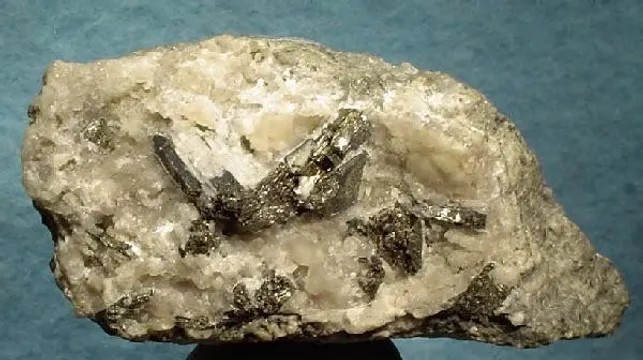
Production in the broader Silverton region included gold, silver, lead, zinc, copper, and associated byproduct metals. The South Silverton mining area alone was credited by USGS work with more than $61 million in gross value from gold, silver, lead, copper, and zinc ores, while Sunnyside became one of the district’s great producers, ultimately credited in later technical summaries with more than seven million short tons of ore over its long life. Mayflower Mill, Shenandoah-Dives, Gold King, Sunnyside, and the American Tunnel all belong to the historical fabric surrounding the locality, but their specimen roles differ: American Tunnel–Sunnyside is the key name for rhodochrosite-fluorite-quartz combinations; Zuni is the key name for zunyite; Kendall Mountain, Sultan Mountain, Cement Creek, and nearby mines add huebnerite, sulfides, and classic San Juan vein species.
Today, serious collectors should treat Silverton as a closed or access-sensitive classic locality, not as an open dig. Much of the important ground consists of patented claims, private holdings, reclaimed or hazardous mine sites, or areas affected by the Bonita Peak Mining District Superfund cleanup. Historic workings are unstable, often water-impacted, and commonly contaminated by metal-rich mine waste. Loose float on public land in the region may be tempting, but legal access, claim status, private property boundaries, seasonal road conditions, and environmental restrictions must be checked before any collecting. The finest Silverton specimens on the market are overwhelmingly old stock from active mining, miner recoveries, old collections, or dealer inventories dispersed decades after the pockets were mined.
Specimen pockets were episodic rather than constant. The famous rhodochrosite material emerged during active mining in the American Tunnel–Sunnyside system, particularly from upper vein zones and vugs lined with milky quartz, fluorite, and pink manganese carbonate. Labels may say “Sunnyside Mine,” “American Tunnel,” “Gladstone,” “Silverton,” or simply “San Juan County,” and those labels are often historically meaningful rather than sloppy: the workings, portals, mills, and towns were connected in ways that make a single specimen’s precise underground origin difficult to reconstruct unless accompanied by a miner’s note or old collection record.
Silverton rhodochrosite is the district’s signature collector mineral, especially from the American Tunnel–Sunnyside system near Gladstone, where late-stage cavities yielded pink to strawberry-pink rhombohedra, flattened rhombs, scalenohedral forms, rosette-like aggregates, and locally warped or saddle-shaped crystals on drusy quartz. Typical crystals are small to thumbnail scale, but documented and traded examples include rhombs around 1.5 cm and older accounts describe crystals approaching two inches on edge; the finest pieces show isolated, lustrous pink crystals standing cleanly on white quartz with colorless, pale green, or pale blue-green fluorite and minor pyrite, chalcopyrite, galena, sphalerite, or tetrahedrite-tennantite. What separates a good Silverton rhodochrosite from an ordinary one is not just intensity of color—many are pastel—but crisp undamaged rhomb faces, contrast against quartz, a balanced fluorite association, and a credible old locality chain distinguishing American Tunnel–Sunnyside material from the very different Sweet Home Mine style.
Quartz is the backbone of Silverton specimen aesthetics as well as the principal gangue in many of the district’s veins; at Sunnyside it made up the largest share of the vein filling, and on specimens it appears as sparkling white to colorless druse, milky crusts, small terminated prisms, and locally clean rock-crystal sprays from mines around the Animas district. The best collector quartz from Silverton is seldom a solitary quartz specimen in the alpine-cleft sense; it is the stage on which the district’s more diagnostic minerals sit—pink rhodochrosite, pale fluorite, pyrite, sphalerite, galena, chalcopyrite, and manganese silicates. Good pieces have bright, undamaged druse, open negative space around the associated species, and fresh white contrast; ordinary pieces are massive vein quartz with sulfide staining or incomplete crystal coverage.
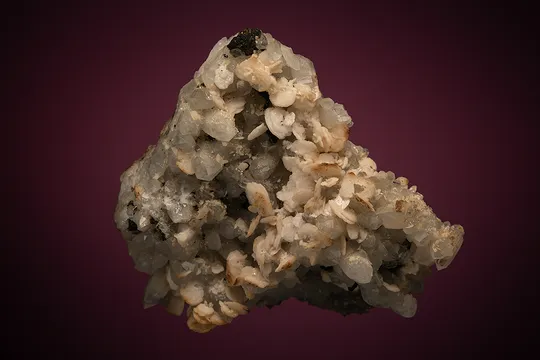
Silverton fluorite ranges from nearly colorless through pale blue-green and mint-green to green with purple highlights, and it is prized most when it occurs as glassy cubes, stepped-growth crystals, octahedral or complex modified forms on quartz and rhodochrosite. The classic association is American Tunnel–Sunnyside rhodochrosite with fluorite and quartz, where translucent fluorite may sit beside or partly coat pink rhodochrosite; district fluorites are also documented as standalone clusters, including pastel-green specimens noted for purple fluorescence. Fine Silverton fluorite is judged by transparency, undamaged edges, distinctive pale color, and placement with rhodochrosite; colorless broken cubes scattered through vein quartz are much less desirable unless the association and provenance are strong.
Sphalerite was an important ore mineral in Silverton’s lead-zinc-silver-gold veins, particularly at Sunnyside where it formed a major component of the vein assemblage with quartz, galena, pyrite, chalcopyrite, rhodochrosite, pyroxmangite, fluorite, and calcite. On collector specimens it is usually a supporting mineral rather than the star: small amber, honey-yellow, brown, or dark resinous to submetallic crystals and grains tucked into quartz-rich matrices or visible on the reverse of rhodochrosite-fluorite pieces. Good Silverton sphalerite specimens are those where the crystals are identifiable, lustrous, and well placed with quartz or manganese minerals; ordinary ore chunks, even if historically interesting, need sharp crystal faces or a strong old-label context to rise above reference value.
Pyrite is widespread at Silverton, both as disseminations in altered volcanic wall rock and as a vein mineral with quartz, galena, sphalerite, chalcopyrite, rhodochrosite, and fluorite. In the collector realm it is most often seen as tiny brassy cubes or microcrystals accenting rhodochrosite-on-quartz, as octahedra associated with Zuni Mine material, or as massive to granular sulfide in ore specimens. The best pyrite pieces from the locality are bright, sharp, and compositionally useful—adding sparkle and geologic context to rhodochrosite, fluorite, or zunyite—whereas dull, oxidized, acid-stained sulfide masses from mine dumps are common and generally less collectible unless tied to a specific mine or vein.
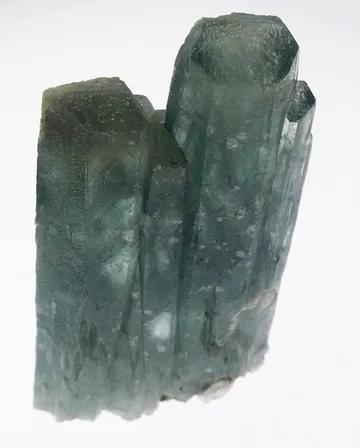
Beyond the five market-facing species above, Silverton is unusually rich in minerals of interest to systematic collectors. Zunyite from the Zuni Mine is the locality’s great type-mineral prize: small glassy tetrahedra to a few millimeters in altered, kaolinite-rich rock, historically associated with pyrite, enargite, bournonite, barite, diaspore, and lead-arsenic sulfosalt material. “Guitermanite,” also described from the Zuni material in the nineteenth century, is historically important but problematic in modern nomenclature and has long been treated as doubtful or related to jordanite-like material. The district also records huebnerite from several mines near Silverton and Gladstone; pyroxmangite and rhodonite-like manganese silicates from Sunnyside; helvite, tetrahedrite-tennantite, galena, chalcopyrite, acanthite, pearceite, enargite, bournonite, barite, calcite, alunite, dickite, kaolinite, and other alteration and ore minerals that make old Silverton labels especially rewarding to read closely.
Silverton specimens require careful locality literacy. “Silverton,” “American Tunnel,” “Sunnyside Mine,” “Gladstone,” and “Eureka district” are often used on old labels for related but not identical places; some labels are broad because the material moved through connected mine workings, mills, and company inventories. Conversely, “Silverton rhodochrosite” is sometimes confused in the trade with Sweet Home Mine rhodochrosite from Alma. The visual difference is usually pronounced: Silverton pieces tend toward pastel to strawberry-pink rhombs on white quartz with pale fluorite, while Sweet Home pieces more often show sharper, deeper red, more gemmy rhombs on sulfide-rich matrix. Still, old labels and provenance matter.
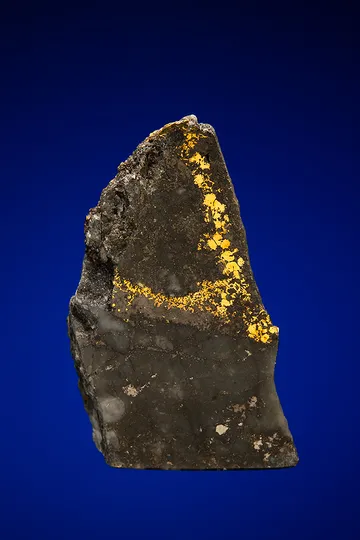
A documented authenticity concern specific to American Tunnel rhodochrosite involves fake “gold” added to a specimen. In one reported case, a specimen sold as rhodochrosite with gold from the American Tunnel was tested and the alleged gold proved to be brass. Treat visible native gold on Silverton rhodochrosite with skepticism unless it is demonstrably natural, penetrates or is enclosed by the matrix, and comes with strong provenance or analytical support. American Tunnel rhodochrosite is a real and classic association, but rhodochrosite with conspicuous showy gold from this locality is not a normal expectation.
Condition is central. Rhodochrosite is soft, brittle, and cleavable; many crystals show edge bruises, contact marks, or cleaved terminations. Fluorite corners are even more vulnerable on protruding crystals, and pale fluorite damage can be hard to see until the specimen is tilted under strong light. Quartz druse may conceal old trimming, glue, or stabilization along the back of plates, so inspect edges and the reverse. Sulfide-rich pieces from dumps or damp storage may show oxidation, acid staining, or friable matrix, especially where pyrite and base-metal sulfides sit in altered volcanic rock.
Market availability is steady but not abundant. Small rhodochrosite-quartz miniatures and thumbnails from old American Tunnel/Sunnyside stock appear periodically, while large, undamaged, well-composed rhodochrosite-fluorite-quartz cabinet pieces are legitimately scarce. Zunyite from the type locality is available more often as micromount or small-cabinet material with millimetric tetrahedra than as visually obvious display specimens. Most newly offered Silverton pieces should be presumed to be old stock, estate material, or redistributed collection specimens rather than fresh production.
The first Silverton story is older than Silverton itself. In 1860, John Baker led prospectors into the mountain-ringed park where the town would later stand. They were chasing mineral promise, but the San Juan country was still Ute land, winter came hard, and the expedition became a warning tale rather than a rush. Ransome’s early USGS account describes men overtaken by snow, harassed by the conditions and the realities of entering occupied country, with some dying and others retreating after severe hardship. For years, that memory helped discourage a return. Then the reports of mineral wealth grew too persuasive to ignore, and by the 1870s the lodes that would define the district were being located.
The Sunnyside story begins with a date collectors should remember: August 18, 1873, when Reuben J. McNutt staked the Sunnyside claim. The mine’s first life was high, cold, and difficult, with early workings above 12,000 feet near Lake Emma. The ore had to be moved down from the cirque, and by the late nineteenth century the operation relied on mills, tramways, and rail connections that tied the lonely workings to Eureka, Gladstone, Silverton, and Durango. At one point in the early period, the Thompson brothers were said to have taken out $385,000 in a single year. For a remote mountain mine, that figure explains why men kept returning to veins that winter, elevation, water, and low-grade ore repeatedly tried to shut down.
The American Tunnel changed the geometry of the old mine. What had begun as lower-level work associated with the Gold King side was extended and repurposed, eventually becoming the deep portal and drainage route that let operators reach the Sunnyside system from far below. By the early 1960s, Standard Metals had given the mine a new life, and the same engineering that made ore haulage and drainage practical also intersected the sort of late-stage pockets collectors now prize. The pink rhodochrosite, white quartz, and green fluorite combinations that came out under mining conditions were not dug as a hobby pastime; they were rescued from a working gold-silver-lead-zinc-copper operation whose economic life was measured in tons per day.
Then came June 4, 1978. It was a Sunday—fortunate, given what happened. The bottom of Lake Emma collapsed into the upper Sunnyside workings, and water, mud, and debris roared through the mine. Later summaries describe the lake as having drained into the mine; popular historical accounts put the release at roughly 500 million gallons and tell of a 20-ton Plymouth locomotive flattened by the force. The operation required about two years of rehabilitation before production could resume. It is one of the great near-catastrophe stories of Colorado mining, and it gives surviving Sunnyside specimens an added layer of context: these delicate pink rhombs and pale fluorites came from a mine that was, at times, fighting an entire alpine lake.
The Zuni Mine offers a quieter but equally memorable mineralogical scene. Hillebrand’s nineteenth-century description reads like analytical mineralogy performed with hand tools, acid, and patience. The ore from Anvil Mountain carried glassy tetrahedral faces projecting from lead-arsenic sulfide material; by dissolving away the sulfide with nitric or nitro-hydrochloric acid and separating the residue, Hillebrand isolated the tiny crystals of what he named zunyite. A showy zunyite specimen today may be a hand-sized rock, but the crystals that make it important can be only 1 to 3 mm across. That mismatch—modest visual scale, immense systematic significance—is exactly why old Zuni labels still stop experienced collectors in their tracks.
There is also a cautionary collector story from the rhodochrosite trade. A Scottsdale collector once returned from Silverton with what was represented as rhodochrosite and gold from the American Tunnel. The association sounded too good. The “gold” did not appear to penetrate the quartz or belong naturally to the matrix, and testing by Chuck Lewis at Arizona State University showed that the yellow metal was brass. The buyer was able to get his money back, but the lesson remains useful: Silverton rhodochrosite is classic enough on its own. If someone tries to make it better with gold, slow down.
Frederick Leslie Ransome, 1901, A Report on the Economic Geology of the Silverton Quadrangle, Colorado, U.S. Geological Survey Bulletin 182 — The foundational early USGS treatment of the Silverton quadrangle, including mining history, ore-deposit classification, gangue minerals, Sunnyside notes, and the early published discussion of zunyite in the district.
David J. Varnes, 1963, Geology and Ore Deposits of the South Silverton Mining Area, San Juan County, Colorado, U.S. Geological Survey Professional Paper 378-A — The principal USGS study for the South Silverton area, with caldera-margin geology, vein structures, and production context for the mines south and southeast of Silverton.
Wilbur S. Burbank and Robert G. Luedke, 1969, Geology and Ore Deposits of the Eureka and Adjoining Districts, San Juan Mountains, Colorado, U.S. Geological Survey Professional Paper 535 — The essential reference for the Eureka district, Sunnyside setting, caldera structures, and ore deposits adjoining the Silverton area.
Tom Casadevall and Hiroshi Ohmoto, 1977, “Sunnyside Mine, Eureka Mining District, San Juan County, Colorado: Geochemistry of Gold and Base Metal Ore Deposition in a Volcanic Environment,” Economic Geology, 72(7), 1285–1320 — A major geochemical paper on Sunnyside ore deposition, hydrothermal fluids, mineral assemblages, and the volcanic-caldera environment.
W. F. Hillebrand, 1885, “On zunyite and guitermanite, two new minerals from Colorado,” Proceedings of the Colorado Scientific Society, 1, 124–132 — The original description of zunyite and the historically problematic guitermanite from the Zuni Mine on Anvil Mountain.
William P. Moats, Arnold G. Hampson, and Paul F. Hlava, 1996, “Zunyite and associated minerals from the Zuni Mine, San Juan County, Colorado,” Rocks & Minerals, 71(2), 94–101 — A focused modern collector-mineralogy paper on the Zuni Mine assemblage.
Paul F. Hlava, Arnold G. Hampson, and William P. Moats, 1994, “Zunyite and other minerals of the Zuni mine, San Juan County, Colorado,” New Mexico Mineral Symposium abstract — Useful concise treatment of the Zuni Mine location, type-locality status, elevation, access season, geology, and associated minerals.
Smithsonian National Museum of Natural History, Rhodochrosite, USNM R16834, Silverton, American Tunnel, Colorado — A National Mineral Collection rhodochrosite specimen record documenting American Tunnel material from Silverton.
Arthur Lakes Library, Colorado School of Mines, “Rhodochrosite on drusy quartz: Colorado, San Juan County, Silverton, Sunnyside Mine” — A specimen image record with concise Sunnyside mining-history context and dates of operation.

Photo: Wikimedia Commons
The Complete History of: Eureka, Colorado, and The Sunnyside Mine & Mill | LOC Episode #1 — League of Curiosity — A history-focused video overview of Eureka, the Sunnyside Mine, the mill, ASARCO-era development, and the American Tunnel story.
Not every mine can be a tour: Inside Silverton’s Old Hundred — Rocky Mountain PBS — A modern media piece on the Old Hundred Gold Mine tour near Silverton, useful for understanding what makes a historic mine safely accessible versus closed or hazardous.
Gold King Mine Videos — U.S. EPA — EPA video archive related to the 2015 Gold King Mine release north of Silverton and the environmental legacy of the mining district.
Mindat: Silverton, Animas Mining District, San Juan County, Colorado, USA — The main locality database entry for Silverton in the Animas Mining District, useful for species lists, nearby mines, and specimen-photo cross-checking.
Mindat: Sunnyside Mine group, Bonita Peak, Gladstone, Eureka Mining District, San Juan County, Colorado, USA — The key database entry for the American Tunnel–Sunnyside system, including mineral list, history, and locality relationships.
Mindat: Zuni Mine, Anvil Mountain, San Juan County, Colorado, USA — Essential for zunyite, Zuni Mine associated species, and type-locality research.
USGS: A Shallow to Deep View Inside the Hydrothermally Altered and Mineralized Silverton Caldera Complex — Modern USGS overview of the Silverton caldera complex as a natural laboratory for volcanic-hosted hydrothermal systems and legacy-mining studies.
USGS Professional Paper 378-A: Geology and ore deposits of the South Silverton mining area — Authoritative geologic and ore-deposit reference for the South Silverton sector.
USGS Professional Paper 535: Geology and ore deposits of the Eureka and adjoining districts — Authoritative geologic reference for the Eureka–Sunnyside side of the Silverton system.
USGS Bulletin 182: A report on the economic geology of the Silverton quadrangle, Colorado — The classic early federal report, invaluable for historic mine descriptions and mineral names as used around 1900.
EPA: Bonita Peak Mining District — Current cleanup and public-information hub for the Superfund district that includes many historic mine sources around Silverton.
San Juan County Historical Society: Mayflower Mill — Historical and visitor information for the Mayflower Mill, an important surviving processing site connected to Silverton’s mining era.
San Juan County Historical Society: Old Hundred Boarding House — Useful historic context for the high-mountain mine infrastructure around Silverton.
Western Mining History: San Juan County Colorado Gold Production — Concise production and district summary for San Juan County and the Animas/Silverton district.
New Mexico Mineral Symposium Abstract: Zunyite and other minerals of the Zuni mine — Compact and collector-relevant summary of Zuni Mine geology, access season, type-locality status, and associated minerals.