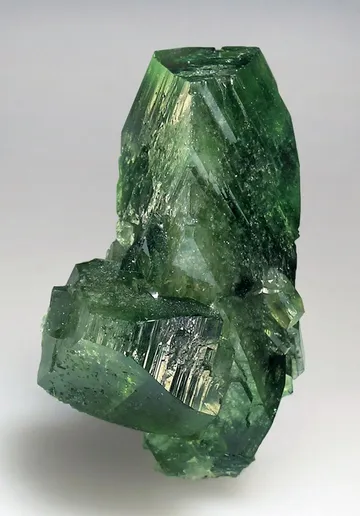
Silver King mine, USA — a classic native-silver locality near Superior, AZ, producing curled filiform and dense silver in dark ore with acanthite, stromeyerite…
Key facts
The Silver King mine near Superior, Arizona, is one of the classic American native-silver localities: a nineteenth-century bonanza in which rich silver mineralization was packed into a compact, steeply dipping stockwork and breccia body rather than a long, simple vein. The old workings sit in Comstock Wash, north of Superior, in the Kings Crown Peak area of Pinal County, where quartz diorite and diorite porphyry intrusions cut the older rocks on the north end of the Apache Leap–Pinal Mountain country. For collectors, its importance is not merely that it was Arizona’s richest historic silver mine, but that it produced the kind of specimens that make old Western silver famous: curled and filiform native silver, heavy masses and leafs of silver, dark acanthite-rich ore, stromeyerite, argentiferous tetrahedrite-freibergite, and a base-metal suite of galena, sphalerite, chalcopyrite, bornite, chalcocite, pyrite, barite, quartz, calcite, and secondary oxidation minerals.
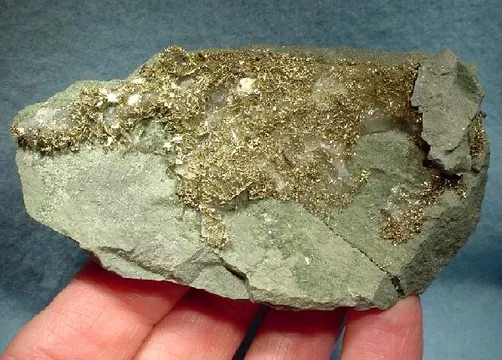
The best Silver King specimens have a distinctive look: old-time, dense, often sooty or burnished rather than bright-white, with silver emerging from dark sulfide ore or resting in quartz-lined fractures. Many pieces are not open, delicate “wire silver” in the Kongsberg sense; they are tough Arizona ore specimens—curled wires, compact leafs, heavy masses, and black acanthite-stromeyerite matrix—whose appeal lies in richness, age, and historical identity. The mine’s silver minerals also matter scientifically. Early studies of polished ore from Silver King helped demonstrate complex replacement relationships among chalcopyrite, bornite, stromeyerite, chalcocite, galena, tetrahedrite, sphalerite, and native silver.
Regional View
Country View
Historically, Silver King was developed from a rich surface outcrop into an open pit, deep shafts, stopes, crosscuts, and multiple levels. Contemporary descriptions portray the orebody as a pipe-like or stockwork mass roughly 130 feet in maximum diameter, dipping steeply west and centered around a conspicuous axis of milky quartz. The ore was porphyry shot through by innumerable quartz veinlets, with silver-copper sulfides and base-metal sulfides concentrated along the veinlets and in bunches. In modern exploration language, the system is commonly described as epithermal to mesothermal polymetallic silver-base-metal mineralization with evidence for deeper copper-rich, porphyry-style roots.

Search for specimens: View all specimens from Silver King mine, USA
The Silver King mine is the famous Silver King Mine of Comstock Wash, Kings Crown Peak area, Pinal County, Arizona, about three miles north of Superior. Older names and associated property names include the Silver King Mining Company property, Fortune, California, White Horse, Seventy-Four, and Last Chance. The mine lies in the Superior or Pioneer mining district, close to the later Magma-Silver Queen system and the modern Resolution Copper area, but it is mineralogically and historically distinct: Silver King was mined principally for silver, while Magma became one of Arizona’s great copper mines.
Geologically, the deposit is best understood as a steeply west-dipping, pipe-like stockwork and breccia body hosted mainly in quartz diorite or diorite porphyry, with older rocks of the region including Pinal Schist, diabase, quartzites, Paleozoic limestones, and Tertiary volcanic and cover rocks nearby. A diorite porphyry plug and associated dikes and sills occur in the Silver King area. Classic descriptions emphasize that the orebody was not a simple persistent fissure vein: it was a compact mesh of veinlets in altered porphyry, arranged around a milk-white quartz core or axis. The quartz core carried local rich bunches but was not, as a whole, the ore; the silver values were concentrated in the surrounding altered porphyry cut by abundant veinlets.
The principal silver-bearing ore minerals were stromeyerite, highly argentiferous tetrahedrite now best treated in part as freibergite-subgroup material where silver-rich, acanthite, and native silver. Galena, sphalerite, chalcopyrite, bornite, pyrite, chalcocite, covellite, quartz, barite, calcite, and siderite were part of the broader hypogene and supergene ore assemblage. Older literature uses the name “argentite” for Ag2S; collector and modern mineralogical usage should normally treat room-temperature Ag2S from such specimens as acanthite unless there is a compelling reason to discuss high-temperature argentite as a precursor. In the upper levels, stromeyerite and argentiferous tetrahedrite-freibergite with acanthite were especially important; at greater depth, argentiferous sphalerite became prominent, with native silver recorded in association with stromeyerite and sphalerite.
The original mine was developed from a surface glory-hole or open pit described as about 115 by 92 by 120 feet. By the early 1880s, the mine had a main shaft more than 600 feet deep, levels, crosscuts, and winzes. Later records describe the old Bilk shaft as reaching 987 feet, a newer post-1916 shaft to about 635 feet, and seven or eight levels of workings depending on the description and period. Modern exploration summaries describe historic access to roughly 300 meters below the surface glory hole.
The discovery story belongs to the hard, violent frontier period of central Arizona. A soldier named Sullivan, working on Stoneman’s Grade in the early 1870s, picked up heavy black metallic fragments near the road; they flattened under a blow instead of breaking. He kept the pieces secret, later showed them to Charles G. Mason, and then disappeared from the area. Mason and companions eventually traced similar black silver ore back to a small conical hill near the base of the grade and staked the Silver King claim in March 1875. Within months, rich hand-sorted ore was being packed and hauled out. Some early ore reportedly assayed around $2,000 per ton at period silver prices, rich enough for direct shipment and treatment without elaborate concentration.
The mine’s first boom ran from 1875 into the late 1880s, with the Silver King Mining Company organized after the property passed into outside hands. Picket Post, later Pinal City, grew as the milling and service settlement tied to the mine. A stamp mill and amalgamation plant were built near the old military camp at Picket Post, and ore was hauled by wagon from the mine. The Southern Pacific Railroad’s arrival at Casa Grande in 1879 reduced freight costs, but the mine still fought the economics of depth, changing ore character, and transport. Operations declined by the late 1880s and were intermittent into the 1890s.
A second phase followed after the Silver King of Arizona Mining Company acquired the property in 1916. Limited production resumed during and after World War I, with additional silver output recorded through the 1920s. Later small-scale work and rehabilitation occurred in the late 1990s to around 2000, including access to shallow levels and sampling of high-grade material. In 2026, Prismo Metals reported results from a Phase I diamond-drilling program totaling eight holes and 1,272 meters, confirming additional high-grade silver intervals in the upper mineralized body and suggesting deeper copper-rich alteration beneath or lateral to the historic pipe. That modern drilling is exploration work, not collecting activity, but it underscores that the old mine is an active mineral-property interest rather than an abandoned open collecting ground.
Access today should be treated as closed unless explicit permission is obtained from the landowner, claim holder, or operator. The old workings are dangerous, the historic site includes private and patented-claim interests, and the surrounding country includes a complicated patchwork of mining, Forest Service, and modern exploration concerns. Collector specimens on the market overwhelmingly come from old collections, old dealer stock, and historical ore saved during mining or later small-scale work, not from casual modern collecting.
Native silver is the signature collector mineral of the Silver King mine, occurring as curled and filiform wires, leafs, heavy masses, and rich metallic blebs or crack fillings in dark sulfide ore and quartz-rich matrix. Good specimens show visible, three-dimensional silver rather than merely gray ore; the strongest pieces combine old-time provenance, sculptural curled wires or leafs, and intimate association with acanthite, stromeyerite, bornite, chalcopyrite, chalcocite, sphalerite, galena, or quartz. The famous material is typically small-cabinet to miniature in display scale, though much larger masses and rich hand specimens were historically mined as ore. Silver King silver often carries a dark patina or acanthite burnish, which is part of its identity; aggressively cleaned pieces lose much of the old Arizona character that separates fine examples from ordinary massive silver-bearing ore.
Acanthite from Silver King is chiefly an ore and matrix mineral rather than a locality famed for freestanding, lustrous display crystals. It occurs as black to dark gray Ag2S, historically called argentite in older reports, in rich upper-level silver ore with stromeyerite, argentiferous tetrahedrite-freibergite, and native silver, and it may also coat, darken, or burnish native silver specimens. The most desirable collector pieces show the acanthite visibly and confidently, either as dark crystalline or massive silver sulfide associated with recognizable native silver or as part of a rich, labeled historic ore specimen from the classic bonanza period. Ordinary acanthite-rich fragments can be visually ambiguous, so pieces with old labels, analyzed material, or unmistakable silver association are markedly preferable.
Beyond silver and acanthite, the Silver King suite is unusually rich for a compact orebody. Stromeyerite, AgCuS, is central to the locality and was described as one of the most important silver minerals in the ore, especially in replacement textures with copper sulfides. Argentiferous tetrahedrite-freibergite, sphalerite, galena, chalcopyrite, bornite, pyrite, chalcocite, covellite, polybasite, chlorargyrite, native gold, native copper, and the uncommon recorded native antimony give the mine its mineralogical breadth. The oxidation assemblage includes such species as malachite, azurite, antlerite, cuprite, anglesite, cerussite, massicot, vanadinite, wulfenite, aurichalcite, hematite, and manganite. No well-established type-locality mineral is tied to Silver King, but its stromeyerite-native silver-acanthite-freibergite relationships make it a serious ore-mineral locality, not merely a historic source of attractive silver.
Silver King specimens are scarce in the open market compared with better-known world silver localities. Most desirable examples are old collection pieces, and locality confidence matters. Labels may read “Silver King,” “Silver King Mine, Superior,” “Pinal Co.,” “Pioneer District,” “Comstock Wash,” or older property names; the best provenance distinguishes the Arizona Silver King from other Silver King mines in Utah, California, Nevada, Colorado, New Mexico, Idaho, and elsewhere. Mislabeling is the chief authenticity risk. A specimen labeled only “Silver King Mine, USA” should be treated cautiously until the associated mineral suite, label history, and dealer or collection context support the Superior, Arizona locality.
The second common issue is mineral-name drift. Older labels and publications often say “argentite,” especially for black Ag2S ore. For collector cataloging, “acanthite” is generally the safer modern name for Ag2S at ordinary temperatures, while “argentite” should be reserved for historically worded labels or pseudomorph discussions. Similarly, silver-rich tetrahedrite may be marketed broadly as tetrahedrite or freibergite; without analytical confirmation, a conservative “tetrahedrite subgroup” or “freibergite subgroup” label is preferable.
Condition varies widely. Native silver wires and leafs from Silver King can be bent, compressed, or partially embedded in massive ore, and many pieces are naturally darkened by sulfide films. Avoid confusing honest dark patina with damage; on Silver King silver, a black-gray surface may be expected and desirable. Conversely, bright acid-cleaned silver on an otherwise old Arizona specimen can look unnatural and may reduce historical appeal. Acanthite and silver sulfides are soft and easily bruised; keep specimens dry, stable, and away from unnecessary handling. Do not polish native silver, and avoid sulfurous storage materials, rubber, some foams, and acidic paper that can accelerate tarnish.
The mine’s secondary minerals are usually less important on the collector market than the silver-suite minerals, but verified Silver King pieces of stromeyerite, acanthite, polybasite, native antimony, freibergite-subgroup material, or silver-bearing ore with analytical support can be more mineralogically interesting than prettier but generic silver specimens. For display, the prime collector target remains a small, rich, three-dimensional native silver on original sulfide-quartz matrix with an old label.
One of the great charms of Silver King is that its discovery story begins not with a trained prospector but with a soldier, a road grade, and black lumps that would not break. Sullivan, working on the military road later known as Stoneman’s Grade, was returning from work when he picked up heavy, dark metallic pieces near camp. When struck, they flattened like lead. He pocketed the fragments and kept silent. Only later, after leaving the army and working for Charles G. Mason, did he show the pieces to someone who recognized their significance: they were rich native silver and silver sulfide ore. Sullivan still would not reveal the exact place, and then he vanished from the local story.
Mason’s attempts to rediscover Sullivan’s source first led him near, but not onto, the great orebody. One search found a manganese-stained outcrop that became the Silver Queen, the prospect that would eventually grow into the Magma mine, the copper giant of Superior. The richer mystery remained unsolved until March 1875, when Mason, Benjamin Reagan, William Long, Isaac Copeland, and another man were returning from the Globe country with pack animals. The party was attacked; the unnamed fifth man was killed, and the survivors buried him at Camp Supply near the old road.
Then came the moment every prospector dreams of. One pack animal strayed. Copeland went after it and noticed black rock cropping out near the animal. He broke off a piece, recognized the look of Sullivan’s nuggets, and called out, “I’ve struck it!” The four survivors traced the ore to the outcrop on the little hill and staked the Silver King. The tragic errand for a wandering mule had brought them to one of the richest silver discoveries in Arizona.
The camp life that followed was loud, rich, and short-lived. Ore was so valuable that theft became part of the mine’s folklore. Rich chunks were said to be thrown from ore wagons by men in league with confederates along the road; one period account claimed the dust along the haulage route could average several dollars per ton in silver. Wagon teams moved ore from the mine to the mill, and Picket Post—later Pinal City—filled with miners, freighters, gamblers, merchants, and the inevitable hangers-on of a boom camp.
The mine also produced one of the most memorable native-silver images in Arizona mining lore. Harry Brook, editor of The Pinal Drill, later recalled that superintendent Aaron Mason would drive down from the mine to the mill with “a string of silver wire several feet long twisted around his sombrero.” The story may sound like frontier embroidery, yet it fits the material: Silver King really did produce wire and curled native silver, and its best specimens still look like fragments of that legend.
The financial drama was nearly as vivid. Two of the original owners sold out early for $80,000, fearing the bonanza was too rich to last. Mason later sold his interest for $250,000, and Reagan sold for $300,000. For a brief span, the Silver King seemed inexhaustible, and its stock was quoted on the San Francisco exchange. Yet the mine did have a bottom in the economic sense. The richest ore gave way to deeper, more complex sulfide mineralization, freight and treatment costs mattered, and the surrounding settlement eventually faded.
Perhaps the most poignant episode is Sullivan’s return. Years after the discovery, a worn and impoverished man appeared in the mining settlement and identified himself as the original finder. He had apparently spent years elsewhere trying and failing to convince backers of his story. This time he was recognized, but the fortune had passed him by. He was given work at the mine, while the orebody he had first glimpsed had already made and unmade other men’s fortunes.