Siberia, Russia: a vast mineral locality renowned for diamond-bearing kimberlites, rare wiluite and green grossular, and its historic role in mineralogy.
Key facts
“Siberia, Russia” is not a single mine in the collector’s sense; it is a vast regional locality that gathers some of the most consequential mineral districts in northern Asia under one old, persistent label. For collectors, the name carries two very different kinds of weight. One is economic and geologic scale: diamond-bearing kimberlite pipes of the Siberian craton at Mir, Udachnaya, Aikhal, Yubileinaya, Internatsionalnaya, Zarnitsa and related Yakutian fields; enormous gold systems of the Lena province around Bodaibo and Sukhoi Log; and nickel-copper-PGE ores of the Norilsk-Talnakh region. The other is specimen romance: dark green wiluite and olive grossular from the Vilyui River skarns, black Aldan spinel on mica-rich matrix, native gold in white quartz or rounded placer pieces, and the rare sight of natural diamond still lodged in gray kimberlite.
The region matters historically because several of its mineral occurrences are woven directly into the development of mineralogy. Grossular was named with reference to the gooseberry-green Siberian garnets from the Vilyui River area. Wiluite, a boron-bearing vesuvianite-group mineral, was approved much later as a distinct species from the Wilui/Vilyui River region. The same Yakutian skarn-rodingite assemblage has yielded unusual garnets, hydrogarnets, vesuvianite-group minerals and “achtarandite” pseudomorphs that have kept petrologists returning to this remote locality for more than a century.
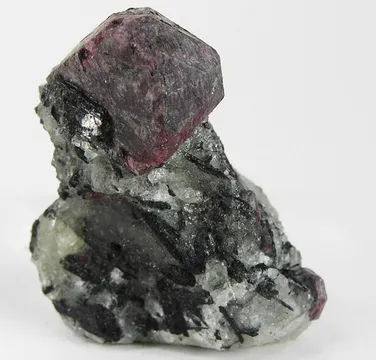
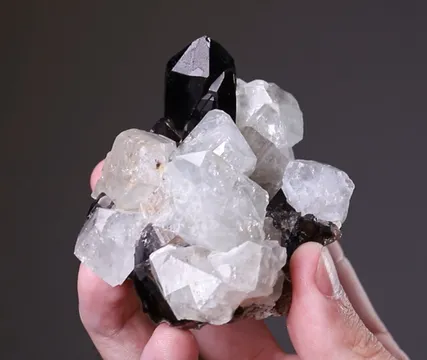
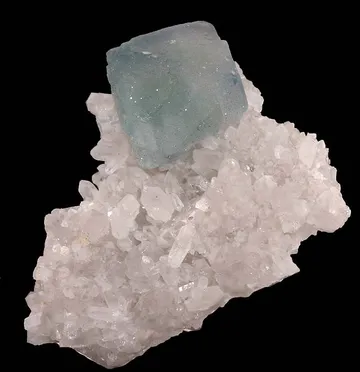
The best Siberian specimens have a look that is hard to confuse once seen. Vilyui grossular tends toward olive, yellow-green and brownish green, commonly as lustrous dodecahedral to trapezohedral crystals on pale altered skarn or serpentine-rich matrix. Wiluite is darker, blockier and more tetragonal: blackish green to olive-green prisms and dipyramids, sometimes doubly terminated, with glassy luster and only partial translucency at the edges. Yakutian diamonds from the classic pipes are mostly small as specimens but can be exceptionally sharp: colorless to gray octahedra, rounded octahedra and dodecahedral forms, with rare pieces still embedded in kimberlite beside red pyrope. Siberian gold ranges from placer-worn nuggets and flakes to old-time quartz pieces showing rich yellow metal along seams and cavities.
Regional View
Country View

Photo: Wikimedia Commons / Staselnik
The broadness of the Siberian label is part of its challenge. A specimen marked simply “Siberia” may be scientifically honest for an old cabinet piece, but serious collectors should try to refine it to the mine, river basin, district, republic or oblast whenever possible. “Vilyui River, Yakutia” means something quite different from “Bodaibo, Irkutsk Oblast” or “Mirny Mine, Sakha.” In this guide, “Siberia, Russia” is treated as a regional collector locality, with emphasis on the documented sublocalities that have supplied the minerals represented here.

Search for specimens: View all specimens from Siberia, Russia
The specimen locality “Siberia, Russia” covers an immense set of deposit types rather than a single deposit. The most important collector-producing environments represented by this label are diamondiferous kimberlite pipes of the Siberian craton, orogenic and placer gold systems of the Lena and related provinces, and calcium-rich skarn to rodingite-like assemblages in Yakutia that produced the Vilyui grossular-wiluite suite. Each has its own geology, its own mining history, and its own specimen market.
The Yakutian diamond deposits lie within the Siberian craton, where kimberlite pipes brought mantle-derived material to the surface and intruded older sedimentary rocks, including Cambrian to Silurian carbonate sequences in the Daldyn-Olenyok belt. Mir, Udachnaya, Aikhal, Yubileynaya, Sytykanskaya, Zarnitsa and Internatsionalnaya are not casual collecting sites; they are industrial diamond deposits, historically state-controlled and later operated within the ALROSA system. The collectible pieces are usually recovered through the industrial stream or preserved from older geological collections: small diamonds in kimberlite, loose octahedral crystals, pyrope-bearing matrix, mantle xenolith material, and uncommon inclusions-rich research specimens.
The Mir pipe at Mirny is the iconic image of Siberian diamond mining. Discovered in June 1955 during the Soviet diamond search in Yakutia, it became the center around which Mirny developed. Open-pit mining began in the late 1950s and continued for decades before open-pit extraction stopped in 2001; later work shifted underground, with the Mir underground mine subsequently frozen after the 2017 accident. For collectors, Mir is important less for gem production than for the rarity of matrix diamond specimens. A small, natural octahedron still sitting in kimberlite is far scarcer as a cabinet mineral than a faceted Yakutian diamond many times its weight.
Udachnaya, in the Daldyn field near Udachny, is another major collector name. The pipe is famous in scientific literature for unusually fresh kimberlite, alkali carbonate, sulfate and chloride groundmass minerals, mantle xenoliths, and diamonds used in inclusion and isotope studies. Specimen diamonds from Udachnaya can be sharp, colorless to gray, and occasionally mounted naturally in kimberlite matrix. The Udachnaya name also appears on rare species and research material associated with unusual kimberlite mineralogy, so locality precision is especially valuable.
Gold mineralization in Siberia is equally broad. The Lena gold province around Bodaibo in Irkutsk Oblast is one of Russia’s great gold regions. Its bedrock systems include black-shale-hosted and quartz-sulfide gold mineralization, with the giant Sukhoi Log deposit as the reference example: gold associated with pyrite, arsenopyrite and folded bedding-parallel pyrite-quartz veinlets within deformed organic-bearing sedimentary rocks. The region’s placers, including the Nygri and other alluvial deposits, were historically central to production, and many old “Siberia” gold specimens are either gold in quartz from lode material or water-worn placer pieces from the Lena drainage and related fields.
Mining in the Lena fields began in the nineteenth century and produced both wealth and one of the most notorious episodes in Russian labor history, the 1912 Lena goldfields shooting near Bodaibo. From a collecting standpoint, old Siberian gold labels can be desirable, but they are also often frustratingly vague: “Lena,” “Bodaibo,” “Siberia,” “Russia,” and pre-revolutionary or Soviet-era names may appear without a mine or creek. Better pieces show visible native gold as bright metallic leaves, seams or masses in quartz, or as rounded placer gold with attractive shape and old provenance.
The Vilyui River Basin in Sakha is a very different mineral province. Near the Akhtaragda/Akhtaranda River mouth and the Chernyshevsky area, altered skarn and serpentinite-related rocks produced the classic grossular-wiluite association. The assemblage includes grossular, wiluite, vesuvianite-group minerals, serpentine-group minerals, chlorite, carbonate, limonitized pyrite, hydrogrossular or hibschite, and “achtarandite,” a tetrahedral pseudomorph whose identity and origin have been debated and reinterpreted in modern work. These were not large-scale specimen pockets in the alpine-cleft sense; the collector material appears as isolated crystals and crystal groups in altered skarn-like matrix, often recovered from older field work, exchanges or museum-related sources.
Aldan, also in Sakha, is the name collectors most often associate with Siberian black spinel. The classic pieces are dark pleonaste-spinel crystals, commonly perched on or associated with biotite/phlogopite and sometimes diopside. These are not gem-red spinels; their appeal is architectural and locality-based: large, dark, well-formed octahedral to slightly rounded crystals in a mica-rich metamorphic or metasomatic setting.
Collecting access today is highly restricted or practically unavailable at the most important sources. Kimberlite mines in Yakutia are industrial diamond operations with security, permitting and safety controls. Active gold districts are commercial mining areas rather than recreational collecting grounds. The Vilyui grossular-wiluite material is remote, historically collected, and only intermittently available through old collections and the specimen trade. As with many Russian localities, export history, old labels, museum exchange labels and dealer provenance matter greatly.
Gold from Siberia, Russia is best understood through the Lena-Bodaibo province and other eastern Siberian placer and lode systems: old collector pieces may show rich yellow native gold in milky quartz, water-worn nuggets or flattened placer forms, and less commonly crystalline or leaf-like aggregates along quartz-rich matrix. In the Bodaibo district, primary mineralization is tied to quartz-sulfide and veinlet-disseminated systems in deformed carbonaceous metasedimentary rocks, with pyrite, arsenopyrite, pyrrhotite, sphalerite, chalcopyrite and gold tellurides documented in the broader Sukhoi Log model; placer gold from streams such as those draining the Sukhoi Log area and the Nygri system may preserve inclusions and chemistry linking it directly to primary low-sulfide sources. The best collector specimens are not merely “gold-bearing quartz” but pieces with obvious, bright, well-exposed native metal, preferably with an old Lena, Bodaibo or Siberian label and enough matrix to make the geologic setting readable; ordinary pieces are small blebs, sparse specks in quartz, or vague old labels that cannot be separated confidently from the many Russian gold districts outside Siberia.
Diamond from Siberia, Russia is dominated by the Yakutian kimberlite province, especially Mir, Udachnaya, Aikhal, Yubileynaya, Internatsionalnaya and related pipes of the Siberian craton. Collector-quality examples are usually small but intensely desirable: colorless, gray, brownish or yellowish octahedra, rounded octahedra, dodecahedral forms and mixed-habit crystals, with the rarest mineral specimens being natural diamonds still embedded in kimberlite matrix, sometimes with red pyrope garnet or other kimberlite indicator minerals nearby. Published and photographed specimens include sharp octahedra only a few millimeters across, matrix pieces with diamonds around 3–5 mm, and loose crystals around the one-carat range; the industrial mines have of course yielded much larger gem rough, but such stones usually leave the collector-mineral category. A fine Siberian diamond specimen is judged by natural attachment, crystal sharpness, luster, transparency, lack of repair or glue, and credible mine-level provenance; a loose crystal labeled only “Yakutia” is far less informative than a Mir or Udachnaya diamond in original kimberlite.
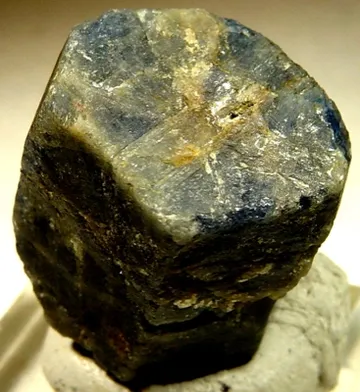
Spinel from Siberia, Russia is most collectible in the dark pleonaste-style material from the Aldan area of Sakha, especially specimens labeled from the Gon phlogopite deposit or older Aldan material. These are typically black to very dark green-black or brown-black crystals, octahedral to slightly rounded, commonly associated with mica-rich matrix such as biotite or phlogopite and with diopside reported on some trade specimens. Good examples are valued for sculptural form and scale: well-formed single crystals can reach several centimeters, with documented trade pieces around 40 mm perched on mica, while lesser pieces are massive, incomplete, poorly exposed or lacking matrix. The important distinction for collectors is that Siberian spinel is not the classic transparent red gem spinel of Myanmar or Tajikistan; its authority lies in large dark crystals from a Russian metamorphic-metasomatic locality, with old Aldan provenance and attractive matrix making the best pieces stand apart.
Grossular from Siberia, Russia is inseparable from the Vilyui River Basin, where greenish and yellow-green garnets from the Akhtaragda/Akhtaranda-Chernyshevsky area became historically important enough to anchor the species’ type-locality story. The crystals are commonly olive green, yellow-green, brownish green or cinnamon-tinged, with lustrous dodecahedral forms modified by trapezohedral faces, and they occur in altered skarn or rodingite-like matrix with wiluite, vesuvianite-group minerals, serpentine, chlorite and hydrogrossular-related material. Collector specimens commonly show crystals in the 0.75–2 cm range, while literature on Russian gem materials records greenish to yellowish-green crystals from the Vilyui valley reaching substantially larger sizes; the market pieces that excite collectors are sharp, glossy, translucent, matrix-supported garnets rather than loose or bruised fragments. Fine examples are also prized because they clarify an old naming tangle: “viluite” on an antique label may refer to green grossular, while “wiluite” is a separate vesuvianite-group species.
Wiluite from Siberia, Russia is the definitive material for the species: dark green to blackish green boron-bearing vesuvianite-group crystals from the Wilui/Vilyui River region of Sakha, occurring with grossular in metasomatized skarn and serpentine-rich matrix. The type description records crystals up to about 3 × 3 × 5 cm, slightly elongate along the c-axis, dominated by tetragonal forms; collector examples are usually smaller, but superb specimens show lustrous blocky prisms, tetragonal dipyramids, sharp edges, partial translucency at thin edges and natural association with olive grossular or “achtarandite”-bearing matrix. The finest pieces are damage-free, well-exposed, and unquestionably from the Vilyui type area; ordinary ones are dark, incomplete bits that can be visually confused with vesuvianite unless supported by provenance or analysis. Because wiluite was only approved as a distinct species in the 1990s, older labels using “viluite,” “wiluite,” or “Siberian vesuvianite” require special scrutiny.
Other minerals documented from Siberia are too numerous for a short list: Mindat’s regional entry records more than a thousand valid minerals and hundreds of type-locality species under the Siberian umbrella. Among the most important collector and scientific names are eringaite from the Wiluy River rodingite-like rocks, argentopentlandite from the Oktyabrsky Mine at Norilsk-Talnakh, charoite from the Murunskii Massif at the Chara and Tokko rivers area, unusual kimberlite minerals from Udachnaya, and a wide spread of PGE, sulfide, telluride, skarn, alkaline-complex and volcanic species from the Siberian platform, Aldan Shield, Baikal region, Norilsk district and Kamchatka. The best Siberian collections are therefore not built around one mineral alone, but around the region’s extremes: mantle diamonds, giant gold systems, remote skarns, alkaline metasomatites and ore bodies that made new minerals.
The first rule with “Siberia, Russia” is locality discipline. A specimen with only a broad Siberia label may be perfectly legitimate, especially if it is old, but its scientific and market value rises sharply when the label can be refined to Mirny Mine, Udachnaya, Vilyui River Basin, Akhtaragda River mouth, Aldan, Bodaibo, Sukhoi Log, Norilsk-Talnakh or another exact sublocality. Many nineteenth- and early twentieth-century labels used “Siberia” loosely; some also used historical spellings such as Wilui, Vilui, Vilyui, Yakutia, Sacha/Sakha, Aldan, Bodaybo/Bodaibo, or simply “Eastern Siberia.”
Diamond specimens require the strictest authentication. Natural diamond in kimberlite matrix is rare and valuable enough that glued, inserted or “improved” matrix pieces are a real concern in the general market. A trustworthy Siberian diamond-in-matrix specimen should show convincing natural setting, no adhesive halo, no fresh drill cavity around the crystal, compatible matrix texture, and ideally old collection, mine or dealer documentation. Loose Yakutian diamonds should be judged as mineral specimens only when crystal form, surface features, and provenance are preserved; otherwise they enter the gem rough category, where grading and legal chain of custody matter more than mineral aesthetics.
Wiluite and grossular have a specific naming hazard. “Viluite” has been used historically for green grossular from the Vilyui area, while wiluite is a distinct vesuvianite-group mineral approved in modern mineral nomenclature. Older labels may not follow modern usage. A dark green tetragonal crystal may be wiluite or vesuvianite-group material; an olive-green dodecahedral or trapezohedral garnet is more likely grossular; mixed specimens can carry both. Important examples, especially expensive ones, deserve analytical confirmation or at least provenance from a dealer or collection that understands the distinction.
Aldan spinel is commonly dark and robust-looking, but condition still matters. Check crystal terminations, octahedral edges, contact points with mica matrix, and any repair at the base of large crystals. A black spinel perched naturally on biotite or phlogopite is much more desirable than a detached crystal glued back onto mica. Because these spinels are not gem-red material, avoid paying for them as if they were transparent gem spinel; their value is locality, size, habit and matrix.
Siberian gold should be evaluated as both mineral and metal. Visible native gold in quartz can be confused by beginners with pyrite, chalcopyrite, oxidized sulfides or even metallic lead in unusual old pieces. True native gold is sectile, rich yellow, high-density and does not tarnish like brass-colored sulfides. For old Siberian gold-in-quartz, the best pieces combine clear metal exposure, natural texture, attractive quartz, and label history; crushed ore fragments with only pinpoints of gold are less collectible unless tied to a significant mine or study.
Condition issues vary by species. Diamonds are hard but can have natural cleavages and chips; matrix pieces are often more fragile than the diamond itself. Wiluite and grossular are brittle and can bruise on protruding edges. Some altered skarn matrix is soft, chloritic, serpentinous or limonitic and should not be soaked aggressively. Gold-in-quartz is mechanically sturdy but can be damaged by harsh cleaning that undercuts quartz or removes iron oxides that help prove natural setting. Fluorescence is not a major selling point for classic Vilyui wiluite, and the type description notes no fluorescence under long- or short-wave ultraviolet light; collectors should not expect UV response to authenticate the species.
Market availability is uneven. Yakutian diamond specimens appear occasionally and command strong prices when natural in matrix. Vilyui grossular and wiluite are scarcer than their historical fame suggests, especially as undamaged matrix specimens with precise labels. Aldan spinel appears intermittently from older stock and private collections. Siberian gold remains available, but truly well-provenanced old Lena or Bodaibo pieces are much scarcer than generic “Russian gold” labels imply.
The discovery story of Yakutian diamonds has the clean shape of a field geologist’s legend because it begins not with a glittering diamond but with indicator minerals. Larisa Popugaeva’s use of pyrope garnets as a trail-marker changed the search. Instead of wandering the Siberian taiga hoping to see diamonds directly, prospectors learned to follow the tiny red garnets shed by kimberlite. Her 1954 discovery of the Zarnitsa pipe proved the method, and the following season the search widened across western Yakutia.
In June 1955, Yuri Khabardin, Ekaterina Elagina and Viktor Avdeenko found the Mir pipe. The most repeated version has Khabardin noticing blue kimberlitic earth exposed by a foxhole in a ravine. The coded radio message that followed became one of the most famous sentences in Russian diamond history: “I am smoking the pipe of peace.” The phrase was not poetic accident; “Mir” means peace, and “pipe” was the prospectors’ target. What followed was not a gentlemanly gem rush but a Soviet crash program in a remote cold region, building a diamond industry where there had been taiga, permafrost and expedition camps.
The Mir open pit then became an object so large it turned into a geographic fact. The city of Mirny grew beside it; the mine became the emblem of Yakutian diamonds; and the great circular excavation entered popular imagination as the Siberian hole in the earth. For mineral collectors, the romance is not in the tonnage but in the little survivors: a 4 mm octahedron locked in gray kimberlite, a red pyrope sitting beside diamond, or an old Soviet-era specimen whose label carries a pipe name rather than just “Russia.”
The Lena goldfields tell a darker story. In 1912, miners in the Bodaibo region went on strike after years of harsh labor, long hours, fines, poor food and dangerous conditions. The immediate spark often retold in histories is rotten meat issued through mine stores, but the deeper grievances were wages, hours and working life in an isolated gold province where the company controlled much of the workers’ world. By mid-March the strike had spread through the fields and involved thousands of workers.
On 17 April 1912, after strike leaders had been arrested, a large crowd marched toward the Nadezhdinsky goldfield to present grievances. Soldiers fired on them. Contemporary and later accounts differ in exact casualty figures, but the reported scale was shocking: hundreds dead or wounded. News of the shooting traveled far beyond the Lena drainage and became a national political event, helping propel Alexander Kerensky into public prominence and feeding the revolutionary mood in late imperial Russia. Every old Lena gold label sits, whether quietly or not, against that history of remote wealth extracted at human cost.
The Vilyui River story is quieter but, for mineralogists, just as memorable. The locality that gave collectors green grossular and later wiluite is not a glittering gem pocket but a strange altered skarn-serpentinite world of pseudomorphs, hydrogarnets and chemically complex calcium silicates. “Achtarandite” appears as tetrahedral forms after an uncertain precursor, associated with hydrogrossular, chlorite and carbonate; wiluite crystals grew dark, blocky and boron-bearing; grossular appeared as olive to yellow-green garnets. The result is one of those localities where a modest hand specimen can carry three histories at once: antique garnet nomenclature, modern IMA species work, and the petrology of skarn alteration in the shadow of the Siberian traps.