A collector's guide to Sherman Mine, USA: its geology, mining history and notable minerals, illustrated with the 51 specimens documented from this locality on EarthWonders.
Key facts
The Sherman Mine—better known on many specimen labels as the Sherman Tunnel—is one of the indispensable Colorado localities for collectors of secondary lead-zinc-copper minerals. It sits high in Upper Iowa Gulch, below Mount Sherman in Lake County, on the western side of the Mosquito Range, where silver-lead-zinc ore occupied ancient cave systems in the Mississippian Leadville Formation. That geological setting is the key to the locality’s character: this was not simply another Leadville replacement mine, but the name-giving example for “Sherman-type” mineralization, a barite-rich Ag-Pb-Zn assemblage developed in paleokarst.
For collectors, the mine is remembered above all for thick, lustrous, golden baryte crystals and for unusually colorful oxidized ore specimens: blue-green rosasite, azurite, smithsonite, cerussite, hemimorphite, malachite, and rare microminerals on quartz, dolomite, galena, and baryte. The best pieces have the look of a high-altitude Colorado classic with a distinctly southwestern color palette—warm honey-yellow baryte blades or blocky plates, powdery to botryoidal turquoise rosasite, glassy smithsonite crystals, white cerussite “snowflakes,” and occasional tiny orange wulfenite tabs or green pyromorphite accents.
Regional View
Country View
The Sherman material is also historically compact: much of what collectors prize came from twentieth-century workings, particularly the Sherman Tunnel and associated Hilltop mine ground, with a burst of specimen recovery around the mine’s later production years. Consequently, many fine pieces carry older Colorado labels—Kosnar, Lavinsky/iRocks, or regional collector labels—and locality notations such as K-22 Bypass, C-22 Area, or O-22 area are worth preserving.

Photo: Wikimedia Commons

Photo: Wikimedia Commons
Search for specimens: View all specimens from Sherman Mine, USA
The Sherman Mine is in Upper Iowa Gulch, Lake County, Colorado, below Mount Sherman and the Iowa Amphitheater, at roughly 12,200 feet elevation. Mineralogically it belongs to the broader Leadville district, but it occupies the high, eastern Horseshoe/Mount Sherman side of the system rather than the central Leadville camp around Carbonate Hill and Fryer Hill. The mine is also recorded under several names that appear on labels and in literature: Sherman Tunnel, Leadville Corporation Mine, Day Mines, and Hilltop Mine.
The ore deposit is the classic Sherman-type Ag-Pb-Zn-Ba system: barite-galena-sphalerite-silver mineralization in paleokarst developed in the Leadville Dolomite or Leadville Limestone, depending on the terminology used by the source. These orebodies are not simple, straight fissure veins. They followed an inherited cave architecture—sinuous passages, sinkholes, breccia-filled voids, and sediment-filled cavities—that formed in carbonate rock before ore deposition. Studies of the Sherman system describe integrated paleocave networks trending predominantly northeast, with individual passages traceable for hundreds of meters and numerous sinkholes marking former points of water entry. That cave-hosted geometry explains why Sherman specimens so often show open-space crystal growth rather than merely massive ore.
The primary ore suite included galena, sphalerite, silver-bearing sulfosalts, pyrite in relatively modest amounts, chalcocite or copper sulfosalts in some Sherman-type descriptions, and abundant baryte. The oxidized zone then supplied the collector minerals: cerussite and anglesite after galena, smithsonite and hemimorphite after zinc minerals, azurite, malachite, aurichalcite, rosasite, brochantite, and chrysocolla from copper-bearing portions, plus quartz, calcite, dolomite, siderite, goethite, and iron-manganese oxides. Sherman’s most distinctive visual signature is the combination of golden baryte with blue-green copper-zinc carbonates.
Mining history at the locality has two intertwined threads. The older Hilltop side began with the Last Chance claim in 1869, supplied ore to the Horseshoe smelter in 1877, and grew into the Hilltop group after 1886, when a discharged Last Chance cook located the Hilltop, Ptarmigan, and Leslie De claims just north of the Last Chance endline. The Hilltop Incline shaft was sunk to about 37 meters and the mine produced heavily until the 1893 silver-price collapse. Felix Leavick and associates had acquired control in 1892, built a narrow-gauge railway spur from Fairplay to Leavick, and installed a roughly 5-kilometer aerial tramway from Leavick to the main Hilltop shaft; the timing could hardly have been worse, and operations were suspended after the silver crash.
The Sherman Tunnel belongs to the later chapter. The Horseshoe Zinc Company leased the Hilltop group in 1943; after consolidation of properties in the Four Mile Amphitheater area, the company was reorganized in 1945 as the Leadville Lead Corporation. In 1946, Leadville Lead Corporation began driving the Sherman Tunnel on Mount Sherman to get beneath the old Hilltop workings and test lower-level veins. Modern records commonly summarize Sherman Mine production as beginning in 1968–1970, reopening in 1975, and closing in 1982, with total production around 10 million ounces of silver. Environmental and regulatory sources also describe operation by Day Mines and Hecla Mining Company in the later 1970s and early 1980s, with shutdown for economic reasons after that period.
Specimen finds came from both the Sherman Tunnel and the associated Hilltop mine ground, though many Hilltop specimens are believed to have exited through the Sherman Tunnel on the Lake County side. Hilltop is noted for plates of small hemimorphite crystals, crystalline quartz, and white mammillary smithsonite. Sherman Tunnel proper produced the thick golden barytes that made the locality famous, as well as crystalline azurite and malachite, calcite, smithsonite, hemimorphite, native silver, and complex secondary associations. Documented specimen labels and photo records mention pieces from the K-22 Bypass, C-22 Area, and O-22 area; these notations are especially valuable because pocket-level information from the mine is otherwise scattered across old labels, auction descriptions, and collector records.
Today Sherman is a closed, reclaimed, high-elevation mine area rather than an organized collecting locality. Reclamation by the Colorado Division of Reclamation, Mining and Safety in 2008 reestablished drainage through Iowa Gulch and regraded waste rock, and more recent restoration planning has focused on stabilizing channels and protecting downstream wetlands after erosion and a documented 2008 portal blowout that moved thousands of cubic yards of material. Collectors should treat the site as sensitive, hazardous, and land-status dependent: do not enter portals, do not disturb reclamation work, and do not assume that old dumps or mine structures are open to collecting simply because they are visible from hiking routes.
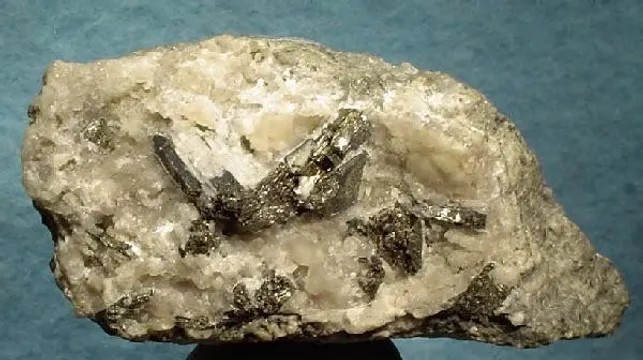
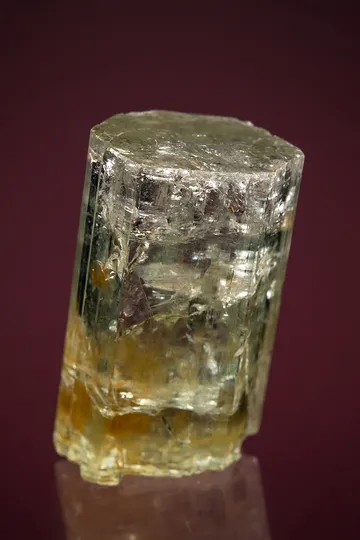
“Barite” is the spelling most often used on older American Sherman labels, and at this locality it means the same BaSO4 species that modern international mineral databases usually call baryte. Sherman barite is prized for thick, lustrous, golden to honey-brown crystals, commonly blocky-tabular rather than the thin bladed habit familiar from many Colorado deposits. Published Leadville locality accounts note Sherman Tunnel crystals reaching about 5 cm on an edge, and specimen records show individual groups in the miniature to small-cabinet range, with the finest examples showing bright stepped faces, good translucency, and little edge bruising. The best pieces are not merely yellow—they have depth of color, sharp modified terminations, and a clean contrast against quartz, dolomite, galena, or oxidized matrix; ordinary pieces tend to be contacted, dull, isolated fragments, or sugary baryte-coated matrix without the commanding crystal architecture that made the tunnel famous.
Under the name “baryte,” Sherman Mine is one of Colorado’s classic localities for golden BaSO4, especially from the Sherman Tunnel workings below Mount Sherman. The characteristic crystals are thick tabular to blocky groups, yellow, amber, tan, or golden-brown, sometimes perched on quartz or gray siliceous matrix and sometimes forming the foundation for later secondary copper-zinc-lead minerals. Notable pieces from the K-22 Bypass are described as sharp, lustrous, thick tabular golden baryte with stepped faces; such specimens are far superior to loose cleaved crystals because they preserve the mine’s open-space growth and its paleokarst context. A fine Sherman baryte should have intact edges, glassy luster, warm saturated color, and enough matrix or associated secondary minerals to prove locality character rather than appearing as a generic Colorado barite crystal.
Pyromorphite from Sherman Mine is a secondary lead phosphate of collector interest chiefly because Sherman is not a prolific pyromorphite locality in the way that some classic lead mines are; it is recorded from the mine, but good visible specimens are scarce. Expect small green to yellow-green crystals or crusts in oxidized lead-rich pockets, associated with cerussite, baryte, quartz, galena remnants, iron oxides, and sometimes the broader copper-zinc suite. The value here lies less in large crystal size than in accurate locality, clear association, and well-crystallized micro to thumbnail-scale coverage. Good Sherman pyromorphite should be sharp enough under magnification to separate it from nondescript green coatings, and pieces with convincing old labels or analytical support deserve a premium because the mine’s better-known yellow micro-tabs may also be baryte or, rarely, wulfenite.
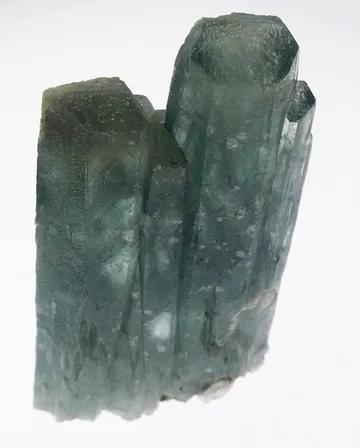
Rosasite is one of the great color minerals of Sherman Mine, occurring as blue, blue-green, turquoise, and green botryoidal crusts, spherical aggregates, drusy coatings, and small fans on quartz, smithsonite, cerussite, baryte, dolomite, and oxidized lead-zinc-copper ore. The best documented pieces are miniature to small-cabinet specimens from areas such as O-22 and C-22, where rounded rosasite aggregates sit with cerussite, smithsonite, azurite, and golden baryte; one notable association specimen collected in 1980 from the C-22 Area combines cerussite, rosasite, azurite, smithsonite, mimetite, beudantite, baryte, galena, and quartz. Good Sherman rosasite is richly colored, textural, and three-dimensional, ideally with contrasting white cerussite or pale smithsonite; ordinary pieces are powdery blue-green smears without botryoidal form, analytical confidence, or meaningful associations.
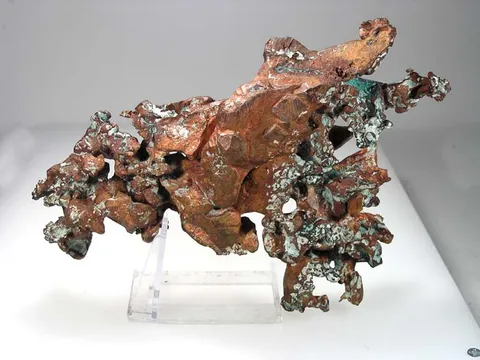
Beyond these headline species, Sherman Mine has a substantial documented suite for a single high-altitude Colorado locality: anglesite, aurichalcite, azurite, brochantite, calcite, cerussite, chalcopyrite, chrysocolla, covellite, cuprite, dolomite, galena, goethite, hemimorphite, huntite, linarite, malachite, native copper, native silver, oxyplumboroméite, plumbojarosite, pyrargyrite, pyrite, quartz, siderite, manganese-bearing siderite, smithsonite, sphalerite, willemite, wulfenite, and zincrosasite are among the recorded minerals. Zincrosasite is especially worth treating cautiously: it is recorded from Sherman, and intensely blue crusts with smithsonite have been reported, but some blue “rosasite” auction pieces from O-22 were explicitly noted as possible zincrosasite only if analysis confirmed it. Oxyplumboroméite and wulfenite add micromount interest, while pyrargyrite and native silver connect the collector suite back to the mine’s silver-ore history.
Sherman Mine specimens are classic enough that labels matter. A piece marked “Sherman Tunnel,” “Sherman Mine,” “Day Mines,” “Leadville Corporation Mine,” “Upper Iowa Gulch,” or occasionally “Hilltop” may all refer to material in the same historical collecting orbit, but the exact wording should be preserved. Hilltop is physically associated with the broader mine story, yet it lies across the county-line complexity of the Horseshoe area; many Hilltop specimens reportedly came out through the Sherman Tunnel, which is why careful label transcription is better than over-cleaned, modernized locality wording.
The most common authenticity problem is misidentification, not artificial enhancement. Golden tabular microcrystals on blue-green rosasite matrix have at times raised the question of wulfenite versus baryte; genuine Sherman wulfenite is reported, but it is sparse and generally tiny, so “wulfenite” should not be accepted casually on visual grounds when small golden baryte is far more characteristic of the locality. Rosasite versus zincrosasite is another recurring issue. Some blue botryoidal material may be zincrosasite, but without analysis it is safer to retain the older label as rosasite or describe it as possible zincrosasite rather than upgrade the species for market effect.
Condition is a major price driver. Sherman baryte crystals can show edge rubs, cleaves, back-side contacts, or bruised terminations; because the best crystals are thick and lustrous, even small chips can be visually distracting. Rosasite and aurichalcite-style coatings may be powdery or delicate, and cerussite “snowflake” microcrystals can be easily crushed or rubbed away. Avoid ultrasonic cleaning on mixed secondary specimens, and be conservative with water, acids, or aggressive mechanical cleaning because the appeal of many pieces lies in fine surface texture.
Fluorescence is not the main reason to buy Sherman specimens, although willemite is recorded from the locality and some zinc or carbonate assemblages may invite ultraviolet testing. Treat UV response as a bonus, not an authentication method. The important collecting hierarchy remains visible-light quality: golden baryte with sharp luster; vivid, undamaged blue-green rosasite; well-crystallized smithsonite or cerussite; and rare verified microminerals on a well-documented Sherman matrix.
Market availability is limited but not impossible. Loose or modest baryte and small secondary specimens appear periodically from old Colorado collections, while top Sherman baryte groups and multicolored association pieces are much less common. The finest examples tend to be older, from late twentieth-century finds, and are often described as ex-Kosnar or other regional collections. Premiums are justified for specimens with pocket or mine-area notes such as K-22 Bypass, C-22 Area, or O-22 area, intact baryte crystals to several centimeters, rich rosasite color, or analyzed rare species.
The Sherman story begins before the Sherman Tunnel itself. In 1869, the Last Chance claim was staked in the Horseshoe area. By 1877 it was sending ore to a smelter at the town of Horseshoe, roughly 9.6 kilometers east, and by 1884 it was shipping to Fairplay while a mill site was being developed at what became Leavick. Then came one of those small, human turns on which mining history often pivots: in 1886, a mine cook who had been discharged by the Last Chance operators located three claims just north of the Last Chance endline—the Hilltop, the Ptarmigan, and the Leslie De. Those claims became the Hilltop mine. A 37-meter incline shaft soon proved profitable, and the Hilltop produced heavily until the great silver decline of 1893.
The 1892–1893 sequence is especially memorable because it captures the brutality of timing in the silver camps. Felix Leavick and associates acquired control of the Hilltop in 1892, then immediately poured money into infrastructure: a narrow-gauge railway spur from Fairplay to Leavick, and a 5-kilometer aerial tramway from Leavick to the main Hilltop shaft. The whole scheme was built for ore movement at scale. Then the silver price collapsed in 1893, and the very expenditures that should have secured the mine’s future became a burden. Operations were suspended, and the Horseshoe district entered the long stop-start pattern familiar to so many Colorado camps after the silver crash.
The Sherman Tunnel was the later attempt to reach the old ground from below. In 1943, the Horseshoe Zinc Company leased the Hilltop claims; by 1945, after property consolidation in the Four Mile Amphitheater area, the company had become the Leadville Lead Corporation. In 1946 it began driving the Sherman Tunnel into the side of Mount Sherman, aiming beneath the old Hilltop workings to test lower-level veins. The tunnel is the reason so many specimens with a Hilltop pedigree are nevertheless tied to Lake County and the Sherman Tunnel on labels. For collectors, this matters: a specimen can be geologically and historically Hilltop material, yet have entered the specimen world through the Sherman Tunnel.
Collectors remember the mine through individual pieces almost as much as through ore production. One documented C-22 Area specimen, collected in 1980 and later photographed from the Richard Kosnar Collection, is a miniature museum in itself: cerussite, rosasite, azurite, smithsonite, mimetite, beudantite, baryte, galena, and quartz all on one 15.1 x 10.6 x 9.8 cm matrix. Its appeal is not that any one species is enormous; it is that Sherman’s oxidized system is preserved in one dense, colorful association—white cerussite, blue azurite, green-blue rosasite, pale smithsonite, rare beudantite, golden baryte, and dark galena.
The mine’s afterlife has been just as dramatic, though for environmental rather than collecting reasons. In 2008, after reclamation work had reestablished drainage through Iowa Gulch and regraded the waste rock, a portal blowout sent an estimated 8,000 to 10,000 cubic yards of material downstream. Later restoration planning divided roughly 2,000 feet of drainage channel into North Channel, South Channel, and Energy Dissipation zones, with grouted riprap and boulders proposed to stabilize waste rock and reduce sediment movement into sensitive wetlands. It is a sobering modern footnote: the same high, mineralized ground that yielded golden baryte and blue-green secondary minerals remains an active landscape of water, waste rock, snowmelt, and reclamation.