Santa Rosa Mine, Brazil: renowned tourmaline locality known for watermelon elbaite, bicolored crystals, and green-to-blue rims on quartz.
Key facts
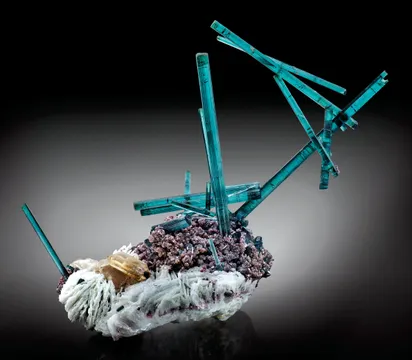
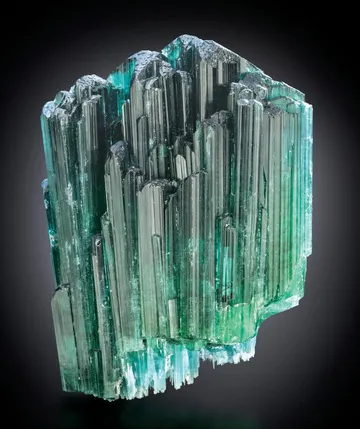
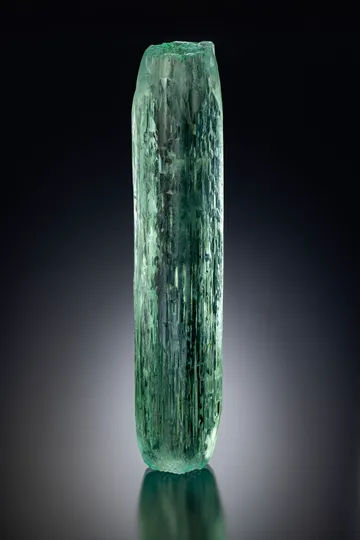
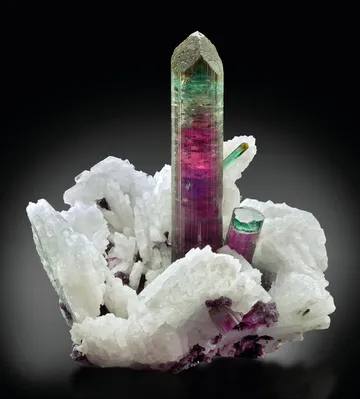
Santa Rosa is one of the decisive names in Brazilian tourmaline collecting: a weathered, pocket-rich granite pegmatite of the Santa Rosa Pegmatite Field, long catalogued under Itambacuri, Minas Gerais, and now also understood in the Franciscópolis–Itambacuri district southwest of Teófilo Otoni. Its fame rests on elbaite from pockets and decomposed pegmatite, especially the classic bicolored and “watermelon” crystals with rose to red interiors and green to turquoise-blue rims. The best pieces have the unmistakable Santa Rosa look: lustrous striated prisms, saturated green or blue-green skins, pink cores visible through gemmy zones, occasional blue or purple terminations, and dramatic placements on quartz or pale mica-rich pegmatite matrix.
Regional View
Country View
The mine’s collecting importance is not simply that it produced attractive Brazilian tourmaline; it helped define what collectors now mean by Brazilian watermelon elbaite. The principal discovery was in weathered ground where hard tourmaline and quartz pocket crystals lay in soft kaolinized pegmatite, so an extraordinary quantity of specimen and cutting material could be won rapidly by hand methods before systematic mining ever had a chance to organize the hill. Later hard-rock work produced fewer tourmalines, but the locality continued to yield fine green and blue material from the mine area and nearby hills, much of it still traded under the Santa Rosa name.

Photo: Rob Lavinsky / Wikimedia Commons

Photo: Rob Lavinsky / Wikimedia Commons
Search for specimens: View all specimens from Santa Rosa Mine, Brazil
Santa Rosa belongs to the Eastern Brazilian Pegmatite Province, one of the world’s major gem-pegmatite belts. The local field formed in the crystalline core of the Neoproterozoic Araçuaí Orogen, related to the Santa Rosa Granite and its late-stage pegmatitic fluids. The pegmatites intrude schists and gneisses of the São Tomé and Tumiritinga formations; in the studied Santa Rosa workings, the host is biotite schist, and the pegmatite is a sheetlike dike with weak but recognizable internal zoning.
The mine is a classic lithium-boron-phosphate pegmatite occurrence rather than a metal mine in the conventional sense. Its collectible “ore” was tourmaline-bearing pocket material: quartz, feldspar, mica and tourmaline in cavities and replacement pockets, locally surrounded by clay, water or kaolinized feldspar. Scientific work on a Santa Rosa Pegmatite Field dig described border, wall and intermediate zones with discontinuous quartz core development, and gem pockets most favorable near the transition between the intermediate zone and the quartz core. Pocket frames can show distinctive star-like muscovite growths, while barren cavities may be clay-filled or contain black tourmaline of little gem value.
Historically the site began as a mica operation. The mica mine opened in 1938, was abandoned after World War II, and then entered mineral-collecting history on October 12, 1967, when garimpeiro Tião Matias noticed colored tourmaline chips coming out of ant holes and armadillo burrows on the Santa Rosa hillside. His first dig produced tourmaline druses; deeper work exposed quartz crystals encrusted with gemmy pink-and-green bicolored tourmalines. The ensuing rush was immense. In less than a year, hundreds of kilograms of clean multicolored tourmaline and much larger quantities of specimen-grade material were recovered, while the hillside became riddled with hundreds of short, unsafe tunnels.
The richest early material came from the decomposed upper and colluvial portions of the pegmatite, where weathering had done much of the mining for the garimpeiros. Hard-rock tunnels later penetrated the primary pegmatite, including long workings on the back side of the hill, but those deeper passages yielded fewer tourmalines and a smaller percentage of gem-quality crystals than the original weathered ground. Santa Rosa’s most celebrated production included 10–25 cm watermelon crystals, some very large nongem crystals up to about 45 cm long and more than 20 kg, and smaller gemmy cores known locally as balinhas that could sometimes be freed from decomposed outer prisms.
The “Santa Rosa” name in commerce has always required nuance. The classic Santa Rosa front is reported as buried and abandoned, while modern Santa Rosa Pegmatite Field activity has continued in nearby commercial underground digs, especially around the Franciscópolis–Itambacuri area. Some references describe at least six pegmatite bodies in the Santa Rosa group, and material from nearby hills has long been sold simply as Santa Rosa. For collectors, this means the locality name is both historically specific and commercially elastic: the finest old specimens are usually understood as classic Santa Rosa Mine material, while later pieces may represent the broader Santa Rosa field unless accompanied by stronger provenance.
Collecting access today should be treated as private, hazardous and commercial. The old workings were already unstable in the late 1960s, and modern underground digs in the field use blasting and locally rudimentary methods. Casual collecting is not a realistic expectation; specimens reach collectors through dealers, older collections, estate dispersals and occasional production from active operations in the district.
Elbaite is the signature Santa Rosa mineral, occurring as lustrous, strongly striated prismatic crystals in green, blue-green, blue, pink, red and bicolored to watermelon zoning; the classic material shows a rose to red core wrapped by a green or turquoise-blue rim, sometimes with a blue or purple terminal zone. Documented Santa Rosa crystals range from thumbnail and miniature singles through 10–25 cm gemmy to partly gemmy prisms, with exceptional nongem specimen crystals reported up to roughly 45 cm and more than 20 kg. The most desirable pieces are unrepaired, sharply terminated, transparent enough to show internal color zoning without excessive backlighting, and preferably on quartz, cleavelandite or lavender lithium mica matrix; ordinary examples tend to be darker, more etched, broken, heavily included, or detached cutting rough rather than complete collector crystals.
“Tourmaline” on Santa Rosa labels commonly covers unanalysed or varietally named crystals that collectors may also call verdelite, rubellite, indicolite or elbaite depending on color and documentation. Santa Rosa tourmalines are typically elongated prisms with strong vertical striation, flat to pyramidal terminations, and colors ranging from bottle green and emerald green through blue-green to pink and red; many early pieces came from kaolinized pocket zones, while later production and field material include darker green hard-rock crystals. The better general tourmaline specimens from this locality have bright glassy luster, a clean termination, strong color visible in normal light, and attractive association with quartz or lavender mica; pieces sold only as “tourmaline” are best valued by specimen quality and provenance rather than by assuming a precise species name without analysis.
Quartz at Santa Rosa is important less as a standalone species than as the pocket architecture that made the tourmalines collectible: masses and crystals of colorless to milky quartz formed the core and pocket environment, and the most memorable finds included quartz crystals encrusted or flanked by pink-and-green elbaite. Collectible quartz-associated pieces range from small tourmaline-on-quartz thumbnails to cabinet specimens where clear quartz gives structural contrast to saturated green or blue tourmaline; good examples keep quartz tips intact and place the tourmaline visibly rather than burying it in massive white matrix. Pure rock-crystal quartz from Santa Rosa is a secondary pursuit, while quartz matrix with undamaged, gemmy tourmaline is one of the locality’s classic specimen formats.
Indicolite from Santa Rosa is represented by blue to blue-green elbaite crystals, including transparent slender prisms on quartz and larger parallel groups with rich blue color and sharp polycrystalline terminations. Fine examples are much scarcer than ordinary green Santa Rosa tourmaline and were vulnerable to the gem trade because clean blue crystals were excellent cutting rough; one reason large collector specimens are prized is that many comparable crystals were faceted rather than preserved. The best indicolites show an even saturated blue or blue-green body, high luster, crisp termination geometry, and minimal repair, with quartz accents adding both provenance character and display value.
Lepidolite from Santa Rosa is best understood in the collector’s sense as lavender to lilac lithium-rich mica associated with tourmaline, rather than as a consistently analyzed modern mica species. It appears as soft micaceous aggregates or matrix at the base of tourmaline crystals, providing the pale purple contrast that makes green and bicolored Santa Rosa specimens so attractive. Important examples preserve the mica as an undisturbed pocket association rather than a crumbly afterthought; because the mica is delicate, specimens with intact lepidolite, upright lustrous tourmaline, and no glue line or reconstructed base are markedly superior to ordinary loose crystals set into altered mica-rich matrix.
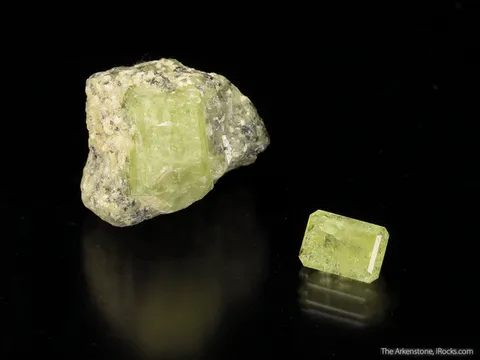
Other minerals documented from Santa Rosa include albite, especially cleavelandite, muscovite, schorl, fluorapatite including carbonate-rich fluorapatite, hydroxylherderite, wardite and rock crystal quartz. Hydroxylherderite is the standout rarity for species collectors: beige to yellowish crystals, sometimes with cleavelandite, are known from Santa Rosa and are far less common on the market than tourmaline. Later scientific work in the Santa Rosa Pegmatite Field also characterized feldspars, garnet-group minerals, apatite and zircon in the active dig environment, reinforcing the picture of a complex rare-element pegmatite system rather than a simple tourmaline vein.
The main Santa Rosa authenticity problem is label precision, not a famous tradition of manufactured fakes. Material from nearby hills and later Santa Rosa Pegmatite Field digs has long circulated under the Santa Rosa name, so an old label, collection history, dealer archive or photograph matters greatly when a specimen is represented as classic 1967–1970s Santa Rosa Mine production. “Itambacuri” on an older label is not automatically wrong; it reflects the traditional commercial and municipal attribution, even though present-day descriptions may place parts of the field in Franciscópolis.
Repairs are a serious condition issue. Large Brazilian tourmalines were commonly broken during extraction, trimming, transport or preparation, and many fine Santa Rosa crystals entered commerce as single crystals after being separated from quartz or kaolinized matrix. An unrepaired, sharply terminated Santa Rosa prism of substantial size is therefore much scarcer than the number of labels might suggest. Inspect along the c-axis for transverse breaks, resin-filled seams, reattached terminations, reconstructed bases and polished or sawn contact surfaces. Where a crystal sits on quartz or lepidolite, examine the junction carefully; natural pocket attachment and later mounting can look deceptively similar in photographs.
Color should be evaluated in both normal light and transmitted light. Santa Rosa greens can be very saturated, but some dark prisms need strong backlighting to show gemminess. Fine blue and blue-green indicolite is rare and can command a premium when unrepaired and well terminated. Watermelon crystals are judged by the visibility and balance of the zoning: a rose or red core cleanly rimmed by green or turquoise-blue is the locality ideal, while muddy, opaque, or poorly exposed zoning is less desirable. Strong claims of rubellite or indicolite should be supported by visible color, old provenance, or analysis where the specimen’s price depends on the varietal name.
Matrix specimens require extra care. Quartz tips chip easily, cleavelandite can detach along blades, and lithium mica matrix is soft and friable. Do not clean lepidolite-bearing pieces aggressively, and avoid prolonged soaking of altered kaolinized matrix. Tourmaline itself is durable enough for normal handling, but the pocket assemblage around it is not. Fluorescence is not a useful locality test for Santa Rosa tourmaline specimens; color zoning, habit, matrix and provenance are far more diagnostic.
In the current market, Santa Rosa is available but uneven. Small green tourmalines and detached crystals appear regularly; fine old watermelon pieces, blue indicolite, unrepaired cabinet crystals, and matrix specimens with strong aesthetics are much scarcer. Top pieces compete with other great Minas Gerais tourmaline localities, but Santa Rosa has a distinct premium when the specimen shows the classic bicolored or watermelon character that made the mine famous.
The Santa Rosa story begins with one of the most memorable prospecting clues in Brazilian gem history. On October 12, 1967, Tião Matias was on the Santa Rosa hillside when he noticed colored tourmaline chips in ant holes and armadillo burrows. The detail matters: this was not a shaft, a mapped vein, or a formal survey. It was animal excavation betraying a decomposed pegmatite so close to the surface that gem tourmaline fragments had literally been pushed into daylight by ants and armadillos. Matias dug first through the soft ground and found tourmaline druses; deeper down, he struck quartz crystals coated with gemmy pink-and-green bicolored tourmaline.
For a brief moment Matias tried to make the strike orderly. He gathered miners under his own control, claimed the richest ground, and set rules against guns, knives and hard liquor. Theft, he said, would mean prison. It was an impossible code to enforce once word spread. Within weeks, the kilometer-long hillside was overrun by more than 4,000 garimpeiros, and Itambacuri became the trading floor where independent miners and buyers from abroad met in furtive bargaining. The soft kaolinized pegmatite made extraction fast and cheap; the value of the crystals made restraint unrealistic.
Dr. Fred Pough reached Santa Rosa in June 1968, only nine months after the discovery, and saw a pegmatite being consumed by chaos. By then 452 tunnels had been driven into the hill, but only six were producing. The original crowd of 4,000 miners had already fallen to about 1,000. The workings were short, crowded and often unshored, with one tunnel beside another, above another, below another, each group scratching out whatever quartz and tourmaline appeared at the face before moving on. Pough saw a badly lacerated man who had been hurt in a cave-in. He also noted the central absurdity of the rush: the mining was so disorganized that it probably left as much gem material behind as it removed.
The “balinhas” are among the most charming details of Santa Rosa collecting. Many colluvial tourmaline crystals were partly decomposed, their weathered prisms hiding flawless, rounded, dark green gem cores. The miners called those outer weathered tubes canudos and the freed cores balinhas, “little bullets.” Sometimes the bullet-like cores had weathered out naturally; sometimes a practiced hand with a hammer could tap the old prism just right and release a rounded gem nodule inside. These were not the large display crystals collectors dream of, but they were some of the finest rough the mine produced.
The bonanza was astonishingly short. The greatest activity lasted about five months, and within three years the mine was virtually abandoned. Yet the yield from that short interval was extraordinary: at least 500 kg of clean multicolored tourmaline, about 200 kg of balinhas and roughly 1,600 kg of specimen-quality material were estimated from the year after Matias’s discovery. Some nongem crystals were so large that they went to major institutions rather than cutters, with immense Santa Rosa tourmalines recorded in collections such as the Smithsonian Institution, the American Museum of Natural History, the Sorbonne exhibit and the Folch collection.
Santa Rosa did not entirely end with the first rush. Renewed activity began around 1980 at the mine and nearby hills, and a large pocket in late 1984 yielded superb collector crystals. By 1985, fine “emerald”-green material was again being bought from the locality. That later production complicates labels but enriches the story: Santa Rosa is both a legendary five-month rush and a broader pegmatite field whose pockets continued to surprise miners long after the famous hill had been honeycombed.