






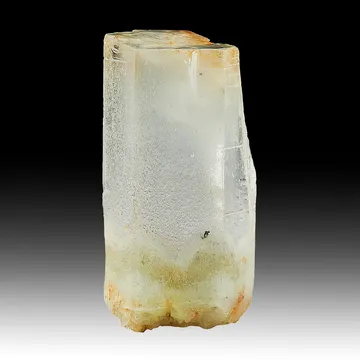
Sakavalana mine, Madagascar - famed for pezzottaite-(Cs) raspberry-pink beryl-group crystals from a tiny pocket, a locality prized by collectors.
Key facts
Sakavalana is one of those rare pegmatite localities whose fame rests on a single, short-lived event: the opening of a miarolitic pocket that introduced the mineral world to pezzottaite-(Cs), the vivid raspberry-pink, cesium- and lithium-rich beryl-group species formally recognized in the early 2000s. The mine lies in the Ambatovita–Mandrosonoro area of Madagascar’s central highlands, in the northern part of the Ampandramaika–Malakialina pegmatite district. Geologically it is a rare-element granitic pegmatite with an unusually hybrid personality: the pegmatite carries hallmarks of both LCT enrichment, with Li, Cs and Ta, and NYF affinity, with amazonitic K-feldspar, zircon and Nb-Ta oxides.
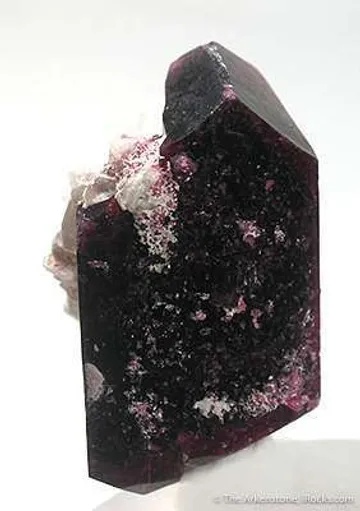
The collector importance of Sakavalana is far larger than its physical size. The productive dike is only a few meters wide and a few hundred meters long, hosted by impure marbles of the Vohimena Group, yet it produced a pocket assemblage that reads like a catalogue of central Madagascar pegmatite glamour: citrine to smoky quartz, green amazonite, bladed albite, black to multicolored tourmaline, green-to-pink spodumene, danburite, zircon, spessartine, hambergite, chiavennite, and the pink species that made the mine famous. Good Sakavalana specimens are immediately recognizable when they are right: small but saturated pezzottaite crystals, commonly tabular and hexagonal-looking, set against black schorl, white albite, smoky quartz or green feldspar. The color is not the candy-pale pink of ordinary morganite but a denser purplish raspberry, often complicated by etching, growth tubes, healed fractures and pocket corrosion.
Regional View
Country View
Sakavalana’s best specimens are not large by Brazilian tourmaline or Afghan spodumene standards; their power is mineralogical. The most desirable pieces combine strong raspberry color, recognizable crystal form, matrix contrast and unambiguous type-locality provenance. Loose crystals and fragments occur, but true matrix specimens with bright pezzottaite perched on schorl, albite, quartz or amazonite are far less common. Much of the original material was corroded, broken, included or cut as gems, making undamaged display pieces from the discovery pocket a small and finite population.

Photo: Géry Parent, Wikimedia Commons

Search for specimens: View all specimens from Sakavalana mine, Madagascar
Sakavalana is a gem-bearing rare-element granitic pegmatite mine near Ambatovita, in the Mandrosonoro commune of the Ambatofinandrahana District, Amoron'i Mania Region, Madagascar. The locality is recorded at approximately 20°44'48" South, 46°04'30" East, and the pezzottaite workings described in the original gemological literature were situated on a low hill at roughly 920 meters elevation, a few kilometers northwest of Ambatovita and southwest of Ankosira, near the Manambaroa River.
The deposit is a subvertical pegmatite dike at least 4–6 meters wide and more than 200 meters long. Its country rock is an impure marble package assigned to the Vohimena Group, on the eastern limb of a synformal structure dominated by quartzitic gneisses and surrounded by deformed granites. Regionally, Sakavalana belongs to the Ampandramaika–Malakialina pegmatite district, a central Madagascar pegmatite province long known for beryl and gem minerals. Its mineralogical peculiarity is the “mixed” LCT–NYF signature: lithium-cesium enrichment and late pocket mineralization coexist with amazonitic microcline, zircon, monazite and Nb-Ta oxide species more typical of NYF-style pegmatites.
The pegmatite’s outer portions are dominated by K-feldspar, quartz, plagioclase and black mica. The core zone, where the important cavities formed, is much richer visually and chemically: green amazonite, smoky quartz, zoned black and purple mica, cleavelandite albite, danburite, zircon, Nb-Ta oxides, black tourmaline, minor beryl, spessartine and spodumene. Crystal-lined cavities developed locally in this core zone, and pezzottaite formed there as a late-stage hydrothermal mineral. The most persuasive genetic model involves cesium remobilization from earlier pollucite or pollucite-like material, followed by late Be-rich fluids depositing pezzottaite in and around the pocket system. Secondary voids consistent with dissolved pollucite, Cs-bearing phases such as analcime, and pervasive corrosion of pezzottaite all support a late, fluid-driven episode rather than a simple primary beryl crystallization story.
Mining at Sakavalana began long before pezzottaite was recognized. The pegmatite was reportedly worked from the early 1940s for multicolored tourmaline, and the older workings consisted of small pits, shafts and open cuts dug largely by hand. During the pezzottaite rush, the mine was still artisanal: tunnels and rooms were entered by short passages, illumination was by candlelight, and crude timbering and scaffolding were used around deeper openings. One shaft reached roughly 30 meters and suffered from flooding, although the pezzottaite-bearing rooms were separate from the deepest tourmaline-producing shaft.
The decisive event came in November 2002, when local miners opened a large miarolitic cavity. Contemporary accounts describe a pocket, possibly up to about 3.0 × 3.0 × 1.2 meters, filled with large crystals and broken masses of quartz, amazonite, albite, spodumene, multicolored liddicoatite and raspberry-pink “Cs-rich beryl,” later shown to be pezzottaite-(Cs). Beneath the main cavity was a zone of many smaller vugs containing smaller pezzottaite crystals. The original production figures are remarkable for such a compact mineralized zone: about 700 kilograms of smoky to citrine quartz, 280 kilograms of multicolored tourmaline, more than 40 kilograms of pezzottaite, and about 25 kilograms of transparent spodumene were attributed to the main pocket. Some tourmaline crystals reached weights of 15, 25 and 50 kilograms and were reportedly purchased for carving.
The pezzottaite itself was produced as crystals, fragments and masses, generally weighing only a few grams but rarely much larger. Gem-quality pieces were uncommon and typically under 1–2 grams, while many tens of kilograms consisted of low-quality, deeply corroded, fractured or spongy material. The total Sakavalana pezzottaite production was estimated by dealers and researchers to have possibly reached around 150 kilograms, but only a fraction of that material was suitable for cutting, and attractive specimen-quality crystals on matrix were the rarest category.
By early 2003, the discovery had drawn miners, families and traders to the hill. At the height of the rush, roughly 120 people, including about 60 miners and their families, were living at or near the deposit. By April 2003 most had left because production had dropped sharply, and by July 2003 only about 20 people were actively working the pegmatite. Reports from late 2003 described the pezzottaite-bearing zone as largely mined out, the remaining ground difficult to work by hand, and the underground conditions deteriorated by rockfalls and backfill. For collectors today, Sakavalana should be treated as a finite classic locality rather than a reliable modern source. Specimens appear mostly as old stock, collection releases and occasional dealer pieces, not as steady new mine production. Any collecting access would require local permission, guides and an awareness that the historical pezzottaite workings were remote, unstable and seasonally difficult to reach.

Sakavalana pezzottaite is the locality-defining species: raspberry to purplish pink, commonly tabular and pseudohexagonal in outward appearance, occurring as isolated crystals, flat irregular cavity fillings between cleavelandite, quartz and tourmaline, and smaller crystals attached to tourmaline faces. Documented crystals reached several centimeters across, with the formal species description noting subhedral to euhedral tabular crystals up to about 10 cm in diameter, although most collectible pieces are far smaller and many are fragments rather than complete crystals. The best Sakavalana specimens show saturated color, obvious form, luster, and matrix contrast with black schorl, white albite, smoky quartz or green amazonite; ordinary examples tend to be corroded, heavily fractured, spongy, dull, or represented only by tiny grains in matrix. Growth tubes parallel to the c-axis are common and gave some gem rough chatoyancy, but for mineral collectors the premium is on sharp raspberry crystals on matrix from the original 2002 pocket and its immediately underlying vug zone.
Beyond pezzottaite, Sakavalana is documented for an unusually rich pocket assemblage. Quartz occurs as smoky and citrine crystals; K-feldspar as green amazonite is visually important in the core zone; albite appears as bladed cleavelandite; tourmaline includes schorl, elbaite and probable liddicoatite; spodumene includes green-to-pink material described from the pocket; and accessory or late-stage species include danburite, zircon, spessartine, beryl, morganite, aquamarine, cassiterite, monazite-(Ce), allanite-(Ce), pyrochlore-supergroup minerals, analcime, cryptomelane, chalcedony, bavenite, milarite, opal and scorodite reported with uncertainty. Chiavennite deserves special attention: although not a type-locality species at Sakavalana, the Ambatovita material was exceptional, occurring as fresh brownish-red to orange aggregates and small transparent crystals in cavities, associated with hambergite, pezzottaite, Mn hydroxides and chalcedony.
The first authenticity issue for Sakavalana is naming. Early material was sold under several incorrect or provisional names, including “raspberry beryl,” “red beryl,” “pink beryl,” “hot pink-red beryl,” “raspberyl,” “bixbite,” and even tourmaline. Those historical labels are not automatically fraudulent; many date from the brief period before pezzottaite-(Cs) was understood as a new mineral species. For a modern collection, however, the distinction matters. Pezzottaite is not Utah red beryl and is not ordinary morganite. A serious specimen label should identify pezzottaite-(Cs), ideally with Sakavalana mine, Ambatovita, Mandrosonoro, Ambatofinandrahana District, Amoron'i Mania, Madagascar.
The second concern is locality precision. Since pezzottaite has since been reported from other places, including new Madagascar material outside Sakavalana, a generic “Madagascar pezzottaite” label is no longer enough. Sakavalana pieces should have old-stock provenance, a credible dealer chain, a museum-style label, or matrix/association consistent with the original pocket. The classic Sakavalana look is raspberry-pink pezzottaite with schorl, albite, smoky quartz, amazonite or pocket feldspar. More recent, highly saturated loose crystals or gems from other Madagascar deposits should not be casually reassigned to Sakavalana.
Condition is a central grading point. Many crystals were naturally etched or corroded by late fluids, and some show spongy pale masses, brown iron or manganese staining, microsteps, fractures, healed cracks and broken edges. That does not automatically make a specimen poor; corrosion is part of the locality’s paragenetic signature. But collector-grade pieces need the corrosion to be subordinate to color and form. A small sharp crystal with saturated raspberry color on contrasting schorl is generally more desirable than a larger, chalky, corroded mass.
Clarity enhancement is documented for Sakavalana rough. Researchers examining early material found low-relief fractures and bubbles consistent with filling, and learned that local Madagascar dealers commonly oiled rough so buyers could see into the etched surfaces more easily. For specimen collectors, oiling or resin in fractures should be disclosed, especially on loose crystals and polished windows. Under UV, pezzottaite from the study material was generally inert to long-wave and short-wave ultraviolet; weak chalky yellow fluorescence in fractures was interpreted as evidence of a filling substance rather than the pezzottaite itself.
Heat is another handling concern. In laboratory experiments, a purplish pink fragment lost nearly all color at 450°C and regained much of it after gamma irradiation; no such change was noted at lower experimental temperatures of 250°C and 350°C. That does not mean specimens are fragile under ordinary display conditions, but it does argue strongly against aggressive heating, torch work, recutting without coolant, or ultrasonic and steam-cleaning practices that could affect fillings or stress fractures. Pezzottaite is hard enough for gem use, but Sakavalana specimens are usually fractured, cleaved, included or perched on delicate matrix, so the practical rule is simple: handle them as rare pocket specimens, not as robust beryl thumbnails.
On the market, Sakavalana remains scarce. Fine matrix pieces are much rarer than loose fragments or cut stones, because the original pocket was small, much of the production was gem rough, and the mine was already described as largely depleted by late 2003. Current availability is mostly sporadic: old collection labels, dealer holdbacks, estate material and occasional high-priced thumbnails. For top pieces, value is driven less by size alone than by a combination of type-locality certainty, color saturation, undamaged crystal form, matrix aesthetics and documented provenance.
In July 2003, Brendan Laurs visited the mine with Federico Pezzotta as guide. The route itself explains why Sakavalana was never going to become an easy collecting locality. From Antsirabe, the paved road to Ambatofinandrahana covered about 160 kilometers and took roughly six hours. From there, the journey continued by rough dirt track for about 140 kilometers to Mandrosonoro, then another 25 kilometers to the mine. Even in the dry season, described in the report as “ideal” conditions, the trip took about 14 hours from Ambatofinandrahana because the terrain caused multiple vehicle breakdowns. In the rainy season, from December through April, the same road was described as hazardous to impassable.
The mine, when the researchers reached it, was not an industrial operation but a small human settlement on a low hill. Huts stood above the workings, and the pezzottaite rooms were accessed by short tunnels. The contrast between the mineralogical sophistication of the discovery and the simplicity of the mining is striking: the pezzottaite-bearing vugs were worked with simple hand tools and candlelight. In the underground rooms, iron-stained clay coated fractures and obscured the mineralogy. That same clay contributed to poor roof stability, making the workings unsafe even while they were still being chased for specimens.
The main pocket must have been astonishing when opened. It reportedly yielded about 700 kilograms of smoky quartz, including crystals up to 50 kilograms, as well as 280 kilograms of multicolored tourmaline and more than 40 kilograms of pezzottaite. The three largest tourmaline crystals weighed 15, 25 and 50 kilograms and were reportedly bought by a Korean dealer for carving. Against that massive pocket production, the finest pezzottaite specimens were small treasures: raspberry crystals, fragments and masses normally weighing only a few grams, with truly gem-quality pieces usually less than 1–2 grams.
The human rush was brief. After the first discovery, about 120 people lived at the deposit, including around 60 miners and their families. By April 2003, most had left because the pocket had stopped producing at the same pace. By July, only about 20 people were still actively working. By November, Federico Pezzotta reported that the underground workings were in poor condition from rockfalls and backfill, and that little, if any, additional pezzottaite had been produced. Sakavalana became a classic locality almost immediately, but it also became a depleted one almost immediately.
There is a smaller, quieter story inside the famous pocket: the discovery of exceptional Malagasy chiavennite. In February 2003, Hervé Forner examined Ambatovita material and noticed a 5 cm specimen dominated by a brownish-red mineral in radial aggregates, associated with manganese hydroxides and cementing fragments of quartz and pezzottaite. In tiny cavities, the unknown mineral formed 1–2 mm globules under a thin crust of colorless to pale blue chalcedony. Later, during the July 2003 field trip, Federico Pezzotta obtained from a local miner a specimen weighing over 7 kilograms, containing pezzottaite, liddicoatite, green amazonite, quartz, manganese hydroxides and large masses of the same brownish-red mineral. When the mass was broken down, cavities up to 5 cm across appeared inside it, lined with globular and tabular crystals. Analyses in Milan identified the brownish-red mineral as chiavennite and the flat colorless to white prisms, up to 1 cm long, as hambergite.
Even the mine camp had its own epilogue. A photograph caption in the chiavennite study records the Sakavalana mine in April 2004 after a strong cyclone in March 2004 had destroyed much of the cabins at the site. The image belongs to the afterlife of the discovery: the pocket largely spent, the rush over, the huts damaged, and the mineral world already absorbing the significance of a new raspberry-pink beryl-group species from a remote Malagasy hill.
Brendan M. Laurs, William B. Simmons, George R. Rossman, Elizabeth P. Quinn, Shane F. McClure, Adi Peretti, Thomas Armbruster, Frank C. Hawthorne, Alexander U. Falster, Detlef Günther, Mark A. Cooper and Bernard Grobéty, “Pezzottaite from Ambatovita, Madagascar: A New Gem Mineral,” Gems & Gemology, Vol. 39, No. 4, 2003, pp. 284–301. The foundational gemological paper documenting the discovery history, access, geology, production, properties, inclusions, color stability and early market confusion.
Frank C. Hawthorne, Mark A. Cooper, William B. Simmons, Alexander U. Falster, Brendan M. Laurs, Thomas Armbruster, George R. Rossman, Adolf Peretti, Detlef Günther and Bernard Grobéty, “Pezzottaite, Cs(Be2Li)Al2Si6O18, a Spectacular New Beryl-Group Mineral from the Sakavalana Pegmatite, Fianarantsoa Province, Madagascar,” The Mineralogical Record, Vol. 35, No. 5, 2004, pp. 369–378. The formal mineralogical treatment of pezzottaite, including morphology, structure, name approval and type-locality context.
Pezzottaite entry, Handbook of Mineralogy. Concise mineral data for the species, including Sakavalana chemistry, occurrence, associations and listed type-material repositories: National Museum of Natural History, Washington, D.C.; Canadian Museum of Nature, Ottawa; and Natural History Museum Bern, specimen NMBE-36990.
William B. Simmons, Alexander U. Falster, Brendan M. Laurs, Federico Pezzotta and Frank C. Hawthorne, “Cesium Remobilization and the Formation of Pezzottaite at the Sakavalana Pegmatite, Madagascar,” Geological Society of America Abstracts with Programs, Vol. 36, No. 5, 2004, p. 116. A focused genetic interpretation linking pezzottaite formation to late hydrothermal fluids and cesium remobilization, probably after corrosion of pollucite.
Federico Pezzotta, Alessandro Guastoni, Hervé Forner, Francesco Demartin and Roy Kristiansen, “Exceptional Chiavennite Associated with Pezzottaite from the Sakavalana Pegmatite, Ambatovita, Madagascar.” A detailed account of the rare chiavennite-hambergite assemblage found with pezzottaite in the late-stage pocket environment.
G. Diego Gatta, Ilaria Adamo, Martin Meven and Erica Lambruschi, “A Single-Crystal Neutron and X-ray Diffraction Study of Pezzottaite, Cs(Be2Li)Al2Si6O18,” Physics and Chemistry of Minerals, Vol. 39, No. 10, 2012, pp. 829–840. A later crystallographic study cited in the Handbook of Mineralogy entry, based on pezzottaite from Sakavalana.
Robert F. Martin and Caterina De Vito, “The Patterns of Enrichment in Felsic Pegmatites Ultimately Depend on Tectonic Setting,” The Canadian Mineralogist, Vol. 43, 2005, pp. 2027–2048. Places Sakavalana in the broader discussion of hybrid NYF–LCT pegmatites and the unusual juxtaposition of Li-Cs enrichment with amazonite, zircon, spessartine, danburite and Nb-Ta oxides.
Alexander A. Goodsuhm, Nathan Renfro and Wim Vertriest, “New Deposit of Pezzottaite from Madagascar,” Gems & Gemology, Spring 2025. Important for modern collectors because it distinguishes newer Madagascar pezzottaite material from classic Sakavalana production.
Taku Okada and Kazuko Saruwatari, “Pezzottaite with Multiple Cat’s-Eyes,” Gems & Gemology, Summer 2025. Useful for understanding pezzottaite inclusions, growth tubes, cleavage-related phenomena and gemological separation.
Mindat locality page: Sakavalana mine, Ambatovita, Mandrosonoro, Ambatofinandrahana District, Amoron'i Mania, Madagascar Essential locality summary with coordinates, mineral list, type-locality status and references.
Mindat pezzottaite-(Cs) mineral page Species-level data and locality distribution for pezzottaite-(Cs).
Wikimedia Commons category: Sakavalana Mine Open-image archive with several Sakavalana pezzottaite photographs useful for visual comparison.
GIA: “Pezzottaite from Ambatovita, Madagascar: A New Gem Mineral” The most detailed open-access account of the discovery, mine visit, pocket production and gemological data.
GSA abstract: “Cesium Remobilization and the Formation of Pezzottaite at the Sakavalana Pegmatite, Madagascar” Short but valuable genetic model for the late-stage formation of pezzottaite.
MSA Pegmatites: “Exceptional Chiavennite Associated with Pezzottaite from the Sakavalana Pegmatite” Best source on Sakavalana’s chiavennite, hambergite and late-stage pocket assemblage.
Handbook of Mineralogy: Pezzottaite Compact reference for formula, type material, occurrence and associations.
CaltechAUTHORS record for the Mineralogical Record pezzottaite paper Bibliographic access point for the formal description of the species.
.jpg)

