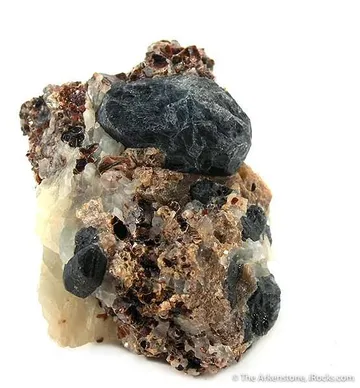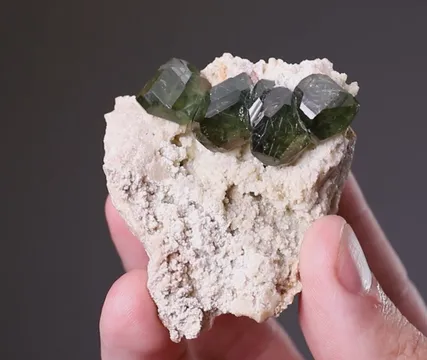
Antsirabe, Madagascar locality - pegmatite belt producing vividly zoned tourmalines (liddicoatite) and rare minerals; a historic source prized by collectors.
Key facts
For mineral collectors, “Antsirabe” is less a single pit than a historically powerful locality name for the rare-element pegmatite belt of Madagascar’s central highlands. The city itself became the trade and reference point for a constellation of lithium-, cesium-, tantalum-, boron-, and fluorine-rich granitic pegmatites around Ibity, Betafo, the Sahatany Valley, Manandona Valley, and the Anjanabonoina area. That belt is one of the world’s classic sources of vividly zoned tourmaline—especially calcium-rich lithium tourmalines long traded as liddicoatite—and it is tied directly to the type material that modern nomenclature treats as fluor-liddicoatite.
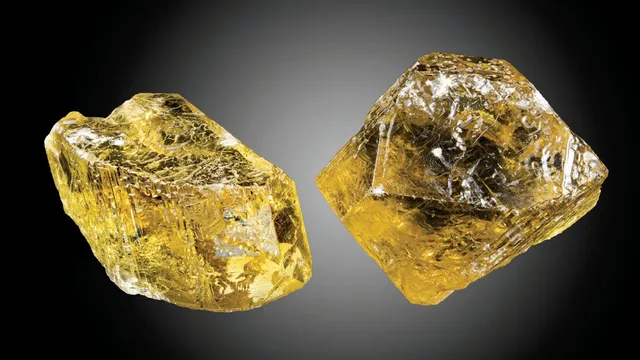
The geological setting is unusually favorable: late Pan-African granitic pegmatites intruded metasedimentary rocks of the Itremo Group, including quartzite, schist, gneiss, and marble. Where pegmatitic melts and late fluids interacted with calcium-rich host rocks, especially carbonate units, the system produced tourmalines rich in calcium as well as an exceptional accessory suite. The same district that yielded polychrome tourmaline also produced beryl, spodumene, danburite, phenakite, hambergite, rhodizite-londonite, bityite, manandonite, schiavinatoite, manganocolumbite, manganotantalite, microlite, xenotime-(Y), monazite-(Ce), hafnian zircon, and other evolved-pegmatite minerals.
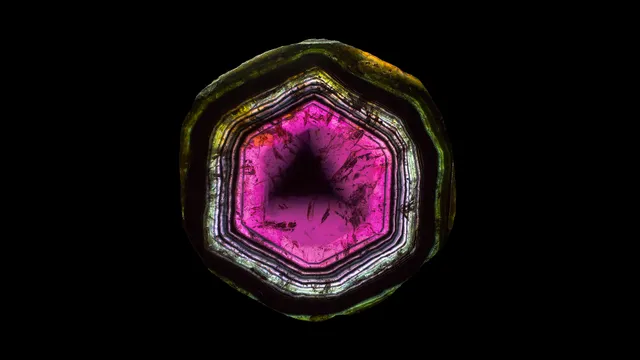
The finest Antsirabe-region tourmalines have a look that is almost impossible to mistake once one has handled enough of them: stout to slender trigonal prisms, commonly deeply striated, sometimes with a dark outer skin, and—when sliced perpendicular to the c-axis—extraordinary internal color geometry. The best cross sections show triangular cores, concentric rims, sharp red or pink bands meeting at 120 degrees, and transitions through raspberry, cranberry, rose, orange-pink, yellow-green, blue-green, brown, colorless, and black zones. Complete crystals on matrix are far scarcer than polished slices, because much of the productive pegmatite was deeply weathered to kaolin and eluvial clay; crystals were often recovered loose or with fragile remnants of cleavelandite, quartz, or altered feldspar.
Regional View
Country View
Historically, Antsirabe matters because it sits at the crossroads of Malagasy gem mining, French colonial mineralogy, Idar-Oberstein lapidary work, and modern tourmaline nomenclature. Alfred Lacroix and early European investigators described the Malagasy pegmatites and their polychrome tourmalines in the late nineteenth and early twentieth centuries. In the 1970s, Smithsonian researchers recognized calcium-rich Madagascar tourmaline as a distinct end-member and named it in honor of Richard T. Liddicoat of the Gemological Institute of America. Later nomenclature refined that original type material as fluor-liddicoatite, but the collecting world still uses “liddicoatite” for many Antsirabe-region calcium-rich tourmalines, especially when they show the famous triangular or star-like zoning.

Photo: Wikimedia Commons
Search for specimens: View all specimens from Antsirabe, Madagascar
The collector locality “Antsirabe” should be read carefully. In mineral literature it often means the pegmatitic region around Antsirabé in Madagascar’s central highlands rather than a single shaft within the city. Mindat’s “Near Antsirabe” entry records the historic type material of fluor-liddicoatite as detrital crystals from soils somewhere near Antsirabe, with the exact source unknown. The likely source area is one of the rare-element pegmatites southwest of the city, including the Sahatany Pegmatite Field near Ibity or the Anjanabonoina and neighboring pegmatites west-southwest of Antsirabe.
The district’s mineralization is hosted by granitic pegmatites generated during late to post-tectonic phases of the Pan-African event. In the Anjanabonoina area, the pegmatites are part of an aplite-pegmatite system exposed over about 800 by 300 meters in the historic mining area and extending roughly 2 kilometers south-southwest. The dikes dip gently north-northwest and range from about 2 to 12 meters thick. They intrude quartzites, schists, and marbles of the Itremo Group, and late hydrothermal fluids have strongly kaolinized much of the feldspar-rich pegmatite. Weathering can exceed 20 meters in the eluvial zones, which explains why many tourmaline crystals reached the trade without a durable matrix.
The Antsirabe-area pegmatites are not simple “gem pockets” in the casual sense; they are complex rare-element systems. Anjanabonoina has been described as intermediate between LCT and NYF rare-element pegmatite families. Its pockets are rare but can be very large, surrounded by kaolin clay, and contain quartz, microcline including amazonite, albite as cleavelandite, dravite-elbaite-liddicoatite tourmaline, spodumene as kunzite, native bismuth, spessartine, beryl as morganite, hambergite, danburite, phenakite, and scapolite. Londonite-rhodizite-bearing pegmatites in the broader Betafo-Antsirabe region are similarly evolved, commonly hosted by dolomitic marbles and marked by small dikes with extraordinary Cs, K, B, and Be enrichment.
Mining history in the region reaches back to the earliest decades of Malagasy gem-mineral exploitation. A large rubellite crystal from the Mount Ibity area was reportedly brought to the Paris museum in 1890, and colored tourmaline was found in situ in the Betafo region by 1893. The Anjanabonoina mining area was reportedly discovered in 1894 by Émile Gautier. Léon Krafft began intensive mining in the early 1900s, with the strongest early period between 1920 and 1925, when about 80 workers were active. By 1912, recorded colored tourmaline production from Anjanabonoina had reached 1,675 kilograms; after a lull, nearly another 1,700 kilograms were mined between 1920 and 1925. Early operations largely exhausted or disturbed eluvial material on the eastern and southern slopes, while deeper pegmatite potential remained.
A modern chapter began when Eckehard Petsch of the Julius Petsch Jr. company in Idar-Oberstein learned of the unusual zoned tourmalines, reached the abandoned Anjanabonoina workings in 1967, and recognized that significant ground remained unmined. His Malagasy company, Société Germadco, acquired the deposit in 1970, built roads, housing, and a school, and began mining in 1972 from dumps and eluvial deposits downslope from the pegmatites. By 1974, more than 100 workers were present. Germadco also advanced into the pegmatites themselves, with some tunnels reaching 100 to 200 meters.
After Madagascar changed mining-company ownership rules in 1979, Germadco passed into Malagasy control. Later work included deeper exploration, open pits, and local manual mining. The 1990s saw renewed technical evaluation by Fretosoa Company, an Italian-Malagasy venture involving Federico Pezzotta. Between 1995 and 1996, Fretosoa developed surface and underground workings, including four shafts 45 to 55 meters deep and a 185-meter subhorizontal tunnel that reached the pegmatite core zone. This work showed that part of the gem-bearing core remained unmined, but operations collapsed after the 1997 deaths of Randrianarisolo Benjamin and Giuseppe Tosco; equipment was stolen, workings deteriorated, and the area returned largely to small-scale seasonal digging.
Documented major Anjanabonoina tourmaline pockets occurred in 1972, 1978, 1984, and 1991. The 1978 pocket appears to have been the largest recorded, with about 2.6 tonnes of polychrome and red tourmaline crystals, individual crystals weighing up to roughly 20 kilograms. The 1984 pocket yielded about 2 tonnes of similar material along with other gem minerals. The 1991 pocket is less precisely documented, but one reported sale from that find alone involved 600 kilograms of red tourmaline. The largest tourmaline crystal recovered by Petsch reportedly measured 80 centimeters tall and 32 centimeters in diameter.
Collecting access today is not a casual proposition. The old Germadco track to Anjanabonoina was reported as impassable by vehicle in modern accounts, making the mine reachable only on foot from the Antsirabe side, with a two-day journey feasible mainly in the dry season. Published field accounts explicitly warned against casual travel to the area because of security concerns and noted that visitors should coordinate with local authorities. In practical collector terms, Antsirabe-region specimens should be acquired through established dealers, documented old collections, or reliable Malagasy sources rather than through improvised field collecting.
Antsirabe-region “liddicoatite” is the classic Madagascar calcium-rich lithium tourmaline of the trade: stout to slender trigonal prisms, deeply striated parallel to the c-axis, commonly raspberry, cranberry, purplish red, pink, green, brown, yellowish, blue-green, colorless, or black in complex zoning. The historic type material came as detrital crystals from soils near Antsirabe, while many of the great collector pieces labeled Antsirabe or Anjanabonoina came from large kaolin-lined cavities in pegmatites west-southwest of the city. Crystals can be thumbnail to cabinet size, and the mine record includes giants weighing many kilograms; a documented doubly terminated Anjanabonoina crystal weighed 17.8 kilograms and measured 33 by 22 centimeters. Matrix specimens with cleavelandite, quartz, or feldspar are much scarcer than loose crystals and slices. Good pieces here are separated from ordinary ones by transparency, sharp termination, bright cranberry to raspberry color, strong internal zoning, minimal breakage along healed fractures, and reliable locality and analytical context, because liddicoatite, fluor-liddicoatite, elbaite, and dravite cannot be separated confidently by appearance alone.
Tourmaline is the signature mineral of the Antsirabe pegmatite province, occurring as black schorl and dravite in less evolved or border zones and as gemmy elbaite-liddicoatite-fluor-liddicoatite compositions in the more evolved pocket zones. At Anjanabonoina and related localities, crystals are typically prismatic with trigonal symmetry, prism and rhombohedral faces, and lengthwise striations; many show a dark outer rind but reveal brilliant red, pink, green, yellow, blue-green, brown, and colorless zones when backlit or sliced. Complete single crystals, matrix groups on cleavelandite, and polished cross sections are all collected, but the most diagnostic visual form from this district is the slice cut perpendicular to the c-axis, where triangular core zones, concentric outer growth bands, and red star-like patterns display the multistage growth of the pegmatite pocket. The best Antsirabe-region tourmalines combine strong color contrast, translucency to transparency, clean faces, intact terminations, and, for slices, crisp symmetrical zoning with little resin-filled fracturing.
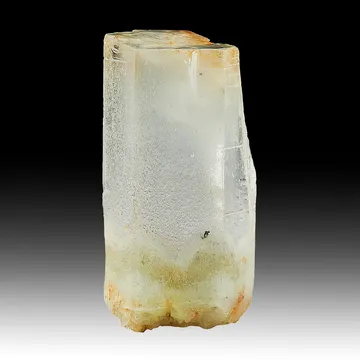
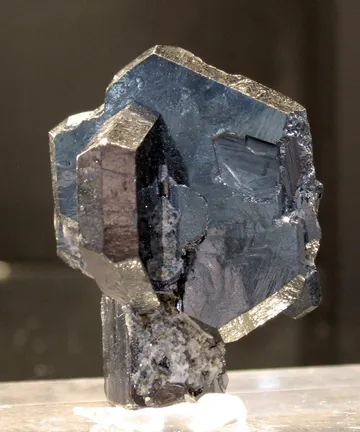
Other documented Antsirabe-region minerals make the district far more than a tourmaline locality. Fluor-liddicoatite has its type locality in the pegmatitic area southwest of Antsirabé and Betafo. Bityite is tied to Maharitra in the Sahatany Valley near Ibity, where the type material occurred as tiny white to yellowish pseudohexagonal barrel-shaped aggregates and lamellae on tourmaline or quartz. Manandonite was described from the Antandrokomby pegmatite of the Manandona Valley as pearly white flakes and fanlike globular aggregates. Londonite, the Cs-dominant analogue of rhodizite, was described from Antandrokomby and related Betafo-Antsirabe pegmatites, occurring as colorless, white, pale yellow, or sulfur-yellow dodecahedral crystals; Antsongombato produced especially large crystals up to about 7 centimeters. Schiavinatoite is tied to Antsongombato as its type locality. The district also produced rhodizite, danburite, hambergite, phenakite, Cs-rich beryl, spodumene, pollucite, manganoan fluorapatite, microlite, xenotime-(Y), monazite-(Ce), native arsenic, scheelite, manganocolumbite, manganotantalite, hübnerite, béhierite, and hafnian zircon in evolved pegmatite assemblages.
The chief authenticity issue with Antsirabe tourmaline is not whether a specimen is Madagascar material, but what it is being called. “Liddicoatite” has a long and legitimate history in the trade, yet current tourmaline nomenclature is stricter than older labels. The original Madagascar type material named liddicoatite was later treated as fluor-liddicoatite because fluorine dominates the relevant anion site. In addition, polished Madagascar tourmalines sold as liddicoatite have been shown analytically to include elbaite, liddicoatite, fluor-liddicoatite, dravite, or zones of more than one species within a single stone. Color, triangular zoning, “Mercedes star” patterns, refractive index, and density are not enough to prove the species. For high-value purchases, ask whether the identification is visual, historic, dealer-traditional, or supported by quantitative chemical analysis.
Locality labels also require discipline. “Antsirabe” may mean “purchased in Antsirabe,” “from near Antsirabe,” “from the Antsirabe/Betafo/Ibity trading region,” or a more precise mine such as Anjanabonoina, Tsarafara, Antsira, Maharitra, Manjaka, Antsongombato, or Antandrokomby. Good old labels are worth preserving, but serious cataloguing should record the exact wording rather than silently upgrading it. A specimen labeled simply “Antsirabe” should not be relabeled as Anjanabonoina unless that provenance is supported.
Condition issues are common and locality-specific. Much of the best material came from weathered, kaolinized pockets and eluvial deposits, so crystals may show etched surfaces, natural healed fractures, bruised terminations, missing rind, clay staining in crevices, or remnants of friable cleavelandite. In polished slices, healed fractures are normal; however, resin stabilization, wax residue, oiling, and doublets made with glass or plastic have all been reported in the broader Madagascar liddicoatite-slice trade. Fine slices should be examined under magnification for filled fractures, surface-reaching cracks, laminate construction, and unusual bubbles or seams.
Fluorescence is not usually a dramatic selling feature. Madagascar liddicoatite-elbaite material is generally inert to long-wave ultraviolet light, while some zones may show weak to moderate greenish yellow or golden yellow fluorescence under short-wave UV. Londonite-rhodizite crystals from the broader district may show weak yellow-green fluorescence under short-wave UV, but their identification also requires chemistry because K-dominant rhodizite and Cs-dominant londonite can be visually indistinguishable.
Rarity depends strongly on format. Polished Madagascar tourmaline slices are available on the market, though truly fine symmetrical and transparent slices with documented Antsirabe-region provenance command strong prices. Complete gemmy crystals are much scarcer, especially undamaged crystals with good termination, strong color, and any matrix. Matrix liddicoatite on cleavelandite or quartz from Anjanabonoina-style pockets is genuinely desirable. Analytically confirmed fluor-liddicoatite or liddicoatite with exact locality, old collection history, and minimal repair is far more significant than a bright but vaguely labeled “Madagascar tourmaline.”
One of the earliest Antsirabe stories begins not at a mine but in Paris. In 1890, a colleague of the French scientist Alfred Grandidier brought a large rubellite crystal from the Mount Ibity area south of Antsirabe to the National Museum of Natural History. Within a few years, Grandidier had found colored tourmaline in place in the Betafo region west of Antsirabe, and the central highlands began to emerge in European mineralogical writing as something more than a supplier of pretty gem rough. Lacroix’s later work fixed the region in the mineralogical imagination: he illustrated slices of polychrome Anjanabonoina tourmaline and noted the strange internal geometry, including red bands crossing at 120 degrees.
Anjanabonoina’s mining history has the rhythm of a frontier deposit: discovery, silence, rediscovery, boom, abandonment, and return. Émile Gautier is credited with discovering the mining area in 1894. Léon Krafft then drove the first major phase of work in the early twentieth century, with about 80 workers on site during the 1920 to 1925 peak. By 1930, organized early operations had ceased, even though they had mostly exploited eluvial material on the slopes and had not fully explored the pegmatites in depth.
The most vivid rediscovery belongs to Eckehard Petsch. In 1965, he traveled to Madagascar and heard of the strange zoned tourmalines from the old workings. Two years later, with the help of Madame Liandrat of Antananarivo, Krafft’s daughter, he made the trip to the mining area. Published accounts describe it as an arduous approach involving nearly two days of walking. At the abandoned mine, Petsch found tourmaline crystals still lying in the dumps and realized the deposit had not been worked out. His later company, Société Germadco, did not merely reopen holes: it built roads, housing, and a school, and by 1974 more than 100 workers were active.
The 1978 pocket is the kind of find collectors talk about decades later. It reportedly yielded about 2.6 tonnes of red and polychrome tourmaline, with individual crystals weighing up to 20 kilograms. One photographed Anjanabonoina crystal weighed 17.8 kilograms and measured 33 centimeters tall by 22 centimeters wide. Such crystals could look dark and almost unrevealing from the outside, but slicing them perpendicular to the c-axis could expose spectacular internal slabs—the reason Madagascar liddicoatite became a lapidary object as much as a mineral specimen.
Another great pocket came in 1984, producing about 2 tonnes of similar tourmaline and other gem materials. In 1991, another large pocket triggered a period of unrest in which several miners were killed. The exact output is unknown, but one reported transaction from that find alone involved 600 kilograms of red tourmaline. These are not ordinary pocket numbers; they explain why old Madagascar tourmaline still circulates through collections and dealers long after the classic organized mining periods ended.
The Fretosoa exploration of 1995 and 1996 adds a different tone: less romance, more hard underground geology. Federico Pezzotta and colleagues evaluated the deposit with surface and underground workings, four shafts 45 to 55 meters deep, and a 185-meter subhorizontal tunnel. One published figure describes a point 160 meters from the tunnel entrance where small kaolinized pegmatite veins cut weathered quartzite; candles on the wall provided the light. That work produced a three-dimensional model and suggested that part of the gem-bearing core zone still remained. Then, in 1997, Randrianarisolo Benjamin and Giuseppe Tosco died, equipment was stolen, and tunnels and pits collapsed or were damaged by local mining. The deposit slipped back toward seasonal hand digging, with miners washing material when rainwater pools made it possible.
Dunn, P. J., Appleman, D. E., & Nelen, J. E. (1977). “Liddicoatite, a new calcium end-member of the tourmaline group.” American Mineralogist, 62, 1121–1124. The original description of liddicoatite from detrital soils near Antsirabe, with holotype material deposited at the Smithsonian and additional type material in major museum collections.
Henry, D. J., Novák, M., Hawthorne, F. C., Ertl, A., Dutrow, B. L., Uher, P., & Pezzotta, F. (2011). “Nomenclature of the tourmaline-supergroup minerals.” American Mineralogist, 96, 895–913. The key nomenclature paper that treats the original Madagascar “liddicoatite” type material as fluor-liddicoatite and gives the type locality as the pegmatitic area southwest of Antsirabé and Betafo.
Dirlam, D. M., Laurs, B. M., Pezzotta, F., & Simmons, W. B. (2002). “Liddicoatite Tourmaline from Anjanabonoina, Madagascar.” Gems & Gemology, Spring 2002, 28–53. The essential modern collecting, mining-history, gemology, and geology article for Anjanabonoina tourmaline in the Antsirabe region.
Bosi, F., et al. (2021). “Mn-bearing purplish-red tourmaline from the Anjanabonoina pegmatite, Madagascar.” Mineralogical Magazine, 85, 242–253. A modern multi-analytical study showing the complexity of species-level identification in purplish-red tourmaline sold under liddicoatite-type labels.
Simmons, W. B., Pezzotta, F., Falster, A. U., & Webber, K. L. (2001). “Londonite, a new mineral species: the Cs-dominant analogue of rhodizite from the Antandrokomby granitic pegmatite, Madagascar.” Canadian Mineralogist, 39, 747–755. The description of londonite from Antandrokomby and related Betafo-Antsirabe pegmatites, including the broader rhodizite-londonite-bearing pegmatite map and associated mineral suite.
Mindat: Near Antsirabe, Vakinankaratra, Madagascar. The concise locality record for the uncertain “near Antsirabe” source of the historic fluor-liddicoatite type material and the reported scandian ixiolite occurrence.
Mindat: Maharitra, Sahatany Valley, Ibity, Antsirabe II District, Vakinankaratra, Madagascar. Records Maharitra and the adjacent type occurrence of bityite in the Sahatany Valley near Ibity.
Mindat: Sahatany Pegmatite Field, Mount Ibity area, Madagascar. Useful for placing the Antsirabe-area tourmaline and rare-element pegmatites in their regional Ibity/Sahatany context.
“Pegmatite Tourmaline Mine near Antsirabe, Madagascar” — IVY / YAVORSKYY Gems, Travel & Knowledge. A short field video from a pegmatite tourmaline mine in the Antsirabe area, useful for seeing the small-scale mining context.
“Liddicoatite Tourmaline” — Wilensky Minerals. Video of a large Anjanabonoina liddicoatite tourmaline crystal measuring 16.5 centimeters tall by 11.4 centimeters in diameter.
“Fluor-liddicoatite from Anjanabonoina, Ambohimanambola, Madagascar” — Fabre Minerals. Specimen video of a thin, sharp, mauve-toned fluor-liddicoatite crystal from Anjanabonoina.
Mindat: Near Antsirabe, Vakinankaratra, Madagascar — The most relevant database entry for the imprecise historic “near Antsirabe” fluor-liddicoatite type locality.
Mindat: Anjanabonoina pegmatites, Ambohimanambola, Betafo District, Vakinankaratra, Madagascar — The classic Antsirabe-region source for major liddicoatite-fluor-liddicoatite-elbaite tourmaline specimens and slices.
Mindat: Sahatany Pegmatite Field, Mount Ibity area, Madagascar — Regional locality framework for the Ibity/Sahatany pegmatites south-southwest of Antsirabe.
GIA: “Liddicoatite Tourmaline from Anjanabonoina, Madagascar” — The indispensable source on Anjanabonoina mining history, geology, production, gemology, and treatment issues.
American Mineralogist: “Liddicoatite, a new calcium end-member of the tourmaline group” — Original description of liddicoatite from detrital soils near Antsirabe.
American Mineralogist: “Nomenclature of the tourmaline-supergroup minerals” — The modern nomenclature basis for separating liddicoatite and fluor-liddicoatite.
Mineralogical Magazine: “Mn-bearing purplish-red tourmaline from the Anjanabonoina pegmatite, Madagascar” — A modern analytical paper showing why species-level tourmaline labels from this district require chemistry.
Canadian Mineralogist: “Londonite, a new mineral species” — Key paper on londonite-rhodizite in the Betafo-Antsirabe rare-element pegmatites.
Wikimedia Commons: Liddicoatite on albite from Anjanabonoina — Open-license photograph of a representative cranberry-red liddicoatite specimen on cleavelandite.