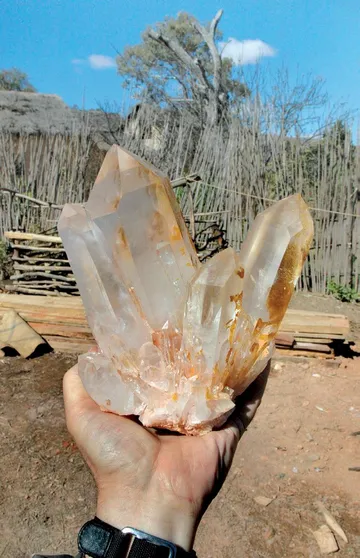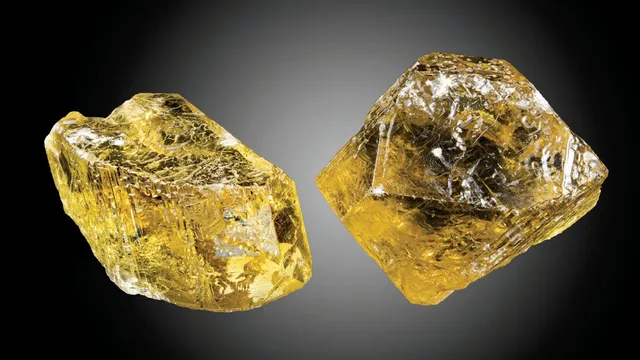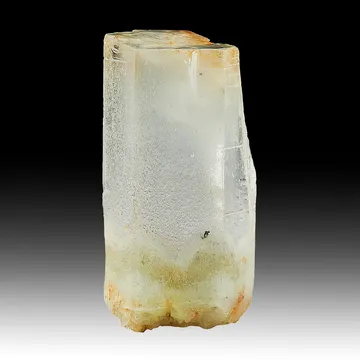
Amborompotsy, Madagascar — quartz with trapped violet-to-blue fluorite octahedrons, crystal-in-crystal specimens prized by collectors for color and rarity.
Key facts
Amborompotsy occupies a small but memorable place in modern specimen collecting for a very specific reason: transparent to translucent quartz crystals enclosing sharp purple-to-blue fluorite octahedrons. The locality label points to Amborompotsy, a rural commune and market center in the Ambatofinandrahana District of Madagascar’s central highlands, but the productive occurrence was reported as a mine or dig about 17 km northeast of the village rather than in the village itself. In mineralogical terms it is not a broad mine name with a long species list; it is a tightly defined inclusion locality—an approximately 80 cm quartz vein cutting quartzite host rock, near an elbaite- and beryl-bearing pegmatite, that yielded a short-lived run of “crystal-in-crystal” specimens.
The best Amborompotsy pieces are not ordinary quartz crystals with surface-grown accessory fluorite. Their appeal is internal. Violet, purple, and blue fluorite crystals appear suspended inside the quartz, commonly as tiny octahedrons set near the outer growth zones and concentrated beneath particular crystal faces. In fine examples, the quartz is clear enough that the inclusions read as a floating constellation, with the fluorite preserving crisp octahedral form while the enclosing quartz continues outward into a complete prism and termination. Larger crystals, doubly terminated individuals, and rare clusters are the prizes; most surviving specimens show the locality’s typical silky or frosted quartz luster, minor bruising, contacts, or partially dissolved inclusions.
Regional View
Country View
Amborompotsy’s historical importance is also bound up with the way it reached the market. The material appeared at the 2005 Tucson gem shows under a Madagascar label that was initially represented as Miandrivazo; later locality information from Madagascar dealers and subsequent mineralogical reporting tied the find to the Amborompotsy area. That correction matters to collectors, because the specimens are distinctive enough that a good label can preserve a very narrow event: late 2004 to early 2005 production from one productive zone, worked by local miners with hand tools, and then effectively ended by a cave-in.

Photo: Rob Lavinsky, iRocks.com, via Wikimedia Commons
Search for specimens: View all specimens from Amborompotsy, Madagascar
The Amborompotsy fluorite-in-quartz occurrence is best understood as a specimen-producing quartz vein rather than a metal mine. The reported vein was about 80 cm wide and cross-cut quartzite host rocks in the central highland terrain of Madagascar. Its geological neighborhood is consistent with the broader Ambatofinandrahana district: quartzite and other metamorphosed sedimentary rocks of the Itremo region, cut locally by pegmatites and granitoid to syenitic bodies, with a long regional history of rare-element and rare-earth mineralization. For this particular specimen occurrence, however, the collectible mineralization is simple: quartz grew, fluorite crystallized late on or very near growing quartz surfaces, and then additional quartz overgrowth sealed the fluorite inside.
The “ore body,” if one can use that term for a specimen pocket, was the quartz vein itself. Fluorite is not present as large external cubes or vein masses here; the defining material consists of small blue to violet fluorite crystals trapped in clear rock-crystal quartz. Gemological examination of hundreds of pieces showed that the fluorite was largely confined to near-surface outer zones of the host quartz, commonly under certain faces and on one side of a crystal. That geometry is one of the locality’s most diagnostic features. It suggests a late-stage, directional episode of fluorite deposition after much of the quartz prism had already formed, followed by renewed quartz growth that entombed the fluorite.
The mining history is unusually compact. Quartz crystals had reportedly been mined from the region for several years before the included material appeared, but fluorite-included quartz was first recovered in late November 2004. Local miners worked the productive area with hand tools until the end of February 2005, when a cave-in buried the productive zone. Total production was estimated at roughly 300 kg of fluorite-included quartz, with about the same amount of quartz lacking fluorite inclusions. Most of the included material was said to have consisted of single crystals—some doubly terminated—up to 23 cm long, while clusters were much less common.
The commercial path is part of the locality’s identity. At Tucson in 2005, Frederic Gautier of Little Big Stone Co. in Antananarivo was noted as a principal source for the material, and Little Big Stone reportedly acquired most of the production. The production was sold as mineral specimens and cutting rough, polished points, and fashioned stones, including emerald cuts, slabs, cabochons, and at least one large faceted example near 100 ct. For mineral collectors, the uncut crystals are generally more desirable when they preserve a natural termination, show little bruising, and contain well-positioned fluorite octahedrons visible without needing heavy backlighting.
Collecting access today should be treated as effectively closed for practical purposes. The reported productive area was buried in 2005, the exact mine position was never widely formalized under a stable mine name, and the marketplace locality is a village/commune label rather than a published mine plan. Modern specimens mostly circulate from old parcels, dealer stock, and collection dispersals. Labels may read Amborompotsy, Ambatofinandrahana, Amoron’i Mania, Fianarantsoa Province, or simply Madagascar; older labels may preserve the earlier Miandrivazo attribution or vague central Madagascar wording.
Amborompotsy fluorite is famous almost entirely as an inclusion mineral inside quartz, where it occurs as tiny to several-millimeter violet, purple, and blue crystals, most notably sharp octahedrons rather than the larger external cubes associated with many classic fluorite localities. Published gemological work recorded inclusions commonly in the outer growth zones of the quartz, only beneath certain faces and often on one side of the host crystal, a pattern that gives the best specimens their directional “floating” look. Individual inclusions may reach about 7 mm, though many collectible crystals contain smaller octahedrons scattered or clustered through a transparent to silky quartz host. Good Amborompotsy fluorite pieces are judged by the intensity and distribution of the blue-purple inclusions, the completeness of the octahedral forms, the transparency of the quartz window around them, and the absence of dissolved-out cavities that leave only pale octahedral ghosts.
Amborompotsy quartz is the host, the stage, and the specimen: colorless rock crystal in single prisms, doubly terminated crystals, and rarer clusters, commonly with a silky or lightly frosted surface rather than the glassy brilliance of the finest Alpine or Brazilian quartz. Reported crystals reached up to 23 cm long, while many market examples fall into thumbnail to cabinet sizes, with elongated prisms showing internal blue-violet fluorite concentrated near outer growth zones. The locality’s best quartz is transparent enough to display the inclusions sharply, complete enough to retain a pleasing termination or floater character, and structurally clean enough that the fluorite appears suspended rather than lost in fractures. Ordinary pieces from the find can be frosted, bruised, cloudy, or inclusion-poor; exceptional pieces combine clarity, termination, and a balanced spray of visible fluorite octahedrons.
For the exact Amborompotsy fluorite-in-quartz occurrence, the documented species list is essentially quartz and fluorite, with occasional photo-associated iron oxides or limonitic staining reported on specimens rather than as defining collectible species. The broader Amborompotsy Commune has separate records for minerals such as beryl, anthophyllite, clinochlore var. leuchtenbergite, chevkinite-group minerals, and titanium-bearing magnetite at nearby named sublocalities, but those should not be merged casually with the fluorite-in-quartz occurrence. No type-locality mineral is tied to the Amborompotsy fluorite-in-quartz find itself; the celebrated type-locality story in the wider Ambatofinandrahana district belongs to the Sakavalana pezzottaite occurrence near Mandrosonoro, not to Amborompotsy.
The principal authenticity issue with Amborompotsy material is not a published fake problem, but locality discipline. Early market material was represented as Miandrivazo before later information placed the mine about 17 km northeast of Amborompotsy, and older labels may use Fianarantsoa Province, Ambatofinandrahana, or simply Madagascar. A strong provenance should ideally connect the piece to the 2004–2005 production, an early dealer parcel, or a recognized collection. “Amborompotsy” should be read as a market-town locality label, not as proof that the specimen was collected inside the town.
Condition is the critical collecting variable. The quartz from this find is often silky, frosted, contacted, or nicked, and some specimens have modest luster compared with top rock crystal from Brazil, the Alps, or Pakistan. Damage at the termination, bruised prism edges, and chips along the base are common. Because the fluorite inclusions formed close to the outer zones of the quartz, fractures can intersect them. In some pieces, fluids later partially dissolved fluorite inclusions, leaving octahedral voids, pale ghosts, or a loose fluorite remnant able to move within a cavity. Such “mobile” inclusions are fascinating gemologically but should be distinguished from intact, sharply visible fluorite octahedrons when valuing a mineral specimen.
Treatments are more relevant on the lapidary side than the mineral-specimen side. Amborompotsy material was cut into faceted stones, polished points, slabs, and cabochons as well as sold as rough and natural crystals. A polished window or fully polished point may display inclusions beautifully, but it is no longer a natural crystal specimen in the same sense as an undamaged terminated quartz crystal. For natural specimens, look for continuous quartz surfaces, undisturbed terminations, and fluorite inclusions fully enclosed within the host rather than suspiciously exposed, glued, or sitting on repaired fractures.
Rarity is real but nuanced. The original production estimate of about 300 kg sounds substantial, yet much of that weight would have been broken, cloudy, poorly included, cut, polished, or dispersed long ago. Fine crystals with attractive, visible fluorite, good transparency, and minimal damage are much scarcer than small or imperfect examples. As of the mid-2020s, specimens still appear sporadically through dealer inventories, online marketplaces, and collection resales, with small examples and modest crystals sometimes available, while large cabinet pieces and clean clusters remain genuinely difficult to replace.
The Amborompotsy story began in the glare and commerce of Tucson. At the 2005 gem shows, collectors encountered something startling even by Madagascar standards: colorless quartz crystals carrying crisp violet-to-blue fluorite crystals inside them. At first, the locality given at the show was Miandrivazo, a name that would follow some early labels into collections. Then Frederic Gautier of Little Big Stone Co. in Antananarivo clarified the story: the mine was not at Miandrivazo but about 17 km northeast of Amborompotsy, in central Madagascar. The practical distance was short on a map and long on the ground; from Amborompotsy the deposit could be reached only by motorcycle or on foot because of the poor road.
The productive zone was modest: a quartz vein only about 80 cm wide, cutting quartzite. Local miners worked it with hand tools. For a few months it gave up an object mineral collectors are trained not to expect—fluorite, with its perfect cleavage and different crystallographic habit, sealed visibly inside quartz. The timing was brief and exact. Fluorite-included quartz began coming out in late November 2004. By the end of February 2005, a large cave-in buried the productive area. That collapse is why Amborompotsy specimens have the aura of a stopped clock: the find was large enough to enter the international market, but short enough that collectors quickly learned not to assume a second wave would follow.
The production was sorted into several lives. Some crystals stayed as specimens; others became cutting rough, polished points, cabochons, slabs, and faceted stones. The reported total was about 300 kg of fluorite-included quartz and a similar amount of plain quartz. Most of the good included material was in single crystals, some doubly terminated, and only a few clusters were recovered. One faceted stone discussed in early reporting weighed 21.68 ct and displayed three large blue fluorite inclusions; another dealer believed the largest stone cut by that point was around 100 ct. For a gemologist, the appeal was the internal scene. For a mineral collector, the prize remained the natural quartz crystal that needed no cutting at all.
The strangest Amborompotsy episode came later under the microscope. A violet fluorite inclusion was found free to move inside an octahedral void. The cavity shape gave away the past: the fluorite must once have been larger, defining the octahedral space, before a secondary healed crack let fluids reach it and dissolve it down. The crack healed, the cavity remained, and a smaller fluorite crystal was trapped with liquid and a gas bubble around it. In the hand, Amborompotsy specimens look like quiet quartz. Under magnification, some preserve a little sealed chamber where a fluorite crystal can shift position inside the ghost of its former self.