Sahatany Valley, Madagascar - classic pegmatite district and premier collector locality famed for color-zoned tourmaline, rare borates, and lithium minerals.
Key facts
Sahatany Valley is one of the classic pegmatite districts of Madagascar, a collector’s locality where the name on a label immediately suggests color-zoned tourmaline, rare borates, lithium minerals, and a century of small-scale gem mining. The valley lies in the Mt. Ibity area south of Antsirabe, within the northeastern part of the Itremo region of central Madagascar. Its pegmatites cut a metamorphic terrane of schists, quartzites, marbles, dolomitic marbles, and Mg-rich calc-silicate rocks, a setting that gave the district its unusual blend of Li-rich granitic-pegmatite minerals and Ca-Mg-B-rich contact assemblages.
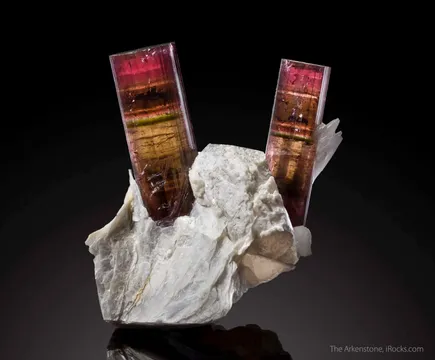
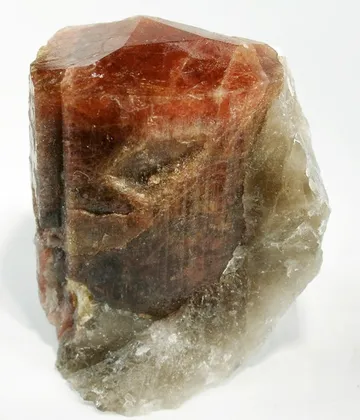
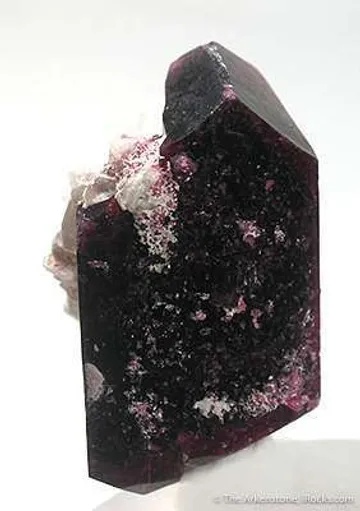
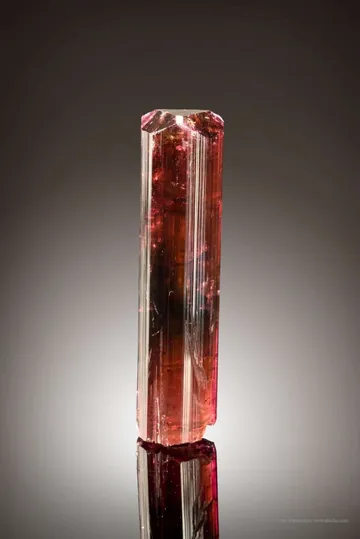
For mineral collectors, Sahatany is above all a tourmaline valley. The best specimens are lustrous, striated, gemmy to translucent prisms in red, mauve, pink, green, orange-brown, and polychrome zoning, sometimes doubly terminated, sometimes standing from smoky or citrine quartz, albite, cleavelandite, feldspar, or pale pegmatite matrix. Many fine crystals long sold simply as “liddicoatite” are now more precisely understood as fluor-liddicoatite, elbaite, fluor-elbaite, or mixed/zoned tourmalines, and serious labels increasingly reflect that analytical caution. At its best, a Sahatany tourmaline is not merely colorful; it has the sharp triangular or trigonal visual geometry, skeletal or complex terminations, and abrupt internal growth zoning that made Madagascar tourmaline a benchmark in modern gem pegmatite collecting.
Regional View
Country View
The district’s importance goes well beyond showy tourmaline. Sahatany and its associated Mt. Ibity pegmatite field have yielded type-locality or historically important material for rare species including béhierite, bityite, vránaite, and ertlite, and the Manjaka pegmatite in particular has become a small but remarkably productive natural laboratory for boron-rich pegmatite mineralogy. The mineral assemblage includes albite and cleavelandite, quartz, microcline including amazonite, beryl including morganite, spodumene including kunzite, lepidolite-group mica, danburite, hambergite, columbite-tantalite minerals, microlite-group minerals, spessartine, schorl, dravite, elbaite, fluor-liddicoatite, and a suite of rare borates and borosilicates. Few pegmatite fields offer such a satisfying overlap between aesthetic cabinet specimens, gem rough, and species-level mineralogical research.
Search for specimens: View all specimens from Sahatany Valley, Madagascar
Sahatany Valley belongs to the Sahatany Pegmatite Field of the Mt. Ibity area, in the Antsirabe II District of Madagascar’s Vakinankaratra Region. The field follows the Sahatany River south of Antsirabe, with the quartzitic Mt. Ibity massif forming a prominent eastern boundary to the classic collecting district. The pegmatites are best treated not as one mine but as a clustered field of related dikes and bodies, with historically named sublocalities such as Manjaka, Maharitra or Manitra, Tsarafara, Tsarafara Sud or Ankadilava, Tsarafara-Nord, Ilapa, Ampatsikahitra, Tamponilapa, Ankarinarivo, Estatoby or Antanetinilapa, and other smaller workings.
Geologically, the collector’s Sahatany is a field of rare-element granitic pegmatites, largely of LCT affinity, with important elbaite-subtype bodies and locally danburite-subtype expressions. They are hosted mainly by metasedimentary rocks of the Itremo succession: schists, quartzites, calcic and dolomitic marbles, and Mg-rich calc-silicate rocks. This host-rock contrast matters. Where lithium-rich pegmatite melt and late fluids met carbonate and calc-silicate wall rocks, the result was not just ordinary quartz-feldspar-mica pegmatite but a hybridized Ca-Mg-B environment with danburite, axinite-group minerals, diopside-hedenbergite, titanite, Mg-rich tourmalines, Ca-bearing garnets, hambergite, béhierite, rhodizite-londonite, and other uncommon species.
The Manjaka pegmatite, also historically called Sahananana and formerly misnamed Ampakita in early literature, is one of the scientific anchors of the field. It is an elbaite-subtype granitic pegmatite hosted by dolomite marble and Mg-rich calc-silicate rock, situated near the village of Ihasy in the Sahatany Valley. It has been worked for gem tourmaline since the early twentieth century and is one of the district’s classic miarolitic-cavity pegmatites. In collector terms, Manjaka is prized for rare species and old-labeled material; in mineralogical terms, it is celebrated for béhierite and vránaite, for unusual borosilicate breakdown products of spodumene, and for complex tourmaline chemistry at the pegmatite-host-rock contact.
Tsarafara and Tsarafara Sud are among the most familiar specimen names on Sahatany tourmalines. These workings produced the vivid, striated, gemmy, color-zoned tourmalines that made the valley internationally recognizable. Tsarafara pieces are especially sought when the tourmaline is perched on quartz or feldspar rather than occurring as a loose or repaired crystal, because intact matrix specimens from decomposed Madagascar pegmatites are much less common than loose crystals. Tsarafara material may be labeled tourmaline, elbaite, fluor-liddicoatite, or liddicoatite depending on age of label and level of analysis; older “liddicoatite” labels should be read with caution unless accompanied by analytical data.
Estatoby, known in the literature as Antanetinilapa, is a complex LCT pegmatite of elbaite subtype on a small hill behind Antanetinilapa village, on the western side of the Sahatany River in the northeastern part of the valley. It became especially famous for a major 2012 pocket of polychrome fluor-liddicoatite. The find produced a reported total of about 70 kg of crystals, including one specimen 26 cm long weighing 4.6 kg and another weighing 5.2 kg. Several fragments were analyzed and shown to contain significant Ca and F with limited Na, confirming fluor-liddicoatite as the dominant species in those crystals. Estatoby is also a locality where mislabeling has been documented: bityite found at Antanetinilapa has often been mislabeled as coming from the nearby Ilapa pegmatites, though Ilapa is a separate locality higher to the south-southwest and bityite has not been reported from Ilapa.
Tamponilapa and Tsarafara-Nord are geologically important because they expose the interaction between elbaite-subtype pegmatites and Ca-Mg-rich host rocks. Documented dikes there are roughly 2–3 m thick and cut calc-silicate rocks with quartzite intercalations. Tamponilapa has yielded Li-tourmaline and hambergite from pocket zones, and it is also a key site for studies of secondary blue tourmaline replacing garnet and albite. The alteration assemblage includes blue tourmaline ranging from schorl to Fe-rich fluor-elbaite and rarely Fe-rich fluor-liddicoatite, with quartz involved in the replacement textures. For collectors, Tamponilapa hambergite is a special Sahatany chapter, particularly transparent, well-formed, twinned crystals that reached the market around 2009–2010.
Ankarinarivo is another complex LCT pegmatite, worked for gem polychrome tourmaline, topaz, and beryl. Historical names applied to this locality include Tompohobohitra or Tompobohitra in older literature. Its mineral list includes beryl, elbaite, dravite, schorl, quartz, chalcedony, microcline including amazonite, topaz, spessartine, columbite-series minerals, microlite-group minerals, monazite-(Ce), xenotime-(Y), zircon, and several iron oxides or alteration minerals. For specimen buyers, Ankarinarivo labels most commonly appear on rubellite, polychrome tourmaline, quartz-feldspar pegmatite pieces, and occasional accessory species.
Mining has been intermittent, artisanal, and locally commercial since the early twentieth century. Early French and Malagasy work described gem-tourmaline pegmatites in the Sahatany area by the first decade of the 1900s, and historical localities such as Tsarafara, Ilapa, Ampatsikaitra, Manjaka, Maharitra, and Antandrokomby produced large miarolitic cavities with red or polychrome tourmaline and, in some pockets, vivid pink beryl. By the late twentieth century some classic workings, especially Manjaka and Maharitra, were largely exhausted, while other pegmatites continued to produce episodically. Production fell after nationalization of some Malagasy gem operations in the 1970s, and later field reports noted that mining activity in parts of the valley slowed when miners were drawn to the sapphire rush at Ilakaka.
Modern access is not casual collecting. Many workings are claimed, privately operated, or worked by local miners and mining groups, and conditions vary from open weathered pits and kaolinized pegmatite dumps to shafts and underground workings. Published collector and conference reports document commercial activity by Ruby-Red Madagascar s.r.l. in the central valley, with operations at northern Tsarafara and Ampatsikahitra and some allowance for local small-scale mining projects. Any visit requires permission from landowners, claim holders, mine operators, and local authorities, plus realistic safety precautions around shafts, unstable kaolinized pegmatite, and active workings. In practice, most serious collectors encounter Sahatany specimens through Antsirabe dealers, Malagasy exporters, old European collections, or specialized mineral dealers rather than through independent field collecting.
Sahatany “liddicoatite” is the mineralogical and commercial signature of the valley, but the best modern labels should specify fluor-liddicoatite where analysis supports it, because many older Madagascar tourmalines were grouped under liddicoatite before routine chemical work became common. The finest Sahatany crystals are striated prisms, often short to stout rather than pencil-thin, in deep purplish red, mauve, pink, green, brownish green, orange, and multicolored growth zones; good examples may be doubly terminated, translucent to gemmy, sharply terminated, and sometimes attached to quartz or feldspar matrix. Tsarafara and Estatoby are the most important names for high-quality material: Tsarafara is famous for gemmy color-zoned crystals and quartz combinations, while the 2012 Estatoby pocket produced large polychrome fluor-liddicoatites, including multi-kilogram crystals and pieces with skeletal or complex terminations. The best collector pieces show strong luster, undamaged terminations, visible internal zoning without needing extreme backlighting, and either a fine floater form or convincing original matrix; ordinary pieces tend to be dark, incomplete, overthick, heavily repaired, or labeled “liddicoatite” without analytical support.
Quartz at Sahatany is rarely the headline species by itself, but it is essential to the look and paragenesis of the best specimens: smoky quartz, citrine-toned quartz, clear to milky pocket quartz, quartz coatings, and quartz-feldspar pegmatite matrix host or accompany many of the district’s most desirable tourmalines. Tsarafara Sud has produced showy combinations with gemmy green, pink, mauve, or purplish red tourmaline perched on quartz, including large cabinet-sized specimens where the quartz is not just a broken pegmatite base but a lustrous, terminated crystal. In the pegmatite bodies, quartz also occurs with feldspar in graphic or blocky units, though studies note that the Sahatany elbaite-subtype pegmatites differ from some classic examples by the relative scarcity of graphic K-feldspar-quartz and tourmaline-quartz intergrowths. The best quartz-bearing Sahatany specimens are judged less by the quartz species itself than by composition: a well-terminated smoky or citrine quartz carrying an undamaged, colorful tourmaline crystal is far more desirable than loose quartz or massive vein material, and intact matrix is a premium because many local pegmatites weather to crumbly kaolinized material that releases crystals before preserving them.
“Tourmaline” is often the most honest field or dealer designation for Sahatany material unless the crystal has been analyzed, because the valley’s pegmatites contain a chemically diverse tourmaline suite: schorl and dravite in border and contact settings, elbaite and fluor-elbaite in lithium-rich pegmatite zones, fluor-liddicoatite in some classic gem pockets, darrellhenryite at Manjaka, and the very boron-rich tourmaline-supergroup mineral ertlite as a late-stage pocket phase. Collector specimens range from black schorl in border-zone pegmatite to bright rubellite, green verdelite-like crystals, mauve-red fluor-liddicoatite, and dramatic polychrome crystals with sector or growth zoning. The most attractive examples are lustrous, striated prisms with clean terminations and saturated color that remains visible in normal light; matrix examples with quartz, cleavelandite, feldspar, lepidolite, or associated pocket minerals are scarcer and more valuable than comparable loose crystals. The valley rewards careful labeling: a beautiful crystal sold simply as tourmaline may be entirely respectable, while a claimed species-level liddicoatite, fluor-liddicoatite, elbaite, or fluor-elbaite identification deserves analytical backing.
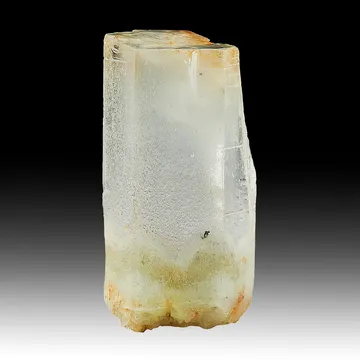
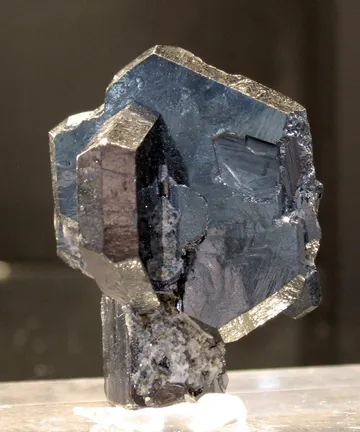
Other Sahatany minerals are unusually important for a pegmatite district of specimen interest. Béhierite, Ta(BO4), was described from Manjaka and occurs as grayish to cream or greenish tetragonal crystals associated with pegmatite minerals such as albite, quartz, feldspar, lepidolite, apatite, pollucite, and tourmaline. Bityite, CaLiAl2(AlBeSi2O10)(OH)2, has a type-locality connection to Maharitra and the Sahatany field and is a tiny but historically important Be-Li mica, sometimes seen as microscopic to millimetric crystals or cavity material rather than cabinet display pieces. Vránaite, Al16B4Si4O38, was described from Manjaka as an anhydrous B-Al-Si phase related to boralsilite, occurring with albite and K-feldspar as a breakdown product of spodumene. Ertlite, NaAl3Al6(Si4B2O18)(BO3)3(OH)3O, is a very B-rich tourmaline-supergroup mineral whose holotype is from Sahatany Valley. The broader district also documents hambergite from Tamponilapa and Estatoby, danburite, beryl including morganite and alkali beryl, spodumene including kunzite and hiddenite-labeled material, topaz, spessartine, columbite-tantalite minerals, microlite-group minerals, phenakite, rhodizite-londonite, amazonite, boralsilite, manandonite in the wider Sahatany pegmatite field, and rare late-stage alteration or exocontact assemblages that make the valley as rewarding to the species collector as to the tourmaline specialist.
The first rule with Sahatany tourmaline is analytical humility. “Liddicoatite” on an old label may be correct, but it may also mean fluor-liddicoatite, elbaite, fluor-elbaite, or a zoned crystal containing more than one tourmaline species. Madagascar tourmalines can show striking triangular and sector-like color zoning, and that visual style alone is not a species determination. For expensive pieces, especially those sold specifically as liddicoatite or fluor-liddicoatite, a reputable analysis or a dealer note explaining the basis for the identification adds real value.
Condition is the second major issue. Many Sahatany pegmatites are deeply weathered, and loose crystals from decomposed pegmatite are common. Repairs, reattachments, cleaved bases, bruised terminations, polished or sawn bases, and glued matrix associations occur in the market. This is not a reason to avoid the locality; it is a reason to examine terminations and contact points carefully under magnification. Matrix specimens are scarcer than loose crystals, but matrix must make geological sense: quartz, feldspar, albite or cleavelandite, lepidolite, and pocket pegmatite are plausible; suspiciously convenient placements or cement at the contact deserve scrutiny.
Color should be judged in normal light and with transmitted light. Some thick, dark Sahatany fluor-liddicoatites show wonderful internal color only when strongly backlit; such crystals can be beautiful, but they are less visually effective in a cabinet than thinner or more translucent examples that show red, mauve, green, or polychrome zoning unaided. Top-quality crystals combine luster, transparency or rich translucency, saturated color, complete terminations, minimal repairs, and good aesthetics from multiple angles. Skeletal, complex, or doubly terminated forms from the Estatoby-style finds carry extra collector interest when undamaged.
Be cautious with locality precision. Sahatany labels may be broad, and older specimens may say only “Mt. Ibity,” “Antsirabe,” “Sahatany,” or “Madagascar.” That is normal for old material, but modern high-end pieces benefit from a sublocality such as Tsarafara Sud, Estatoby, Manjaka, Tamponilapa, Ankarinarivo, or Ampatsikahitra. Documented mislabeling exists around Antanetinilapa/Estatoby and Ilapa, especially for bityite, and Malagasy place names have shifted or been misunderstood in the literature. A broad Sahatany label is acceptable for aesthetic tourmaline; a precise label matters greatly for type-locality minerals and rarities.
Fluorescence is not usually the central selling point for Sahatany tourmaline, but some associated minerals and matrices may respond weakly, and individual analyzed fluor-liddicoatite specimens have been noted with minor UV response. More important handling concerns are mechanical: tourmaline is hard but brittle, with striated prisms and complex terminations that chip easily; hambergite, beryl, and rare borates should be stored so they do not abrade against quartz or feldspar. Rare species such as béhierite, vránaite, ertlite, boralsilite, and bityite are generally specimen- or micromount-scale scientific minerals; their value lies in verified identity and provenance, not visual flash.
Market availability is episodic. Small loose Sahatany tourmalines and fluor-liddicoatites appear regularly, while large, colorful, well-terminated matrix specimens are far less common. The 2012 Estatoby production placed notable material into collections, but the largest and best pieces were quickly absorbed. Fine old specimens from Manjaka, Tsarafara, and early Sahatany workings often carry a premium because they combine historic labels, classic locality status, and a style of Madagascar tourmaline that is no longer consistently available from active workings.
One of the most memorable modern Sahatany episodes came from Estatoby in 2012. For years the hill behind Antanetinilapa was known for weathered pegmatite, tourmaline, and the slow rhythm of local digging, but in June a group of seven local miners led by an experienced miner named Pieró began work on a pit that changed the reputation of the pegmatite. The pocket they opened produced polychrome tourmalines on a scale that immediately entered collector lore: about 70 kg of crystals were recovered, including one specimen 26 cm long weighing 4.6 kg and another weighing 5.2 kg. Analyses later showed the chemistry was not merely generic “Madagascar liddicoatite,” but fluor-liddicoatite-dominant material with significant calcium and fluorine and limited sodium. The crystals had the look collectors hope for from Madagascar: thick, lustrous prisms with red, green, orange, mauve, and complex internal zoning, some so dark and massive that their color only came alive when held against strong light.
Field reports from the same era capture Sahatany in a way a specimen label cannot. Dealers and collectors traveling from Antsirabe described the valley not as a single mine gate, but as a lived-in mineral landscape of white kaolin dumps, grassy hills, villages, shafts, pits, and sellers appearing wherever a visiting group stopped. At Tsarafara, the workings were already heavily dug; at Estatoby, the newly famous pegmatite had become a magnet because of the enormous pocket; at Ampatsikahitra, visitors could descend into fresh, unweathered pegmatite, a rarity in a district where so much collecting happens in decomposed, clay-rich material. The same reports note the social reality of mining: men underground, women and children sifting dump material, and local dealers offering tourmalines almost as soon as collectors emerged from the pits.
The 2014 Mindat Madagascar conference gave many international collectors a rare structured look at the valley. The group left Antsirabe early and spent a full day in Sahatany with Federico Pezzotta, the Milan museum mineralogist whose work on Madagascar pegmatites made him one of the district’s key modern interpreters. The excursion moved through Tsarafara, Estatoby, Ampatsikahitra, and Tamponilapa, with the route framed by Mt. Ibity and the pale scars of kaolinized pegmatite dumps. Participants saw weathered pegmatite workings, sellers with fresh material, shafts at Tsarafara, the underground mine at Ampatsikahitra, and Tamponilapa, noted in the report as a source of world-class hambergite. The long day ended with the sort of mineral-field exhaustion familiar to anyone who has chased pegmatites in difficult country: after dinner, nearly everyone went to bed early.
There is also a Sahatany story that belongs to early mineralogy rather than field romance. Manjaka, one of the valley’s old gem-tourmaline pegmatites, became the type locality for béhierite after Jean Béhier recognized an unusual tantalum borate there in the mid-twentieth century. Modern dealer records occasionally document specimens from Béhier’s own material, including small béhierite crystals associated with pink tourmaline in quartz-rich matrix. For the species collector, such a piece is not about size. It is about a direct line from a small Madagascar pegmatite cavity to a new mineral name, a French colonial-era mineralogist, and a locality that still produces surprises in the tourmaline-supergroup literature more than half a century later.