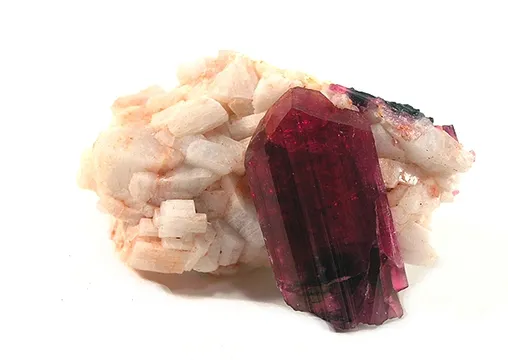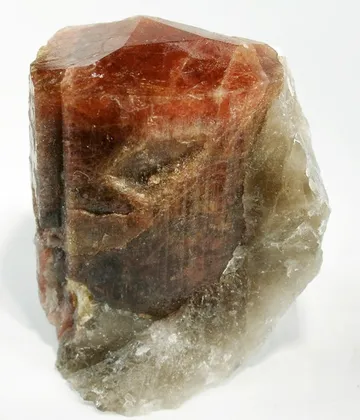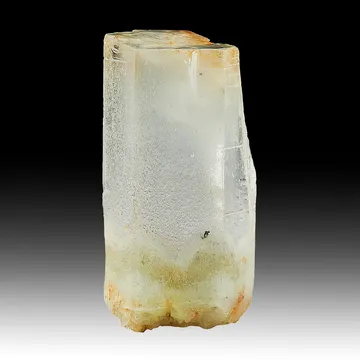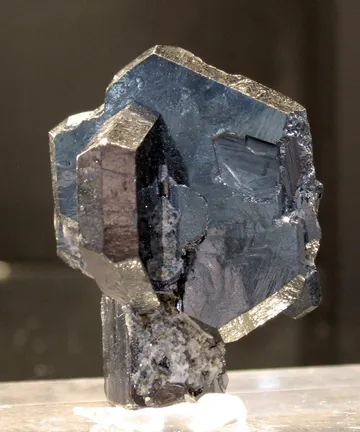
Anjanabononoia, Madagascar — central tourmaline locality famed for giant color-zoned tourmaline crystals; also yields quartz and amazonite—highly prized by col…
Key facts
Anjanabononoia is best understood by serious collectors through the classic central-Madagascar tourmaline locality usually published as Anjanabonoina, the name attached in the gem and specimen trade to some of the world’s most recognizable calcium-rich lithium tourmaline. The deposit lies in Madagascar’s highland pegmatite country west-southwest of Antsirabe, in the Betafo–Vakinankaratra region, where rare-element granitic pegmatites cut the metamorphic rocks of the Itremo Group. Its collector importance rests on an unusual “hybrid” pegmatite signature: the pockets combine the lithium-boron vocabulary of LCT systems with minerals and geochemical traits more at home in NYF pegmatites. In practical specimen terms, that means tourmaline, cleavelandite, quartz, microcline including amazonite, danburite, hambergite, morganite, kunzite, spessartine, phenakite, native bismuth, and Nb-Ta-Ti oxide minerals appearing in a setting famous above all for giant, color-zoned tourmaline crystals.
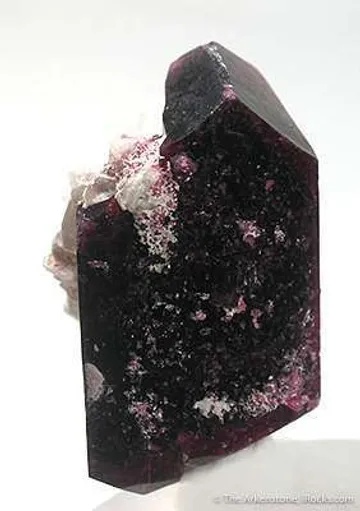
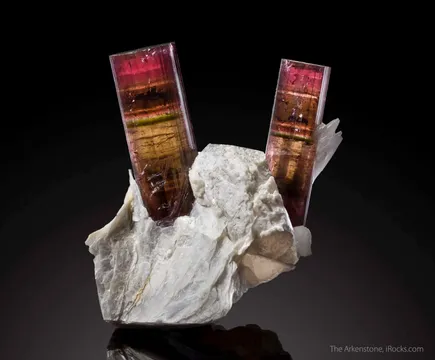
The finest pieces from this locality have a look that is instantly Malagasy: stout to elongated prismatic tourmalines, commonly dark-skinned externally, but with interiors that reveal cranberry, red, mauve, pink, yellow, green, brown, and colorless zones when broken, sliced, polished, or backlit. The celebrated cross sections are not merely “watermelon” in the simple pink-core, green-rim sense; the best Anjanabonoina material can show sharp triangular sectors, trigonal star figures, nested bands, and abrupt color boundaries parallel to crystallographic faces. That visual architecture made the locality a bridge between mineral collecting, gemology, lapidary art, and museum display.
Regional View
Country View
The name matters here. “Anjanabononoia” is the spelling used on EarthWonders locality pages, while the principal published mineralogical literature and many museum labels use “Anjanabonoina” for the historic liddicoatite-bearing pegmatites near Ambohimanambola and Mount Ikaka. Collectors should keep both spellings in mind when tracing provenance, because classic material has circulated for more than a century through French, German, Swiss, American, and Malagasy channels under variant locality renderings.

Photo: Wikimedia Commons
Search for specimens: View all specimens from Anjanabononoia, Madagascar
The classic Anjanabonoina deposit is a rare-element granitic aplite-pegmatite system in the central highlands of Madagascar, historically placed about 55 km west-southwest of Antsirabe and about 40–42 km southwest or west-southwest of Betafo, depending on the reference and route description. The workings occupy a low hill near Mount Ikaka, with the historic mine area described at roughly 1,400 m elevation. The pegmatites are emplaced in the Neoproterozoic Itremo Group, whose local host rocks include quartzite, schist, marble, paragneiss, and orthogneiss. Contact effects are important: schist and quartzite near the pegmatites are extensively tourmalinized, marble is locally skarned, and black tourmaline veins penetrate the altered wall rocks.
Geologically, Anjanabonoina is not a simple textbook LCT pegmatite. The pegmatites carry a mixed or hybrid signature: Li, B, Be, Cs, Ta, and colorful lithium tourmaline point toward LCT evolution, while pyrochlore-group minerals, zircon, amazonitic microcline, native bismuth, Nb-rich oxides, and other traits reflect an NYF component or at least NYF-style chemistry. The historic pegmatites are exposed over an area on the order of 800 × 300 m and form part of a larger aplite-pegmatite system extending roughly 2 km to the south-southwest. Major dikes dip gently north-northwest and have been reported from about 2 to 12 m thick. Deep weathering and kaolinization are central to the mine’s history: late-stage hydrothermal alteration turned large volumes of feldspar-rich pegmatite into clay, and weathering exceeded 20 m in places, especially where eluvial deposits were mined.
Specimen pockets are rare but can be large, even several meters across. The pocket assemblage most relevant to collectors includes quartz, microcline including amazonite, albite as cleavelandite, dravite-elbaite-liddicoatite series tourmaline, spodumene as kunzite, beryl as morganite, spessartine, hambergite, danburite, phenakite, scapolite, and native bismuth. These pockets are typically enveloped in kaolin clay, a feature that helped preserve large crystals while also making mining unstable. Tourmaline crystals from the best pockets were often massive by specimen standards, with individual crystals commonly reported up to about 20 kg and exceptional crystals far larger. One crystal recovered by Eckehard Petsch reportedly measured 80 cm tall and 32 cm across, while published photographs include a doubly terminated crystal 33 cm tall, 22 cm wide, and 17.8 kg.
The early history is unusually well documented. The mining area was reportedly discovered in 1894 by Émile Gautier, and Léon Krafft began intensive work in the early 1900s. Alfred Lacroix’s early-20th-century studies placed Anjanabonoina firmly in the scientific literature, and by the time he wrote about Madagascar’s minerals he considered it the only tourmaline deposit then being mined while other original tourmaline occurrences had been depleted. The most active early production came between 1920 and 1925, with 80 workers on site and large quantities of multicolored tourmaline and exceptional morganite recovered. When operations ceased in 1930, only the eluvial portion of the deposit along the eastern slope had been substantially explored; limited local surface digging continued into the 1960s.
The modern collector era begins with Eckehard Petsch of the Julius Petsch Jr. Company of Idar-Oberstein. After hearing in 1965 about the locality’s unusual color-zoned tourmalines, Petsch visited the abandoned mine in 1967 with help from Madame Liandrat of Antananarivo, Krafft’s daughter. The trip required nearly two days of walking, but the dumps still yielded tourmaline crystals and showed that much of the deposit remained intact. Petsch’s Madagascar company, Société Germadco, acquired the deposit in 1970, built roads, miners’ housing, and a school, and began mining in 1972 from dumps and eluvial material downslope from the pegmatites. By 1974 more than 100 workers were on site. Germadco also drove tunnels into the pegmatites; some workings reached 100–200 m in length.
Production came in waves rather than a smooth curve. By 1912, recorded colored-tourmaline production had reached 1,675 kg. The following decade yielded only about 15 kg of rubellite and multicolored tourmaline, but between 1920 and 1925 almost 1,700 kg more were mined. Production was negligible from 1950 to 1970, then Germadco’s 1970s work recovered several thousand kilograms of red and polychrome tourmaline. Major pockets are specifically reported in 1972, 1978, 1984, and 1991. The 1978 pocket was probably the largest, yielding roughly 2.6 tonnes of polychrome and red tourmaline, including crystals up to about 20 kg. The 1984 pocket produced about 2 tonnes of similar tourmaline and other gem materials, while the 1991 find is remembered in part for a single reported sale of 600 kg of red tourmaline.
Politics and ownership reshaped the mine after 1979, when Madagascar required foreign mining companies to transfer ownership to Malagasy nationals. Société Germadco came under the control of Randrianarisolo Benjamin, a Malagasy engineer and former employee of Petsch, with a Bulgarian partner. The new operators explored dikes in place and opened a pit 1.6 km southwest of the historic mine to test what was probably a continuation of the pegmatite system. That pit was unproductive, but in 1984 a major tourmaline pocket was found on the western slope near the original mining village. The excitement drew hundreds of people into illegal digging, Germadco lost practical control, and the area became a dangerous maze of hand-dug pits.
A later attempt to re-evaluate the deposit came in 1995–1996, when Federico Pezzotta led work by Fretosoa Company, an Italian-Malagasy joint venture, in partnership with Germadco. This phase developed surface and underground workings, including four shafts about 45–55 m deep and a 185 m subhorizontal tunnel that reached the pegmatite core zone. The Sarodivotra workings in the upper-eastern part of the deposit produced significant dravite and liddicoatitic tourmaline. Work stopped after the deaths in 1997 of Randrianarisolo Benjamin and Fretosoa chief Giuseppe Tosco. With strict control lost, equipment was stolen and tunnels and pits collapsed or were destroyed by later local activity.
Access today should be treated as non-casual. Published descriptions already noted in the early 2000s that the old Germadco track had become impassable by vehicle, making the mine reachable only on foot from the Antsirabe side, with the journey possible only in the dry season and taking about two days. The same sources warned against travel to the area because of security concerns and malaria risk, especially in the rainy season. Later collecting and market availability are therefore dominated not by organized specimen mining but by old stock, recirculated material from historic pockets, and sporadic artisanal recovery.
Anjanabonoina liddicoatite—much of which modern nomenclature and analysis may place in fluor-liddicoatite or mixed elbaite-fluor-liddicoatite zones—is the locality’s signature mineral and one of the classic tourmalines of the world: crystals range from small gemmy thumbnails to enormous dark-skinned prisms weighing many kilograms, with reported pocket crystals commonly up to about 20 kg and exceptional material far larger; habits are stout trigonal prisms, commonly striated parallel to the c-axis, bounded by prism, rhombohedron, and scalenohedron faces, and the finest unsliced specimens show cranberry to purplish-red transparency, sharp terminations, strong luster, and white cleavelandite or quartz contrast, while the finest slices show complex triangular, star-like, and concentric color zoning in red, pink, mauve, green, yellow, brown, and colorless bands. The major 1972, 1978, 1984, and 1991 pockets supplied the great mass of classic material, with the Sarodivotra workings specifically noted for significant dravite and liddicoatitic tourmaline; top pieces are separated from ordinary ones by intact terminations, real transparency under backlight, saturated red or mauve internal color, strong geometric zoning, minimal healed-fracture disruption, and reliable old provenance rather than merely a polished section with a vague Madagascar label.
Elbaite from Anjanabonoina is inseparable from the locality’s liddicoatite story because the two species can overlap visually, occur in the same crystal, and require quantitative analysis rather than appearance alone for confident separation; classic red to violetish-red, pink, green, colorless, yellowish, brown, and pale blue tourmalines from the deposit include sodium-dominant elbaitic zones, and a recent full study of a purplish-red crystal sold as “liddicoatite” showed it to be Mn-bearing elbaite, while a studied watermelon tourmaline slice had Mn-rich fluor-liddicoatite in three outer zones and Mn-rich fluor-elbaite in its brownish-yellow triangular core. As collector specimens, elbaite-labeled pieces from this locality should be judged for the same traits as the liddicoatitic material—unbroken trigonal habit, sharp luster, attractive color zoning, and white cleavelandite or quartz association—but their premium depends heavily on analytical confidence and honest labeling, since a pretty red Anjanabonoina tourmaline can be elbaite, fluor-liddicoatite, liddicoatitic tourmaline, or zoned combinations rather than a species name that can be assigned by eye.
Beyond the headline tourmalines, the classic Anjanabonoina assemblage rewards pegmatite specialists. Hambergite was first described from Anjanabonoina by Lacroix in 1909 and occurs as a rare but important beryllium borate in the pocket suite. Danburite can be abundant in some pockets and is geologically significant because it concentrates calcium and boron in the same late-stage environment that produced calcic lithium tourmaline. Phenakite, morganite, kunzite, spessartine, cleavelandite, amazonite, dravite, schorl-dravite, topaz, xenotime-(Y), zircon, zinnwaldite, bismuth alteration minerals, and native bismuth round out the collector assemblage. The rare-oxide side of the deposit is especially important scientifically: pyrochlore-group minerals and fersmite record magmatic and postmagmatic Nb-Ti-Ta evolution in the hybrid pegmatite, while the exact Manapa-field Anjanabononoia entry in Mindat’s locality system documents albite, euclase, microcline var. amazonite, phenakite, quartz, and schorl, which is one reason locality spelling and hierarchy deserve close attention on specimen labels.
The first authenticity issue is locality spelling and locality scope. “Anjanabononoia” and “Anjanabonoina” are easy to confuse, and current marketplace labels may use the former where older literature, museum pages, and scientific studies use the latter. A specimen simply labeled “Madagascar liddicoatite” is much weaker than one tied to Anjanabonoina/Anjanabononoia with old dealer, collection, or analytical documentation. Labels mentioning Betafo, Ambohimanambola, Mount Ikaka, Antsirabe, or Vakinankaratra may all be part of the same locality tradition, but they should be read carefully rather than assumed interchangeable with every pegmatite in the district.
The second issue is species identification. Classic collector labels say “liddicoatite,” but modern tourmaline nomenclature has complicated that name. Much old Madagascar “liddicoatite” is F-dominant fluor-liddicoatite, and some red or purplish-red crystals from Anjanabonoina are elbaite or contain both elbaitic and liddicoatitic zones. Refractive index, color, habit, and zoning are not enough to settle the species. Serious species-level claims need electron-microprobe data, single-crystal work, or other appropriate quantitative analysis, especially for expensive specimens marketed as true liddicoatite rather than fluor-liddicoatite or elbaite-fluor-liddicoatite series tourmaline.
The third issue is treatment and cutting history. Slicing and polishing are traditional for this locality, not automatically a defect: Anjanabonoina tourmaline became famous precisely because cutting perpendicular to the c-axis reveals trigonal stars, triangular sectors, and layered color geometry hidden beneath dark skins. But collectors should distinguish a true mineral specimen, a polished slice, a lapidary object, and a repaired or assembled display. Recent experimental work showed that heating Mn-bearing purplish-red Anjanabonoina tourmaline at high temperature can intensify color by oxidation of Mn2+ to Mn3+, and higher-temperature treatment produced minor cracking in the tested thicker sample. For collectible crystals, ask whether color is natural, whether terminations are repaired, and whether any base or mounting conceals breaks.
Condition standards vary by format. Complete crystals are much rarer than slices and should be examined for bruised terminations, rehealed breaks, contacted prism faces, and clay-filled fractures. Many crystals naturally show a dark outer skin that can make them appear black until backlit or cut; that skin is not by itself a problem. Slices should be judged for thickness, polish, symmetry of the cut relative to the c-axis, absence of distracting saw marks, and whether fractures interrupt the central pattern. Internal features such as color zoning, strain, partially healed fractures, feathers, needle-like tubes, negative crystals, and albite inclusions are normal for the locality, but they affect both transparency and price.
Fluorescence is not a major selling point. Published gemological work found Anjanabonoina liddicoatite-elbaite material inert under long-wave ultraviolet and inert to moderately greenish yellow or golden yellow under short-wave ultraviolet. Handle it like other gem tourmaline: hardness is adequate for display, but crystals and slices can be brittle along fractures, and thin polished sections should be protected from knocks, bending pressure, and abrupt temperature changes.
Market availability is unusual. The locality produced tonnes of material over the 20th century, so polished slices and old-stock fragments appear regularly, but fine crystallized specimens from reliable old pockets are genuinely scarce. The most desirable specimens are red to cranberry, mauve, or multicolored crystals on cleavelandite or quartz; large transparent unsliced crystals are exceptional because so much material was historically cut to reveal the hidden zoning. As a rule, ordinary slices trade as gem-lapidary material, while intact crystals with provenance, transparency, and strong color belong in the higher specimen market.
In the early 20th century, Anjanabonoina was already remote enough to feel legendary. Alfred Lacroix’s Madagascar work captured the locality when the original tourmaline deposits had reportedly been depleted and Anjanabonoina stood out as the deposit still producing. He recorded large, beautiful crystals from the eluvial workings and helped fix the locality in mineralogical memory long before “liddicoatite” existed as a modern species name. One of the most elegant afterlives of that early work is a famous sawn and polished tourmaline slice now associated with the Muséum national d’Histoire naturelle in Paris: collected by Lacroix, published by him in 1922, and later tied to the Paris jeweler Jean Vendome’s 1975 Arbre aux tourmalines. That history is pure Anjanabonoina—scientific specimen, lapidary revelation, and jewel all in the same stone.
The 1967 return of Eckehard Petsch reads like the beginning of the modern collecting era. Petsch had heard of the color-zoned tourmalines while in Madagascar in 1965, but it took the help of Madame Liandrat of Antananarivo—Léon Krafft’s daughter—to get him to the old mine. The trip required nearly two days of walking. When he arrived, the abandoned dumps still held tourmaline crystals, enough to convince him that the deposit was not exhausted. Three years later his Malagasy company, Société Germadco, acquired the deposit; by 1972 the company was mining dumps and eluvial ground, and by 1974 more than 100 workers were on site. Roads, houses, and a school for miners’ families were built in a place that had recently required a two-day walk.
The great pockets were the locality’s thunderclaps. In 1978, the largest reported pocket produced about 2.6 tonnes of polychrome and red tourmaline, including crystals up to about 20 kg apiece. In 1984, another pocket yielded roughly 2 tonnes more. The numbers can sound industrial until one pictures what they mean: dark, heavy prisms hauled from clay-rich pegmatite, many unimpressive in hand until a slice or strong backlight disclosed red, green, pink, mauve, and yellow geometry inside. The biggest individual crystal associated with Petsch was reported at 80 cm tall and 32 cm in diameter. A published 17.8 kg doubly terminated crystal, 33 cm tall and 22 cm wide, looked dark externally but was described as likely to produce spectacular slabs if cut.
The 1984 pocket also marked the point where mineral luck spilled into social disorder. After Madagascar’s 1979 change in mining-ownership rules, Germadco passed under Malagasy control with Randrianarisolo Benjamin and a Bulgarian partner involved. The new operators pursued the in-place dikes and exploratory tunneling, and in 1984 a large pocket was discovered on the western slope near the original mining village. The crystals were exported by the Bulgarian partner, but he was forced to leave after problems with Germadco and local people. Hundreds of people, drawn by the discovery, began digging illegally. The formal owner retained legal title but lost practical control of the mine.
The landscape that followed was dangerous in a very literal sense: hundreds of hand-dug pits, some up to 40 m deep. Rainy seasons destroyed the roads and structures built during earlier work, so miners carried gems on foot to Ambohimanambola and Betafo. In 1991, another large pocket triggered fresh unrest, and several miners were killed. The romance of old Madagascar tourmaline should never be separated from that history. These crystals came from beautiful pegmatites, but also from remote, unstable workings where sudden value could overwhelm fragile local control.
The last major scientific push came in 1995–1996, when Federico Pezzotta and Fretosoa Company returned with a more geological eye. Their work included four shafts 45–55 m deep and a 185 m subhorizontal tunnel driven into the pegmatite core zone. At 160 m from the surface, small kaolinized pegmatite veins cut the weathered quartzite; published photographs show candles used for illumination. The exploration produced enough data for a three-dimensional model and suggested that important gem-bearing core remained unmined. Then, in 1997, Randrianarisolo Benjamin and Fretosoa chief Giuseppe Tosco died. Equipment was stolen, tunnels and pits collapsed or were destroyed, and the mine again slipped back toward local hand work and abandonment.
Dona M. Dirlam, Brendan M. Laurs, Federico Pezzotta, and William B. Simmons, “Liddicoatite Tourmaline from Anjanabonoina, Madagascar,” Gems & Gemology, Spring 2002, pp. 28–53 — The essential freely available account of the locality’s geology, mining history, production, gemology, zoning, and specimen context.
Dona M. Dirlam, Brendan M. Laurs, Federico Pezzotta, and William B. Simmons, GIA article page: “Liddicoatite Tourmaline from Anjanabonoina, Madagascar” — Web landing page for the GIA study and its data repository.
Wendell E. Wilson, “The Anjanabonoina Pegmatite, Madagascar,” The Mineralogical Record, Vol. 20, No. 3, 1989, pp. 191–200 — The classic collector-mineralogy article cited for the locality’s specimen assemblage.
C. De Vito, F. Pezzotta, V. Ferrini, and C. Aurisicchio, “Nb-Ti-Ta oxides in the gem-mineralized and ‘hybrid’ Anjanabonoina granitic pegmatite, central Madagascar: A record of magmatic and postmagmatic events,” The Canadian Mineralogist, Vol. 44, 2006, pp. 87–103 — Key scientific paper on the hybrid NYF-LCT character and oxide-mineral evolution of the pegmatite.
Aaron J. Lussier, Yassir Abdu, Frank C. Hawthorne, Vladimir K. Michaelis, Pedro M. Aguiar, and Scott Kroeker, “Oscillatory zoned liddicoatite from Anjanabonoina, central Madagascar. I. Crystal chemistry and structure by SREF and 11B and 27Al MAS NMR spectroscopy,” The Canadian Mineralogist, Vol. 49, 2011, pp. 63–88 — Important structural and crystal-chemical study of oscillatory zoned Anjanabonoina tourmaline.
Ferdinando Bosi, B. Celata, Henrik Skogby, Ulf Hålenius, Gioacchino Tempesta, M. E. Ciriotti, E. Bittarello, and A. Marengo, “Mn-bearing purplish-red tourmaline from the Anjanabonoina pegmatite, Madagascar,” Mineralogical Magazine, Vol. 85, 2021, pp. 242–253 — Demonstrates why species labels are difficult here: a gem-quality purplish-red “liddicoatite” sample was fully characterized as Mn-bearing elbaite, with heating experiments relevant to color.
Floriana Rizzo, Ferdinando Bosi, Gioacchino Tempesta, and Giovanna Agrosì, “Compositional Variation and Crystal-Chemical Characterization of a Watermelon Variety of Tourmaline from Anjanabonoina, Central Madagascar,” Crystals, Vol. 13, No. 8, 2023 — Detailed study of a zoned watermelon tourmaline slice showing fluor-liddicoatite outer zones and a fluor-elbaite core.
A. Ertl, J. M. Hughes, S. Prowatke, T. Ludwig, P. S. R. Prasad, F. Brandstätter, W. Körner, R. Schuster, F. Pertlik, and H. Marschall, “Tetrahedrally coordinated boron in tourmalines from the liddicoatite-elbaite series from Madagascar,” American Mineralogist, Vol. 91, 2006, pp. 1847–1856 — Crystal-chemical reference cited for F-dominant Anjanabonoina tourmalines and the unusual boron behavior in the series.
Muséum national d’Histoire naturelle, Paris: “Liddicoatite” — Museum record for a celebrated Anjanabonoina tourmaline slice collected by Alfred Lacroix and associated with Jean Vendome’s Arbre aux tourmalines.
Natural History Museum of Los Angeles County, “Liddicoatite 55579” — Museum-photo record of a large liddicoatite slice from the Anjanabonoina pegmatite.
“Fluor-liddicoatite from Anjanabonoina, Ambohimanambola, Madagascar” — Fabre Minerals — Short specimen video of a thin, sharp, gem-quality mauve fluor-liddicoatite crystal from Anjanabonoina, 5 × 0.7 × 0.7 cm.
“Liddicoatite Tourmaline” — Wilensky Minerals — Video of a large Anjanabonoina liddicoatite tourmaline, 16.5 cm tall by 11.4 cm diameter, left unsliced because of its size and transparency.
“Liddicoatite Tourmaline slice from Anjanabonoina, Antsirabé, Madagascar” — Nharo! — Retail media page for a small polished Anjanabonoina tourmaline slice, useful for seeing modern slice presentation and market labeling.
Mindat: Anjanabononoia, Manapa pegmatite Field, Anosiarivo Manapa, Betafo District, Vakinankaratra, Madagascar — Exact “Anjanabononoia” locality entry; useful for checking the separate Manapa-field spelling, coordinate uncertainty, and documented mineral list.
Mindat: Anjanabonoina pegmatites, Ambohimanambola, Betafo District, Vakinankaratra, Madagascar — Primary locality page for the classic Anjanabonoina pegmatites, with mineral list, references, and locality hierarchy.
Mindat occurrence: Fluor-liddicoatite from Anjanabonoina — Focused occurrence entry with formula, reference list, photo links, and modern fluor-liddicoatite context.
Mindat occurrence: Liddicoatite from Anjanabonoina — Important for nomenclature cautions surrounding old “liddicoatite” labels from the locality.
Mindat occurrence: Hambergite from Anjanabonoina — Useful entry for the locality’s rare hambergite and its Lacroix 1909 description.
GIA: Liddicoatite Tourmaline from Anjanabonoina, Madagascar — Concise article page for the major GIA study of Anjanabonoina tourmaline.
GIA PDF: “Liddicoatite Tourmaline from Anjanabonoina, Madagascar” — Best single downloadable source for geology, history, production figures, mining episodes, and gemological details.
Wikimedia Commons: Minerals of Anjanabonoina pegmatites — Open-image category with liddicoatite and associated minerals from the locality.
Wikimedia Commons: Fluor-liddicoatite media category — Broader open-image archive for comparing Madagascar fluor-liddicoatite crystals and slices.
Fabre Minerals video: Fluor-liddicoatite from Anjanabonoina — Short video showing crystal transparency, color, and habit.
Wilensky Minerals video: Liddicoatite Tourmaline — Video record of a large unsliced Anjanabonoina tourmaline crystal.