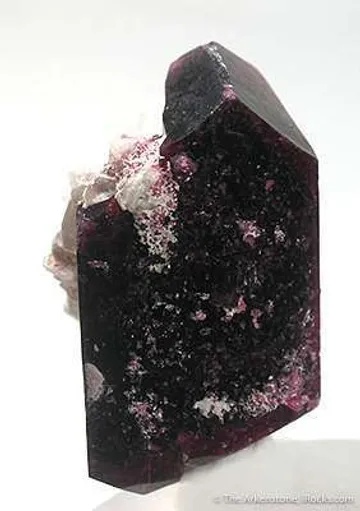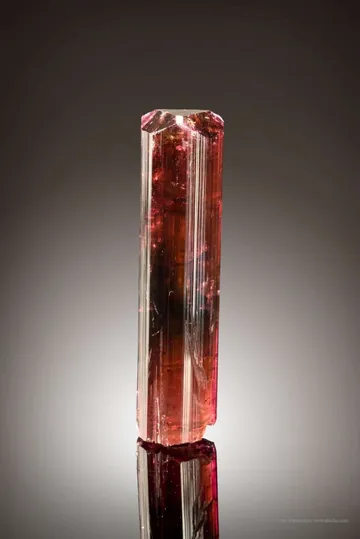
Anjanabonoina, Madagascar — famed for large, colorful calcium-rich tourmalines (liddicoatite/fluor-liddicoatite) and a diverse suite prized by collectors.
Key facts
Anjanabonoina is one of the great names in Malagasy pegmatite collecting: a remote central-highland aplite-pegmatite system near Ambohimanambola and Betafo, celebrated above all for large, complexly zoned calcium-rich lithium tourmalines historically sold as liddicoatite. Its importance is not merely aesthetic. The locality sits in the Neoproterozoic Itremo Group, where pegmatite dikes cut quartzite, schist, marble, paragneiss, and orthogneiss, and where contact metasomatism and tourmalinization helped create an unusually calcium-, boron-, lithium-, beryllium-, and rare-element-rich environment. For collectors, the result is a specimen suite that feels half LCT pegmatite, half NYF pegmatite: polychrome tourmaline, rubellite, dravite, elbaite-liddicoatite series material, morganite, kunzite, phenakite, danburite, hambergite, spessartine, amazonitic microcline, cleavelandite, native bismuth, and rare Nb-Ta-Ti oxide minerals.
The best Anjanabonoina tourmalines are unmistakable even from across a room. Prismatic crystals may look dark from the outside, often with a black or deep brown “skin,” but sawn sections reveal intricate internal geometry: triangular cores, three-rayed red star patterns, green rims, pink and cranberry-red zones, caramel or yellow-brown interiors, and tight bands parallel to the prism faces. This is why so much classic material was cut into polished slices rather than kept as rough crystals. A fine slice from Anjanabonoina is less a gemstone than a crystallographic map—growth history displayed in color.
Regional View
Country View
The locality’s fame began in the early literature on Madagascar gem minerals and reached full mineralogical significance when calcium-rich Malagasy tourmaline was described as liddicoatite in the 1970s. Later tourmaline nomenclature has made the story more nuanced: much classic “liddicoatite” from Anjanabonoina is now properly regarded as fluor-liddicoatite or as complex zoned material containing both fluor-liddicoatite and elbaite, and individual color zones within a single crystal can belong to different tourmaline species. That scientific complication has not diminished the collecting appeal; if anything, it has made well-documented Anjanabonoina material more interesting.
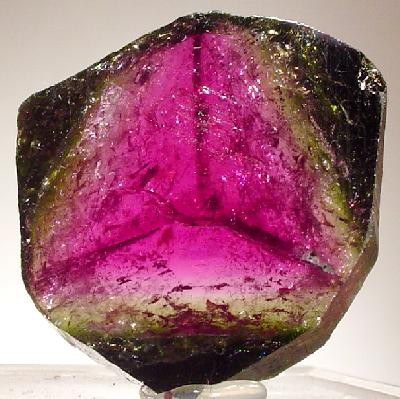
Photo: Wikimedia Commons

Photo: Wikimedia Commons
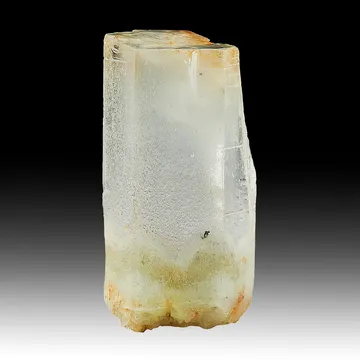
Anjanabonoina is also a reference locality for clear, sharply terminated phenakite crystals. These are not abundant, but the best examples are water-clear, prismatic, and bright, and they form an important counterpoint to the famous tourmalines: the locality is not just a source of sliced gem rough, but a true pegmatite specimen locality with collectible crystals of several difficult species.
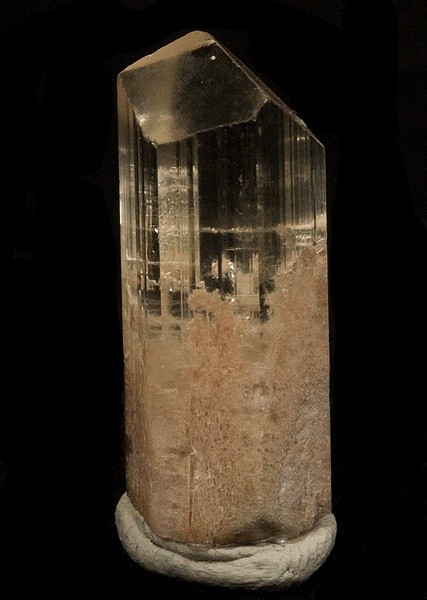
Photo: Wikimedia Commons
Search for specimens: View all specimens from Anjanabonoina pegmatites, Madagascar
The Anjanabonoina pegmatites lie in the central highlands of Madagascar, in the Ambohimanambola area of Betafo District, Vakinankaratra. The classic mine area is on a hill of about 1,400 m elevation, roughly 55 km west-southwest of Antsirabe and a short distance east of Ikaka Mountain. Older literature may refer to the locality with historical or imprecise names, including the misspelling “Anjanabonsana,” but the collector locality now centers on the Anjanabonoina pegmatite field and its workings, including the Sarodivotra area.
Geologically, the historic workings expose a group of gently dipping pegmatite dikes over an area of roughly 800 × 300 m, within a larger aplite-pegmatite system extending south-southwest for about 2 km. The major dikes are generally 2 to 12 m thick and dip gently north-northwest. They intrude rocks of the Itremo Group—quartzite, schist, marble, paragneiss, and orthogneiss—and the contacts locally show striking metasomatic effects. Schist and quartzite near the pegmatites were heavily tourmalinized, and marble was locally transformed into skarn-like assemblages. This calcium-rich wall-rock environment is a key part of why Anjanabonoina produced such unusual calcium-bearing tourmalines and abundant calcium-boron minerals such as danburite.
The deposit is best understood as a rare-element granitic pegmatite field with hybrid character. Lacroix called the pegmatites “sodalithic,” meaning sodium- and lithium-rich, while modern authors have emphasized their mixed LCT and NYF signature. LCT features are seen in lithium tourmaline, spodumene, lepidolite, beryl, spessartine, and tantalum-bearing phases; NYF affinities appear in amazonitic microcline, zircon, pyrochlore-group minerals, betafite-type material, fersmite-related minerals, native bismuth, and other Nb-Ti-Ta oxides. At Sarodivotra, Nb-Ti-Ta oxide studies have shown both magmatic and post-magmatic generations, with earlier oxide minerals cut by later fractures containing Ti-, Nb-, and Ta-dominant phases.
Gem pockets at Anjanabonoina are rare, but when they occur they can be very large. The classic pockets are surrounded by kaolin clay, reflecting the deep weathering and late hydrothermal alteration that affected much of the pegmatite. Recorded pocket assemblages include quartz, microcline including amazonite, albite as cleavelandite, dravite-elbaite-liddicoatite series tourmaline, spodumene as kunzite, native bismuth, spessartine, morganite, hambergite, danburite, phenakite, and scapolite. Large crystals were normal in the most productive pockets: tourmaline crystals commonly weighed many kilograms, and one crystal recovered by Eckehard Petsch was recorded as 80 cm tall and 32 cm in diameter.
The deposit was reportedly discovered in 1894 by Emile Gautier, and intensive mining began in the early 1900s under Léon Krafft. Activity was strongest from 1920 to 1925, when about 80 workers were on site and large quantities of multicolored tourmaline and exceptional morganite were recovered. By 1930, operations had ceased after mining mainly the eluvial portion of the deposit along the eastern slope of the hill. Small-scale surface digging continued intermittently into the 1960s.
The modern collecting history is tied closely to Eckehard Petsch and the Julius Petsch Jr. Company of Idar-Oberstein. Petsch visited Madagascar in the 1960s, reached Anjanabonoina in 1967 with the assistance of Madame Liandrat of Antananarivo, and recognized that important parts of the deposit remained unworked. His Malagasy company, Société Germadco, acquired the deposit in 1970, built roads, housing, and a school, and began mining in 1972. By 1974 more than 100 workers were active, and the mine was mapped and developed with tunnels that in places reached 100 to 200 m.
Political and legal changes altered the operation in 1979, when Madagascar required foreign mining companies to transfer ownership to Malagasy nationals. Germadco came under the control of Randrianarisolo Benjamin, a Malagasy engineer and former Petsch employee, together with a Bulgarian partner. Subsequent work shifted toward the large dikes in place and deeper exploration. A 1984 tourmaline pocket on the western slope of the hill, near the original village, triggered renewed excitement; Germadco remained the legal owner but lost practical control as hundreds of local miners moved into the area.
Major tourmaline pockets were reported in 1972, 1978, 1984, and 1991. The 1978 pocket was probably the largest, producing about 2.6 tonnes of polychrome and red tourmaline, including crystals up to about 20 kg. The 1984 pocket yielded about 2 tonnes of similar tourmaline plus other gem minerals, and the 1991 find included a reported single sale of 600 kg of red tourmaline. Production before 1912 totaled about 1,675 kg of colored tourmaline, then declined, revived dramatically from 1920 to 1925 with nearly another 1,700 kg, was negligible from about 1950 to 1970, and rose again in the Germadco period of the 1970s.
In 1995, Federico Pezzotta led Fretosoa Company, an Italian-Malagasy joint venture, in evaluating the central-highland gem pegmatites. A partnership between Fretosoa and Germadco developed surface and underground workings at Anjanabonoina from 1995 to 1997, including four shafts 45 to 55 m deep and a 185 m subhorizontal tunnel that reached the pegmatite core zone. The work generated enough geological and structural information for a three-dimensional model of the deposit, showing that a significant part of the gem-bearing core zone remained unmined. The effort ended after the 1997 deaths of Randrianarisolo Benjamin and Fretosoa chief Giuseppe Tosco, after which equipment was stolen and tunnels and pits collapsed or were damaged by local workings.
Collector access today should be regarded as highly impractical and not comparable to visiting a regulated public collecting locality. Published accounts describe the old Germadco road as eroded and impassable by vehicle, leaving a long approach on foot, feasible only in the dry season and complicated by security concerns. The area has also been worked by local people using hand tools, with rainwater pools used to wash material. For most collectors, Anjanabonoina is a market locality, not a field destination: specimens are obtained through old collections, Malagasy dealers, and international mineral-show channels rather than by direct collecting.
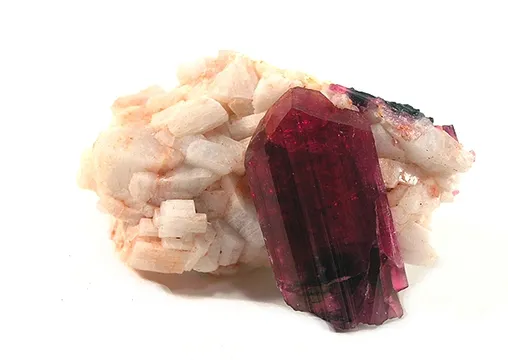
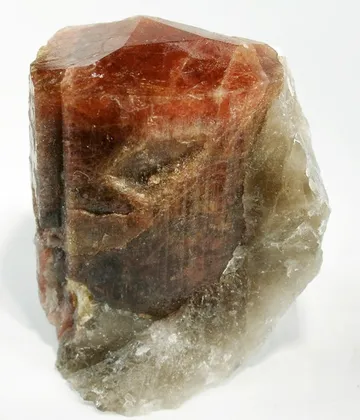
Anjanabonoina “liddicoatite” is the locality’s signature collector mineral, but the label needs careful reading: older specimens and dealer stock commonly use liddicoatite in the traditional sense, while modern analysis may identify fluor-liddicoatite, elbaite, or zoned crystals containing more than one tourmaline species. The classic material occurs as stout, deeply striated prismatic crystals, commonly dark on the outside, with sawn sections revealing green rims, cranberry-red and pink interiors, yellow-brown or caramel zones, triangular cores, and the famous three-rayed star patterns produced by color bands intersecting at 120 degrees. Individual crystals from major pockets could weigh many kilograms, while collectible matrix specimens more often show gemmy cranberry-red crystals on cleavelandite or other pegmatite minerals; the finest pieces combine strong luster, translucency, a clean termination, minimal bruising, and a pattern or color contrast that unmistakably displays the Anjanabonoina growth zoning.
Tourmaline at Anjanabonoina ranges from schorl-dravite in altered host rocks and pegmatite contacts to gem dravite-elbaite-liddicoatite series crystals in pockets, and this broad chemical span is part of the deposit’s scientific importance. Collectors encounter red rubellite, purplish-red crystals, green and brown zones, colorless to pale pink material, and complex watermelon-style sections, with some crystals showing black Fe-rich cores, pale rims, or tightly banded outer shells. Lacroix recorded homogeneous colors from red and violetish red through pink, yellowish pink, colorless, violet, green, brown, yellow, and pale blue, while modern studies have shown that even a single attractive slice may pass from Mn-rich fluor-liddicoatite in its outer zones to Mn-rich fluor-elbaite in its core. Good Anjanabonoina tourmaline is judged by locality character as much as by color: a vivid geometric cross-section, a glassy intact crystal on cleavelandite, or a documented old-pocket rubellite is far more desirable than a generic broken fragment with only a Madagascar label.
Phenakite from Anjanabonoina is one of the locality’s great non-tourmaline prizes, occurring as clear to water-clear prismatic crystals, commonly sharply terminated and far more transparent than most collectors expect from a weathered pegmatite environment. A documented pocket with danburite and phenakite produced about 50 clear, colorless prismatic phenakite crystals ranging from roughly 5 mm wide and 15 cm long to about 2.5 cm wide and 8 cm long, which explains why the locality can produce both thumbnail-bright crystals and elongated cabinet-quality examples. The best specimens are clean, lustrous, well-terminated, and visibly prismatic, with minimal internal frost, bruising, or contact damage; ordinary pieces lose much of their impact when they are incomplete, cloudy, or separated from any meaningful pocket context.
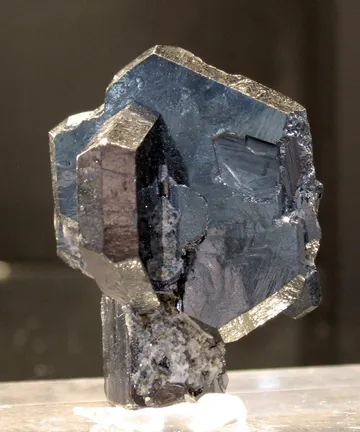
Other minerals documented from Anjanabonoina give the locality its broader pegmatite stature. Danburite is especially important and may locally form a large part of the pocket assemblage; hambergite, morganite, kunzite, spessartine, topaz, quartz including smoky and rutilated quartz, microcline including amazonite, albite-cleavelandite, lepidolite, zinnwaldite, native bismuth, rutile, zircon, xenotime-(Y), scapolite, gibbsite, and columbite-series minerals have all been reported. Sarodivotra has supplied important information on pyrochlore-supergroup minerals, betafite-type material, microlite-group minerals, fersmite-related phases, and post-magmatic Nb-Ti-Ta oxide evolution. In type-locality terms, Anjanabonoina is central to the story of liddicoatite sensu lato and fluor-liddicoatite: the original “liddicoatite” species was approved from Malagasy calcium-rich tourmaline, and later nomenclature redefined the fluorine-dominant holotype as fluor-liddicoatite.
The chief authenticity issue for Anjanabonoina is not whether the material is tourmaline, but which tourmaline species the label claims. Many older specimens are labeled “liddicoatite” because that was the accepted collector and gemological language for decades. Modern tourmaline nomenclature is more exacting: fluor-liddicoatite is fluorine-dominant at the W site, liddicoatite in the strict modern sense is hydroxyl-dominant, and elbaite may occur in the same crystal or even in different color zones of the same slice. Refractive index, color, habit, and zoning are not enough to prove the species. For high-value pieces, especially faceted stones or expensive slices sold as liddicoatite, quantitative chemical work is the standard: electron microprobe analysis, structure refinement, SIMS or LIBS data for light elements, and careful interpretation of F/OH dominance may be needed.
Locality mislabeling is also common. Fine polychrome lithium tourmaline from Madagascar may be generically sold as Anjanabonoina because the name is famous, while material from Sahatany Valley, Antsirabe-area pegmatites, Fianarantsoa-area deposits, or other central and south-central Malagasy localities can look broadly similar. A true old Anjanabonoina label, an established collection pedigree, or a specimen style matching documented pockets is valuable. Conversely, visual resemblance alone should not be treated as proof, particularly for polished slices that have lost their original rough-crystal context.
Condition is a major factor. Large Anjanabonoina tourmalines were commonly mined as heavy crystals from clayey pockets or eluvial workings and then sawn; natural fractures, strain patterns, healed breaks, feathers, needle-like tubes, negative crystals, and albite inclusions are normal internal features. In polished slices, open fractures may be resin-stabilized, waxed, oiled, or assembled as glass or plastic doublets. Some wax was reportedly used during polishing to prevent residue from accumulating in surface irregularities, and not all of it was necessarily removed from fractures. Collectors should inspect slices under magnification and crossed light, look for filled cracks or layered constructions, and ask whether a slice has been stabilized.
For phenakite, the practical concerns are edge damage and clarity. The crystals are hard but can be brittle along damaged terminations and prism edges, and many examples show contact marks from pocket growth or extraction. Clean, sharply terminated crystals with strong transparency are much less common than the number of loose phenakite labels from Madagascar might suggest. Danburite and hambergite from the locality can also be confused in casual trade with other colorless pegmatite species, so confirmation by physical properties or analysis matters for better specimens.
Fluorescence is not a major selling feature for Anjanabonoina tourmaline. The original liddicoatite description noted no fluorescence for the type material under either longwave or shortwave ultraviolet radiation. That does not rule out fluorescence in associated species from the pegmatite, but collectors should not buy Anjanabonoina tourmaline on the expectation of a diagnostic UV response.
Market availability is uneven. Polished slices and older loose tourmaline fragments appear more often than intact, high-quality crystals on matrix. Strongly patterned slices are still obtainable, but exceptional examples with vivid symmetry, good transparency, and honest treatment disclosure are increasingly selective purchases. True matrix specimens of cranberry-red tourmaline on cleavelandite, well-documented old Germadco-period material, large historic slices, and clear phenakite crystals from the known danburite-phenakite finds are all scarcer than casual “Madagascar liddicoatite” listings imply.
In the early literature, Anjanabonoina enters the mineralogical imagination through slices. In 1910, Alfred Lacroix illustrated a polychrome tourmaline section from the locality and called attention to the distinctive star form made by three red bands meeting at 120 degrees. That observation remains one of the simplest ways to explain why Anjanabonoina became legendary: the crystal did not merely contain color, it organized color according to tourmaline symmetry. In the best slices, red arms radiate through pink or green zones like a mineralogical compass rose.
The mine’s modern revival began with a long walk. Eckehard Petsch of the Julius Petsch Jr. Company in Idar-Oberstein learned of the unusual Anjanabonoina tourmalines during a 1965 trip to Madagascar. Two years later, with help from Madame Liandrat of Antananarivo, the daughter of Léon Krafft, he reached the old mining area after nearly two days on foot. There, in the dumps of a mine that had already been quiet for decades, he found tourmaline crystals and recognized what earlier mining had missed: the eluvial ground had been worked, but a major part of the pegmatite system remained intact.
When Société Germadco took over in 1970, Anjanabonoina briefly became more than a hand-dug gem field. Roads were built, housing and a school were constructed for miners and their families, and by 1974 more than 100 workers were on site. Tunnels driven into the hill reached 100 to 200 m in places. This was not casual scratch-digging; it was a serious attempt to understand and mine a complicated pegmatite system that had already been famous in European gem circles for half a century.
Then came the pockets. The 1978 pocket has the scale of a pegmatite legend: about 2.6 tonnes of red and polychrome tourmaline, with individual crystals weighing up to 20 kg. A pictured doubly terminated crystal from Anjanabonoina weighed 17.8 kg and measured 33 cm high by 22 cm wide, yet looked nearly black until one understood what might lie inside it. For a lapidary in Idar-Oberstein, such a crystal was a sealed book; the saw opened it page by page.
One of the most memorable episodes belongs not at the mine but in the cutting shop. Gerhard Becker, who bought much of the Petsch tourmaline, commercialized the cutting of liddicoatite into polished slices so the internal architecture could be seen. In 1971 he described the slicing of a huge crystal in an article titled “70 pound tourmaline crystal produces multicolored slabs.” Richard T. Liddicoat visited Becker’s shop shortly after that crystal was cut and photographed the changing sequence of patterns from the base toward the termination. The story has the satisfying circularity collectors love: the man for whom liddicoatite would be named saw, almost fresh from the saw blade, the kind of Malagasy tourmaline that made the species famous.
The mine’s later history is less romantic. After the 1979 ownership changes, a 1984 pocket on the western slope near the original village reignited local activity. The Bulgarian partner exported crystals from the find, but conflict with Germadco and local people forced him to leave Madagascar. Germadco remained the legal owner, but hundreds of people moved into the area and began digging. The field filled with dangerous hand-dug pits, some as deep as 40 m. Roads and buildings from earlier operations were damaged by rainy-season erosion, and gems had to be carried out on foot to Ambohimanambola and Betafo.
The 1991 pocket brought another surge of mining and unrest. A single sale of 600 kg of red tourmaline was reported from that find, but the human cost was severe: several miners were killed during the disorder that followed the discovery. In the years after, with no comparable new find, many miners left the locality.
The last organized technical effort came in the mid-1990s, when Federico Pezzotta led Fretosoa Company in partnership with Germadco. Between 1995 and 1997 they sank four shafts 45 to 55 m deep and drove a 185 m subhorizontal tunnel toward the pegmatite core. The work was done under difficult conditions: one published photograph from the tunnel shows candles used for illumination at 160 m from the surface, with small kaolinized pegmatite veins crossing weathered quartzite. The project produced a three-dimensional model and showed that significant gem-bearing ground likely remained, but the deaths of Randrianarisolo Benjamin and Giuseppe Tosco in 1997 ended the controlled operation. Equipment was stolen, workings collapsed, and the locality reverted to sporadic local digging.
Dunn, P. J., Appleman, D. E., and Nelen, J. E. (1977). “Liddicoatite, a new calcium end-member of the tourmaline group.” American Mineralogist, 62, 1121–1124. The original species paper for liddicoatite, based on calcium-rich Malagasy tourmaline and still essential for understanding the locality’s nomenclatural history.
Wilson, W. E. (1984). “What’s New in Minerals?—Munich Show 1983.” The Mineralogical Record, 15(2), 117–120. Includes the reported Anjanabonoina pocket that produced danburite and about 50 clear prismatic phenakite crystals.
Wilson, W. E. (1989). “The Anjanabonoina Pegmatite, Madagascar.” The Mineralogical Record, 20(3), 191–200. The classic collector-mineral account of the locality, with history, geology, and an alphabetical mineral list.
Dirlam, D. M., Laurs, B. M., Pezzotta, F., and Simmons, W. B. (2002). “Liddicoatite Tourmaline from Anjanabonoina, Madagascar.” Gems & Gemology, 38(1), 28–53. The most accessible detailed modern treatment of Anjanabonoina tourmaline, including geology, mining history, production, pockets, internal features, and gemological issues.
De Vito, C., Pezzotta, F., Ferrini, V., and Aurisicchio, C. (2006). “Nb-Ti-Ta oxides in the gem-mineralized and ‘hybrid’ Anjanabonoina granitic pegmatite, central Madagascar: A record of magmatic and postmagmatic events.” The Canadian Mineralogist, 44(1), 87–103. Key publication on Sarodivotra and the locality’s Nb-Ti-Ta oxide evolution.
Ertl, A., Hughes, J. M., Prowatke, S., Rossman, G. R., London, D., and Fritz, E. A. (2006). “Tetrahedrally coordinated boron in tourmalines from the liddicoatite-elbaite series from Madagascar: Structure, chemistry, and infrared spectroscopic studies.” American Mineralogist, 91, 1847–1856. Uses Anjanabonoina tourmalines to investigate structural chemistry in the liddicoatite-elbaite series.
Lussier, A. J., Abdu, Y., Hawthorne, F. C., Michaelis, V. K., Aguiar, P. M., and Kroeker, S. (2011). “Oscillatory zoned liddicoatite from Anjanabonoina, central Madagascar. I. Crystal chemistry and structure by SREF and 11B and 27Al MAS NMR spectroscopy.” The Canadian Mineralogist, 49(1), 63–88. Detailed structural and spectroscopic work on oscillatory zoned Anjanabonoina tourmaline.
Bosi, F., et al. (2021). “Mn-bearing purplish-red tourmaline from the Anjanabonoina pegmatite, Madagascar.” Mineralogical Magazine. Demonstrates the importance of full analytical characterization by showing that a gem-quality purplish-red crystal labeled as liddicoatite was compositionally Ca-rich elbaite.
Rizzo, F., Bosi, F., Tempesta, G., and Agrosì, G. (2023). “Compositional Variation and Crystal-Chemical Characterization of a Watermelon Variety of Tourmaline from Anjanabonoina, Central Madagascar.” Crystals, 13(8), 1290. Modern multi-analytical study of an Anjanabonoina watermelon tourmaline showing different species in different color zones.
Mindat locality page: Anjanabonoina pegmatites — The best single online locality database entry, with mineral list, sublocalities, references, and collector photographs.
GIA: “Liddicoatite Tourmaline from Anjanabonoina, Madagascar” — Essential readable reference for the locality’s tourmaline, history, geology, production, and gemology.
American Mineralogist PDF: “Liddicoatite, a new calcium end-member of the tourmaline group” — The original liddicoatite description and a key paper for understanding older labels.
MDPI Crystals: Watermelon tourmaline from Anjanabonoina — Open-access modern paper showing how Anjanabonoina color zoning can cross tourmaline species boundaries.
Cambridge Core: Mn-bearing purplish-red tourmaline from Anjanabonoina — Important cautionary study on species identification in material labeled “liddicoatite.”
Crossref record: De Vito et al. 2006 on Nb-Ti-Ta oxides — Bibliographic access point for the technical Canadian Mineralogist paper on the hybrid pegmatite and oxide assemblages.
Wikimedia Commons category: Minerals of Anjanabonoina pegmatites — Useful open-image set for tourmaline and phenakite specimens from the locality.
Wikimedia Commons: Liddicoatite-68003.jpg — Classic small polished slice showing the locality’s “Mercedes star” triangular zoning.
Wikimedia Commons: Liddicoatite-Albite-216417.jpg — Fine cranberry-red liddicoatite on cleavelandite, showing the matrix-specimen style collectors prize.
Wikimedia Commons: Phenakite-216031.jpg — Clear, terminated phenakite crystal from Anjanabonoina, representative of the locality’s best non-tourmaline species.