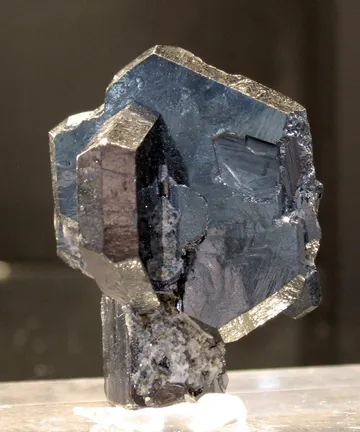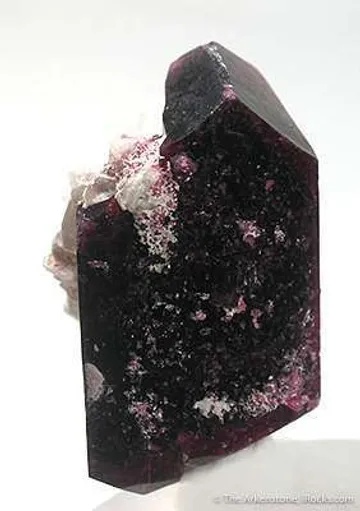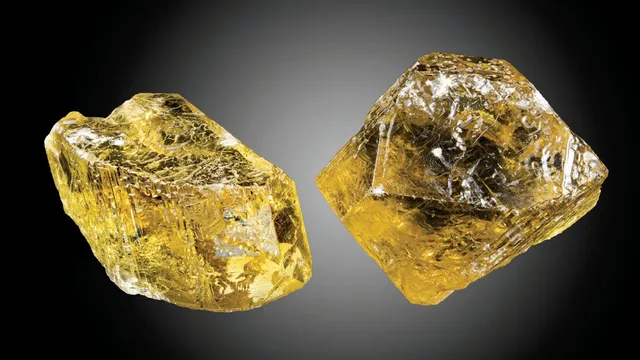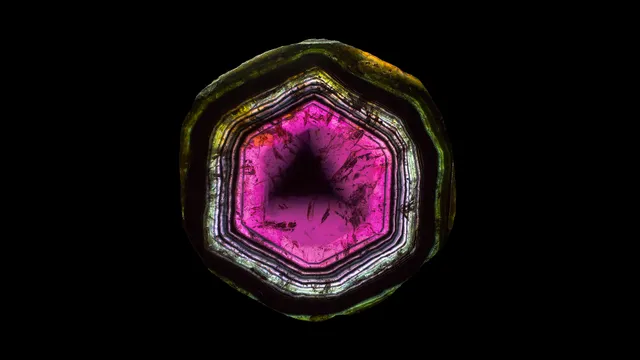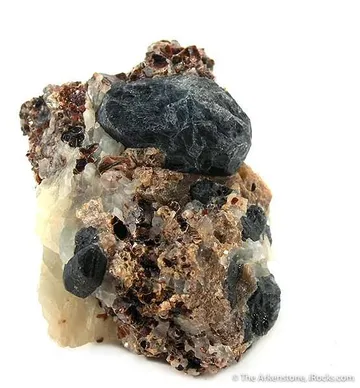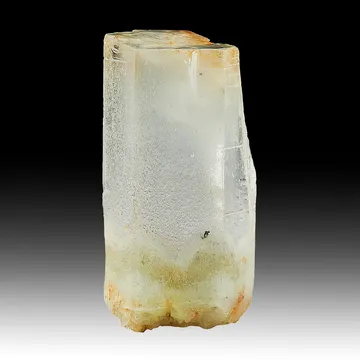
Sahatany Pegmatite Field, Madagascar — famed for tourmalines and rare-element pegmatites; zoned crystals of tourmaline, rubellite and spodumene.
Key facts
The Sahatany Pegmatite Field is one of the classic names in Malagasy pegmatite mineralogy: a broad, historically worked swarm of rare-element pegmatites around the Ibity massif, southwest of Antsirabe in Madagascar’s central highlands. For collectors, Sahatany matters because it combines two different kinds of appeal that seldom coexist so well. It has produced beautiful pocket minerals—polychrome tourmalines, red and pink rubellites, rose beryl, spodumene, danburite, quartz, albite and lepidolite—and it has also yielded a serious rare-species assemblage that has made the field important in the mineralogical literature. The best pieces are not anonymous pegmatite rubble: they are gemmy, sharply terminated, vividly zoned crystals perched on albite, quartz, feldspar or lepidolite, or rare borate and beryllium minerals from highly evolved pockets whose chemistry reads like a catalogue of Li, Cs, Ta, Be and B enrichment.
Geologically, Sahatany is an LCT rare-element pegmatite field emplaced into a Precambrian metamorphic terrane of schists, quartzites, marbles and calc-silicate rocks. Older literature often called the area “Mt. Bity,” the earlier spelling of Ibity, and several named pegmatites—Manjaka, Maharitra, Tsarafara, Estatoby, Ilapa, Ampatsikahitra and Antandrokomby among them—have entered collector usage. The field is especially famous for tourmaline: red, green, pink, yellow, blue and multicolored crystals, many long sold as liddicoatite, fluor-liddicoatite, elbaite or simply “Madagascar tourmaline” depending on the era and degree of analytical work behind the label.
Regional View
Country View
Visually, the top Sahatany tourmalines have a distinct Malagasy character: lustrous prisms with abrupt red-green-pink zoning, “pencil” crystals with bright terminations, and larger dark-rinded crystals that reveal richer color only where light passes through an edge, a broken window or a polished face. Matrix pieces are scarcer than loose crystals because much of the mining has been in kaolinized, weathered pegmatite, where crystals are dug from clay and broken ground rather than freed intact from solid pocket walls. For that reason, a sharp crystal group on albite or quartz from Tsarafara, Estatoby or Manjaka is far more desirable than a loose, contacted gem rough crystal of comparable color.

Sahatany also has a deeper scholarly importance. Maharitra is the type locality of bityite, Manjaka is the type locality of béhierite and vránaite, and Antandrokomby is tied to manandonite, londonite and hydrokenopyrochlore. In collector language the field is therefore both a “pretty tourmaline” district and a type-locality district; the best collections from Sahatany often show both sides, pairing elegant liddicoatite or rubellite specimens with small but significant rare borates, micas and pyrochlore-supergroup minerals.
Search for specimens: View all specimens from Sahatany Pegmatite Field, Madagascar
The Sahatany field lies in the Mt. Ibity area, about 25–30 km southwest or south-southwest of Antsirabe, depending on the point of reference and the particular workings being discussed. The field covers roughly 150 km² and contains more than one hundred pegmatites. These are principally rare-element LCT pegmatites, including beryl-type and complex-type pegmatites, with important elbaite-subtype and danburite-subtype bodies. The country rocks are part of a Precambrian schist–quartzite–marble sequence, and many of the productive pegmatites are hosted in dolomitic marble or Mg-rich calc-silicate rocks. This carbonate-rich setting is not merely background geology: it helps explain some of the field’s unusual Ca-, Mg-, B- and Be-bearing assemblages, particularly at Manjaka and Antandrokomby.
The pegmatites range from small dikes to substantial bodies, locally kaolinized by weathering. Productive pockets occur in the evolved inner zones, in miarolitic cavities, and in clay-filled or partly collapsed pocket systems. The field guide literature describes subvertical to nearly horizontal dikes, some concordant and others discordant to the fabric of the host rocks. Albite is especially conspicuous in many Sahatany pegmatites, and collectors repeatedly encounter albite, quartz, microcline, lepidolite, spodumene, danburite, beryl and tourmaline as the basic collector framework. The rarer minerals—rhodizite, londonite, bityite, béhierite, vránaite, manandonite and others—belong to the more chemically evolved parts of the system.
Mining history in Sahatany reaches back to the early twentieth century, with Alfred Lacroix already describing the tourmaline-bearing pegmatites of Madagascar and the Mt. Bity region in the first decades of the 1900s. Important named mines and pegmatites include Manjaka, Maharitra, Tsarafara, Ilapa, Ampatsikahitra and Antandrokomby. Manjaka is one of the great historic pegmatites of the field, known for rhodizite, béhierite, rubellite, spodumene and a remarkable boron-rich mineralogy. Maharitra, now largely exhausted and overgrown, is central to the history of bityite. Antandrokomby, in the Manandona Valley sector of the field, is a thin, highly evolved LCT pegmatite famous for danburite, red tourmaline, rhodizite-londonite material and type-locality species. Tsarafara and Estatoby, near the Ilapa Mountain area, are modern collector names because of their polychrome tourmalines and liddicoatite/fluor-liddicoatite crystals.
Production has always been episodic. Early workings yielded gem tourmaline, beryl, danburite, spodumene and rose quartz; later mining shifted with pockets, local access, weathering profiles and market demand. A field-course account notes that Manjaka and Maharitra were already largely exhausted by the late twentieth century, while other dikes continued to produce occasional good specimens. A 2013 account of the Estatoby discovery reported that Ruby-Red Madagascar s.r.l., based in Antananarivo, held claims over many gem-bearing pegmatites in the central Sahatany Valley and operated at northern Tsarafara and Ampatsikahitra, while allowing some local small-scale mining. The same account emphasized that activity by miners and dealers from outside the local area was restricted and locally enforced.
Today, Sahatany should be understood as an active, claimed and locally worked mining district, not a casual collecting area. Much of the production comes from artisanal shafts, pits and tunnels in weathered pegmatite. In the tourmaline workings, men have commonly dug underground while women and children sorted and sifted kaolinized dump material for gem fragments. Shafts and galleries can be narrow, unsupported, deep, unstable and unventilated; old workings may be hidden in vegetation or covered by dumps. Collectors should not attempt field collecting without explicit permission from landholders, mining-rights holders and local authorities, and serious visitors normally work through established Malagasy contacts rather than treating the area as an open locality.
The most famous modern pocket story is Estatoby in 2012, when a large clay-filled pocket yielded a major quantity of polychrome tourmaline, including very large fluor-liddicoatite-dominant crystals. Tsarafara Sud and Tsarafara Nord also supplied important liddicoatite/fluor-liddicoatite material, including gemmy, striated, color-zoned crystals with red tips, green middle zones and multiple color bands. Manjaka’s significance is different: it is less a single “pretty pocket” name than a mineralogical landmark, with rhodizite in saccharoidal albite near marble contact and in cavities, red tourmaline, spodumene breakdown assemblages, béhierite and vránaite. Antandrokomby adds the danburite-subtype dimension, with londonite-rhodizite, manandonite, hydrokenopyrochlore and tourmaline from evolved inner zones and miarolitic cavities.
Sahatany “liddicoatite” is best understood in the collector’s historical sense: many pieces sold under that name, especially from Tsarafara and Estatoby, are better described analytically as fluor-liddicoatite-dominant or as members of the elbaite–fluor-liddicoatite/liddicoatite tourmaline assemblage. The finest Sahatany examples are lustrous, striated, gemmy prisms and crystal groups, commonly red-tipped with green, yellow-green, pink or reddish zones, and some Tsarafara crystals show several distinct bands along a single prism. Estatoby is important for large polychrome crystals from the 2012 pocket, while Tsarafara Sud is prized for sharper, more delicate matrix pieces and smaller free-standing crystals on albite, feldspar or quartz. Ordinary pieces are loose, contacted, fractured or too dark to read well without backlighting; the best pieces combine readable color zoning, intact terminations, glassy luster, minimal bruising and, ideally, natural matrix rather than a detached gem crystal.
Tourmaline is the signature collector mineral of the Sahatany field, but it is not a single simple occurrence: Manjaka alone records a progression from host-rock-related fluor-uvite and dravite through elbaite, fluor-elbaite and darrellhenryite/elbaite compositions, while the broader field supplies schorl, dravite, elbaite, liddicoatite/fluor-liddicoatite and vivid gem varieties. Collectors see the locality expressed as red rubellite prisms, green to blue-green elbaite/fluor-elbaite, yellow Mn-rich material historically associated with Tsilaizina, and multicolored crystals from Tsarafara and Estatoby. The most desirable specimens are not merely colorful; they are sharply terminated, lustrous, transparent to translucent, and either well isolated on pale albite/quartz matrix or large and clean enough that zoning is visible through the crystal rather than hidden behind a dark rind.
Elbaite from Sahatany is central to the field’s LCT identity and occurs in several of the named pegmatites, including Manjaka and Tsarafara Nord. At Manjaka, modern analytical work shows elbaite and fluor-elbaite as part of a chemically evolved sequence in a boron-rich elbaite-subtype pegmatite hosted by Mg-rich calc-silicate rock; the crystals belong to a system in which albite, quartz, K-feldspar, spodumene and tourmaline dominate the pegmatite assemblage. Collector elbaites from Sahatany range from pink and red rubellite-like crystals to green and darker Fe-bearing material, commonly as prismatic crystals in or on albite, quartz, feldspar or lepidolite-rich pegmatite. Good specimens show crisp trigonal terminations, bright luster and clear color rather than abraded, opaque, clay-stained or heavily repaired gem rough.
Sahatany rhodizite is most famously associated with Manjaka and Antandrokomby, and it is among the minerals that give the field its rare-species prestige. At Manjaka, rhodizite occurs in saccharoidal albite near the contact with host marble and in miarolitic cavities, as pale to honey-yellow or colorless transparent to translucent crystals, commonly well-formed dodecahedra modified by tetrahedral faces and reaching centimeter scale in the best examples. Associations include albite, quartz, béhierite, rubellite and spodumene, and the aesthetic ideal is a bright, sharp, lustrous yellow crystal well exposed on contrasting white albite or pegmatite matrix. Because rhodizite and londonite form a compositional series and can be visually indistinguishable, serious labels should be conservative unless supported by analysis; “rhodizite-londonite series” is often a more honest description than a confident species name.
Rubellite from Sahatany is the red-to-pink collector face of the field’s lithium tourmalines, recorded from localities including Manjaka, Maharitra, Antandrokomby, Ampatsikahitra and Tsilaizina-area workings. At Manjaka, rubellite is part of the same boron-rich pegmatite environment that produced béhierite, rhodizite, spodumene and rare borosilicate breakdown assemblages, and specimens may occur as prismatic red tourmaline in quartz-feldspar pegmatite with albite, K-feldspar or associated rare minerals. The better pieces show saturated cranberry, pink-red or wine-red color, visible translucency in the edges, clean terminations and a natural matrix context; lesser examples are dark, fractured, contacted, over-cleaned or simply gem rough with a locality label. A Manjaka rubellite with béhierite, rhodizite or good feldspar/quartz context has more locality value than an isolated crystal of equal color.
Beyond these headline tourmalines and rhodizite, Sahatany is a type-locality and rare-species field of real consequence. Bityite, a brittle mica named for Mt. Bity/Ibity, has its type locality at Maharitra and was later found in good material from the Ilapa–Estatoby area, though labels from that sector require care. Béhierite, TaBO4, is a type-locality mineral from Manjaka and occurs in pegmatitic assemblages with albite, quartz, lepidolite, pollucite, apatite-group minerals and tourmaline. Vránaite, Al16B4Si4O38, was described from the Manjaka pegmatite as a boron-rich mineral related to boralsilite. Antandrokomby adds londonite, the Cs-dominant analogue of rhodizite, as well as manandonite and hydrokenopyrochlore. Other well-documented Sahatany minerals include albite, quartz, microcline, danburite, spodumene including kunzite, morganite and other beryl, pollucite, hambergite, cookeite, fluorapatite, spessartine, columbite-tantalite minerals, Nb-bearing rutile, zircon, bismuth minerals and lepidolite.
The first authenticity issue for Sahatany is nomenclature, not fakery. Many older and commercial labels use “liddicoatite” broadly for multicolored calcium-rich Malagasy tourmaline, but modern tourmaline nomenclature and analyses often support fluor-liddicoatite, fluor-elbaite, elbaite or mixed zoning rather than a simple liddicoatite identification. A specimen can be visually perfect and historically important while still needing a cautious label. For high-value crystals, especially those sold as liddicoatite, fluor-liddicoatite, londonite or rhodizite, analytical support matters. Electron microprobe, LA-ICP-MS, Raman, X-ray or other documented work is far more meaningful than a dealer assertion.
The second issue is locality precision. “Sahatany,” “Mt. Ibity,” “Antsirabe,” “Ilapa,” “Tsarafara,” “Estatoby” and “Manjaka” are not interchangeable. Some bityite-bearing material from Estatoby has been mislabeled as Ilapa, even though Ilapa is a different nearby locality and bityite has not been reliably reported from Ilapa in the same sense. Likewise, broad “Madagascar liddicoatite” labels may hide important distinctions between Anjanabonoina, Sahatany, Vohitrakanga and other central Malagasy pegmatites. For serious locality collectors, an old label that names the specific pegmatite—Manjaka, Maharitra, Antandrokomby, Tsarafara Sud, Tsarafara Nord, Estatoby or Ampatsikahitra—is a major part of the specimen’s value.
Condition is the most common market problem. Sahatany pegmatites are often deeply weathered, and much of the material is extracted from kaolinized ground by artisanal methods aimed primarily at gems. Loose crystals are common; matrix specimens are much less common; complete undamaged matrix groups are genuinely scarce. Expect contacted bases, rehealed fractures, bruised terminations, clay staining, chips along prism edges and repaired large crystals. On the largest polychrome Estatoby crystals, the exterior can be dark enough that color reads poorly unless the specimen is backlit; this is natural, but it affects display value. For small Tsarafara pieces, look closely for glued clusters, restored terminations and crystals reset into soft albite or clay-altered matrix.
Treatment concerns are similar to those for gem tourmaline generally: pink and red tourmalines may be heated in the gem trade, and loose crystals or cut stones can be difficult to evaluate without disclosure. For mineral specimens, heating is less commonly documented as a Sahatany-specific collecting problem than repair, polishing, trimming and mislabeling. Polished slices of Madagascar liddicoatite-type tourmaline are a separate collecting category; they can be beautiful and legitimate, but they should not be valued as natural crystal specimens. Backlit slices emphasize sector zoning, triangular patterns and color architecture; natural crystal specimens should be judged instead by crystal form, luster, termination quality, matrix and locality documentation.
Rhodizite-londonite material requires special caution. The species distinction is compositional, involving dominance of K versus Cs, and cannot be made reliably by color, luster or crystal shape alone. Many attractive yellow crystals from Sahatany are safest as rhodizite-londonite series unless analyzed. Béhierite, vránaite, hydrokenopyrochlore and other rare Sahatany species are not casual visual identifications either; small grains in pegmatite matrix should be accompanied by credible analytical history or a reputable institutional/dealer provenance.
Market availability is uneven. Small liddicoatite/fluor-liddicoatite and tourmaline specimens from Sahatany appear with some regularity, especially loose crystals and small matrix pieces. Fine matrix liddicoatite, well-formed rubellite from Manjaka, documented rhodizite-londonite, and type-locality rare species are much less available. The best 2012 Estatoby pocket pieces and older Manjaka or Antandrokomby specimens are already dispersed into collections, so choice material tends to surface as old labels, dealer stock, auction pieces or collection releases rather than as abundant new production.
The great modern Sahatany tourmaline story begins not in a mechanized mine but in a weathered hillside near Estatoby. Before 2012, Estatoby was known mostly as an eluvial and colluvial gem occurrence, where erosion had released tourmaline and pale pink spodumene from pegmatitic veins on the hill and from pegmatite still present at depth. Miners had dug pits into kaolinized pegmatite before, but nothing especially important had come of it.
In June 2012, seven local miners led by an experienced miner named Pieró began a small shaft with a simple plan: follow a trail of colored tourmalines that dipped steeply downward. During the second week of June, at about 8 m depth, the trail led into a coarse, kaolinized pegmatite lens rich in clevelandite and pink-violet lepidolite. As the miners worked through the lens, they broke into a large clay-filled pocket and began pulling out multicolored liddicoatite-type tourmaline crystals. The first day alone reportedly yielded more than 30 kg of crystals, including a superb 26 cm crystal weighing 4.6 kg. The crystal was large, lustrous, well formed and polychrome—one of those finds that instantly changes a locality’s standing in the collector world.
The pocket did not behave like a neat little cavity with a single entrance. It extended in different directions, and the original shaft proved too narrow as the walls began to collapse. The next day the miners abandoned the first opening and started a second, larger shaft nearby. But a discovery of that scale does not stay secret in a mining valley. Within days, other miners had heard the news and were trying to reach the same pegmatite from other directions. In the space of about a week, Pieró’s team recovered many crystals, but because the mineralized zone stretched horizontally for meters, two other groups also reached it. The find became a race underground, then a dispute over newly recovered crystals.
The broader scene at Estatoby was equally vivid. Accounts and photographs from the period show white kaolin dumps, primitive shafts, miners working with simple tools, women sifting weathered feldspar-and-mica clay, and families participating in the search for small gem fragments. The contrast is striking: from precarious hand-dug pits and kaolin heaps came some of the finest modern multicolored Sahatany tourmalines, including large crystals whose size was unusual for the district and smaller pieces whose color and terminations made them far more displayable.
Even the local names carry history. The central Ilapa Mountain area includes groups of workings known as Tamponilapa, “the top of Ilapa Mountain,” and Antanetinilapa, “the cultivated fields of Ilapa.” Tsarafara has been translated as “the beautiful Fara,” said to refer to a woman named Fara who directed mining and gemstone buying in the 1970s. Estatoby means “the field to the east,” and hillside diggings above it have been known as Vietnam. These names are not decorative afterthoughts; they are part of how the mining landscape is remembered locally and how specimens moved from shafts and dumps into the international collector market.