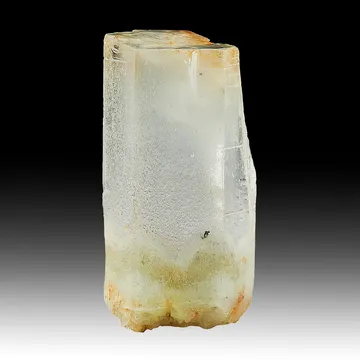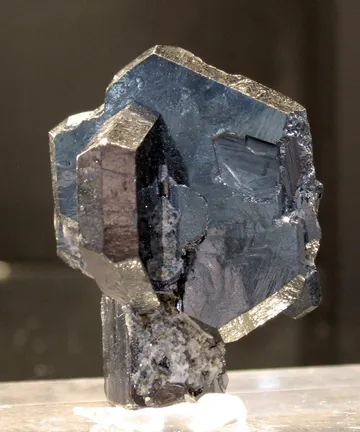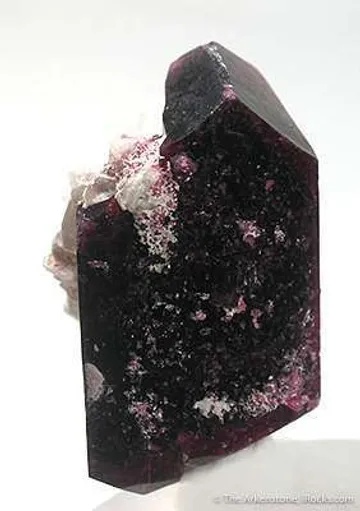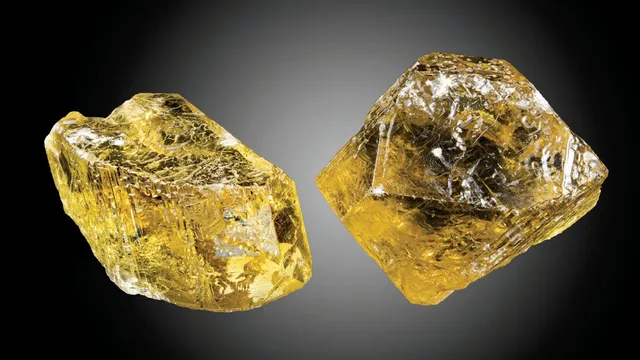
A collector's guide to Haute Matsiatra, Madagascar: its geology, mining history and notable minerals, illustrated with the 28 specimens documented from this locality on EarthWonders.
Key facts
Haute Matsiatra, also recorded in mineralogical databases as Matsiatra Ambony, is a broad central-Madagascar collecting label rather than a single mine. For serious collectors its importance lies in the rare-element pegmatite belt that crosses the highlands between the Ambositra–Fianarantsoa corridor and the more remote Ikalamavony and Camp Robin areas. The specimens that made this region famous are not bulk ore minerals but pocket minerals: Ca-rich, Li-bearing tourmalines with astonishing internal zoning; raspberry-red cesium beryl-group pezzottaite traded under old Fianarantsoa-province labels; smoky quartz and feldspar from miarolitic cavities; and occasional rarities from evolved pegmatites rich in Li, Cs, Be, B, F, and Nb-Ta elements.
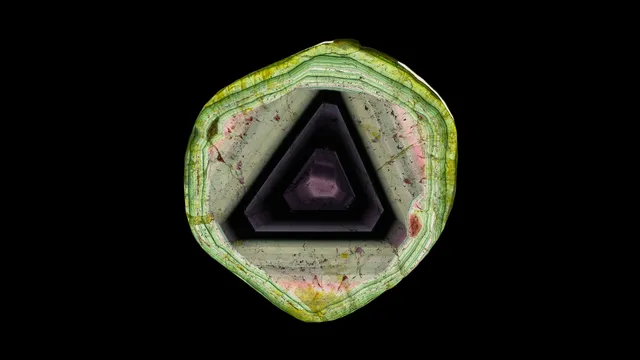
The best Haute Matsiatra-associated pieces have the unmistakable Madagascar look: stout trigonal tourmaline crystals with dark exteriors and glowing interiors, slices cut perpendicular to the c-axis that reveal triangular red sectors and kaleidoscopic bands, and pezzottaite crystals whose purplish-pink to raspberry color seems improbable for a newly described mineral species. The collector value here is in locality precision. “Haute Matsiatra” can be a legitimate regional label for Alakamisy Itenina, Camp Robin, Ambohimahasoa, Tsitondroina, and other modern Matsiatra Ambony localities, but older labels reading only “Fianarantsoa Province” may refer to districts that are now administratively separate. Pezzottaite, in particular, is inseparable from the Sakavalana/Ambatovita discovery in the former Fianarantsoa Province, even though the strict modern locality is usually given as Amoron'i Mania rather than Haute Matsiatra.
Regional View
Country View
In practical collecting terms, Haute Matsiatra sits in the same central-highland pegmatite story as Anjanabonoina, Sahatany, Malakialina, and Ambatovita: isolated bodies of highly evolved granitic pegmatite intruded into metamorphic country rocks, then opened by artisanal work into small pockets that may contain extraordinary crystals for a few weeks and little thereafter. That episodic character explains both the brilliance and the frustration of the locality. Fine pieces appear in the trade in sudden pulses, often with incomplete village-level data, then vanish into private collections before the geology is fully documented.
Search for specimens: View all specimens from Haute Matsiatra, Madagascar
Haute Matsiatra’s collector minerals come primarily from rare-element granitic pegmatites of the central Madagascar crystalline basement. These bodies are part of a regionally important suite of Li-Cs-Ta and related miarolitic pegmatites that have supplied Madagascar with gem tourmaline, beryl-group minerals, spodumene, danburite, quartz, feldspar, and accessory Nb-Ta oxides for more than a century. On modern locality labels, the most relevant Haute Matsiatra names include Alakamisy Itenina in Vohibato District, Tsitondroina and associated Ikalamavony pegmatites, and the Camp Robin–Ambohimahasoa sector, including Ankitsikitsika, Antsengy, Fiadanana, and Valozoro labels. Camp Robin is especially important as a trade and locality name: it refers both to a commune and to a roughly NE-SW rare-element pegmatite field that extends for many tens of kilometers between the Ambatofinandrahana and Ambohimahasoa side of the central highlands.
The deposits are pocket pegmatites, not conventional ore bodies. At the specimen-producing scale, the “ore” is the inner pegmatite zone: feldspar, quartz, albite, mica, tourmaline, and late cavities where fluids concentrated incompatible elements. In such pockets, the difference between a common pegmatite and a world-class specimen source can be a small geochemical and physical accident: enough Ca to stabilize liddicoatitic tourmaline, enough Cs and Li to generate pezzottaite-like beryl chemistry in neighboring districts, and enough open space for crystals to grow without freezing into massive pegmatite. The Sakavalana pezzottaite pocket, although modernly outside Haute Matsiatra, illustrates the same central-Madagascar process with rare clarity: a subvertical mixed-feature pegmatite dike several meters wide, a green amazonite-rich core, smoky quartz, mica, tourmaline, spodumene, albite, danburite, zircon, and Nb-Ta oxides, with pezzottaite crystallizing late in cavities.
Mining has been intermittent and largely artisanal. The older central-Madagascar gem pegmatites were known to French and Malagasy workers by the early twentieth century, and specimens moved through colonial, French, German, Swiss, and later American and Japanese gem channels. The Alakamisy Itenina name is a good example of how labels evolved: “Lacamisinten,” long seen in the gem trade, is not a separate locality but a trader’s rendering of Alakamisy Itenina. The locality is scientifically important because an OH-dominant liddicoatite sample from there was studied in detail by Aurisicchio, Demartin, Ottolini, and Pezzotta in 1999, providing unusually homogeneous material in a tourmaline world where single crystals commonly cross species boundaries from zone to zone.
The Camp Robin area entered the modern collector market forcefully after discoveries reported in 2005–2006. More than sixteen localities in the district have been worked for multicolored tourmalines, and several tons of tourmaline were reportedly mined after the discovery period. The named pegmatites and deposits in the Camp Robin sphere are best known for multicolored tourmaline in pink, purple, red, olive-green, yellow-brown, and yellow hues, with some homogeneous red crystals. Material from Ankitsikitsika and related localities is commonly sold as liddicoatite or fluor-liddicoatite in the collector trade, but exact species identification cannot be made by eye; a single polychrome crystal may cross from elbaite-rich to liddicoatite-rich or fluor-liddicoatite-rich zones.
Collecting access today should be treated as permission-only. These are remote small workings, not public fee digs. Old pits, candlelit tunnels, collapsed pockets, unstable clay-lined fractures, and unrecorded artisanal shafts are recurring features in the documented central-Madagascar pegmatite record. The most reliable modern route into specimens is through established Malagasy dealers, field partners, and old collections with labels preserved. When a piece is offered simply as “Haute Matsiatra,” the collector should ask for the village, district, mine or pegmatite name, year or period of find, and whether the species name is analytical or a trade identification.
Haute Matsiatra liddicoatite is best understood through Alakamisy Itenina and the Camp Robin–Ikalamavony pegmatite labels, where Ca-rich, Li-bearing tourmalines occur as richly colored gem crystals, fragments, and slices rather than as abundant matrix specimens. Alakamisy Itenina material is particularly important because a large pink-red crystal fragment from the locality was characterized as OH-dominant liddicoatite, while Camp Robin-area crystals are the dramatic collector pieces: stout trigonal prisms, often dark-skinned outside but glowing internally with bands or sectors of pink, purple, red, green, orange, yellow-brown, and near-black tones under strong backlighting. Good pieces here are sharply terminated, lustrous, thick enough to transmit color, and accompanied by credible village-level labels such as Alakamisy Itenina, Ankitsikitsika, Befisiotra, Tsitondroina, or Camp Robin; ordinary pieces are attractive but under-documented tourmalines whose true species may be elbaite, fluor-liddicoatite, liddicoatite, or a mixture of zones within one crystal.
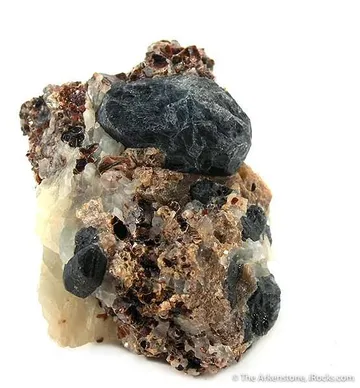
Pezzottaite sold with broad Haute Matsiatra or old Fianarantsoa labels should be evaluated with care, because the scientifically established classic source is the Sakavalana pegmatite near Ambatovita in the former Fianarantsoa Province, now normally placed in Amoron'i Mania rather than modern Haute Matsiatra. The material is unmistakable when right: purplish pink to raspberry-red, commonly tabular to equant in a pseudo-hexagonal-looking habit despite its trigonal structure, usually etched or corroded on surfaces, and associated with albite, smoky quartz, black tourmaline, mica, spodumene, and locally chiavennite. Most crystals are small, often millimeter to low-centimeter scale on collector specimens, while gem rough is typically fractured and included with growth tubes; the finest pieces are saturated, translucent to transparent, complete enough to show crystal form, and especially desirable when still perched on feldspar or schorl-bearing matrix rather than reduced to loose fragments.
Other minerals recorded from modern Haute Matsiatra and its constituent districts include rubellite-tourmaline at Alakamisy Itenina, tourmaline, albite, smoky quartz, quartz, and the londonite-rhodizite series in the Camp Robin field, as well as beryl, chrysoberyl, apatite, microcline, lepidolite, kaolinite, calcite, diopside, garnet-group minerals, and amethyst sceptre material from the broader Tsitondroina–Ikalamavony area. The region also has non-pegmatite mineralization, notably nickel-bearing lateritic material around Valozoro, where garnierite, lizardite, nickel-bearing lizardite, serpentine-group minerals, talc, chalcedony, and quartz are recorded. No major mineral species appears to have Haute Matsiatra as its formal type locality in the same celebrated way that pezzottaite is tied to Sakavalana, but Alakamisy Itenina remains a key analytical locality for liddicoatite sensu stricto.
The principal authenticity issue for Haute Matsiatra is locality precision. “Madagascar,” “Fianarantsoa,” “Haute Matsiatra,” “Camp Robin,” “Alakamisy Itenina,” and “Lacamisinten” are not interchangeable labels. Alakamisy Itenina and Lacamisinten can refer to the same place, but “Fianarantsoa Province” is an older, broader administrative label that can include mines now assigned to different modern regions. Pezzottaite is the most sensitive case: a piece sold as “Haute Matsiatra pezzottaite” may be a broad marketplace label for Sakavalana/Ambatovita material, and collectors should seek supporting provenance rather than assuming a modern Haute Matsiatra mine source.
Tourmaline species names require equal caution. Many Madagascar polychrome tourmalines were historically sold as liddicoatite because of color zoning, locality, or habit. Modern nomenclature and analytical work show that visual identification is inadequate: liddicoatite, fluor-liddicoatite, elbaite, rossmanite-like compositions, and mixed elbaite-liddicoatite zones can occur in similar-looking material, sometimes within the same crystal. For high-value pieces, “liddicoatite” should ideally mean analytical confirmation or a well-established published locality association; otherwise “tourmaline, liddicoatitic” or “liddicoatite/fluor-liddicoatite series” is the more honest label.
Condition issues are normal and should be judged with locality context. Camp Robin-type tourmalines commonly have dark skins, internal strain, rehealed fractures, contacts, and interrupted growth, but they can still be superb if the termination, luster, and transmitted color are strong. Slices should be checked for polishing scratches, resin, dye, backing, or composite construction. Pezzottaite is even more condition-sensitive: documented Sakavalana rough is commonly etched, fractured, included, and locally corroded. Matrix pezzottaite is rare, so repaired matrix pieces, glued crystals, and tiny crystals on unrelated albite or schorl should be examined carefully under magnification.
Treatments are best documented for pezzottaite. Many rough samples observed early in the trade showed low-relief fractures and behavior consistent with oil or another filling substance, and a dealer involved with the material reported that local dealers oiled rough to improve visibility through etched surfaces. Pezzottaite from the classic material is generally inert to long- and short-wave UV; weak chalky yellow fluorescence restricted to fractures can indicate a filling rather than the mineral itself. Heating to high temperature can remove much of the purplish-pink color, while irradiation can restore it, so gems and transparent fragments should be protected from unnecessary heat and evaluated by a gem laboratory if value depends on color.
Market availability is narrow but not extinct. Fine Camp Robin and Haute Matsiatra liddicoatitic tourmalines still appear from old collections and occasional recent workings, but the best thick, lustrous, internally vivid crystals are increasingly contested. Pezzottaite is much scarcer: the original Sakavalana production was small, most gem-quality material was cut or dispersed quickly, and attractive specimen crystals on matrix are among the most difficult Madagascar pegmatite specimens to replace. Small pezzottaite crystals and fragments remain available, but large, saturated, complete crystals with credible provenance command a significant premium.
The most vivid central-Madagascar pezzottaite story begins not with a polished gem but with a cramped, unstable pocket. At Sakavalana, the pezzottaite-bearing zone lay only about six meters below the surface, yet it opened into a cavity that may have measured roughly 3.0 × 3.0 × 1.2 meters. Below it was a zone of smaller vugs. The whole productive area was so limited that, once it was mined, the great new mineral was essentially gone. Around the first rush, about 120 people lived at the deposit, including miners and families. By April 2003 most had left because production had faded, and by July only about twenty people were still actively working the pegmatite.
The setting was primitive even by artisanal pegmatite standards. Workings included pits, shafts, open cuts, two small underground rooms, and short tunnels. Illumination underground was by candlelight. Logs served as crude scaffolding near the opening of the deepest shafts, which reached about 30 meters, and flooding affected one of the lower shafts. The pezzottaite rooms were cut into pegmatite where fractures were coated with iron-stained clay; that clay hid the mineralogy and created roof-stability problems. Later visits found the workings in poor condition, with rockfalls and backfill generated by continued mining.
The main pocket’s contents read like a Madagascar collector’s inventory written in kilograms: about 700 kg of smoky quartz, including crystals up to 50 kg; about 280 kg of multicolored tourmaline with a black skin; more than 40 kg of pezzottaite; and about 25 kg of transparent spodumene. The three largest tourmaline crystals reportedly weighed 15, 25, and 50 kg and were purchased by a Korean dealer for carving. The pezzottaite itself was not a treasure chest of flawless red gems. It came out as crystals, fragments, and masses usually weighing only a few grams, rarely up to about 1,000 grams, with many tens of kilograms of low-quality fragments and deeply corroded crystals. Gem-quality pezzottaite was typically less than one or two grams.
The tourmaline story has its own romance. Madagascar liddicoatite became famous because slices cut across the c-axis can reveal what looks like geometry painted in light: triangular cores, red three-rayed stars, green rims, yellow and pink bands, and fine zoning parallel to prism faces. In the twentieth-century lapidary trade, slicing became the way to expose that hidden architecture. One celebrated episode involved a 70-pound tourmaline crystal that was cut into multicolored slabs; Richard T. Liddicoat visited Gerhard Becker’s shop shortly after the slicing and photographed the changing patterns from the base toward the termination. That moment belongs to the broader Madagascar liddicoatite tradition, but it explains why Haute Matsiatra and neighboring pegmatite labels still excite collectors even when a crystal’s exterior appears nearly black.
Alakamisy Itenina contributes a quieter but memorable chapter. A tourmaline from the locality was used in an intaglio designed and carved by Ute Bernhardt, with permission from Mikhail Baryshnikov, to depict his representation of an older man in the ballet Heart Beat. For collectors, the important detail is not the celebrity connection alone but the material: Alakamisy Itenina tourmaline with aggregate-type color zoning, chosen because Madagascar liddicoatite can carry complex internal patterning that rewards carving as much as faceting.
Camp Robin’s modern chapter arrived suddenly in the mid-2000s. Local miners opened new multicolored tourmaline localities in wild, underexplored parts of central Madagascar, and the district became known for pink, purple, red, olive-green, yellow-brown, and yellow tourmalines. In the 2006 gemological reporting, newly mined Camp Robin crystals totaling about two kilograms were pictured as evidence that Madagascar’s old pegmatite province was still capable of surprise. Dealers and collectors soon learned the difficult lesson that the beauty of the material could outrun the precision of its labels: the crystals were spectacular, but the species name often remained a question unless a laboratory had actually analyzed the relevant zone.
Brendan M. Laurs, William B. Simmons, George R. Rossman, Elizabeth P. Quinn, Shane F. McClure, Adi Peretti, Thomas Armbruster, Frank C. Hawthorne, Alexander U. Falster, Detlef Günther, Mark A. Cooper, and Bernard Grobéty, “Pezzottaite from Ambatovita, Madagascar: A New Gem Mineral,” Gems & Gemology, 39(4), 284–301, 2003 — The essential description of the Sakavalana pezzottaite discovery, geology, production, gemology, chemistry, and treatment observations.
PDF: “Pezzottaite from Ambatovita, Madagascar: A New Gem Mineral,” Gems & Gemology, Winter 2003 — Full illustrated article with mine photographs, pocket figures, production estimates, and analytical tables.
“Liddicoatite Tourmaline from Anjanabonoina, Madagascar,” Gems & Gemology, Spring 2002 — The major English-language treatment of Madagascar liddicoatite, including references to Alakamisy Itenina/Lacamisinten, Fianarantsoa-area material, zoning, gemology, and identification problems.
Carlo Aurisicchio, Francesco Demartin, Luisa Ottolini, and Federico Pezzotta, “Homogeneous liddicoatite from Madagascar: a possible reference material? First EMPA, SIMS and SREF data,” European Journal of Mineralogy, 11(2), 237–242, 1999 — The key Alakamisy Itenina liddicoatite reference; Mindat’s reference page links the paper specifically to the Alakamisy-Itenina gem deposit in Matsiatra Ambony.
Mindat occurrence record: Liddicoatite from Alakamisy-Itenina gem deposit, Alakamisy Itenina, Vohibato District, Matsiatra Ambony, Madagascar — Useful for the analytical note that the studied sample is OH-dominant liddicoatite and for the warning that visual species identification in polychrome Madagascar tourmaline is unreliable.
Mindat locality page: Alakamisy-Itenina gem deposit, Alakamisy Itenina, Vohibato District, Matsiatra Ambony, Madagascar — Locality hierarchy, commodity listing, and the explanation that “Lacamisinten” is a trade misspelling of Alakamisy Itenina.
Federico Pezzotta, “New Gem localities in Madagascar,” 2006 Gemmological Research Conference, Gems & Gemology, Fall 2006, p. 116 — Reference connecting Camp Robin-area localities, including Ankitsikitsika, Antsengy, Fiadanana, and Valozoro, with the 2005–2006 multicolored tourmaline discoveries.
Margherita Superchi, Federico Pezzotta, and Elena Gambini, “Gemological Investigations of Multicoloured Tourmalines from New Localities in Madagascar,” 2006 Gemmological Research Conference, Gems & Gemology, Fall 2006 — Conference abstract reporting the Camp Robin-area tourmalines and their Ca-rich elbaite to liddicoatite compositional range.
Mindat locality page: Camp Robin area, Madagascar — The best concise locality summary for the Camp Robin field, including its dealer-name usage, approximate extent, named deposits, and reported tonnage of tourmaline production after the 2005 discovery.
Mindat locality page: Tsitondroina, Ikalamavony District, Matsiatra Ambony, Madagascar — Documents the broader Ikalamavony pegmatite and gem-mineral context, including beryl, chrysoberyl, tourmaline, lepidolite, smoky quartz, and related minerals.
Robert B. Cook, “Connoisseur’s Choice: Pezzottaite, Sakavalana Mine, Ambatovita, Mandrosonoro Commune, Ambatofinandrahana District, Fianarantsoa Province, Madagascar,” Rocks & Minerals, 92(2), 2017 — A collector-focused publication on a notable pezzottaite specimen from the type locality.
Mindat photo record: Pezzottaite-(Cs), Sakavalana mine, Ambatovita, Mandrosonoro, Ambatofinandrahana District, Amoron'i Mania, Madagascar — A verified photographed micromount-scale pezzottaite specimen from the classic source, useful for real-world size expectations.
Mindat: Haute Matsiatra Region, Madagascar — Administrative-region entry for Haute Matsiatra/Matsiatra Ambony and its districts.
Mindat: Ambohimahasoa District, Matsiatra Ambony, Madagascar — District-level mineral list including Camp Robin-area tourmaline localities and the Valozoro lateritic nickel deposit.
Mindat: Camp Robin area, Madagascar — Key reference for the rare-element miarolitic pegmatite field and post-2005 multicolored tourmaline production.
Mindat: Alakamisy Itenina, Vohibato District, Matsiatra Ambony, Madagascar — Commune-level page for the Alakamisy Itenina/Lacamisinten liddicoatite locality.
Mindat: Alakamisy-Itenina gem deposit — Specific deposit page documenting liddicoatite, tourmaline, rubellite, and the “Lacamisinten” spelling issue.
Mindat: Liddicoatite from Alakamisy-Itenina gem deposit — Species occurrence page with the critical analytical caveat for Madagascar liddicoatite versus fluor-liddicoatite and elbaite.
Mindat: Tourmaline from Madagascar locality entries — Broad Madagascar tourmaline locality index, useful for checking whether a dealer label corresponds to a recorded pegmatite or district.
GIA: “Pezzottaite from Ambatovita, Madagascar: A New Gem Mineral” — The primary gemological and mineralogical article on the pezzottaite discovery.
GIA PDF: “Liddicoatite Tourmaline from Anjanabonoina, Madagascar” — Essential background for Madagascar liddicoatite, including Alakamisy Itenina and Fianarantsoa-area references.
GIA: “New Deposit of Pezzottaite from Madagascar,” Spring 2025 Gem News International — Useful modern comparison for pezzottaite identity, gemological properties, and how new Madagascar finds are reported.
Mindat: Sakavalana mine, Ambatovita, Mandrosonoro, Ambatofinandrahana District, Amoron'i Mania, Madagascar — The strict modern locality reference for classic pezzottaite formerly traded under broader Fianarantsoa labels.
Mindat: Pezzottaite-(Cs) mineral page — Species-level data and photo links for pezzottaite-(Cs), including the classic Madagascar type material.