






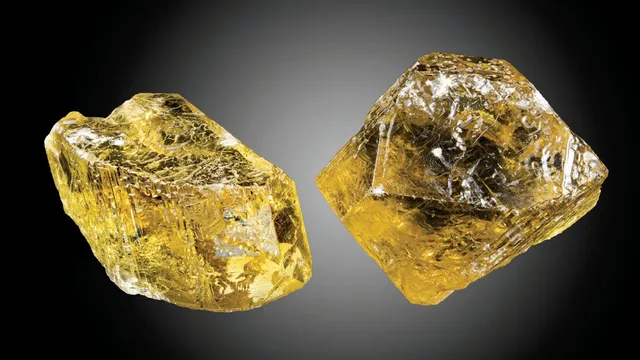
Anosy, Madagascar — premier collector locality with sapphirine, grandidierite, hibonite and sapphire; renowned for dark blue crystals and bluish-green hues.
Key facts
Anosy is not a single mine in the usual specimen-label sense, but a mineral province: the rugged southeastern end of Madagascar around Taolagnaro, Amboasary Sud, Tranomaro, Esiva, Andrahomana, Andranondambo, and the dry interior toward Betroka. For collectors, its importance rests on an extraordinary overlap of high-grade metamorphic geology, boron- and calcium-rich rocks, uranium-thorium skarns, pegmatitic veins, and classic Malagasy gem fields. Few regional labels can honestly carry so many serious mineralogical associations: indigo sapphirine, bluish green grandidierite, black hibonite, sapphire, phlogopite, scapolite, diopside, spinel, thorianite, uranothorianite, zircon, titanite, fluorapatite, and a suite of calc-silicate minerals that read like a field lesson in granulite-facies metasomatism.
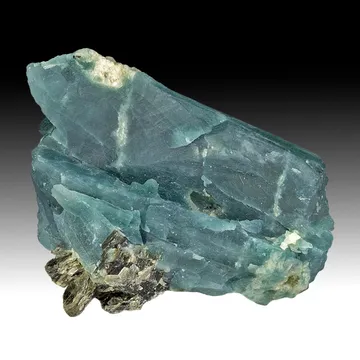
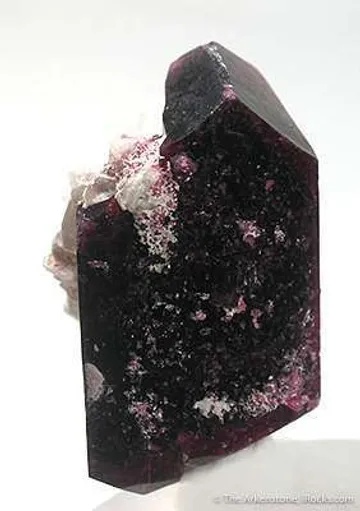
The most desirable Anosy collector specimens have a visual language all their own. Morafeno sapphirine typically appears as dark blue to nearly black, sharply formed crystals set into pale calcite-, scapolite-, plagioclase-, and honey-brown phlogopite-rich matrix; the best pieces are not just blue masses, but discrete, lustrous crystals with crisp terminations and enough contrasting matrix to show the paragenesis. Tranomaro grandidierite brings a different color: strong bluish green to greenish blue, commonly translucent rather than transparent, with stout prismatic crystals that can be impressive cabinet specimens even when not gemmy. Hibonite from Esiva and nearby Anosy localities is darker and denser in character, prized less for beauty than for rarity, history, and its status as a type-locality oxide. Add the Andranondambo sapphire story—thin, irregular skarn-hosted veins that launched a mid-1990s rush—and Anosy becomes one of the great collector names of southern Madagascar.
Regional View
Country View
Geologically, Anosy belongs to the high-grade crystalline terrain south of the Ranotsara shear zone. The mineral districts most relevant to collectors lie in and around the Anosyan and Tranomaro domains, where calcic and magnesian paragneisses, marbles, leptynites, pyroxenites, phlogopite-rich rocks, scapolitites, anorthitic rocks, and pegmatitic intrusions record intense Pan-African deformation and metamorphism. These rocks are not passive hosts; they reacted, exchanged fluids, and recrystallized. That is why the same regional guide must discuss sapphirine in calc-silicate matrix, hibonite in U-Th skarns and eluvials, sapphire in feldspathic veins and skarn reaction zones, and grandidierite in boron-bearing pegmatitic systems.

Photo: Wikimedia Commons
The historical thread is equally strong. Cap Andrahomana, near Taolagnaro, is the type locality of grandidierite, first recognized from material sent to Alfred Lacroix in the early twentieth century. Esiva eluvials, in the Amboasary district, are the type locality of hibonite, a mineral first encountered in the mid-twentieth-century uranium-thorium prospecting era. Morafeno, about 10 km south of Tranomaro, was worked for uranothorianite and phlogopite in the late 1950s before becoming known to collectors for sapphirine specimens that appeared on the mineral-show circuit in the late 1990s. Andranondambo, farther north in the same broad southeastern mineral belt, supplied blue sapphires that reshaped international awareness of Madagascar’s gem potential before the even larger Ilakaka rush.
Search for specimens: View all specimens from Anosy, Madagascar
Anosy collector material comes from several related but distinct geological settings. The most important for sapphirine specimens is the Morafeno thorianite deposit in the Tranomaro commune, where a scapolite-bearing pyroxenite or diopsidite body, roughly hundreds of meters long and tens of meters wide, was worked historically for uranothorianite and phlogopite. This is a calcic-magnesian, high-grade metamorphic environment, not a pegmatite pocket locality in the classic granitic sense. The sapphirine occurs in a hard, pale-to-brown matrix of calcite, scapolite, plagioclase, and phlogopite, with specimens valued when the rare blue silicate stands out as sharp crystals rather than as indistinct dark grains.
The Morafeno workings were subdivided in older descriptions into named areas. Andavabe was noted for thorianite embedded in phlogopite and pyroxene, including “cakes” of parallel-growing crystals; Beraketa, farther north, yielded small thorianite cubes in white or orange calcite; and Puits Moreau was noted for diopside. A fluorite-bearing pocket was also recorded from the area, an unusual feature for this district. The sapphirine specimens that collectors now associate with Morafeno became visible in the trade in the 1996–1998 period, initially with confused labels. Some were offered as “Androy,” while others were later misassigned to Betroka; the Morafeno attribution is the one that matters for the classic calcite-phlogopite-scapolite matrix pieces.
The broader Tranomaro district is also a uranium-thorium province. Uranothorianite mineralization is tied to pyroxenites and related calc-silicate rocks in granulite-facies terrain. French Atomic Energy Commission work in the 1950s and 1960s explored and mined several small deposits and quarries in the Fort Dauphin–Tranomaro region. The mineralization was never a specimen mine in the modern collector sense, but the old workings and associated calc-silicate assemblages supplied the geological context for some of Anosy’s rarest collector minerals: hibonite, sapphirine, spinel, diopside, scapolite, phlogopite, titanite, zircon, thorianite, and uranothorianite.
The grandidierite story is centered on two generations of Anosy localities. Cap Andrahomana, on the southern coast near Taolagnaro, is the type locality. Lacroix’s original material came from a pegmatite-aplite association with quartz, microcline, red almandine, pleonaste, andalusite, and biotite. Later workers found that the original small pegmatite was essentially depleted, which is why old Andrahomana labels are prized but must be treated with caution. Much later, in May 2014, a new gem-quality grandidierite deposit was discovered near Tranomaro, about 15 km from the village and roughly 60 km northwest of Cap Andrahomana. The Tranomaro grandidierite occurs in irregular, discontinuous veins in weathered pegmatite; miners worked it by hand with spades and pickaxes in near-surface corridors and pits.
The Andranondambo sapphire field is the best-known gem-corundum chapter of Anosy. It lies in high-grade granulite-facies rocks of the Tranomaro Group, including crystalline limestone, diopside-bearing marble, anorthite-rich plagioclase rocks, wollastonite-bearing calc-silicate assemblages, gneiss, and pyroxenite. The sapphires are not simple river pebbles washed out of basalt; they are skarn- and vein-related stones, occurring in thin, discontinuous, often erratic mineralized seams. Researchers documented blue sapphire associated with K-feldspar, fluorapatite, calcite, and phlogopite in late veins crosscutting marble. The field became active in the early 1990s and drew thousands of miners by the mid-1990s, with pits and shafts driven into dry, calcareous ground.
Collecting access today should be understood realistically. Much of Anosy’s classic material came from artisanal workings, abandoned uranium-thorium quarries, small gem pits, or remote concessions rather than from open, safe, fee-collecting sites. Tranomaro-area grandidierite deposits require difficult travel and local permission, and published accounts specifically note security concerns in the region. Old U-Th workings pose an additional hazard: uranothorianite and thorianite are radioactive, and abandoned quarries should never be treated as casual collecting grounds. For most collectors, the practical route is through well-provenanced specimens already in the market, with labels narrowed to sublocality whenever possible: Morafeno for sapphirine, Esiva eluvials for type-locality hibonite, Cap Andrahomana for type-locality grandidierite, Tranomaro for the 2014 grandidierite find, and Andranondambo for sapphire.
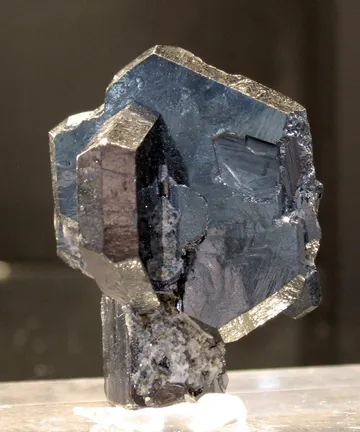
Anosy sapphirine is best known from Morafeno in the Tranomaro district, where collectors prize sharp, dark indigo-blue to blue-black crystals in a calcite-, scapolite-, plagioclase-, and phlogopite-rich matrix. The classic 1996–1998 show material commonly carried crystals around 1 cm, with documented specimens showing bluish crystals to about 13 mm and exceptional individual crystals reaching roughly 2 cm or more; the most attractive pieces combine strong blue color, recognizable crystal form, undamaged terminations, and contrasting honey-brown phlogopite or pale calc-silicate matrix. Morafeno sapphirine can be deceptively dark under weak light, so better examples are those that flash true blue on edges or faces rather than reading as black massive patches. Pale blue to bluish green sapphirine with phlogopite has also been documented from the Betroka-side Anosy localities such as Voronkafotra, but the archetypal collector specimen remains the Morafeno matrix piece from the old thorianite district.
Other Anosy minerals give the region unusual depth. Grandidierite, (Mg,Fe2+)(Al,Fe3+)3(SiO4)(BO3)O2, has its type locality at Cap Andrahomana, where early twentieth-century material reached Alfred Lacroix; later Tranomaro finds produced bluish green crystals of genuine gemological and specimen interest. Hibonite, CaAl12O19, is another Anosy type-locality species, originally from the Esiva eluvials and named for Paul Hibon; it is typically dark brown to black and mineralogically significant because of its association with U-Th skarns, corundum, spinel, thorianite, and calcic metamorphic rocks. Andranondambo sapphires are famous for blue, commonly color-zoned corundum in skarn-related assemblages with calcite, fluorapatite, phlogopite, feldspars, scapolite, spinel, thorianite/uraninite, zircon-bearing phases, and other calc-silicate inclusions. Diopside, scapolite, phlogopite, spinel, titanite, zircon, fluorapatite, uranothorianite, and thorianite are not merely accessory names here; they are the mineralogical vocabulary of the Anosy deposits.
The first collector rule for Anosy is to demand sublocality precision. “Anosy, Madagascar” is acceptable as a broad regional label, but a serious specimen should ideally say Morafeno, Tranomaro, Esiva, Cap Andrahomana, Andranondambo, Voronkafotra, or another specific mine or occurrence. This matters because the region includes several unrelated specimen styles. A sharp blue sapphirine in calcite-phlogopite-scapolite matrix is not equivalent to a pale sapphirine-bearing rock from Betroka, a grandidierite from Tranomaro, a type-locality grandidierite from Cap Andrahomana, or a sapphire from Andranondambo.
Mislabelling is specifically documented for this region. Morafeno sapphirines were first sold with erroneous “Androy” labels and have also circulated as Betroka material. Grandidierite from several southern Madagascar localities north of Andrahomana has historically been labelled as Andrahomana, because that was long the best-known textbook locality. Hibonite creates the opposite problem: because Esiva is the classic type locality, Madagascar hibonite specimens lacking exact locality data are often casually or incorrectly sold as Esiva. In each case, old labels can be valuable evidence, but not proof; matrix, habit, acquisition date, and chain of custody matter.
For sapphirine, watch condition closely. The mineral is hard, but the specimens are usually matrix pieces with mica, calcite, scapolite, and plagioclase, so trimming, edge bruising, and cleaved or rubbed matrix are common. The best Morafeno pieces have visible blue crystals standing proud of the matrix, not just dark broken grains. Because sapphirine may look nearly black under indoor light, evaluate it with strong neutral lighting and from several angles. Repaired matrix is possible on larger cabinet pieces, though widespread treatment of sapphirine itself is not a known locality issue.
For sapphire from Andranondambo, heat treatment is the major authenticity and disclosure concern. Published gemological work found that much of the gem-quality production entering the cutting trade was heated, often in Bangkok, to modify or intensify color. Heat-treated stones may show altered inclusions, stress fissures around crystals and negative crystals, turbid or mirror-like mineral inclusions, rounded fluid inclusions, and pale grayish or bluish bands; untreated stones commonly show strong color zoning and a suite of calc-silicate-related inclusions. Fine untreated Andranondambo sapphire should be bought with laboratory documentation.
For grandidierite, transparency and color drive value, but collector specimens should not be judged by faceting standards alone. Many Tranomaro crystals are translucent, fractured, or only locally gemmy, yet still important as large, well-formed examples of a very rare borosilicate. The finest specimens show strong blue-green color, recognizable crystal faces, and minimal crushing or sawing. Grandidierite from Tranomaro was reported as non-fluorescent under both short-wave and long-wave ultraviolet radiation, so fluorescence is not normally a selling point.
Radioactive minerals from Anosy require special handling. Thorianite and uranothorianite specimens from Tranomaro-area deposits should be stored away from living spaces, handled minimally, kept out of reach of children, and not cut, ground, cleaned ultrasonically, or displayed in poorly ventilated cases without understanding their radiation and radon implications. Matrix specimens containing suspected U-Th minerals should be tested with an appropriate meter if they are to be kept in a collection.
Market availability is uneven. Morafeno sapphirine appears periodically from old collections and occasional dealer holdings, but sharp, well-crystallized examples are scarce. Hibonite is rare and often expensive relative to its visual appeal because locality, species, and type-locality significance carry the value. Tranomaro grandidierite is more visible than it was before the 2014 discovery, but top specimens and transparent gem rough remain genuinely uncommon. Andranondambo sapphire is available in the gem trade, yet mineral specimens showing matrix or complete crystals are far less common than cut stones.
The grandidierite story begins with a small, almost improbable handoff. Charles Alluaud, a French biologist and explorer, collected specimens during his 1900–1901 expedition in southern Madagascar and sent them to Alfred Lacroix in Paris. Among them was a fragment of a greenish blue mineral that did not fit the known species. Lacroix recognized it as new and published a preliminary note in 1902, naming grandidierite in honor of Alfred Grandidier, the explorer and naturalist whose work on Madagascar had become monumental. Later, commandant Blondlat at Fort Dauphin sent additional material to Lacroix. The original pegmatite at Cap Andrahomana was small; when C. Mignot visited the site in 1960, he could not find additional grandidierite there. For decades, that scarcity gave the name Andrahomana an almost mythic quality—so much so that grandidierite from other southern localities was often folded back into the famous type-locality name on labels.
The modern Tranomaro grandidierite find reads like a different chapter in the same book. In May 2014, a new deposit was discovered near Tranomaro, close enough to the old Andrahomana story to feel like a geological echo but distinct in character and setting. Reaching it was not straightforward: from Tolanaro, one followed a paved road west to Amboasary Atsimo, then a rough unpaved road north toward Tranomaro, and finally a half-day approach on foot from the village. The published account notes that security was a problem because bandits operated in the region. Mining was hand work. About a dozen miners used spades and pickaxes to dig holes as deep as 15 m in weathered pegmatite, following two blue-green grandidierite-bearing veins separated by anything from 30 cm to several meters. Between May 2014 and March 2016, the deposit yielded about 800 kg of rough specimens, but only about one crystal in 10,000 was considered gem-quality; fewer than ten faceted stones above 1 ct were reported from the early production.
The Andranondambo sapphire rush was more chaotic. Fine blue sapphire began appearing in Antananarivo parcels in the early 1990s, but the rumor trail was confused at first: word circulated in Fort Dauphin that a new sapphire deposit had been found near Bekily, in the central part of southern Madagascar. Once the true source near Andranondambo became known, miners poured into the area. From the air, the deposit was described as looking like “Swiss cheese,” pocked with hundreds of small shafts over about 3 km. At times the shanty town held as many as 10,000 people in extremely primitive conditions. By March 1995, about 3,000 miners were still working Andranondambo proper, while another nearby discovery about 10–12 km north at Antsiermene had attracted an estimated 3,000–4,000 diggers of its own.
The physical mining at Andranondambo was stark. Small teams sank narrow shafts by hand, sometimes 20–30 m deep, through hard calcareous rock. They climbed down by ropes, tree trunks, or crude wooden ladders, working with long crowbars and shovels. Buckets of rock were hauled up by rope, and the waste was dumped on the surface—sometimes, inefficiently, over unworked ground. The shafts could be only half a meter apart, making the surface dangerous to cross. The dryness of the region was a mixed blessing: there was little groundwater to collapse the shafts, but the work remained precarious, improvised, and exhausting.
The production numbers tell a story of fever and frustration. In a two-day mine visit in March 1995, one researcher saw only a few hundred grams of small gem-quality sapphire, most pieces weighing just 0.2 to 0.5 g, despite the number of miners in the field. Yet dealers in Bangkok reported that by late 1994 roughly 100 kg of rough from Andranondambo was arriving each month, with a high proportion usable for jewelry after heat treatment. Most stones were small, but crystals of 50–60 g were reported, and a spectacular 17.9 kg rough blue sapphire was described in Bangkok as “definitely gem-grade sapphire” with fine blue color. Whether judged as geology, gem trade, or human event, Andranondambo was one of the episodes that announced Madagascar as a major modern sapphire source.
The hibonite story is quieter but no less collectible. In the 1950s, amid the search for radioactive minerals in southern Madagascar, Paul Hibon found the material that would become hibonite in the Esiva eluvials. The new oxide was associated with the thorianite-phlogopite world of the Amboasary district and was formally described in the French literature soon afterward. Its crystals are not bright cabinet showpieces in the manner of tourmaline or aquamarine; they are dark, dense, and mineralogically exacting. But a good Anosy hibonite carries the weight of a type locality, a named discoverer, and a link between terrestrial high-grade metamorphic rocks and the same mineral family known from meteorites and calcium-aluminum-rich inclusions.
Lacroix, A. (1902), “Note préliminaire sur une nouvelle espèce minérale,” Bulletin de la Société Française de Minéralogie, 25, 85–86 — The original grandidierite description, tied to Cap Andrahomana in Anosy.
Cap Andrahomana locality record, Mindat — Useful summary of the type-locality history of grandidierite, including Alluaud’s expedition material, Lacroix’s description, later collecting, and the problem of erroneous Andrahomana labels.
Bruyère, D., Delor, C., Raoul, J. A., Rakotondranaivo, R., Maubec, G. W., and Lahfid, A. (2016), “A New Deposit of Gem-Quality Grandidierite in Madagascar,” Gems & Gemology, 52(3), 266–275 — Detailed study of the 2014 Tranomaro grandidierite deposit, including geology, mining, crystal size, color, pleochroism, inclusions, and gem potential.
Delbos, L. (1955), “Note sur le gisement d’un minéral nouveau ‘la hibonite’ de l’Androy Mandrareen,” Rapport Annuel du Service Géologique pour 1955, Tananarivo, 143–144 — Early report on the newly recognized hibonite occurrence connected to the Anosy/Androy-Mandrare uranium-thorium district.
Curien, H., Guillemin, C., Orcel, J., and Sternberg, M. (1956), “La hibonite, nouvelle espèce minérale,” Comptes Rendus de l’Académie des Sciences, 242, 2845–2847 — The formal new-mineral publication cited in contemporary mineralogical listings.
Hainschwang, T., Notari, F., Massi, L., Armbruster, T., Rondeau, B., Fritsch, E., and Nagashima, M. (2010), “Hibonite: A New Gem Mineral,” Gems & Gemology, 46(2), 135–138 — Gemological paper that summarizes hibonite’s original Esiva alluvial thorianite-phlogopite context before discussing gem-quality material from outside Madagascar.
Kiefert, L., Schmetzer, K., Hänni, H. A., and others (1996), “Sapphires from the Andranondambo Region, Madagascar,” Gems & Gemology, Summer 1996 — Major gemological and field account of the Andranondambo sapphire deposit, including access, mining, production, treatments, inclusions, and identification features.
Gübelin, E. J., and Peretti, A. (1997), “Sapphires from the Andranondambo mine in SE Madagascar: evidence for metasomatic skarn formation,” The Journal of Gemmology, 25(7), 453–516 — Detailed inclusion and genesis study arguing for skarn-related sapphire formation.
Rakotondrazafy, A. F. M., Giuliani, G., Ohnenstetter, D., Fallick, A. E., Rakotosamizanany, S., Ralantoarison, T., Razanatseheno, M. M., Offant, Y., Garnier, V., Dunaigre, C., Schwarz, D., Mercier, A., Ratrimo, V., and Lasnier, B. (2008), “Gem corundum deposits of Madagascar: A review,” Ore Geology Reviews, 34, 134–154 — Broad geological synthesis placing Andranondambo and the Tranomaro-area corundum-skarn assemblages in the wider Madagascar corundum framework.
Sahoa, F. E., Rabesiranana, N., Andriambololona, R., Geckeis, H., Marquardt, C., and Finck, N. (2012), “Crystallographic Study of U-Th bearing minerals in Tranomaro, Anosy Region–Madagascar” — Modern XRD-focused study of U-Th minerals from old abandoned Tranomaro quarries.
Morafeno thorianite deposit, Mindat — Key locality record for Morafeno sapphirine, thorianite, phlogopite, diopside, fluorite, and the documented 1996–1998 sapphirine specimen appearance.
Anosy regional locality record, Mindat — Regional mineral list and sublocality portal for Anosy, including type-locality entries for grandidierite and hibonite.
Anosy, Madagascar — Mindat — Best starting point for the regional species list, sublocalities, and type-locality minerals.
Morafeno thorianite deposit — Mindat — Essential reference for the classic Morafeno sapphirine matrix specimens and the old thorianite workings south of Tranomaro.
Sapphirine gallery — Mindat — Useful visual comparison for Morafeno and other Anosy sapphirine habits, colors, matrices, and label variants.
Cap Andrahomana — Mindat — Focused locality page for the grandidierite type locality and its collecting history.
Grandidierite from Tranomaro — Mindat — Photo-rich record of Tranomaro grandidierite specimens from the modern Anosy find.
A New Deposit of Gem-Quality Grandidierite in Madagascar — GIA — Detailed gemological paper on the 2014 Tranomaro grandidierite discovery and production.
Sapphires from the Andranondambo Region, Madagascar — GIA — Classic field and gemological study of the Andranondambo sapphire rush and material.
Sapphires from the Andranondambo mine in SE Madagascar — Gem-A — In-depth skarn-genesis and inclusion study of Andranondambo sapphires.
Gem corundum deposits of Madagascar: A review — Ore Geology Reviews PDF — Broader scientific context for Madagascar corundum deposits, including Andranondambo and Tranomaro-related skarn systems.
Crystallographic Study of U-Th bearing minerals in Tranomaro, Anosy Region–Madagascar — arXiv — Technical note on uranium-thorium minerals from old Tranomaro quarries.
Exploration uranifère — OMNIS Madagascar — Official Malagasy overview of uranium exploration history, including Tranomaro.
Uranium 2024: Resources, Production and Demand — OECD Nuclear Energy Agency / IAEA — Current uranium-industry reference summarizing historic Fort Dauphin-area uranothorianite production.
File:Sapphirine-744804.jpg — Wikimedia Commons — Freely licensed image of a classic Morafeno sapphirine specimen.
File:Sapphirine2 (Madagascar).jpg — Wikimedia Commons — Public-domain photograph showing sapphirine with phlogopite, useful for visual comparison.

.jpg)