Ron Coleman Mine, USA, a Ouachita quartz locality known for water-clear, glassy prisms from large veins, with WWII production history and collecting appeal.
Key facts
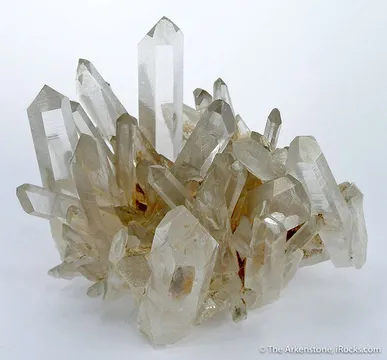
Ron Coleman Mine, near Jessieville in Garland County, Arkansas, is one of the classic names in the Ouachita quartz belt: a working commercial and fee-collecting quartz mine whose reputation rests on exceptionally abundant rock crystal from large hydrothermal vein systems. The mine is the modern successor of the old Dierks No. 4 or Blocker Lead workings, a wartime source of oscillator-grade quartz and later one of the best-known public-facing crystal mines in the Hot Springs–Mount Ida collecting region. Its best specimens have the look serious collectors want from Arkansas: water-clear, glassy, sharply terminated six-sided prisms rising from white quartz matrix or clay-filled pocket debris, sometimes in sculptural sprays and floater-like clusters, often with the warm red-brown iron staining that marks their birth in the weathered Ouachita rocks.
Geologically, the mine belongs to the great Arkansas quartz-crystal province of the Ouachita Mountains, where silica-rich hydrothermal fluids filled fractures and cavities during the late stages of Ouachita mountain building. The locality has been described as quartz veins in Stanley Shale, and older field-trip literature also places the Coleman workings in highly weathered Blakely Sandstone on the nose of a plunging syncline. In collecting terms, both descriptions point to the same essential specimen environment: deformed Paleozoic strata cut by steep quartz veins, with productive cavities opened along vein swells, intersections, bends, and fractured zones. The mine’s commercial importance is not the diversity of its species list but the sheer scale, continuity, and quality of its quartz production.
Regional View
Country View
Historically, Ron Coleman Mine matters because it connects three collecting worlds that rarely overlap so neatly: World War II industrial quartz production, long-running family mining, and modern public collecting. In 1943 and 1944, when natural quartz was a strategic material for radio and other electronic oscillator uses, the old Blocker Lead/Dierks No. 4 workings produced major quantities of clear crystal. Decades later, the mine became a steady source of specimen-grade quartz for collectors, decorators, dealers, and museums. The most public symbol of that achievement is the Berns Quartz, the colossal Coleman Mine cluster now displayed at the Smithsonian’s National Museum of Natural History.

Photo: Wikimedia Commons
The finest cabinet pieces from Ron Coleman are not merely “Arkansas quartz” in a broad commercial sense. They tend to show the pocket aesthetics that made the locality famous: complete or near-complete points, bright luster, minimal bruising, transparent terminations, and clusters with lively three-dimensional architecture. Ordinary material is plentiful—milky points, iron-stained fragments, healed pieces, broken plates, and etched or contacted crystals are common in the mine-run stream—but collector-grade examples stand out immediately by their sharpness, clarity, balance, and lack of tip damage.
Search for specimens: View all specimens from Ron Coleman Mine, USA
Ron Coleman Mine is located at Blue Springs, north-northwest of Jessieville, in Garland County, Arkansas. The modern visitor address is 211 Crystal Ridge Lane, Jessieville, Arkansas, and the mine sits in the Hot Springs–Jessieville part of the Ouachita quartz belt, close enough to Hot Springs National Park that it is often marketed to visitors as a Hot Springs-area crystal mine. The historical names attached to the property are important for labels: Old Coleman Mine, West Chance, Dierks No. 4, Blocker Lead, and Geomex all refer to the same locality lineage or mine area, and old specimens may carry any of those names.
The deposit is a hydrothermal quartz-vein system in folded and faulted Ouachita strata. The quartz occurs in “leads,” the local Arkansas term for veins or vein zones, and the old workings exploited a vein described as 10 to 50 feet wide and about 800 feet long. The richest specimen production came not from uniform solid bull quartz but from cavities and pocket zones, where clay-filled openings allowed crystals to grow with open faces. In the best pockets, red clay and weathered shale acted as natural packing material, cushioning crystals that otherwise might have been crushed or shattered during movement and later mining.
The mineralization is overwhelmingly quartz, both massive white vein quartz and transparent to translucent rock crystal. Primary associates are sparse in the exposed, deeply weathered parts of the deposit. Historical descriptions mention rhombohedral casts after calcite in vein quartz and crystal fragments, clots of kaolin and dark-red halloysite in fissures, and local carbonaceous inclusions in crystal and vein quartz. That austere mineralogy is part of the Coleman identity: the mine is not a complex sulphide or phosphate locality; it is a high-volume quartz-crystal producer whose accessory features are mostly inclusions, casts, clay fillings, iron oxide staining, and local smoky coloration.
Mining began modestly before the main wartime boom, but early diggers were hindered by a massive white quartz cap. The decisive change came in 1943, when local miners broke through that cap and opened productive crystal ground. During roughly four months of hand work, miners produced about 50 tons of crystals, including 2,100 pounds of oscillator-grade material. Work paused because of claims litigation, and in January 1944 the Diamond Drill Carbon Company began operations, using open cuts up to about 40 feet deep. In the following four months, the company mined about 60 tons of crystals and more than 2,500 pounds of eye-clear quartz. Contemporary reporting singled out the deposit for both volume and crystal size within the district.
Those wartime pocket descriptions still read like collector mythology. Some pockets reached about 4 by 10 by 30 feet and contained mostly large crystals. Individual crystals reportedly weighed as much as 600 pounds, and many 20- to 40-pound crystals contained 10 to 30 percent oscillator quartz. The largest single piece of oscillator quartz, after cobbing, weighed 18 pounds. Not all clear quartz met industrial specifications: a high percentage showed optical twinning, which reduced its usefulness for oscillator plates but did not diminish its eventual appeal as specimen material.
After the war, the Dierks Lumber Company leased the mine to Charles Coleman and family from 1946 to 1976. It was later leased or operated by Japanese interests in the late 1970s, sold to a German company around 1980, and then returned to Coleman family control when Ron Coleman purchased the property around 1990. Ron Coleman Mining opened public digging in 1991, and later ownership passed to Kevin and Kathy Coleman, with the mine continuing as a family-run operation. The site now combines commercial mining, public tailings digging, mine tours, a gift shop, and an RV/camping component.
Collecting access today is controlled and fee-based. The public does not enter the active commercial mine for self-collecting; public digging is in a designated tailings area supplied by mine material. The commercial pit itself is subject to mine-safety regulations, but guided tours may enter the open-pit area by vehicle and show visitors veins, machinery, pocket work, cleaning vats, and grading areas. The mine advertises a four-acre public digging area, daily fee collecting during posted hours, and a “keep what you find” policy for crystals carried from the public area. Current rules prohibit heavy or powered tools such as pickaxes, sledgehammers, and power tools, so visiting collectors should treat the site as hand-tool tailings collecting rather than in-situ pocket mining.
Notable finds span from pocket-sized clusters to museum-scale giants. The mine has produced sharp thumbnail and small-cabinet points, large cabinet clusters, smoky quartz, healed crystals, and big matrix plates. At the extreme end stands the Berns Quartz, recovered from Ron Coleman Mine in 2016 and later installed at the Smithsonian. The Smithsonian catalog records it as two fitted pieces with a combined weight of about 9,200 pounds, while the museum’s public exhibition text describes the displayed cluster as more than 8,000 pounds and seven feet tall. Either way, it is one of the defining American quartz specimens of the modern era.
Quartz is the signature mineral of Ron Coleman Mine and occurs as massive white vein quartz, loose and matrix-supported rock crystal, iron-stained points, clear to milky clusters, occasional smoky quartz, and large pocket plates. The best pieces show the classic Arkansas habit: lustrous hexagonal prisms with bright rhombohedral terminations, ranging from jewelry-point sizes to cabinet clusters and, rarely, huge display specimens. Crystals were produced historically from large clay-filled pockets along a wide vein system, with major wartime production from the old Blocker Lead/Dierks No. 4 ground and later commercial production under Coleman family operation. Ordinary specimens are abundant and often chipped, stained, milky, or contacted; superior Ron Coleman quartz is distinguished by water-clear terminations, undamaged tips, glassy luster, balanced cluster architecture, and enough matrix or healed growth to give the specimen character rather than just size.
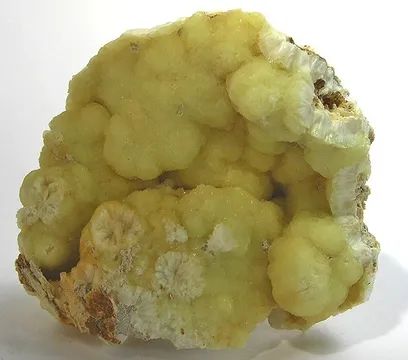
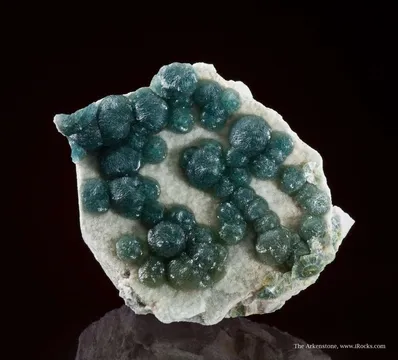
Wavellite from Ron Coleman Mine is a minor collector occurrence rather than the mine’s main fame, and pieces attributed to the locality should be evaluated with particular care because Arkansas wavellite is far more famously associated with phosphate localities such as Mauldin Mountain and Avant-area occurrences. On Ron Coleman specimens, wavellite is valued as a secondary phosphate accent to quartz rather than as large stand-alone balls or thick botryoidal crusts: expect small green to yellow-green radiating aggregates or crusty patches on quartz-rich matrix, sometimes easily overlooked beside the dominant crystal quartz. The best examples are those in which the phosphate is visually distinct, intact, and convincingly attached to Coleman quartz matrix, with clear locality documentation; ordinary or questionable pieces may be no more than greenish secondary material on quartz and should not be bought at a premium without reliable provenance.
Other documented or repeatedly reported materials from Ron Coleman Mine are few compared with the scale of quartz production. Calcite is mainly represented by rhombohedral casts in quartz rather than by abundant surviving calcite crystals. Kaolin and dark-red halloysite occur as clay fillings in fissures and pockets, and carbonaceous inclusions are locally present in crystal and vein quartz. Smoky quartz is reported and sold from the mine, though much Arkansas “smoky” material in the trade more broadly has been artificially irradiated, so naturally smoky Ron Coleman pieces deserve careful documentation. No well-established type-locality mineral species is tied to Ron Coleman Mine; its mineralogical importance is instead the exceptional volume and size of quartz specimens from a historically documented American quartz-crystal deposit.
Ron Coleman Mine quartz is common enough that modest specimens remain accessible, but fine examples are much less casual than the mine’s tourist reputation suggests. Small points, milky clusters, iron-stained fragments, and broken crystals from public tailings are abundant; sharp cabinet pieces with transparent terminations, balanced composition, and minimal bruising are genuinely selective. The locality’s production volume can mislead buyers: “from Ron Coleman” does not automatically mean high grade, and the value gap between a damaged tailings point and an undamaged old-pocket cluster is substantial.
Condition is the central issue. Public-dig material is moved, dumped, weathered, and handled; broken tips, bruised prism edges, contacted bases, clay-filled cracks, and iron-oxide coatings are common. A crystal can be attractive and still be heavily damaged under dirt or stain. Examine terminations with a loupe, especially on sprays where the tallest crystal dominates the composition. Matrix clusters should be checked for sawed or broken bases, repaired points, and fresh white bruises along protruding edges. Iron staining is normal for the locality and is often removed with oxalic-acid cleaning; a cleaned specimen is not automatically “treated” in the deceptive sense, but collectors should expect many bright white-to-clear Coleman quartz pieces to have been acid cleaned after recovery.
The main authenticity concerns are locality confusion, enhancement, and marketing language. “Coleman Mine” can refer imprecisely to more than one Coleman-associated Arkansas quartz operation, and old labels may use Ron Coleman, Old Coleman, East Coleman, Blocker Lead, Dierks No. 4, Geomex, Jessieville, or Blue Springs. These names can be legitimate when historically connected, but vague labels deserve follow-up. Titanium-coated, “aura,” and other vapor-coated quartz is sold in the modern decorative trade and should never be confused with natural color. Arkansas Geological Survey notes that much smoky quartz in Arkansas rock-shop circulation has been produced by irradiation of natural rock crystal; for Ron Coleman smoky quartz, insist on either mine-direct labeling or a seller who clearly distinguishes natural smoky color from irradiated material.
Wavellite from this locality deserves even more caution than quartz. Arkansas wavellite is famous, but its classic localities are not Ron Coleman Mine. If a piece is sold as Ron Coleman wavellite, the label should be treated as a provenance claim requiring evidence, not as a casual assumption based on “Arkansas” alone. Look for old collection labels, mine-direct history, or marketplace documentation tying the specimen specifically to Ron Coleman rather than to Mauldin Mountain, Avant, Dug Hill, or another Ouachita phosphate locality.
Quartz is hard and durable, but clusters are mechanically vulnerable. Transport exposed sprays in padded boxes, not loose flats. Avoid thermal shock during cleaning, especially on large pieces freshly brought from clay or water. If using oxalic acid, neutralize thoroughly, rinse repeatedly, and allow slow drying; trapped acid or clay in matrix pockets can continue to discolor or damage labels and storage materials. Quartz itself is not especially light sensitive, but clay-coated and iron-stained specimens can change appearance dramatically after cleaning, so photograph important self-collected pieces before and after preparation if you want to preserve their field context.
The old Blocker Lead story begins with frustration: early diggers had a promising quartz vein but were stopped by a heavy cap of massive white quartz. The mine did not become a major crystal producer until 1943, when local workers finally broke through that cap and reached the pocketed ground beneath it. Once opened, the deposit changed character almost immediately. In four months of hand digging, miners recovered about 50 tons of crystals, including 2,100 pounds of oscillator-grade quartz. For a collector, that number is startling; for wartime industry, it meant clear natural quartz that could be cobbed, inspected, and cut for critical electronic uses.
The second act came in January 1944, when Diamond Drill Carbon Company took over and drove open cuts as deep as 40 feet. In only four months, the company mined about 60 tons of crystals and more than 2,500 pounds of eye-clear quartz. The pocket measurements read like something from a prospector’s tall tale, but they come from the technical record: cavities as large as 4 by 10 by 30 feet, large crystals throughout, individual crystals up to about 600 pounds, and 20- to 40-pound crystals carrying portions of oscillator-quality material. The catch was twinning. Much of the eye-clear quartz was optically imperfect for oscillator cutting, a wartime disappointment that later became irrelevant to collectors who cared more about luster, clarity, and form than whether a crystal could be sliced into a radio plate.
The modern museum story is the Berns Quartz. Recovered from Ron Coleman Mine in 2016, the giant cluster eventually reached the Smithsonian’s National Museum of Natural History, where it went on public display on October 27, 2021. In the museum, it is not tucked away as a geological curiosity; it stands near the historic north entrance, seven feet tall and weighing more than 8,000 pounds in the exhibition description. The Smithsonian’s catalog records the specimen as two matching pieces with a combined weight of about 9,200 pounds. Its name honors Michael and Tricia Berns, whose support brought the specimen into the national collection. Smithsonian director Kirk Johnson placed it beside the museum’s icons—the Hope Diamond, the Nation’s T. rex, and Henry the elephant—and curator Jeffrey Post called a clear quartz cluster of that size and quality “extraordinarily rare.”
Field collecting at Ron Coleman has its own, humbler rhythm. A visiting club does not usually pry crystals from a virgin pocket; it works the mine-run clay and tailings brought up from the commercial operation. Collectors arrive with buckets, gloves, small hand tools, and the hope that fresh material has recently been dumped. The red clay can look discouraging until the first glassy face flashes. Smaller points may lie loose on the surface, while better clusters often require patient hand digging and careful rinsing. Heavy rain can be a collector’s ally, washing clay from points and exposing crystals that were invisible the day before. The tradeoff is damage: material moved by equipment gives up plenty of crystals, but many have bruised edges, broken tips, or contacted bases. The satisfying Ron Coleman find is the one that survived the ride—sharp enough, clear enough, and still sitting on enough matrix to tell the pocket story.