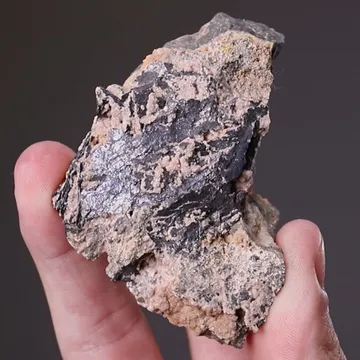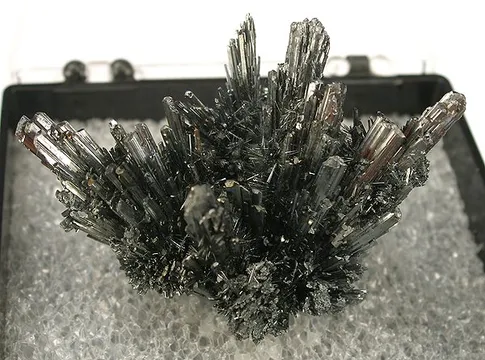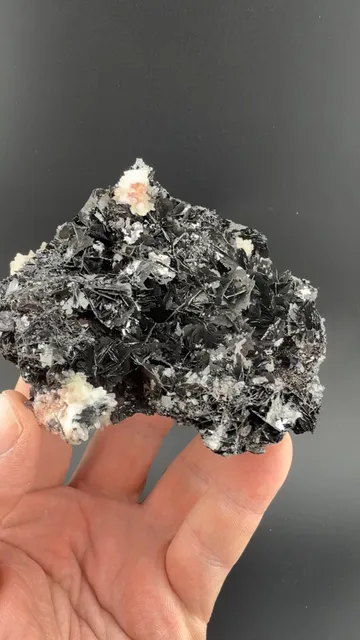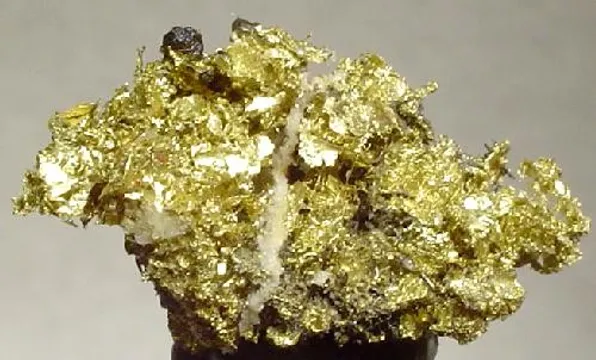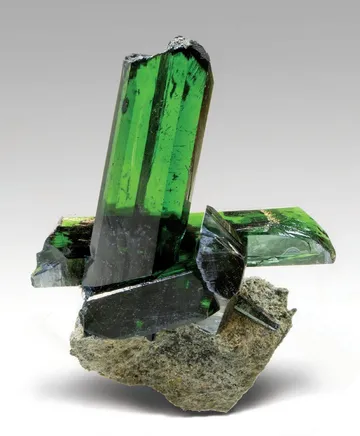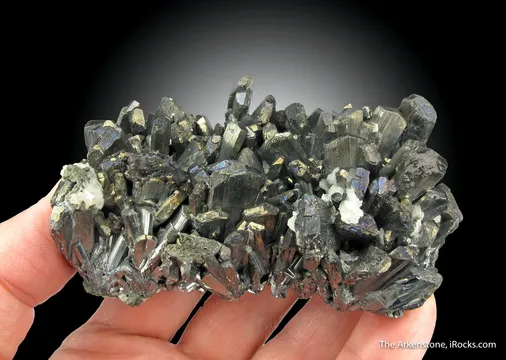
Romania — classic European ore fields, with Baia Mare–Gutâi and Apuseni riches like tellurides, stibnite, and gold-silver specimens, prized for parageneses.
Key facts
Romania is not a single locality in the collector’s sense so much as a country-sized cabinet of classic European ore fields. Its finest specimens come overwhelmingly from two mineral provinces. In the north, the Baia Mare–Gutâi district of Maramureș produced epithermal polymetallic veins rich in Pb, Zn, Cu, Ag, Au, Sb, Mn and spectacular carbonate gangue; Herja, Baia Sprie, Cavnic, Băiuț, Săsar, Dealul Crucii, Ilba and Nistru are names that still carry weight on old labels. In the west, the Apuseni Mountains — especially the Metaliferi Mountains and the celebrated Golden Quadrilateral — gave the world a suite of Au-Ag-Te minerals from epithermal veins tied to Neogene volcanism. Săcărâmb, formerly Nagyág, is one of Europe’s great telluride names, a locality where black lamellae of nagyágite, steel-gray hessite and petzite, native gold, rhodochrosite, quartz and carbonate gangue made both scientific history and cabinet history.
The Romanian aesthetic is old-world and unmistakable. The best Baia Mare specimens are not garish; they are architectural: metallic stibnite sprays on pale baryte, black sulfosalt needles trapped in calcite, honey-brown siderite rhombs, galena and sphalerite in carbonate-lined vugs, bladed or spherical calcite, and classic combinations whose strength is contrast rather than size alone. Săcărâmb material is usually more intimate: dark telluride plates and grains in pale quartz, calcite or rhodochrosite, specimens whose importance may be measured in millimeters but whose locality history spans the discovery of mineral species and even the chemistry of tellurium.
Regional View
Country View
For collectors, Romania’s importance rests on three overlapping virtues: closed classic mines, scientifically famous parageneses, and specimen forms that are local enough to be recognizable. A Romanian stibnite from Baia Sprie or Herja is visually different from a modern Chinese stibnite; a Herja calcite sphere is not simply “calcite” but a late hydrothermal object linked to jamesonite-rich open spaces; a Săcărâmb hessite or nagyágite is part of the mineralogical vocabulary of the Golden Quadrilateral.
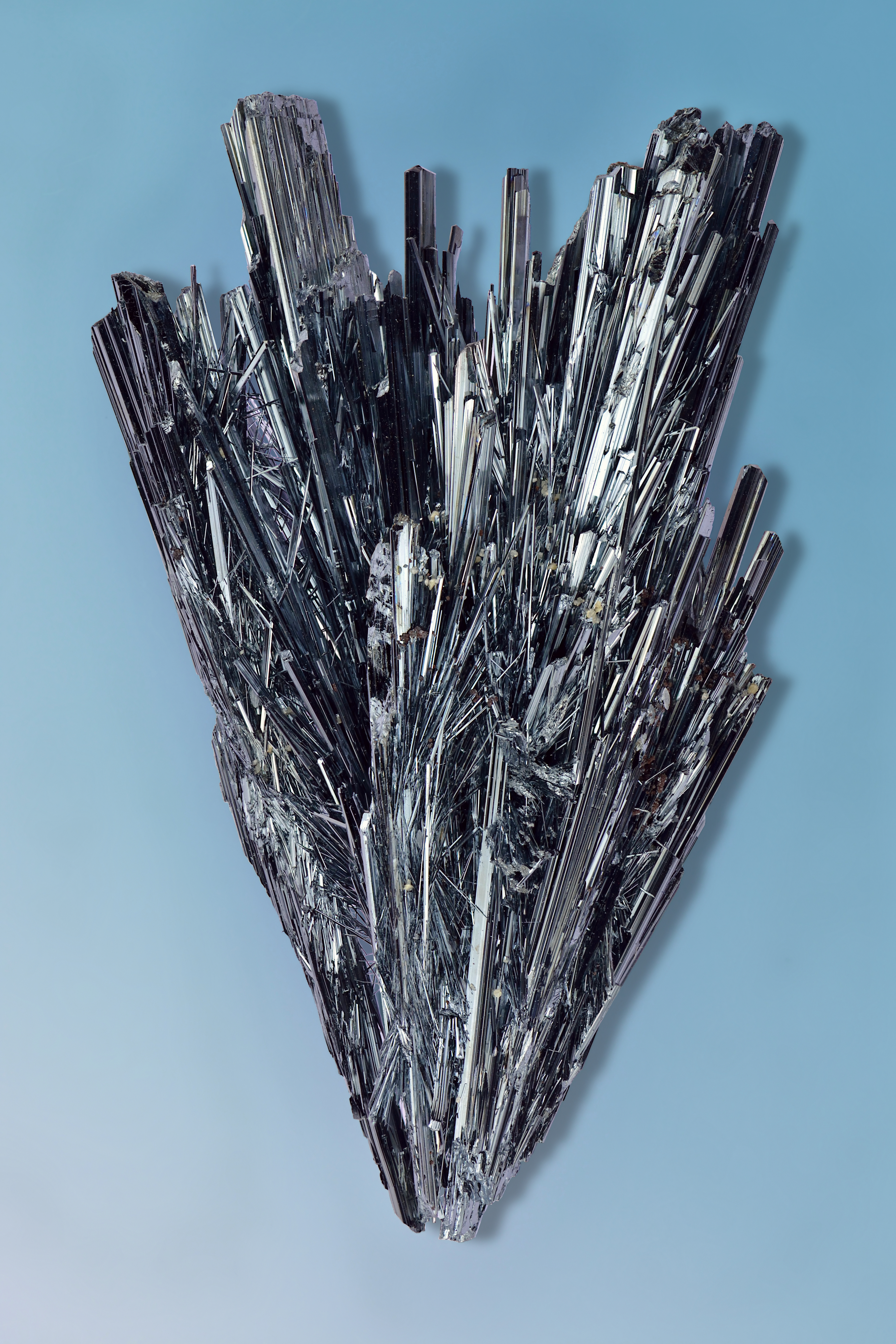
Photo: Ivar Leidus, Wikimedia Commons

Search for specimens: View all specimens from Romania
Romania’s classic specimen production is rooted in hydrothermal ore systems formed during the Alpine-Carpathian evolution of southeastern Europe. The Baia Mare district belongs to the Neogene volcanic belt of the Eastern Carpathians, where intermediate calc-alkaline volcanism, intrusions, faulting and repeated hydrothermal pulses produced low- to intermediate-sulfidation polymetallic vein systems. These deposits yielded Zn-Pb-Cu-Ag-Au ores with abundant quartz, calcite, baryte, rhodochrosite, siderite and adularia, accompanied by pyrite, sphalerite, galena, chalcopyrite, tetrahedrite-tennantite group minerals, stibnite and a remarkable suite of Pb-Sb sulfosalts. The district’s specimen mines are a chain of names from west to east: Ilba, Nistru, Săsar, Dealul Crucii, Herja, Baia Sprie, Șuior, Cavnic and Băiuț, with each mine developing its own habits and associations.
Baia Sprie, historically Felsőbánya, is one of the most important specimen mines in the country. It produced stibnite, baryte, rhodochrosite, quartz, scheelite, semseyite, felsőbányaite and many other species from a complex epithermal vein system in the Gutâi Mountains. The old mining center was documented from the medieval period, and modern scientific summaries place it among Romania’s richest mineral type localities. For collectors, Baia Sprie is most immediately recognizable through elongated acicular stibnite crystals, often striated and associated with translucent flaky baryte, and through the broader “mine flower” tradition of Romanian cabinet specimens.
Herja, near Chiuzbaia and Baia Mare, is especially famous for carbonate-sulfosalt vugs. The Herja ore deposit is a Pb-Zn ± Au-Ag epithermal vein system, and its best specimens reflect late open-space mineralization: black calcite included with jamesonite or related sulfosalts, white and black calcite spheres, siderite spheres, galena, sphalerite, semseyite, pyrrhotite, marcasite pseudomorphs, stibnite and fibrous Pb-Sb minerals historically lumped under the name “plumosite.” The celebrated calcite spheres were found within geodes and paleochannel-like open spaces along veins, especially in the Șălan, Clementina and Ignațiu veins. Their black color is not a dye or surface stain; in the real material it comes from abundant hairlike sulfosalt inclusions, most commonly jamesonite, incorporated into calcite during late hydrothermal growth.
Cavnic and Băiuț broaden the same district aesthetic. Cavnic is associated with polymetallic veins, baryte, rhodochrosite, quartz, calcite, tetrahedrite, chalcopyrite, sphalerite and historic mining infrastructure; Băiuț is one of the key Romanian stibnite localities, known for thick prismatic crystals and bunches rather than the long, fragile acicular sprays of Baia Sprie. The Baia Mare district also supplied important museum material: large druses of quartz and calcite, exceptional galena and sphalerite combinations, black and white Herja calcites, baryte in several colors, and rare sulfosalts that still require analytical caution.
The Apuseni Mountains are the second major pillar of Romanian mineral collecting. The Golden Quadrilateral in the Metaliferi Mountains is Europe’s great Au-Ag-Te province, with Săcărâmb standing out as the archetypal telluride deposit. Săcărâmb is a low-sulfidation epithermal Au-Ag-Te vein deposit hosted in andesitic volcanic rocks related to Neogene magmatism. Mining began in the eighteenth century and continued, in various forms, for more than two centuries. Its specimen reputation rests less on large crystals than on rare telluride assemblages: hessite, petzite, nagyágite, krennerite, stützite, muthmannite, sylvanite, altaite, native tellurium, native gold, alabandite, rhodochrosite, quartz and calcite. Material from Săcărâmb may look modest to a casual buyer, but for a systematic collector a verified old label from Nagyág or Săcărâmb can be a major prize.
Romania also has important skarn and contact-metasomatic localities in the Banat and Apuseni regions. Băița Bihor, Ocna de Fier, Dognecea, Ciclova, Oravița and Moldova Nouă are central to the country’s type-mineral and metallogenic history, yielding borates, arsenates, oxides, silicates and copper-lead-zinc minerals in settings very different from the Baia Mare and Săcărâmb epithermal veins. These localities are less represented in the three featured species here, but they matter deeply for understanding why Romania ranks so highly among European mineralogical type-locality countries.
Most of the classic underground sources are now closed, inaccessible, or subject to mine-closure and environmental restrictions. The Baia Mare mining region’s extraction and ore-processing activity effectively ended in the mid-2000s, and many Maramureș operations were abandoned or formally placed into closure around 2006–2007. Săcărâmb and nearby Certej also shifted out of historic underground production into modern project, reclamation and environmental contexts. For collectors, this means the serious Romanian market is dominated by old stock, museum deaccession only where lawful, dealer-held material, inherited miner collections and specimens that left the mines before closure. Contemporary underground collecting should not be assumed legal or safe.
Romanian stibnite is a Baia Mare specialty, with the most important collector material coming from Baia Sprie, Herja, Băiuț and Poiana Botizei/Băiuț-area occurrences in Maramureș. Baia Sprie produced the classic long, acicular, strongly striated crystals, recorded up to about 20 cm in the broader Romanian mineral literature and commonly associated with tabular or flaky baryte; Herja is more typical for short bladed to prismatic crystals, often about 4–5 cm, in radiating or parallel groups with calcite, siderite, quartz and Pb-Sb sulfosalts; Băiuț material is characteristically thicker, more columnar or prismatic, forming bunches and parallel groups that may reach several centimeters. The best Romanian stibnites are not judged merely by size: collectors look for undamaged terminations, an intact spray or fan, strong metallic gray luster, natural contrast against white calcite or baryte, and a precise mine label, because “Romania” or even “Baia Mare” alone can hide very different habits and values.
Calcite from Romania ranges from ordinary vein gangue to world-class curiosities, but the most locality-specific material is from Herja in the Baia Mare district. Herja produced white, gray, black, brownish and sharply bicolor black-and-white calcite, including spherical aggregates found in geodes within Pb-Zn ± Au-Ag epithermal veins; documented examples include spheres around 4–6 cm across, built of rhombohedral calcite and commonly associated with jamesonite-rich “plumosite,” siderite, quartz and other sulfides or sulfosalts. The black portions owe their color to abundant needle-like sulfosalt inclusions, chiefly jamesonite and locally berthierite, while white or creamy portions may include carbonate impurities such as ankerite or siderite. Fine Herja calcite is valued for natural spherical form, clean color division, undisturbed crystal skin, attached matrix or convincing old provenance, and association with authentic sulfosalt growth; suspiciously perfect loose black spheres deserve special caution.
Romanian hessite is above all a Golden Quadrilateral mineral, best considered in the Săcărâmb-Nagyág telluride tradition rather than as a showy cabinet species. At Săcărâmb it occurs in Au-Ag-Te epithermal assemblages with petzite, nagyágite, krennerite, stützite, sylvanite, native gold, altaite, rhodochrosite, quartz, calcite, galena and sphalerite; macroscopic hessite is rare, but the mineral is persistent in telluride parageneses and may appear as steel-gray to lead-gray grains, rounded crystals, aggregates or polished-section constituents in quartz-carbonate vein material. The best collector pieces are analytically confirmed, visibly rich for the species, and carry an old Săcărâmb/Nagyág provenance; without analysis, small gray tellurides from Romania can be difficult to distinguish from petzite, stützite, altaite or altered silver-gold telluride mixtures, so a strong label and laboratory confirmation matter more than sparkle.
Romania’s wider mineral list is unusually rich in type-locality species and rarities. Săcărâmb is the type locality for nagyágite, petzite, krennerite, stützite, muthmannite, krautite and museumite, and it is one of the classic European sources for telluride-associated native gold and rhodochrosite. Baia Sprie is tied to felsőbányaite, dietrichite, szmikite, semseyite, senandorite and klebelsbergite; Herja is the type locality of fizélyite; Baia Mare/Dealul Crucii is linked with fülöppite and baiamareite; Cavnic is historically bound to rhodochrosite; Băița Bihor is important for hemimorphite, szaibelyite, paderaite, makovickyite, cuproneyite and grațianite; and the Banat localities add names such as ludwigite, veszelyite, wollastonite, hörnesite, alloclasite and cyanotrichite. For collectors who enjoy locality history as much as display quality, Romania is one of Europe’s densest landscapes of mineralogical firsts.
Romanian specimens are label-sensitive. The country has many closely spaced mines with overlapping species, especially in the Baia Mare district, and old labels may use Romanian, Hungarian or German names: Herja may appear with Chiuzbaia or Kisbánya; Baia Sprie with Felsőbánya; Baia Mare with Nagybánya; Cavnic with Kapnikbánya; Săcărâmb with Nagyág, Szekerembe or Sacarîmb. These older names are not red flags by themselves — in many cases they are evidence of an older European collection — but “Romania” alone is inadequate for any serious stibnite, telluride, sulfosalt or calcite-sphere specimen.
The best-documented locality-specific fakery concerns Herja’s famous black and bicolor calcite spheres. Researchers reported fake centimeter-scale black or gray “calcite spheres” exhibited at Romanian mineral shows, with X-ray diffraction identifying synthetic aluminum oxide with subordinate spinel balls; jamesonite debris and needles had been glued to the surface to imitate the sulfosalt-rich black calcite of Herja. Authentic Herja carbonate spheres should show natural crystal continuity, convincing calcite or siderite textures, appropriate sulfosalt inclusions, and ideally old provenance. Be suspicious of perfect loose balls, surfaces that look dusted or glued, highly uniform artificial cores, or examples sold without a locality history despite being presented as major rarities.
Condition is the other major issue. Romanian stibnite is often brittle, with bent, broken or reattached needles, and the fine Baia Sprie acicular sprays are especially vulnerable. Herja specimens with jamesonite, berthierite, boulangerite-like fibers or semseyite can shed or mat if packed poorly. Calcite spheres and hollow siderite spheres chip at high points and may crack internally. Rhodochrosite from Cavnic and Săcărâmb can be dulled or bruised, baryte tabs can cleave, and quartz-carbonate matrix pieces often show mining bruises along the back or edges. Repairs are not unusual on older display specimens, so inspect spray bases, sphere-to-matrix contacts and large crystal terminations.
Identification can be difficult in the sulfosalt and telluride assemblages. Herja “plumosite” is a historical field term and not a reliable species name; material sold as boulangerite, jamesonite or berthierite may need analysis. Săcărâmb gray tellurides are even more challenging: hessite, petzite, stützite, altaite, sylvanite, krennerite and complex replacement mixtures may occur together at small scale. For high-value Romanian tellurides, polished-section work, SEM-EDS, XRD, or a published/museum provenance can make the difference between an interesting ore chip and a specimen-grade rarity.
Handling is straightforward but conservative. Stibnite is Sb2S3 and should not be ground, trimmed without dust control, licked, soaked, ultrasonically cleaned or handled by children without supervision. Wash hands after handling antimony sulfides and Pb-Sb sulfosalt specimens. Calcite will react with acids, so acid cleaning is risky on Herja and Baia Mare combinations, especially where sulfides, sulfosalts, siderite, baryte or old matrix are present. Store delicate stibnite and sulfosalt specimens in rigid boxes with no fiber contact against the crystals.
Market availability remains better than many closed European classics because large quantities left the mines during twentieth-century production, but fine Romanian material is no longer casually replaceable. Small Herja stibnites, mixed Baia Mare sulfide-carbonate pieces and old-stock calcites appear with some regularity. Sharp undamaged stibnite sprays on attractive matrix, authentic Herja black-and-white calcite spheres, rich Săcărâmb telluride specimens with analysis, and old labeled type-locality pieces are much scarcer and increasingly move through specialist dealers, auctions and established collections.
In 1958, Herja miners opened geodes that did not behave like ordinary ore pockets. In the lower parts of cavities in veins such as Șălan, Clementina and Ignațiu were rounded carbonate objects — white, black, and partly black and white — that the miners called “the mineral balls from Herja.” The phrase is perfect: not a formal species name, not a museum label, but the language of men who had just found something that looked more like marbles than Pb-Zn ore. Alexandru Dunca, a standardizer at the mine, later remembered that the balls varied in size and color, and that not all had their black and white portions divided evenly. The detail that survives best is wonderfully human: the miners “used to play with them.”
Victor Gorduza, the founding figure behind the Baia Mare mineral collection and later the county mineralogy museum, preserved the more geological memory of the same finds. He recalled that the white-and-black balls lay in a mass of plumosite filling the vein geodes, and that they had to be cleaned before they could be collected. The black part, he said, was always below. That one observation became crucial to the later genetic interpretation: the dark half was not random decoration but a record of gravity, suspended jamesonite needles, hydrothermal fluids and calcite growth in open space.
One Herja specimen became famous for a darker reason. The museum in Baia Mare held an exceptional bicolor calcite sphere, classed as Romanian national patrimony. During the night of January 25/26, 2014, it was stolen from its secure place. The specimen was not just a pretty carbonate ball; it was one of the icons of Herja mineralogy, the kind of object that links a mine, a museum and a national mineral heritage. Its absence still hangs over the story of the locality, especially because genuine Herja spheres largely vanished from the public market after the early 2000s.
The fakes that followed were almost as revealing as the theft. By 2016, fake black or gray spheres were being shown at Romanian mineral fairs. They were not merely mislabeled calcite: analytical work identified synthetic aluminum oxide with subordinate spinel balls, dressed with glued jamesonite debris and needles. The imitation was clever because it copied the very ingredient that makes Herja black calcite real — the feathery Pb-Sb sulfosalt material that miners had called plumosite. It is one of the few fraud stories in mineral collecting where the fake tells you exactly what made the original famous.
Romania’s telluride story has an older, almost chemical-mythic quality. In the eighteenth century, Transylvanian gold ores from the Zlatna–Fața Băii–Săcărâmb region confounded miners and chemists because they behaved like no familiar gold ore. Franz-Joseph Müller von Reichenstein, then overseeing mining and metallurgical work in Transylvania, investigated the strange material in the 1780s. Some thought it was antimony; Müller at one stage suspected bismuth sulfide; the substance produced unusual reactions, including a carmine-red color in concentrated sulfuric acid. Before tellurium had its modern name, it circulated in the language of uncertainty as a “metallum problematicum.” That problem metal, born from Transylvanian gold ores, became tellurium — and the same Romanian region later supplied the classic named telluride species that still fascinate collectors.
Călin G. Tămaș, “Brecciation and epithermal mineralization in the Baia Mare ore district (Romania): The Wilhelm deposit,” GSA Bulletin, 2024 — A modern treatment of brecciation and intermediate-sulfidation Zn-Pb-Ag-Au mineralization in the Baia Mare district.
Ioan Mârza, Călin Gabriel Tămaș, Romulus Tetean, Alina Andreica, Ioan Denuț and Réka Kovács, “Epithermal Bicolor Black and White Calcite Spheres from Herja Ore Deposit, Baia Mare Neogene Ore District, Romania—Genetic Considerations,” Minerals 9(6), 352, 2019 — The key open-access paper on Herja black, white and bicolor calcite spheres, including genesis, oral testimony, museum specimens and documented fakes.
Gheorghe Ilinca, Dana Pop, Dan Costin and Florentina Tatiana Puica, “The Relationship Between the Crystal-Chemistry and the Morphology of Stibnite from Baia Mare Area,” in GEO 2005 Proceedings — A focused study distinguishing Baia Sprie, Herja and Băiuț morphological types of Romanian stibnite.
G. Ilinca and D. Pop, “Stibnite from the Baia Mare region,” Brukenthal. Acta Musei, 2004 — A museum-based study of stibnite morphology and provenance in the Baia Mare region.
M. Buzatu, G. Damian, A. Buzgar and A. Iancu, “The Effect of Mn Substitution on Natural Sphalerites by Means of Raman Spectroscopy: A Case Study of the Săcărâmb Au–Ag–Te Ore Deposit, Apuseni Mountains, Romania,” Minerals 12(7), 885, 2022 — Includes a concise modern summary of the Săcărâmb Au-Ag-Te system and its type-locality telluride suite.
N. J. Cook and C. L. Ciobanu, “Au-Ag-Te-Se deposits: Mineral assemblages from the vein salband at Săcărîmb, Golden Quadrilateral, Romania: II. Tellurides,” Geochemistry, Mineralogy and Petrology 43, 2005 — A technical paper on the telluride assemblages at Săcărâmb, including hessite, petzite, nagyágite and related minerals.
Gheorghe Popescu, Mihaela Cioacă, Antonela Neacşu, Dan Filipescu and Eugen Orlandea, “New data regarding the resources of tellurium and its distribution in the waste dumps and tailing dam from the Certej-Sacaramb ore deposit, Metaliferi Mts., Romania,” Geologica Balcanica 39, 2009 — Useful for the scale and economic-mineralogical significance of tellurium in the Certej-Săcărâmb area.
Marinel Kovacs, Călin Gabriel Tămaș and collaborators, “Mineral- and Rock Type Localities in Romania and Their Potential Geoheritage Value,” Geoheritage, 2024 — A current synthesis of Romania’s mineral type localities, including Baia Sprie, Herja, Săcărâmb, Băița Bihor and the Banat localities.
“Colecție minerale,” Muzeul Județean de Mineralogie “Victor Gorduza” Baia Mare — The museum’s own overview of notable Baia Mare-region species, specimen forms and important combinations.
“Calcit — Mina Herja — furat de la Muzeul de Mineralogie Baia Mare,” Muzeul Județean de Mineralogie “Victor Gorduza” Baia Mare — Museum notice concerning the stolen Herja calcite national-patrimony specimen.
Mindat: Romania — Broad entry point for Romanian mineral localities and species records.
Mindat: Herja Mine, Baia Mare, Maramureș County — Core locality page for Herja’s calcite, stibnite, galena, siderite, sulfosalts and other Baia Mare classics.
Mindat: Baia Sprie Mine, Maramureș County — Essential for Baia Sprie stibnite, baryte, rhodochrosite, scheelite and type-locality species.
Mindat: Cavnic, Maramureș County — Useful for Cavnic’s polymetallic vein minerals, rhodochrosite, baryte, calcite, quartz and sulfide combinations.
Mindat: Săcărâmb, Certeju de Sus, Hunedoara County — The key database page for the Nagyág/Săcărâmb Au-Ag-Te locality and its type minerals.
Wikimedia Commons: Minerals of Săcărâmb — Open image archive for nagyágite, sylvanite, rhodochrosite and other Săcărâmb specimens.
Wikimedia Commons: Minerals of Baia Sprie — Open image archive showing Baia Sprie stibnite and other Maramureș specimens.
“Victor Gorduza” County Museum of Mineralogy, Baia Mare — The principal public museum for Maramureș mineral specimens and Baia Mare mining-mineralogical heritage.
Parcul Minelor Baia Sprie: History — A concise public-history overview of Baia Sprie mining and mine-heritage development.
Preliminary Assessment of the Geological and Mining Heritage of the Golden Quadrilateral, Metaliferi Mountains, Romania — Accessible overview of the Golden Quadrilateral as a mining and geoheritage region.