A collector's guide to Rex Mine, Gold Hill, Gold Hill District, Boulder County, USA: its geology, mining history and notable minerals, illustrated with the 34 specimens documented from this locality on EarthWonders.
Key facts
The Rex Mine belongs to one of the great American telluride camps: Gold Hill, on the northeastern end of the Colorado Mineral Belt in the Front Range west of Boulder. For specimen collectors it is not important as a prolific cabinet-mineral mine in the ordinary sense, but as a sharp, specialized locality for rich, old gold-silver-telluride ore. The best Rex pieces are compact fissure-vein fragments: dense quartz and sulfide-telluride seams carrying black to lead-gray hessite and petzite, matte gray coloradoite, native tellurium, and pinpoints or tiny blebs of native gold. They reward a loupe more than a showcase spotlight, but a fine specimen from here is a concentrated slice of one of Colorado’s most distinctive ore systems.
Geologically, Rex sits in the Gold Hill part of the Boulder County gold district, where precious-metal veins cut Proterozoic crystalline basement and are spatially tied to Tertiary intrusive activity and structural corridors. The broader district produced both pyritic-gold veins and gold-telluride veins; the Rex material of collector interest is firmly in the telluride camp. Its mineral suite—hessite, native gold, native tellurium, coloradoite, petzite, empressite, stützite, altaite, galena, and sphalerite—makes it a locality for collectors who appreciate chemistry, paragenesis, and provenance as much as crystal size.
Regional View
Country View
Historically, the significance of the area reaches back to Colorado’s earliest gold rush. Placer gold was found near Gold Hill in January 1859, and primary vein discoveries followed soon after. The later recognition of telluride ore at nearby Red Cloud in 1872 transformed the camp because ore that looked unimpressive could assay extraordinarily high. Rex is part of that same collector narrative: specimens may appear like dark, heavy, metallic ore, yet under magnification the best pieces disclose a telluride assemblage that is far rarer than ordinary pyrite-quartz-gold vein material.
Search for specimens: View all specimens from Rex Mine, Gold Hill, Gold Hill District, Boulder County, USA
Rex is best understood as a narrow, high-grade gold-silver-telluride vein locality within the Gold Hill district rather than as an isolated mine with a large, self-contained published record. The Gold Hill district occupies roughly 12 square miles in central Boulder County, northwest of Boulder and Denver, with the town of Gold Hill as its historic center. The district includes Gold Hill proper and nearby camps and drainages such as Sunshine, Rowena, Glendale, Wallstreet, Salina, and Crisman. It lies in steep Front Range terrain, and the older mining literature repeatedly treats it as one of the core camps of the Boulder County tellurium belt.
The deposit style is fissure-vein mineralization in old crystalline rocks, with gold-silver tellurides in quartz-rich veins and locally pyritic ore. District-wide, the veins occupy structural breaks, commonly near breccia zones, and many productive shoots were narrow but rich. The Gold Hill-area telluride veins are characterized by jaspery quartz, fine pyrite, free gold, and telluride species including petzite, hessite, coloradoite, native tellurium, altaite, sylvanite, and related minerals. In the Rex suite, the collector’s eye is drawn to the contrast between pale to brassy sulfides, black to lead-gray tellurides, and small but vivid gold.
The regional geologic framework places the Boulder County gold district in a Precambrian igneous and metamorphic terrane cut by younger hypabyssal stocks and dikes. Gold deposition in the district is closely associated with Tertiary alkalic intrusive activity, northwest-trending faults, and smaller northeast-trending structures that served as ore conduits. The Gold Hill quadrangle mapping around the town shows Proterozoic gneiss, schist, and Boulder Creek Granodiorite, along with younger dikes and faults; field-trip mapping of the Gold Hill area marks the Rex Mine near Gold Run and the Cash-Victoria-St. Joe group of workings.
Mining history at Rex is less fully published than that of the famous Cash, Slide, Red Cloud, Cold Spring, and other Gold Hill mines, but modern property records and Colorado Geological Survey reports tie Rex to the consolidated Cash-Rex property position. By the mid-2000s, Consolidated Global Minerals, through Mount Royale Ventures, was developing the Front Range Gold Project in the Gold Hill district, a 480-acre position that included the Cash, Rex, Who Do, St. Joe, and Black Cloud mines. A 1964 underground sampling estimate cited in Colorado state reporting for the Cash and Rex mines listed 15,948 tons grading 1.71 ounces per ton gold and 14.8 ounces per ton silver as “proven,” with an additional indicated tonnage at lower but still high grades. The same reporting emphasized that the mines produced from narrow, high-grade quartz veins cutting Proterozoic gneiss and granitic rocks, with gold locally present in telluride minerals.
Modern activity has centered more visibly on the Cash and Who Do workings and the Gold Hill Mill than on collectible Rex specimen production. The Cash-Rex project began production in March 2007 after development work and mill refurbishment, but later regulatory records for related Gold Hill operations document inactivity from 2008 onward, temporary cessation, water-quality monitoring, and continuing permitting issues. For collectors, that matters because Rex specimens on the market are not the by-product of steady, current mining; they are mostly older collection pieces, small lots from underground workings, or material preserved from past exploration and development.
Access today should be treated as private, controlled, and potentially hazardous. The Gold Hill mine properties include patented claims, unpatented claims, and areas affected by federal and state oversight. Published inspection and permitting records for related Gold Hill operations describe permitted underground mine areas, mill infrastructure, temporary suspension issues, and water-monitoring obligations. In practical collecting terms, Rex is not a casual dump-collecting locality. Any visit requires explicit landowner and mineral-rights permission, and underground entry is unsafe and legally restricted without the operator’s written authorization and proper safety controls.
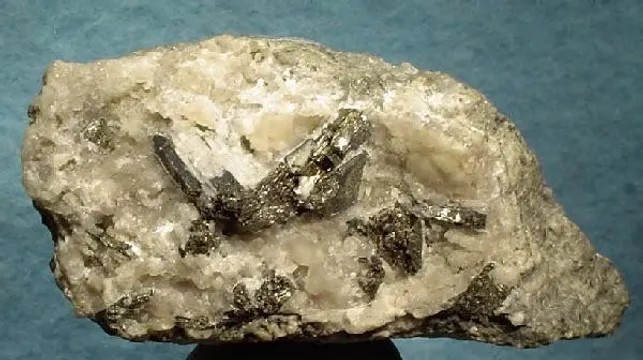
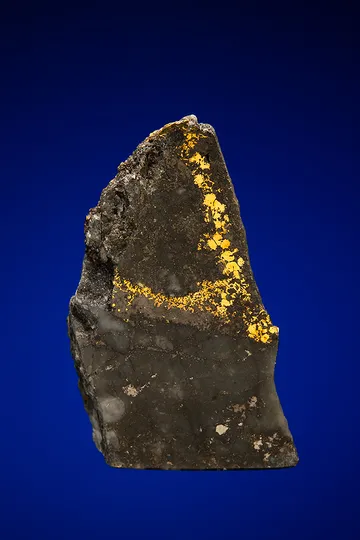
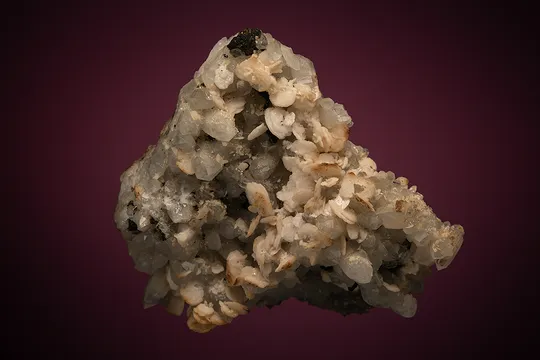
The documented specimen finds are best described as rich fissure-vein and level material rather than large open pockets. One widely circulated old-time Hessite with Coloradoite specimen was described as a natural fissure fragment containing brassy pyrite crystals, matte-gray coloradoite crusts, and black hessite crystals to 9 mm, with provenance through C. D. Woodhouse, U.C. Santa Barbara, David New, and Western Minerals. Another Rex specimen, from the #5 Level, was a 38 mm gold-telluride-rich piece dominated by petzite with tiny bright gold specks and probable coloradoite. A Hal Miller collection specimen measured 9.5 x 7.3 x 4.3 cm and carried native tellurium and coloradoite with minor empressite, hessite, and a reported additional telluride. These are exactly the kind of specimens that define Rex: dense, old, uncommon, and far more mineralogically complex than they appear at arm’s length.
Hessite from Rex is the locality’s signature collector mineral, occurring as black to lead-gray metallic telluride in quartz-rich fissure ore with coloradoite, petzite, pyrite, and native gold; the best documented pieces are not bright freestanding show crystals but rich vein fragments with crude crystals or crystal faces visible under a loupe, including a noted old-time specimen with hessite crystals to about 9 mm across on a natural fissure surface. Good Rex hessite is judged by richness, verified association, and old provenance: a piece with obvious black hessite on contrasting quartz, matte-gray coloradoite crusts, small brassy pyrite, and no ambiguity about the Gold Hill label is vastly preferable to a dark, massive telluride lump that needs analysis to separate hessite from petzite, stützite, or other Ag-Au-Te phases.
Gold from Rex is usually a microscopic-to-small-specimen companion in telluride ore rather than the leaf or wire gold for which other Colorado localities are better known; published collector references describe gold in small vugs in hessite associated with petzite and coloradoite, and one #5 Level specimen was noted for tiny bright gold specks scattered through a rich petzite mass. The most desirable Rex gold specimens therefore show the gold in paragenetic context—visible yellow points or blebs in dark telluride and quartz—because the locality’s importance lies in the gold-telluride association, not in large crystallized native-gold display.
Native tellurium from Rex occurs as gray to dark metallic masses in telluride-rich ore with coloradoite, hessite, empressite, petzite, and gold, with the strongest collector examples being dense old cabinet or small-cabinet specimens where native tellurium is specifically recorded on an old label rather than inferred from appearance. A notable Hal Miller collection specimen measured 9.5 x 7.3 x 4.3 cm and was labeled as native tellurium with coloradoite and minor associated tellurides; specimens of that character are valued for their uncommon chemistry, old provenance, and association suite, while ordinary dark metallic Rex ore should not be accepted as native tellurium without analytical support or reliable collection history.
Other minerals documented from Rex include altaite, coloradoite, empressite, galena, petzite, riebeckite, sphalerite, and stützite. Petzite is especially important because some rich Rex pieces are actually petzite-dominant gold telluride ore rather than hessite-dominant material, and misidentification among dark Ag-Au-Te species is easy by sight alone. Coloradoite, HgTe, gives Rex specimens additional importance because Boulder County is the historic type region for the species, although the formal type-locality wording in the literature applies to Boulder County/Boulder veins rather than making the Rex Mine itself the sole type locality. Empressite and stützite add to the locality’s appeal for advanced telluride collectors, but they are typically components of analyzed or well-documented ore pieces rather than obvious hand-specimen display species.
Rex Mine specimens are specialty pieces, and authenticity depends heavily on provenance and analysis. Dark telluride minerals in the Rex suite can be visually treacherous: hessite, petzite, stützite, coloradoite, and native tellurium may all present as dark metallic grains, crusts, blebs, or crude crystals in quartz-rich ore. A label saying “hessite” or “tellurium” is strongest when backed by an old collection pedigree, a published specimen reference, or modern analytical work. The most convincing pieces combine multiple locality-typical features: quartz fissure matrix, black or lead-gray tellurides, small pyrite, local coloradoite crusts, and visible native gold.
No well-documented fake industry specific to Rex Mine specimens appears in the major published and marketplace records, but mislabeling and overconfident visual identification are real concerns. “Gold Hill” labels can refer to the district, the town, or other mines in Boulder County; “Gold Hill” in the United States can also refer to unrelated districts in Utah, Nevada, Oregon, and elsewhere. A proper label should read Rex Mine, Gold Hill district, Boulder County, Colorado, or an equivalent hierarchy. Older labels may use shortened forms such as “Rex Mine, Gold Hill, Boulder Co., Colo.” and are worth preserving.
Condition expectations should be realistic. Rex pieces are ore specimens, not pocket-perfect crystal plates. The best hessite may be crude, matte, and partly embedded; coloradoite may appear as dull crusts; native tellurium may be massive and visually subdued; and gold may require magnification. Broken quartz edges, sawn bases, and minor bruising are not automatically fatal if the telluride surfaces are intact and the specimen is rich. Conversely, a freshly broken, anonymous dark ore chunk with no analytical documentation should be valued cautiously.
Handling is straightforward but should be careful. The suite includes mercury telluride in coloradoite and several tellurium-bearing phases, so avoid grinding, trimming without protection, or generating dust. Wash hands after handling friable ore and keep small fragments away from children and pets. Native tellurium and telluride minerals are generally collected as stable dry specimens, but they should be stored in a clean, dry box with labels separated from abrasive contact. Do not clean Rex telluride specimens aggressively; acids, abrasives, and ultrasonic cleaning can remove tiny gold, loosen soft metallic grains, and erase the very surface textures that make the piece meaningful.
Rarity is the main market factor. Rex is far less commonly offered than many Colorado gold localities, and good pieces tend to move through specialized dealers, auction archives, and old collections rather than appearing in quantity. Documented auction and dealer records show thumbnail to cabinet specimens, including small petzite-hessite pieces in the low hundreds of dollars and larger, old-provenance hessite-coloradoite pieces that have sold for four-figure prices. Richness, confirmed species, visible gold, old labels, and association with coloradoite or native tellurium are the premium drivers.