






A collector's guide to Québec, Canada: its geology, mining history and notable minerals, illustrated with the 103 specimens documented from this locality on EarthWonders.
Key facts
Québec matters to mineral collectors not as a single pocket, mine, or district, but as a province-scale mineralogical world: Archean gold-and-molybdenum granite systems in Abitibi, Grenvillian pegmatites and skarns, Appalachian asbestos and copper camps, the carbonatite-bearing quarries of Montréal, and the alkaline pegmatites of Mont Saint-Hilaire. Few political localities can span, within one label, both world-class gem grossulars from a serpentinized ultramafic asbestos mine and rare-species micromineralogy from one of the most species-rich alkaline complexes on Earth.
For display collectors, the Québec name most often summons the Jeffrey Mine at Val-des-Sources, historically labelled Asbestos, where rodingitized dykes and altered intrusive rocks at contacts with serpentinized peridotite produced gemmy hessonite and chrome-bearing grossular, green diopside, vesuvianite, prehnite, pectolite, wollastonite, and rare copper-bearing species. For systematic collectors, Mont Saint-Hilaire and the Francon quarry are equally important: the former is a benchmark alkaline locality with hundreds of recorded species and dozens of type minerals, while the latter made Montréal Island famous for dawsonite-rich silicocarbonatite sills and a suite of rare strontium-aluminum carbonates.
Regional View
Country View
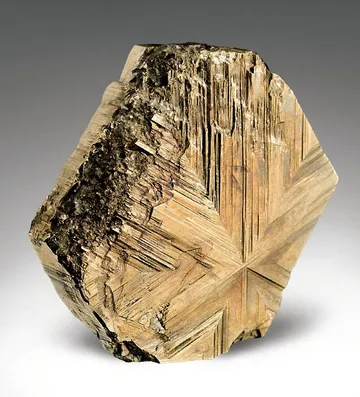
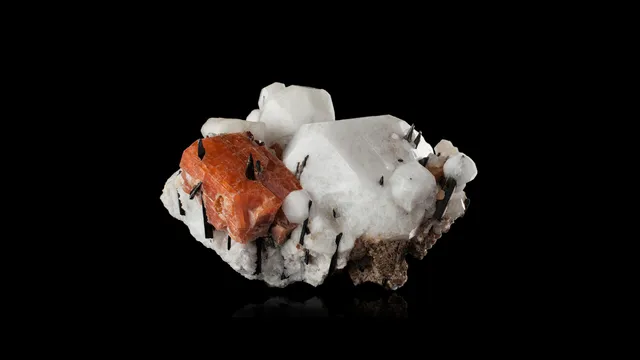
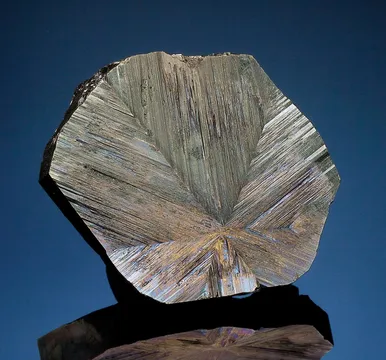
The best Québec specimens have very different visual languages depending on district. Jeffrey material is lush and sculptural: orange, pink, or green garnets riding on pale pectolite, grass-green diopside, or white wollastonite, often in bright, glassy crystals small enough to be intimate but rich enough to command a cabinet. Abitibi molybdenite pieces are more severe and metallic: soft, bluish-silver plates and flakes seated in quartz or granite, prized when the molybdenite is distinct, lustrous, and not merely smeared through the matrix. Mont Saint-Hilaire specimens can be theatrical in miniature, with rare species in cavities of alkaline pegmatite, but the locality has also produced surprisingly large quartz, sphalerite, microcline, and analcime specimens.
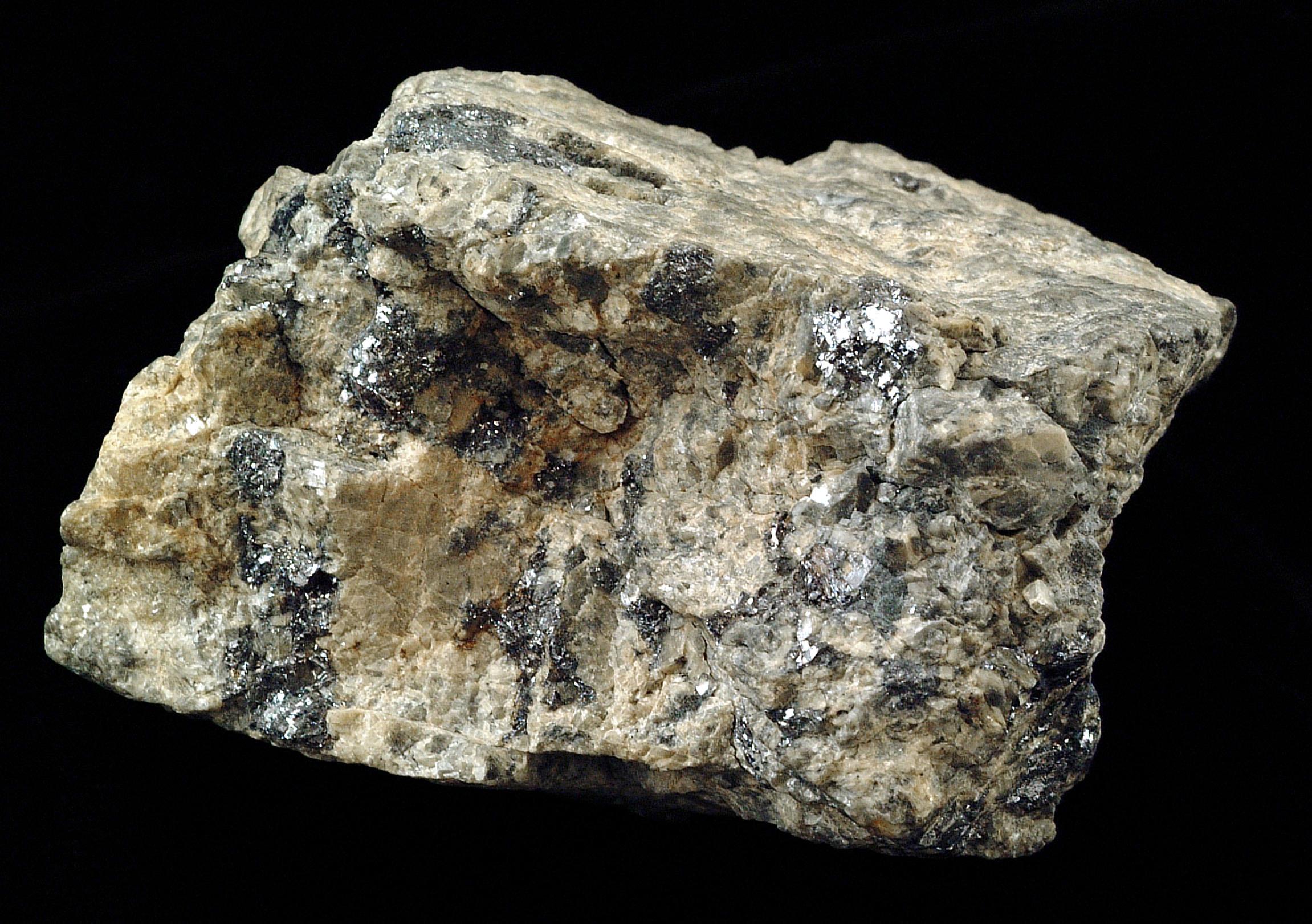
Photo: Wikimedia Commons
Search for specimens: View all specimens from Québec, Canada
Québec’s specimen geology is best understood by separating its great terranes. The Superior Province underlies much of the north and west and hosts the Abitibi mining country, including gold camps such as Val-d’Or and molybdenum-bismuth occurrences around Preissac, La Motte, La Corne, Cadillac, and Moly Hill. The Grenville Province dominates much of southern Québec north of the St. Lawrence and includes high-grade metamorphic rocks, pegmatites, marbles, and skarns. South of the river, Appalachian rocks carry the historic asbestos belt of the Eastern Townships and Chaudière-Appalaches, as well as the Gaspé copper-molybdenum skarn and porphyry systems. Cutting through the St. Lawrence Lowlands are the Cretaceous Monteregian alkaline intrusions, including Mont Saint-Hilaire, the rare-species giant of Québec mineralogy.
The Jeffrey Mine at Val-des-Sources is the classic collector mine. Its economic ore was chrysotile asbestos in serpentinized peridotite and dunite, but its collectible minerals formed where granitic, dioritic, albitic, and rodingitic intrusive bodies cut or contacted the ultramafic rocks. Calcium metasomatism and hydrothermal alteration produced pockets and seams carrying grossular, diopside, vesuvianite, prehnite, pectolite, wollastonite, clinochlore, chromite, native copper, chalcocite, and rare species such as spertiniite and jeffreyite. Older labels reading “Asbestos, Quebec” are historically correct; the town later adopted the name Val-des-Sources.
Jeffrey began as an asbestos deposit identified in the late nineteenth century and grew into one of the great open pits of the Canadian asbestos industry. Ownership passed from early local interests to the Asbestos and Asbestic Company, then to Manville interests and Canadian Johns-Manville. The mine operated for well over a century, and collector production was strongest during the period when miners, local collectors, and a small circle of invited mineralogists were able to save specimens from otherwise industrial rock. By the late twentieth and early twenty-first centuries, the great open pit was no longer a predictable collecting source; most serious pieces now come from old collections, dealer stock, and documented finds made before the mine’s final closure.
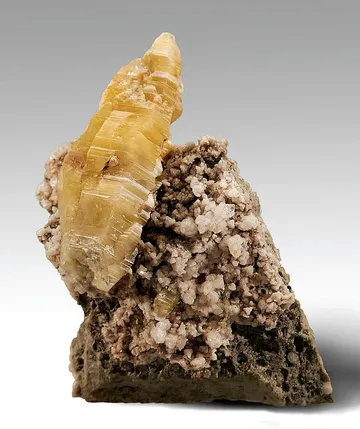
The Lac d’Amiante du Canada / Black Lake area, near Thetford Mines and Saint-Joseph-de-Coleraine, belongs to the same broad southern Québec asbestos belt but has its own mineral identity. In addition to serpentine minerals, chromite, magnetite, and platinum-group micro-mineral occurrences, it is important to collectors for rare hydrous calcium silicates such as suolunite. The best suolunite specimens attributed to the Black Lake / Lake Asbestos mine are distinctive for radiating, pale lavender to whitish translucent blades with a waxy appearance.
In Abitibi, molybdenite specimens are tied to granite, pegmatite, and quartz-vein systems around the Preissac-La Corne-La Motte area. Moly Hill, near La Motte, is the specimen locality that most often appears in collections: molybdenite crystals or flaky aggregates on quartz, muscovite-bearing quartz, or granite. Regional geological reports describe molybdenite locally accompanied by bismuthinite, native bismuth, pyrite, chalcopyrite, and sphalerite in the Preissac batholith and related late Archean granitic suites. The collecting appeal here is not abundance but clarity of presentation: clean metallic molybdenite on pale quartz is much more desirable than massive, rubbed, or graphite-like material with little form.
Mont Saint-Hilaire, in Montérégie east of Montréal, is an alkaline intrusive complex of the Monteregian Hills and one of the world’s most important systematic-mineral localities. Quarrying exposed hornfels, marble xenoliths, igneous breccias, and alkaline pegmatites with cavities ranging from millimetres to metres. The locality is famous for sérandite, catapleiite, elpidite, eudialyte-group minerals, leifite, analcime, rhodochrosite, albite, microcline, sodalite var. hackmanite, and a vast suite of rare sodium, zirconium, rare-earth, carbonate, phosphate, and silicate minerals. While many Mont Saint-Hilaire specimens are micromounts or thumbnails, exceptional pockets have yielded surprisingly large quartz, sphalerite, microcline, and associated minerals.
The Francon quarry on Montréal Island is another locality whose scientific importance exceeds its size. Its dawsonite-rich silicocarbonatite sills intrude Ordovician limestone and yielded a rare assemblage including weloganite, dresserite, hydrodresserite, strontiodresserite, franconite, sabinaite, montroyalite, voggite, and associated dawsonite, strontianite, calcite, quartz, and plagioclase. The quarry is defunct and has been used as a snow-disposal site, so meaningful modern collecting access is not comparable to the productive years when fresh quarry faces and sills were exposed.
Gaspé Copper at Murdochville represents a different Québec specimen province altogether: Devonian porphyry Cu-Mo and copper-skarn mineralization in the Gaspé Peninsula. Historically, the Copper Mountain and Needle Mountain systems were major copper producers, with chalcopyrite, pyrite, molybdenite, and skarn minerals in altered sedimentary and intrusive rocks. For collectors, the secondary copper suite is more modest but appealing: chrysocolla, malachite, azurite, chalcocite, quartz, and iron oxides in oxidized zones and old mine material.
Collecting access today is highly uneven. Active quarries and mines require permission and are normally closed to casual collecting. Mont Saint-Hilaire access is tightly controlled through organized club trips and rules set by the operator; it should not be treated as a public rockhounding site. Jeffrey, Black Lake, and other former asbestos operations involve private property, industrial hazards, unstable ground, and asbestos-fiber concerns; collecting must be limited to legal, permitted settings, and specimens containing fibrous chrysotile should be handled with particular care. For most collectors, Québec specimens are acquired through established dealers, old Canadian collections, club exchanges, and estate material rather than self-collecting.
Québec molybdenite specimens in the collector market most often trace to the Abitibi molybdenum-bismuth belt, especially Moly Hill near La Motte and the broader Preissac-La Corne area, where molybdenite occurs in granite-hosted quartz veins, pegmatite dykes, and muscovite-bearing quartz assemblages. The desirable look is bluish-silver metallic molybdenite in distinct platy crystals or flaky aggregates on pale quartz, sometimes with muscovite and regionally with bismuthinite, native bismuth, pyrite, chalcopyrite, or sphalerite. Ordinary pieces are massive, rubbed, greasy-looking, or visually confused with dark graphite-like material; good pieces show crisp metallic plates, obvious contrast with quartz, and enough matrix to tell the geological story.
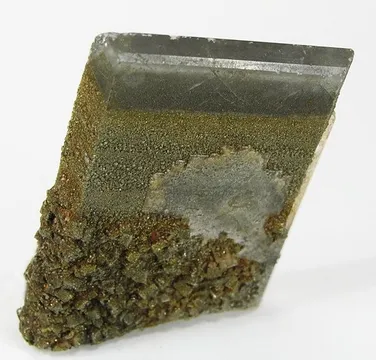
Québec quartz is too widespread to define by one habit, but the collectible examples fall into several recognizable provincial styles: molybdenite-bearing quartz from Moly Hill and related Abitibi veins; smoky, colorless, and occasionally sceptre quartz from Mont Saint-Hilaire alkaline pegmatite cavities; banded amethyst-milky quartz from the Federal Mine area of Gaspésie; and quartz with dawsonite, strontianite, and rare carbonates from Montréal-area carbonatite quarries. The finest Mont Saint-Hilaire quartz specimens are sharply terminated, smoky to colorless, sometimes bi-terminated or sceptred, and may occur with microcline, rutile, calcite, donnayite-group species, or sphalerite; the value drops quickly when the quartz is merely massive, iron-stained, or detached from any meaningful locality context.
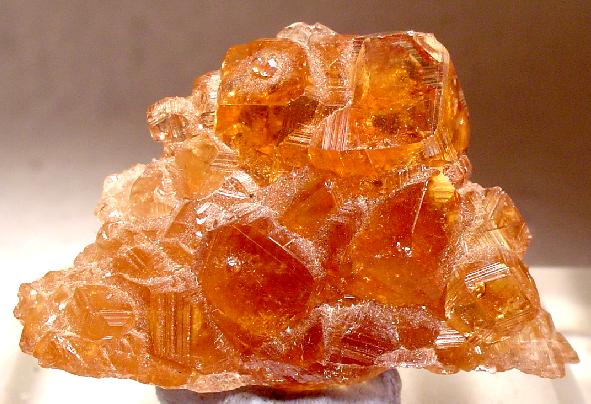
Grossular is Québec’s premier display garnet, and the Jeffrey Mine is the locality that made it famous: hessonite-orange, peach-pink, colorless, and green chrome-bearing crystals formed in calcium-metasomatized rodingite and altered intrusive rocks at contacts with serpentinized ultramafic ore. Crystals commonly range from a few millimetres to around a centimetre, with notable pocket specimens carrying gemmy hessonites to about 1.4 cm and rare larger groups with crystals approaching or exceeding that scale; classic associations include green diopside, white pectolite, prehnite, wollastonite, vesuvianite, clinochlore, and chromite. The best pieces combine glassy, undamaged, three-dimensional garnets with contrasting matrix, while ordinary Jeffrey grossular is small, incomplete, embedded, contacted, or dulled by pocket abrasion.
Québec suolunite is principally a Black Lake / Lac d’Amiante du Canada collector species, prized far more for rarity and locality significance than for large crystal size. The classic material appears as pale lavender, white, or very light grey radiating blades and fibrous-to-bladed aggregates with a waxy to silky lustre, coming from altered calcium-silicate environments in the asbestos-mining district near Thetford Mines. Good specimens are coherent, visibly radial, and well labelled to the Lake Asbestos / Black Lake mine; poor examples are chalky, massive, or visually indistinguishable from other pale hydrous calcium silicates without analytical support.
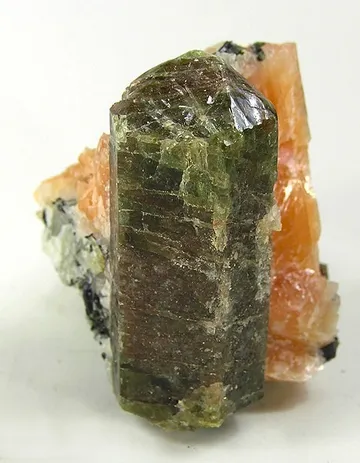
Jeffrey Mine diopside is a supporting actor that often makes the whole specimen work: grass-green to yellow-green crystals, blades, and crystalline masses form matrix and pocket linings for hessonite grossular, vesuvianite, pectolite, prehnite, and wollastonite in rodingitized contact zones. Documented collector pieces range from tiny sprays a few millimetres long to miniature and cabinet specimens with diopside crystals reported around 1–3 cm, and some pockets were lined with green diopside before yielding gem garnets. The best diopside-rich Québec pieces show lustrous, fresh green crystals with contrasting garnet, vesuvianite, or pectolite; unattractive pieces tend to be massive green matrix with little crystal definition or surface damage from extraction.
Québec chrysocolla is best tied to oxidized copper mineralization at the Gaspé Copper mine near Murdochville, where the historic Cu-Mo porphyry and skarn systems supplied the copper source for secondary blue-green crusts, seams, and coatings. It is not a locality known for large, botryoidal cabinet chrysocolla on the scale of major arid copper districts; rather, the appeal lies in saturated turquoise to blue-green color on quartz-rich or iron-stained copper ore, commonly in association with malachite, azurite, chalcocite, limonite, and other secondary copper products. Better specimens have vivid color, stable surfaces, and a credible Murdochville or Gaspé Copper provenance; ordinary pieces are dull green copper stain, mixed malachite-chrysocolla without distinction, or poorly localized “Quebec copper ore.”
As a group label, “garnet” from Québec should be treated carefully because the province hosts multiple garnet species in very different geological settings: grossular and hessonite at Jeffrey, chrome-bearing grossular and uvarovite-style green garnets in the asbestos belt, and andradite-grossular compositions in skarns and altered ultramafic contacts. Collector-quality garnet from Québec is usually judged by Jeffrey standards: bright orange, pink, or green crystals with good transparency, sharp form, and association with diopside, pectolite, wollastonite, prehnite, or vesuvianite. Pieces labelled only “garnet, Québec” are less desirable than specimens with a precise mine and species determination; a good label should distinguish grossular from andradite or uvarovite where possible, not merely rely on color.
Beyond these gallery species, Québec is one of Canada’s great type-mineral provinces. Mont Saint-Hilaire alone has yielded dozens of type species from alkaline pegmatites and related environments, including abenakiite-(Ce), adamsite-(Y), carletonite, catapleiite-associated rare assemblages, eudialyte-group species, sérandite-famous parageneses, yofortierite, and many later rare-earth and zirconium minerals. The Francon quarry is the type locality for a celebrated Montréal suite including weloganite, dresserite, hydrodresserite, strontiodresserite, franconite, sabinaite, montroyalite, and voggite. The Jeffrey Mine adds spertiniite, jeffreyite, and nisnite to the province’s type-locality record, while Oka is historically important for carbonatite mineralogy and niobium-bearing perovskite-group material such as latrappite.
The first rule for Québec specimens is locality precision. “Québec, Canada” is acceptable for an old thumbnail with limited documentation, but serious collectors should prefer labels that name the mine or quarry: Jeffrey Mine, Val-des-Sources / Asbestos; Moly Hill, La Motte; Poudrette quarry, Mont Saint-Hilaire; Francon quarry, Montréal; Lac d’Amiante / Black Lake; Gaspé Copper, Murdochville. Several older place names remain correct historical labels, especially “Asbestos” for the Jeffrey Mine and “Black Lake” for material now administratively associated with Thetford Mines.
No major, well-documented fake industry is specifically associated with Québec classics, but mislabelling is common. Jeffrey hessonite may be sold generically as “garnet” without species confirmation; green Jeffrey garnets may be casually called uvarovite when they are chrome-bearing grossular or mixed garnet-series material; pale suolunite can be confused with pectolite, tobermorite, xonotlite, or other hydrous calcium silicates; and Montréal rare carbonates from Francon can be impossible to identify visually without analysis. For Mont Saint-Hilaire rare species, a micromount label from a knowledgeable collector or analytical provenance is often more important than visual appeal.
Condition matters strongly. Jeffrey grossular and vesuvianite are often contacted where they grew against diopside, pectolite, or pocket walls, and many crystals show bruised edges from extraction in hard rodingite. Molybdenite is soft, sectile, and easily smeared; avoid pieces that have been handled until the molybdenite looks rubbed into the matrix. Chrysocolla from oxidized copper ore can be porous or friable, and bright color alone should not substitute for structural stability. Quartz from Mont Saint-Hilaire may carry coatings or alteration films; do not assume cleaning will improve a pocket specimen, because associated rare species can be delicate or soluble.
Asbestos-bearing specimens demand informed handling. Jeffrey and Black Lake material may contain chrysotile or other fibrous serpentine minerals. Stable, encapsulated display pieces can be kept safely by experienced collectors, but specimens should not be sawed, ground, air-blasted, brushed aggressively, or stored where loose fibers can shed. Use closed boxes for fibrous material, avoid creating dust, and wash hands after handling. If a specimen’s appeal depends on loose silky chrysotile, treat it as a hazardous educational specimen rather than ordinary décor.
Market availability is split. Moly Hill molybdenite and Québec quartz appear periodically and are usually affordable unless exceptionally aesthetic. Jeffrey grossular, vesuvianite, pectolite, and diopside remain available, but the supply is mostly recycled from older finds, and top undamaged hessonite groups have become significantly scarcer than small commercial thumbnails. Suolunite from the Black Lake / Lake Asbestos find is a specialist rarity and should be bought with provenance or analytical confidence. Mont Saint-Hilaire common species are widely represented in old micromount collections, while the finest rare-species specimens with good labels are increasingly absorbed by museums and advanced systematic collectors.
One of the best Jeffrey Mine collecting stories begins not with a famous museum curator but with Sylvain Roy, a hammer, a chisel, and a stubborn piece of rodingite. In the summer of 1998 he had already found notable pink garnets. Then, in May 1999, at the base of a rock containing rodingite, he began working through about 70 cm of very hard rock with his hands, a 5-pound hammer, and a chisel. A full day later he had exposed a massive diopside vein. One blow drove his chisel 8 cm into the vein, and a small loosened piece opened a dark hole. After he removed a second piece, daylight entered the cavity and revealed what he called the lucky find of his life: a pocket about 40 x 17 x 50 cm lined with green diopside crystals and, at the bottom, gem-quality hessonite grossular. The largest garnets reached 1.4 cm, including a crystal impaled on diopside. One cabinet specimen from the pocket measured 15 x 7.5 cm and carried 14 gemmy hessonites on diopside matrix.
Mont Saint-Hilaire supplied an equally memorable Sunday in August 2002. Daniel Comtois arrived at the Poudrette Quarry with his father, Roland, after a discouraging season in which fresh blasts had exposed little besides syenite and minor millimetre-sized smoky quartz. He parked beside an old altered pegmatite wall, a dark brown, rotten-looking face with open cavities and little promise. Other collectors doubted the spot. Comtois decided that digging there was still better than going home to wash windows, cut grass, and wash the driveway.
The first reward was not quartz but a delicate pegmatite specimen: a pink rhodochrosite crystal about 3 x 2.8 cm perched on a 2.5 cm pseudomorph “stick” covered with millimetre-sized donnayite crystals, with rutile, microcline, and micro-siderite also present. That find lit the fuse. Behind unstable boulders, after two hours of securing the wall, he uncovered another pegmatite opening almost 1 m wide and only 7–15 cm high, oriented like a mouth toward the sky. His father joined him by ladder, and they began reaching into the cavity by hand among broken, sharp crystals.
Then came the moment collectors live for. After Comtois struck his own hand with the sledgehammer, his father took over and soon called out. Between broken pieces he had found a bi-terminated quartz crystal about 19 cm long and 9 cm wide. Comtois called it “What a monster!” and ran for the camera before removing it. The crystal was wrapped in newspaper before being exposed to hot sun, a field precaution he believed necessary for smoky quartz from that pocket.
The pocket kept going. Quartz crystals came out one after another, single, twinned, skeleton-like, and cathedral-like, some carrying rutile, microcline, calcite, and donnayite. Then a larger mass shifted at the bottom. The piece was too heavy to pull directly and kept sliding on broken rock, so Roland suggested using two wooden sticks like rails. Comtois compared the operation to trying to grab a giant noodle with Chinese chopsticks. The “monster of all monsters” proved to be a 24 cm quartz-and-microcline specimen made of three quartz clusters forming a triangular composition around a central microcline mass.
Even then the pocket was not finished. Microcline plates up to 13 x 13 cm appeared, and among them came green, gemmy sphalerite of a size rarely expected from Mont Saint-Hilaire. One perfect dark green sphalerite crystal stood 7.5 cm high; another tetrahedral crystal measured about 9 x 9 x 8 cm. Comtois ended the day driving home with exceptional quartz and sphalerite specimens stowed under and above the truck seats, after beginning the morning in a spot where everyone thought there was nothing left to find.
Williams, R. and Grice, J. D. “Famous Mineral Localities: The Jeffrey Mine, Asbestos, Quebec.” The Mineralogical Record, 10(2), 1979, 69–80. A foundational article on the Jeffrey Mine as a specimen locality, repeatedly cited in later Jeffrey literature.
Grice, J. D. and Gasparrini, E. “Spertiniite, Cu(OH)2, a new mineral from the Jeffrey Mine, Quebec.” The Canadian Mineralogist, 19, 1981, 337–340. Type-mineral paper for spertiniite from Jeffrey Mine rodingite.
Grice, J. D. and Robinson, G. W. “Jeffreyite, (Ca,Na)2(Be,Al)Si2(O,OH)7, a new mineral species and its relation to the melilite group.” The Canadian Mineralogist, 22, 1984, 443–446. Type-mineral reference for jeffreyite, named after the Jeffrey Mine.
Horváth, L., Pfenninger-Horváth, E. and Spertini, F. “The Jeffrey Mine, Asbestos, Québec, Canada.” The Mineralogical Record, 44(4), 2013, 375–417. Modern comprehensive treatment of the Jeffrey Mine’s history, geology, and specimen mineralogy.
Amabili, M., Miglioli, A. and Spertini, F. “Recent Discoveries at the Jeffrey Mine, Asbestos, Québec.” The Mineralogical Record, 35(2), 2004, 123–135. Documents late Jeffrey finds and summarizes the locality’s classic grossular, vesuvianite, prehnite, pectolite, and rare-species significance.
Wight, W. and Grice, J. D. “Canadian Vesuvianite Gems.” The Journal of Gemmology, 18(8), 1983, 738–745. Useful for Jeffrey Mine Ca-silicate assemblages and the gemological context of Canadian vesuvianite.
“The Jeffrey Mine at Asbestos, Richmond Co., Québec.” The Journal of Gemmology, 18(6), 1983, 550–552. Notes Jeffrey as Canada’s major source of gem-quality grossular and discusses hessonite material.
Horváth, L. and Gault, R. A. “The Mineralogy of Mont Saint-Hilaire, Québec.” The Mineralogical Record, 21(4), 1990, 283–392. Classic cited reference for Mont Saint-Hilaire mineralogy.
Horváth, L. et al. Mont Saint-Hilaire: History, Geology, Mineralogy. The Canadian Mineralogist Special Publication 14, 2019. The modern monographic work on Mont Saint-Hilaire, cited by IUGS for the site’s global significance.
Tarassoff, P., Horváth, L. and Pfenninger-Horváth, E. “Famous Mineral Localities: The Francon Quarry, Montréal, Québec, Canada.” The Mineralogical Record, 37(1), 2006. Major reference on the Francon quarry and its type-mineral suite.
Sabina, A. P. “The Francon Quarry, a Mineral Locality.” Geological Survey of Canada, Paper 76-1B, 1976. Early Geological Survey account of Francon’s dawsonite-rich sills and rare minerals.
“Minerals of the Francon Quarry (Montreal Island): A Progress Report.” Geological Survey of Canada, Paper 79-1A. Follow-up report expanding the Francon mineral list and describing the dawsonite-rich silicocarbonatite setting.
Allcock, J. B. “Skarn and porphyry copper mineralization at Mines Gaspé, Murdochville, Quebec.” Economic Geology, 77(4), 1982, 971–999. Core economic-geology paper for the Gaspé Copper / Murdochville Cu-Mo skarn and porphyry system.
Marcelissen, M. “Geochronology of the Mines Gaspé porphyry deposit, Québec, Canada.” Lakehead University thesis summary. Recent age constraints and geological context for the Mines Gaspé porphyry system.
Géologie Québec: “Batholite de Preissac.” Government geological reference for the Preissac batholith and regional molybdenite-bismuth associations.
“Mont Saint-Hilaire—A Canadian Mineral Hotspot” — Canadian Museum of Nature — Museum video introducing Mont Saint-Hilaire’s exotic mineral diversity, geological origin, and national collection specimens.
“Le mont Saint-Hilaire : un lieu canadien riche en minéraux” — Musée canadien de la nature — French-language version of the Canadian Museum of Nature’s Mont Saint-Hilaire mineral feature.
“Rockhounding - Jeffrey Mine - Asbestos QC, Canada 2024” — YouTube field video — A modern rockhounding video connected to the Jeffrey Mine / Val-des-Sources area, useful for seeing the scale and collecting context of the former asbestos district.
Mindat: Québec, Canada — Province-level mineral index for Québec, useful for navigating species and sublocalities.
Mindat: Jeffrey Mine, Val-des-Sources, Québec — Core locality page for the classic Jeffrey Mine, with species list, synonyms, references, and type-locality information.
Canadian Rockhound: “Hessonite Garnets and Other Fine Minerals from the Jeffrey Mine, Québec” — First-person collecting article with specific pocket details, Jeffrey history, and mineral associations.
Québec Mineral: Jeffrey Mine pages — Specimen-oriented Québec reference with extensive Jeffrey Mine photo archives and locality notes.
Mindat: Moly Hill mine, La Motte, Québec — Key locality page for collectible Québec molybdenite on quartz.
Wikimedia Commons: Molybdenite from Molly Hill, La Motte, Québec — Open image and specimen note for a granite-hosted molybdenite example.
Géologie Québec: Geological Overview of Québec — Government overview of Québec’s major geological provinces.
Gouvernement du Québec: Geology of Québec — Public-facing summary of Québec geology and SIGÉOM data access.
Géologie Québec: SIGÉOM — Official geoscience information system for maps, reports, and mineral occurrence data.
IUGS Geoheritage: Mineral Site of Mont Saint-Hilaire — Authoritative global-geoheritage profile for Mont Saint-Hilaire’s mineralogical importance.
Mindat: Poudrette quarry, Mont Saint-Hilaire, Québec — Essential locality page for Mont Saint-Hilaire quarry names, mineral list, and access notes.
Mindat: Type Locality Report for Poudrette quarry — Type-mineral index for the Poudrette quarry / Mont Saint-Hilaire locality.
Canadian Museum of Nature: Minerals of Mont Saint-Hilaire — Museum article on the Mont Saint-Hilaire exhibit and important specimens from the Haineault collection.
Canadian Museum of Nature: The Haineault Mont Saint-Hilaire Collection — Background on a major Mont Saint-Hilaire collection now preserved at the Canadian Museum of Nature.
Canadian Rockhound: “Outstanding Giant Quartz and Sphalerite from Mont Saint-Hilaire, Québec” — Vivid field account of a major 2002 quartz and sphalerite pocket at Poudrette Quarry.
Mindat: Francon quarry, Montréal, Québec — Core reference for Francon’s mineral list, type minerals, and quarry status.
Geological Survey of Canada: “The Francon Quarry, a Mineral Locality” — Early scientific account of the Francon quarry and its unusual mineralization.
Geological Survey of Canada: “Minerals of the Francon Quarry (Montreal Island): A Progress Report” — Follow-up report documenting the expanded Francon mineral suite.
Innovation, Science and Economic Development Canada: “Weloganite (1966)” — Historical note on weloganite and the Francon quarry’s importance.
Mindat: Black Lake, Thetford Mines, Québec — Regional mineral index for the Black Lake / Thetford Mines asbestos district, including suolunite-bearing sublocalities.
Mindat specimen page: Suolunite from Black Lake Mine — Specific suolunite specimen record documenting the Black Lake / Lac d’Amiante occurrence.
Mindat: Gaspé Copper mine, Murdochville, Québec — Locality page for the Murdochville Cu-Mo porphyry and skarn mine.
Mindat occurrence: Chrysocolla from Gaspé Copper mine — Occurrence record tying chrysocolla to the Gaspé Copper locality.
USGS Professional Paper: Geology and Resources of Copper Deposits — Includes discussion of the Copper Mountain and Needle Mountain deposits at Gaspé Copper Mines.
Club de Minéralogie de Montréal: Excursions minéralogiques — Current club-access context for organized mineral collecting trips, including Mont Saint-Hilaire rules and restrictions.
.jpg)
