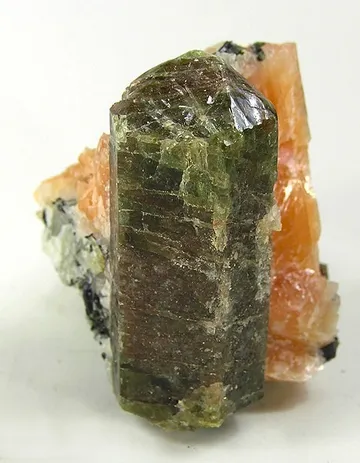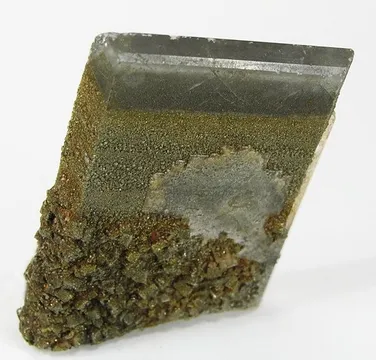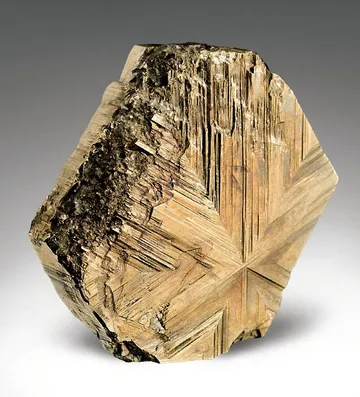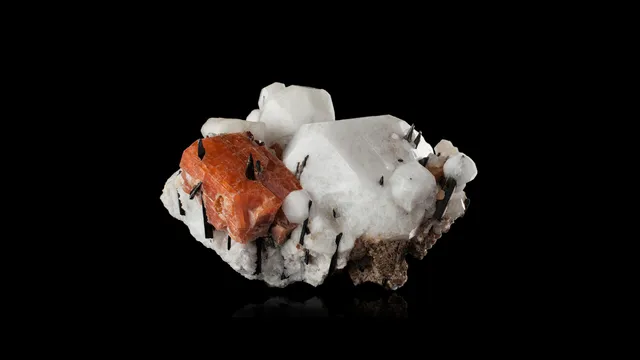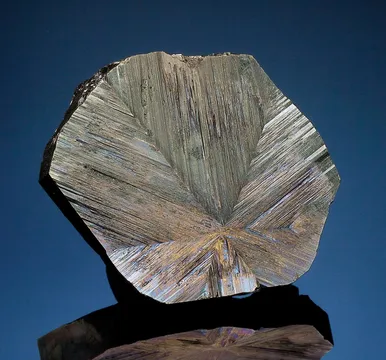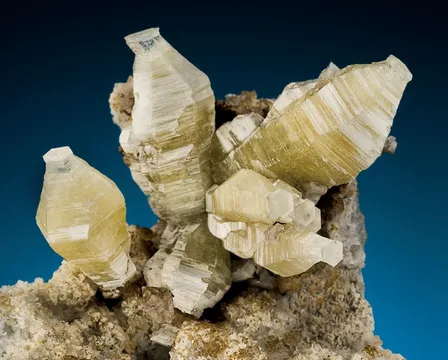
Francon quarry, Canada — benchmark locality for weloganite, with pale straw-yellow to amber prisms in vugs, prized for rarity and its Canadian mineral history.
Key facts
Francon quarry, in the Saint-Michel district of Montréal, is one of those deceptively urban mineral localities whose significance far exceeds the size of the outcrop. The quarry was worked for limestone aggregate, but its fame rests on a set of altered alkaline sills cutting the Ordovician limestone of Montréal Island. In these dawsonite-rich, carbonatized phonolitic to silicocarbonatitic rocks, late fluids sealed into vugs produced an assemblage unlike any ordinary limestone quarry: weloganite, dresserite, hydrodresserite, strontiodresserite, sabinaite, franconite, montroyalite, voggite and other species tied the quarry permanently to Canadian mineralogical history.
To collectors, Francon means first of all weloganite. This rare sodium-strontium-zirconium carbonate was discovered there in 1966 and described in 1968, and the quarry remains the benchmark locality for attractive, crystallized material. The best specimens have a look that is unmistakable once learned: pale straw-yellow to amber pseudohexagonal prisms, horizontally striated and often swollen or “pagoda-like,” sitting in small cavities with colorless quartz, white albite, calcite, dawsonite, dresserite or purple fluorite. The scale is intimate—most pieces are thumbnails or small cabinet specimens—but the mineralogical importance is immense. Francon is not a locality of showy ore masses; it is a locality of vugs, thin coatings, radiating balls, acicular nests, and rare carbonate chemistry made visible.
Regional View
Country View
The quarry’s mineralization belongs to the broader Monteregian alkaline igneous province, the same regional alkaline episode that gave collectors Mont Saint-Hilaire, yet Francon is not simply a smaller version of that great locality. Its productive rock is dominated by dawsonite-altered sills rich in sodium and unusually enriched in high-field-strength elements such as zirconium and niobium. That combination made Francon Canada’s second most prolific type locality after Mont Saint-Hilaire, and made a working roadstone pit in the middle of Montréal a classic name in systematic mineralogy.

Photo: Wikimedia Commons

Photo: Wikimedia Commons
Search for specimens: View all specimens from Francon quarry, Canada
Francon quarry lies in the Saint-Michel area of Montréal Island, where quarrying exposed Ordovician limestone intruded by alkaline igneous sills. The collector locality is not an ore deposit in the usual mining sense. The commercial product was limestone and crushed aggregate; the specimen-producing “ore bodies” were mineralized cavities in grey, dense, altered sill rock. Geological Survey of Canada work described the key rock as dawsonite-rich silicocarbonatite or carbonatized phonolite, intruding Trenton limestone and carrying abundant vugs from millimetric scale to several centimetres.
Three alkaline sills have been reported from the quarry, but the specimen interest centered on the exposed upper and lower mineralized sills. The upper-level assemblage was especially important for the new minerals: albite, quartz, dawsonite and calcite lined vugs, with strontianite, barite, cryolite, fluorite and pyrite as less abundant but significant companions. This assemblage yielded much of the classic weloganite, dresserite, hydrodresserite and strontiodresserite material. In the lower sill, the common vug minerals shifted toward calcite, dawsonite, fluorite, quartz, analcime and albite, with abundant strontianite, celestine, barite, montmorillonite, marcasite and hematite; weloganite was present there too, but the upper levels produced the larger and more abundant crystals.
The host sill rock was described as composed principally of potassium feldspar and dawsonite, with variable quartz, analcime, aegirine-augite, dolomite, siderite and albite. Its unusual zirconium and niobium content explains much of Francon’s mineralogical personality. Rather than forming large pegmatitic crystals, those elements entered late carbonate, oxide, phosphate-carbonate and hydrated oxide species in vugs, producing such species as weloganite, sabinaite, franconite, hochelagaite and voggite.
The industrial history is layered. Limestone extraction in the Saint-Michel area reaches back to the nineteenth century, with the Limoges quarry and lime kilns active from about 1879. The direct ancestor of Francon was worked by Arthur Dupré from 1924 to 1928, then by National Quarries Limited from 1930 to 1962. Highway Paving Company followed from 1963 to 1965, and Francon, Division of Canfarge Limited, operated the quarry from 1966. Contemporary collector accounts from the late 1960s and 1970s describe the quarry and crushing plant as working for road-building aggregate, and visitors were expected to make written arrangements before collecting.
The scientific collecting history begins in 1966, when Ann P. Sabina of the Geological Survey of Canada examined the quarry during work on collector guide material. The discovery of weloganite in cavities of the St-Michel sill immediately transformed the locality. Subsequent quarrying exposed additional mineralized rock, and by 1974 and 1975 Sabina had returned repeatedly, collecting representative suites from both levels and incorporating specimens from the National Mineral Collection and private collectors. The number of confirmed minerals rose rapidly; unknown coatings and fibres became new species, and Francon moved from “interesting quarry” to classic type locality.
The quarry has not been a practical collecting locality for modern field collectors for many years. The City of Montréal acquired the site in the early 1980s, extraction ended by the mid-1980s, and the pit is now used chiefly as a major municipal snow-disposal site. Access is municipal and industrial rather than recreational. Collector material now comes from historical field collections, old dealer stock, museum duplicates, and specimens preserved from the active quarry years. Labels matter: “Francon quarry, Saint-Michel, Montréal” should not be casually conflated with the later Lafarge Montréal-Est quarry, sometimes called the new Francon or Francon Montréal-Est quarry, nor with Mont Saint-Hilaire, even though some species occur at more than one of these alkaline localities.
Weloganite is the signature Francon species and the reason the locality became famous beyond Canada: at its type locality it forms deeply striated, pseudohexagonal prisms, stacked plates, tapered “pagoda” crystals and locally trumpet-like crystals created by oscillatory growth, in colours from colourless and white through pale lemon-yellow, straw-yellow and amber to rare orange or olive-green tones. Crystals from the upper level are generally larger and more abundant than those from the lower level, with exceptional individuals reported to 6 cm and more typical collector crystals in the millimetre to 2 cm range; common associates include quartz, calcite, dawsonite, dresserite, strontianite, hydrodresserite, franconite, fluorite, albite and cryolite. Ordinary Francon weloganite may be small, chalky, heavily coated or broken from the vug wall, while good pieces show sharp terminations, lustre, readable striations, pleasing yellow colour, matrix context and minimal white alteration; the finest are sculptural crystals on open cavity matrix rather than loose fragments.
Quartz at Francon is important less as a standalone species than as the clean, glassy architecture of the vugs that carried the rare carbonates. It occurs as colourless crystals lining cavities in the altered sill rock, commonly with albite, calcite and dawsonite, and is one of the most frequent companions to weloganite; some pieces show small quartz points sparkling around pale yellow weloganite crystals, while others combine quartz with dresserite, strontiodresserite, analcime or fluorite. The crystals are generally small—millimetric to thumbnail-scale rather than large cabinet quartz—but the best collector examples are crisp, bright, undamaged cavity linings that frame rare species rather than obscure them, especially where transparent quartz gives contrast to straw-yellow weloganite or white radiating carbonate aggregates.
Fluorite from Francon occurs in a surprisingly varied range for such a micro- to small-specimen locality: colourless, white, purple to dark purple, nearly black, pink, grey, brown and pale green crystals, commonly only up to about 2 mm on an edge, plus lilac sugary aggregates and botryoidal crusts over finely fibrous dawsonite. It is especially characteristic of the lower-level assemblage, though it also appears in associations involving weloganite and cryolite, including thin coatings and drusy films; mindat photo records and collector material also document purple fluorite on weloganite and sabinaite with botryoidal fluorite and dawsonite. The desirable pieces are not judged by size alone but by contrast and preservation: violet or lilac fluorite visibly lining a vug, coating dawsonite fibres, or delicately set on weloganite is far more collectible than indistinct black granular fluorite in massive sill rock.
Beyond these three, Francon is a systematic collector’s locality of the first rank. The type-locality suite includes weloganite, dresserite, hydrodresserite, strontiodresserite, sabinaite, franconite, montroyalite and voggite, with doyleite and hochelagaite as co-type-locality species. Dresserite occurs as colourless to white bladed tufts and spheres, hydrodresserite as related hydrated barium-aluminum carbonate material that can dehydrate, strontiodresserite as white radiating blades or silky spheres, sabinaite as delicate white to colourless carbonate aggregates, franconite and hochelagaite as niobium-bearing rarities, montroyalite as radiating white fibrous balls, and voggite as matted nests of colourless to white acicular crystals in cavities near altered amygdaloidal basalt dyke margins. Other documented Francon minerals include dawsonite, calcite, albite, analcime, strontianite, celestine, barite, cryolite, dolomite, siderite, marcasite, hematite, pyrite, zircon, anatase, galena, sphalerite, graphite, elpidite, dachiardite-Na, mordenite and viitaniemiite.
Francon specimens should be approached as closed-locality historical material. The quarry is no longer an active collector site, and the supply consists mainly of pieces collected during quarry operations or dispersed from old Canadian and international collections. That means provenance is part of the specimen: a label naming “Francon quarry, Saint-Michel, Montréal, Québec” is materially more meaningful than a vague “Montréal” or “Québec” label.
The most common authenticity problem is not outright fakery but locality confusion. Weloganite is also known from the Lafarge Montréal-Est quarry and from Mont Saint-Hilaire, and old labels may use “Francon” ambiguously for Montréal-area quarry material. The historic type locality is the Saint-Michel Francon quarry, not simply any quarry once connected with the Francon name. Specimens accompanied by old labels from Canadian collectors, Geological Survey-associated material, long-established dealers, or clearly documented ex-collections deserve a premium.
Condition can be subtle. Weloganite’s striated, stepped surfaces make minor bruising easy to miss at first glance; check terminations and the exposed ridges under magnification. Many crystals carry white coatings or alteration products, and some otherwise attractive crystals are partly hollow, chalky or dulled. A little associated dresserite, dawsonite or fluorite can enhance a piece, but heavy white overgrowth may hide the weloganite rather than improve it.
Hydrated carbonate species from Francon deserve careful handling. Hydrodresserite is known to lose water readily and may alter toward dresserite-like material, so avoid heat, intense display lighting, dry hot cases and aggressive cleaning. Do not soak mixed Francon carbonate specimens casually: calcite, dawsonite and delicate fibrous coatings may be damaged or detached, and acid testing is destructive. Fluorite, quartz and albite are more robust, but they commonly occur in the same vugs as fragile, powdery or fibrous rare species.
Fluorescence is useful but not definitive. Some Francon calcite fluoresces pink under shortwave ultraviolet, and weloganite has been reported with weak to moderate responses as well as triboluminescence. Fluorescence can help reveal coatings and associations, but it should not replace mineral identification on rare white fibres, crusts or spheres. Many of Francon’s prized species require microscopy, X-ray diffraction or reliable provenance for confident identification.
Market availability is uneven. Small weloganite thumbnails still appear with some regularity, but sharp, clean, well-coloured crystals on matrix—especially crystals over 2 cm—are scarce and increasingly tied to old collections. Dresserite, hydrodresserite, strontiodresserite and sabinaite are available mostly as micro- to miniature specimens, often visually modest but highly desirable to systematic collectors. Montroyalite, voggite, franconite and hochelagaite are much rarer in clearly identified collector specimens.
In 1966, Ann P. Sabina visited the Francon limestone quarry while gathering information for a Geological Survey of Canada collector guide. The setting was hardly romantic: a working Montréal aggregate pit, trucks and quarry faces, Ordovician limestone cut by a two-metre-thick St-Michel sill. Yet in the small cavities of that altered sill she noticed pale yellow crystals that did not match the familiar quarry suite. X-ray work showed they were not in her diffraction database. The mineral became weloganite, named for Sir William Edmond Logan, founder of the Geological Survey of Canada. The best part of the story is how quickly a routine field stop became a cascade of discoveries: the first known strontium zirconium carbonate, then a sequence of other new species that made Francon one of the great Canadian type localities.
The quarry’s afterlife is nearly as striking as its mineralogy. The same pit that yielded straw-yellow weloganite and white spheres of rare carbonates now receives a large share of Montréal’s used snow. Residents of Saint-Michel know it not as a specimen locality but as a huge urban void, described in local reporting as the size of 98 soccer fields and large enough to hold mountains of plowed snow. During winter operations, hundreds of trucks may cycle through the site; one local account describes traffic reaching 150 trucks per hour during storms, while another reports winter nights with as many as 300 trucks per hour. For mineral collectors, it is a reminder that classic localities do not retire into museum cases. Some become parks, some become flooded, and Francon became part of a city’s snow-removal machinery.
There is an odd poetry in that transformation. The old vugs formed because the sill was sealed tightly enough for alkaline fluids to “stew” in place and precipitate rare carbonates. Decades later, the quarry’s giant man-made cavity is again a container, this time for winter itself. Local children’s media has described snow still present in summer and even snow believed to be 10 to 15 years old. The mineral pockets are gone from reach, but the locality remains physically present in Montréal: a canyon in Saint-Michel, both a celebrated name on specimen labels and a difficult urban space for the people who live around it.
Tarassoff, P., Horváth, L., and Pfenninger-Horváth, E. (2006). “Famous mineral localities: The Francon Quarry, Montréal, Québec, Canada.” The Mineralogical Record, 37(1), 5–60. The essential modern locality treatment, documenting Francon’s geology, collecting history, species list and status as Canada’s second most prolific type locality.
Sabina, A. P. (1979). “Minerals of the Francon quarry (Montreal Island): a progress report.” Geological Survey of Canada Paper 79-1A, 115–120. A primary Geological Survey report describing the upper- and lower-level assemblages and the principal vug minerals then known.
Sabina, A. P. (1976). “The Francon Quarry, a mineral locality.” Geological Survey of Canada Paper 76-1B. Early progress report on the mineralogical investigation that began after the discovery of weloganite.
Sabina, A. P., Jambor, J. L., and Plant, A. G. (1968). “Weloganite, a new strontium zirconium carbonate from Montreal Island, Canada.” The Canadian Mineralogist, 9(4), 468–477. The original description of Francon’s signature type mineral.
Jambor, J. L., Fong, D. G., and Sabina, A. P. (1969). “Dresserite, the new barium analogue of dundasite.” The Canadian Mineralogist, 10(1), 84–89. The type description for dresserite, one of the classic white barium-aluminum carbonate species from Francon.
Jambor, J. L., Sabina, A. P., and Sturman, B. D. (1977). “Hydrodresserite, a new Ba-Al carbonate from a silicocarbonatite sill, Montreal Island, Quebec.” The Canadian Mineralogist, 15(3), 399–404. Type description for hydrodresserite, important for both systematic collectors and for understanding dehydration issues in Francon carbonates.
Jambor, J. L., Sabina, A. P., Roberts, A. C., and Sturman, B. D. (1977). “Strontiodresserite, a new Sr-Al carbonate from Montreal Island, Quebec.” The Canadian Mineralogist, 15(3), 405–407. Type description and mineral data for the strontium analogue of dresserite.
Roberts, A. C. (1978). “The space group of strontiodresserite.” Geological Survey of Canada Paper 78-1B, 180. Follow-up crystallographic note based on white spherical strontiodresserite aggregates from Francon.
Jambor, J. L., Sturman, B. D., and Weatherly, G. C. (1980). “Sabinaite, a new hydrous zirconium bearing carbonate mineral from Montreal Island, Quebec.” The Canadian Mineralogist, 18(1), 25–29. Original description of sabinaite, named in honour of Ann P. Sabina.
Ramik, R. A., Sturman, B. D., Roberts, A. C., and Dunn, P. J. (1983). “Viitaniemiite from the Francon quarry, Montreal, Quebec.” The Canadian Mineralogist, 21(3), 499–502. Documents the first Canadian occurrence of viitaniemiite in cavities of the Francon sill.
Jambor, J. L., Sabina, A. P., Roberts, A. C., Bonardi, M., Ramik, R. A., and Sturman, B. D. (1984). “Franconite, a new hydrated Na-Nb oxide mineral from Montreal Island, Quebec.” The Canadian Mineralogist, 22(2), 239–243. Original description of the niobium-bearing type species franconite.
Chao, G. Y., Baker, J., Sabina, A. P., and Roberts, A. C. (1985). “Doyleite, a new polymorph of Al(OH)3, and its relationship to bayerite, gibbsite and nordstrandite.” The Canadian Mineralogist, 23(1), 21–28. Co-type description of doyleite, including Francon material on weloganite, calcite and quartz.
Jambor, J. L., Sabina, A. P., Roberts, A. C., Bonardi, M., Owens, D. R., and Sturman, B. D. (1986). “Hochelagaite, a new calcium niobium oxide mineral from Montreal, Quebec.” The Canadian Mineralogist, 24(3), 449–453. Co-type description of hochelagaite, one of the niobium-bearing rarities linked to Francon.
Roberts, A. C., Sabina, A. P., Bonardi, M., Jambor, J. L., Ramik, R. A., Sturman, B. D., and Carr, M. J. (1986). “Montroyalite, a new hydrated Sr-Al hydroxycarbonate from the Francon quarry, Montreal, Quebec.” The Canadian Mineralogist, 24(3), 455–459. Original description of montroyalite from Francon.
Roberts, A. C., Sabina, A. P., Ercit, T. S., Grice, J. D., Szymanski, J. T., and Ramik, R. A. (1990). “Voggite, a new hydrated Na-Zr hydroxide-phosphate-carbonate from the Francon Quarry, Montreal, Quebec.” The Canadian Mineralogist, 28, 155–159. Type description of voggite, found as acicular nests in cavities near altered dyke margins.
Roberts, A. C., Sabina, A. P., Bonardi, M., Jambor, J. L., Ramik, R. A., Sturman, B. D., and Carr, M. J. type material records for montroyalite. Mindat records note type-material preservation for several Francon species, including holdings at institutions such as the Geological Survey of Canada, Ottawa, and the Royal Ontario Museum, Toronto.
Mindat locality page: Francon quarry, Montréal, Québec, Canada The best current species checklist, with photo records, type-locality status and reference trail.
Mindat photo gallery: Francon quarry Useful for seeing the visual range of weloganite, fluorite, dawsonite, dresserite and other Francon cavity minerals.
Geological Survey of Canada: “Minerals of the Francon quarry (Montreal Island): a progress report” Primary source for the upper- and lower-sill mineral assemblages.
Geological Survey of Canada: “The Francon Quarry, a mineral locality” Early field and specimen report from Ann P. Sabina’s investigation.
Innovation, Science and Economic Development Canada: “Weloganite (1966)” Concise official account of the discovery of weloganite and its importance to the Geological Survey of Canada.
Canadian Rockhound: “Canada’s Top Ten Minerals — Weloganite” Collector-oriented discussion of weloganite crystal habit, colour and rarity.
Wikimedia Commons: Francon Quarry category Open image archive with Francon weloganite, quartz, dresserite, hydrodresserite, dawsonite and fluorite photographs.
Vivre Saint-Michel en santé: Carrière Francon Current community context for the former quarry as an urban snow-disposal and redevelopment issue.
24 heures: Montréal’s snow in the former Francon quarry Local reporting on the quarry’s present-day role in Montréal snow management.