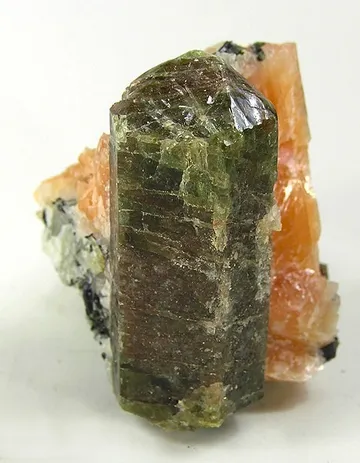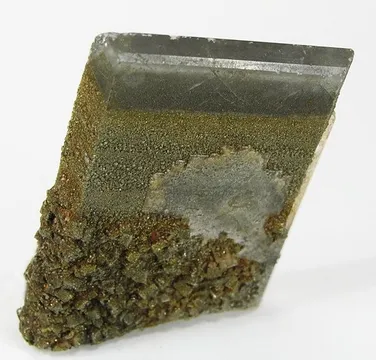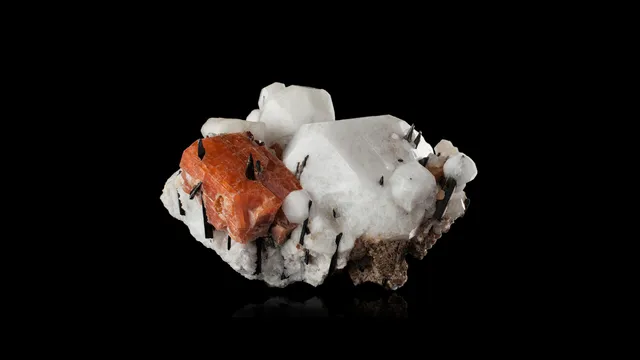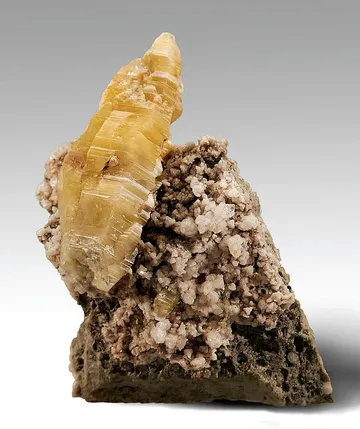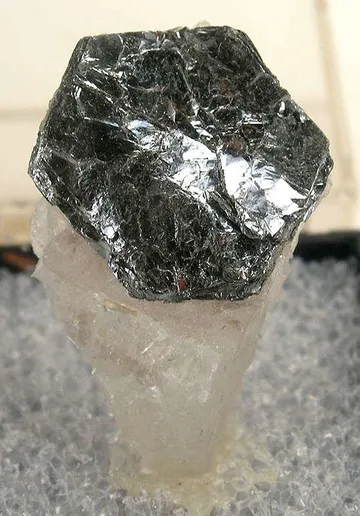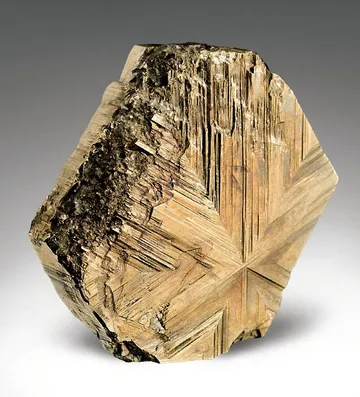
Henderson No. 2 Mine, Canada — classic cubanite locality in the Chibougamau camp; brass-yellow crystals on calcite, benchmark specimens with finite supply.
Key facts
Henderson No. 2 is one of the classic specimen localities of the Chibougamau mining camp, and for collectors its reputation rests on a single mineral in unusually eloquent form: cubanite. The mine was a copper-gold producer in the Doré Lake Complex near Chibougamau, Nord-du-Québec, where ore was localized in sheared, altered anorthosite and related fractures. That hard geological setting matters directly to the specimens: the best crystals were not simple massive sulphide ore, but late-stage crystals lining open calcite-bearing shears, where cubanite had room to form bright, striated, pseudohexagonal twins and trillings. In hand specimen they are among the most charismatic sulphides from Canada—brass-yellow to bronze metallic blades and tabular twins, commonly perched on white calcite or set against dark sulphide matrix.
Regional View
Country View
The locality is also historically important because its cubanites entered the collector world during active mining, not through later dump picking. Specimens were recovered from underground workings during the mine’s production life, especially in the 1970s and 1980s, and by the time the occurrence was documented in The Mineralogical Record in 1983, Henderson No. 2 had become a benchmark against which other cubanite localities were judged. The mine closed in the late 1980s, leaving the supply finite. Today, even thumbnail crystals from Henderson carry a locality premium; matrix pieces with sharp twins on calcite are the real prizes.

Photo: Wikimedia Commons
Search for specimens: View all specimens from Henderson No. 2 mine, Canada
Henderson No. 2 lies in the Chibougamau district of northern Québec, within the Lac Doré Complex, a layered Archean mafic intrusive complex that has been central to the district’s copper-gold mining history. The mine is usually described as a copper-gold deposit in altered anorthosite. Its ore occurs along the Henderson-Portage structural system, with mineralization controlled by a major shear zone and subsidiary fractures. In the most specimen-productive parts of the mine, some of those shears remained open long enough for late calcite, quartz, siderite and sulphide crystals to line the cavities rather than simply seal them as massive ore.
The Henderson-Portage system is part of a broader cluster of Chibougamau Cu-Au mines around Lac Chibougamau and Lac aux Dorés, including Henderson No. 1 and Portage. Technical summaries describe the Henderson-Portage mines as part of a multi-lensed orebody developed along a broad northeast-trending shear system with more than a mile of strike length. The mineralized structures dip moderately to steeply southeast, and the mine was worked to roughly 885 m depth. Historical production figures for Henderson No. 2 are commonly given as 6,483,479 short tons grading about 1.60% Cu and 1.41 g/t Au for the 1960–1988 production period.
The ore minerals are the expected Chibougamau sulphides—chalcopyrite, pyrite, pyrrhotite and sphalerite—with native gold recorded as a commodity and chalcocite also documented from the mine. The specimen assemblage is narrower and more distinctive: cubanite with calcite, pyrite, sphalerite, siderite, quartz, pyrrhotite and minor carbonate minerals such as ankerite. The best cubanites formed in open shears rather than in the massive ore itself, which explains why showy crystals are rare relative to the enormous tonnage mined. Much of the mine’s production would have been visually unremarkable sulphide ore; the collector-grade material came from the fortunate intersections where structure, late hydrothermal fluids and open space coincided.
Campbell Chibougamau Mines was operating the Henderson mine during the classic period of discovery. A 1969 Québec mining activity report records Campbell as operator of the Henderson copper mine in Roy Township, and that year the company detected a new high-grade zone at the 525-foot level of the Henderson No. 2 shaft. This D-East zone lay about 1,000 feet east of the main B zone, was reported to strike east-west with a steep southerly dip, and early drilling suggested a vein 20 to 50 feet wide with an average copper grade exceeding 3%. Exploration drifts were already being driven on the 650- and 900-foot levels. Such details are useful to collectors because they remind us that Henderson was not a one-pocket curiosity: it was a serious underground copper-gold mine with changing ore shoots, faults, shears and late openings exposed over years of development.
The mine’s final years were uneven. Henderson No. 2 was reported closed in 1982 in the original specimen literature, but later accounts clarify that it reopened in 1984 and closed again in 1989, with additional cubanite specimens recovered during that second operating period. Other mining summaries place the commercial production span at 1960–1988 and note that the Henderson II operation followed the Campbell-Chibougamau mine into closure as reserves declined. By May 1988, trade press coverage described Henderson II as having limited economic reserves at prevailing metal prices and as a high-cost contributor to Campbell’s Chibougamau operations.
Collecting access today should be treated as closed. The underground mine is long inactive, the ground is part of modern mineral-claim and exploration holdings around the Lac Chibougamau property package, and later work has focused on depth extensions rather than specimen collecting. The pieces in circulation are old mine-run material, old collection specimens, and occasional dealer or auction reappearances. Henderson cubanite specimens with exact level information are uncommon, but at least one documented specimen was recovered from the 1600 level circa 1980. That level-specific note is valuable: it confirms that fine crystals were being recovered from within the developed underground mine during the classic collecting window, not merely attributed later to the district.
Cubanite from Henderson No. 2 is the locality’s defining mineral and one of the finest expressions of the species. The crystals are brass-yellow to bronze-yellow, metallic, striated and characteristically twinned—most memorably as V-twins, cyclic twins, pseudohexagonal trillings and sixlings. Published and dealer-documented examples commonly range from a few millimetres to about 1–2 cm, with exceptional crystals reported to 3 cm and some Canadian summaries giving Henderson crystals to 4 cm. They occur as loose crystals, crystals embedded in dark sulphide matrix, and the most desirable form: bright twins standing free on white to translucent calcite, sometimes with quartz or pyrite. Good pieces show sharp edges, strong metallic luster, clean twin geometry and contrast; ordinary pieces are massive, partly buried, bruised, or visually lost in sulphide ore.
Other minerals documented from Henderson No. 2 include native gold as a commodity, chalcocite, sphalerite, chalcopyrite, pyrrhotite, pyrite, quartz, calcite, siderite, ankerite and chlorite-group minerals. None of these rivals cubanite for collector importance at the mine. Calcite is the key aesthetic associate, both because it provided open-space growth surfaces and because white carbonate makes the brassy cubanite visually legible. Sphalerite, pyrrhotite and pyrite are more often part of the ore-matrix context, while siderite and quartz help mark the late shear assemblage in which the finest cubanites formed. Henderson No. 2 is not a type-locality-style collector destination; its fame comes from producing an exceptional habit and size range for a species that is far more often massive, exsolved, or microscopic elsewhere.
Henderson cubanite is a finite old-mine material, and serious buyers should give special attention to labels, matrix, and crystal habit. The locality is often written in several ways—Henderson No. 2, Henderson #2, Henderson II, Henderson Mine, Chibougamau, or simply “Québec”—and older labels may omit the modern administrative place names Jamésie and Nord-du-Québec. “Henderson Mine” alone is not ideal, but it is common on older labels and does not automatically indicate a problem if the specimen is the classic twinned cubanite habit.
The main authenticity issue is misidentification rather than deliberate fabrication. Cubanite can be confused with chalcopyrite or pyrite in massive material, and acicular or odd habits at other localities have historically been mistaken for millerite. Henderson specimens are usually recognizable by their brassy metallic, striated, cyclically twinned crystals, but a loose thumbnail without matrix should still be assessed carefully. Cubanite is weakly magnetic to magnetic, and this can be a useful clue, but the test is not decisive on matrix because pyrrhotite and magnetite can also influence a magnet. If an important specimen is ambiguous, X-ray diffraction, SEM-EDS, or microprobe confirmation is preferable to relying on appearance alone.
Condition is central to value. Cubanite is a metallic sulphide with a moderate hardness, and the prominent edges of Henderson twins can show bruising, contact marks and broken tips. Many crystals were extracted from hard sulphide or carbonate-lined shears, so it is normal to see contacted backs, cleaved-looking attachment points or matrix breaks. Matrix specimens are much rarer than loose crystals, but they are also more vulnerable: calcite can be chipped, and sulphide-rich matrix may be friable or stained. Avoid aggressive cleaning. Acids that attack calcite will destroy the most important visual contrast on many specimens, and mechanical cleaning can round the fine striations that distinguish the best crystals.
Fluorescence is not a major reason to collect this locality, although at least one large cubanite-with-calcite specimen in the modern market was reported with pastel-pink longwave UV fluorescence from the calcite. Treat that as specimen-specific rather than a general locality expectation. The cubanite itself is opaque and metallic, not a fluorescent display mineral.
Market availability is sporadic. Small loose crystals and thumbnails appear periodically from old stocks, but well-composed matrix specimens with undamaged 1 cm or larger twins on calcite are scarce. Large cabinet-size pieces are genuinely unusual for the locality and should be judged by how much of the surface actually carries sharp cubanite rather than by weight alone. Provenance to old Canadian collections, the A. E. Seaman Mineral Museum, Royal Ontario Museum material, named dealer stocks, or 1970s–1980s Chibougamau collections adds confidence and interest.
The Henderson orebody began as a winter geophysical target under Lac Chibougamau. A preliminary geological report records that copper mineralization was discovered in the late winter of 1956 when two drill holes tested an electromagnetic anomaly. The follow-up was not tentative: during the winter of 1957, roughly 90,000 feet of diamond drilling outlined a major copper-gold occurrence beneath the waters of the lake in Roy Township. Published reserve figures at that stage were about 3,207,393 tons grading 2.66% copper, with gold, nickel and cobalt also reported. For a collector holding a bright 1 cm cubanite twin, it is easy to forget that the crystal’s birthplace was first understood through drill core, ice-season logistics and a large concealed orebody rather than a surface outcrop.
By 1969 Henderson was still revealing new ore. Québec’s annual mining activity report singled out an “important” copper discovery by Campbell at Henderson. The new zone was encountered at the 525-foot level of the No. 2 shaft, about 1,000 feet east of the principal B zone, and was described as the eastern extension of the secondary D zone. Early drilling suggested a vein 20 to 50 feet wide and averaging more than 3% copper. Exploration galleries were already being driven at 650 and 900 feet. Those numbers bring the underground mine into focus: Henderson was a living, expanding set of workings, and the fractures that later became famous for cubanite were part of an active search for ore shoots in altered anorthosite.
The collector story turns in 1974, when crystals initially thought to be pyrite were recognized as cubanite. That misidentification is understandable: a fresh Henderson crystal can flash like brassy pyrite or chalcopyrite, especially in underground light, but the form is wrong for pyrite and much more sculptural than ordinary chalcopyrite. Once the crystals were understood, their status rose quickly. The classic Henderson look—sharp striated twins and sixlings on white calcite—was unlike the usual massive or exsolved cubanite familiar to ore microscopists. Within a decade, André Lévesque’s 1983 article in The Mineralogical Record had made the occurrence part of the collector canon.
The end came with the blunt arithmetic of reserves and costs. In May 1988, The Northern Miner reported that Henderson II was “living on borrowed time,” with proven reserves of about 150,000 tons grading 0.063 oz/t gold and 1.70% copper—enough for roughly twelve months. The same report noted that the mine had produced 8,516 oz of gold and 2.5 million pounds of copper in 1987, but Campbell’s Chibougamau operations were under pressure to cut costs. In specimen terms, that closing chapter matters enormously: a mine that had produced world-class cubanites was no longer a renewable source. The pieces that had trickled out through miners, collectors and dealers became a fixed population.
One of the most memorable later descriptions of a Henderson cubanite is not about size alone, but magnetism and shape. A Mindat gallery entry for a 2 cm “maple leaf” crystal on a 4 by 6 cm matrix notes that the crystal is actually a trilling, with six edges alternating north and south magnetic poles. That is a wonderful collector detail because it ties beauty to physics: the same cyclic twinning that gives Henderson crystals their star-like outlines also produces a specimen you can interrogate with a magnet, face by face, edge by edge.
André Lévesque, “Cubanite from Chibougamau, Quebec,” The Mineralogical Record, Vol. 14, No. 3, May–June 1983, pp. 151–155 — The essential collector publication for the Henderson No. 2 cubanite occurrence, including the classic description of the crystals, associations and morphology.
Jayanta Guha, Guy Archambault and Jacques Leroy, “A correlation between the evolution of mineralizing fluids and the geomechanical development of a shear zone as illustrated by the Henderson 2 Mine, Quebec,” Economic Geology, Vol. 78, No. 8, 1983, pp. 1605–1618 — A key technical paper on the relationship between mineralizing fluids and shear-zone development at Henderson 2.
“Preliminary Report on the Geology of the Henderson Copper Deposit,” Québec geological report GM 09900-A — Early geological account of the Henderson orebody, including discovery by drilling, regional setting in the Doré Lake Complex, and early reserve figures.
“Exposé sommaire sur les activités minières dans la région de Chibougamau au cours de l'année 1969,” Québec report GM 67047 — Contemporary mining report documenting Campbell’s operation of Henderson and the 1969 discovery of the D-East zone from the No. 2 shaft.
Technical Report: Lac Chibougamau Mining Properties, Chibougamau Independent Mines / Globex — Modern technical compilation with historical production figures for Henderson No. 2 and its place in the Chibougamau camp.
Robert B. Cook, “Connoisseur’s Choice: Cubanite, Chibougamau, Quebec, Canada,” Rocks & Minerals, Vol. 75, No. 6, 2000, pp. 404–406 — Collector-oriented treatment of Chibougamau cubanite, referencing the Lévesque work and the locality’s best-of-species status.
A. E. Seaman Mineral Museum cubanite, Henderson II Mine, Chibougamau, Québec, noted by D. Joyce Minerals — Documents an 8.0 cm Henderson cubanite specimen in the A. E. Seaman Mineral Museum collection.
Mindat gallery entry for a 3 cm Henderson No. 2 cubanite trilling in the A. E. Seaman Mineral Museum collection — Notable museum specimen record showing the scale and quality achieved by the locality.
Mindat: Henderson No. 2 Mine, Chibougamau, Jamésie, Nord-du-Québec, Québec, Canada — Best single locality database page for mineral list, map position, gallery and references.
Mindat gallery: Henderson No. 2 Mine — Valuable visual reference for the range of cubanite habits, matrix styles, sizes and labels attributed to the mine.
D. Joyce Minerals: “Cubanite From Canada” — Collector-friendly overview of Canadian cubanite localities, with a strong section on Henderson II geology, history and crystal morphology.
Canadian Rockhound: “Canada’s Top Ten Minerals” — Archived article placing Henderson II cubanite among Canada’s standout mineral specimens and comparing it with other Canadian cubanite localities.
Chibougamau Independent Mines: Lac Chibougamau property — Useful modern summary of the Henderson-Portage depth-extension setting, historical production context and current property framework.
Québec geological report DV 98-04: Geology and Metallogeny of the Chapais-Chibougamau Mining District — Regional geological framework for the Chibougamau camp and Doré Lake Complex.
Wikimedia Commons: Cubanite and calcite from Henderson No. 2 mine — Freely licensed image of the classic bright cubanite-on-calcite style.
Wikimedia Commons: Cubanite from Henderson Mine, Chibougamau, Québec — Freely licensed photograph of a large A. E. Seaman Mineral Museum cubanite specimen.
MineralAuctions: Henderson No. 2 cubanite suite — Market record illustrating old-collection material, typical sulphide matrix, and the note that crystals were not identified as cubanite until 1974.
MineralAuctions: Large cubanite with calcite from Henderson No. 2 — Recent auction record for an unusually large matrix specimen, useful for market comparison and scale.