Ouray County, USA is a constellation of classic districts with distinctive quartz, sulfides, and rhodochrosite, renowned for mining lore and collecting appeal.
Key facts
Ouray County sits at the hard, beautiful hinge between the western San Juan volcanic field and the older sedimentary section cut by the Uncompahgre River, and that is exactly why its minerals are so varied. For collectors, the county is not one locality but a compact constellation of classic districts: the Ouray and Uncompahgre mines around Gold Hill, Canyon Creek, the Amphitheater, and the upper Uncompahgre River; the Red Mountain–Idarado belt along U.S. 550; the Mount Sneffels and Imogene Basin mines including Camp Bird; and the Paquin district north of Ouray. The ore systems include Laramide intrusive-related replacement and vein deposits in Paleozoic and Mesozoic sedimentary rocks, younger San Juan volcanic-hosted veins, breccia-pipe systems at Red Mountain, and spectacular solution-cavity occurrences in the Leadville Limestone.
The specimen character of Ouray County is unusually distinctive. Its best quartz is not simply “Colorado quartz,” but stout, old-time milky and clear crystals from the Amphitheater and Ouray district, sceptered and overgrown examples from Leadville Limestone cavities, and the famous hollow quartz casts and pseudomorphs after bladed anhydrite or calcite from the Silver Point, Ohio, OS, and related pockets. Its sulfide specimens are equally recognizable: lustrous black sphalerite, brassy chalcopyrite, galena, pyrite, and quartz from Camp Bird and Idarado; green sphalerite and pyrite on thin calcite plates from the Portland mine; enargite from the Red Mountain mines; and pink rhodochrosite with quartz from the Grizzly Bear and Mountain Monarch area. The county also carries a strong mineralogical pedigree through Red Mountain natroalunite, bismuth sulfosalt occurrences, and a long literature that ties ore geology, collecting, and mining history together more tightly than at most San Juan localities.
Regional View
Country View
The historical weight of the county is just as important as the specimens. Camp Bird turned Thomas F. Walsh from a nearly ruined mining man into one of Colorado’s great fortunes, while the Idarado system later connected the Red Mountain side of the divide with the Telluride side through the Treasury Tunnel. The older Ouray district north and east of town, although less romanticized than Camp Bird, is the structural and stratigraphic key to much of the county’s mineralization: ore fluids rose along intrusive and structural axes, then moved through favorable beds, faults, and permeability contrasts, producing a zoning from contact-metamorphic and pyritic gold-bearing bodies toward silver-lead-zinc deposits.


Search for specimens: View all specimens from Ouray County, USA
Ouray County occupies one of the most mineralized corners of the San Juan Mountains. Around the town of Ouray, the Uncompahgre or Ouray district lies on the northwestern flank of the range and exposes a bedrock section from Proterozoic rocks through Paleozoic carbonates, Mesozoic sedimentary units, and Cenozoic intrusive and volcanic rocks. The principal Ouray district ore deposits are tied to Laramide porphyritic granodiorite intrusions, including crosscutting and laccolithic bodies. The deposits were not random fissures: they were controlled by the intersection of a north-northwest Uncompahgre uplift axis and a northeast-trending intrusive axis, by faults and shallow tensional fractures, and by receptive beds such as limestone, dolomite, and sandy or brecciated horizons.
The Ouray district’s ore styles are broad for such a small area. Near the intrusive center are low-grade contact-metamorphic bodies and pyritic gold-bearing deposits containing tellurides and native gold. Farther out, especially in favorable northern and southern sectors, silver-bearing lead-zinc ores developed along bedding, fractures, and replacement channels. Miners paid particular attention to the Leadville Limestone and to the lower Wanakah section, including the Pony Express beds, because favorable stratigraphy could turn a fissure into a productive replacement body. The county’s specimen cavities often reflect the same geometry: limestone solution openings, silicified rolls, breccia zones, bedding-plane replacements, and later quartz-carbonate openings in and around old ore shoots.
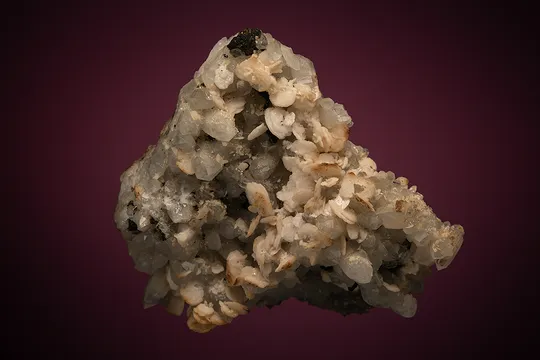
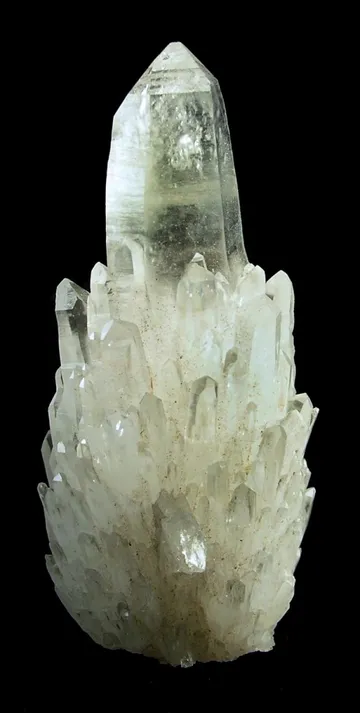
The Amphitheater east of Ouray is one of the county’s important specimen areas. The Ohio mine and nearby Leadville Limestone cavities yielded large, milky, barrel-shaped and doubly terminated quartz crystals, quartz casts after calcite and fluorite, and attractive old-time groups that entered Colorado collections decades ago. Crystal Cave, on the north side of Canyon Creek, is another Leadville Limestone solution-cavity occurrence; it produced gray to light-brown calcite scalenohedra drused with clear quartz, with small water-clear sceptered quartz crystals in places. The Portland mine is known for quartz groups, pale amethyst, white quartz scepters, and scarce lime-green sphalerite with pyrite on calcite.
The upper Uncompahgre River and Red Mountain side add a different flavor. Idarado, near the ghost town of Guston and the Red Mountain Pass corridor, was a lead-zinc-silver operation with gold and copper values, and its mineral list includes anhydrite, barite, calcite, fluorite, galena, chalcopyrite, sphalerite, pyrite, rhodochrosite, rhodonite, piemontite, tellurides, and a suite of bismuth sulfosalts. The Silver Point area and associated pockets are crucial to modern collectors because of their quartz casts and pseudomorphs after anhydrite, long sold and described as some of the classic Ouray pseudomorph material.
The Sneffels–Imogene Basin side is inseparable from Camp Bird. The Gertrude and Una veins were known before Walsh, but his 1896 consolidation and development of Camp Bird transformed the basin. The Camp Bird vein trends roughly east-west and was later described as containing early quartz-sulfide, quartz-breccia, and bull-quartz components. For specimen collectors, Camp Bird means sharp black sphalerite, chalcopyrite, galena, quartz, calcite, epidote, scheelite, fluorite, and gold-bearing quartz. Good Camp Bird sulfide specimens tend to be dense, lustrous, and architectural rather than delicate: black sphalerite crystals up to centimeter scale, bright chalcopyrite accents, and quartz points providing contrast on compact cabinet-size plates.
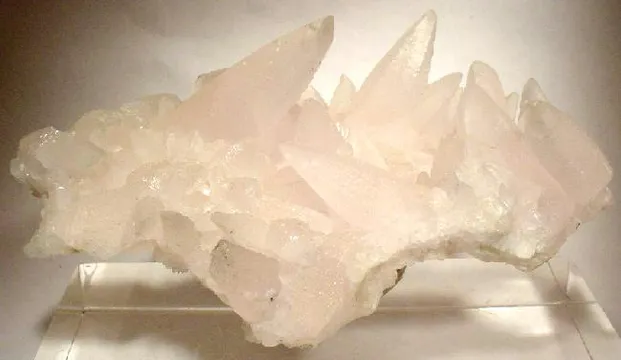
The Paquin district north of Ouray contributed its own suite of barite, calcite, gypsum, quartz, silver minerals, and replacement-body specimens. The Bachelor mine produced cream-colored calcite scalenohedra on dark silicified limestone. The Black Girl mine produced white tabular barite with clear quartz druse, rust-colored wheat-sheaf calcite, and selenite. The Pony Express mine produced metallic-brown calcite scalenohedra in plates reported to about 12 inches wide and white barite blades near the portal. These occurrences are important because they show how the county’s collector minerals are not confined to the famous gold mines; smaller silver-lead-zinc and replacement deposits produced some of the most visually distinctive display specimens.
Modern access requires discipline. Much of the historic mine ground is private property, patented claim land, active or reclaimed mine property, or environmentally sensitive abandoned-mine land. Some collecting on National Forest land may be possible where land status, active claims, closures, and local rules allow it, but there are no broadly designated casual collecting areas on the Ouray Ranger District, and mine portals, stopes, shafts, tailings impoundments, and reclaimed sites must be treated as off-limits unless explicit permission has been obtained. Camp Bird and Revenue–Virginius remain tied to active property, road, and permitting issues; Idarado and Red Mountain include reclamation land and historic structures; and many appealing dumps visible from roads or trails are either private, claimed, unstable, contaminated, or all four. Most serious collectors now acquire Ouray County specimens through old collections, dealer stock, estate dispersals, and carefully documented pieces from known historic finds.
Quartz is the visual thread running through nearly every collectible suite from Ouray County, but the best pieces fall into several very local styles: stout milky and clear crystals from the Ohio mine and other Amphitheater cavities, sceptered and overgrown quartz from Crystal Cave and related Leadville Limestone openings, hopper-like or white quartz crystals from Red Mountain mines, quartz with sulfides from Camp Bird and Idarado, and hollow quartz casts or pseudomorphs after bladed anhydrite or scalenohedral calcite from the Silver Point, OS, Vampire, Ohio, and Mineral Farm-type pockets. Good Ouray quartz is judged less by transparency alone than by form and story: doubly terminated sprays, barrel-shaped milky crystals approaching cabinet size, clean hollow casts that preserve the vanished sulfate or carbonate habit, later sparkling druse over earlier forms, and sharp associations with calcite, barite, fluorite, sphalerite, chalcopyrite, pyrite, rhodochrosite, or anatase separate the memorable pieces from ordinary vein quartz.
Anhydrite from Ouray County is far more important to collectors through its ghost than through surviving CaSO4 crystals: actual anhydrite is documented from Idarado, but the celebrated county material consists of quartz preserving flattened, bladed, tabular, and radiating forms after anhydrite from pockets such as OS, Vampire, Silver Point, and related Ouray district occurrences. These pieces range from thumbnails and miniatures to large-cabinet plates, commonly colorless to white and glittering with fine quartz microcrystals; the better examples are three-dimensional, undamaged, open-ended or hollow, and still legible as former anhydrite blades rather than shapeless drusy crusts. Misidentification with quartz after barite has followed this material for years, but the best-supported modern interpretation for many of the classic hollow bladed casts is quartz after anhydrite, especially where the cast form, pocket associations, and comparison with documented Ouray material fit.
Calcite from Ouray County is most collectible where it records the county’s replacement and solution-cavity environments: gray to light-brown scalenohedra from Crystal Cave coated or accompanied by clear quartz, cream-colored scalenohedral groups from vugs in the Bachelor mine, metallic-brown scalenohedral plates from the Pony Express mine, limonite-stained wheat-sheaf forms from the Black Girl mine, calcite with sulfides at Camp Bird and Idarado, and calcite forms later coated or replaced by quartz at Mineral Farm, Ohio, and other Ouray district pockets. Fine pieces are those with crisp scalenohedral form, attractive contrast against dark silicified limestone or quartz druse, minimal bruising to points, and a clearly documented mine attribution; otherwise, undifferentiated “Ouray calcite” can be difficult to place because similar calcite habits recur through several Paquin and Ouray district mines.
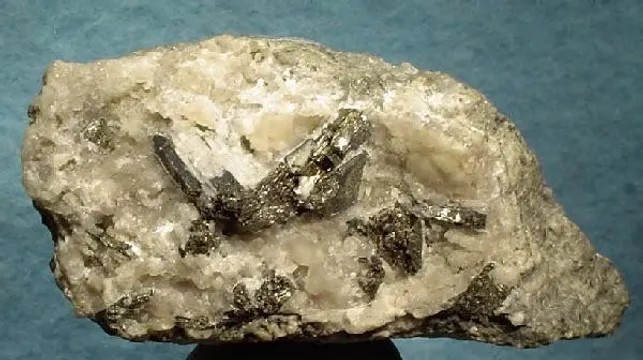
Other documented Ouray County minerals make the county much broader than a quartz-calcite locality. Natroalunite has its type locality in the Red Mountain Mining District, with early work distinguishing sodium-rich alunite-group material from Red Mountain. The Michael Breen–Mountain Monarch area is important for rare bismuth and silver-bismuth sulfosalt mineralogy, and locality records in that cluster include cupropavonite and mummeite as type-locality species, along with native bismuth, aikinite-related and lillianite-series minerals, matildite, pavonite, neyite, and ourayite-related literature from the broader Ouray–San Juan region. Red Mountain and National Belle are notable for enargite, alunite-group minerals, pyrite, quartz, barite, pyrargyrite, and tetrahedrite-group minerals. Camp Bird and Idarado add the classic ore-suite minerals: sphalerite, galena, chalcopyrite, pyrite, fluorite, scheelite, gypsum, calcite, quartz, rhodochrosite, rhodonite, tellurides such as calaverite and petzite, and manganese-rich carbonates. The Silver Link mine has published occurrences of anatase, brookite, and rutile, and the Mineral Farm mine is known for azurite, malachite, barite, quartz-after-calcite, and early near-surface mineral collecting.
The main authenticity issue in Ouray County is not wholesale faking but locality precision. Many older labels read only “Ouray,” “Ouray Co.,” “Red Mountain,” “Camp Bird,” or “San Juan Mts.,” and the same specimen style may cross county or district boundaries. Idarado material is especially prone to confusion because the mine system and related district extend across the Ouray–San Miguel divide, while “Red Mountain” can refer to a broader district rather than a single shaft. Poughkeepsie Gulch and upper Uncompahgre labels can also be blurred in old collections. For high-value pieces, the label should ideally name the mine or pocket: Ohio mine, Crystal Cave, Silver Point, OS pocket, Vampire Pocket, Portland mine, Camp Bird mine, Idarado mine, Mineral Farm, Pony Express, Bachelor, Black Girl, Grizzly Bear, Mountain Monarch, Michael Breen, Silver Link, or National Belle.
Quartz-after-anhydrite material deserves special attention. Many pieces have circulated as quartz after barite, quartz casts after barite, quartz after calcite, or simply “Ouray pseudomorph.” Some Silver Point and related bladed hollow casts are now best understood as quartz after anhydrite, and collectors should evaluate whether the label reflects modern reidentification or old dealer convention. The form matters: anhydrite casts tend to be thin, flattened, bladed, and sometimes open-ended or hollow, with sparkling quartz lining or replacing the former crystal; calcite pseudomorphs preserve scalenohedral or dogtooth forms; barite-related forms should show credible tabular barite morphology and association.
Condition is a serious grading factor. Ouray quartz, especially the hollow pseudomorphs, is commonly composed of sugary to drusy microcrystals over casts; edges are easily bruised, repaired-looking contact points are common, and old cabinet pieces may have sawn bases. Calcite scalenohedra from Paquin and Crystal Cave localities chip at the tips and may be partially iron-stained or etched. Camp Bird sulfides can be very durable visually but are often compact ore specimens with contacted backs, pocket wall contacts, or minor edge abrasion. Sphalerite may show cleavage bruises; chalcopyrite can dull; pyrite may oxidize if stored damp; and carbonate-associated pieces should not be cleaned aggressively in acid without knowing the assemblage.
Fluorescence is a secondary but useful trait. Some Ouray quartz-after-anhydrite pieces have been reported with minor zoned short-wave fluorescence, and manganese-bearing calcite from Idarado and related districts may respond under ultraviolet light. Fluorescence should be treated as an added observation rather than a locality proof, because similar responses occur in many Colorado carbonate and quartz specimens.
Rarity varies sharply by style. Generic Ouray quartz and sulfide ore can be affordable, but truly aesthetic old-time Ohio or Amphitheater quartz, sharp hollow quartz-after-anhydrite casts with pocket provenance, Camp Bird sphalerite-chalcopyrite-quartz from documented stopes, green Portland sphalerite, fine Grizzly Bear rhodochrosite, and Red Mountain enargite are all much scarcer than casual market listings suggest. The best Ouray County specimens usually come from old Colorado collections, not fresh mining, and strong provenance can add as much value as size.
The Camp Bird story begins with discouragement. After the Silver Crash of 1893, much of the San Juan silver country was wounded, and the mines around Ouray were no exception. Thomas F. Walsh, an Irish-born mining man who had worked his way through Colorado camps, was examining old ground in Imogene Basin when he saw value where others had walked away. The old Gertrude and Una claims had been treated as silver prospects, but Walsh was interested in gold-rich quartz. Assays from the material he examined reportedly ran as high as $3,000 per ton, the kind of number that could alter a district overnight.
Walsh did not announce a bonanza and invite competitors into the basin. He quietly bought abandoned claims and tax-title ground until the property became a consolidated empire. By 1900, his Camp Bird holdings included 103 mining claims and 12 mill sites covering about 941 acres. A July 1900 appraisal placed the mine at $6,000,000. By then it had already yielded $2,535,512 gross and about $1,650,000 profit, extraordinary figures for a property that had seemed part of a depressed silver camp only a few years earlier.
The name itself is pure mountain-camp folklore. “Camp birds,” generally understood as gray jays, were said to have made a habit of stealing miners’ lunches. The name attached first to a claim and then to one of Colorado’s legendary gold mines. Whether one imagines the birds as comic thieves or as accidental mascots, the name has an odd charm: a mine that made millionaires remembered not by a grand patriotic title but by lunch-stealing birds.
The sale was almost as dramatic as the discovery. Negotiations with British interests and major mining figures did not close immediately, and while talks dragged on Walsh continued to extract ore. Between July 1900 and April 1902 he reportedly took out another $1,500,000 in ore and made about $750,000 profit. The final deal brought him millions in cash, shares, and royalty payments, with later accounts giving total proceeds of roughly $6,000,000. In less than a decade, Walsh had moved from post-panic uncertainty to national wealth.
Camp Bird’s wealth also created targets. One account preserved by Western Mining History describes an attempted holdup of the Mount Sneffels stage at 2:30 in the afternoon about a mile from the Camp Bird mill, the robber trying unsuccessfully to seize a treasure box carrying about $12,000 in gold bullion. The detail is cinematic because it is so specific: not “gold was dangerous to move,” but a particular stage, a particular afternoon, a particular box of bullion on the road below one of the richest mines in the San Juans.
The mine outlived Walsh’s ownership and became a technical as well as financial success. Under Camp Bird, Ltd., the British company that acquired the property, the operation was associated with John Hays Hammond and J. E. Spurr, two names of real weight in mining geology. The property’s production after 1902 was immense, and its mill, tram, boarding houses, shops, and mine levels turned the steep Imogene Basin country into an industrial landscape. Russell Lee’s 1940 color photographs of the Camp Bird mill capture that later period beautifully: timber, metal, steep valley walls, and the practical geometry of a high-altitude mine that had become part of the mountain.
Ouray County’s collecting stories are not all bullion and big business. The Mineral Farm mine earned its name because mineralized veins cropped out so plainly near the surface that the material could be worked almost like a crop. Collectors remember it for quartz after calcite, gemmy quartz points, and barite, but the name preserves something older: the shock of finding a place where minerals lay so accessibly in the ground that the comparison was not to blasting or hoisting, but to harvesting.
The Amphitheater east of Ouray offers another kind of story, quieter and more specimen-centered. At the Ohio mine, collectors found large milky quartz groups under slabs of limestone that had fallen from solution-cavity ceilings. The scene is almost the opposite of Camp Bird’s industrial grandeur: not a tramway hauling ore, but a limestone cavity, a collapsed slab, and milky quartz sprays protected until someone looked beneath the right rock. Those Ohio specimens, many now old-label pieces, are among the reasons experienced collectors still treat “Ouray quartz” as a phrase with real meaning.