






Oregon, USA — a premier mineral province known for thundereggs and agates, type-locality minerals like priceite and josephinite, and diverse collecting culture…
Key facts
Oregon is not a single-specimen locality in the usual sense; it is an entire mineral province whose collector identity comes from sharp contrasts. West of the Cascades, accreted oceanic terranes, serpentinite belts, altered volcanic rocks, and coastal sediments yielded gold, chromite, nickel-iron alloys, zeolites, barite, mercury minerals, and a run of type-locality species that has kept Oregon in the mineralogical literature for more than a century. East of the Cascades, Miocene volcanism, welded tuffs, rhyolites, ash-flow sheets, basalt flows, lake beds, and hot-spring alteration produced the state’s best-known lapidary material: agate-filled thundereggs, plume agate, jasper, petrified wood, opal, obsidian, sunstone, and the delicate zeolite assemblages around Owyhee Dam, Goble, Durkee, Oxbow Dam, and the western Cascade quarries.
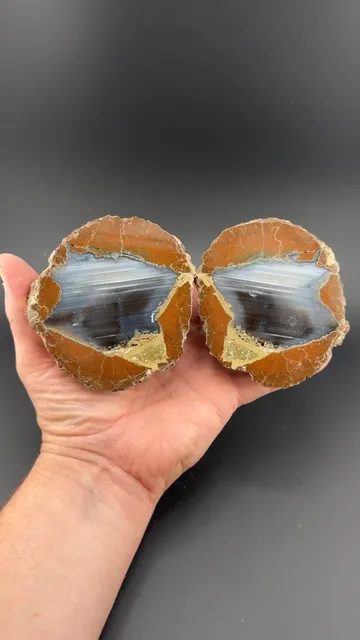
For collectors, Oregon matters because it bridges two collecting cultures unusually well. It is one of the classic American rockhounding states, famous for thundereggs and agates that look unremarkable in the hand until sawn and polished into landscapes of plume, tube, moss, fortification banding, chalcedony, opal, and jasper. At the same time, it has a serious mineralogical pedigree: priceite from Curry County, josephinite and oregonite from Josephine County, erionite from Baker County, mansfieldite from Lane County, heinrichite and metaheinrichite from Lake County, and cavansite and pentagonite from the Owyhee area and Goble are all tied to Oregon’s scientific record. Few U.S. states can claim such a mix of cabinet-quality lapidary classics, historic gold, state-named minerals, and type-locality rarities.
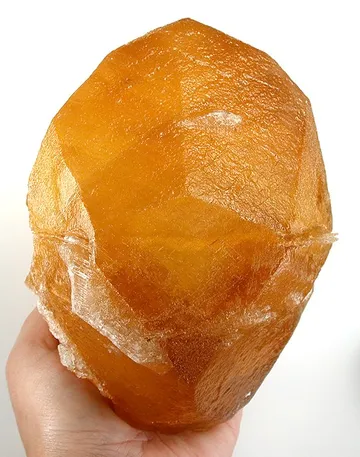
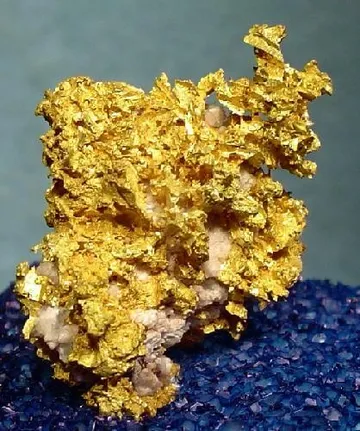
The best Oregon specimens have very different looks depending on their province. From the Priday and nearby central Oregon beds, a top thunderegg may cut to a tight bull’s-eye of blue-gray chalcedony, red and yellow fortification, or green moss and plume agate suspended in clear silica. From the Owyhee roadcuts, the coveted miniature aesthetic is a vivid blue vanadium silicate “blueberry” or spray sitting with colorless to pale zeolites and calcite. From the gold camps of Baker, Grant, Josephine, Jackson, and Lane Counties, the best pieces are native gold as nuggets, wires, leaves, and hackly masses, or gold locked in white quartz from lode veins. From the Lookout Point area near Oakridge, Oregon’s uncommon barite specimens can be surprisingly good: yellow to honey, glassy, spear-shaped crystals with enough transparency and sharpness to stand apart from the more typical massive barite gangue of sulfide deposits.
Regional View
Country View

Oregon’s collecting story is inseparable from its geologic architecture. The Klamath Mountains of southwestern Oregon are built from fault-bounded slices of oceanic crust, volcanic arcs, peridotite, serpentinite, metasedimentary rocks, and intrusive bodies; this is the country of Josephine Creek’s nickel-iron alloys, of rich pocket gold, of chromite, platinum-group associations, and of hydrothermal veins. The Blue Mountains and northeastern districts carry the memory of the state’s great gold rushes, with placer gravels below quartz-sulfide lodes in and around Baker, Grant, and Union County mining camps. The Western Cascades add hydrothermal veins, zeolite-bearing amygdaloids, and gold districts such as Quartzville and Bohemia. The High Lava Plains, Owyhee Uplands, and Basin-and-Range margin supply the volcanic glass, rhyolite, tuff, zeolitized beds, agate nodules, thundereggs, and silica-rich hot-spring systems that made Oregon a household name among lapidary collectors.
Search for specimens: View all specimens from Oregon, USA
Oregon’s collectible minerals come from several deposit types rather than one mine or one district. Native gold occurs chiefly in placer deposits and in lode veins. The placers are mechanical concentrations in stream channels, terrace gravels, bench deposits, beaches, and gulches, where dense gold was released from oxidized quartz veins and reworked into pay streaks with black sand, magnetite, chromite, platinum-group grains in places, and heavy nickel-iron alloy pebbles in southwestern Oregon. The lode deposits are mostly quartz veins, vein zones, and altered shear zones carrying pyrite, chalcopyrite, galena, sphalerite, arsenopyrite or other sulfides depending on district, with native gold locally in oxidized upper levels or pocket zones.
The historic gold camps fall into two broad belts. Southwestern Oregon’s Klamath Mountains include Josephine, Jackson, Curry, Coos, Douglas, and adjacent counties, with districts such as Waldo, Galice, Greenback, Gold Hill-Applegate, Mule Creek-Bolivar, Illinois-Chetco, and the beach placers. The geology is complex: serpentinite contacts, altered volcanic rocks of the Rogue and Galice affinities, Dothan and Applegate rocks, quartz diorite and gabbro-diorite bodies, and numerous shears and veins. Northeastern Oregon’s Blue Mountain belt includes Baker, Grant, Union, and nearby counties, where districts such as Baker, Sumpter, Cracker Creek, Cornucopia, Greenhorn, Granite, Susanville, and Canyon Creek worked both placers and hard-rock mines. Oregon’s gold rush began in the early 1850s in the southwest, then shifted dramatically to northeastern Oregon after the early 1860s discoveries at places such as Griffin Gulch, John Day, and Canyon Creek. By the time modern summaries were written, Oregon’s recorded gold output from 1852 through 1965 stood at nearly 5.8 million ounces.
Gold mining in Oregon was carried out first by hand methods in shallow placers, then by hydraulic cuts, ditch-and-flume systems, dredging, and underground lode mining. In Josephine County, early placer richness was soon followed by searches for the quartz veins that fed the gravels; the Jewett Mine near Grants Pass was already being worked in the 1860s, while the Greenback and other northeastern Josephine County mines became important later hard-rock producers. The Briggs Pocket near the Siskiyou Crest is one of the state’s legendary near-surface pocket deposits, a shallow cut credited with about 2,000 ounces of gold before it was abandoned. In the northeast, Sumpter-area dredging and the Baker and Grant County lode camps produced the state’s best-known large nugget history, including the Armstrong Nugget from the Susanville area.
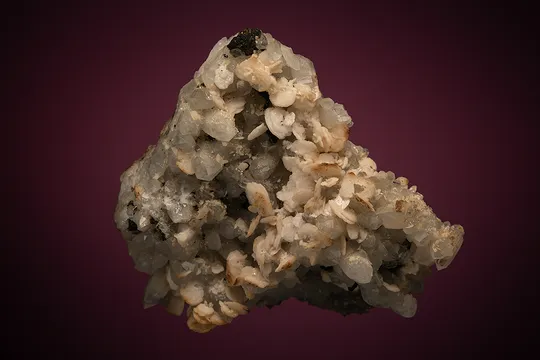
Barite in Oregon is much less commercial than collectible, but it is geologically important. State summaries describe Oregon barite chiefly as an accessory mineral in sulfide deposits, particularly as a gangue mineral in lead, copper, zinc, and precious-metal systems. Lenses and pods of barite were noted in the Almeda and Silver Peak mines of Josephine and Douglas Counties, commonly with disseminated pyrite, and the Silver Peak area includes “Big Yank lode” style mineralization with sulfides in barite gangue and sericite schist along altered contact zones. The rarer specimen-grade Oregon barites, however, are not generally the massive pyritic pods; collectors prize the sharp, translucent to transparent yellow crystals from the Lookout Point area near Oakridge in Lane County.
The agate and thunderegg deposits are mainly volcanic and silica-replacement systems. Classic Oregon thundereggs formed in cavities and lithophysal structures in rhyolitic, welded tuff, and perlitic rocks, later filled by chalcedony, agate, opal, jasper, quartz, and iron- or manganese-colored silica. The best-known belts are in Jefferson, Crook, Wheeler, Wasco, Malheur, and adjacent central and southeastern counties. The Priday Agate Beds near Madras, long associated with Richardson’s Rock Ranch, produced celebrated green moss agate, red-yellow-orange plume agate, blue-bed thundereggs, tube agate, and fortification patterns. Other Oregon agate names with long collector recognition include Sucker Creek, Ochoco, Hampton Butte, Graveyard Point/Owyhee-area material, Maury Mountain, Polka Dot agate, and many coast and river localities where weathered chalcedony nodules are recovered as float.
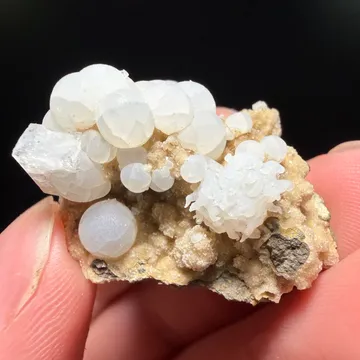
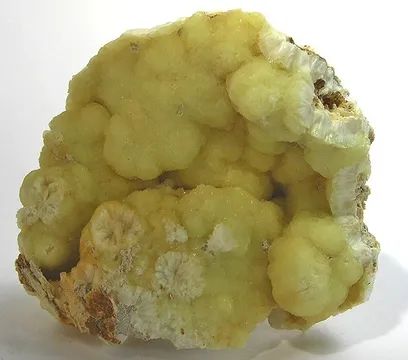
Oregon’s zeolite localities are a separate collecting chapter. Analcime, chabazite, heulandite, stilbite, mordenite, levyne, gmelinite, thomsonite, apophyllite, calcite, and other cavity minerals occur in altered basalt, tuff, and volcaniclastic rocks. The Owyhee Dam locality in Lake Owyhee State Park is especially important because it produced cavansite and pentagonite with zeolite and calcite associates in a faulted tuff roadcut. Goble, in Columbia County, is one of Oregon’s classic zeolite districts in vesicular basalt and tuff breccia. Oxbow Dam in Baker County, Monument in Grant County, Rickreall Creek, Nestucca River basalt, and coastal or Cascade quarries add further analcime-bearing associations. These are generally small-cavity mineral localities: thumbnail and miniature specimens can be very fine, but most good pieces require careful trimming and close viewing.
Collecting access today is mixed and must be treated locality by locality. Much of Oregon’s famous agate collecting is on BLM, Forest Service, private ranch, or claim land, and the legal status can change at the scale of a road, gate, claim block, or seasonal closure. BLM-managed public lands generally allow casual, noncommercial collecting of reasonable amounts of rocks, mineral specimens, and semiprecious gemstones where not otherwise closed, but collectors must check active claims, wilderness or ACEC restrictions, state-park rules, tribal land, private land, and local limits. Richardson’s Rock Ranch, historically a famous fee-dig destination for Priday thundereggs, now states that digging is permanently closed, although its rock shop continues to sell Priday and related material. State parks and protected cultural or scientific sites require particular caution; collecting at scientifically sensitive zeolite or type-locality exposures is not equivalent to ordinary rockhounding on open public land.
Oregon barite is best understood in two collector categories: common massive barite as sulfide-deposit gangue, and scarce specimen-grade crystal groups. The state’s older mineral-resource summaries describe barite as usually an accessory mineral in sulfide deposits, with lenses and pods in the Almeda and Silver Peak mines of Josephine and Douglas Counties and pyrite commonly disseminated through the barite; these pieces tend to be heavy, pale gray to white, and more geological than aesthetic. Oregon’s standout cabinet barite comes from the Lookout Point prospects near Oakridge in Lane County, where crystals have been described and photographed as thick, sharp, translucent yellow spearpoints, locally glassy and unusually large for the state. Good Oregon barite is therefore judged less by abundance than by sharp form, translucency, warm yellow color, undamaged edges, and a credible sublocality label; ordinary pieces are massive white-gray gangue or dull blades without the uncommon Lookout Point aesthetics.
Oregon gold ranges from fine flakes and small stream-worn nuggets to rare lode specimens with native gold in quartz, and the state’s best labels usually point to either the Blue Mountains of northeastern Oregon or the Klamath Mountains of the southwest. In the Baker, Grant, Sumpter, Susanville, Cornucopia, and Canyon Creek country, gold was recovered from placer gravels and quartz-sulfide lodes; in Josephine, Jackson, Curry, and Douglas Counties it came from stream placers, beach placers, oxidized pocket deposits, and veins in altered metavolcanic, metasedimentary, intrusive, and serpentinite-contact settings. Collectible Oregon gold is commonly bright yellow and hackly to leafy in quartz, flattened and rounded as placer nuggets, or present as small wires and grains in oxidized vein material; the finest pieces have visible metal, old district provenance, and enough crystallized or textured surface to separate them from ordinary placer fines. Pieces from famous historic contexts such as the Briggs Pocket, Baker-area placers, Josephine Creek, Althouse Creek, Cornucopia, or Quartzville command far more interest than anonymous “Oregon gold,” because the state is large and the geological stories differ sharply from district to district.
Quartz is everywhere in Oregon collections, but the significant collector forms are vein quartz from gold and base-metal districts, small crystals and druzy linings from volcanic cavities, amethystine and smoky quartz from scattered pockets, and chalcedonic quartz as agate, jasper, and petrified wood. In the gold districts, quartz is the dominant gangue of many lodes and may carry pyrite, chalcopyrite, galena, sphalerite, calcite, sericite, and visible native gold; in places such as Quartzville, Bohemia, Baker County, and the Klamath districts it is historically inseparable from mining. Oregon crystal quartz is generally less famous than its agates, but clear to milky points, small clusters, drusy coatings, and occasional amethystine pieces occur in Cascade and central Oregon localities, including Quartzville-area volcanic rocks and other cavity-bearing zones. A good Oregon quartz specimen is one that preserves context: gold in quartz from a named mine, lustrous crystals on contrasting volcanic matrix, or attractive amethystine clusters with a specific county or quarry label are far more desirable than massive white vein quartz with only a state attribution.
Agate is Oregon’s signature collector material, especially as thunderegg interiors from central and southeastern volcanic terrains. The Priday beds near Madras are famous for thundereggs and ledge agate with blue-gray chalcedony, green moss, tube structures, red, yellow, and orange plume agate, and strong fortification patterns; Ochoco, Sucker Creek, Buchanan, Hampton Butte, Graveyard Point, Maury Mountain, Polka Dot, coastal beaches, and many stream deposits add their own color and pattern vocabularies. Oregon agate is usually judged cut rather than natural: the rough exterior of a thunderegg may be plain gray-brown rhyolitic shell, while a sawn face reveals floating plumes, sagenitic sprays, tubes, moss, waterlines, jaspery islands, or translucent chalcedony. Top pieces show saturated natural color, crisp pattern contrast, complete centers without muddy fractures, and a known bed or district; ordinary pieces may still be attractive lapidary material, but vague “Oregon agate” labels, weak color, healed cracks, and over-polished surfaces reduce collector value.
Oregon analcime is a zeolite-cavity mineral of basalt, tuff, and altered volcaniclastic environments, most interesting when tied to the Owyhee Dam, Goble, Oxbow Dam, Monument, Nestucca River, or other named zeolite localities. At Owyhee Dam it is part of the celebrated cavansite-pentagonite assemblage with calcite, heulandite, stilbite, apophyllite, chabazite, thomsonite, and gmelinite; colorless analcime and other zeolites can partly cover the blue vanadium silicates, adding sparkle while sometimes muting their color. Elsewhere in Oregon, analcime occurs as colorless to white trapezohedral crystals in vesicles and cavities, locally to centimeter scale, with clay, natrolite, apophyllite, mordenite, heulandite, or calcite depending on locality. The best Oregon analcime specimens are sharp, glassy, undamaged crystals on stable basaltic or tuffaceous matrix, especially when associated with colorful cavansite, pentagonite, or contrasting zeolites; mediocre examples are chalky, clay-coated, loose, or labeled only broadly without a named quarry, river, dam, or roadcut.
Beyond these five species, Oregon is unusually rich in minerals with type-locality or historical importance. Priceite was described from the Lone Ranch area of Curry County; josephinite, a nickel-iron alloy variety of awaruite, and oregonite came from Josephine Creek placers; erionite was first described from the Durkee/Swayze Creek area in Baker County; johannsenite is tied in part to the Bohemia District of Lane County; mansfieldite came from Hobart Butte in Lane County; heinrichite and metaheinrichite are associated with the Lakeview uranium district in Lake County; and cavansite and pentagonite were described from Oregon material, with Owyhee Dam and Goble central to the original work. Collectors should also remember Oregon’s broader classics: copper-bearing sunstone from Lake County, chromite and platinum-group minerals from southwestern Oregon placers, mercury minerals from opalite and hot-spring systems, zeolites from basalt quarries, cinnabar from eastern districts, obsidian from Glass Buttes and Newberry-area volcanics, and petrified wood and jasper from the state’s volcanic and sedimentary basins.
The most important authenticity issue for Oregon is not usually outright fakery, but locality precision. A specimen labeled simply “Oregon” may be attractive, but it loses much of its scientific and collector value in a state where the same species can represent very different geological environments. “Gold, Oregon” could mean fine placer grains from a modern panning site, a Baker County nugget, a Josephine County pocket-gold fragment, or a lode specimen in quartz. “Agate, Oregon” could mean a Priday thunderegg, Graveyard Point plume, Hampton Butte material, a beach pebble, or a modern lapidary slab from mixed old stock. Serious collectors should press for county, district, mine, ranch, bed, creek, quarry, or roadcut data whenever possible.
Oregon agates and thundereggs deserve normal lapidary scrutiny. Sawing and polishing are expected and are not treatments in the deceptive sense; most thundereggs reveal their value only after cutting. Dyeing, resin filling, oiling, and enhanced photography are the concerns. Bright, unnatural colors, color concentrated along fractures, suspiciously uniform saturation, or a seller unwilling to provide locality information should raise caution. Natural Oregon colors can be strong—Priday plume, Polka Dot, jasper-agate, and Owyhee-area material can be vivid—so the point is not to distrust color, but to evaluate it against known material from the stated bed.
Gold specimens need the same caution as all native-gold specimens. Placer nuggets should show natural wear, rounded or flattened forms, and surface texture consistent with stream transport; lode gold in quartz should show convincing attachment, no glue line, no acid-brightened quartz halo that looks staged, and no improbable gold geometry forced into a crack. Because Oregon gold is actively recovered by hobby prospectors as well as traded from old collections, labels should distinguish modern panning recovery from historical mine or district material. Old Baker, Grant, Josephine, Jackson, Lane, or Curry County provenance can matter as much as weight.
Zeolite specimens, especially from Owyhee Dam and Goble, require gentle handling and careful identification. Owyhee cavansite and pentagonite are small, and blue material partly hidden by heulandite, analcime, stilbite, or calcite can be misnamed. Older “cavansite” labels from Oregon may deserve re-examination where crystal habit suggests pentagonite, because both species are related vanadium silicates and both are tied to the Owyhee story. Analcime, calcite, and zeolite druse can be brittle on weathered tuff matrix, and Owyhee specimens may be small but scientifically important; aggressive cleaning can ruin the association.
Erionite from Oregon should be handled as a hazardous fibrous zeolite, not as a casual cabinet curiosity. The Durkee type-locality material was named for its woolly appearance, and fibrous erionite has serious respiratory-health implications. Do not trim, saw, grind, blow dust from, or ultrasonically clean suspected fibrous zeolites; keep such specimens enclosed, labeled, and undisturbed. Similarly, Oregon uranium minerals such as heinrichite and metaheinrichite require ordinary radioactive-mineral precautions: minimize dust, wash hands after handling, store away from living spaces if the specimen is significant, and avoid unnecessary close or prolonged exposure.
Market availability varies sharply by category. Oregon agates, jasper, petrified wood, obsidian, and cut thundereggs are widely available, though the best named-bed older pieces are increasingly prized. Oregon gold is available but very sensitive to provenance and metal price, with aesthetic lode specimens scarcer than placer fines. Good Lookout Point barite is uncommon on the market. Owyhee cavansite, pentagonite, and associated analcime-zeolite specimens are far scarcer than Indian Deccan basalt specimens of similar-looking blue minerals, and Oregon examples should be valued for type-locality and historical significance rather than size.
The Armstrong Nugget is the kind of Oregon gold story that still makes collectors stop mid-sentence. On June 19, 1913, George Armstrong found an 80.4-ounce gold nugget at a placer mine near Susanville in Grant County. It was not melted, which is almost the miracle: most large gold nuggets from western camps eventually vanished into bullion, coins, jewelry, or assay records. The Armstrong Nugget survived as an object, a fist-sized survivor of the old placer era, and for decades it was displayed with other Baker-area gold in a bank lobby in Baker City. Oregon’s own geology publications emphasized that, as a nugget, it was worth many times its melt value—a simple statement that every specimen collector understands immediately. Metal is metal, but form, history, and survival are what make a specimen.
Southwestern Oregon has an even wilder pocket-gold tradition. The Briggs Pocket, near the Siskiyou Crest in Josephine County, was not a deep, orderly mine that produced steadily for decades. It was a shallow, astonishingly rich near-surface occurrence. A 1904 photograph reproduced in Oregon geological literature shows the Briggs Pocket Mine as a shallow cut, and the caption records the essential fact: about 2,000 ounces of gold were produced before the cut was abandoned. Other mine-record summaries describe the gold as porous slabs, roughly an inch thick and two or three feet across. That is the kind of occurrence that built western legends—small in footprint, short in life, and almost unbelievable in richness.
Oregon’s nickel-iron story begins in placer gravels, not in a meteorite crater. Josephinite was long puzzling because its nickel-iron composition invited comparison with meteoritic metal. The material occurred as water-worn pebbles and ellipsoidal masses in Josephine Creek gravels, gray-white beneath a dark coating and highly magnetic. W. H. Melville reported it in 1892, after material collected by a Mr. Hampton came to scientific attention, and later work argued for a terrestrial origin tied to the serpentine and peridotite country of the Klamath Mountains. Then Oregonite added a second layer to the story: a nickel-iron arsenide named for the state itself, identified through ore microscopy and X-ray work in josephinite-bearing material. The result is one of Oregon’s most distinctive mineralogical signatures: metallic pebbles from a creek bed that look as if they ought to have fallen from space, but instead record deep-earth ultramafic processes and later placer concentration.
The Owyhee Dam vanadium-silicate discovery is a story in miniature. The locality is a roadcut in the harsh, beautiful country of Lake Owyhee State Park, where tuff and basaltic volcanic history are exposed near one of Oregon’s great engineering landmarks. In the early 1960s, Leslie and Mrs. Perrigo of Fruitland, Idaho, are credited with finding the blue minerals at Lake Owyhee; Dr. John Cowles later found the Goble occurrence in northwestern Oregon. When the minerals were finally described, cavansite and pentagonite became one of Oregon’s most elegant contributions to mineralogy. They were never Oregon’s biggest minerals. At Owyhee the desirable pieces are small: blue rosettes, sprays, and compact “blueberries” perched among calcite and zeolites, with analcime, heulandite, stilbite, and calcite sometimes sparkling over the blue. The visual drama is not scale; it is color, rarity, and the fact that a modest roadcut became a type-locality name known to mineral collectors worldwide.
Oregon’s thunderegg story is the opposite: democratic, lapidary, family-friendly, and full of surprise. A thunderegg can sit in the hand as a dull, rough, nearly featureless ball of rhyolitic rock. Then a saw opens it and the interior becomes a tiny landscape—blue and white bands, red and yellow plumes, mossy green sprays, tubes, fortifications, cavities, or opal and jasper islands. The Priday Agate Beds near Madras, long associated with Richardson’s Rock Ranch, became a pilgrimage site because that transformation could happen over and over in front of ordinary collectors. Oregon made the thunderegg its state rock in 1965, an unusually apt choice: it is volcanic, cryptic, colorful, and best understood by cutting below the weathered exterior.
_4_(34762078736).jpg)