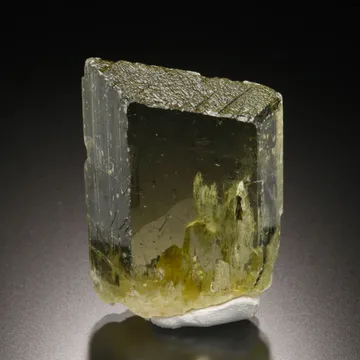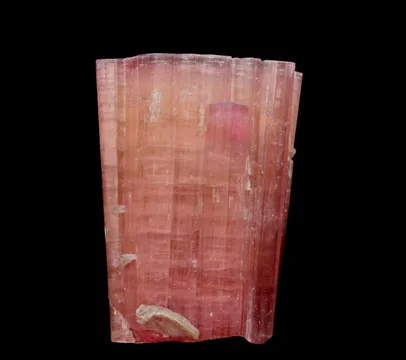
Nuristan, Afghanistan — premier pegmatite locality yielding kunzite, spodumene, tourmaline, beryl and quartz; prized for vivid color, rarity, and collecting hi…
Key facts
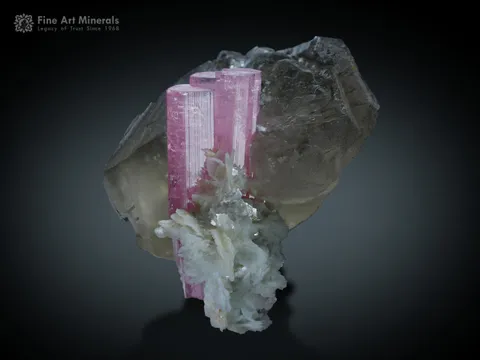
Nuristan is one of the modern world’s essential gem-pegmatite names: a mountainous province on Afghanistan’s eastern frontier where lithium-rich granitic pegmatites of the Hindu Kush have yielded extraordinary kunzite, spodumene, elbaite tourmaline, beryl, cleavelandite, quartz, fluorapatite, and rare phosphate and tantalum minerals. For collectors, “Nuristan” is not a single mine but a label that may encompass several pegmatite fields and workings—Mawi, Nilaw, Kulam or Kolum, Korgal, Paprok, Parun, Pashki, and related sites—many of them difficult to separate on older specimen labels. The finest pieces have the unmistakable Afghan look: glassy pink to violet spodumene blades, pencil-like or multicolored elbaite on snow-white cleavelandite, pastel morganite and aquamarine, smoky quartz, and occasional purple apatite or rare phosphate accents.
Geologically, Nuristan belongs to the great South Asian–Himalayan pegmatite belt produced by continental collision and late granitic magmatism. The collectible minerals formed in complex, internally zoned, rare-metal pegmatites enriched in Li, Cs, Ta, Be, Sn, B, and F. In practical specimen terms this means miarolitic cavities, clay-filled pockets, late leaching and recrystallization, and abrupt changes from blocky feldspar-quartz rock to open spaces where a crystal could grow with mirror luster and gem transparency. The locality’s best known production began reaching the international market in the 1970s and 1980s, when Soviet geological work, Afghan mining, and Pakistani trading routes brought Nuristan tourmaline and kunzite to Western collectors in quantity.
Regional View
Country View
A collector should read “Nuristan, Afghanistan” as both a real provincial locality and a trade-historical umbrella. Many specimens in circulation were mined before precise sublocality recording became routine; others were exported through Pakistan and later relabeled by broad region. The best modern labels specify Paprok, Mawi, Kolum, Nilaw, Korgal, Parun, Pashki, or a named tunnel or pegmatite field, but high-quality older labels may simply say “Nuristan” or even confuse Nuristan with adjacent Kunar or Laghman.

Photo: Wikimedia Commons
Search for specimens: View all specimens from Nuristan, Afghanistan
Nuristan’s specimen localities are gem-bearing rare-metal pegmatites, chiefly LCT-family systems developed in high-grade metamorphic and metasedimentary terranes along the Hindu Kush. Regional studies describe pegmatites intruded into quartz-muscovite-biotite schists with garnet and staurolite, and also into gneiss, amphibolite, limestone, diorite, gabbro-diorite, and Late Triassic sedimentary rocks. The productive bodies range from simple, poorly zoned veins to highly evolved, internally zoned dikes and lenses; the latter are the real specimen producers, especially where albite, microcline, quartz, lepidolite, muscovite, and tourmaline give way to pocket zones.
The Nilaw-Kulam-Mawi-Korgal field is one of the classic Nuristan specimen districts. It lies north of the village historically called Nuristan, in terrain above the Alingar and Kolum river drainages. Mawi is famous for large gem spodumene, morganite, and elbaite; Kolum for gem spodumene, elbaite, morganite, pollucite, and accessory phosphates and tantalates; Nilaw and Korgal for gemmy elbaite, especially delicate pink and green pencil crystals and, at Korgal, remarkably transparent green tourmaline. Published descriptions place pegmatite veins in this field from hundreds of meters to kilometers in length, with some thick bodies measuring tens of meters across.
Paprok, in Kamdesh District, is another cornerstone locality. The “Paprok mine” is best understood as a group of workings rather than a single portal. The main workings are in pegmatites on the right side of the Kéhi Dara Valley south of Paprok village, with named workings including Me Tunnel Madan, KAL Tunnel Madan, GUL Tunnel Madan, and Al Madan. Paprok’s pegmatites are documented as gem-bearing bodies hosted in Late Triassic slate. The great collector reputation of Paprok rests on multicolored elbaite—pink, green, blue-capped, watermelon-zoned, red, colorless, and complexly banded—but the locality also produced important beryllonite, pollucite, hambergite, petalite, fluorapatite, morganite, hydroxylherderite, väyrynenite, viitaniemiite, wodginite, microlite-group minerals, and other rare pegmatite species.
The Parun and Pashki deposits show the lithium-ore side of the same mineralizing province. At Pashki, recent work described steeply dipping quartz-spodumene-microcline-albite pegmatites exposed high in the mountains, including extended veins and vein zones carrying rich spodumene mineralization. Vein No. 3, where colorless beryl was studied, is associated with spodumene, microcline, albite including cleavelandite, tantalite, and polychrome tourmaline; voids contain kunzite, light green muscovite, and rock crystal. This is precisely the environment collectors recognize in Nuristan pieces: feldspar and quartz framework, lithium minerals, late cavities, and rare-element accessories.
Mining history is unusually vivid here. Soviet geologists began serious work at Mawi, Kulam, and Nilaw in the early 1970s while prospecting for lithium, cesium, rubidium, niobium, tantalum, and tin. Afghan miners soon recognized that the gem crystals themselves could be more valuable than the industrial rare-metal minerals. By the mid-1980s, large quantities of gem-quality tourmaline and kunzite from Nuristan were reaching the market through Pakistan, particularly the Bajaur and Peshawar trading networks. Later, Paprok became one of the defining pegmatite specimen names of the 1990s and 2000s, when fine matrix tourmalines, rare phosphate combinations, and cabinet-size crystals entered major private and museum collections.
There is no ordinary collecting access today in the North American or European sense. These are remote, high-altitude Afghan mining areas in difficult terrain, subject to local control, seasonal weather, security concerns, changing mining policy, and export complications. Foreign field collecting is not a realistic route for most collectors. Specimens reach the market through established dealers, old collections, Afghan and Pakistani trading channels, and dispersed older inventories. Provenance therefore matters: a precise sublocality, an old dealer label, an export-era history, or placement in a known collection can add as much confidence as beauty.
The best pockets have produced dramatic combinations. At Mawi and Kolum, kunzite and other spodumene crystals are commonly tied to quartz, cleavelandite, lepidolite, morganite, pollucite, and rare tantalates. At Paprok, multicolored elbaite commonly occurs with albite var. cleavelandite, quartz, smoky quartz, lepidolite, and rare beryllonite or pollucite. Some pockets are largely clay-filled, allowing crystals to be extracted complete; others contain broken spodumene shards, quartz crystals, morganite fragments, and pieces of pocket wall. A specimen’s value depends not just on size but on the luck of the pocket: whether the crystal grew free, escaped blasting, avoided later pocket collapse, and survived the long trip out of the mountains.
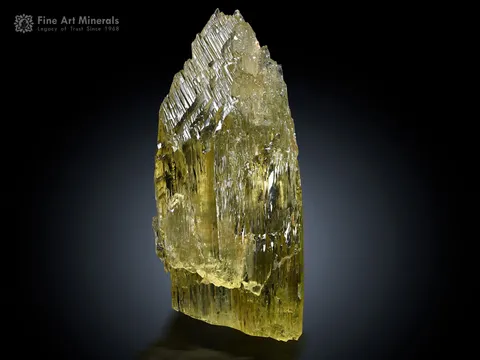
Nuristan kunzite is the collector’s benchmark for large, glassy, pink to violet spodumene, especially from Mawi and the Nilaw-Kolum field, where crystals can be broad, tabular, sharply faced, and strongly pleochroic. Published accounts describe transparent spodumene from Nuristan in pink, purple, blue, green, and yellow hues, with some crystals reaching exceptional lengths; many fine pieces were sold as loose single crystals after extraction from clay-filled pegmatite cavities. The strongest kunzite specimens show saturated color down the c-axis, bright luster on large flat faces, complete or minimally contacted terminations, minimal cleavage damage, and no obvious fading; ordinary pieces tend to be pale, cleaved, sun-faded, etched, or broken from large blades rather than preserved as complete crystals.
As a mineral species rather than only the kunzite variety, Nuristan spodumene ranges from gemmy pink and violet crystals to yellow triphane, blue-gray blades, greenish material, and opaque to translucent pocket-wall crystals. The best examples from Mawi, Kolum, Parun, Pashki, and related fields show the long, flattened pyroxene habit collectors expect—large parallel faces, sharp edges, occasional twinning, and conspicuous cleavage that must be respected. In the lithium pegmatites, spodumene occurs with quartz, albite or cleavelandite, microcline, lepidolite, muscovite, morganite, tourmaline, pollucite, cassiterite, and tantalite-group minerals, but gem spodumene and elbaite are often found in nearby but separate pocket types. Premium Nuristan spodumene is judged by intactness, glassiness, color stability, size, and whether the crystal is a true complete pocket crystal rather than a cleaved fragment.
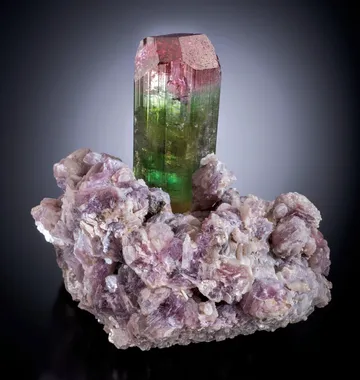
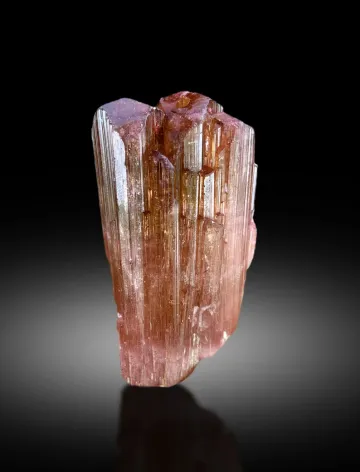
Tourmaline from Nuristan is dominated in collector material by elbaite and related lithium-tourmaline compositions, though schorl and other tourmaline components are also documented in the pegmatite systems. The finest pieces are slender pencil crystals or robust prisms in pink, red, green, blue-green, blue, colorless, and multicolored zoning, commonly on cleavelandite, quartz, smoky quartz, or lepidolite. Paprok is the name most strongly associated with elegant matrix tourmalines, including pink-red crystals, blue-capped crystals, and watermelon-zoned material; Mawi, Nilaw, Korgal, and related fields contribute gemmy singles and combinations. Good Nuristan tourmaline has a clean termination, glassy luster, transparency, distinct zoning, and natural matrix; lesser examples are merely colorful but contacted, repaired, bruised, dull, or detached with no reliable sublocality.
Elbaite is the signature tourmaline species of Nuristan’s gem pegmatites, especially Paprok, where large specimen lots in the late twentieth century included sprays and subparallel groups of translucent crystals from roughly miniature to cabinet scale, along with single gemmy pencils on matrix. Paprok elbaite is famous for pink, cranberry-red, green, blue-capped, colorless, yellow-zoned, and watermelon patterns, commonly set on white albite or cleavelandite with quartz and lepidolite. Analytical work on Paprok watermelon tourmaline documented chemically distinct zones and identified fluor-elbaite in the core zone of a studied sample, so a precise species name on a label should be reserved for analyzed material; visually, however, the collector appeal is immediate. The best elbaite specimens from Nuristan combine saturated color, transparency, sharp terminations, unrepaired matrix attachment, and crisp color zoning rather than muddy transitions.
Quartz in Nuristan is not merely gangue; it is often the architectural mineral that makes the specimen. In Kolum, cavities in albitized muscovite-microcline zones can contain quartz crystals with cleavelandite, gem spodumene, elbaite, morganite, pollucite, cassiterite, and tantalite-group minerals, while Paprok tourmalines may perch against quartz or smoky quartz in highly aesthetic combinations. Rock crystal is reported from Pashki voids with kunzite and muscovite, and smoky quartz is a common foil for pink and green tourmaline in Paprok and related material. Fine Nuristan quartz specimens are those where the quartz is lustrous, undamaged, and compositionally important to the piece—supporting elbaite, morganite, or spodumene naturally—rather than serving as broken white pegmatite matrix.
Beryl from Nuristan includes aquamarine, goshenite, and morganite, with different pegmatite fields emphasizing different varieties. Mawi produced morganite and aquamarine, Paprok produced morganite and other beryl-associated combinations, and Pashki has recently been studied for colorless transparent beryl from spodumene pegmatites at high elevation. Beryl occurs in the same rare-metal environment as spodumene, albite, microcline, cleavelandite, tourmaline, tantalite, quartz, and muscovite, and the most attractive collector pieces show pastel color, sharp hexagonal form, undamaged terminations, and natural association with cleavelandite or quartz. Ordinary Nuristan beryl is often pale or incomplete; the better pieces are those with either strong color, a diagnostic association, or a documented sublocality such as Mawi, Paprok, Parun, or Pashki.
Albite, especially the platy cleavelandite variety, is one of the defining matrix minerals of Nuristan specimens. In the pegmatite pockets it forms white to pearly, bladed, sugary, or rosette-like aggregates that contrast beautifully with pink elbaite, green tourmaline, violet kunzite, purple fluorapatite, and pastel beryl. At Pashki, fine crystalline albite is widespread in the pegmatite, while at Paprok, Mawi, and Kolum cleavelandite is a frequent stage for cabinet specimens and rare-mineral combinations. A strong albite matrix adds locality character and display value when the blades are fresh, undamaged, and naturally intergrown with the main crystal; massive, bruised, iron-stained, or glued-looking feldspar is far less desirable.
Nuristan morganite is best known from Mawi, Paprok, and the broader northeastern Afghan pegmatite province, where it occurs as pink, peach, purplish, or sometimes bicolored beryl crystals with cleavelandite, quartz, smoky quartz, muscovite, elbaite, and spodumene. Published specimen records include Mawi morganite on cleavelandite and Paprok morganite with cleavelandite, quartz, and spodumene, while gemological accounts from the 1980s note pink to brownish pink to peach morganite reported from Mawi. Good Nuristan morganite has a clean hexagonal outline, pleasing pastel saturation, transparency, and matrix aesthetics; ordinary examples are pale, etched, incomplete, or difficult to separate visually from nearby Afghan or Pakistani beryl without a convincing label history.
Fluorapatite from Nuristan is a rare and attractive accessory rather than a bulk species, especially in Mawi and Paprok material. Mawi has produced deep purple fluorapatite crystals, usually small but occasionally reaching several centimeters, in open vugs and in association with feldspar, cleavelandite, quartz, beryl, muscovite, and lithium-pegmatite minerals. Paprok specimens are prized when lustrous purple apatite sits visibly on white cleavelandite or occurs with beryl and other pegmatite species. The best pieces are color-saturated, glassy, sharply crystallized, and clearly associated with classic Nuristan matrix; pale, isolated, or ambiguous apatites need careful locality support because Afghan and Pakistani pegmatite apatites can be visually similar in the trade.
Cleavelandite is the collector’s white framework mineral of Nuristan: thin platy albite that forms the snowy base beneath tourmaline, beryl, fluorapatite, spodumene, tantalites, and rare phosphates. It is documented from Kolum, Mawi, Paprok, Kantiway, Pashki, and other pegmatite fields, and in some areas occurs as aggregates lining productive cavities with smoky quartz, green tourmaline, and kunzite. Fine cleavelandite is bright, fresh, bladed, and sculptural, giving contrast and proof of natural pocket association; poor cleavelandite is crushed, chalky, stained, or overgrown in a way that hides the main crystal. On Nuristan specimens, a well-preserved cleavelandite matrix often makes the difference between a pretty gem crystal and a true locality classic.
Other minerals documented from Nuristan include schorl, lepidolite, muscovite, microcline, pollucite, petalite, hambergite, beryllonite, hydroxylherderite, väyrynenite, viitaniemiite, childrenite, eosphorite, cassiterite, columbite-(Fe), columbite-(Mn), tantalite-(Mn), stibiotantalite, wodginite, fluorite, spessartine, topaz, pezzottaite, bavenite, nanpingite, fluornatromicrolite, foitite, stannite, and zircon. Paprok is particularly important for beryllonite-elbaite combinations, pollucite crystals, rare phosphate species, and large viitaniemiite; Mawi is notable for cassiterite and columbite/tantalite associations, purple fluorapatite, fluorite on aquamarine, spessartine on spodumene, and rare-element accessory suites. For advanced collectors, these rarities are often more locality-specific than the showy tourmaline and kunzite because their associations and labels can tie them to a particular pocket generation.
Nuristan specimens reward careful provenance work. Many older labels use broad geographic terms—“Nuristan,” “Laghman-Nuristan,” “Kunar-Nuristan,” “Pech Valley,” or simply “Afghanistan”—because mining, trading, and export routes did not always preserve exact field data. Adjacent Afghan and Pakistani pegmatite localities can produce visually similar combinations of tourmaline, beryl, cleavelandite, quartz, and spodumene. A specific sublocality such as Paprok, Mawi, Kolum, Nilaw, Korgal, Parun, or Pashki is valuable only when supported by an old label, dealer history, collection pedigree, or distinctive association.
Kunzite and other spodumene require special care. Nuristan spodumene is strongly cleavable and easily damaged by pressure, vibration, or careless mounting. Color is another issue: Afghan spodumene has been reported to emerge in blue-violet or green shades and to change toward pink or purple after exposure to sunlight, sometimes after boiling; laboratory fade tests on pink material showed that sunlight and heat can significantly lighten color. Collectors should keep kunzite out of strong direct light, avoid display in sunny windows, and treat vivid unusual colors—especially blue, green, or very intense pink—with healthy skepticism unless treatment history is disclosed.
Tourmaline from Nuristan is generally stable, but repairs are common on large Paprok and Mawi specimens because long, slender crystals break easily during mining, transport, and cleaning. Look closely at terminations, base contacts, and places where a crystal enters cleavelandite or quartz. A repaired major crystal is not automatically undesirable, but it must be priced and described honestly. Matrix specimens should be inspected for reattached crystals, added cleavelandite, filled gaps, and modern assembly. Paprok pieces with multiple parallel elbaites on cleavelandite are attractive but especially worth checking under magnification.
Smoky quartz associations deserve scrutiny. Some Afghan smoky quartz specimens, especially very dark material attached to tourmaline, may have been irradiated or may be suspected of irradiation in the trade. The issue is not unique to Nuristan, but it matters because dark smoky quartz can greatly enhance contrast with pink elbaite. Ask whether smoky quartz color is believed natural, treated, or uncertain.
Beryl varieties from Nuristan—morganite, aquamarine, and goshenite—are often pale, and locality mislabeling can be difficult to resolve visually. Morganite on cleavelandite from Afghanistan, Kunar, Nuristan, Laghman, and northern Pakistan can overlap in style. For top beryl specimens, a reliable old label or publication history is a significant part of the value. Fluorapatite and rare phosphates are less common on the market and should be checked for correct identification; purple apatite, beryllonite, viitaniemiite, väyrynenite, hydroxylherderite, and microlite-group minerals are best bought from dealers who understand pegmatite species and are willing to stand behind analyses or expert determinations.
Market availability remains good for smaller loose kunzite and tourmaline crystals, but truly fine matrix pieces from Paprok, Mawi, and Kolum are not common. Major specimens entered collections in the 1980s through 2000s and now reappear mostly through collection dispersals, show inventories, and high-end dealers. Large, transparent, unrepaired kunzite with stable color; sharp multicolored elbaite on natural cleavelandite; purple fluorapatite on matrix; and rare Paprok beryllonite or phosphate combinations are all premium material.
The old accounts of Nuristan read like a field guide written on a cliff edge. In the Nilaw-Kulam-Mawi-Korgal country, the pegmatite field lies in steep forested mountainsides above river valleys where Afghan kings once hunted brown bears and leopards. Local people formed a human chain high on the slopes and drove bears down toward the waiting king and his horse in the Kolum River valley. The same mountains were known for cobras, scorpions, and, before decades of war and firearms, leopards.
When Soviet geologists began serious work at Mawi, Kulam, and Nilaw in 1971, they were officially looking for rare metals—Li, Cs, Rb, Nb, and Ta—but they could not miss the gem pockets. They hired roughly 100 local men for drilling, blasting, and mining. Later recollections say that in the intense 1972–1973 working period, the local men who helped open the pegmatites were not allowed access to the pockets or ore zones exposed by their own labor. Years afterward, a post-Soviet kunzite pocket yielded a crystal with a two-inch Soviet drill hole through it, a perfect mineralogical relic of exploration colliding with specimen value.
Pierre Bariand of the Sorbonne visited the Mawi field in the 1970s and obtained a sharp 50 cm kunzite crystal from the giant pegmatite. Reaching the deposits then required roughly two days on foot beyond the end of the jeep road, along narrow trails and steep rocky gorges, with a 3,000 m range to cross before Mawi. Even after later road extensions, the pegmatites still remained a foot journey away from the nearest vehicle access.
The Paprok story is even harsher. The gem-bearing pegmatites lie about 16 km west-northwest of Paprok village, a hard six- to eight-hour walk for local miners. One fit young man in his twenties described walking hard for 16 hours on his first attempt and still failing to reach the main mine before turning back; wind and bitter cold had beaten him before the mountain did. Paprok village itself used to require a couple of days on foot from Kamdesh, the district capital, before villagers financed and built a jeep road with money earned from mine finds.
Paprok is not a single tidy mine but a mountain cut by numerous pegmatite veins and dikes. The route divides after hours of walking from the village: one branch leads up Kéhi Darra toward the “Main mines,” exposed high on a nearly vertical cliff face; the other branch leads into Chappa Darra and to high-altitude workings including Noor Ahmed Madan. The most important main workings include Me Tunnel Madan, KAL Tunnel Madan, GUL Tunnel Madan, and Al Madan. Some tunnels penetrated about 200 m into the mountain, exposing dozens of tourmaline pockets; some underground rooms became large enough to compare to a living room. Teams as large as 100 people worked a mine, staying up to ten days until the next shift arrived, often living inside the tunnel because the ridge outside was too cold and windy.
One of the most memorable commercial episodes comes from the small Pashagar mine. In 1992, a pocket produced 72 specimens of pink, gemmy elbaite crystals on highly lustrous smoky quartz. Malem Haji brought them to the brothers Asmat and Faisal Umar Shinwari in Landi Kotal in July and August of that year. The brothers bought the lot for $16,000, sold it for the same amount to Tariq Iqbal and Wayne Thompson, and later received an after-sale profit of $5,000—an example of the profit-sharing arrangements common in the Afghan-Pakistani gem trade. Two lesser pockets found during six months of work produced another 15 very fine specimens; the best later entered the Mim Museum in Beirut. The mine closed in 1992, and no later finds of the same kind were reported.
The rare-mineral side of Paprok has its own drama. A superb 17 cm viitaniemiite crystal on lepidolite was recovered in 1991 and eventually entered the Vienna Museum of Natural History. It has been described as one of the finest specimens of that rare mineral ever found, yet soon after discovery it reportedly sold for only 4,850 German marks—a reminder that in remote pegmatite fields, rarity is not always recognized before a specimen leaves the mountains.
Pierre Bariand and J. F. Poullen, “The pegmatites of Laghman, Nuristan, Afghanistan,” The Mineralogical Record, 9(5), 301–308, 1978 — Classic early Western account of the Afghan gem pegmatites, including Nilaw, Mawi, Korgal, tourmaline, spodumene, and field access.
George W. Bowersox, “A Status Report on Gemstones from Afghanistan,” Gems & Gemology, 21(4), 191–204, Winter 1985 — Important gemological report documenting Nuristan tourmaline and spodumene production, mining access, crystal sizes, colors, fluorescence, and trade routes.
Philip J. Dunn, “Gem spodumene and achroite tourmaline from Afghanistan,” Journal of Gemmology, 14, 170–174, 1974 — Early gemological treatment of Afghan spodumene and colorless tourmaline cited in later GIA and Mineralogical Record work.
Robert B. Cook, “Connoisseur’s Choice: Spodumene var. kunzite, Nuristan, Afghanistan,” Rocks & Minerals, 72, 340–343, 1997 — Collector-oriented treatment of Nuristan kunzite as a classic specimen mineral.
M. D. Cocker, “Chapter 24A. Summary for the Mineral Information Package for the Nuristan Rare-Metal Pegmatite Area of Interest,” in USGS Open-File Report 2011–1204, 2011 — Regional geological and resource synthesis for the Nuristan rare-metal pegmatite area, including pegmatite fields, metallogeny, zonation, and mineralization.
Stephen G. Peters, Trude V. V. King, Thomas J. Mack, Michael P. Chornack, eds., “Summaries of important areas for mineral investment and production opportunities of nonfuel minerals in Afghanistan,” USGS Open-File Report 2011–1204 — The broader USGS Afghanistan mineral-resource volume containing the Nuristan pegmatite chapter and related data packages.
Lucyna Natkaniec-Nowak, Magdalena Dumańska-Słowik, and Andreas Ertl, “‘Watermelon’ tourmaline from the Paprok mine (Nuristan, Afghanistan),” Neues Jahrbuch für Mineralogie - Abhandlungen, 186(2), 185–193, 2009 — Key analytical paper on Paprok color-zoned tourmaline, including fluor-elbaite, schorl, foitite, rossmanite, and liddicoatite components.
Peter Lyckberg, “Gem pegmatites of northeastern Afghanistan,” The Mineralogical Record, 48(5), 610–675, 2017 — Major illustrated locality article covering Mawi, Nilaw, Kolum, Korgal, Paprok, Parun, Pech Valley, rare species, pockets, field stories, and museum specimens.
Sergey G. Skublov, Nazifullah Hamdard, Mikhail A. Ivanov, and Vladislav S. Stativko, “Trace element zoning of colorless beryl from spodumene pegmatites of Pashki deposit (Nuristan province, Afghanistan),” Frontiers in Earth Science, 12, 2024 — Recent analytical study of goshenite from Pashki, including LCT pegmatite setting, vein descriptions, and trace-element zoning.
Mindat reference page for Natkaniec-Nowak, Dumańska-Słowik, and Ertl, 2009 — Useful source index tying the Paprok watermelon-tourmaline paper to documented mineral occurrences.
Wikimedia Commons: Beryllonite and Elbaite from Paprok, photograph by Rob Lavinsky — Verified open-license image record for a Paprok beryllonite-elbaite specimen.
Mindat: Nuristan, Afghanistan — Broad mineral list and sublocality index for Nuristan Province, including pegmatite minerals, commodities, and locality hierarchy.
Mindat: Paprok, Kamdesh District, Nuristan, Afghanistan — Essential sublocality page for the Paprok pegmatite field, with coordinates, workings, mineral list, photo gallery, and references.
Mindat: Parun pegmatite field, Nuristan, Afghanistan — Useful page for Parun-area pegmatites, including Pashki references and beryl/spodumene-related occurrences.
GIA: “A Status Report on Gemstones from Afghanistan” — Foundational gemological paper for Afghan emerald, tourmaline, spodumene, kunzite, beryl, and trade history.
USGS Open-File Report 2011–1204, Chapter 24A: Nuristan Rare-Metal Pegmatite Area of Interest — Best regional geological summary for deposit type, metallogeny, pegmatite fields, and resource potential.
USGS Open-File Report 2011–1204 main index — Full Afghanistan nonfuel-mineral assessment with links to all area-of-interest chapters.
Frontiers in Earth Science: Pashki beryl trace-element zoning study — Recent open-access study tying Nuristan goshenite to spodumene LCT pegmatites.
University of Vienna record: “‘Watermelon’ tourmaline from the Paprok mine” — Bibliographic and abstract record for the key analytical study of Paprok zoned tourmaline.
ResearchGate record: Peter Lyckberg, “Gem pegmatites of northeastern Afghanistan” — Major illustrated Mineralogical Record article on Afghan gem pegmatites, locality stories, species lists, and specimen records.
Wikimedia Commons: Beryllonite and Elbaite from Paprok — Open-license specimen image and metadata for a Paprok beryllonite-elbaite combination.