






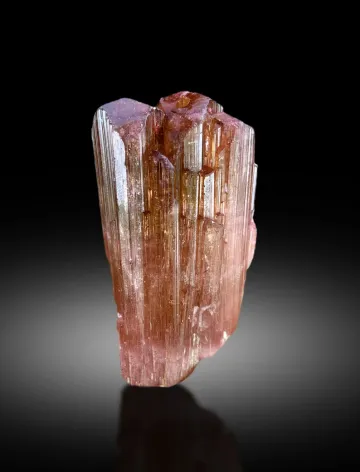
Paprok, Afghanistan - a premier gem pegmatite locality known for color-zoned elbaite tourmalines and a wealth of rare minerals, prized by collectors worldwide.
Key facts
Paprok is one of the great modern names in gem pegmatite collecting: a high, difficult, pocket-rich field in Nuristan where lithium-, beryllium-, boron-, cesium-, tantalum-, and phosphate-bearing pegmatites have produced superb elbaite tourmalines and a remarkable suite of rare species. In collector speech “Paprok” usually means a group of workings around Paprok village in Kamdesh District, especially the mines reached from the Kéhi Dara and Chappa Dara valleys, rather than a single tidy mine in the industrial sense. The pegmatites are hosted in Late Triassic slate and belong to the broader rare-metal pegmatite province of northeastern Afghanistan, a Himalayan collision-related belt whose finest cavities have supplied the world market with elbaite, kunzite, morganite, pollucite, beryllonite, petalite, hambergite, microlite-group minerals, phosphates, and tantalum oxides.
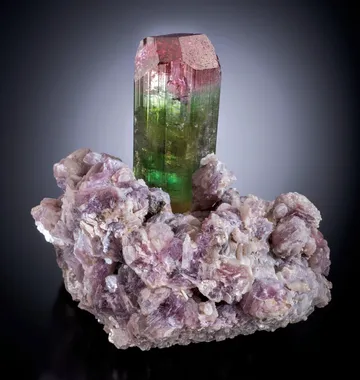
For collectors, Paprok’s signature is color-zoned elbaite: lustrous prismatic crystals in green, pink, red, blue, colorless, and “watermelon” combinations, commonly on white albite var. cleavelandite, smoky to colorless quartz, or lilac lepidolite. The best Paprok pieces are architectural rather than merely colorful. A single gem “pencil” may rise cleanly from a cleavelandite nest; a red or green tourmaline may sit across quartz; or a large matrix plate may carry multiple thick prisms with flat green caps, pale pink bodies, and complex terminations. Paprok also matters because it is not just a pretty tourmaline locality: it is one of the most prolific gem-and-rare-mineral pegmatite localities of its generation, with significant documented specimens of pollucite, beryllonite, petalite, hambergite, hydroxylherderite, fluorapatite, childrenite, väyrynenite, viitaniemiite, wodginite, stibiotantalite, and fluornatromicrolite.
Regional View
Country View
Historically, Paprok emerged with the late twentieth-century Afghan pegmatite boom. Tourmaline from the area was already appearing in Kabul street markets by the early 1970s, and Western awareness grew through dealers and travelers connected with Afghanistan, Pakistan, Idar-Oberstein, and later the Peshawar market. During the 1980s and early 1990s, Paprok began sending large lots of multicolored elbaite to international shows, including both robust first-generation crystals and delicate, gemmy second-generation crystals. The locality’s reputation was strengthened by scientific attention as well: Paprok watermelon tourmaline has been studied for its chemical zoning, fluor-elbaite component, inclusions, and spectroscopic behavior.

Photo: Wikimedia Commons

Photo: Wikimedia Commons

Photo: Wikimedia Commons
Search for specimens: View all specimens from Paprok, Afghanistan
Paprok lies in Kamdesh District, Nuristan Province, northeastern Afghanistan, near the Afghanistan-Pakistan frontier in the rugged eastern Hindu Kush. The locality has appeared in mineral literature and labels under variants including Papruk and Paprowk. In strict locality terms, it is a pegmatite field; in collector language, “Paprok Mine” refers to several workings in gem-bearing pegmatites south and west of Paprok village, particularly those reached through Kéhi Dara and Chappa Dara.
The deposit is an LCT-style rare-element granitic pegmatite system: lithium, cesium, tantalum, boron, beryllium, fluorine, and phosphate enrichment account for the combination of elbaite, spodumene, lepidolite, pollucite, beryl, petalite, topaz, beryllonite, hambergite, tantalum-niobium oxides, and rare phosphates. The immediate Paprok pegmatites are described as hosted in Late Triassic slate, while broader regional summaries place them in the Parun or Paron rare-metal pegmatite field. Published Afghan mineral-resource summaries list Paprok or Papruk among pegmatites carrying spodumene, lepidolite, albite, microcline, polychromic tourmaline, columbite-tantalite, and cassiterite, with related Paron-field occurrences also carrying beryl, pollucite, muscovite, and cleavelandite.
The workings are high, cold, and logistically severe. The Paprok gem pegmatites are described as lying roughly 16 km west-northwest of Paprok village, a demanding walk of six to eight hours under favorable conditions. The route traditionally followed the main valley west from the village before turning into side valleys; Kéhi Dara leads to the Main mines on a near-vertical cliff, while Chappa Dara leads to another group of high-altitude workings. Before a jeep road reached Paprok village, the village itself could require a couple of days on foot from Kamdesh. Mining is highly seasonal, generally possible only for a short autumn window before deep snow and bitter winter conditions close access.
The Main mines in Kéhi Dara include Me Tunnel Madan, KAL Tunnel Madan, GUL Tunnel Madan, and A1 Madan; “madan” is a local word for mine or working. KAL Tunnel Madan has been described as the most prolific of these. The principal pegmatite vein there is several meters thick and exposed high on the cliff face, with tunnels following wider sections of the vein into the mountain. Reported tunnel penetration reaches about 200 meters, and the underground workings have opened dozens of tourmaline-bearing pockets. Some internal chambers are large enough to be compared to rooms, a telling detail for anyone used to small, tight pegmatite vugs.
Chappa Dara Madan, including the important Noor Ahmed Madan, represents the second major mining area. Teams of up to about 100 people have worked individual mines, staying on site for days at a time before being relieved by the next shift. Because of wind, cold, altitude, and distance, miners may live inside the tunnels during a work period. The best pockets are large by pegmatite-specimen standards, sometimes several meters across, and have produced hundreds of kilograms of elbaite crystals, matrix specimens, loose crystals, and broken tourmaline shards in a single pocket lot.
The production history is tied closely to Afghanistan’s political history and to the regional gem trade. Paprok tourmaline was already reaching Kabul street markets in the early 1970s, but few pieces reached Western specimen collectors during most of that decade. In the mid-1980s, specimens became more common in the West, with the German-based Afghan dealer Daoud Wafa named in the literature as the first major dealer to bring Paprok material into the Western specimen market in quantity. By the early 1990s, annual lots included hundreds of kilograms of multicolored elbaite, much of it in sprays and subparallel groups of translucent 10 to 30 cm crystals, along with bright, gemmy single crystals on matrix.
Paprok continued to produce important pockets into the new millennium. A notable 2009 season produced two good pockets: one with pink flat-topped elbaite carrying thin inky-blue caps, and another with large matrix specimens of pale pink tourmaline crystals overgrown by grass-green zones and green-capped terminations on milky to transparent quartz plates with white spherical cleavelandite aggregates. Individual tourmalines in those matrix specimens reached 15 cm long and 10 cm thick, with matrices to 40 cm across. The same pocket also yielded gemmy second-generation pink-and-green elbaite pencils to 16 cm, some on beryllonite or smoky quartz, and the largest associated beryllonite crystals reached about 28 cm.
Paprok’s recent production has been irregular. Harsh weather, unsafe routes, political instability, government controls, and the availability and cost of explosives have all affected mining. Little work could be done in 2012, production largely ceased in 2013–2014 when dynamite was nearly unavailable, and limited mining resumed around 2015, with a reported rise in Paprok production again in 2016. The locality remains a remote artisanal mining district rather than an organized industrial operation. For collectors today, access should be understood as essentially unavailable to outsiders in any normal field-collecting sense; specimens reach the market through Afghan and Pakistan-linked mining and trading networks rather than through legal recreational collecting.
One outlying Paprok-area working, the Masawee mine, is reported at high altitude on the back side of the main Paprok deposits and yields small green elbaite crystals. Local miners reportedly need six to eight days to reach it, and it can be worked only for a few short weeks in summer. That detail explains why Paprok’s output is so episodic: even where thousands of pegmatite veins remain in surrounding mountains, discovering and extracting undamaged pocket specimens demands weather, labor, security, explosives, money, and luck to align at exactly the right moment.
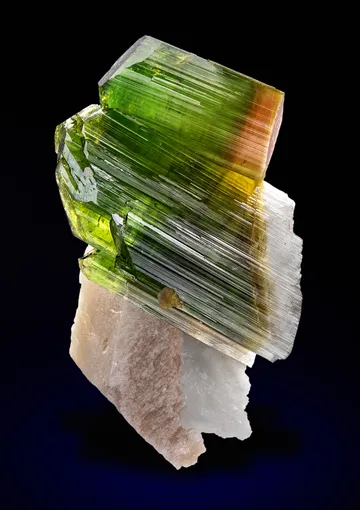
Elbaite is Paprok’s defining collector mineral, and the best examples are among the most recognizable tourmalines from Afghanistan: vertically striated, lustrous to gemmy prisms in green, pink, red, blue, colorless, and watermelon-zoned combinations, commonly with flat pinacoid caps or more complex pyramidal terminations. Large first-generation crystals tend to be more translucent, deeply colored, and bundled in subparallel sprays, while second-generation crystals are slimmer, gemmier “pencils” that may run 5 to 15 cm, with exceptional matrix pieces and single crystals reported into the 20 to 40 cm class. Classic associations are white albite var. cleavelandite, smoky or colorless quartz, and lepidolite, with rarer showpieces placing elbaite on beryllonite, pollucite, topaz, or rare phosphates. The strongest Paprok elbaites combine undamaged terminations, internal glow, vivid but natural zoning, and a stable matrix that shows the crystal off without overwhelming it; ordinary pieces are often simply broken shards, contacted prisms, or opaque fragments from the same large pocket lots.
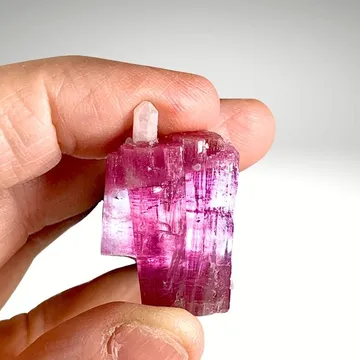
Tourmaline from Paprok is overwhelmingly collected as elbaite and its color varieties, but the broader tourmaline label appears on many older and trade specimens because color-zoned tourmaline parcels were historically sorted by appearance before precise species work. Paprok tourmalines occur as single prisms, divergent groups, thick flat-topped crystals, and matrix specimens with albite, cleavelandite, quartz, smoky quartz, lepidolite, beryl, beryllonite, topaz, and rare tantalum or phosphate minerals. A studied Paprok watermelon tourmaline showed concentric zoning with a pale pink core, a thin colorless zone, and a green outer zone, while other specimens show axial zoning with pink bases, green bodies, purple or blue touches, dark caps, or colorless achroite sections. Good Paprok tourmaline is judged by crisp crystal geometry, clean luster, bright readable zoning, and lack of repairs; merely “from Paprok” is not enough when the locality has produced everything from world-class matrix sculptures to abundant broken gem rough.
Quartz at Paprok is both a specimen mineral and the most important visual partner for tourmaline, forming milky, colorless, transparent, and pale smoky crystals that act as platforms for elbaite, cleavelandite, lepidolite, beryl, topaz, and rare species. The best-known Paprok quartz combinations include matrix plates with quartz supporting thick pink-and-green elbaite crystals, some matrices reaching cabinet size, and later-generation gemmy tourmaline pencils lying or standing across quartz points. Quartz crystals may be bright and glassy, but on many Paprok pieces their value is compositional: they give contrast, depth, and a natural pocket context to the colored lithium minerals. Fine Paprok quartz pieces are those where the quartz is intact, clean, and aesthetically positioned; ordinary examples are bruised, milky support matrix with little visual role beyond proving pegmatite association.
Lepidolite from Paprok appears as lilac, lavender, mauve, grayish, or locally more saturated mica aggregates and books in the evolved lithium-rich portions of the pegmatites, most prized when it supports or frames gem elbaite, petalite, spodumene, fluorapatite, microlite-group minerals, or the famous rare phosphates. Collectors know Paprok lepidolite less as isolated mica and more as the soft-colored matrix that makes pink, green, and blue tourmaline sing; some elbaite specimens are set on thin lepidolite plates, and rare-mineral pieces include fluornatromicrolite octahedra and viitaniemiite on lepidolite. Good examples have fresh pearly luster, attractive color, and an association that proves late-stage pocket chemistry, while ordinary lepidolite is friable, dull, or visually subordinated to the main species.
Albite is the white framework mineral of many Paprok specimens, forming massive to bladed feldspar matrix around tourmaline, quartz, beryl, spodumene, petalite, hambergite, topaz, and rare microlite-group crystals. The most attractive albite is usually the cleavelandite habit: bright, pearly, bladed, and snow-white, making green, red, pink, and blue tourmaline appear especially vivid. Paprok albite can also occur as blockier feldspar masses and as pocket matrix in combination with quartz and lepidolite; it is essential evidence of the highly evolved pegmatite environment but is rarely the specimen’s headline mineral unless the blades are unusually aesthetic. Strong Paprok albite pieces are clean, undamaged, three-dimensional matrices that support well-placed colored crystals; weak ones are chalky, iron-stained, flattened, or heavily contacted.
Cleavelandite, the platy variety of albite, is Paprok’s classic “snow” matrix and one of the locality’s most important aesthetic ingredients. It forms white to cream blades, rosettes, sheaves, and spherical aggregates in pocket cavities, most memorably with gem elbaite, smoky quartz, quartz, spodumene, morganite, hambergite, topaz, pollucite, and beryllonite. Some of the 2009 Paprok matrix specimens carried delicate white spherical aggregates of cleavelandite beneath large pink-and-green elbaite crystals on quartz, showing how the feldspar can transform a specimen from a loose crystal into a complete pegmatite scene. The best cleavelandite is bright, airy, and intact; damaged blades, dirt-filled rosettes, and crushed feldspar bases are common condition compromises.
Smoky quartz from Paprok occurs as pale to medium smoky crystals in association with elbaite, cleavelandite, lepidolite, spodumene, fluorapatite, petalite, and beryl, and it is especially valued when the smoky tone gives visual contrast to pink or green tourmaline. Several documented Paprok elbaite specimens show tourmaline on smoky quartz, including pieces where crystals from the same pocket display reddish orange bodies, yellow zones, green terminations, white cleavelandite, and smoky quartz. Because the Afghan pegmatites are geologically young, very dark smoky quartz should be approached with caution, especially when paired with pale or suspectly intense pink spodumene, since irradiation has been documented or suspected in some Himalayan-system material. Fine Paprok smoky quartz is lustrous, naturally toned, and structurally important to the composition; ordinary pieces are overdark, chipped, or visually heavy.
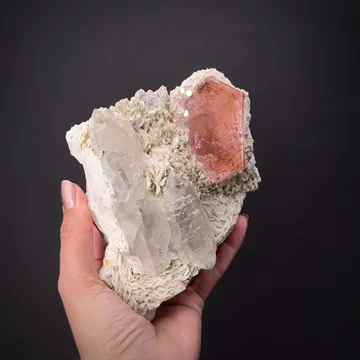
Morganite from Paprok is less abundant in the market than elbaite but forms attractive peach-pink to salmon-pink beryl crystals and combination pieces with albite, cleavelandite, quartz, muscovite, tourmaline, and occasionally other pegmatite minerals. Documented Paprok specimens include pale pink morganite serving almost as a matrix for small green to bluish-green tourmalines and white bladed albite, as well as morganite with quartz and cleavelandite. The best Paprok morganites have enough color to read clearly against the white matrix, glassy luster, crisp hexagonal form, and minimal etching or bruising; lesser pieces may be pale, blocky, contacted, or locality-confused with more prolific Afghan or Pakistani morganite sources.
Beryllonite is one of Paprok’s great rare-species credentials, occurring as white to colorless crystals and complex aggregates in the same evolved pocket environment as elbaite, pollucite, petalite, albite, quartz, and lepidolite. Paprok beryllonite is especially famous for complex “cogwheel” aggregates with serrated edges, and single crystals have been reported transparent and reaching large sizes by world standards. Two exceptional combination specimens from Paprok reportedly showed red elbaite crystals 15 and 20 cm long enclosed by coronas of beryllonite crystals, while 2009 production included beryllonite surfaces carrying second-generation pink-and-green gem elbaite pencils. The finest pieces are not merely rare labels: they show recognizable beryllonite form, clean white to transparent luster, and meaningful association with tourmaline; ordinary examples can be massive, damaged, or difficult to distinguish without documentation.
Petalite from Paprok is a rare lithium-aluminum silicate occurrence in the locality’s highly fractionated pegmatites, documented as slightly etched crystals, in some cases transparent enough to yield collector gems. It occurs in the same late-stage mineral environment as elbaite, albite, lepidolite, pollucite, beryllonite, topaz, and phosphate or tantalum species, and its value lies in both rarity and pegmatite-system completeness. Published figure captions and collection records include Paprok petalite crystals in the several-centimeter class, with a 13 cm example illustrated from a major museum collection. The best Paprok petalite is lustrous, pale, transparent to translucent, and recognizably crystallized; weak pieces are etched to dull masses or are visually difficult without strong provenance.
Topaz from Paprok is an accessory gem mineral of the evolved pegmatites, reported as occasional sharp crystals, including blue crystals to about 3 cm and white topaz in rare association with pollucite and beryllonite. In the Paprok suite it is most appealing when perched on albite or associated with elbaite, hambergite, quartz, or lepidolite, because the association places it firmly within the locality’s Be-Li-F-rich pocket chemistry. Paprok topaz is not the locality’s volume mineral, so collectors should prize sharpness, luster, transparency, and unambiguous matrix association over size alone. Ordinary examples are small, isolated, or poorly documented, and very deeply colored topaz should be treated cautiously in the broader Himalayan pegmatite context.
Rubellite from Paprok represents the red to pink elbaite component of the locality’s tourmaline production, ranging from pale pink prisms to richer raspberry-red crystals and red sections in multicolored specimens. Paprok rubellite occurs as loose crystals, matrix pieces on albite, cleavelandite, smoky quartz, quartz, or lepidolite, and as color zones in watermelon or bicolored elbaite; one published Paprok specimen is described as red rubellite and colorless achroite elbaite, 40 cm across. Good rubellite here needs more than saturation: the best pieces retain sharp terminations, glassy faces, readable zoning, and natural contrast with pale matrix. Ordinary rubellite is often broken pocket material, opaque red prism sections, or repaired crystals whose color alone cannot carry the specimen.
Beryl at Paprok includes aquamarine, goshenite, and morganite, with morganite the most familiar collector variety and colorless to blue beryl documented in locality records. It appears as hexagonal crystals, blocky to glassy masses, and matrix participants with albite, cleavelandite, quartz, muscovite, tourmaline, lepidolite, and rare accessory minerals. Compared with Paprok elbaite, beryl is a quieter but important part of the assemblage, signaling beryllium enrichment alongside beryllonite, hambergite, hydroxylherderite, and rare phosphates. The best beryl specimens from Paprok are well crystallized and association-rich, especially pink morganite with white albite or tourmaline; lower-grade pieces are pale, etched, massive, or easy to confuse with other Afghan beryl localities unless well documented.
Microlite-group minerals at Paprok, especially material identified as fluornatromicrolite, occur as small but visually powerful octahedral crystals in the evolved tantalum-rich pegmatite zones, commonly associated with lepidolite, albite, cleavelandite, and elbaite. Paprok fluornatromicrolite has been documented as gemmy deep orange octahedra to about 1.3 cm on lepidolite and albite, with museum and dealer examples illustrated in the mineralogical literature. For advanced collectors, the appeal is the combination of color, rarity, and locality: an orange Ta-rich octahedron on lilac mica or white albite tells the story of Paprok’s extreme fractionation as clearly as a tourmaline does. Fine microlite-group specimens need sharp octahedral form, confirmed identity where possible, and stable matrix; ordinary examples are tiny, embedded, mislabeled, or known only as “microlite” without analytical precision.
Feldspar at Paprok includes albite, cleavelandite, and microcline, forming the structural framework of the pegmatites and much of the visible matrix in specimen-quality pockets. Albite and cleavelandite dominate the collector look, while microcline appears in the broader rare-metal assemblage with spodumene, lepidolite, quartz, tourmaline, beryl, and tantalum-niobium oxides. Good Paprok feldspar specimens are valued for matrix architecture rather than isolated feldspar perfection: white bladed albite beneath pink-green elbaite, feldspar blocks with quartz and beryl, or cleavelandite nests holding rare species. Ordinary feldspar is common pegmatite gangue; the premium comes when it is bright, undamaged, three-dimensional, and compositionally integral.
Kunzite, the pink to lilac variety of spodumene, is documented from Paprok as part of the locality’s lithium-rich spodumene-bearing pegmatite suite, though the locality is better known for tourmaline than for the huge kunzite production associated with some other Nuristan and Kunar pegmatites. Paprok kunzite occurs as flattened, striated spodumene crystals, pale pink to lilac in tone, with possible associations including cleavelandite, quartz, smoky quartz, lepidolite, tourmaline, and feldspar. Fine examples show a complete chisel-like termination, clean longitudinal striations, transparency, and a stable pastel color; lesser specimens are etched, cleaved, pale, broken, or marketed under optimistic varietal names. Because spodumene color can be light-sensitive or treatment-influenced in the wider Afghan trade, provenance and care history matter.
Pollucite from Paprok is one of the locality’s most impressive rare-element minerals, occurring as white to colorless trapezohedral crystals sometimes associated with polychrome elbaite and, more rarely, with white topaz and beryllonite. Published accounts describe enormous gemmy pollucite crystals to more than 20 cm across, commonly slightly etched but with internal gemmy areas to about 10 cm; major museum specimens from Paprok have been illustrated at 23 and 30 cm. These are exceptional dimensions for a collector rare species, and Paprok pollucite carries both mineralogical and aesthetic weight when it is crystallized, translucent, and associated with elbaite or cleavelandite. Ordinary pollucite is blocky, etched, massive, or easily undervalued by non-specialists because its color is subtle.
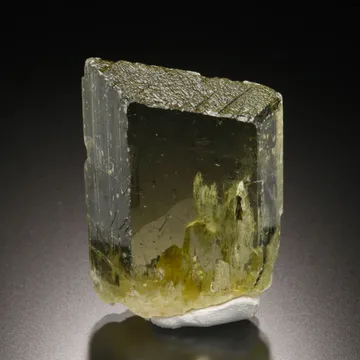
Spodumene from Paprok belongs to the same lithium-rich rare-metal pegmatite environment that produces lepidolite, petalite, pollucite, albite, microcline, tourmaline, beryl, and tantalum-niobium oxides. Collector specimens range from pale to green, pink, lilac, or yellowish flattened prisms, typically strongly striated and best when complete, transparent, and associated with cleavelandite, smoky quartz, quartz, lepidolite, or tourmaline. Paprok green spodumene has been marketed as hiddenite, and photographed examples show green spodumene with cleavelandite and smoky quartz. Strong specimens have crisp bladed form, visible natural color, undamaged terminations, and clear locality documentation; ordinary pieces are cleaved fragments, faded or questionable green crystals, or pale material sold more on the Afghan pegmatite name than on specimen quality.
Indicolite from Paprok is the blue to blue-green tourmaline component of the elbaite suite, seen in certain crystals as deep blue sections, blue caps, green-blue bodies, or blue-green tones in multicolored prisms. While the Pech Valley is especially celebrated for blue indicolite pencils, Paprok has documented blue and blue-capped tourmaline, including 2009 pocket material with thin inky-blue caps on pink elbaite and color-zoned specimens with green, blue, red, pink, and colorless zones. The best Paprok indicolite is glassy, saturated without being black, sharply terminated, and preferably on cleavelandite, quartz, smoky quartz, or lepidolite. Ordinary blue-green pieces may be small, dark, fractured, or better described simply as color-zoned elbaite unless the blue is truly dominant.
Hambergite is one of Paprok’s prestige rare beryllium minerals, occurring as colorless to white, lustrous crystals on albite, muscovite, topaz, and elbaite-bearing pegmatite matrix. Published specimens include a 5.5 cm hambergite crystal on albite and a 21.5 cm hambergite-on-muscovite specimen in a major museum collection; another exceptional Paprok combination reportedly shows razor-sharp, doubly terminated hambergite crystals with muscovite. Fine Paprok hambergite is judged by transparency, sharp double termination, striation, lack of bruising, and association with clean albite or mica; ordinary examples are small, contacted, etched, or need expert verification because several pale pegmatite species can look deceptively similar in casual photographs.
Other documented Paprok minerals make the locality exceptional for advanced pegmatite collectors. The rare phosphate viitaniemiite is represented by a famous 17 cm crystal on lepidolite found in 1991 and now in the Natural History Museum in Vienna, an extraordinary size for a species first described from Finland rather than Afghanistan. Väyrynenite occurs as sharp orange-pink gemmy crystals to more than 2 cm; childrenite is reported as doubly terminated crystals to 8 cm; hydroxylherderite appears rarely as pastel green crystals with tourmaline; fluorapatite, eosphorite, stibiotantalite, tantalite-(Mn), wodginite, cassiterite-related minerals, foitite, schorl, muscovite, fluorite, opal var. hyalite, and microcline round out a suite that is far richer than a simple tourmaline locality. Paprok is not important because it is a type locality for a famous species; it is important because it produced extraordinary, crystallized occurrences of many rare pegmatite species in association with world-class gem elbaite.
Paprok specimens deserve careful scrutiny because the locality has produced enough famous material that the name itself adds value. Older labels may read Paprok, Papruk, Paprowk, Nuristan, Kunar, Laghman, or simply Afghanistan, reflecting changes in provincial boundaries, older collecting habits, and the long trade route through Pakistan. A specimen sold from Peshawar or labeled “Afghan/Pakistan” is not automatically suspect, but locality precision often weakens as material moves through miners, brokers, export dealers, and show inventories. For high-value Paprok pieces, especially rare species and major tourmalines, old labels, collection history, dealer documentation, and consistency of matrix are important.
Repairs and restorations are common concerns on Paprok tourmaline. Large freestanding elbaite crystals are brittle, heavy, and often extracted from deep pockets under difficult conditions; breaks at the base, repaired terminations, filled cracks, and rebuilt matrix contacts should be expected in the market. Some dealer descriptions openly disclose repairs and restoration on exceptional color-zoned Paprok tourmalines, and that transparency is worth more than a vague “perfect” claim. Always examine the base of a tourmaline where it meets cleavelandite or quartz, look for resin in fractures, check whether the crystal fluoresces oddly under UV around joins, and compare luster continuity across suspected repair lines.
Treatment concerns are most relevant for smoky quartz and spodumene. Very dark smoky quartz is unusual for the young Himalayan-system pegmatites, and unnaturally dark smoky quartz on Afghan or Pakistani combination specimens can indicate irradiation. Kunzite and some green spodumene should be protected from strong light; Afghan green spodumene sold as hiddenite may fade if stored in display lighting, and not every green spodumene deserves the varietal name hiddenite in the strict chromophore sense. If a Paprok specimen combines intense dark smoky quartz with brightly altered-looking pink spodumene, ask direct questions about irradiation and be prepared to treat the piece as enhanced unless provenance argues otherwise.
Condition issues are typical of high-altitude pocket pegmatite specimens. Cleavelandite blades are easily crushed, lepidolite can shed or abrade, quartz tips chip, petalite and pollucite may show natural etching, and beryllonite or hambergite edges can be bruised. Tourmalines often have natural contacts from other pocket crystals, and these should not be confused with later damage when they show healed or growth-textured surfaces. On matrix specimens, the best value lies in undamaged terminations, stable matrix, natural crystal placement, and believable pocket context; a repaired but spectacular Paprok can still be important, but the price should reflect the work.
Market availability is uneven rather than rare in a simple sense. Paprok tourmaline appears regularly in collector and dealer inventories, but the finest old-stock crystals, matrix specimens from major pockets, and rare-species combinations are tightly held. Small to mid-sized elbaite crystals, albite-rich matrix pieces, and occasional spodumene or morganite specimens remain obtainable. By contrast, significant pollucite, large beryllonite, sharp hambergite, fine petalite, väyrynenite, viitaniemiite, and analytically confirmed fluornatromicrolite are specialty-market pieces. The locality rewards patience: ordinary Paprok is common enough to compare, while exceptional Paprok must be evaluated mineral by mineral, pocket by pocket, and often label by label.
The first thing to understand about Paprok is the walk. The pegmatites lie far above village life, about 16 km west-northwest of Paprok village, and even that distance understates the ordeal. Peter Lyckberg recorded the account of a young and very fit local man in his twenties who set out for the main mine, walked hard for 16 hours, and still had to turn back before reaching it because the wind and bitter cold were worse than he had imagined. In a collecting world where locality names often sound tidy and static, Paprok is a reminder that a specimen label can hide an entire mountain.
The villagers eventually built a jeep road to Paprok village themselves, paying for it with mine earnings. Before that, Paprok could take a couple of days to reach on foot from Kamdesh, the district capital. The mines still remained far beyond the comforts of the village. Mining was limited to a few weeks a year, generally from early September through early November, and the high workings were cold even in good weather. At Chappa Dara, teams of up to 100 miners worked in shifts lasting as long as ten days. They lived inside the tunnels because the ridge was too cold, windy, and dangerous, wearing windproof clothing, layers of wool, and head protection even on sunny days.
Paprok’s underground pockets could be astonishingly large. In the Main mines, tunnels penetrated about 200 meters into the mountain and exposed dozens of tourmaline pockets. Some workings were described as “living-room size,” and the pockets themselves could run several meters across. One pocket might yield hundreds of kilograms of elbaite specimens, loose crystals, and tourmaline shards. That scale explains the strange market reality of Paprok: at one moment, nothing; at another, a flood of pink, green, blue, and colorless prisms moving by the kilogram through local hands and onward to Pakistan, Europe, and the United States.
Paprok tourmaline was already known locally before it was famous internationally. By the early 1970s, gem tourmaline from Paprok was reaching Kabul street markets, where it was sold as a colorful curiosity to tourists and traders. The local name recorded for tourmaline, “berutsch,” captures that moment before Paprok became a standard label in Western collections. In the mid-1980s, Daoud Wafa became the first major dealer to bring Paprok specimens into the Western specimen market in quantity. By the early 1990s, annual lots could include hundreds of kilograms of multicolored elbaite: sprays and subparallel groups of 10 to 30 cm crystals, plus bright single gem crystals on matrix.
One of Paprok’s most memorable pocket stories comes from the 2009 season. One pocket produced pink elbaite crystals with flat tops and thin inky-blue caps. Another yielded large matrix specimens that would become part of the modern Paprok ideal: divergent groups of pale pink tourmalines with grass-green overgrowths and flat green-capped terminations, set on plates of milky to transparent quartz and decorated with delicate white spherical cleavelandite. Individual tourmaline crystals reached 15 cm long and 10 cm thick; the matrices reached 40 cm across. From the same pocket came second-generation pink-and-green gem “pencils” to 16 cm, some touched with purple, lying on beryllonite or smoky quartz.
The rare-mineral stories are just as striking. In 1991, Paprok produced a 17 cm crystal of viitaniemiite on medium-grained lepidolite, an enormous and improbable specimen for a mineral most collectors will never see except as a microscopic rarity. It eventually entered the Natural History Museum in Vienna. Soon after the find, it reportedly sold for 4,850 German marks, a price that now reads almost unbelievable for one of the finest known specimens of such a rare phosphate. Paprok also produced giant pollucite crystals, including museum specimens illustrated at 23 and 30 cm, and large beryllonite crystals that became stages for pink-and-green elbaite pencils.
Then there are the interruptions. In 2012, very little mining could be done: harsh weather shortened the season, dynamite became unavailable after Kamdesh was bombed, and the political situation on the road to the village worsened. During 2013 and 2014, almost no dynamite was available in the region, and Paprok production ceased. Mining resumed in limited fashion in 2015, and production rose again in 2016, but the larger lesson is clear. Paprok is not a mine whose output can be scheduled. It is a remote mountain system where geology, weather, politics, explosives, cash, and human endurance all have to agree before a single specimen can leave the rock.
.jpg)

